Category Islam

Attention, Habit, and Inner Presence in Human Action and ʿIbādah

Attention, Habit, and Inner Presence in Human Action and ʿIbādah

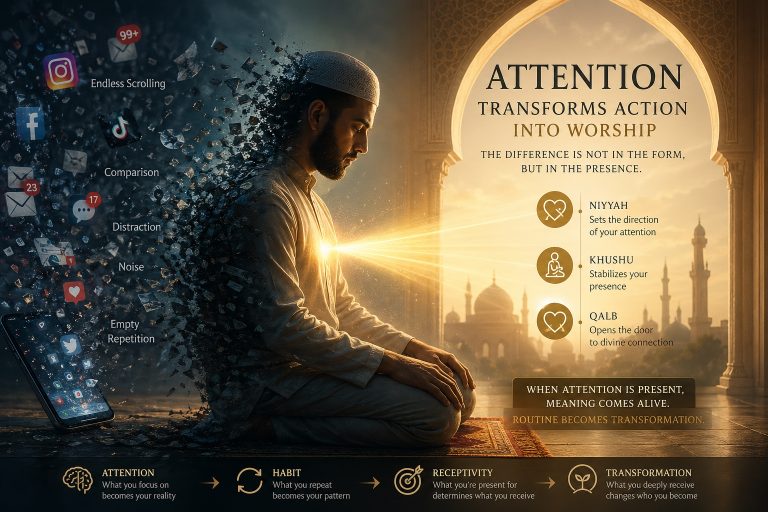
This article presents a structured framework explaining how attention governs human experience, how habit forms through repetition, and how the depth of attention determines whether repeated actions remain mechanical or become transformative. It further applies this model to ʿibādah, highlighting the difference between routine performance and conscious presence (khushu), showing that inner attentional engagement is the key to meaningful transformation.

قدر اللہ :انہوں نے اللہ کی صحیح قدر و منزلت کا حق ادا نہیں کیا

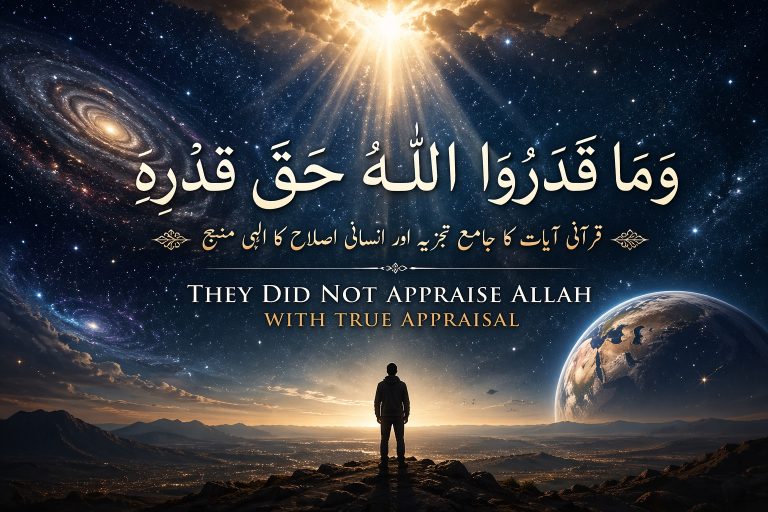
وَمَا قَدَرُوا اللّٰهَ حَقَّ قَدْرِهِ

This article explores the profound Qur’anic statement “وما قدروا الله حق قدره” as the root diagnosis of human deviation—intellectual, practical, and existential. By examining its occurrences across the Qur’an, it unveils a comprehensive framework for understanding الإنسان، الكون، and the Divine, while offering a timeless methodology for reforming thought, action, and society.

قرآن کا عالمی خطاب: بنی نوعِ انسان کے نام الٰہی پیغام کا تحقیقی مطالعہ

قرآن کا عالمی خطاب

قرآنِ مجید صرف مسلمانوں کی کتاب نہیں بلکہ پوری انسانیت کے لیے ہدایت ہے۔ اس تحقیقی باب میں قرآن کے عالمی خطاب کا مطالعہ پیش کیا گیا ہے جس میں اللہ تعالیٰ بنی نوع انسان سے توحید، اخلاقی ذمہ داری، عدل و انصاف اور آخرت کی جواب دہی جیسے بنیادی تقاضے بیان کرتا ہے۔

Selective Morality and Justice in Pakistan

Selective Morality and Justice in Pakistan

A recent fatal accident involving the son of a judge has reignited a long-standing debate in Pakistan: is the law applied equally to all, or selectively enforced against the weak? This analytical article examines the roots of selective morality through Islamic concepts of justice and comparative post-colonial experience.

The Straight Path: The Human Journey From Covenant to Habit

The Straight Path: The Human Journey From Covenant to Habit

Sirat-e-Mustaqeem is not merely a moral suggestion — it is the complete divine framework that begins with the Covenant of Alastu Bi Rabbikum (Qur’an 7:172). From religion to constitution, from state policies to institutional procedures, and from public systems down to personal habits, every layer of human life is meant to remain within this primordial covenant. Wherever this chain breaks, deviation begins and humanity moves off-axis.