Category Islam

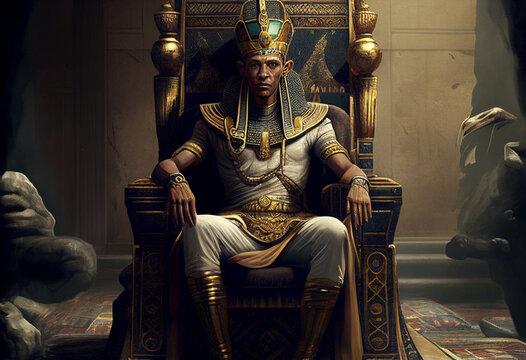
Firaun as Archetype : A Quranic, Historical, and Comparative Study of Legitimized Tyranny

فرعون بطور نمونہ جواز یافتہ ظلم کا قرآنی، تاریخی اور تقابلی مطالعہ

Most people remember Fir'aun simply as the ruler who opposed Prophet Musa (AS). The Qur'an, however, presents something far deeper. This study demonstrates that Fir'aun represents a repeatable political archetype whose tyranny developed through carefully staged processes—elite consultation, propaganda, public spectacle, threat construction, selective terror, and ultimately absolute authority. By combining Qur'anic analysis, classical Tafsir, Egyptology, and modern political theory, this paper reveals why the Qur'anic narrative remains profoundly relevant in understanding authoritarian systems throughout history.

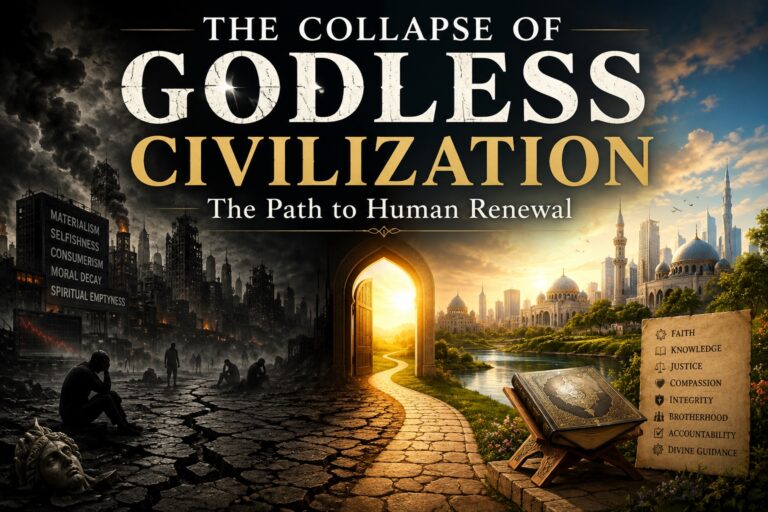
The Collapse of Godless Civilization: The Path to Human Renewal

The Collapse of Godless Civilization

Modern civilization has achieved unprecedented scientific and technological success, yet it continues to face deep moral, intellectual, and spiritual crises. This research argues that these crises stem from a civilization built upon materialism and separation from divine guidance. By examining both Western secular development and the contemporary Muslim condition, it proposes the Qur'anic worldview as a comprehensive path toward genuine human renewal and lasting civilizational balance.

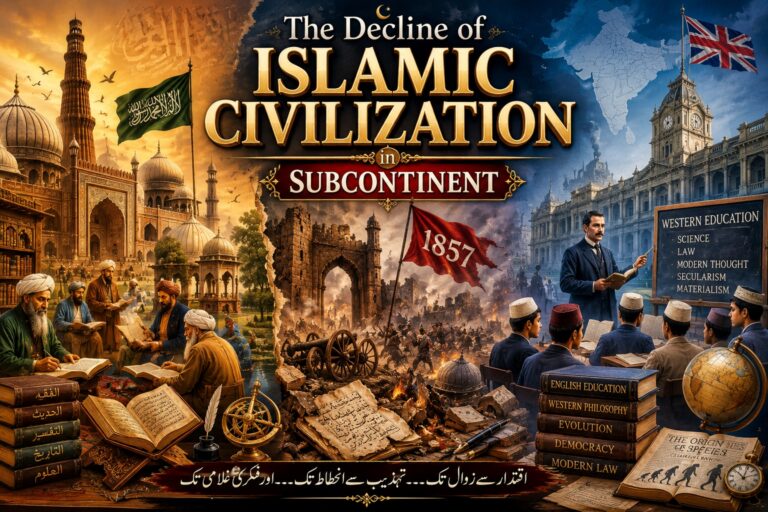
The Decline of Islamic Civilization in Subcontinent

Historical illustration depicting the decline of Islamic civilization in India through political collapse, British colonial rule, and intellectual transformation

The decline of Islamic civilization in India was not merely the result of military defeats or political setbacks. It was a gradual process that unfolded over centuries through weak religious foundations, the erosion of Islamic institutions, colonial domination, and the rise of Western intellectual influence. While Muslim rulers governed large parts of the subcontinent for centuries, Islamic civilization never became deeply rooted among the majority of the population. The collapse of Muslim political authority, followed by British colonial policies, dismantled educational, legal, and cultural institutions that had sustained Muslim identity. The spread of Western education further transformed the outlook of a new Muslim elite that increasingly viewed its own religious and civilizational heritage through foreign intellectual frameworks. This article examines the historical, political, and intellectual factors behind the weakening of Islamic civilization in India and explores how intellectual subjugation often proves more enduring than military conquest.

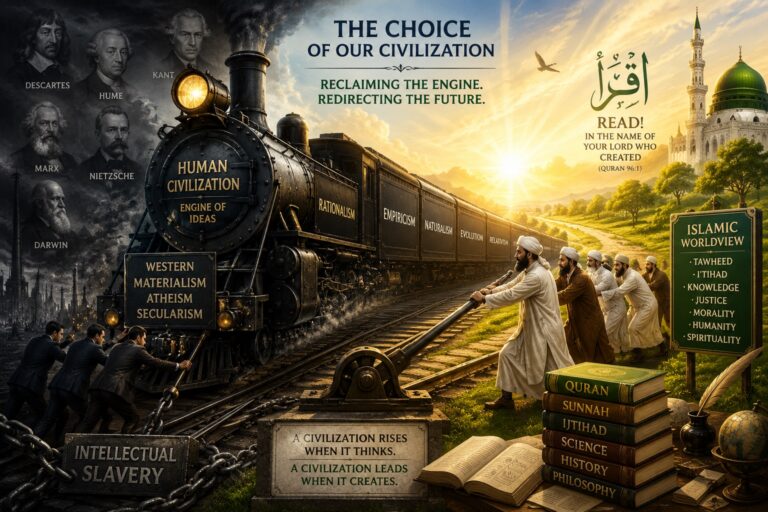
Our Intellectual Slavery and Its Causes: How the Muslim World Lost Intellectual Leadership

Our Intellectual Slavery and its Causes

Why do politically independent Muslim nations continue to think through foreign intellectual frameworks? This research paper examines the phenomenon of intellectual slavery, tracing its origins to the Muslim world's abandonment of independent research and Ijtihad. It explores the historical rise of Western materialism, the philosophical journey from Descartes to Darwin, the conflict between Islamic and Western civilizational paradigms, and the urgent need for an Islamic intellectual renaissance capable of restoring independent thought and global leadership.

Human Legislation versus Divine Revelation: A Historical Study

Human Legislation versus Divine Revelation

Can law alone transform human behaviour? The American Prohibition experiment sought to eradicate alcohol through legislation, education, enforcement, and public campaigns, yet it ultimately failed. More than a thousand years earlier, Islam achieved what modern governments could not: the near-complete elimination of alcohol from society through faith-driven moral transformation. By comparing these two historical experiences, this study explores fundamental questions about law, morality, human psychology, social reform, and the relationship between Divine Revelation and human legislation. The analysis uncovers three universal principles that illuminate not only temperance laws but the entire structure of jurisprudence and ethics.

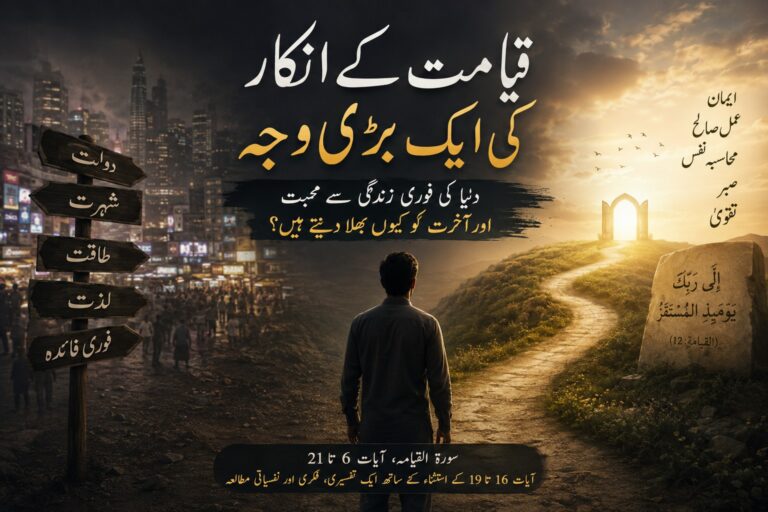
قرآنی تنبیہات اور عصرِ حاضر کی ذہنی گمراہیاں

عصرِ حاضر کی ذہنی گمراہیاں

یہ تحقیقی مقالہ قرآنِ مجید کی روشنی میں عصرِ حاضر کی ان ذہنی، نفسیاتی اور تہذیبی گمراہیوں کا تجزیہ پیش کرتا ہے جنہوں نے انسان کو دولت، شہرت، طاقت، مادّہ پرستی اور مصنوعی کامیابی کے فریب میں مبتلا کر دیا ہے۔ اس تحقیق میں قرآنی آیات، مستند تفاسیر، نفسیاتی تجزیے اور جدید دنیا کے فکری بحرانوں کو مربوط انداز میں پیش کیا گیا ہے تاکہ قاری حقیقی کامیابی، فلاح اور انسانی مقصدِ وجود کو سمجھ سکے۔

معرفتِ الٰہی کا قرآنی سفر

معرفت الٰہی

یہ تحریر قرآنِ مجید کی روشنی میں اللہ تعالیٰ کی معرفت، اس کی مطلق قدرت، حکمت، رحمت اور قربت کو نہایت فکری، روحانی اور صوفیانہ انداز میں بیان کرتی ہے۔ کائنات، انسانی فطرت اور بندگی کے تعلق کو قرآنی آیات اور تدبر کے ذریعے سمجھنے کی یہ ایک جامع دعوتِ فکر ہے

The Drama Effect: Pakistani Television Drama’s Impact on Islamic Social Values, Cultural Identity, and National Character

Drama effects

This comprehensive research paper explores how Pakistani television dramas influence Islamic social values, cultural identity, family structure, language, mental health, and national character. Combining media theory, Islamic frameworks, psychological research, regulatory analysis, and policy recommendations, the study argues that contemporary Pakistani dramas function as a powerful instrument of cultural transformation requiring urgent reform and civilizational reorientation.

Attention, Habit, and Inner Presence in Human Action and ʿIbādah

Attention, Habit, and Inner Presence in Human Action and ʿIbādah

This article presents a structured framework explaining how attention governs human experience, how habit forms through repetition, and how the depth of attention determines whether repeated actions remain mechanical or become transformative. It further applies this model to ʿibādah, highlighting the difference between routine performance and conscious presence (khushu), showing that inner attentional engagement is the key to meaningful transformation.