Category Islam

Selective Morality and Justice in Pakistan

Selective Morality and Justice in Pakistan

A recent fatal accident involving the son of a judge has reignited a long-standing debate in Pakistan: is the law applied equally to all, or selectively enforced against the weak? This analytical article examines the roots of selective morality through Islamic concepts of justice and comparative post-colonial experience.

The Straight Path: The Human Journey From Covenant to Habit

The Straight Path: The Human Journey From Covenant to Habit

Sirat-e-Mustaqeem is not merely a moral suggestion — it is the complete divine framework that begins with the Covenant of Alastu Bi Rabbikum (Qur’an 7:172). From religion to constitution, from state policies to institutional procedures, and from public systems down to personal habits, every layer of human life is meant to remain within this primordial covenant. Wherever this chain breaks, deviation begins and humanity moves off-axis.

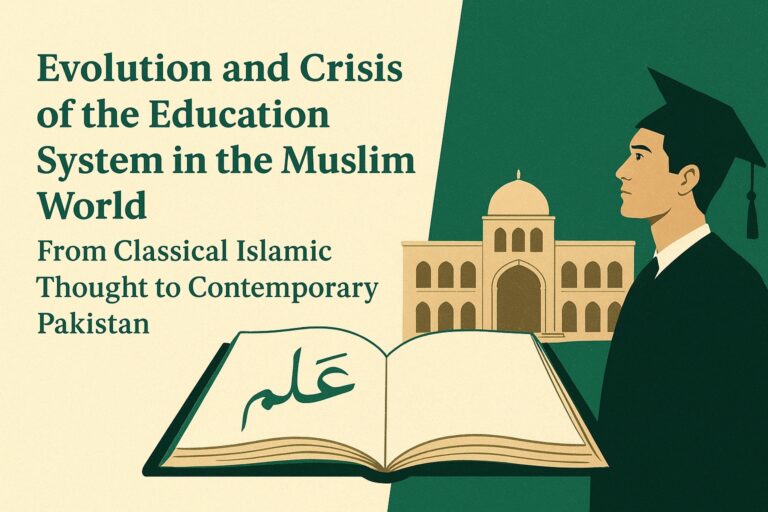
Evolution and Crisis of the Education System in the Muslim World

Evolution and Crisis of the Education System in the Muslim World: From Classical Islamic Thought to Contemporary Pakistan

This research paper explores the evolution of Muslim education from its sacred origins in the Prophetic era to the complex realities of modern Pakistan. It traces the unity of knowledge established by Imam al-Ghazali, the disruption of that unity during the colonial encounter, and Pakistan’s continuing struggle to create an education system aligned with its ideological foundations. The study argues that reform must begin with defining the Profile of the Pakistani Youth—a concept that integrates spiritual awareness, intellectual excellence, and civic responsibility. Rooted in Islamic philosophy and linked with the author’s framework on Human Resource Development for Pakistan, this paper offers a blueprint for rebuilding a moral, intellectual, and national renaissance through education.

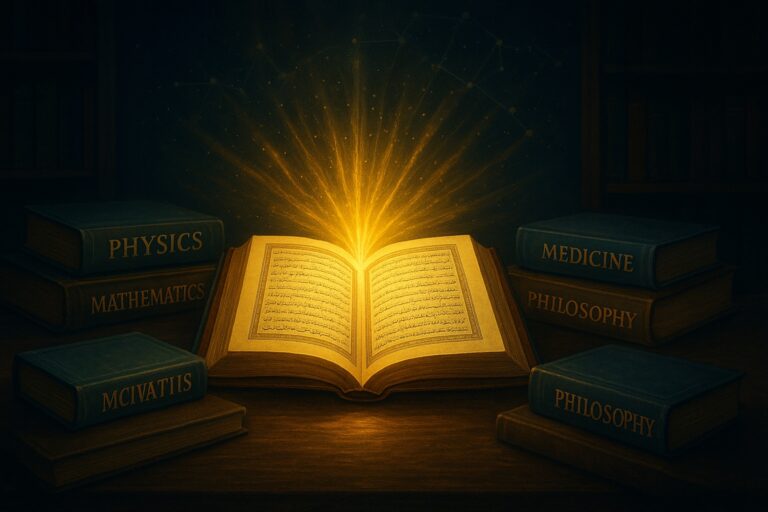
Reconnecting Knowledge with Tawheed

Integrating the Divine Origin of Knowledge into Modern Education

Human knowledge, in all its forms, is a revelation from Allah, discovered progressively by mankind through divine permission. Yet, modern academia often attributes it to impersonal entities like “Science” or “Nature.” This paper argues that acknowledging Allah as the true source of all knowledge can reunite faith and reason, correct epistemic distortions, and lead humanity to a more holistic, ethical, and advanced civilization.

The Qur’ānic Charge-Sheet against Banī Isrā’īl

The Qur’ānic Charge-Sheet against Banī Isrā’īl

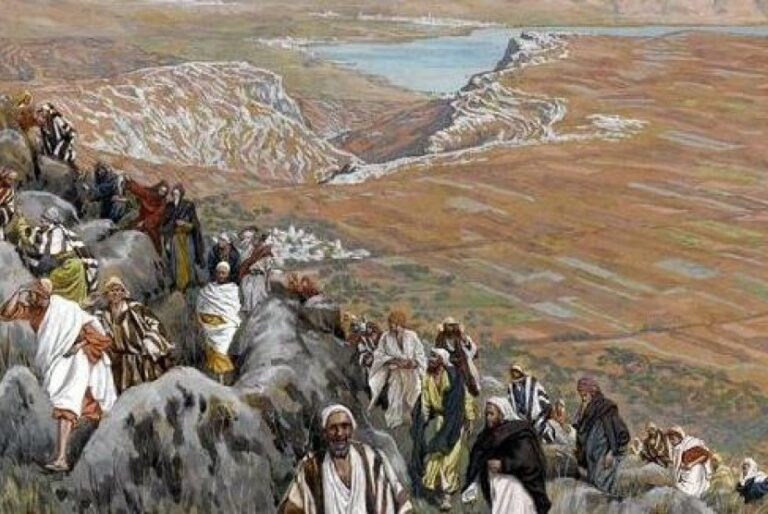
The Qur’an presents a detailed account of the moral, spiritual, and civilizational decline of Bani Israel (the Children of Israel). Through numerous verses, Allah reveals their repeated defiance, corruption, and rejection of divine guidance. This article compiles these verses chronologically with explanatory notes from classical tafsir, offering a comprehensive understanding of their crimes against Prophets, the commandments of Allah, and humanity itself.

اسلام اور پاکستان ۔ تاریخی علمی سیاسی اور ثقافتی پس منظر

اسلام اور پاکستان ۔ تاریخی علمی سیاسی اور ثقافتی پس منظر

This book, written in Urdu, explores the deep interconnection between Islamic ideology, the creation of Pakistan, and the cultural-civilizational challenges faced by the nation today. It examines the foundations of Islam as a complete way of life, Pakistan’s ideological background, the role of Islam in the Constitution and state-building, as well as the cultural struggles in modern society. The work concludes with results and practical recommendations, highlighting the urgent need for a committed and trained group—similar to the early Makkan phase of Islam—to carry forward the mission of building a truly Islamic state and society.