متحدہ عرب امارات خلیج کا “تنہا کھلاڑی” یا بدلتی دنیا کا نازک ماڈل؟
UAE Lone Ranger of the Gulf:What It Means for Everyone Else
Lets explore,What is actually happening is that the UAE has decided to go solo. It has hosted Israeli soldiers on its soil. It has dumped OPEC after nearly sixty years. It is squeezing Pakistan financially. And it is doing all of this while its neighbours watch in disbelief.
UAE Lone Ranger of the Gulf: Why the UAE Is Going Its Own Way and What It Means for Everyone Else
The Misconception You Probably Believe
Here is something most people get wrong about the Middle East right now. They think the United Arab Emirates is a loyal team player, quietly following Saudi Arabia’s lead while keeping its head down and counting its oil money. That is not what is happening. Not even close.
What is actually happening is that the UAE has decided to go solo. It has hosted Israeli soldiers on its soil. It has dumped OPEC after nearly sixty years. It is squeezing Pakistan financially. And it is doing all of this while its neighbours watch in disbelief.
The UAE’s departure from OPEC shakes up the alliance that influences oil prices worldwide
The decision by the United Arab Emirates to leave the OPEC oil cartel shook up the 65-year-old alliance that produces some 40% of the world’s crude oil and exerts major influence over the price of energy around the globe.
The UAE said in the announcement Tuesday that when it leaves OPEC this Friday, it plans to carry on with its long-held goal of increasing crude production “in a gradual and measured manner, aligned with demand and market conditions.”
Right now, that’s academic as far as oil prices go, since Iran is still blocking the Strait of Hormuz, which means much of the oil from Persian Gulf producers such as the UAE cannot be exported. But the departure could have long-term effects on oil prices.
This is not a small story. It is a regional earthquake. And understanding it matters because the Middle East is where the world gets its oil, where major powers fight proxy wars, and where a single miscalculation can send gas prices spiking in your hometown.
So let me walk you through what the UAE is doing. Why is it doing it? What does it stand to gain? And why it’s a gamble might cost it more than it ever imagined.
The Day Everything Changed for Abu Dhabi
Imagine you live in a quiet neighbourhood. You have a security system. You have a friendly relationship with the guy next door. But one day, someone starts firing rockets at your house. Not one or two. Thousands of them.
That is what happened to the UAE during the recent war with Iran. According to data from a major security think tank, Iran launched over 5,000 drones, more than 2,000 ballistic missiles, and nearly 60 cruise missiles during the conflict. The UAE alone was hit by 38 per cent of those projectiles. That is more than 2,200 drones, over 500 ballistic missiles, and two dozen cruise missiles slamming into or near a country that had not seen a direct conventional attack in its entire history.
More than 600 Emiratis died. Over 2,500 were injured. Refineries were damaged. Airports were struck. The psychological toll was enormous.
And here is the part that really stung. When the UAE asked its Gulf neighbours for help, the response was lukewarm. There were meetings. There were statements. There was no joint military action. No coordinated counterstrikes. Nothing made the UAE feel protected.
That is when Abu Dhabi started making its own plans.
UAE Lone Ranger of the Gulf: The Day Everything Changed for Abu Dhabi
The Israeli Iron Dome Sitting on Arab Soil
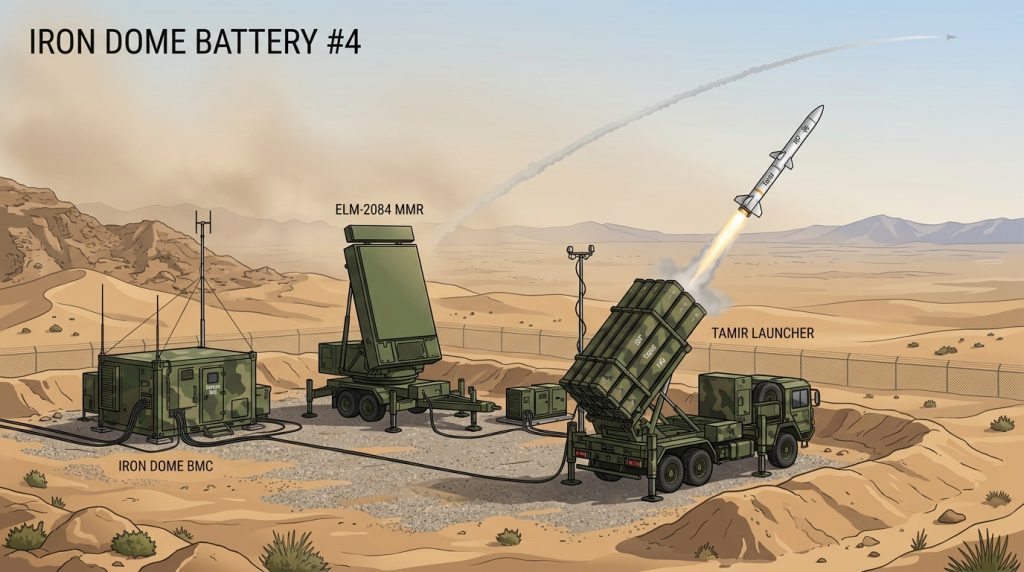
Here is a sentence that would have sounded insane five years ago. Israeli soldiers are operating an Iron Dome battery in the United Arab Emirates.
The Israeli Iron Dome Sitting on Arab Soil
But that is exactly what happened. During the war, Israel deployed the air defence system and several dozen of its personnel to the UAE. The two countries coordinated directly. The Israeli prime minister and the UAE president spoke. And the equipment was set up to protect Emirati skies.
Let me pause here. An Arab country invited Israeli combat troops onto its territory to help defend it against Iran. A country that formally normalised relations with Israel only in 2020. A country that still officially supports the Palestinian cause.
The reaction in the Arab world has been fierce. A prominent Saudi academic called the UAE “Israel’s Trojan horse in the Arab world.” That is not diplomatic language. That is a declaration of war by other means.
But here is the thing. The UAE does not seem to care. And for a very simple reason. The Iron Dome worked. Iranian drones that would have hit their targets were shot down. Emirati citizens lived because Israeli technology was sitting on Emirati soil.
Ask yourself this. If your family were under rocket attack and your neighbours refused to help, but a former enemy offered protection, what would you do? The UAE answered that question with its actions.
Walking Away from OPEC Like It Was Nothing
The OPEC decision is even more astonishing, but for different reasons. The UAE left the cartel on May 1, 2026. It did not give much warning. It did not ask for permission. It just announced it was done.
To understand why this matters, you need to know a little history. OPEC was founded in 1960. The UAE joined in 1967. For nearly six decades, OPEC has been the club where oil-producing nations try to control prices by limiting supply. It is not a perfect system. But it is the only system the world has.
Saudi Arabia has been the unofficial boss of OPEC for most of that time. When Saudi Arabia says cut production, the others usually cut production. When Saudi Arabia says raise prices, the others usually go along.
Not anymore. The UAE looked at its production capacity, which is about 4.85 million barrels per day, and looked at its OPEC quota, which was roughly 3.2 million barrels per day, and realised that it was leaving about 1.6 million barrels of daily production sitting idle. That is not just frustrating. That is billions of dollars of lost revenue every year.
So the UAE did the math. It built a pipeline from its onshore fields to the Port of Fujairah, which sits outside the Persian Gulf. It invested heavily in that port. And when the Strait of Hormuz became too dangerous to use, the UAE kept exporting oil anyway.
The message to Saudi Arabia was unmistakable. You do not control our oil anymore. Nobody does.
The Pakistan Problem: When Friendship Turns Sour
Now let me tell you about the most personal consequence of the UAE’s solo flight. Pakistan.
For decades, the UAE and Pakistan were close. Really close. Nearly two million Pakistanis live and work in the UAE. They send home billions of dollars every year. The two countries shared military intelligence. They coordinated on regional issues. They called each other brothers.
That brotherhood is now in intensive care.
Here is what happened. When the Iran war broke out, Pakistan tried to mediate. It hosted talks between the United States and Iran. It positioned itself as a neutral peacemaker. From Pakistan’s perspective, this was responsible statecraft. From the UAE’s perspective, it was a betrayal.
Remember what I said about the UAE being hit by thousands of Iranian projectiles. Remember the 600 dead Emiratis. From Abu Dhabi’s point of view, there is no neutral position on Iran. You are either with us or against us. And Pakistan was not clearly with them.
The UAE responded by demanding the immediate repayment of about 3.5 billion dollars in loans that it had previously deposited in Pakistan’s central bank. That is not a small request. Pakistan’s foreign reserves were only about 16 billion dollars at the time. The IMF had counted on those UAE deposits staying put. Suddenly, they were gone.
The UAE also pulled out of a deal to operate Islamabad International Airport. It stopped rolling over its debt, which had been standard practice for years. And it let Pakistan know, quietly but clearly, that the relationship had changed.
Here is the painful irony. Pakistan’s economy is now in worse shape. But the UAE has also made itself vulnerable. Those two million Pakistani workers keep Dubai’s construction sites running, its hotels staffed, and its logistics moving. If the UAE tightens labour policies in retaliation, it could hurt its own economy.
The grandmother test applies here. If your grandmother asked why the UAE and Pakistan are fighting, you could tell her: The UAE is angry because Pakistan tried to be friends with both sides after Iran attacked the UAE. And now the UAE is asking for its money back.
India and Israel: The New Best Friends
So if the UAE is alienating Saudi Arabia and antagonising Pakistan, who is it turning to? India and Israel. And this is where the story gets really interesting.
India and the UAE signed a defence pact. India and Israel renewed their security cooperation. And the three countries are now being described by analysts as a potential axis in the making. Not a formal alliance like NATO. But a loose alignment of interests that could reshape the region.
Think of it like a chessboard. The old configuration was Saudi Arabia plus the United States versus Iran. The new configuration is more like India plus Israel plus the UAE versus… well, that part is still being written. But the Saudi‑Pakistan defence pact that was signed in September 2025 clearly worries Abu Dhabi. The UAE sees itself as balancing against that emerging bloc.
There is an old saying in diplomacy. The enemy of my enemy is my friend. The UAE, Israel, and India all have complicated relationships with Pakistan. They all have concerns about Iran. And they all want stable access to energy and trade routes.
Is Israel manipulating the UAE? No. The UAE is too smart and too rich to be manipulated. But Israel is certainly happy to accept a new partner who wants its military technology and its intelligence cooperation.
Is India manipulating the UAE? Also no. But India sees the Gulf as its backyard. It has millions of citizens working there. It needs stable oil supplies. And it views the UAE as a more predictable partner than Saudi Arabia, which has closer ties to Pakistan.
The best way to think about it is this. The UAE is not being pushed. It is jumping. And Israel and India are jumping with it.
The Bypass That Is Not Quite Enough
Let me explain something about the UAE’s oil exports that most news reports get wrong. Yes, the UAE can still export oil when the Strait of Hormuz is blocked. But no, it cannot export all of its oil.
The pipeline from Abu Dhabi to Fujairah has a capacity of about 1.8 million barrels per day. That sounds like a lot. But the UAE was producing over 3.4 million barrels per day before the war. So the pipeline can handle only about half of what the country can pump.
Here is a metaphor that might help. Imagine you have a garden hose that can deliver a steady stream of water. But your neighbour has a fire hydrant. During a drought, the garden hose is better than nothing. But it is not the same as having full access to the hydrant. The UAE has the garden hose. Saudi Arabia has the fire hydrant.
There is an even bigger problem. Natural gas. The UAE exports natural gas as liquefied natural gas, or LNG. Those exports have to go through the Strait of Hormuz. There is no pipeline alternative. None. If the strait is blocked, the gas stops flowing. Period.
During the recent war, that is exactly what happened. Oil kept moving, at a reduced rate. Gas basically stopped.
Imagine being a country that relies on energy exports for most of its government revenue. Now imagine that half of your oil and almost all of your gas cannot reach international markets. That is a nightmare scenario. And it is exactly why the UAE is so desperate for better relationships with countries that can help protect its energy infrastructure.
The Port That Became a Target
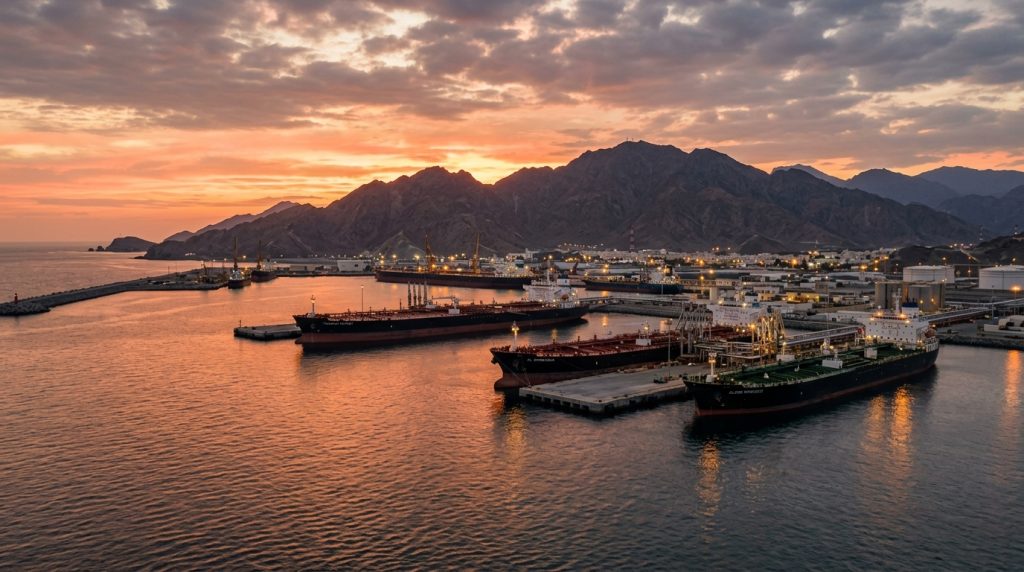
The Port of Fujairah is the UAE’s great hope. It is the endpoint of that pipeline. It sits on the Gulf of Oman, safely outside the Persian Gulf. Tankers can load there and sail directly to Asia without ever entering the strait.
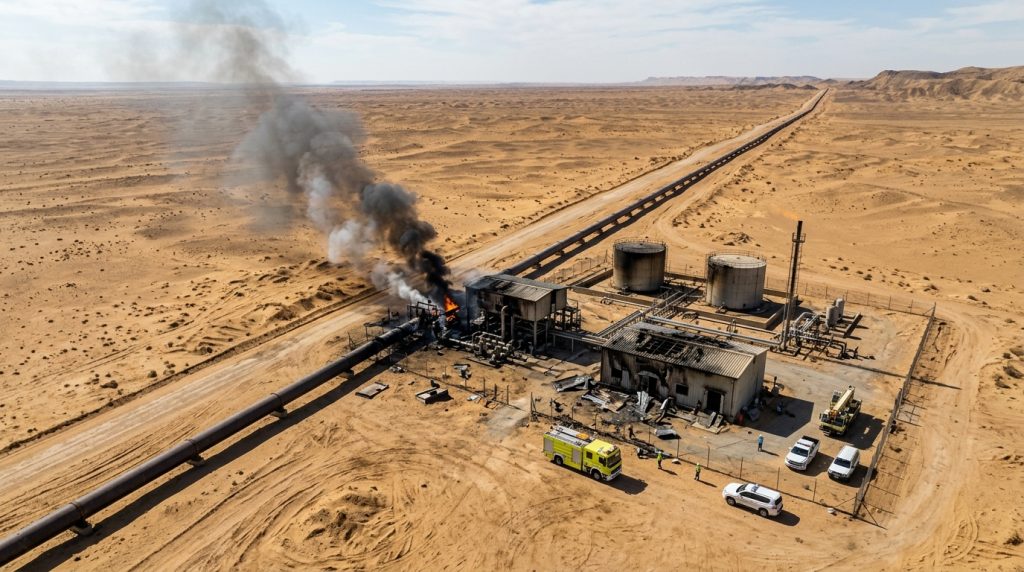
But here is the problem. The port was hit by at least seven drone strikes during the war. Loading operations had to be suspended. Ships could not dock. The entire bypass system, which the UAE spent billions of dollars building, was temporarily shut down by relatively cheap drones.
This is the cruel math of modern warfare. Defending against ballistic missiles costs millions of dollars per intercept. Building a pipeline costs billions. But attacking a port with a drone costs maybe twenty thousand dollars. The defender always spends more.
The UAE has learned this lesson the hard way. It has invested in air defences. It has hosted the Iron Dome. It has coordinated with the United States. But every time it builds a shield, Iran builds a slightly better spear.
What the UAE Stands to Gain
After all of that bad news, you might be wondering why the UAE is doing any of this. There has to be an upside, right? There is. Several of them.
UAE Lone Ranger of the Gulf: What the UAE Stands to Gain
First, the UAE is now making its own decisions about oil production. It does not have to ask for Saudi permission. It does not have to coordinate with OPEC. It can pump as much as it wants, when it wants, and sell it to whomever it wants. That freedom is worth real money.
Second, the UAE has better air defences than it did before the war. The Iron Dome deployment was not just a one-time thing. It was a trial run. And it worked. The UAE now has relationships with Israeli defence firms. It has operational experience integrating Israeli systems with its existing American and European hardware. That makes the country safer, even if it makes its neighbours uncomfortable.
Third, the UAE has positioned itself as the United States’ most reliable partner in the Gulf. The OPEC exit was a gift to the Trump administration, which had long complained about the cartel keeping oil prices artificially high. The UAE is now seen in Washington as a problem solver, not a problem maker.
Fourth, the UAE has opened up new economic relationships with India and Israel. These are not small markets. India is the world’s most populous country. Israel is a technology powerhouse. Combined, they offer the UAE something that Saudi Arabia and Pakistan cannot match. Innovation.
The grandfather of a friend of mine used to say something that applies here. You cannot dance at two weddings with one pair of shoes. The UAE has chosen its dance partners. It has picked India and Israel over Saudi Arabia and Pakistan. Only time will tell if it picked the right ones.
What the UAE Stands to Lose
But the losses are real, too. Let me list them.
The UAE has lost its close relationship with Pakistan. Maybe not forever. But certainly for now. The sudden demand for loan repayment was seen in Islamabad as a betrayal. And Pakistan has a long memory.
The UAE has publicly humiliated Saudi Arabia by leaving OPEC without warning. Riyadh will not forget that. The two countries are now openly competing in Yemen and Sudan, backing opposite sides in both civil wars. That is not the behaviour of allies. That is the behaviour of rivals who used to be friends.
The UAE has alienated the broader Arab street. Public opinion across the region is overwhelmingly opposed to normalising relations with Israel. The UAE is ignoring that sentiment. And while dictatorships can ignore public opinion for a long time, they cannot ignore it forever. Eventually, the people notice.
The UAE has made itself more dependent on the United States. And the United States is not as reliable as it used to be. American foreign policy swings wildly from one administration to the next. What Trump gives, a future president could take away.
Here is a specific detail that captures the fragility of the UAE’s position. The Port of Fujairah was hit by seven drone strikes. Not seventy. Not seven hundred. Just seven. And that was enough to shut down its loading operations. The UAE’s great bypass solution is one good attack away from being useless.
The Three Poles of the New Middle East
Let me zoom out and give you the big picture. The Middle East is no longer a single system with the United States at the centre. It is now a region with three competing power poles.
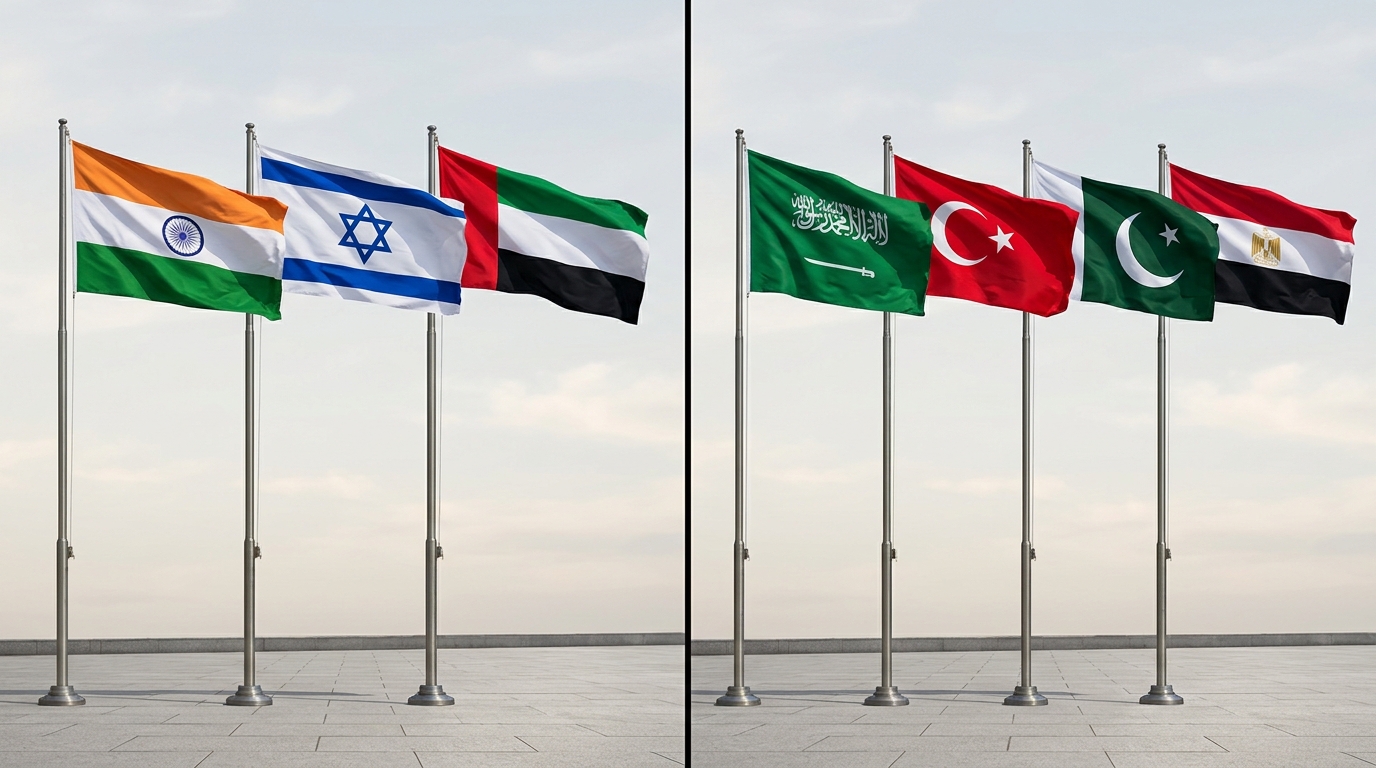
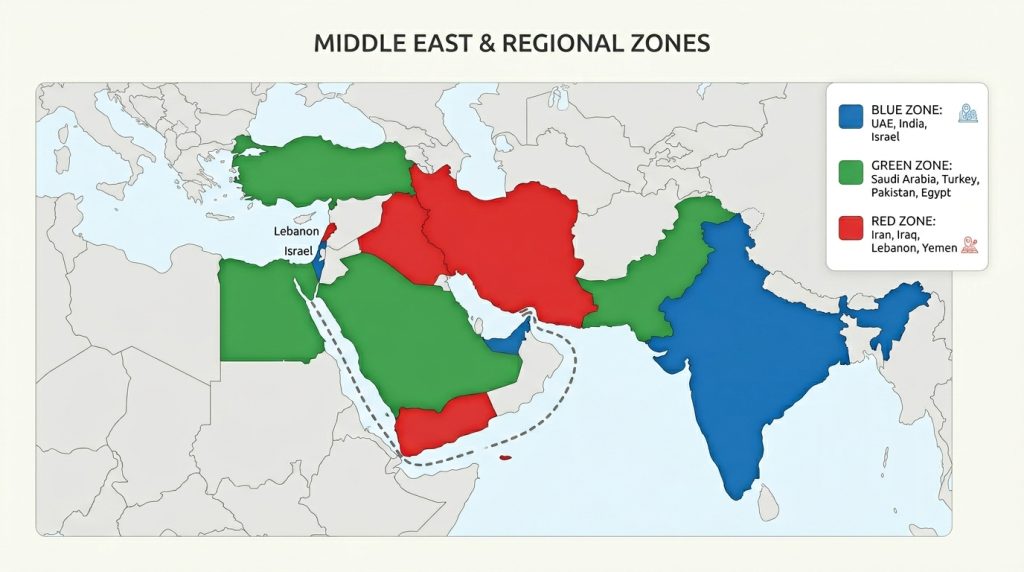
Pole one is the India‑UAE‑Israel axis. This is the newest and most dynamic pole. It is driven by economic interests, technology transfer, and a shared wariness of Pakistan. It is not an alliance in the traditional sense. But it is more than just a friendship.
Pole two is the Saudi‑Turkey‑Pakistan‑Egypt alignment. This pole is older, larger, and more cautious. It is built on shared opposition to Israeli military expansion and a mutual fear that the United States might abandon the region. It is also built on the Saudi‑Pakistan defence pact, which is as close to a formal military alliance as exists in the region.
Pole three is Iran and its remaining allies. This pole is diminished but not destroyed. Iran still influences Iraq, parts of Lebanon, and Yemen. Its proxies are becoming more autonomous, which is both a weakness and a strength. A decentralised network is harder to decapitate.
The Three Poles of the New Middle East
The old Middle East was bipolar. The United States and its allies versus Iran and its proxies. The new Middle East is tripolar. And tripolar systems are famously unstable. They tend to produce shifting alliances, frequent crises, and occasional wars.
The UAE has placed its bet on pole one. It is hoped that India and Israel can provide the security and prosperity that Saudi Arabia and Pakistan no longer can. It is a bold bet. But bold bets can lose.
The Personality at the Centre
No explanation of the UAE’s solo flight is complete without mentioning the man in charge. Mohammed bin Zayed, the president of the UAE, is not a typical Arab leader. He is patient. He is strategic. And he is ruthless when he needs to be.
MBZ, as he is known, watched the Arab Spring uprisings up close. He saw what happened to leaders who lost control of their streets. He saw what happened to leaders who relied too heavily on allies who let them down.
His conclusion was simple. The UAE must be able to defend itself. It must be able to feed itself. And it must be able to sell its oil regardless of what its neighbours do.
That is why the UAE built the pipeline to Fujairah. That is why the UAE diversified its economy away from oil. That is why the UAE invested in desalination plants and strategic food reserves. And that is why the UAE is now willing to alienate Saudi Arabia and Pakistan.
MBZ is not trying to be liked. He is trying to make sure his country survives. There is a difference.
What Happens Next
Predicting the future in the Middle East is a fool’s errand. But I can tell you what to watch for.
Watch whether any other Gulf country follows the UAE out of OPEC. If Kuwait leaves, the cartel is finished. If Oman leaves, the cartel is wounded. If neither leaves, the UAE will remain isolated, but it will not be fatal.
Watch whether the Saudi‑led pole formalises into a real defence pact. Turkey, Pakistan, Egypt, and Saudi Arabia have talked about closer coordination. But there is a difference between talking and signing. If they sign, the region will have two clear armed camps.
Watch whether Iran tries to exploit the rift between the UAE and Saudi Arabia. Tehran is weakened right now. But it is also opportunistic. If it sees an opening, it will take it.
Watch the price of oil. The UAE is pumping more than its OPEC quota would have allowed. That extra supply puts downward pressure on prices. Lower prices hurt every oil exporter, including the UAE itself. There is a reason OPEC limits production. When everyone pumps as much as they can, everyone makes less money.
Watch the port of Fujairah. If it is hit again and the damage is worse, the UAE will have no backup to its backup. That is when the panic starts.
The Bottom Line
The UAE is making a gamble that its security interests matter more than its regional relationships. It is betting that India and Israel are better partners than Saudi Arabia and Pakistan. It is betting that the United States will stick around. And it is betting that its pipeline to Fujairah will keep the oil flowing.
Those are not bad bets. But they are not sure things either. For the rest of us, the UAE’s solo flight matters because it is a sign of things to come. The era of monolithic Gulf unity is over. The era of predictable Saudi leadership is over. The era of pretending that Arab public opinion does not matter is ending, too.
The UAE is not a victim. It is not a traitor. It is not a hero. It is a country that got hit hard by Iran and decided to look out for itself. That is what countries do when they feel abandoned. They look for better friends.
Whether those better friends will be there when the next crisis comes, nobody knows. But the UAE is about to find out.
6 FAQs
Q1: Why did the UAE leave OPEC after nearly 60 years?
A: The UAE left OPEC because its production capacity had grown to about 4.85 million barrels per day, but OPEC kept its quota at roughly 3.2 million barrels per day. That meant the UAE was leaving around 1.6 million barrels of daily production unsold, which cost billions in lost revenue. The UAE also felt that OPEC was too slow to adapt and that Saudi Arabia, the de facto leader, no longer aligned with Emirati interests. Leaving OPEC gave the UAE full control over its own oil production and pricing.
Q2: Did the UAE really let Israeli soldiers operate on its soil?
A: Yes. During the recent war with Iran, Israel deployed an Iron Dome air defence battery and several dozen Israeli Defence Forces personnel to the United Arab Emirates. This was done with direct coordination between the Israeli prime minister and the UAE president. It marks the first time an Arab country has hosted Israeli combat troops for active defence. The UAE saw it as a necessary step to protect its citizens after Iranian drone and missile attacks killed over 600 Emiratis.
Q3: What did the UAE do to Pakistan, and why?
A: The UAE demanded the immediate repayment of roughly 3.5 billion dollars in loans that it had previously deposited in Pakistan’s central bank. It also pulled out of a deal to operate Islamabad International Airport and stopped rolling over its debt. The reason was Pakistan’s attempt to mediate between the United States and Iran during the war. From the UAE’s perspective, there is no neutral position when Iran has just attacked the UAE relentlessly. The UAE saw Pakistan’s mediation as a betrayal.
Q4: Can the UAE still export oil if the Strait of Hormuz is blocked?
A: Yes, but only about half of its oil. The UAE built a pipeline from its onshore fields to the Port of Fujairah, which sits outside the Persian Gulf. That pipeline can carry about 1.8 million barrels per day. Before the war, the UAE was producing over 3.4 million barrels per day. So the pipeline cannot handle all of its oil. Worse, natural gas exports have no alternative route. If the strait is blocked, almost all of the UAE’s liquefied natural gas cannot leave the Gulf.
Q5: What are the three power poles in the new Middle East?
A: The first pole is the India‑UAE‑Israel axis, built on defence, technology, and economic cooperation. The second pole is the Saudi‑Turkey‑Pakistan‑Egypt alignment, which opposes Israeli military expansion and fears U.S. abandonment. The third pole is Iran and its remaining allies in Iraq, Lebanon, and Yemen, which is weakened but still dangerous. The old bipolar system of U.S. allies versus Iran is gone, replaced by a more unstable tripolar structure.
Q6: Is the UAE being manipulated by Israel or India?
A: No. The UAE is acting on its own strategic interests. It chose to partner with Israel and India because those countries offered tangible military technology, intelligence sharing, and economic depth that the UAE’s traditional Gulf neighbours and Pakistan did not provide. The UAE is too wealthy and too strategically savvy to be a puppet. It is a decisive actor that jumped toward new alliances after feeling abandoned by its old ones.
References:
Iron Dome deployment – Axios via Tehran Times & The New Arab (April 2026): Israel deployed Iron Dome battery and IDF personnel to UAE during Iran war. UAE suffered over 5,000 Iranian drones/missiles, 600+ dead, 2,500+ injured.
UAE leaving OPEC – Hindustan Times & Xinhua (April 28, 2026): UAE quit OPEC/OPEC+ effective May 1, 2026, after 59 years of membership.
Production vs. quota – Hindustan Times (April 29, 2026): UAE capacity 4.85 mb/d, OPEC quota 3.2 mb/d, leaving 1.6 mb/d idle. Target 5 mb/d by 2027.
Saudi academic “Trojan horse” – Middle East Eye (Jan 23, 2026): Saudi columnist Ahmed al-Tuwaijri accused UAE of being “Israel’s Trojan horse in the Arab world.”
ADCOP pipeline & Fujairah port – Asharq Al-Awsat & Gem.wiki: 1.5–1.8 mb/d capacity, cost $3.3 billion, 400 km long. Port hit by at least seven drone strikes, suspending operations.
UAE-Pakistan loan dispute – Times of India & ThePrint (April 2026): UAE demanded $3.5 billion repayment. Pakistan reserves ~$16 billion. Nearly 2 million Pakistani workers in the UAE send $6–7 billion annually. Quoted Neil Quilliam (Chatham House): “There’s no neutrality in this.”
India-UAE-Israel axis – Indian Defence News (Oct 2025): Defence pacts and CEPA pushing trade past $100 billion.
Saudi-Pakistan defense pact – Signed September 2025: mutual defense agreement treating attack on one as attack on both.
GCC rift analysis – Chatham House & Financial Times (April 2026): Neil Quilliam on UAE-Saudi split playing out in Pakistan; Gulf bloc fragmenting.