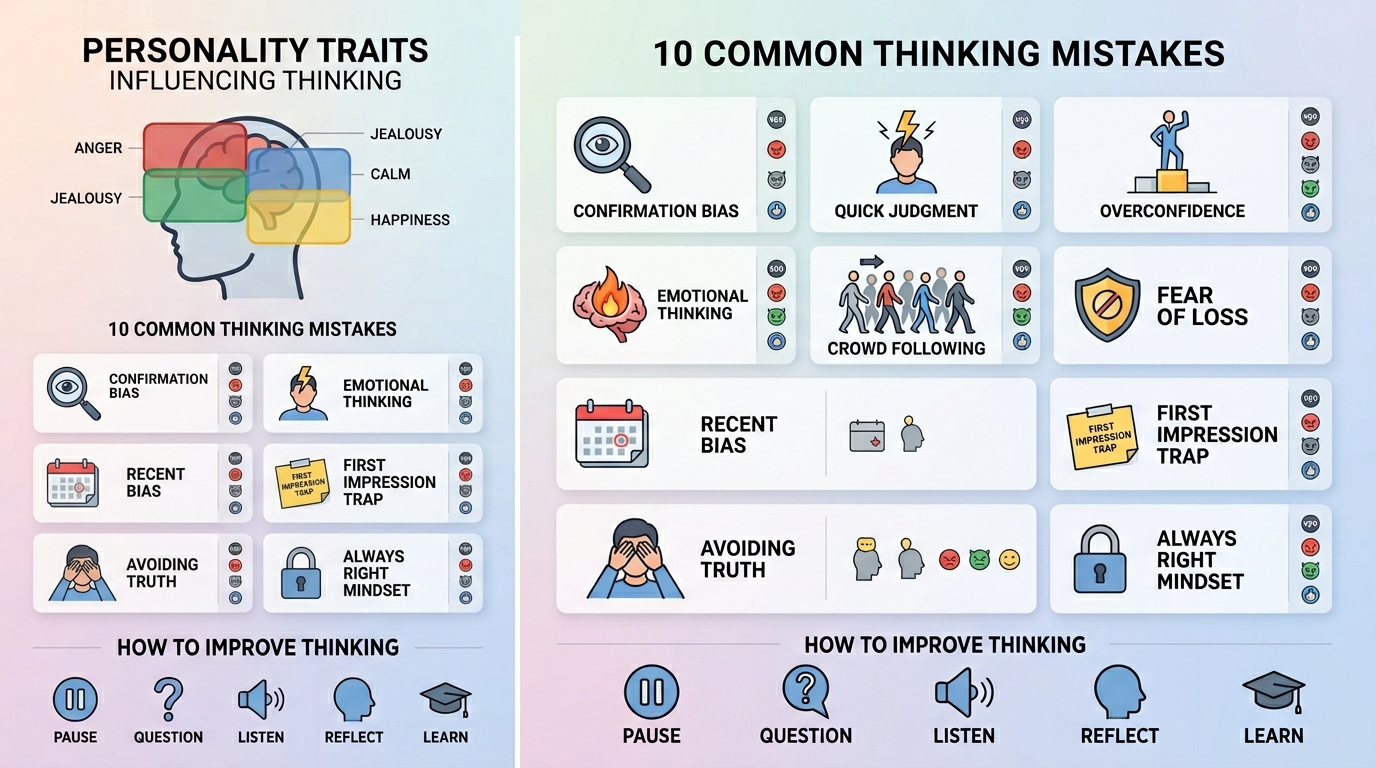

10 Common Thinking Mistakes, How Personality Traits Drive Them
10 Common Thinking Mistakes, How Personality Traits Drive Them.What if your biggest decisions are not controlled by logic… but by your personality?
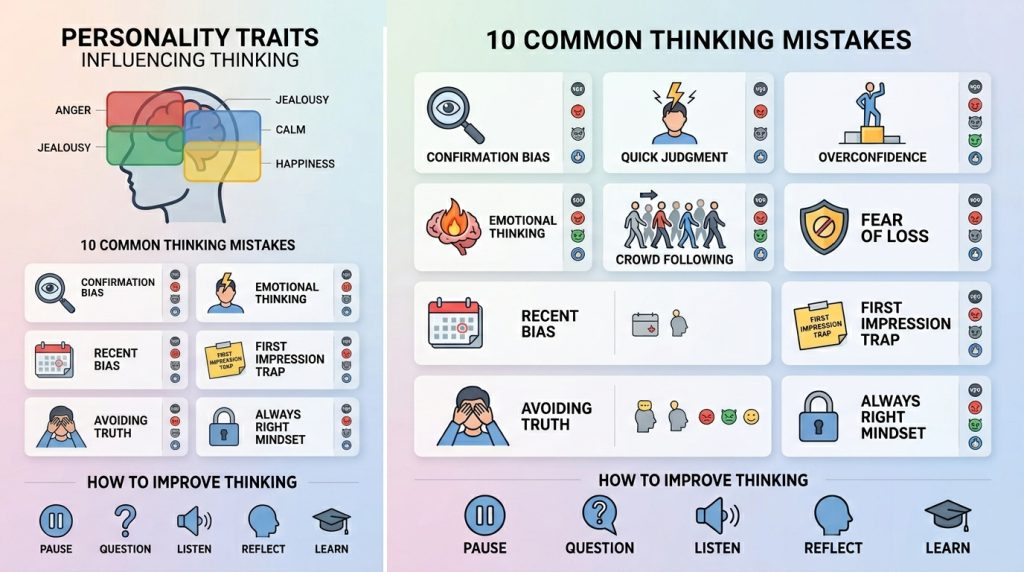
10 Common Thinking Mistakes, How Personality Traits Drive Them. We like to believe we think clearly. But in reality, our thoughts are shaped by emotions like jealousy, anger, and prejudice, as well as by happiness, gratitude, and moral values.
Two people can face the same situation and reach completely different conclusions. Not because facts changed, but because their inner filters are different.
What Are Cognitive Distortions and How Can You Change These Thinking Patterns?
Cognitive distortions involve negative thinking patterns that aren’t based on fact or reality. You can help change these thinking patterns to promote your mental well-being.
“I have the worst luck in the entire world.”
“She’s late. It’s raining. She has hydroplaned, and her car is upside down in a ditch.”
These are all prime examples of cognitive distortions: thought patterns that cause people to view reality in inaccurate — usually negativeTrusted Source — ways.
In short, they’re habitual errors in thinking. When experiencing a cognitive distortion, the way you interpret events is usually negatively biased.
Most people experience cognitive distortions from time to time. But if they’re reinforced often enough, they can increase anxiety, deepen depression, cause relationship difficulties, and lead to other complications.
Learn more about cognitive distortions, including their connections to mental health, the types, and what you can do to help change your thought patterns.
This article explores 10 common thinking mistakes and shows how personality traits quietly influence each one.
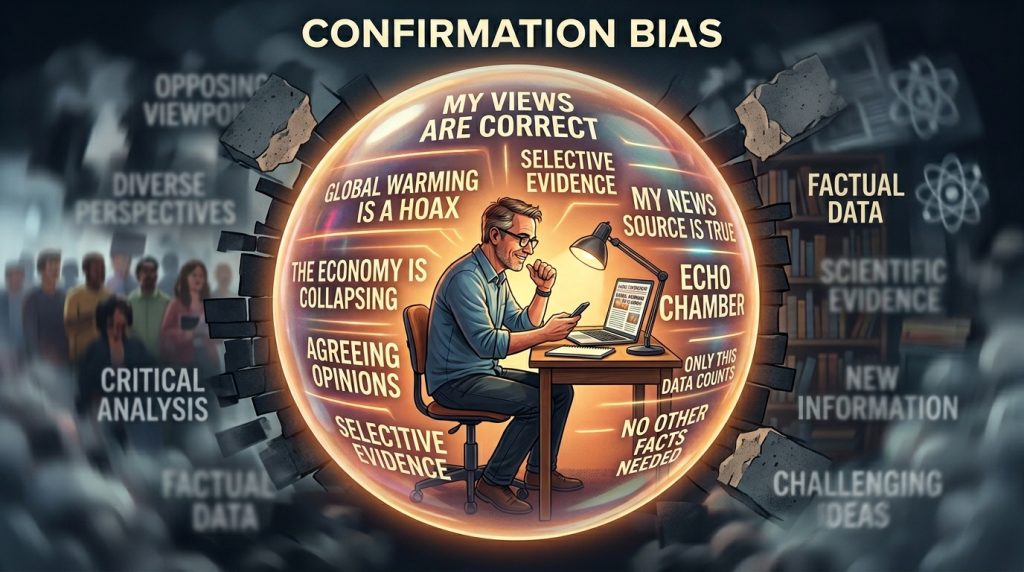
1. Believing Only What Supports Your Opinion
Personality Driver: Prejudice and ego
This happens when you only accept information that supports your beliefs and ignore everything else.
Example: A person believes a group is unreliable. One bad experience confirms their belief, while many good examples are ignored.
Impact: Narrow thinking and biased conclusions.

2. Judging Too Quickly
Personality Driver: Impatience and overconfidence
Some people make fast judgments without understanding the full situation.
Example: You assume someone is rude because they did not greet you, but later you learn they were stressed.
Impact: Misunderstandings and wrong decisions.
3. Overconfidence in Your Knowledge
Personality Driver: Ego
Too much confidence can block learning and lead to poor decisions.
Example: A manager ignores advice because they believe they already know the best solution.
Impact: Costly mistakes and missed opportunities.
4. Letting Emotions Control Decisions
Personality Driver: Anger and fear
Strong emotions reduce clear thinking and lead to impulsive actions.
Example: Sending an angry message and later regretting it.
Impact: Damaged relationships and poor decisions.
5. Following the Crowd Without Thinking
Personality Driver: Need for approval
People sometimes follow others instead of thinking independently.
Example: Buying something just because it is popular.
Impact: Loss of independent judgment.

6. Fearing Loss More Than Valuing Gain
Personality Driver: Fear and anxiety
Fear of loss can stop people from taking useful risks.
Example: Avoiding investment because of fear, even when the opportunity is good.
Impact: Missed growth and progress.

7. Overvaluing Recent Events
Personality Driver: Anxiety and sensitivity
Recent events often feel more important than they actually are.
Example: After hearing about a crime, assuming your area is unsafe.
Impact: Distorted understanding of reality.
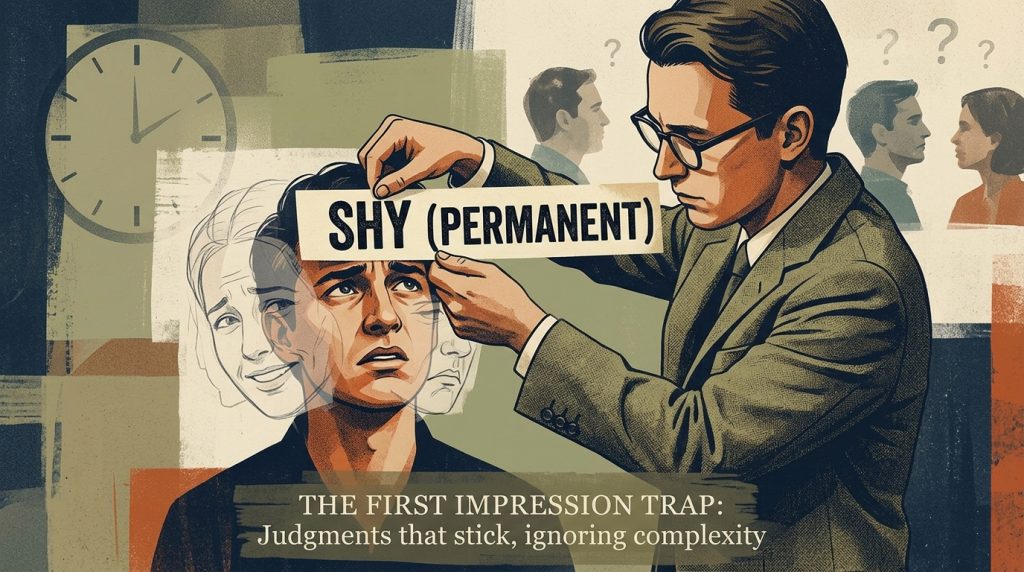
8. Sticking to First Impressions
Personality Driver: Rigid thinking
First impressions can strongly influence long-term judgment.
Example: Labelling a student as weak and ignoring later improvement.
Impact: Unfair and outdated decisions.
9. Avoiding Uncomfortable Truths
Personality Driver: Ego and comfort-seeking
People often avoid information that challenges their beliefs.
Example: Ignoring health advice because it requires lifestyle changes.
Impact: Delayed improvement and bigger problems.
10. Thinking You Are Always Right
Personality Driver: Ego and low humility
This is one of the most harmful thinking mistakes.
Example: A leader refuses feedback, and the project fails.
Impact: Repeated mistakes and damaged relationships.
How Personality Controls Thinking
Personality traits influence thinking in three important ways:
- Attention: What you notice first
- Interpretation: How you understand situations
- Reaction: How you respond
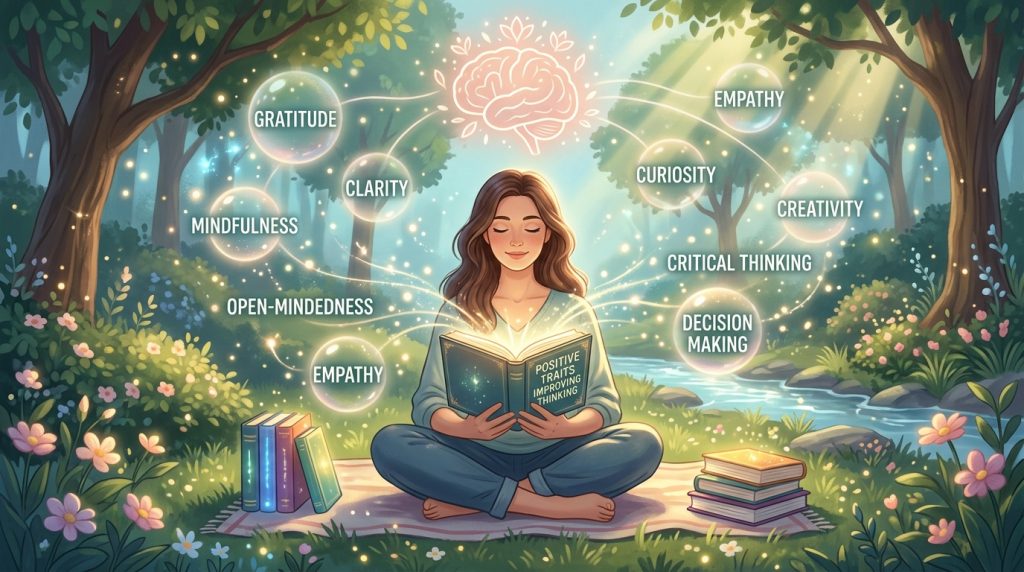
Positive Traits That Improve Thinking
Gratitude
Helps you focus on what you have and reduces negativity.
Happiness
Encourages creativity and open thinking.
Moral Values
Guide decisions and create consistency in behaviour.
Simple Ways to Improve Your Thinking
- Pause before reacting
- Question your first thought
- Listen to different opinions
- Practice gratitude
- Reflect on your decisions
Conclusion
Your personality influences your thinking, but it does not have to control it.
When you understand your thinking patterns, you can make better decisions and avoid common mistakes.
Start by noticing one thinking mistake today. That awareness can change your decisions tomorrow.
Frequently Asked Questions (FAQs)
1. Do personality traits affect decision-making?
Yes, traits like anger, jealousy, and gratitude influence how you think and make decisions.
2. Can thinking mistakes be completely removed?
No, but they can be reduced through awareness and practice.
3. Why do intelligent people make thinking mistakes?
Because intelligence does not remove bias. It can sometimes make people more confident in wrong beliefs.
4. Which personality trait is most harmful?
Extreme ego is often the most harmful because it blocks learning and feedback.
5. How can I improve my thinking?
Slow down decisions, question assumptions, and listen to different viewpoints.
6. Can positive thinking reduce bias?
Yes, traits like gratitude and calmness help improve balanced thinking.
https://mrpo.pk/understanding-human-behaviour/
https://mrpo.pk/6-basic-emotions/
-
References
- Thinking, Fast and Slow — by Daniel KahnemanExplains how fast and slow thinking systems influence decision-making and cognitive biases.
- The Art of Thinking Clearly — by Rolf DobelliProvides real-life examples of common thinking errors and mental biases.
- Behavioral EconomicsStudies how psychological factors influence economic and everyday decisions.
- Cognitive PsychologyFocuses on how people think, learn, remember, and make decisions.
- American Psychological AssociationResearch and publications on human behaviour, thinking patterns, and mental processes.
- Harvard Business ReviewArticles on decision-making, leadership, and the impact of thinking biases in real-world situations.
- Stanford UniversityAcademic research on psychology, behaviour, and decision sciences.