What Should I Do If I’m Turned Away From the Polls? The 2026 U.S. Guide
Turned Away From the Polls: You did everything you thought you were supposed to do.
You checked your registration.
You found your polling place.
You stood in line.
Then, just as you reach the front, someone tells you:
“You can’t vote here.”
Or worse:
“You’re not allowed to vote.”
What do you do?
Do you argue?
Do you leave?
Do you call someone?
Do you ask for a provisional ballot?
And what if the person refusing you is a poll worker?
Election Day is not the time to discover that voting rules are complicated. Unfortunately, that is exactly when complications tend to become very real.
The good news is that being told to leave does not automatically mean the matter is finished.
There may be a legitimate reason you cannot vote at that location. But there may also be another procedure available to you.
The important thing is to find out why you are being turned away and what the official procedure requires.
https://mrpo.pk/2026-us-midterm-elections/
First: Don’t Leave Immediately
If someone tells you that you cannot vote, your first instinct may be to walk away.
Don’t do that until you understand the reason.
Stay calm and ask:
“Could you please explain why I cannot vote here?”
That question is important because several completely different situations can produce the same sentence:
“You can’t vote.”
You may be:
- At the wrong polling place.
- Missing from the voter list.
- Registered at a different address.
- Required to show identification.
- Facing a name or address mismatch.
- Listed as inactive.
- Subject to another eligibility question.
- At a location using a different voting procedure.
Each situation can have a different solution.
Ask Who Is Making the Decision
If another voter or an observer tells you to leave, don’t automatically treat that statement as an official decision.
Ask a poll worker.
Poll watchers and election observers may have authorized roles, but their powers and responsibilities vary by state. The EAC says poll watchers generally observe and monitor elections without violating voter privacy or disrupting the voting process.
So if someone standing nearby says:
“You cannot vote.”
your response can simply be:
“I’d like to confirm that with the poll worker, please.”
No argument is necessary.
You are looking for the official answer.
If a Poll Worker Says You Cannot Vote
This is more serious because poll workers administer the voting process.
But even here, don’t immediately assume that the decision means you have no legal way to cast a ballot.
Ask:
“Why can’t I vote a regular ballot?”
Then ask:
“Is there another procedure available to me?”
Depending on the circumstances and your state’s law, that may involve a provisional ballot or another procedure.
Federal law establishes provisional-voting protections in specified circumstances, but states administer elections and can have different procedures.
The key is to identify the actual problem.
What to do if your vote is challenged: Practical advice for midterm elections
As the 2026 midterm elections enter the final stretch, it’s important to know your rights in case your vote is challenged.
The best way to ensure that your vote is counted is to advocate for yourself. I’m a an attorney and lecturer for the University of Southern California’s undergraduate civil rights advocacy initiative, Agents of Change. Here are several straightforward ways to ensure your vote is counted and two practical remedies for you to consider if your vote remains challenged.
A major part of ensuring that you are able to vote is doing the necessary preparation before you even get to the polling place. Read on to find out how and where to register, where and when you can cast your ballot, and what numbers to call for any information you can’t find online.
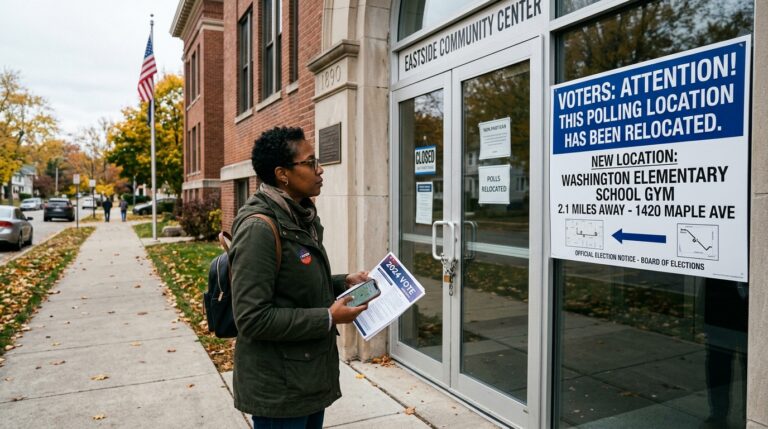
The Most Common Reason: Wrong Polling Place
Sometimes the answer is painfully simple.
You are at the wrong polling place.
USA.gov states that polling places are assigned based on residential address and that voters should go to their assigned location. Your polling place may also change from one election to another.
Suppose you have voted at the same school for years.
This year, the school is no longer your assigned location.
You arrive, stand in line, and discover your name isn’t on the roster.
That can feel like a registration problem.
It may actually be a location problem.
Ask:
“Can you tell me where my assigned polling place is?”
Then verify the information through the official state or local election office.
Don’t Assume Every Polling Place Can Serve Every Voter
This is an important distinction.
A county may have several polling places.
That does not necessarily mean you can choose whichever one is most convenient.
Your assigned polling place is generally determined by your residential address.
USA.gov warns that if you vote somewhere other than your assigned location, you may have to cast a provisional ballot, and the vote may not count depending on the circumstances.
So if someone says:
“You’re at the wrong place.”
that may be legitimate.
But don’t simply accept directions from a stranger.
Ask the poll worker for the official location.
What If Your Name Isn’t on the List?
This is one of the most serious situations in the entire Election-Day emergency series.
If you are at your assigned polling location but your name cannot be found, ask the poll worker to check your information carefully.
You can say:
“I believe I am registered here. Could you please check again?”
If your name still does not appear, ask:
“Am I eligible for a provisional ballot?”
Under the federal provisional-voting framework, a voter who says they are registered but does not appear on the list of eligible voters must generally be offered a provisional ballot in a federal election, subject to specified exceptions.
The exact rules are state-specific.
That is why asking the official question matters.
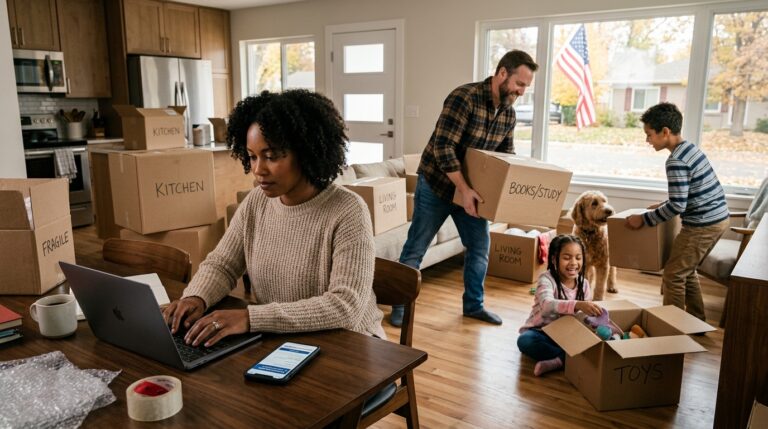
What If You Recently Moved?
A recent move can create a particularly confusing situation.
Maybe you moved:
- Across town.
- To another county.
- To another state.
- Into a temporary residence.
- From a family home to college housing.
Your voter registration may not have followed the move in the way you expected.
USA.gov explains that voters who move permanently to another state generally need to register in the new state, while some states have special provisions for people who move close to an election.
If you are turned away because of an address problem, explain that you recently moved.
Ask what procedure your state provides.
Do not guess.
What If Your Registration Is Marked Inactive?
This is another situation that can surprise voters.
USA.gov explains that states may mark some registrations as inactive under their voter-list maintenance procedures. Depending on state law, an inactive voter may have to take additional steps before voting or may need to cast a provisional ballot.
So if a poll worker says:
“Your registration is inactive.”
don’t interpret that automatically as:
“You cannot vote.”
Ask:
“What do I need to do to vote today?”
The answer depends on your state.
What If You Don’t Have the Required ID?
Voter-ID rules differ across the United States.
USA.gov states that each state sets its own voter-ID requirements. Some states have procedures that allow voters without the required identification to cast a provisional ballot or take another step to establish eligibility.
So if you are turned away because of identification, ask:
“What does this state allow me to do if I don’t have the required ID?”
Don’t accept a vague:
“No ID, no vote.”
Ask for the applicable procedure.
You may have another option.
What If Your Name and Address Don’t Match?
This can happen after moving or changing your name.
For example:
Your voter registration says:
Robert Anderson
Your identification says:
Robert Williams
because you recently changed your name.
Or your registration shows your old address while your current document shows the new one.
USA.gov notes that name and address mismatches can result in provisional voting in some states.
Again, don’t assume the mismatch automatically ends your attempt to vote.
Explain the situation.
Ask what the state’s procedure requires.
What If You Received a Mail Ballot?
Perhaps you requested a mail ballot but decided to vote in person.
You arrive at the polling place and discover that your mail ballot creates a problem.
Don’t panic.
USA.gov explains that states use different procedures. Depending on the state, you may be able to exchange an unused mail ballot, surrender it, return it at the polling place, or vote provisionally.
Tell the poll worker:
“I received a mail ballot but I want to vote in person. What is the procedure here?”
Don’t simply vote twice.
Election officials have systems for determining whether more than one ballot was issued or cast and which ballot can legally be counted.
What If the Poll Worker Says There Is No Other Option?
If you believe you are eligible to vote but are being told you cannot, ask for clarification.
Say:
“Could I speak with the poll supervisor or another election official?”
You are not challenging the authority of the election workers.
You are asking for the appropriate person to resolve a disputed situation.
Then ask:
“Could you explain what the state procedure is for a voter in my situation?”
This is far more useful than arguing about whether the election system is fair.
Ask for a Provisional Ballot When Applicable
If your eligibility cannot be verified at the polling place, provisional voting may be the legal mechanism for resolving the problem.
Federal law requires provisional ballots in specified circumstances, including when a voter says they are registered but does not appear on the list of eligible voters.
A provisional ballot is not a guarantee that your vote will count.
It is a formal way for election officials to review your eligibility.
If you cast one, ask for:
- A receipt or tracking information.
- Instructions for checking its status.
- Any deadline for submitting additional information.
- The name or contact information of the appropriate election office.
Federal law requires jurisdictions subject to the federal provisional-ballot requirements to provide a free way for voters to learn whether their provisional ballot was counted and, if not, why.
What If You Are Still in Line When the Polls Close?
This is one of the most useful rights to remember.
The EAC states that voters generally have the right to vote if they are still in line when the polls close.
So imagine the polling place is scheduled to close at 7:00 p.m.
It is 7:00 p.m.
You are already standing in line.
Do not assume:
“I missed it.”
Stay in line and follow the instructions of election officials.
If someone tells you to leave, ask an authorised poll worker what the official procedure is.
What If the Polling Place Closes Early?
That is different.
If you arrive during posted voting hours and the polling place is unexpectedly closed, ask why.
The polling place may have moved.
There may be a temporary emergency.
There may be an equipment problem.
There may be another authorised explanation.
Don’t rely on rumours from people standing outside.
Contact the local election office or ask the poll worker or election supervisor for official instructions.
If there is a genuine emergency, your immediate safety comes first.
What If There Is a Long Line?
A long line is frustrating.
But frustration does not mean you should leave if you still intend to vote.
If you are already in line when polls close, the EAC says you generally retain the right to vote.
Bring water if permitted.
Stay patient.
Listen for official instructions.
And avoid taking advice from people who are simply guessing about the law.
What If a Poll Worker Tells Everyone to Leave Because of a Machine Problem?
A malfunctioning voting machine does not necessarily mean voting must stop.
Election jurisdictions have procedures for equipment failures and other disruptions.
If one voting machine stops working, ask:
“Are there other voting options available here?”
The EAC explains that voting systems must produce an auditable paper record of ballots cast and that voters must be able to correct a ballot before the system produces the permanent paper record.
The exact backup procedure depends on the jurisdiction and equipment.
If this is your problem, our sixth article in this series will deal specifically with voting-machine failures.
What If You Are Disabled and the Polling Place Cannot Accommodate You?
Federal law provides important protections for voters with disabilities.
The EAC states that voters with disabilities must have the same opportunity to vote privately and independently, and polling places must have accessible voting equipment.
If accessibility is the problem, tell the poll worker.
Ask what accessible voting option is available.
If the polling place itself presents an accessibility barrier, contact the local election office.
USA.gov also advises voters who need disability accommodations to contact their state or local election office.
What If You Need Language Assistance?
Language should not become an unnecessary barrier to understanding the voting process.
Federal voting protections include language-access requirements in certain jurisdictions.
If you cannot understand the instructions you are being given, ask whether language assistance is available.
The EAC lists the right to request language assistance from a poll worker among voter protections.
Do not sign something you do not understand simply because people are waiting behind you.
Ask for help.
What If Someone Is Threatening You?
This is no longer an ordinary election-administration problem.
If someone threatens violence or creates an immediate physical danger, do not confront them.
Move to a safe location and contact local law enforcement.
The Department of Justice states that violence, threats of violence, and intimidation at polling places should be reported first to local police authorities by calling 911.
After an immediate threat has been addressed, possible federal voting-rights violations can also be reported through the Department of Justice’s Civil Rights Division.
Your safety comes first.
What If You Believe You Are Being Intimidated?
Not every disagreement is voter intimidation.
A poll worker enforcing an identification requirement is not automatically intimidating you.
A worker telling you that you are at the wrong polling place is not automatically intimidation.
But conduct intended to frighten, threaten, harass, or discourage someone from voting can raise serious legal concerns.
If you believe intimidation is occurring, tell the polling-place supervisor or election official.
The EAC states that voters have a right not to be intimidated or harassed while voting.
What If Someone Is Following You or Photographing You?
Do not immediately assume that every observer is acting illegally.
Election-observation rules vary by state.
Poll watchers may be authorised to observe certain election activities, but they must comply with applicable rules and cannot violate voter privacy or disrupt the process.
If you are uncomfortable, tell a poll worker.
Ask whether the person’s conduct is permitted.
Again, let the election officials apply the rules.
What If You Are Turned Away Because of a Name or Address Problem?
Ask whether the problem can be resolved at the polling place.
If not, ask whether you qualify for provisional voting or another procedure.
Don’t simply accept:
“Your information doesn’t match, so go home.”
The correct question is:
“What does the law require me to do now?”
USA.gov confirms that some states use provisional ballots for name and address mismatches.
What If You Are Told Your Registration Is Too New?
Registration deadlines vary by state.
Some states allow same-day registration while others do not.
If you registered recently, ask whether your registration has been processed and what procedure applies if it has not.
USA.gov notes that some states allow registration on Election Day and that voters who move close to an election can face different rules depending on the state.
Do not assume that a recent registration automatically means you must leave.
Ask.
What If You Think the Poll Worker Is Wrong?
This is where patience becomes practical.
You may genuinely believe the worker has misunderstood your situation.
Perhaps you brought the wrong document.
Perhaps the worker misunderstood your registration status.
Perhaps you are at the correct location, but your name is missing.
Don’t turn the disagreement into a personal confrontation.
Ask:
“Can I speak with the poll supervisor?”
Then explain your situation clearly.
If you are still denied a regular ballot, ask what other legal procedure is available.
If you cast a provisional ballot, follow the instructions for checking its status.
Document What Happened
If you believe you were improperly turned away, write down the facts as soon as you can.
Record:
- Time: When did the incident occur?
- Location: Which polling place?
- Reason: What reason were you given?
- Person: Who gave the instruction, if you can identify their official role?
- Response: What did you ask?
- Action: Were you offered a provisional ballot?
- Instructions: Were you directed somewhere else?
- Contact: Which election office did you speak with?
- Evidence: Keep any official paperwork or written instructions.
Stick to facts.
Don’t add assumptions about someone’s motives.
A factual record is far more useful than an angry description.
What If You Want to File a Complaint?
Start with your state or local election office.
That is generally the proper place to raise a complaint about polling-place administration.
The Department of Justice also provides a federal channel for reporting possible civil-rights violations involving voting, including discrimination, voter-registration issues, and accessibility problems.
The DOJ’s current 2026 election guidance also directs people to state election offices for state election laws, voting hours, and polling-place information.
If the issue involves immediate violence or threats, contact local police first.
What If You Are Turned Away Because of Discrimination?
Federal law prohibits certain forms of discrimination in voting.
The exact law that applies depends on the facts.
The Department of Justice’s Civil Rights Division accepts complaints concerning possible voting discrimination based on protected characteristics and other federal voting-rights concerns.
If you believe discrimination occurred, document what happened and report it through the appropriate official channel.
Again, stick to facts.
What happened?
What were you told?
What documents or information were involved?
What did the election officials do?
Those details matter.
A Real-Life Example
Imagine Daniel arrives at his polling place at 6:40 p.m.
There is a long line.
At 7:00 p.m., someone announces:
“The polls are closed. Everyone needs to leave.”
Daniel is already in line.
He does not argue.
He asks a poll worker:
“I was already in line before closing time. Am I still allowed to vote?”
The poll worker confirms the procedure and keeps the line moving.
Now change the story.
Daniel reaches the front of the line and is told his name is not on the list.
He says:
“I believe I’m registered here. Could you please check?”
The worker checks again.
Daniel is at the correct location, but his registration cannot be verified.
He asks:
“What are my options?”
The worker explains the applicable provisional-ballot procedure.
Daniel completes the required paperwork, receives information about checking the ballot, and keeps his receipt.
The lesson is simple:
Don’t let the first “no” end the conversation.
Find out what the “no” actually means.
What You Should Never Do
When you are frustrated, the temptation is to make the situation bigger.
Don’t.
Avoid:
- Threatening: Never threaten election workers or other voters.
- Fighting: Do not physically confront anyone.
- Destroying: Never damage voting equipment or election materials.
- Blocking: Do not obstruct voters or poll workers.
- Shouting: Keep disagreements as calm as possible.
- Guessing: Don’t rely on rumours about election law.
- Leaving Too Quickly: Ask what official options are available before leaving.
- Ignoring Instructions: If you receive provisional-ballot paperwork, read it carefully.
Your objective is simple:
Get your voting problem handled through the proper process.
The Election-Day “Don’t Leave Yet” Checklist
If you are told you cannot vote, pause.
Ask these questions:
1. Why can’t I vote?
Get the specific reason.
2. Am I at the correct polling place?
If not, ask for the official location.
3. Can you check my registration again?
Especially if you believe you are registered.
4. Is this an ID problem?
If so, ask what your state’s alternative procedure is.
5. Can I cast a provisional ballot?
Ask when your eligibility cannot be confirmed and the procedure may apply.
6. Is there a poll supervisor I can speak with?
Ask if you believe the situation has not been resolved.
7. How do I contact the election office?
Save the information.
8. If I am turned away, how do I report the problem?
Get the appropriate official channel.
These questions can keep a confusing situation from becoming a missed vote.
The Bottom Line
Being told “You can’t vote” is serious.
But don’t assume the first statement you hear is the final answer.
Find out why.
Make sure you are at the correct polling place.
Ask the poll worker to check your registration.
Explain recent moves, name changes, or identification issues.
Ask whether provisional voting or another state-authorised procedure is available.
If you are already in line when polls close, generally stay in line and follow the instructions of election officials.
If you believe you are being intimidated, harassed, discriminated against, or otherwise prevented from exercising your voting rights, document the facts and report the matter through the appropriate election authorities. The Department of Justice provides official channels for reporting possible federal voting-rights violations.
And if someone tells you to leave, remember:
Before you walk away, ask what the law says you should do next.
Sometimes the answer is another polling place.
Sometimes it is a provisional ballot.
Sometimes it is a supervisor.
Sometimes it is an election office.
And sometimes, after checking everything, the official answer really is that you cannot vote in that particular way.
The important thing is that you know why, you understand your available options, and you have received the answer from the people responsible for administering the election—not from rumor, pressure, or guesswork.
Frequently Asked Questions
1. What should I do if I am turned away from the polls?
First ask why you are being turned away. Confirm that you are at the correct polling place and ask the poll worker to check your registration. If there is an unresolved eligibility issue, ask what procedure is available, including whether you can cast a provisional ballot.
2. Can I still vote if I am already in line when the polls close?
Generally, yes. The EAC lists the right to vote if you are still in line when the polls close among federal voter protections. Stay in line and follow the instructions of election officials.
3. What if my name isn’t on the voter list?
Ask the poll worker to check your registration and confirm that you are at the correct polling place. Under the federal provisional-voting framework, voters who claim to be registered but are not on the list may generally be offered a provisional ballot, subject to applicable exceptions and state procedures.
4. What if I am turned away because I don’t have the required ID?
Voter-ID rules vary by state. Ask the poll worker what alternative procedure your state provides. In some states, voters may be able to use a provisional ballot or provide identification later.
5. What should I do if I believe I am being intimidated at the polling place?
Tell a poll worker or election supervisor immediately. Do not physically confront the person. If there is a threat of violence or an immediate safety emergency, contact local law enforcement by calling 911. Possible federal voting-rights violations can also be reported to the Department of Justice.
6. Who should I contact if I believe I was improperly denied the opportunity to vote?
Start with your state or local election office, which administers the election and can explain the applicable state procedures. If you believe federal voting-rights laws may have been violated, the Department of Justice Civil Rights Division also accepts reports of possible violations.
References
- U.S. Election Assistance Commission — Voter FAQs
- U.S. Election Assistance Commission — Overview of Federal Election Laws
- USA.gov — Find Your Polling Place
- USA.gov — Voting on Election Day
- USA.gov — Confirm Your Voter Registration
- USA.gov — Voter ID Requirements
- USA.gov — Absentee Voting and Voting by Mail
- U.S. Department of Justice — Voting Resources
- U.S. Department of Justice — Voting Section
Author
Maj Hamid Mahmood (Retired) holds an MA in Political Science, LLB, and PGD (HRM). His military background, academic training in political science, and legal education provide a multidisciplinary perspective for examining international conflicts, security affairs, political developments, and the human consequences of war.
Image Prompt
Hero image prompt:
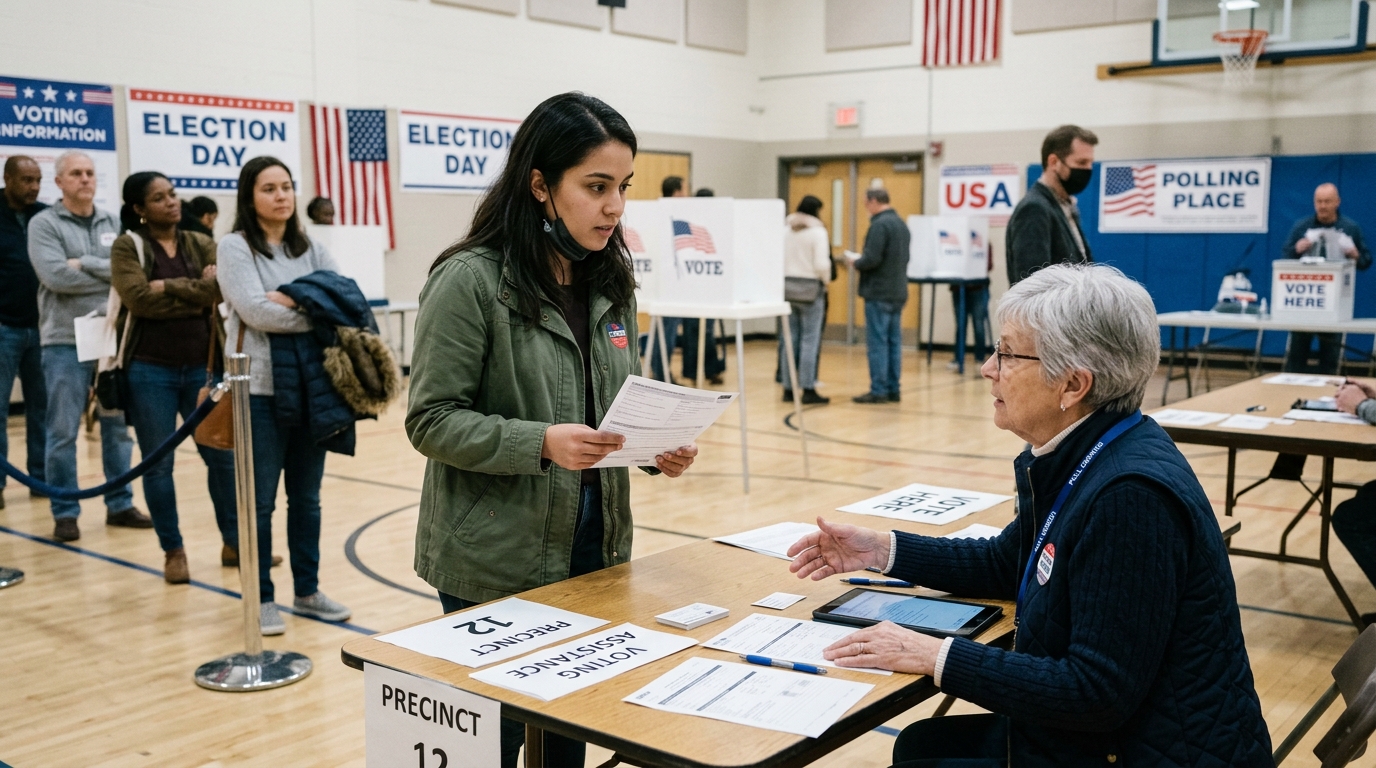
Create a photorealistic cinematic editorial photograph inside an American polling place on Election Day, showing a voter calmly speaking with a senior poll worker after being stopped at the voting desk, the voter holding ordinary election paperwork while the poll worker explains the next official procedure, other voters waiting respectfully in the background, realistic community polling location, documentary journalism photography, natural human expressions, subtle concern rather than confrontation, authentic American election environment, realistic lighting, highly detailed, 16:9 landscape composition, no readable personal information, no candidate names, no campaign logos, no political party symbols.
Alt text:
Voter speaking with a poll worker after being turned away from the polling process on Election Day.
SEO Metadata
SEO Title: What Should I Do If I’m Turned Away From the Polls? 2026 Guide
Meta Description: Turned away from the polls on Election Day? Learn what to ask, when provisional voting may apply, how to document the problem, and where to get official help.
Focus Keyphrase: turned away from the polls
Related Keyphrases:
- What if I am turned away from the polls
- Turned away from polling place
- Cannot vote on Election Day
- Election Day voting problems
- Provisional ballot
- Polling place problems
- Voter rights
- Voter registration problem
- What to do if denied voting
Suggested Slug:
turned-away-from-polls-2026
Suggested Tags:
2026 U.S. Elections, Election Day, Voting Rights, Polling Place, Provisional Ballot, Voter Registration, Voter ID, U.S. Voting
Natural Key Phrase:
What should I do if I’m turned away from the polls?