What If My Polling Place Is Closed or Has Moved? The 2026 U.S. Guide
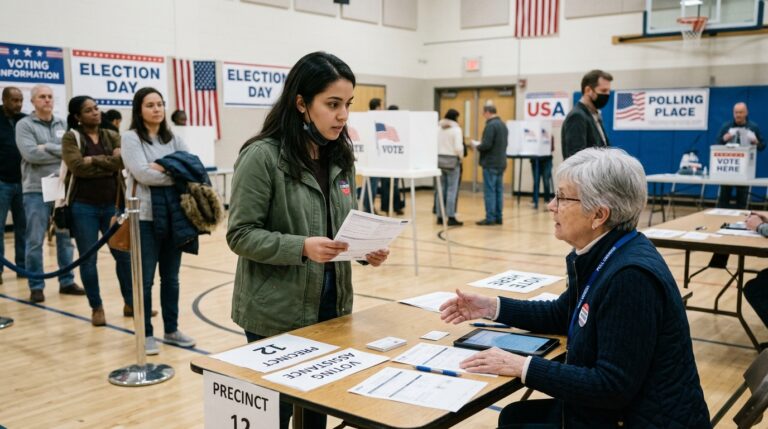
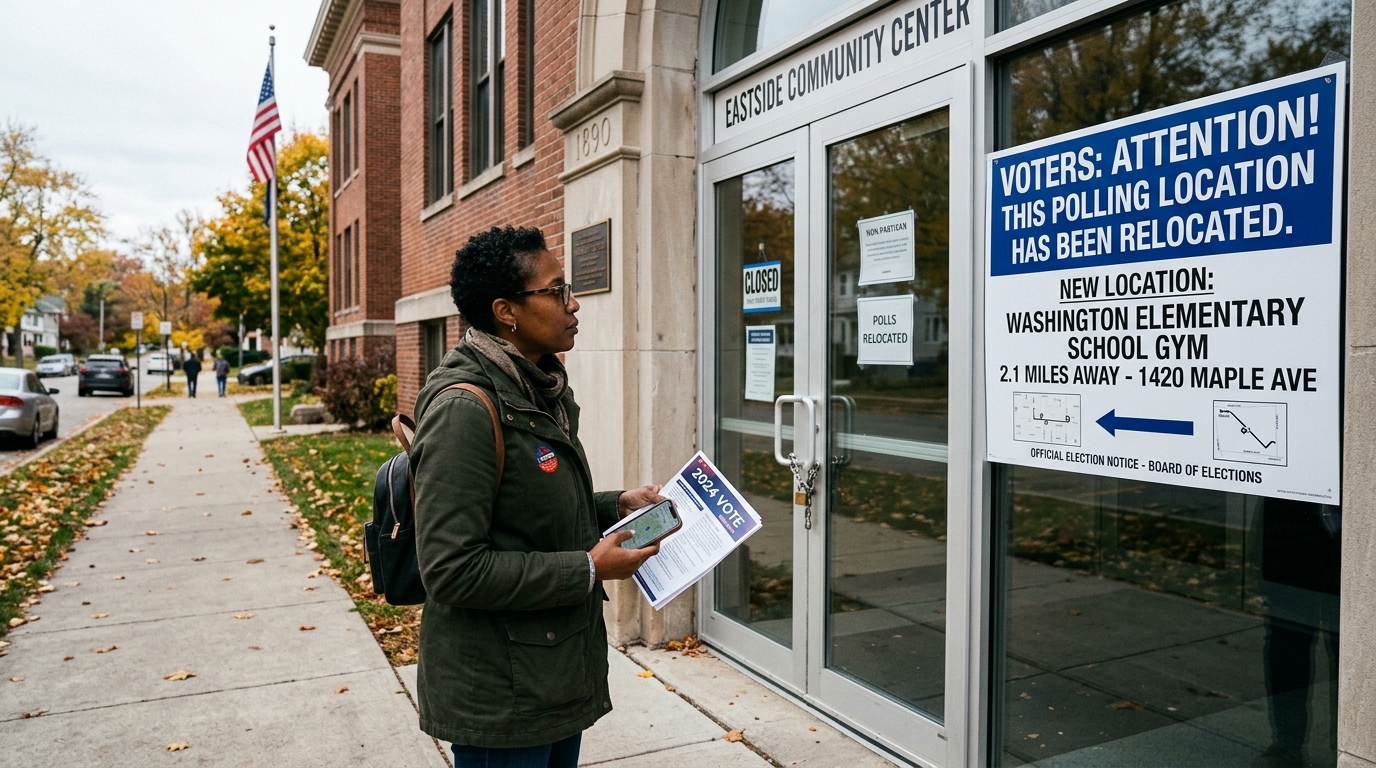
What If My Polling Place Is Closed or Has Moved? You arrive at your polling place on Election Day. The parking lot looks familiar. The building looks familiar. But the doors are locked.
Or worse, there is a handwritten sign saying: “Voting has moved.”
Now what?
Do you simply drive somewhere else and hope you guessed correctly?
No.
A polling place can change between elections. It can also face an unexpected interruption because of weather, flooding, fire, a power failure, building damage, security concerns, or another emergency. The U.S. Election Assistance Commission specifically maintains guidance for election officials dealing with delayed openings and temporary polling-place shutdowns.
The important thing is not to panic — and not to rely on a rumour, social-media post, or a helpful-looking stranger in the parking lot.
Your first job is to find out where your assigned polling place is now and what election officials are telling voters to do.
Your Questions About Voting in the 2026 Midterm Elections, Answered
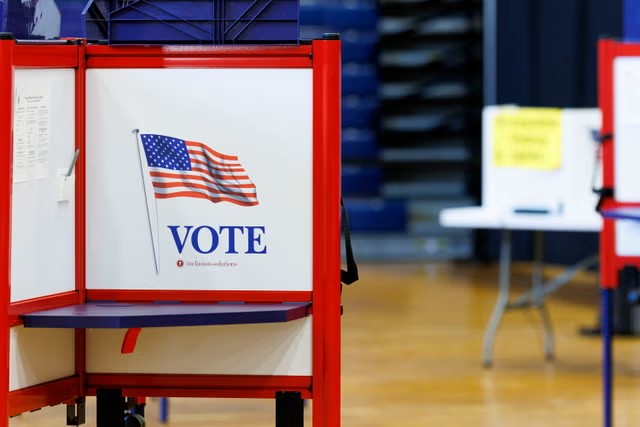
Election Day is Nov. 3, 2026, in the United States. Held midway through each four-year presidential term, midterm elections give voters a chance to choose local representatives, weigh in on state issues, and determine which party controls Congress.
Read More: Congress Is Headed for a Massive Turnover
This year’s midterms will take place among unique challenges to the democratic process itself.
The Trump Administration has attempted to restrict mail-in voting and gather voter data from several states. There have also been concerns raised about the presence of federal agents at polling stations, which President Donald Trump has not categorically ruled out.
Why Can a Polling Place Change?
Polling places are not necessarily permanent.
A school, community centre, government building, church, or other public facility may be used in one election and replaced by another location later.
USA.gov specifically warns that polling places may change from one election to the next. Your assigned location is generally determined by your residential address.
Changes can happen for ordinary administrative reasons:
- Building Availability: The usual facility may no longer be available.
- Construction: Repairs or renovations may make a building unsuitable.
- Election Administration: Officials may redraw or reorganize voting locations.
- Accessibility: A different facility may be needed to provide better access.
- Emergency Conditions: Flooding, storms, fire, power problems, or other emergencies can disrupt a location.
- Security Concerns: Officials may temporarily relocate voting because of a safety issue.
So if the building you used in 2024 or another election is no longer your polling place in 2026, that does not automatically mean something has gone wrong.
It may simply be a legitimate location change.
The First Rule: Verify Before You Move
This is where many voters can make a frustrating situation worse.
You arrive at your old polling place. It is closed.
You see another polling location two miles away.
You drive there.
Unfortunately, your name may not be on that location’s voter roster.
USA.gov says voters should generally vote at their assigned polling place and warns that a voter’s name will not normally appear on the roster at another location. Voting somewhere else can result in a provisional ballot, and depending on state rules, that ballot may not count.
So don’t play “polling-place roulette.”
Instead:
- Check your assigned polling place.
- Contact your state or local election office if the information is unclear.
- Follow official instructions about a relocation.
- Do not assume the nearest polling place is automatically yours.
The official election office is your source of truth.
What If the Polling Place Has Moved?
This is probably the simplest emergency to solve, provided you verify the new location.
Suppose your registration record says:
“Lincoln Elementary School.”
But you arrive and see a notice saying:
“Voting relocated to Lincoln Community Center.”
Don’t assume the sign is fake.
Look for confirmation from the local election authority.
You can also check your registration information and polling location through your state’s official election website. USA.gov directs voters to their state election website for registration and polling-place information.
Before Leaving
Write down or photograph the official relocation notice if it is safe to do so.
Then verify:
- New Address
- Polling Hours
- Whether Your Precinct Is Served There
- Whether the Change Applies to Today’s Election
- Any Special Instructions for Voters
If election officials have officially relocated your polling place, follow their instructions rather than returning to the old building.
What If the Building Is Completely Closed?
This is different.
You arrive during voting hours.
The doors are locked.
There are no election workers outside.
There is no clear relocation notice.
Now you need information quickly.
The EAC has specifically studied polling-place interruptions, including delayed openings and temporary shutdowns. Its 2026 election-administration resources recognise these as situations officials may need to manage.
Do These Things Immediately
Check the Entrance: Look for an official notice explaining the problem.
Check Official Election Information: Use your state or local election office’s website or election-day contact number.
Ask Nearby Officials: If election workers, law enforcement, building staff, or authorized election personnel are present, ask where voters should go.
Do Not Follow Random Instructions: A stranger saying, “They’re voting over there,” is not the same thing as an official election instruction.
Record the Time: Note when you arrived and what you found.
Keep Evidence: If there is an official relocation notice, record the information without photographing other voters or private voter information.
The goal is simple:
Find the official solution before giving up.
What If the Polling Place Is Temporarily Shut Down?
A temporary shutdown does not necessarily mean voting has ended.
A polling place could experience:
- Power Failure
- Severe Weather
- Flooding
- Fire
- Building Damage
- Security Incident
- Equipment Problems
- Medical Emergency
- Utility Failure
- Other Unexpected Disruptions
The EAC’s disaster-response guidance says voters affected by disasters should look to their state election office for specific instructions and accommodations. The agency also identifies measures election officials can use during emergencies, including temporary polling locations, mobile polling units, additional voting equipment, security measures, and other election-continuity measures.
That means an emergency can change the physical voting arrangement without necessarily ending the opportunity to vote.
What If Officials Move Voting to Another Location?
Follow the official instructions.
But don’t assume that any replacement location will work.
There is an important distinction between:
“The election office officially moved your polling place here.”
and
“This building is closer, so I’ll vote here.”
The first may be an authorised relocation.
The second may put you at the wrong polling location.
If you are unsure, ask:
“Is this the official replacement polling location for my precinct?”
That one question can save you a great deal of trouble.
What If I Am Told to Go Somewhere Else?
Ask who is giving you the instruction.
There is a difference between:
- A Poll Worker: Someone officially working at the polling location.
- An Election Official: Someone responsible for administering the election.
- A Poll Watcher or Observer: Someone who may be authorised to observe election procedures but does not necessarily control where voters vote.
- Another Voter: Someone who may simply be trying to help — or may have incorrect information.
Don’t argue.
Don’t become confrontational.
Ask for the polling-place supervisor or election official.
If necessary, contact your local election office directly.
The Department of Justice also directs voters to USA.gov’s state election-office directory for state election laws, voting hours, and polling-place information.
What If the New Location Is Far Away?
This can become a serious practical problem.
Imagine an elderly voter who walks to the usual polling place, only to discover that voting has been moved several miles away.
Or a voter without a car.
Or someone who depends on public transportation.
Or a voter with a disability.
A location change can therefore create more than an inconvenience.
It can create an access problem.
The EAC’s disaster-response guidance recognises transportation, accessibility, temporary polling locations, and other emergency measures as part of election continuity.
If the new location creates a problem, tell the election office immediately.
Do not assume:
“It’s too far, so I guess I can’t vote.”
Ask what alternative procedures are available under your state’s rules.
What If the New Polling Place Is Not Accessible?
This matters especially for voters with disabilities.
Federal law requires political subdivisions conducting federal elections to provide accessible polling places for voters with disabilities and older voters, subject to limited statutory exceptions. Where an inaccessible polling location cannot be made accessible, federal law provides for an accessible alternative or another means of voting under applicable procedures.
So if you arrive and encounter:
- Stairs Without an Accessible Route
- A Blocked Entrance
- No Accessible Voting Area
- A Doorway You Cannot Use
- Other Physical Barriers
Tell the poll worker or election supervisor.
You can also contact the local election office.
The Department of Justice maintains voting resources for reporting accessibility problems and other possible civil-rights violations.
Don’t quietly go home because the building isn’t usable.
Ask what accommodation or alternative procedure is available.
What If the Polling Place Is Closed Because of an Emergency?
This is where timing matters.
A storm does not necessarily cancel an election.
A power failure does not necessarily cancel an election.
A temporary closure does not necessarily mean voters have lost their opportunity to vote.
Election officials may have emergency procedures for keeping voting available.
The EAC’s disaster-response guidance specifically discusses emergency measures such as temporary polling places, mobile polling units, replacement equipment, additional mail ballots where legally appropriate, transportation of voting equipment, and accessibility measures.
But the exact procedure depends on the state and the circumstances.
So don’t guess.
Check official instructions.
What If You Are Still in Line When the Polling Place Closes?
Do not automatically leave simply because the posted closing time has arrived.
Election rules can protect voters who are already waiting in line, although the precise procedures vary by jurisdiction.
The Election Assistance Commission’s voter guidance states that voters who are in line when polls close should remain in line and that voters have the right to vote if they are in line when polls close.
If an emergency interruption occurs, however, officials may provide specific instructions.
The practical rule is:
Stay in line unless an authorised election official tells you what to do next.
If someone tells voters to leave, ask for clarification from the poll worker or election supervisor.
What If a Court Extends Voting Hours?
Sometimes a court order or other legally authorised action can affect polling hours.
Federal election law includes provisions concerning court orders that extend polling hours and provisional ballots.
This is another reason not to rely on social media.
You may see posts claiming:
“Voting has been extended until 10 p.m. everywhere!”
That could be completely wrong.
Election rules are not one-size-fits-all.
Check the official state or local election authority for your jurisdiction.
What If the Closure Is Caused by a Natural Disaster?
This deserves special attention in 2026 because emergencies can happen quickly.
Floods.
Wildfires.
Hurricanes.
Tornadoes.
Severe winter weather.
Earthquakes.
Major infrastructure failures.
The EAC has a dedicated disaster-recovery resource for voters and election officials. It advises voters affected by disasters to consult their state election office for specific information about voting and emergency accommodations.
If you have been displaced by an emergency, contact election officials rather than assuming your normal polling arrangement still applies.
Your temporary physical location and your legal voting residence are not necessarily the same thing.
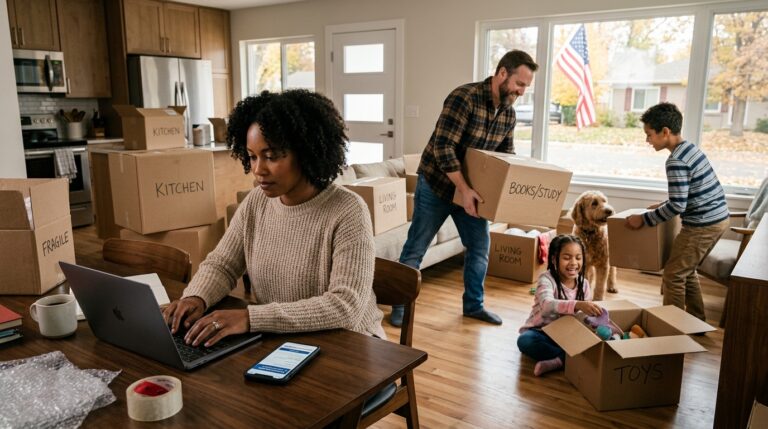
What If My Polling Place Moved Because I Moved?
That’s a different situation.
If you moved within the same state, you generally need to update your voter registration.
If you permanently move to another state, you generally need to register in the new state.
USA.gov explains that voters who move should update their registration because their new address may result in a different assigned polling place.
This is why checking your registration before Election Day matters.
A voter may think:
“The polling place moved.”
When the real issue is:
“My registration address changed, so I have been assigned somewhere else.”
The solution is different.
What If My Registration Still Shows the Old Polling Place?
Don’t assume the online information is wrong.
Election systems can have different update schedules.
Contact the election office and ask for clarification.
Have your:
- Full Name
- Current Address
- Previous Address, If Relevant
- Date of Birth, If Required for Verification
- Election Name or Date
Available when contacting officials.
Do not post personal voter information publicly on social media.
And never send sensitive information to someone who randomly contacts you claiming to be an election worker.
What If Someone Posts a “New Polling Place” on Social Media?
Be careful.
A Facebook post can be wrong.
A group chat can be wrong.
A viral TikTok can be wrong.
Even a well-intentioned neighbour can have outdated information.
Election information should come from an official election authority.
USA.gov directs voters to state and local election offices for polling-place information.
A good rule:
Don’t trust the loudest source. Trust the official source.
What If the Polling Place Has No Election Workers?
If you arrive during voting hours and there appears to be no election staff, don’t simply leave.
Look for official instructions.
Contact the election office.
If there is a supervisor or authorised election official nearby, ask for assistance.
Document the time and location.
The EAC’s polling-place interruption work exists precisely because delayed openings and temporary shutdowns are recognised operational problems that election officials may have to manage.
That doesn’t mean every closed door is an election violation.
It means you should seek an official explanation before concluding that voting is unavailable.
What If the Polling Place Is Closed Because of a Security Threat?
Your safety comes first.
Do not force your way inside.
Do not confront people creating a security problem.
Do not put yourself in danger to prove a point.
If there is an immediate threat or violence, contact local law enforcement or 911.
The Department of Justice specifically instructs voters to report violence, threats of violence, or intimidation at polling places first to local police authorities by calling 911.
After the immediate danger is addressed, election officials can provide information about voting arrangements.
What If I Believe the Closure Prevented Me From Voting?
Document facts, not assumptions.
Write down:
- Exact Location
- Date
- Time You Arrived
- Posted Voting Hours
- What You Saw
- What Officials Told You
- Whether a Relocation Notice Was Posted
- Where You Were Directed
- Names or Roles of Officials, If Known
- Any Official Election-Office Instructions
Avoid photographing ballots, voter records, or other people’s private information.
If you believe you experienced a voting-rights violation, you can report possible civil-rights violations through the Department of Justice’s voting resources. The DOJ also provides links for finding state election offices and reporting election-related issues.
A Real-Life Example
Imagine Maria arrives at her usual elementary school at 8:30 a.m.
The doors are locked.
A printed notice on the door says voting has moved because of a building problem.
Maria sees another school nearby and is tempted to go there.
Instead, she checks the county election office’s official website.
The county confirms the relocation and provides the new address.
Maria goes there.
At check-in, her registration is found, and she votes.
The difference?
She didn’t guess.
She verified.
That may sound boring.
On Election Day, boring is good.
What If You Are Told to Leave the New Location?
Don’t immediately walk away.
Ask:
“Is this not my assigned polling place?”
Then ask:
“Where should I vote?”
If the answer is unclear, ask for the poll worker’s supervisor.
If you believe your eligibility or registration is being questioned, ask whether a provisional ballot is available under your state’s rules.
A provisional ballot is not automatically a guarantee that the vote will count. But when permitted by law, it can provide a formal way for an eligibility question to be reviewed.
Problems at your polling place
Here are potential vote challenges and ways to overcome them.
Possibility No. 1: Out-of-order polling machines.
If you’re asked to leave because of malfunctioning machines, don’t. Instead, ask for a paper ballot.
Possibility No. 2: You’re in line and officials announce the polls have closed.
If you’re in line at the polling location before it closes, don’t let them turn you away at closing time if you haven’t voted. You have the legal right to vote under those circumstances, so stay in line and wait to cast your ballot.
Possibility No. 3: You’re not on the registered voters list.
If you’re told you can’t vote because your name is not on the voter roster, ask the poll site worker to check again and to check what’s called the list of supplemental voters. If they still can’t find your name, ask the poll worker to verify that you’re at the right location.
Possibility No. 4: Someone claims you shouldn’t be allowed to vote.
If your voting eligibility remains challenged after ensuring you’re at the right polling location, ask to cast a provisional ballot, which is available in every state except Idaho and Minnesota. You can find details about your particular state’s provisional ballot rules here.
Your 10-Minute Emergency Plan
If you arrive and your polling place is closed or appears to have moved:
Minute 1: Look Around
Check the entrance for official notices.
Minutes 2–3: Check Official Information
Use your state or local election office’s website or election-day contact number.
Minutes 4–5: Confirm the New Location
Make sure the location is officially assigned for your precinct or voters.
Minutes 6–7: Ask Election Officials
If workers are present, ask where voters should go.
Minutes 8–9: Document the Problem
Record the time, location, instructions, and official information.
Minute 10: Escalate If Necessary
Contact the election office or appropriate authorities if you cannot obtain a clear answer.
The point is not to become an election-law expert in ten minutes.
The point is to avoid giving up because of a locked door.
What You Should Carry on Election Day
Before leaving home, consider having:
- Voter Registration Information
- Polling Place Information
- Required ID, If Your State Requires It
- Election Office Phone Number
- A Charged Phone
- Any Legally Required Documents
- Information About Disability Accommodation, If Needed
- A Small Notebook or Phone Notes App
You don’t necessarily need every item to vote.
But having the information can make an unexpected problem much easier to solve.
The “Don’t Leave Yet” Checklist
If your polling place is closed or moved:
- Check the Door: Look for an official notice.
- Verify Online: Check your state or local election office.
- Confirm Your Precinct: Make sure the new location serves you.
- Ask Election Workers: Seek the supervisor if necessary.
- Don’t Guess: Don’t simply choose another polling place.
- Stay Calm: A temporary closure does not necessarily mean voting has ended.
- Document Facts: Record time, location, and official instructions.
- Ask About Alternatives: If you have an eligibility or access problem, ask what procedures apply.
- Protect Privacy: Don’t photograph voter records or share personal information.
- Report Serious Problems: Use the appropriate election or civil-rights channels.
The Bigger Lesson
Voting systems are enormous logistical operations.
Thousands of polling places.
Hundreds of thousands of election workers.
Millions of voters.
Buildings fail.
Power goes out.
Storms arrive.
Addresses change.
Equipment occasionally stops cooperating.
That does not automatically mean the election process has collapsed.
The real question is:
What are election officials doing to keep voters able to participate?
The EAC’s current resources show that election administrators actively plan for interruptions, emergencies, delayed openings, temporary shutdowns, accessibility problems, and disaster recovery.
For voters, the lesson is refreshingly simple:
Verify. Ask. Document. Don’t give up too quickly.
A locked polling-place door is a problem.
It is not necessarily the end of your voting opportunity.
https://mrpo.pk/2026-us-midterm-elections/
Frequently Asked Questions
1. Can my polling place change before Election Day?
Yes. Polling places can change from one election to another. Check your state or local election office before Election Day to confirm your assigned location.
2. Can I vote at another polling place if mine is closed?
Not automatically. Your assigned polling place is generally tied to your residential address and election precinct. If your location has officially been relocated, follow the election authority’s instructions. Simply going to another location may result in a provisional ballot or may not allow your vote to count.
3. What should I do if I arrive and my polling place is locked?
Look for an official notice, check your state or local election office, and contact election officials. Record the time and circumstances. Do not simply leave without finding out whether voting has been relocated or temporarily interrupted.
4. What if my polling place is closed because of a storm or disaster?
Contact your state or local election office for emergency instructions. Election officials may use measures such as temporary polling locations or other voting arrangements depending on the circumstances and state law.
5. What if the new polling place is inaccessible to me because of a disability?
Tell the poll worker or election office. Federal law protects accessibility for voters with disabilities and older voters, with specific procedures and limited exceptions. Alternative arrangements may be available depending on the circumstances.
6. What if I believe the polling-place closure violated my voting rights?
Document what happened and contact your state or local election office. You can also report possible federal civil-rights violations through the Department of Justice’s voting resources. If there is an immediate threat, violence, or intimidation, contact local law enforcement or 911 first.
References
- USA.gov: Find Your Polling Place
- USA.gov: Confirm Your Voter Registration
- USA.gov: Voting on Election Day
- U.S. Election Assistance Commission: Polling Place Interruptions Simulations
- U.S. Election Assistance Commission: Disaster Recovery & Response
- U.S. Election Assistance Commission: Election Processes Simulations
- U.S. Department of Justice: Voting Resources
- U.S. Department of Justice: Federal Polling-Place Accessibility Requirements
Author
Maj Hamid Mahmood (Retired) holds an MA in Political Science, LLB, and PGD (HRM). His military background, academic training in political science, and legal education provide a multidisciplinary perspective for examining international conflicts, security affairs, political developments, and the human consequences of war.