Pakistan’s Debt Crisis: Who Borrowed the Money, Who Benefited and Who Pays?
Pakistan’s Debt Crisis: An investigation into Pakistan’s mounting public debt, the politics of borrowing, the interests behind public expenditure, repeated IMF assistance and the financial burden ultimately carried by ordinary citizens.
https://mrpo.pk/india-reduced-poverty-dramatically/
Introduction: A Country Borrowing to Keep Its Financial System Afloat
Imagine a household that repeatedly borrows money to pay instalments and interest on previous loans. Its outstanding liabilities keep growing, an increasing share of its income goes towards repayments, and less remains for education, healthcare, improving the house or investing in a business.
The family may continue meeting its immediate obligations for years. But a difficult question eventually emerges: how long can it survive by borrowing without improving its capacity to earn?
Pakistan faces a comparable economic challenge, although the finances of a sovereign country are considerably more complicated than those of a household.
For decades, successive governments have relied on domestic and international borrowing to finance budget deficits, repay maturing obligations, maintain foreign exchange reserves, support government operations and undertake development projects.
Borrowing itself is not evidence of economic failure. Countries across the world borrow to build infrastructure, finance development, respond to emergencies and spread the cost of long-term investments over several generations.
The real problem begins when borrowing becomes a permanent substitute for generating sufficient national income, collecting fair taxes, developing competitive industries and creating productive employment.
Pakistan’s debt figures reveal the scale of this challenge.
According to the Ministry of Finance’s Annual Borrowing Plan FY2027, total public debt reached approximately Rs86.7 trillion at the end of June 2026. This included Rs59.4 trillion in domestic debt and Rs27.3 trillion in external public debt. Public debt had increased from Rs49.3 trillion in June 2022, a nominal rise of approximately 76% over four years.
The figures deserve careful interpretation. A 76% increase in nominal debt does not mean that the real economic burden increased by exactly the same percentage. Inflation, economic growth, exchange-rate movements and changes in the composition of debt all matter.
Nevertheless, the scale of borrowing raises fundamental questions.
Who authorised these loans? What purposes did they serve? Which projects and institutions benefited? Did the money create lasting economic value? Why does the country continue to require substantial refinancing and external financial assistance?
And perhaps most importantly, why do ordinary Pakistanis repeatedly bear the consequences of decisions over which they have little direct control?
These are the questions this investigation seeks to examine.
1. Understanding Pakistan’s Debt: What Does the Country Actually Owe?
Public discussions often treat national debt as one enormous figure. In reality, several categories are involved, and confusing them can lead to misleading conclusions.
Domestic public debt
This is money borrowed by the federal government from sources within Pakistan.
The principal instruments include:
-
Market Treasury Bills.
-
Pakistan Investment Bonds.
-
Government Ijara Sukuk.
-
National Savings instruments.
-
Other government securities.
Commercial banks, financial institutions, institutional investors and individual savers hold these instruments.
Domestic borrowing allows the government to obtain rupees without immediately creating an equivalent foreign currency repayment obligation. However, it carries interest or contractual return costs and requires repayment of principal.
External public debt
This is borrowing by the government from foreign sources, including:
-
International Monetary Fund.
-
World Bank.
-
Asian Development Bank.
-
Islamic Development Bank.
-
Foreign governments and bilateral development partners.
-
International commercial banks.
-
International bond investors.
Unlike domestic rupee borrowing, external debt creates obligations in foreign currencies or under foreign currency-linked arrangements. Exchange-rate depreciation can therefore increase its rupee cost.
Publicly guaranteed debt
The government also guarantees certain borrowing by public-sector enterprises and other eligible entities.
A guarantee is not necessarily an immediate government borrowing. It is a commitment that can become a financial liability if the borrower fails to meet its obligations.
External debt and liabilities
This is a broader statistical category covering external obligations across different sectors, including government, public-sector enterprises, banks and private borrowers.
It must not be confused with the central government’s external public debt.
For example, a Finance Division clarification published in February 2026 reported total external debt and liabilities of approximately $138 billion, while external public debt was approximately $92 billion at the time. These figures cover different institutional categories and reporting periods. They should not be compared directly with the June 2026 rupee-denominated debt figures without accounting for dates and definitions.
This distinction matters because claims that Pakistan owes approximately $300 billion internationally can be misleading. The dollar equivalent of total public debt is not the same thing as external debt.
A credible discussion of national debt must always identify the reporting date, currency, statistical definition and institutions covered.
2. The Numbers Behind Pakistan’s Debt Burden
The Ministry of Finance’s FY2027 borrowing plan provides the following picture:
| Debt indicator | Position |
|---|---|
| Total public debt, June 2026 | Rs86.7 trillion |
| Domestic public debt | Rs59.4 trillion |
| External public debt | Rs27.3 trillion |
| Public and publicly guaranteed debt | Approximately Rs91 trillion |
| Public debt, June 2022 | Rs49.3 trillion |
| Nominal increase over four years | Approximately 76% |
The government also reported that the public-debt-to-GDP ratio declined from approximately 70.6% to 68.3%.
This is an improvement worth acknowledging. However, it does not automatically mean that Pakistan’s debt has become affordable.
Nominal GDP can increase because of inflation as well as real economic growth. A country may therefore record a lower debt-to-GDP ratio without experiencing an equivalent improvement in its productive capacity or ability to generate foreign exchange.
The other important indicator is the government’s financing requirement.
For FY2027, gross financing needs are projected at approximately Rs28.65 trillion, equivalent to around 20% of projected GDP.
These comprise:
-
Rs 7.02 trillion for the projected federal fiscal deficit.
-
Rs 17.10 trillion for domestic debt maturities.
-
Rs 4.53 trillion for external debt repayments.
These are financing requirements, not Rs 28.65 trillion of entirely new expenditure. Much of the amount will replace obligations reaching maturity.
This distinction is essential.
A government may borrow a substantial amount in one year simply to replace maturing loans. Such borrowing does not necessarily represent new development spending or an equivalent increase in the outstanding debt.
The more important question is whether the country can refinance its obligations at reasonable costs without becoming increasingly dependent on the willingness of creditors to extend financing.
3. Who Borrows, From Whom and Under Whose Authority?
National debt is accumulated through government decisions, institutional arrangements and financial agreements. It does not arise automatically.
Federal governments approve budgets and borrowing requirements through constitutional and statutory processes. The Ministry of Finance and its Debt Management Office manage much of the government’s borrowing strategy, while the State Bank of Pakistan acts as banker and fiscal agent in relevant government debt operations.
Parliament has a central responsibility for scrutinising budgets, taxation and public expenditure.
Different governments have borrowed under different economic circumstances. Some financing has supported development, while other borrowing has met budget deficits, debt repayments, emergency requirements and external financing gaps.
However, an important accountability question remains largely absent from public debate:
How clearly can citizens trace major borrowing decisions from approval to expenditure and final results?
A government should disclose:
-
The purpose for which borrowing was authorised.
-
The institution responsible for spending it.
-
The project or programme receiving the funds.
-
The expected financial and social returns.
-
The actual expenditure and completion status.
-
The future repayment obligations.
Without this information, the public can know how much the country owes without knowing whether it received reasonable value for the money. This is not an argument against borrowing. It is an argument for making borrowing decisions accountable.
4. Where Did the Borrowed Money Go?
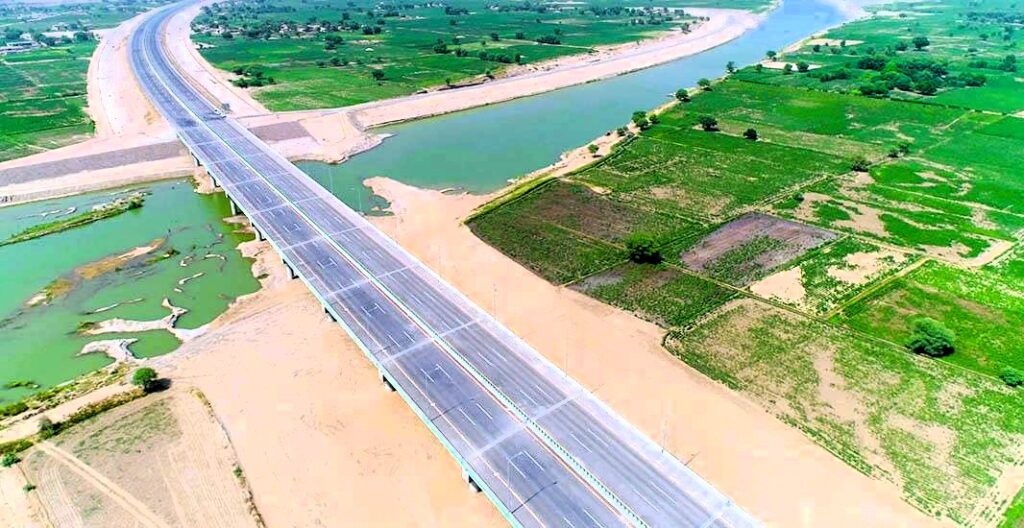
Where Did the Borrowed Money Go? Peshawar-Karachi Motorway (Multan-Sukkur Section) Infrastructure investment can create long-term economic value when projects are properly selected, completed and maintained.This is perhaps the most important question in Pakistan’s debt debate.
Public borrowing can be economically justified when it finances investments that improve the country’s capacity to produce, earn, trade and provide essential services.
Examples include:
-
Roads, railways, ports and transport networks.
-
Electricity generation and transmission.
-
Dams, irrigation and water storage.
-
Schools, hospitals and technical institutions.
-
Industrial infrastructure.
-
Climate-resilient development.
-
Productive agricultural and export-related investment.
A well-designed investment can benefit the country for decades. However, not every expenditure creates a lasting economic asset. A substantial part of government financing also supports recurring expenditure, including salaries, pensions, subsidies, administrative operations and interest payments.
When revenue falls short of expenditure, the government must finance the gap. Pakistan’s borrowing requirements have consequently been influenced by several interconnected pressures.
Persistent fiscal deficits
When government expenditure exceeds revenue, additional financing is required. Repeated deficits increase dependence on borrowing.
Debt servicing
Interest payments consume public resources and create continuing financing requirements.
Government operating expenditure
Salaries, pensions, administrative costs and other recurring obligations require regular funding.
Public-sector enterprise losses
When government-owned enterprises require repeated financial assistance, guarantees or capital injections, they can add to the public financial burden.
Energy-sector liabilities
Circular debt and other energy-sector financial problems have repeatedly created pressure on government finances.
External financing requirements
Import requirements, foreign currency repayments and insufficient sustainable foreign exchange earnings can create additional financing needs.
These categories should not be treated as equally responsible for every increase in public debt. Nor should the entire debt stock be assumed to have financed unproductive expenditure.
A proper investigation requires examining budget documents, project accounts, public-sector enterprise statements and audit reports.
The Ministry of Finance’s published debt statistics explain how much the government owes. They do not, by themselves, establish the complete chain of expenditure and beneficiaries. That is where parliamentary oversight, independent audits and public disclosure become essential.
5. Following the Money: Who Benefits From Public Borrowing?
The title of this investigation raises a question that deserves more than a general discussion of government expenditure. Public borrowing creates financial relationships between taxpayers, creditors, banks, contractors, public institutions and private-sector beneficiaries. Understanding those relationships is essential.
Banks and holders of government securities. A substantial proportion of domestic government debt is held by commercial banks.
These institutions receive interest or other contractual returns on government securities. Other investors and holders of government savings instruments also receive returns.
This means that domestic interest payments do not simply disappear from the Pakistani economy. They become income for domestic creditors, although the distribution of that income is unequal. It is important to distinguish this domestic transfer of income from interest payments made to foreign creditors, which involve foreign currency outflows.
Contractors and suppliers
Government-funded infrastructure and development projects create contracts for construction companies, equipment suppliers, consultants and service providers.
There is nothing inherently wrong with private companies earning profits from public projects. The real issue is whether contracts are awarded competitively, projects are completed efficiently and taxpayers receive value for their money.
Subsidy recipients
Energy, agriculture and other government subsidies can support legitimate public objectives. However, subsidies should be assessed according to their intended beneficiaries, actual distribution and measurable results. A subsidy designed to protect low-income households should not become an indirect advantage for financially powerful groups.
Public-sector enterprises
State-owned enterprises may receive government loans, equity injections, subsidies or guarantees. Some provide essential services. Others have struggled with recurring financial losses. The public deserves to know which enterprises are financially sustainable, which require continuing support and what reforms are being undertaken.
A critical distinction
The existence of a financial benefit does not establish wrongdoing. A bank earning interest, a contractor receiving a government contract or a business receiving a legitimate subsidy is not, by itself, evidence of corruption.
The investigation must establish whether public money was allocated through transparent procedures, whether conflicts of interest were disclosed and whether the expenditure produced the promised results. This is where financial accountability becomes more important than political slogans.
6. Borrowing to Repay Borrowing: When Does Refinancing Become Dangerous?
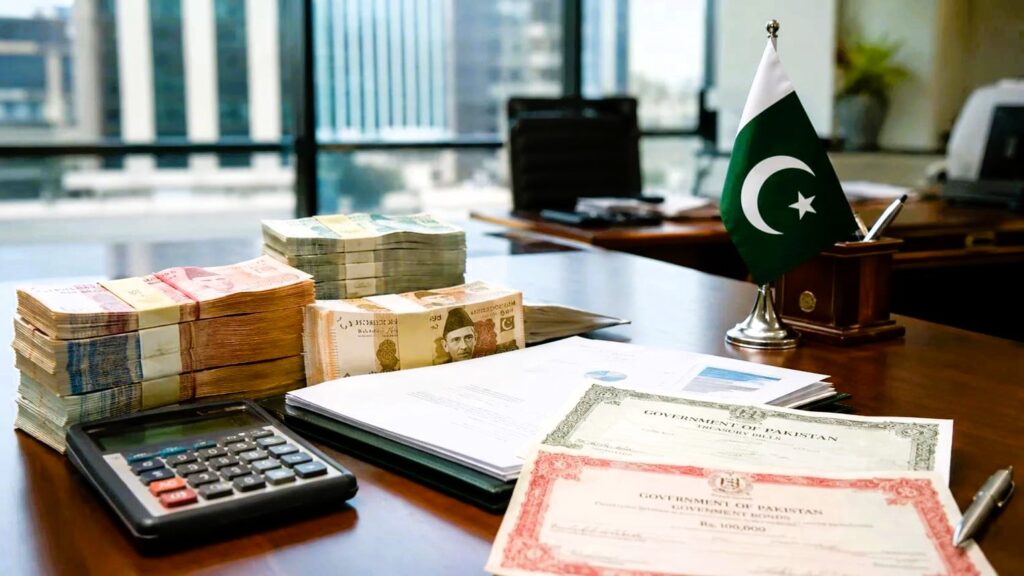
Refinancing is a normal feature of government finance. Even financially strong countries issue new securities to replace maturing debt. The practice allows governments to manage repayment schedules instead of attempting to repay every obligation from current revenue.
Pakistan’s problem is not simply that it refinances debt.
The problem is the scale of financing required relative to its revenue base, foreign exchange earnings and ability to secure affordable replacement financing. Four risks deserve particular attention.
Refinancing risk
When large amounts of debt mature within a relatively short period, the government must obtain replacement financing or arrange repayment. If investors demand higher returns or creditors refuse to extend financing, pressure can increase rapidly.
Interest-rate risk
When domestic interest rates are high, new borrowing and refinancing become expensive. The government may also remain exposed to changes in rates through floating-rate instruments and the replacement of maturing fixed-rate securities.
Exchange-rate risk
External debt denominated in dollars or other foreign currencies becomes more expensive in rupee terms when the Pakistani currency depreciates.
Economic growth risk
If borrowing fails to support productive activity, the government may struggle to generate sufficient revenue and foreign exchange to meet future obligations. The danger is therefore not merely borrowing to repay borrowing. It is repeatedly refinancing obligations without improving the economic capacity needed to meet them.
7. Interest Payments: The Government’s Shrinking Financial Freedom
Debt interest is among the most important constraints on Pakistan’s federal budget. The FY2027 federal budget estimates interest payments at approximately Rs8.054 trillion. Net federal revenue receipts are projected at approximately Rs 11.751 trillion. This means that projected interest payments alone amount to approximately 68.5% of net federal revenue receipts.
68.5%
Share of net federal revenue receipts required for interest payments
Remaining: Rs 3.697 trillion
Based on FY2027 budget estimates. This is a comparison with net federal receipts, not total national revenue or actual year-end expenditure. This comparison helps explain the fiscal pressure more clearly than the interest bill alone. It also requires an important distinction.
Domestic interest payments are largely income for domestic creditors, including banks and other holders of government securities. External interest payments, by contrast, involve payments to foreign creditors and create foreign exchange outflows. Both affect the government’s financial freedom, but their wider economic effects are different.
The Ministry of Finance reported public debt interest expenditure of approximately Rs6.95 trillion in FY2026, compared with Rs8.88 trillion in FY2025. The FY2027 budget subsequently projected approximately Rs 8.05 trillion.
The improvement in FY2026 should be acknowledged. The projected increase in the following budget year also demonstrates that the interest burden remains substantial. The central issue is the opportunity cost.
Money committed to interest cannot simultaneously finance additional schools, hospitals, water systems, technical training or other public priorities. Honouring debt obligations is necessary for financial credibility. But a government that spends a very large proportion of its available revenue servicing old obligations has limited room to respond to the needs of its population.
8. Domestic Borrowing and the Pressure on Private Investment
Pakistan’s debt debate often concentrates on the IMF and foreign creditors. Domestic borrowing deserves equal attention. When the government needs substantial financing, commercial banks may find government securities more attractive than lending to businesses.
Government securities can offer predictable returns and carry different risk characteristics from loans to private borrowers. This can create a crowding-out effect, particularly when government financing requirements are large. The State Bank of Pakistan’s FY2025 reporting provides relevant evidence.
It reported that the advances-to-deposits ratio of banks, development finance institutions and microfinance banks declined from 38.1% in FY2024 to 36.3% in FY2025.
The State Bank also noted that banks’ increased investment in government securities reflected substantial government financing requirements. Private-sector credit relative to GDP stood at approximately 8.7% in FY2025.
These figures support concern about the limited availability of private-sector financing, although they do not establish that government borrowing alone caused the decline. Other factors include monetary policy, business confidence, credit demand, borrower risk and the overall economic environment. The consequences matter.
A small manufacturer seeking financing to modernise machinery may find credit expensive. An agricultural business may postpone expansion. An exporter may struggle to finance new production capacity. When businesses cannot invest, employment and productivity growth also suffer.
Government borrowing can support financial stability, but it should not become so dominant that productive private investment remains persistently constrained.
9. External Debt: The Foreign Currency Challenge
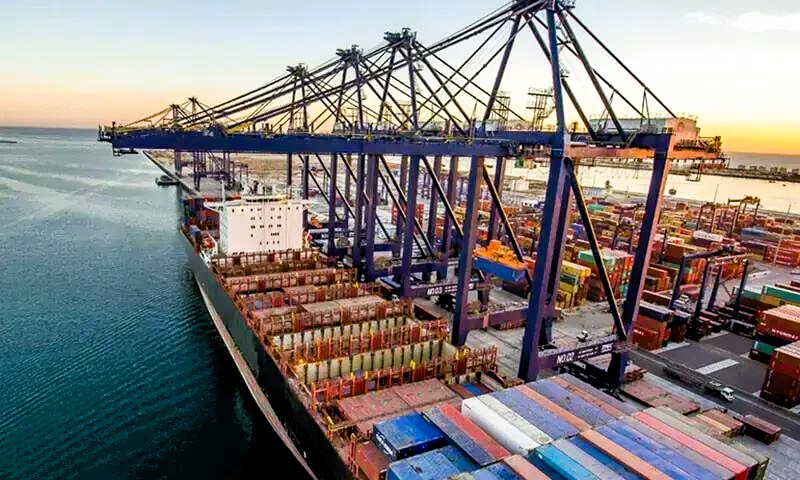
It also needs foreign currency for petroleum, machinery, industrial inputs, essential imports and external debt repayments. The difficulty arises when foreign currency requirements become greater than sustainable inflows.
Pakistan’s merchandise exports remain concentrated in a relatively narrow range of products, particularly textiles and related goods. The country also relies on imported petroleum, machinery, chemicals and industrial components. This creates a difficult relationship.
Importing machinery can support industrial development, but it also requires foreign exchange. Exporting finished products can generate foreign exchange, but that requires competitive production, reliable energy and access to international markets.
When foreign exchange becomes scarce, governments may restrict imports, seek bilateral support, negotiate multilateral financing, obtain commercial loans or allow exchange-rate adjustments. Each choice has costs.
Import restrictions can interrupt industrial production. Currency depreciation increases the cost of imported goods and foreign debt repayments. Commercial borrowing can provide immediate liquidity but may be more expensive than concessional financing. The longer-term answer is not simply to reduce imports regardless of their purpose.
Pakistan needs to increase the foreign exchange earned through competitive exports, technology services, value-added manufacturing, agricultural processing and productive investment. A country cannot build lasting external financial stability by repeatedly arranging emergency financing.
10. Bilateral Deposits, Debt Rollovers and the Politics of Financial Dependence
One important aspect of Pakistan’s external financing requirements deserves greater public attention: the reliance on rollover arrangements. The FY2027 borrowing plan identifies substantial external principal maturities. Some bilateral deposits and other financing arrangements are expected to be renewed or rolled over rather than repaid through immediately available resources.
A rollover can be useful. It gives the government additional time and reduces immediate pressure on foreign exchange reserves. However, it should not be confused with earning foreign exchange through exports or generating sufficient fiscal resources to repay a loan. Repeated dependence on creditor decisions can create uncertainty.
International financial relationships are influenced by economic interests, diplomatic considerations, regional developments and the financial priorities of lending countries. Pakistan therefore needs to distinguish between temporary liquidity support and genuine improvement in its capacity to meet external obligations.
Bilateral assistance can provide breathing space. It cannot permanently replace competitive exports, productive investment and sustainable foreign exchange earnings.
11. IMF Programmes: Necessary Stabilisation or a Permanent Economic Crutch?
The International Monetary Fund has been a recurring participant in Pakistan’s economic management. Pakistan has entered multiple IMF arrangements over several decades, usually during periods of balance-of-payments pressure and difficulties in meeting external financing requirements. The current Extended Fund Facility was approved in September 2024.
On October 7, 2026, IMF staff reached an agreement with Pakistan on the fourth review of the 37-month EFF programme and the third review of the Resilience and Sustainability Facility.
Subject to approval by the IMF Executive Board, the agreement would make approximately $1 billion available under the EFF and $210 million under the RSF. These amounts should not be described as already disbursed merely because a staff-level agreement has been reached.
The IMF reported that Pakistan’s real GDP growth was estimated at 3.6% for FY2026 and gross foreign exchange reserves had reached approximately $21.5 billion by the end of September 2026. It also highlighted continuing risks from geopolitical tensions, energy prices and global financial conditions. These developments deserve recognition.
IMF assistance can help restore financial stability, support reserves and provide access to financing from other international partners. However, stabilisation is not the same as transformation. Pakistan’s repeated need for IMF assistance reflects deeper structural weaknesses:
-
Persistent fiscal deficits.
-
A narrow and uneven tax base.
-
Limited export diversification.
-
High energy-sector costs.
-
Weak productivity.
-
Policy instability.
-
Insufficient investment in human capital.
-
External financing vulnerabilities.
IMF programmes also require difficult policy adjustments, including revenue measures, energy-sector reforms and fiscal discipline. These measures can have consequences for households and businesses, particularly when costs rise faster than incomes or when protections for vulnerable groups are inadequate.
The IMF cannot independently transform Pakistan’s industrial structure, improve its educational system or create an accountable domestic governance framework. Those responsibilities belong to Pakistan’s own institutions and policymakers.
The fair conclusion is neither that the IMF is responsible for all of Pakistan’s economic problems nor that every condition attached to its programmes automatically produces the best possible outcome. The country needs international financial cooperation, but it also needs a credible domestic economic strategy that continues beyond individual IMF programmes.
12. The Governance Question: Conflict of Interest and the Use of Public Money
One of the most important issues in Pakistan’s economic debate is the relationship between public decision-making and private interests.
Economist Kaiser Bengali has raised broader concerns about structural weaknesses in Pakistan’s economic and governance arrangements. His observations deserve consideration, but specific statements should only be attributed to him when supported by identifiable interviews, articles or published research.
The wider issue is independently supported by the IMF’s Pakistan Governance and Corruption Diagnostic, published in November 2025. The report identifies weaknesses involving regulatory capture, politically connected business interests, public procurement, institutional accountability and the management of public resources.
These concerns have direct implications for public borrowing. Consider the following situations.
A government awards a major contract. Was it awarded through open competition? Were the costs independently assessed? Were the terms disclosed?
A public enterprise receives financial assistance. Was the money used to improve performance, or did it merely postpone another financial problem?
A sector receives tax concessions. Did the concessions create employment, exports and investment, or did they mainly protect established interests?
A government provides a financial guarantee. Was the potential risk independently assessed, and who ultimately bears the loss if the borrower defaults?
These are legitimate questions of public accountability.
A conflict of interest does not automatically establish corruption. Nor does a business relationship with government prove that a decision was improperly influenced. But undisclosed or unmanaged conflicts can undermine public trust and distort economic policy.
Pakistan needs effective disclosure requirements, transparent procurement, independent audits and meaningful consequences when public authority is misused. Public money must serve public purposes.
13. The Hidden Public Debt: State-Owned Enterprises and Financial Guarantees
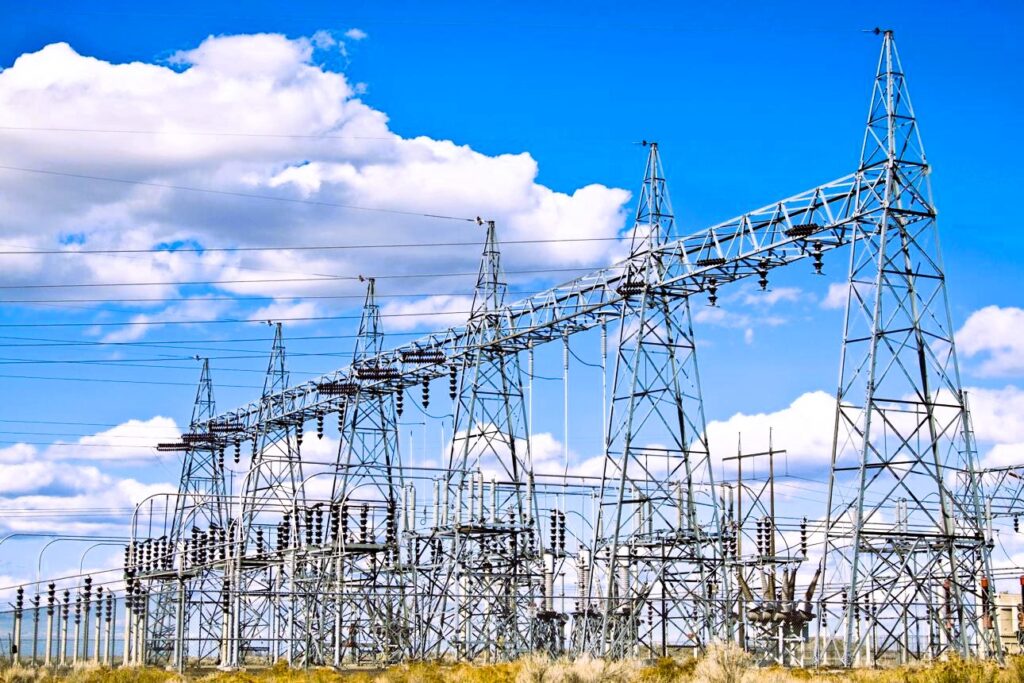
The February 2026 briefing reported that total SOE debt at the portfolio level had reached approximately Rs 9.57 trillion during FY2025. It also reported approximately Rs2 trillion in unfunded pension liabilities and Rs2.16 trillion in guarantees and other off-balance-sheet contingencies. Government support to SOEs was approximately Rs 2.078 trillion during that financial year. These amounts require careful interpretation.
SOE debt is not automatically federal public debt. Nor should every contingent liability be added to the government’s direct debt stock. A government guarantee becomes an actual fiscal cost if the guaranteed borrower fails to meet its obligations and the government has to honour the commitment. Nevertheless, these liabilities matter because they represent potential demands on public finances.
Pakistan needs to identify which enterprises are commercially viable, which provide essential public services and which repeatedly depend on taxpayer support. Financial assistance should be linked to restructuring, performance targets, transparent accounts and independent monitoring. Continuing to support inefficient enterprises without addressing the causes of their losses simply transfers the problem to future budgets.
14. Who Ultimately Pays? The Human Cost of Debt
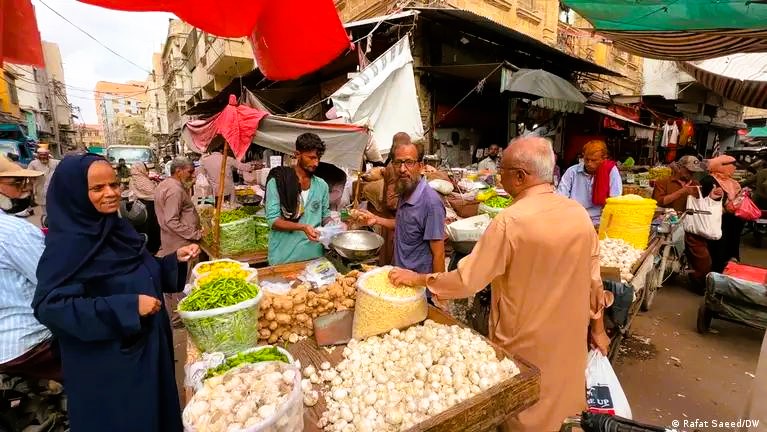
A salaried employee may pay income tax before receiving a monthly salary. The same individual may pay indirect taxes when purchasing goods and services.
A small business may face expensive credit, higher electricity costs and additional compliance expenses.
A household may struggle with utility bills, transport costs, education expenses and essential groceries.
Reduced development spending may delay hospitals, schools, roads and water projects.
However, it would be misleading to claim that every increase in electricity tariffs, every tax adjustment or every episode of inflation is directly caused by public debt.
Inflation, exchange-rate movements, international commodity prices, energy-sector inefficiencies and monetary policy also play important roles.
The more precise argument is that a heavy debt burden restricts the government’s financial choices and can make difficult economic adjustments harder to avoid.
The question of fairness is equally important.
When the government needs additional revenue, are the costs distributed according to people’s ability to pay?
Are economically powerful and under-taxed sectors contributing fairly?
Are subsidies reaching their intended recipients?
Are tax concessions producing sufficient public benefits?
Are public services improving in proportion to the financial sacrifices demanded from citizens?
A country cannot build lasting public confidence if ordinary households repeatedly absorb the adjustment costs while the use of public money remains insufficiently transparent.
15. Is Pakistan Making Progress in Debt Management?
A balanced investigation must acknowledge genuine improvements. Pakistan’s FY2027 borrowing plan identifies several measures intended to improve debt management.
These include:
-
Greater use of medium- and longer-term domestic debt instruments.
-
Efforts to increase fixed-rate borrowing.
-
Debt buybacks and exchange operations.
-
Reduced reliance on short-term Treasury Bills on a net issuance basis.
-
Efforts to improve the maturity profile of government debt.
The government’s borrowing plan reports that the average time to maturity of its debt portfolio increased from approximately 2.7 years in June 2024 to 3.8 years in June 2026. The target is 4.2 years by FY2028.
These measures can reduce immediate refinancing pressure.
The reported decline in FY2026 interest expenditure is also encouraging.
However, debt management and debt sustainability are not the same thing. Debt management concerns the cost, maturity, composition and risks of existing obligations.
Debt sustainability concerns whether the country can continue meeting its obligations without unrealistic fiscal adjustments, financial distress or repeated emergency assistance.
A government can manage its borrowing more efficiently while continuing to depend on substantial financing. Pakistan therefore needs improvements in both areas. The objective should not merely be to extend repayment periods or borrow at lower interest rates. It should be to reduce the underlying need for repeated borrowing.
16. What Would a Realistic Debt Strategy Look Like?
Pakistan needs a long-term strategy that addresses the causes of indebtedness rather than repeatedly managing its symptoms.
1. Make taxation fairer and broader
The government must improve compliance, reduce unjustified exemptions and ensure that economically capable sectors contribute fairly. The burden should not fall disproportionately on salaried employees and ordinary consumers.
2. Improve the quality of public expenditure
Government spending should be evaluated according to its economic and social value. Administrative duplication, poorly targeted subsidies and persistently loss-making public entities require independent assessment. Essential healthcare, education and social protection should be safeguarded.
3. Expand productive investment
Pakistan needs investment in manufacturing, agricultural processing, technology, engineering and other sectors capable of generating employment and export earnings.
4. Strengthen the energy sector
Technical and commercial losses, inefficient distribution systems and circular debt must be addressed. Reliable and competitively priced energy is essential for industrial recovery.
5. Make public borrowing accountable
Major borrowing decisions should be linked to transparent project assessments, procurement records, expenditure disclosures and measurable outcomes.
6. Reform state-owned enterprises
Financially viable enterprises should be supported to improve performance, while persistently loss-making entities require credible restructuring.
7. Strengthen federal and provincial fiscal coordination
Both levels of government have important responsibilities for public expenditure, revenue generation and service delivery. The distribution of financial responsibilities must be accompanied by effective accountability.
8. Protect investment in people
Education, healthcare, technical training and research are not merely social costs. They are essential foundations of future productivity.
9. Establish meaningful conflict-of-interest safeguards
Officials involved in economic decisions should disclose relevant private interests and be prevented from influencing decisions where those interests create a conflict.
10. Maintain policy continuity
A national economic strategy cannot be abandoned whenever governments change. Pakistan needs measurable targets, independent reviews and transparent reporting that allow citizens to assess progress.
17. Can Pakistan Escape the Debt Cycle?
Pakistan has considerable economic potential.
Its agricultural resources, geographical position, ports, mineral deposits, domestic market, entrepreneurial community and overseas workforce provide opportunities for growth.
Its technology and services sectors also offer possibilities for earning foreign exchange.
But potential is not the same as performance.
Natural resources do not automatically create prosperity. A large population does not automatically produce a productive workforce. A geographical location does not automatically make a country a successful trade and logistics centre. These advantages require investment, skilled people, reliable infrastructure, predictable policies and institutions that apply economic rules consistently.
Pakistan needs to move from consumption-led and debt-dependent economic management towards an economy that produces more, exports more, invests more effectively and creates better employment. Debt reduction should emerge from a stronger economy rather than remain an isolated accounting target.
The next generation should inherit productive assets, better institutions and wider opportunities, not simply a larger collection of repayment obligations.
Conclusion: The Debt Belongs to the State, but Its Consequences Reach Every Citizen
Pakistan’s debt crisis is not simply a story of financial statistics or international loan agreements. It is a story of national choices, economic priorities, institutional performance and the country’s ability to turn borrowed money into lasting prosperity.
Borrowing can finance development. International assistance can help prevent financial instability. Domestic government securities can provide investment opportunities and support financial markets.
But none of these instruments can permanently compensate for weak productivity, insufficient exports, inadequate revenue generation and inefficient public expenditure.
The government must explain not only how much the country owes but also what it received in return.
Citizens deserve to know which projects generated economic value, which programmes failed, which enterprises repeatedly required financial assistance, which guarantees created risks and why successive administrations struggled to reduce dependence on borrowing.
They also deserve a fairer distribution of the adjustment costs.
Those with greater economic capacity should contribute fairly. Public subsidies should serve their intended purposes. Government contracts should be transparent. Institutions responsible for public money should be answerable to the people.
Ultimately, Pakistan must move beyond the politics of obtaining the next loan and towards the economics of generating sustainable national income.
A country’s financial strength is not measured by how much it can borrow, how many international agreements it can sign or how long it can postpone repayment pressures. It is measured by its ability to generate enough productive income to finance its future without repeatedly mortgaging the opportunities of the next generation.
And this leaves Pakistan with a question that deserves an honest answer:
If every generation inherits a larger debt burden but not a stronger productive economy, what exactly are we leaving for the generation that follows?
Frequently Asked Questions
1. How much public debt does Pakistan owe?
Pakistan’s total public debt stood at approximately Rs86.7 trillion at the end of June 2026, comprising Rs59.4 trillion in domestic debt and Rs27.3 trillion in external public debt. Public and publicly guaranteed debt was approximately Rs 91 trillion.
2. Why does Pakistan borrow money to repay previous loans?
Governments routinely refinance maturing debt. Pakistan’s challenge is the scale of its financing requirements relative to its revenue and foreign exchange earnings. Refinancing becomes dangerous when borrowing costs rise or creditors become unwilling to extend financing.
3. How much does Pakistan spend on interest payments?
Public debt interest expenditure was approximately Rs 6.95 trillion in FY2026. The FY2027 federal budget projects interest payments of approximately Rs8.05 trillion, equivalent to around 68.5% of projected net federal revenue receipts.
4. Why does Pakistan repeatedly approach the IMF?
Persistent fiscal deficits, limited export diversification, foreign exchange shortages, high energy-sector costs and structural economic weaknesses have contributed to repeated balance-of-payments difficulties. IMF programmes provide financial assistance and support stabilisation, but cannot independently resolve domestic economic and governance problems.
5. Who benefits from Pakistan’s public borrowing?
Domestic banks and other government security holders receive interest income. Contractors and suppliers benefit from government-funded projects, while certain enterprises and sectors receive loans, guarantees or subsidies. Whether these benefits represent good value for taxpayers depends on transparency, competition and measurable economic results.
6. How can Pakistan reduce its dependence on borrowing?
Pakistan needs fairer taxation, stronger exports, productive industrial investment, efficient public expenditure, energy-sector reform, better governance and sustained investment in education and healthcare. These changes can gradually improve its ability to finance national development without repeated emergency borrowing.
References and Further Reading
The following primary and supporting sources should accompany the published article.
1. Ministry of Finance, Government of Pakistan: Annual Borrowing Plan FY2027. Public debt position, gross financing requirements, maturities and borrowing strategy. Read the Annual Borrowing Plan.
2. Ministry of Finance: Annual Debt Review FY2026. Debt composition, interest expenditure and debt-management developments. Debt Management Office publications.
3. Pakistan Economic Survey 2025-26. Public debt, external sector, exports and broader economic performance. Pakistan Economic Survey.
4. State Bank of Pakistan: Annual Report FY2025. Banking-sector developments, government securities and private-sector credit. Read the SBP report.
5. IMF: Pakistan Fourth EFF Review and 2026 Article IV Consultation. Programme reviews, macroeconomic stability and structural reforms. Read the IMF announcement.
6. IMF: Pakistan Governance and Corruption Diagnostic, November 2025. Institutional accountability, regulatory capture and governance weaknesses. International Monetary Fund.
7. Ministry of Finance: State-Owned Enterprises reporting. Financial assistance, SOE liabilities and fiscal risks. Pakistan Ministry of Finance.
Pakistan’s public debt reached Rs86.7 trillion in June 2026, while interest payments and refinancing requirements continue to pressure public finances. Who authorised the borrowing, who benefited from the money, and why are ordinary Pakistanis carrying so much of its financial burden?
Final editorial note
This article deliberately separates verified debt figures, government projections, institutional assessments and economic interpretation. Its discussion of potential beneficiaries does not imply wrongdoing without supporting evidence.
The next investigation will examine how industrial decline, energy costs, taxation, investment incentives, real estate speculation, agriculture and export competitiveness affect Pakistan’s ability to generate sustainable national income.
Article 3 of 6: Pakistan Is Losing Its Productive Economy: Why Factories Close While Speculation Thrives.
Publication check: The numerical figures above refer to their stated reporting periods. FY2027 budget amounts are projections, not actual year-end results. The October 2026 IMF agreement was subject to Executive Board approval. The final publishing check should confirm any subsequent official revisions.