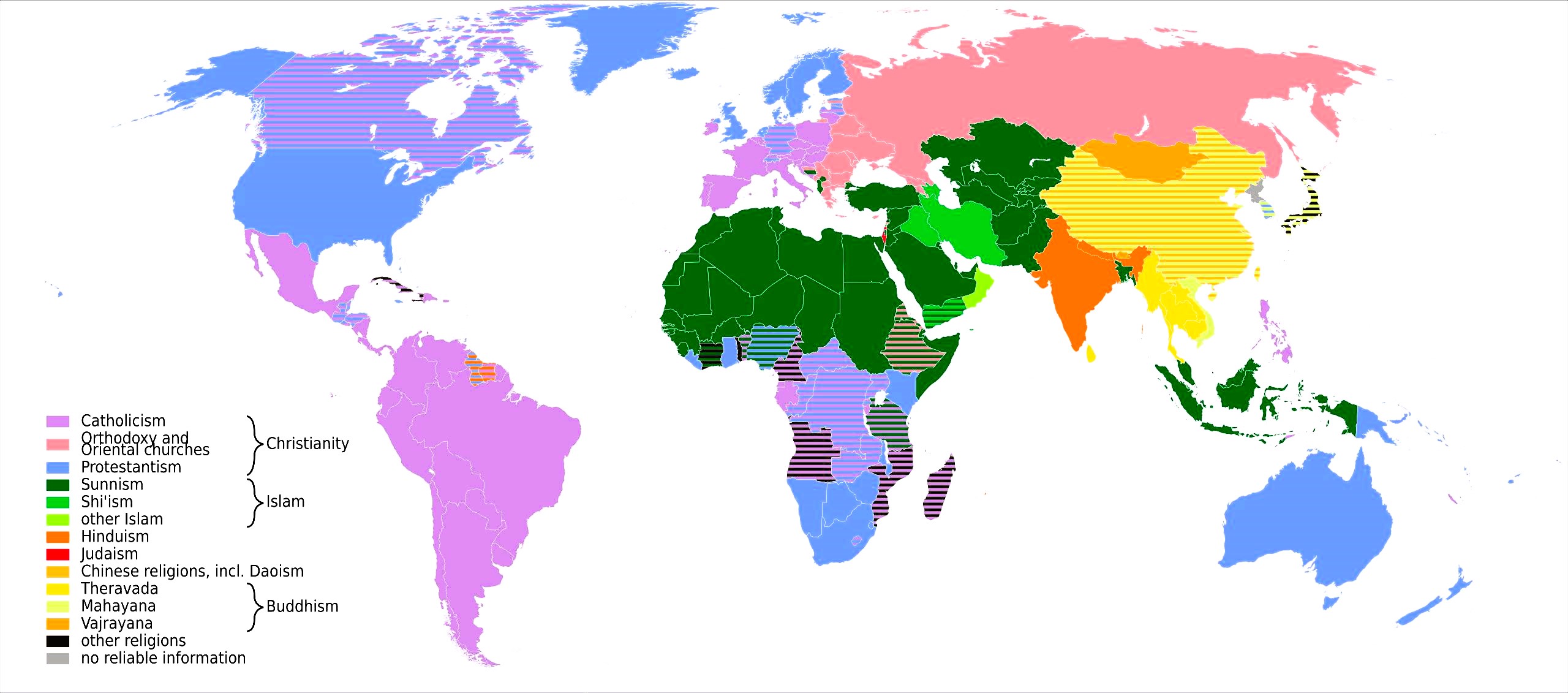

Islam’s Rise by 2035? What Is Driving the Shift?
Islam’s Rise by 2035: Why could Islam overtake Christianity by 2035? Explore population growth, fertility, changing European families, secularisation and the future of global religion.
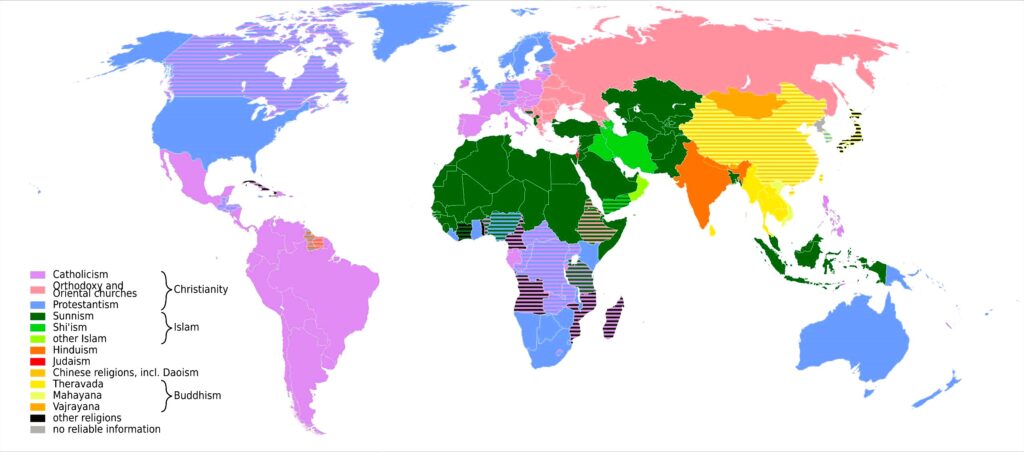
For centuries, Christianity has been the world’s largest religion. But a historic change may be approaching. By 2035, Islam could take the lead, according to new projections published by the Pew Research Centre. The surprising part is that this shift has relatively little to do with mass religious conversions.
The explanation lies somewhere else: younger populations, higher birth rates, changing family structures, declining religious identification and the shifting geography of human populations.
While Muslim populations are growing rapidly, Christianity is experiencing a different transformation. Its traditional strongholds in Europe and North America are becoming increasingly secular, while its centre of gravity is moving towards Africa.
This raises a much bigger question: Are we witnessing a change in religious beliefs, or is the world’s demographic structure quietly rewriting its religious map?
The answer involves far more than religion. It involves families, economics, culture, education, migration and the choices of younger generations.
1. The Changing Religious Map of the World
According to Pew Research Centre’s report, The Future of World Religions: Population Growth Projections, 2020–2070, Muslims are expected to outnumber Christians around 2035.
In 2020, Christians represented approximately 28.8% of the world’s population, compared with 25.6% for Muslims. Both populations are growing, but at different speeds.
The projections suggest that Muslims could represent approximately 36% of humanity by 2070, while Christians would account for about 29%. These figures represent a significant demographic transformation.
However, Christianity is not disappearing. Its global population is also expected to increase. The difference is that Muslim population growth is projected to be considerably faster.
The important question is not simply which religion will have more followers. It is why these two major religious populations are following different demographic paths.
Source: Pew Research Centre, November 2026.
2. The Real Engine Behind Islam’s Growth
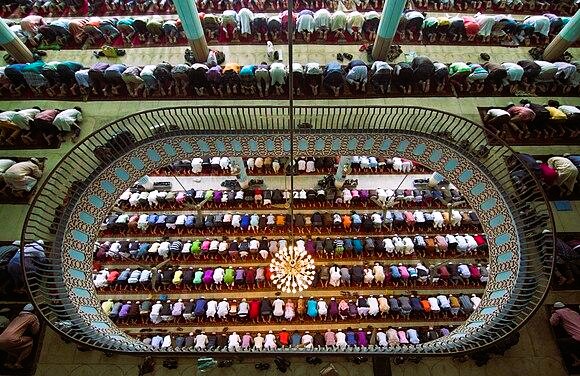
Three factors explain much of Islam’s projected growth: age, fertility and population momentum.
A. Muslims Have a Younger Population
Age is one of the most important factors in demographic growth. According to Pew, the median age of Muslims worldwide was approximately 24 in 2020. The median age of non-Muslims was 33. That is a difference of almost a decade.
Why does this matter?
A younger population contains a larger proportion of people entering or approaching their childbearing years. Even if the average number of children per family eventually declines, the population can continue growing because there are so many young adults. This phenomenon is known as population momentum.
Imagine two societies.
One has a large population of young adults entering family life. The other has a much older population, with fewer people of reproductive age. Even if both societies have similar family sizes, the younger population can experience considerably more births. This demographic advantage is one of the strongest explanations for Islam’s projected growth.
B. Higher Fertility Rates
The second major factor is fertility.
Pew estimates that Muslim women had an average of 3.1 children during 2020–2025. The corresponding figure for non-Muslim women was approximately 2.0. This difference has enormous long-term consequences.
However, we should not assume that religion alone determines family size.
Fertility is influenced by several interconnected factors:
- Education: Higher levels of education, particularly among women, are often associated with smaller families.
- Economic Conditions: Housing, employment and the cost of raising children influence family decisions.
- Urbanisation: Families living in cities generally have fewer children than those in rural communities.
- Family Traditions: Cultural expectations and attitudes towards marriage and parenthood also matter.
- Religious Values: In some communities, religious beliefs encourage marriage, parenthood and larger families.
Muslim-majority societies also experience declining fertility as education, urbanisation and economic development change. The difference is that many Muslim populations still have a younger age structure and higher fertility than the global non-Muslim average.
C. Population Momentum
Population growth does not stop immediately when fertility rates decline. A country with millions of young people entering adulthood can continue experiencing substantial population growth for decades. This explains why demographic changes often take generations to become fully visible. The present growth of Muslim populations is partly the result of demographic conditions established many years ago.
3. Births, Not Mass Conversions: The Biggest Misconception
One of the most important findings in the Pew research is that religious conversion is not the main explanation for Islam’s projected rise. The difference comes primarily from natural population increase. Natural population increase means births exceed deaths.
Pew’s projections show that Muslim populations will gain substantially through this process.
Christian populations will also experience natural growth, but at a slower rate.
Religious switching tells a different story.
In several Western countries, Christianity is losing followers because people raised in Christian households increasingly identify as having no religion. Some people do convert to other religions, including Islam. However, these movements are much smaller than the demographic changes caused by births, deaths and age structures.
This distinction matters. A person leaving Christianity does not automatically become Muslim. Many become atheists, agnostics or simply identify as having no religious affiliation.
Therefore, the global religious balance is changing primarily because different populations are growing at different rates, not because one religion is attracting all the followers of another.
4. Why Christianity Is Losing Ground in Traditional Christian Societies
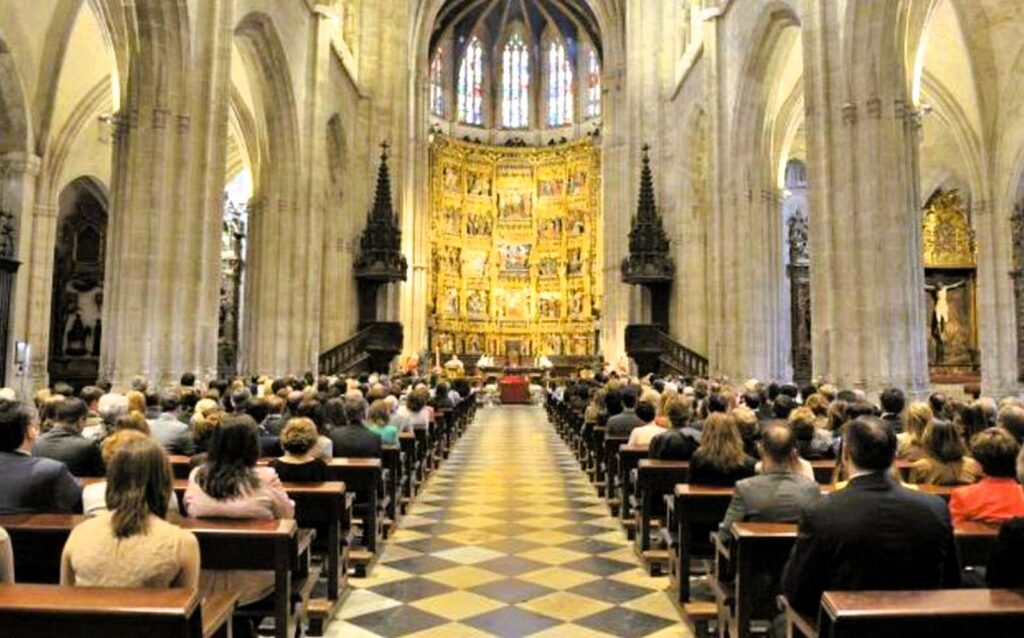
Christianity remains deeply established in many parts of the world. However, its traditional strongholds in Europe and North America are experiencing significant changes.
Several developments are contributing to this transformation.
A. The Rise of Secularisation
In countries such as Britain, France, Germany and other European societies, increasing numbers of people no longer identify with Christianity.
Some have rejected organised religion altogether.
Others retain cultural connections with Christianity but rarely attend religious services or follow traditional religious practices.
Among younger generations, religious identification has become less important in many Western societies.
Several factors contribute to this trend:
- Declining church attendance.
- Greater acceptance of secular lifestyles.
- Changing attitudes towards traditional religious authority.
- Generational differences in religious upbringing.
- Greater emphasis on individual beliefs and personal choices.
Importantly, secularisation does not necessarily mean hostility towards religion. Many people simply consider religion less central to their daily lives.
B. The Generational Disconnect
Religious traditions are often transmitted through families.
Children generally learn religious values, customs and practices from parents and grandparents.
When parents become less religious, children are less likely to grow up with strong religious connections.
Over several generations, this can produce a substantial change.
A child raised in a household where religion is rarely discussed may grow up identifying differently from parents or grandparents who regularly attended church.
This is one reason religious disaffiliation can become a self-reinforcing process.
5. Europe’s Changing Family System: A Deeper Part of the Story

There is another important development that deserves serious attention: the transformation of the traditional European family.
For generations, marriage, children and extended family relationships formed important foundations of European social and religious life.
Those structures have changed considerably.
This does not mean that every modern family is weaker or that unmarried couples cannot provide stable homes. Family structures have become more diverse, and many people maintain strong relationships outside traditional marriage.
Nevertheless, changing patterns of marriage, parenthood and family size have significant demographic consequences.
A. Marriage Is Happening Later
Young Europeans increasingly delay marriage.
Education, career development, housing costs and financial uncertainty often postpone decisions about starting families.
Some couples choose long-term relationships without marriage, while others prefer remaining single.
According to Eurostat, the average age at first marriage has increased across the EU countries for which comparable data are available.
Fewer marriages do not automatically mean fewer families. However, delayed family formation can contribute to delayed parenthood and smaller families.
B. Smaller Families and Declining Birth Rates
This is perhaps the most important demographic consequence.
The EU’s total fertility rate fell to approximately 1.34 children per woman in 2024.
That is considerably below the replacement level of approximately 2.1 children per woman.
At this level, populations tend to age and eventually decline without sufficient immigration.
Economic pressures play an important role.
Young couples face expensive housing, childcare costs, uncertain employment and the challenge of balancing professional and family responsibilities.
Some decide to have only one child. Others postpone parenthood until the opportunity becomes more difficult.
An ageing population then creates another problem: fewer young adults are available to support an increasingly elderly society.
C. Changing Marriage and Family Relationships
Divorce, separation and changing attitudes towards lifelong marriage have also altered family structures.
Single-parent households and blended families are more visible than in previous generations.
However, these developments must be understood carefully.
Divorce does not automatically mean family breakdown, and unmarried couples can raise children in stable and supportive households.
The deeper demographic issue is whether people are having fewer children and whether economic and relationship uncertainty is discouraging family formation.
D. Individualism and Personal Independence
Modern European societies place considerable emphasis on individual freedom, personal fulfilment and independence.
These values have brought important benefits, particularly in personal rights, women’s opportunities and freedom of choice.
But they have also changed traditional expectations surrounding marriage and parenthood.
In earlier generations, starting a family was widely regarded as a normal stage of adult life.
Today, many people view marriage and parenthood as personal options rather than social obligations.
This change does not make modern lifestyles inherently wrong. It does, however, influence demographic outcomes.
When fewer people marry, postpone having children or choose not to become parents, the number of births naturally declines.

E. Is the Family System Also Affecting Religious Identity?
This is where family transformation connects directly with the future of Christianity.
Historically, European churches were closely connected with family traditions, community life, education and important social events.
Religious identity is often passed from grandparents to parents and then to children.
As traditional religious participation declines, this intergenerational transmission becomes weaker.
Children may grow up without regular church attendance, religious education or strong connections to religious communities.
Over time, cultural Christianity can become less important to younger generations.
The result is a possible reinforcing cycle:
Changing family patterns can reduce religious transmission, while secularisation can further weaken the traditional role of religion in family life.
However, we should not confuse correlation with direct causation. Secularisation, low fertility and changing family structures influence one another, but no single factor explains the entire transformation.
The deeper question is whether Europe is experiencing not merely a decline in Christianity, but a broader transformation of the social institutions that once sustained religious identity across generations.
6. Why Some Muslim Communities Maintain Stronger Family Traditions
A comparison with Muslim communities offers another useful perspective.
In many Muslim societies, marriage remains an important social institution.
Children are generally regarded as a blessing, while extended family relationships and intergenerational responsibilities continue to play significant roles.
Religious identity is also frequently transmitted through family life.
Children may learn religious practices at home, attend religious schools or participate in community activities.
These traditions can help maintain religious identification across generations.
However, it would be misleading to suggest that all Muslim families follow the same pattern.
Muslim societies differ considerably in education, income, fertility, urbanisation and family structures.
Fertility is declining in many Muslim-majority countries too.
Furthermore, stronger family traditions do not automatically guarantee stable relationships or successful family life.
The meaningful comparison is not between perfect Muslim families and broken European families.
It is about the different social and demographic environments and how they influence marriage, parenthood and religious continuity.
7. Africa: The Emerging Centre of Global Religious Growth
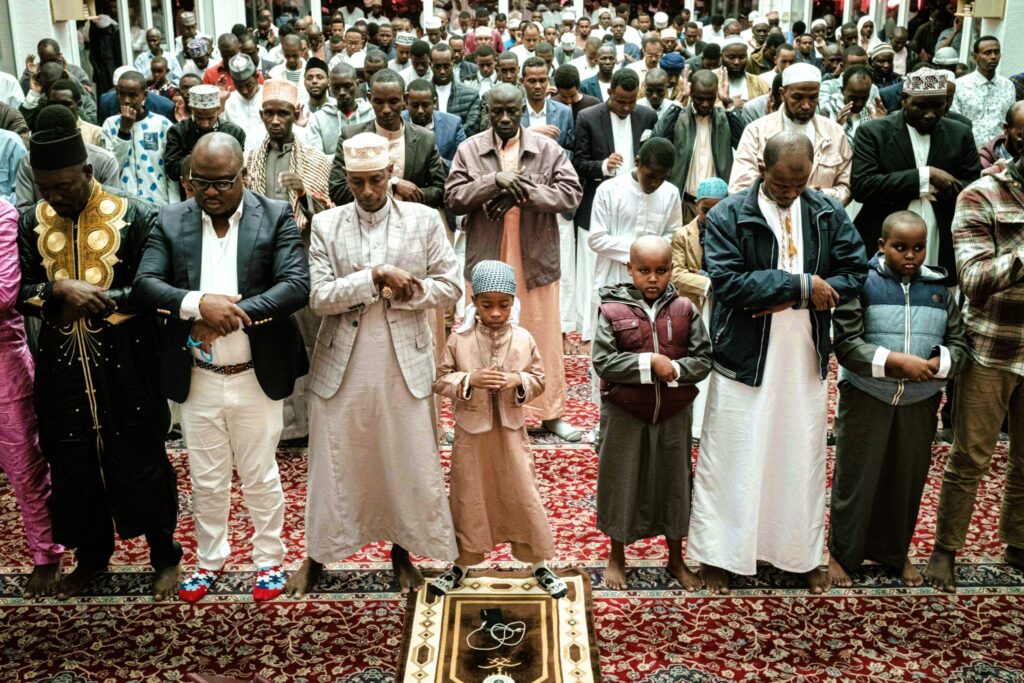
Africa may become one of the most important regions shaping the world’s religious future.
Its population is relatively young, and both Christianity and Islam have substantial and growing communities across the continent.
Christianity has expanded significantly in sub-Saharan Africa.
At the same time, Muslim populations are growing in countries across West, East and Central Africa.
Nigeria provides an interesting example, with large Christian and Muslim populations living within the same country.
The Democratic Republic of the Congo is also becoming increasingly important to global Christianity.
Pew projects that more than half of the world’s Christians could live in sub-Saharan Africa by 2070.
The Democratic Republic of the Congo is projected to surpass the United States as the country with the largest Christian population.
This is a remarkable geographical transformation.
Christianity, traditionally associated with Europe in much of the world’s historical imagination, is increasingly becoming an African and Global South religion.
Africa’s future will therefore influence both major religious communities.
[Image placement: African Christian and Muslim communities]
8. Asia: The Continuing Demographic Powerhouse of Islam

Asia remains central to the future of Islam.
Countries such as Pakistan, Indonesia, Bangladesh and India contain enormous Muslim populations.
Indonesia currently has the world’s largest Muslim population.
However, Pew projects that Pakistan could take that position by 2070.
India is also expected to remain home to one of the world’s largest Muslim populations, despite Muslims representing a minority of the country’s total population.
The region’s importance goes beyond population numbers.
Economic development, education, urbanisation and political stability will influence how these societies evolve.
Pakistan deserves particular attention because its relatively young population gives it substantial demographic momentum.
However, a large population also brings responsibilities.
Education, employment, healthcare, economic productivity and institutional development will determine whether demographic growth becomes an advantage or a burden.
Population size alone does not guarantee national prosperity.
9. Europe: Immigration, Identity and Demographic Change
Europe’s religious landscape is also being influenced by migration.
Muslim communities have grown through immigration as well as natural population increase.
People from Turkey, North Africa, South Asia and other regions have established communities across Western and Northern Europe.
Their children and grandchildren are now part of European societies.
At the same time, Christian identification is declining in several European countries.
Pew projects that the Muslim share of Europe’s population could increase from approximately 6% in 2020 to 13% by 2070.
The religiously unaffiliated population is also expected to grow, reaching approximately one-third of Europe’s population.
Christianity is projected to remain the majority religion in Europe in 2070, although its share will fall substantially.
These developments have become part of wider political debates about immigration, integration, national identity and religious freedom.
However, demographic projections should not be confused with predictions of political control.
A growing religious minority does not automatically acquire greater political power or cultural dominance.
The future of European societies will depend on integration, citizenship, economic participation and the protection of equal rights.
10. North America: Christianity Faces a Different Challenge
The United States has traditionally been one of the world’s most important centres of Christianity.
However, religious identification has changed considerably over recent decades.
More Americans now identify as religiously unaffiliated.
The trend is particularly visible among younger generations.
Pew projects that Christians could fall below half of the US population by 2070, while the unaffiliated population could reach approximately 41%.
This transformation is largely connected with religious switching.
Many people raised as Christians no longer identify with any religion.
Immigration also contributes to religious diversity, bringing Muslim, Hindu, Buddhist and other communities into American society.
Canada is experiencing similar changes in religious identification.
The broader lesson is that economic prosperity and modernisation do not necessarily preserve traditional religious affiliation.
11. What About Hinduism, Buddhism and Other Religions?
The changing religious map is not simply a competition between Islam and Christianity.
Other major religious communities are also experiencing demographic changes.
Hinduism
The global Hindu population is expected to increase in absolute numbers.
India will remain its most important demographic centre.
However, Hinduism’s share of the world’s population is projected to decline slightly because its growth is expected to be slower than the global population’s overall growth.
Buddhism
Buddhism faces a different demographic outlook.
Its global population is projected to decline in the coming decades.
Ageing populations and low fertility in several traditionally Buddhist societies are important contributing factors.
Judaism
The Jewish population is projected to increase modestly.
Israel is expected to account for an increasing share of the global Jewish population.
The Religiously Unaffiliated
This group includes atheists, agnostics and people who simply identify as having no religion.
Its share of the population is projected to decline globally, even though it is expected to increase in many Western countries.
An important reason is China’s enormous population.
Pew projects that China’s religiously unaffiliated population will decline substantially in absolute numbers, largely because of the country’s ageing population and demographic contraction.
This is an important reminder that global trends can differ significantly from what happens within individual countries.
12. Population Size Does Not Automatically Mean Global Power
Here we reach an important distinction.
If Islam becomes the world’s largest religion, will Muslim-majority countries automatically become more powerful?
Not necessarily.
Population size is only one component of national and international influence.
Other factors include:
- Economic Development: Wealth, productivity, industrial capacity and trade.
- Education: Scientific research, technological skills and educational institutions.
- Political Stability: Effective governance and institutional strength.
- International Cooperation: Diplomatic relationships and economic partnerships.
- Innovation: Scientific progress, entrepreneurship and technological development.
Muslim-majority countries have considerable natural resources, strategic geographical positions and large populations.
However, they also face differences in economic development, political systems and international priorities.
The Organisation of Islamic Cooperation represents a large group of Muslim-majority countries, but demographic commonality does not guarantee political unity.
Similarly, Christianity’s large global population does not mean Christian-majority countries share identical political or economic interests.
Religious numbers cannot be translated directly into geopolitical power.
13. Are These Projections Guaranteed to Become Reality?
No demographic projection is a guarantee.
Pew’s findings are based on current population structures and assumptions about fertility, mortality, migration and religious switching.
Several developments could change the outcome.
Changing Fertility Rates
Muslim fertility rates may continue declining as education, urbanisation and economic development progress.
Migration
Political instability, conflict and economic opportunities can change migration patterns and population distribution.
Religious Switching
Younger generations may adopt different religious identities from their parents.
Economic Development
Rising living standards, women’s education and changing family preferences can influence birth rates.
Wars and Political Instability
Large-scale conflicts and displacement can disrupt demographic trends.
Long-term projections are valuable because they help us understand possible futures. But they should never be treated as fixed predictions.
14. The Bigger Question: Is the World Becoming More Religious or Less Religious?
This is perhaps the most interesting question raised by the entire investigation.
The answer is not straightforward.
Islam is projected to grow faster than other major religious groups.
Christianity will remain one of the world’s largest religions, although its geographical centre will increasingly shift towards Africa.
At the same time, secularisation is continuing in several Western societies.
The religiously unaffiliated population is growing in many European and North American countries.
Yet the global share of unaffiliated people is projected to decline.
These developments appear contradictory, but they are not.
Different societies are experiencing different demographic and cultural changes.
A country can become increasingly secular while the global population becomes more religious overall.
The world is not following one universal path.
It is experiencing several demographic transitions simultaneously.
15. What Will the World’s Religious Map Look Like by 2070?
If current trends continue, several major changes are expected.
- Islam will account for approximately 36% of the global population.
- Christianity will represent approximately 29%.
- More than half of the world’s Christians will live in sub-Saharan Africa.
- Pakistan will have the world’s largest Muslim population.
- The United States will no longer have a Christian majority.
- Europe’s Muslim population share will increase, while the unaffiliated population will also grow.
- Buddhism will experience a decline in its global population.
These projections describe a world with a different geographical distribution of religious populations.
However, they do not tell us how religious people will be, how societies will govern themselves or how different communities will interact.
Those questions will depend on developments beyond demography.
Conclusion: The Future Is Being Shaped in Families, Not Just Places of Worship
The possibility of Islam becoming the world’s largest religion by 2035 is a significant demographic development.
But the real story is much bigger than the numbers.
Younger populations, higher fertility rates and population momentum are driving Muslim growth.
Meanwhile, Christianity is experiencing a transformation in its traditional Western strongholds. Secularisation, religious disaffiliation, ageing populations and declining fertility are changing its demographic position.
Europe’s changing family structures add another important dimension. Delayed marriage, smaller household size, economic pressures, and weaker intergenerational religious transmission are influencing both population growth and religious identity.
Yet Christianity is growing in other parts of the world, particularly Africa.
The future religious map will therefore be shaped by a combination of birth rates, family structures, migration, economic development and changing beliefs.
There is also a lesson that goes beyond religion.
The future of societies is not determined by population size alone. It depends on what those societies do with their human potential.
A younger population can become an economic advantage through education, employment and innovation. Without these opportunities, it can become a source of frustration and instability.
Ultimately, the most important question is not which religion will have the largest number of followers.
It is whether humanity can turn its growing diversity into greater understanding, peaceful coexistence and shared progress.
Frequently Asked Questions
1. Will Islam become the world’s largest religion by 2035?
According to Pew Research Centre’s November 2026 projections, Muslims are expected to outnumber Christians around 2035. This change is primarily driven by higher fertility rates and younger Muslim populations.
2. Why is the Muslim population growing faster than the Christian population?
Muslim populations are younger on average and have higher fertility rates. These demographic differences create population momentum, resulting in faster growth.
3. Are Christians converting to Islam in large numbers?
No. Religious conversion is not the primary explanation for Islam’s projected growth. Births exceeding deaths account for most of the increase. Many people leaving Christianity are instead becoming religiously unaffiliated.
4. Why is Christianity declining in Europe?
Several factors contribute, including secularisation, religious disaffiliation, ageing populations and low fertility. Younger generations are also less likely to identify with Christianity in many European countries.
5. Which continent will have the largest Muslim and Christian populations?
Asia will remain central to the global Muslim population, while sub-Saharan Africa is projected to become home to more than half of the world’s Christians by 2070.
6. Does becoming the world’s largest religion mean greater political power?
Not automatically. Population size does not guarantee economic prosperity, political influence or international unity. Education, technology, economic development and effective institutions remain essential.
Purpose of This Article
This article examines the demographic, social, cultural and economic forces reshaping the world’s religious landscape. Its purpose is to explain the evidence behind changing religious populations without promoting one faith over another or confusing population growth with religious conversion.
https://mrpo.pk/surah-ar-rahman/
References and Further Reading
- Pew Research Center (2026), The Future of World Religions: Population Growth Projections, 2020–2070.
- Pew Research Center (2026), Key Factors Shaping the Global Future of Religions.
- Pew Research Center (2026), The Future of Religion in Europe.
- Eurostat (2026), Demography of Europe: 2026 Edition.
- Eurostat (2026), Marriage and Divorce Statistics.
- United Nations, Department of Economic and Social Affairs, Population Division, World Population Prospects.
Author: Maj Hamid Mahmood (Retired)
Research verification: The central 2035 projection and global demographic figures come from the new Pew study. The European family and fertility statistics are supported by Eurostat’s 2026 demographic data. pewresearch.org