Trump, Xi and Putin: A New World Order or a Strategic Power Play?
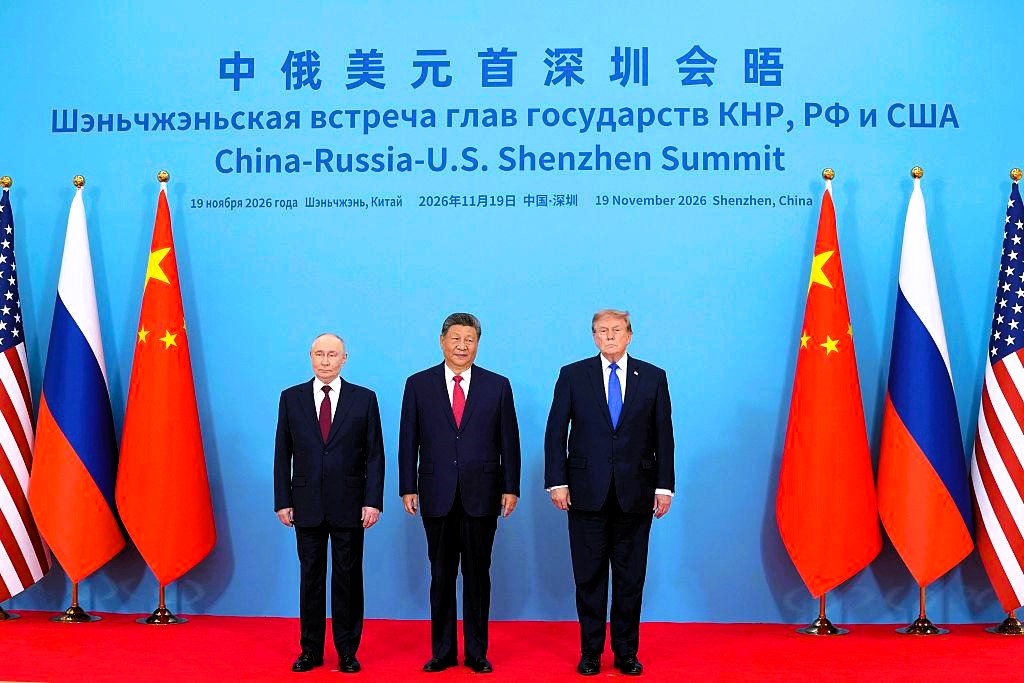
Trump, Xi, and Putin meet at the summit in Shenzhen after Trump’s midterm defeat. Explore the peace declaration, Ukraine, nuclear security and the future of global power.
https://mrpo.pk/why-china-overtook-america/
Introduction: Three Leaders, One Table, A Changing World
What happens when the leaders of the world’s three most powerful nuclear-armed countries sit around the same table to discuss the future of international security?
On November 19, 2026, Donald Trump, Xi Jinping and Vladimir Putin met in Shenzhen, China, for an unprecedented trilateral summit. It was the first face-to-face meeting between the leaders of the United States, China and Russia.
The meeting produced a joint document titled the China-Russia-U.S. Heads of State Declaration toward Peace. Its four main areas covered United Nations reform, energy cooperation, international judicial jurisdiction and nuclear security.
On the surface, the declaration presents an encouraging message. Three countries with enormous military capabilities have publicly committed themselves to international security and dialogue.
But the political circumstances surrounding this meeting make it considerably more interesting.
Trump arrived in Shenzhen after suffering a major defeat in the November 3 American midterm elections. Democrats won control of both the House of Representatives and the Senate, ending Republican control of Congress. He remains President, but his ability to shape American policy now faces a stronger domestic political challenge.
Meanwhile, Xi has an opportunity to present China as a central diplomatic power, while Putin gains international recognition as an equal participant in discussions about the future of global security. The central question is therefore bigger than the summit itself.
Are we witnessing the emergence of a new international order, or are three powerful leaders attempting to reshape the existing system around their own political interests?
Trump, Xi and Putin issue joint declaration after historic meeting
Following the summit in Shenzhen, the countries issued a joint declaration, vowing dialogue on reducing nuclear risks and reforming the UN, and saying they plan to increase supplies of petroleum products.
Sitting around a very large conference table, the three leaders also addressed the media together.
Xi said global powers bear “special responsibilities” in today’s interconnected world. Trump said “no peace was ever forged by declining opportunities for engagement”. And Putin called for constructive co-operation.
Despite the rhetoric and imagery, the joint statement from the three countries provided minimal substance, our North America correspondent writes.
Our eastern Europe correspondent, reporting from Kyiv, says that as Putin spoke of peace in China, Russian strikes were hitting the Ukrainian capital.
1. The Shenzhen Summit: Why This Meeting Matters
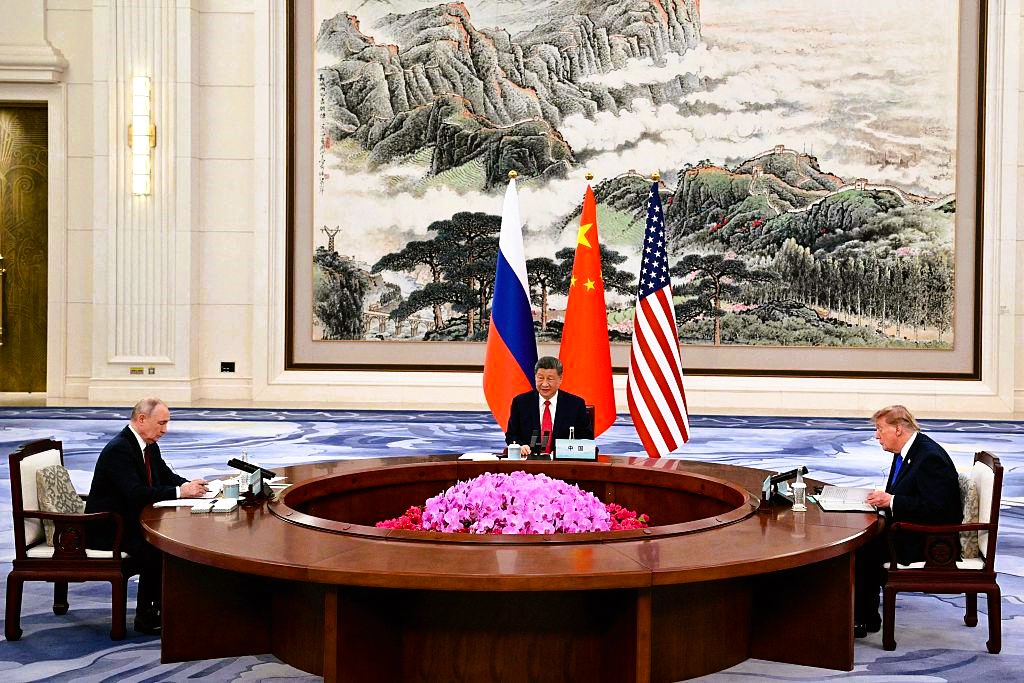
The United States, China and Russia are not traditional allies. They compete economically, politically, technologically and militarily. Their interests frequently conflict, particularly over Taiwan, Ukraine, European security, international trade and military influence.
Bringing their three leaders together is therefore diplomatically significant. The meeting also sends a message to the rest of the world: despite their disagreements, these governments believe they have sufficient common interests to discuss the rules governing international affairs.
Three Leaders, Three Different Objectives
Although the leaders issued a joint declaration, their motivations should not be confused.
Donald Trump: Rebuilding International Influence
Trump has consistently presented himself as a dealmaker capable of negotiating directly with America’s rivals. The summit offered an opportunity to:
- Demonstrate American diplomatic leadership.
- Establish direct communication with Moscow and Beijing.
- Explore nuclear risk reduction.
- Advance American economic and energy interests.
- Strengthen his international political legacy.
However, his domestic electoral defeat complicates this ambition.
Xi Jinping: Establishing China’s Diplomatic Leadership
For Xi, hosting the meeting offered an opportunity to reinforce China’s position as an indispensable international power. China wants greater influence over international institutions and global economic arrangements.
The summit supports that ambition by placing Beijing at the centre of discussions involving Washington and Moscow.
Vladimir Putin: Restoring Russia’s International Position
Putin has faced years of Western sanctions, diplomatic pressure and international criticism following Russia’s invasion of Ukraine. Meeting the American and Chinese presidents on equal diplomatic terms provides an opportunity to demonstrate that Russia remains a major international power.
It also creates opportunities to discuss energy cooperation, sanctions, and security arrangements. The three leaders may share certain interests, but they do not necessarily share the same vision of the future.
2. The Four-Point Peace Declaration: What Did They Actually Agree?
The joint declaration deserves closer examination because its language is broad, but its political implications could be considerable.
2.1 United Nations Reform
The three countries committed themselves to reforming the United Nations so that it could respond more effectively to international challenges. All three are permanent members of the UN Security Council and possess veto powers. This creates an interesting contradiction.
The countries calling for reform are also among those with the greatest influence over the existing system. Important questions include:
- Do they want to make the United Nations more representative?
- Will developing countries receive greater influence?
- Will the Security Council become more effective?
- Or are the three powers primarily interested in reducing restrictions on their own international policies?
UN reform is necessary, but its purpose matters. A more effective international organisation should strengthen collective security, not simply make powerful governments more comfortable with the decisions they take.
2.2 Energy Cooperation and Refined Petroleum Products
The three countries also announced plans to increase the production and supply of refined petroleum products. This is an important economic commitment.
The United States is a major energy producer. Russia remains an important international energy supplier, while China has enormous energy requirements. Greater cooperation could affect international petroleum markets, shipping arrangements and energy security.
However, the declaration does not establish a common energy market or provide a detailed mechanism for removing sanctions. The practical implications will depend on future arrangements.
The bigger question is whether energy cooperation could gradually weaken the economic restrictions that have isolated Russia from important Western markets.
It could also create new competition for traditional energy exporters, including countries in the Middle East.
2.3 Nuclear Security: A Promise That Cannot Be Ignored
The three leaders reaffirmed a principle first expressed during the Cold War: A nuclear war cannot be won and must never be fought. The statement is important because the United States, Russia and China possess enormous nuclear capabilities. Their decisions affect the security of virtually every country.
However, declaring opposition to nuclear war is easier than reducing the weapons and military doctrines that make such a conflict possible.
The declaration promises dialogue on:
- Reducing nuclear risks.
- Preventing nuclear proliferation.
- Maintaining strategic stability.
- Strengthening international security.
What remains unclear is whether this dialogue will produce measurable arms-control commitments.
Will the three countries discuss nuclear weapons limits, military transparency, early-warning systems and mechanisms to prevent accidental escalation? Without practical arrangements, the declaration remains an expression of principle rather than a new nuclear security framework.
2.4 The International Criminal Court: A Controversial Commitment
Perhaps the most politically sensitive element concerns the International Criminal Court (ICC). The declaration emphasises state consent and respect for the immunities of government officials. It also states that the ICC and similar institutions must not abuse their jurisdiction. This position reflects a longstanding disagreement between national sovereignty and international judicial authority.
Russia has strongly opposed the ICC following its arrest warrant for Putin over alleged war crimes in Ukraine.
The United States has historically resisted the court’s jurisdiction over American personnel and officials in certain circumstances.
China is also not a party to the Rome Statute that established the ICC.
The three governments, therefore, have different reasons for questioning the reach of international judicial institutions. But an important distinction must be maintained.
Respect for national sovereignty does not automatically eliminate international responsibility for serious violations of international law.
If international judicial institutions become weaker without an effective alternative, who protects victims of war crimes and abuses committed by powerful governments? This is one of the declaration’s most consequential unanswered questions.
3. Trump’s Midterm Defeat: Can a Politically Weakened President Reshape the World?
The timing of the Shenzhen summit makes this question particularly important. On November 3, American voters delivered a major electoral setback to Trump’s Republican Party. Democrats won control of both chambers of Congress.
With the new Congress scheduled to take office in January 2027, Trump faces the prospect of two years of divided government. This changes the political environment surrounding his international ambitions.
3.1 What Has Trump Actually Lost?
Trump remains President of the United States. He continues to command the executive branch, direct American foreign policy within constitutional limits and serve as commander-in-chief.
However, losing Congress has significant consequences.
Legislative Control: Democrats can block or reshape much of the administration’s legislative agenda.
Financial Control: Congress controls federal appropriations, including funding for military assistance, diplomatic programmes and defence priorities.
Investigative Powers: Democratic committee chairs can investigate administration decisions and demand explanations from government officials.
Appointments: The Senate has an important role in confirming senior government appointments, including ambassadors and other officials.
Foreign Policy Oversight: Congress can challenge policies involving sanctions, military operations and international commitments.
The result is a politically weaker president, not a powerless one.
3.2 Why Did the Summit Become More Important After the Electoral Defeat?
The summit offered Trump an opportunity to demonstrate that his international influence remains substantial despite domestic political opposition. There are several possible explanations.
First, it allowed him to present himself as a global negotiator rather than a politically weakened president.
Second, a successful agreement with Xi and Putin could become a major part of his presidential legacy.
Third, he may want to secure diplomatic understandings before the new Democratic-controlled Congress begins exercising its full powers. This last point deserves attention. The summit took place before the new Congress took office in January.
However, there is no established evidence that the meeting was deliberately arranged to bypass the incoming Congress. The important issue is that Trump has a limited political window in which to pursue major initiatives with the existing Republican-controlled institutions.
3.3 Can Trump Commit America to Long-Term International Agreements?
The answer is yes, but there are important constitutional limitations. American presidents have considerable authority to negotiate international arrangements. However, not every presidential agreement has the same legal status.
Executive Agreements
Presidents can negotiate certain international agreements without obtaining a new two-thirds Senate vote. These may cover diplomatic cooperation, security coordination and other matters within existing executive and statutory authority. However, future administrations may be able to withdraw from or reverse many such arrangements.
Formal International Treaties
Under Article II of the American Constitution, formal treaties require the approval of two-thirds of the senators present. With Democrats controlling 56 Senate seats, they cannot independently approve a treaty requiring a two-thirds majority. Assuming all 100 senators are present, at least 11 Republican votes would also be needed.
Agreements Requiring Congressional Funding
Some international commitments require new legislation or appropriations. A president cannot simply promise unlimited American financial or military support without regard to congressional authority. This is particularly important for long-term defence arrangements, military assistance and major economic commitments. The distinction is straightforward:
Trump can negotiate with Xi and Putin, but he cannot guarantee that every agreement will receive congressional approval or survive a future change of administration.
3.4 Will Democrats Support Trump on International Issues?
Democrats are not automatically opposed to every policy proposed by Trump. American foreign policy has traditionally included areas of bipartisan cooperation. However, the substance of an agreement will determine the level of support.
Nuclear Arms Control
Democrats could support meaningful negotiations that reduce nuclear risks. An agreement that strengthens international security may attract bipartisan support.
Ukraine
Democrats are likely to scrutinise any settlement that appears to reward Russia’s military aggression or compromise Ukraine’s sovereignty. They may support negotiations but oppose the terms.
China
Democrats may support diplomatic engagement while continuing to oppose policies they consider harmful to American economic, technological or security interests.
Russian Sanctions
Removing restrictions without meaningful Russian concessions could face considerable resistance.
International Criminal Court
Democrats are likely to question any arrangement that weakens international accountability or provides excessive protection to government officials.
NATO and European Security
Any attempt to weaken traditional American security commitments to Europe could create significant political opposition. The crucial distinction is that Democrats may support the objective of peace while rejecting the political price Trump is willing to pay to achieve it.
4. Ukraine: The Conflict That Remains Unresolved
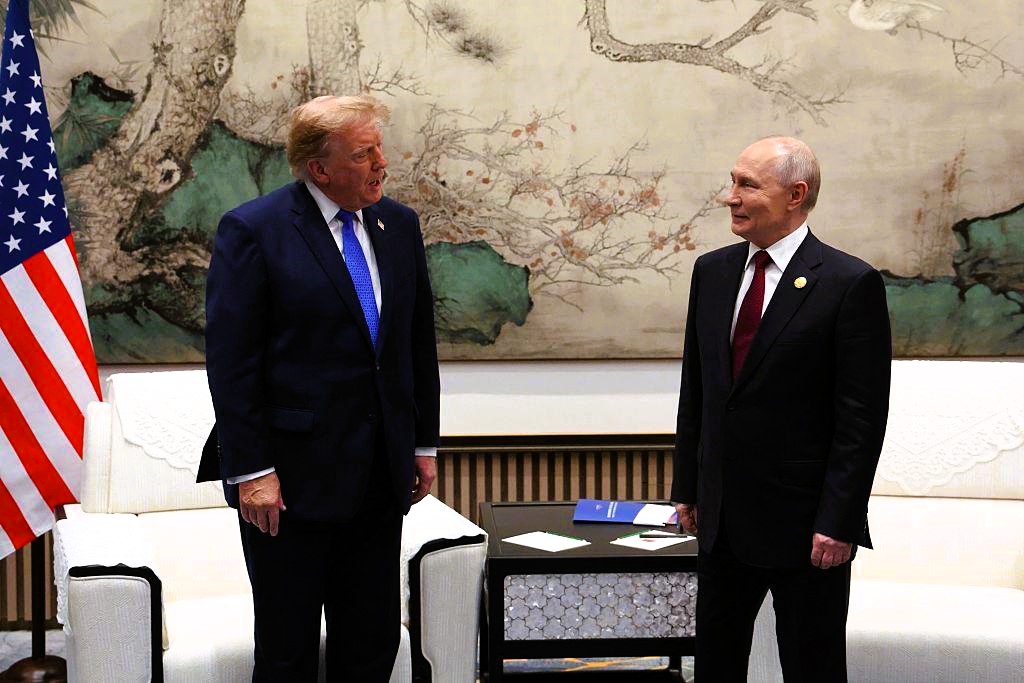
The Ukraine war was reportedly discussed during the summit, but the joint declaration contains no specific agreement about ending the conflict. This omission is significant.
Trump wants to negotiate an end to the war. Putin wants an outcome that protects Russian strategic interests and recognises its territorial claims.
China maintains a close economic and diplomatic relationship with Moscow while presenting itself as a potential diplomatic intermediary. These positions do not automatically produce a common solution.
4.1 Can Three Leaders Decide Ukraine’s Future?
This is one of the most sensitive questions surrounding the summit. Any settlement involving Ukraine’s territory, security, or political future must take Ukraine itself into account.
A peace agreement negotiated exclusively by major powers could create serious problems if the country directly affected is excluded from meaningful participation.
Important questions include:
- Would Russia agree to withdraw from occupied territories?
- Would Ukraine receive credible long-term security guarantees?
- What would happen to international sanctions?
- Would European governments support the proposed settlement?
- Could a ceasefire become a permanent political arrangement?
A diplomatic settlement cannot be judged simply by whether the fighting stops. Its fairness, durability and enforcement mechanisms matter equally.
4.2 Europe’s Strategic Anxiety
Europe has considerable interests at stake. The Ukraine war has transformed European defence planning and raised questions about the reliability of American security commitments.
If Washington and Moscow negotiate a settlement without meaningful European participation, European governments could find themselves facing a security arrangement they did not help design.
This could encourage Europe to strengthen its independent defence capabilities. It could also deepen disagreements within NATO.
The wider issue is whether Europe continues as a central participant in decisions about its own security or becomes increasingly dependent on arrangements negotiated by Washington, Moscow and Beijing.
5. The G3: Is a New Global Power Structure Emerging?
The Shenzhen summit has encouraged discussion about a possible G3 arrangement involving the United States, China and Russia.
However, the term should be understood as an informal description of the three-power relationship, not an established international organisation or alliance. The question is whether their cooperation could gradually change the international balance of power.
5.1 From Western Dominance to Multipolar Diplomacy
For decades, the United States and its Western allies exercised enormous influence over international financial institutions, security arrangements and diplomatic decision-making.
China’s economic rise and Russia’s continued military influence have challenged parts of this structure. Many developing countries also want greater representation in international institutions. A multipolar system could create opportunities for countries that previously had limited diplomatic choices. But it could also produce competing spheres of influence.
5.2 Are the Three Powers Building a Strategic Understanding?
Their potential areas of cooperation include:
- Greater influence over international security arrangements.
- Reform of international institutions.
- Energy cooperation.
- Resistance to external interference in domestic political affairs.
- Greater control over national economic and security policies.
Yet their disagreements remain substantial.
The United States views China’s technological and military expansion as a strategic challenge.
Russia increasingly depends on China economically, but it does not necessarily want a subordinate relationship.
China wants international influence without becoming entangled in every Russian or American conflict. Their cooperation is therefore likely to remain selective unless their underlying strategic interests change.
5.3 Who Decides the Rules of the New World?
The biggest danger of a major-power understanding is that smaller countries may have little influence over decisions affecting their security. The three governments possess permanent seats on the UN Security Council and enormous military capabilities. But most countries affected by their decisions were not represented at the Shenzhen table.
A multipolar world may reduce dependence on a single dominant power. It does not automatically become a fairer world.
6. Energy, Sanctions and the Global Economic Consequences
The energy component of the declaration deserves attention beyond its immediate economic implications. The three countries have different strengths and requirements.
America has substantial energy production capacity. Russia has enormous petroleum and natural gas resources. China remains one of the world’s largest energy consumers. Greater cooperation could influence global supply patterns.
6.1 Could Energy Cooperation Undermine Western Sanctions?
Russia has faced extensive restrictions following its invasion of Ukraine. These restrictions affect energy exports, financial transactions, shipping and access to Western markets. An increase in refined petroleum production and supply does not automatically remove these restrictions.
However, if cooperation develops into broader arrangements, it could change the economic environment in which sanctions operate.
The important questions are:
- Will the United States reconsider any existing restrictions?
- Could Russia gain greater access to international markets?
- Will China expand its role in energy processing and distribution?
- Could new supply arrangements affect global petroleum prices?
The declaration provides no detailed answers.
6.2 Who Could Benefit?
United States: Potential economic and diplomatic opportunities through energy cooperation.
China: Greater flexibility in securing energy supplies.
Russia: Potential access to additional markets and improved international economic relations.
Middle Eastern Producers: Increased competition in international energy markets.
Developing Countries: Potential benefits from greater supply and price stability, although actual outcomes will depend on implementation. For countries heavily dependent on imported petroleum, including Pakistan, energy security is a major concern.
However, cheaper energy cannot be assumed until actual production, supply arrangements and market conditions become clear.
7. The International Criminal Court: Who Protects the World From Powerful Leaders?
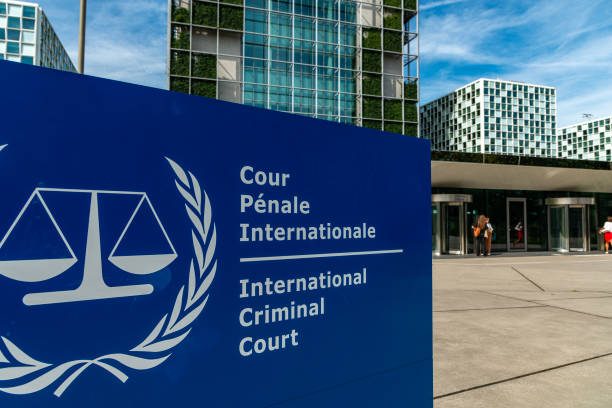
The ICC issue deserves a broader examination because it concerns the future of international accountability. The court was established to investigate and prosecute individuals accused of serious international crimes, including genocide, crimes against humanity and war crimes, within its jurisdiction.
Its authority is not unlimited. It operates under the Rome Statute and depends heavily on state cooperation. The United States, China and Russia are not parties to the Rome Statute. Their concerns about jurisdiction and state sovereignty therefore reflect longstanding disagreements with the existing international legal framework. But the political implications of their joint position are considerable.
7.1 National Sovereignty Versus International Justice
Governments have legitimate reasons to oppose politically motivated legal interference.
However, national sovereignty should not become a blanket excuse for avoiding responsibility for serious international crimes. The challenge is finding a balance between protecting sovereign states and ensuring that individuals responsible for grave violations can be held accountable.
7.2 Who Benefits From Weaker International Oversight?
Powerful governments may gain greater freedom from international judicial pressure. Smaller countries and vulnerable populations, however, could lose important avenues for seeking justice. This creates an uncomfortable question.
If major powers collectively weaken international accountability mechanisms, what effective alternative will protect people whose governments violate international law? The declaration does not provide one.
8. The Global South: Opportunity or Another Power Struggle?
The summit could have consequences far beyond the three participating countries. Developing nations have long criticised the unequal distribution of influence within international institutions. Many want greater access to investment, technology, energy and international markets. A more multipolar system could offer additional choices.
But there is no guarantee that competition between major powers will automatically improve the position of developing countries.
8.1 Pakistan and the Changing Power Balance
Pakistan has strategic relationships with all three countries, although the nature and depth of those relationships differ.
China is a major economic and strategic partner.
The United States remains important for trade, diplomacy, security cooperation and international financial relationships.
Russia offers potential opportunities in energy and regional diplomacy.
Improved relations among Washington, Beijing and Moscow could create diplomatic and economic opportunities for Pakistan.
Possible benefits include:
- Greater flexibility in energy sourcing.
- Improved regional diplomatic cooperation.
- Opportunities for infrastructure and investment.
- Reduced pressure to choose between competing international partners.
However, Pakistan must also consider the risks. If the three major powers begin negotiating regional arrangements according to their own interests, smaller countries may find their strategic choices restricted. Pakistan’s challenge will be to protect its national interests without becoming dependent on any single power.
8.2 India, the Middle East and Africa
The implications affect several regions. India may welcome a more flexible international environment that supports its strategic autonomy, but it will remain concerned about China’s growing influence.
Middle Eastern countries could benefit from improved energy cooperation and reduced international tensions.
African countries may find additional opportunities for investment and infrastructure development.
But all these regions face the same fundamental question:
Will greater competition among major powers create genuine development opportunities, or simply new forms of economic and political dependency?
9. The Geopolitical Contradictions: Peace Declaration Versus Political Reality
The summit’s language is encouraging, but the underlying contradictions deserve examination.
The three governments have committed themselves to international peace while maintaining enormous military capabilities.
They advocate nuclear risk reduction while continuing to modernise their nuclear forces.
They support UN reform while retaining powerful positions within its existing structure.
They defend national sovereignty while their own foreign policies can have profound consequences for the sovereignty of smaller countries.
They question international judicial authority without presenting a comprehensive alternative accountability system.
None of these contradictions automatically makes diplomatic cooperation meaningless.
Countries with competing interests can still work together on matters of common concern. But declarations should be judged against actual policies.
Peace between powerful countries does not automatically mean justice or security for everyone else.
10. Who Won the Shenzhen Summit?
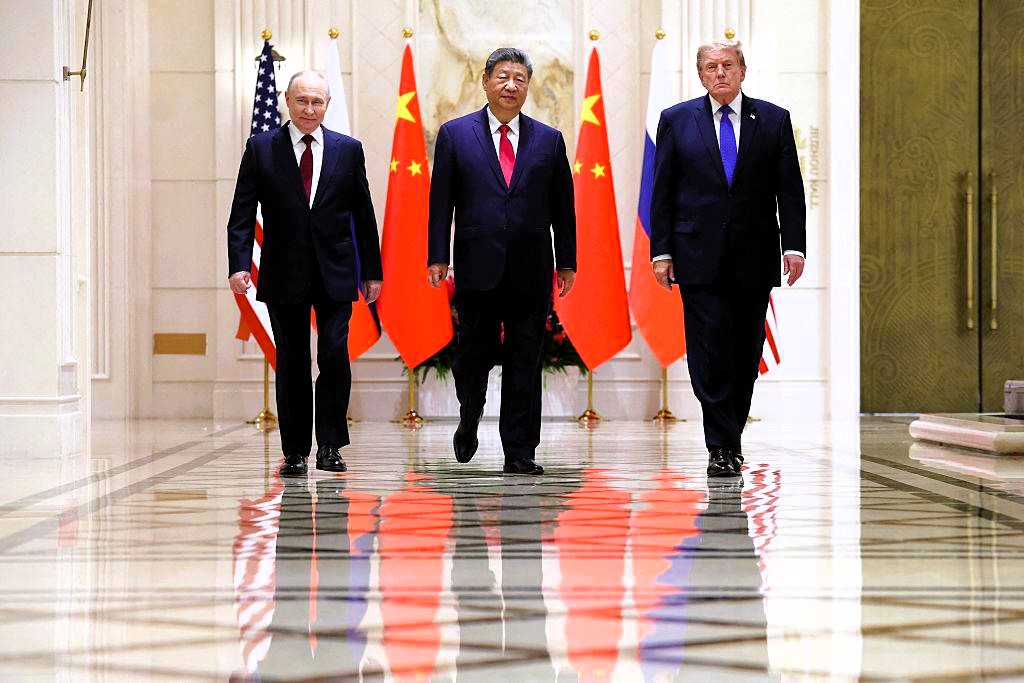
The meeting produced different political benefits for each participant.
Donald Trump: Diplomatic Visibility
Trump gained an opportunity to demonstrate his continued international influence despite the midterm defeat. A successful diplomatic initiative could strengthen his presidential legacy.
However, his ability to turn political declarations into durable American policy remains uncertain.
Xi Jinping: Diplomatic Leadership
Xi arguably gained the greatest immediate diplomatic advantage. Hosting the first-ever meeting of the three leaders allowed China to position itself at the centre of an important international discussion. It reinforced Beijing’s claim that China should have a leading role in shaping global affairs.
Vladimir Putin: International Recognition
Putin gained an opportunity to demonstrate that Russia cannot simply be excluded from major international diplomatic discussions. The meeting also offered potential openings for energy cooperation and discussions about international sanctions and judicial jurisdiction.
The Biggest Winner: China?
China may have achieved the greatest immediate strategic benefit. It hosted the meeting, facilitated the declaration and strengthened its diplomatic visibility.
However, diplomatic prestige should not be confused with a permanent strategic victory. The real test will be whether China can translate this position into practical influence without creating new tensions with Washington or Moscow.
11. What Happens Next? The Five Possible Scenarios
The future of the Shenzhen Declaration will depend on implementation rather than diplomatic language. Five broad outcomes are possible.
Scenario 1: Practical Cooperation
The three countries establish regular communication and make progress on nuclear risk reduction, energy supply and international security. This would give the declaration genuine diplomatic significance.
Scenario 2: Limited Strategic Understanding
They cooperate on selected issues while continuing to compete over trade, technology, military influence and regional security. This may be the most realistic outcome.
Scenario 3: A New Multipolar Framework
The summit becomes the beginning of a broader effort to reshape international institutions and reduce the influence of the traditional Western-led system. However, meaningful reform would require participation from many more countries.
Scenario 4: Symbolic Diplomacy Without Implementation
The declaration remains largely political, with limited progress on its commitments. The three leaders gain diplomatic visibility, but international relations continue along their existing competitive path.
Scenario 5: Renewed Great-Power Rivalry
Disagreements eventually overwhelm their shared interests. The summit becomes a temporary diplomatic episode rather than the beginning of a lasting understanding.
The most important indicators will be concrete agreements, implementation timetables, congressional decisions in Washington and the behaviour of the three governments after the summit.
12. The Biggest Unanswered Question: Can Trump’s Agreements Survive Trump?
This question brings the international and domestic dimensions of the summit together.
Trump has the constitutional authority to negotiate with Xi and Putin. But he faces a Democratic-controlled Congress beginning in January 2027. His ability to secure funding, legislation and bipartisan support will depend on the nature of any agreement. Even if he succeeds, a future American administration may reconsider some of his commitments.
Xi and Putin understand this political uncertainty. They may welcome agreements with Trump while remaining cautious about arrangements that could be reversed by his successor. There is also a wider problem.
International agreements depend on more than the signatures of individual leaders. They require institutions, legal frameworks, financial commitments and political support. Without these foundations, even ambitious diplomatic initiatives can become temporary arrangements.
Trump may negotiate a new understanding with Moscow and Beijing, but he cannot guarantee that America will follow the same course indefinitely.
Conclusion: A Turning Point or a Political Performance?
The Shenzhen summit is historically significant.
For the first time, the leaders of the United States, China and Russia met face-to-face in a trilateral setting and issued a joint declaration covering international security, energy cooperation, UN reform and nuclear risk reduction. But its significance extends beyond the document.
Xi has strengthened China’s diplomatic position. Putin has gained renewed international visibility. Trump has demonstrated that his foreign policy ambitions remain substantial despite a major domestic electoral defeat. Yet the contradictions are difficult to ignore.
Trump must now deal with a Congress controlled by his political opponents. The Ukraine war remains unresolved. The declaration offers no detailed nuclear disarmament roadmap. Its energy commitments lack an implementation framework. Its position on international judicial authority raises serious questions about accountability.
Most importantly, the three leaders have not demonstrated that they can resolve their fundamental strategic disagreements. Perhaps the greatest significance of this meeting lies in what it reveals about the changing international system.
The post-Second World War order was built around institutions intended to prevent major conflicts and establish common rules. Those institutions have serious weaknesses, but replacing them with informal arrangements negotiated by a handful of powerful governments could create even greater uncertainty.
A world with several competing power centres may be more balanced than one dominated by a single superpower. But the balance between powerful states is not the same as justice for smaller nations. And there is one final question that deserves to remain unanswered for now:
Are Trump, Xi and Putin working towards a safer world, or are they negotiating a world in which their own power faces fewer restrictions?
The answer will not be found in the photographs from Shenzhen. It will be found in the decisions they make after the cameras disappear, the agreements they actually implement and the consequences those decisions have for the rest of humanity.
Purpose of This Article
This article examines the geopolitical, constitutional, economic and institutional implications of the November 2026 Shenzhen summit. It distinguishes the leaders’ declared commitments from their practical implementation and evaluates the possible consequences for international security, democratic accountability and the global balance of power.
Frequently Asked Questions
1. Why did Trump, Xi and Putin meet in Shenzhen?
The three leaders met on November 19, 2026, to discuss international security and strategic stability. Their meeting produced a joint declaration covering UN reform, energy cooperation, international judicial jurisdiction and nuclear risk reduction.
2. What is the China-Russia-US Peace Declaration?
It is a four-point joint declaration issued following the Shenzhen summit. It addresses UN reform, increased refined petroleum production and supply, respect for state consent and official immunities, and dialogue on nuclear risk reduction.
3. Did Trump, Xi and Putin agree to end the Ukraine war?
The Ukraine war was reportedly discussed, but the joint declaration contains no specific agreement or roadmap for ending the conflict.
4. Can Trump make long-term agreements with China and Russia after losing the midterm elections?
Yes. The American president retains considerable authority to negotiate international agreements. However, treaties, legislative commitments and agreements requiring congressional funding may face significant opposition from the Democratic-controlled Congress.
5. Could the Shenzhen summit change the global balance of power?
Potentially. Greater cooperation between the United States, China and Russia could influence international institutions, energy markets and security arrangements. However, the summit has not established a formal alliance or a new global governing structure.
References and Further Reading
- The White House — U.S.-Russia-China Heads of State Declaration toward Peace, November 19, 2026.
- Chinese Ministry of Foreign Affairs — China-Russia-U.S. Heads of State Declaration toward Peace.
- Associated Press — Takeaways from the historic summit among Trump, Xi and Putin.
- Associated Press — Russia portrays the Shenzhen meeting as a watershed moment.
- Reuters and other international reporting on the 2026 American midterm elections.
- Congressional Research Service — Constitutional framework governing American treaties and executive agreements.
- International Criminal Court — Rome Statute and jurisdictional framework.
- United Nations — Security Council structure, permanent membership and reform discussions.