
Why China Overtook America: Complete Pew Research Analysis
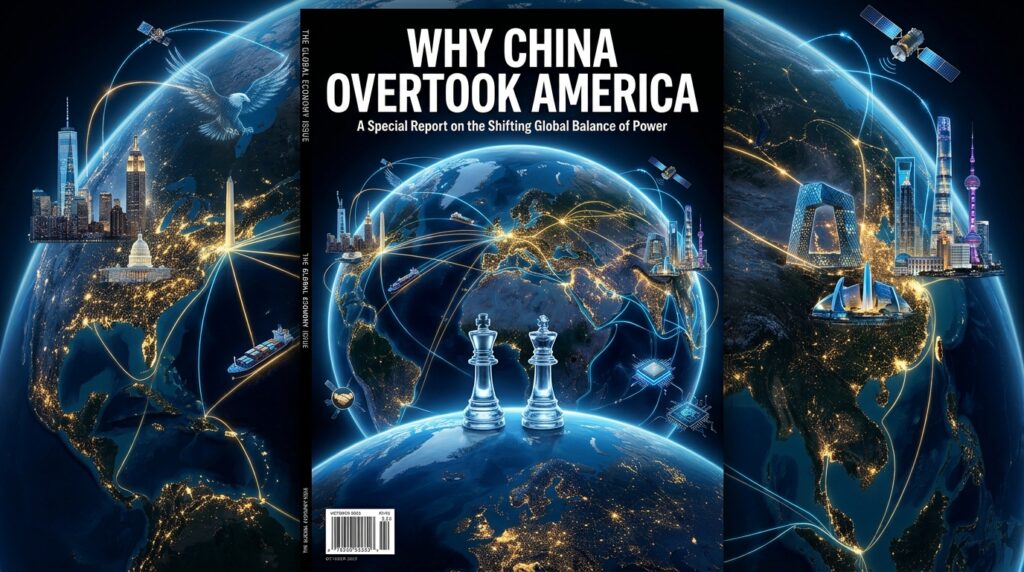
In 2026, however, a landmark international survey by the Pew Research Centre suggested that global public opinion may be entering a new phase. For the first time since Pew began systematically tracking international attitudes toward major powers nearly two decades ago, more countries surveyed expressed a more favourable opinion of China than of the United States.
The findings immediately attracted worldwide attention. Some commentators described the results as the beginning of a new world order, while others argued that they merely reflected temporary political circumstances. The truth lies somewhere between these competing narratives.
This investigative article examines what the Pew Research actually found, how the research was conducted, why China’s international image has improved, why America’s reputation has weakened in several regions, how different U.S. administrations contributed to changing perceptions, and whether this represents a lasting geopolitical transformation or simply another cycle in global public opinion.
People in Many Countries Now View China More Positively Than the U.S.
More also have confidence in Xi than Trump, according to a survey in three dozen countries
Global views of the United States worsened last year as President Donald Trump’s second term began, though most people still had a more positive opinion of the U.S. than China. This year, that is no longer the case.
Views of China have improved in recent years while opinions of the U.S. have worsened, to the point where China is now seen more positively than the U.S. in most of 36 countries surveyed.
Confidence in these countries’ respective leaders to do the right thing regarding world affairs has followed a similar pattern. In the latter half of Joe Biden’s presidency, confidence in him was higher than confidence in Chinese President Xi Jinping across most countries surveyed, though Biden’s rating declined in many places from 2023 to 2024.
Why Global Opinion Matters
Military strength and economic power remain essential components of national influence, but they are no longer sufficient by themselves. Increasingly, countries compete through what political scientists describe as soft power, the ability to influence others through attraction rather than coercion.
Soft power includes diplomacy, culture, education, scientific achievement, humanitarian assistance, innovation, credibility, and international trust. Nations with strong soft power often find it easier to negotiate trade agreements, attract foreign investment, recruit talented students, strengthen alliances, and shape international institutions.
For this reason, governments closely monitor international opinion surveys. While public opinion does not determine foreign policy, it influences the environment in which governments operate.
Understanding the Pew Research Centre
The Pew Research Centre is one of the world’s most respected independent research organisations. Established in 2004, the Centre specialises in public opinion research, demographic trends, religion, technology, politics, media, and international affairs.
Unlike advocacy organisations, Pew does not promote political parties or recommend public policy. Instead, its mission is to collect reliable data using transparent scientific methods and publish objective findings that can be evaluated independently by researchers, journalists, governments, and the general public.
Its reports are widely cited because every survey includes detailed explanations of sampling techniques, questionnaire design, statistical weighting, margins of error, and research limitations.
How the Survey Was Conducted
The 2026 Global Attitudes Survey was among Pew’s most comprehensive international studies. Researchers interviewed more than 42,000 adults across 36 countries and territories representing North America, Europe, Asia, Africa, Latin America, and the Middle East.
Depending on local conditions, interviews were conducted using face-to-face conversations, telephone interviews, or secure online questionnaires. Every questionnaire underwent professional translation and testing to ensure consistent understanding across different languages and cultures.
Researchers applied statistical weighting to ensure that national samples accurately represented each country’s demographic composition. Margins of sampling error were also calculated for every participating country.
Although no survey can perfectly represent global opinion, Pew’s methodology is widely regarded as among the most rigorous available for international public opinion research.
What the Pew Research Found
The headline finding was straightforward yet historically significant. Across a majority of the countries surveyed, respondents expressed a more favourable opinion of China than of the United States. This marked the first time that China surpassed America in overall favorability since Pew began tracking these perceptions nearly twenty years ago.
However, interpreting this result requires caution. The survey measured public perceptions rather than military strength, economic size, political systems, or ideological preferences. A favourable opinion of China does not necessarily indicate support for its political model, just as a less favourable opinion of America does not imply rejection of its democratic institutions or technological leadership.
Many respondents who viewed China positively also expressed concerns regarding censorship, human rights, and political freedoms. Likewise, many respondents who rated America less favourably continued to admire its universities, scientific research, innovation, entrepreneurship, and cultural influence. The survey therefore reflects changing perceptions rather than a definitive shift in geopolitical power.
Why These Findings Matter
International reputation affects far more than diplomacy. Countries with positive global images generally experience advantages in trade, tourism, investment, education, international partnerships, and cultural influence.
Governments that enjoy greater public confidence abroad often find it easier to negotiate agreements, build coalitions, and shape global institutions. Conversely, declining confidence can complicate diplomatic initiatives even when a country retains overwhelming military and economic strength.
This explains why the Pew findings attracted attention from policymakers, economists, diplomats, academics, and business leaders around the world.
Is This the First Time?
Since the early 2000s, Pew has tracked international attitudes toward both the United States and China. Throughout most of that period, America consistently maintained higher favorability ratings despite fluctuations caused by wars, economic crises, and changes in presidential leadership.
The 2026 survey is historically significant because it represents the first time these long-term trends intersected, with China receiving higher overall favorability across the majority of surveyed countries.
This does not mean China has become universally popular or that America has lost its position as a global superpower. Rather, it suggests that international perceptions have evolved alongside profound changes in the global economy and geopolitical landscape.
Public Opinion Is Dynamic
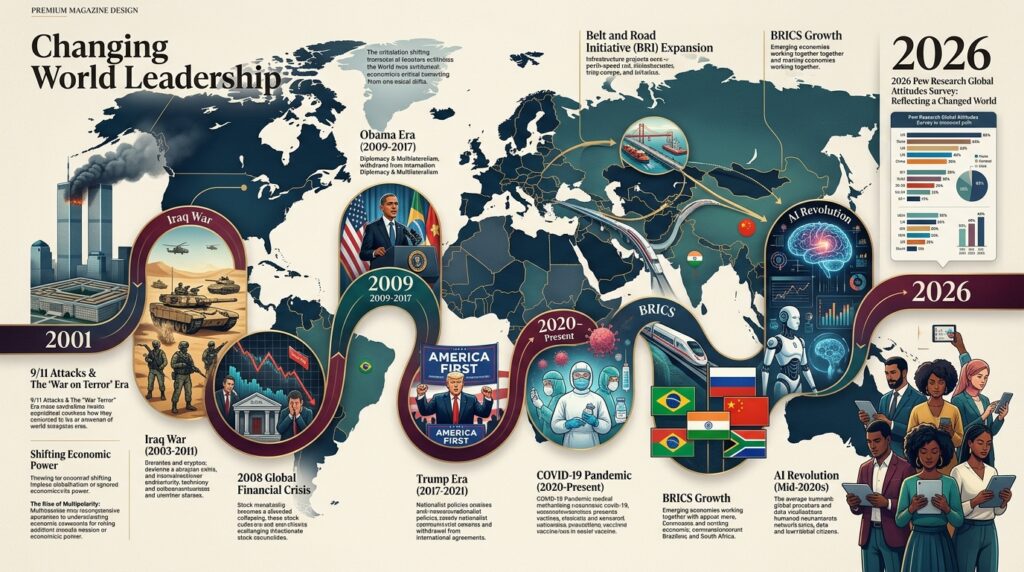
History demonstrates that international opinion changes over time. Following the Iraq War, America’s reputation declined sharply in many countries. During the early years of President Barack Obama, international confidence improved considerably. Later surveys reflected renewed declines during the first Trump administration, partial recovery under President Joe Biden, and further fluctuations after President Trump’s return to office.
China experienced similar shifts. International criticism intensified during the COVID-19 pandemic before improving again through expanded trade, infrastructure investment, and diplomatic engagement. These historical cycles remind us that public opinion is neither fixed nor irreversible.
The Central Question
If the Pew findings reflect long-term change rather than a single event, what forces contributed to this historic shift?
Did America’s global image decline because of prolonged wars, political polarisation, trade disputes, and changing foreign policy priorities? Did China’s expanding economic influence, infrastructure diplomacy, and growing presence across the developing world improve its international reputation? How much responsibility belongs to President Donald Trump’s administration, and how much reflects broader geopolitical transformation?
The following sections examine these questions in detail, beginning with the evolution of America’s international reputation over the past twenty-five years.
America’s Reputation: From Global Leadership to Global Scrutiny
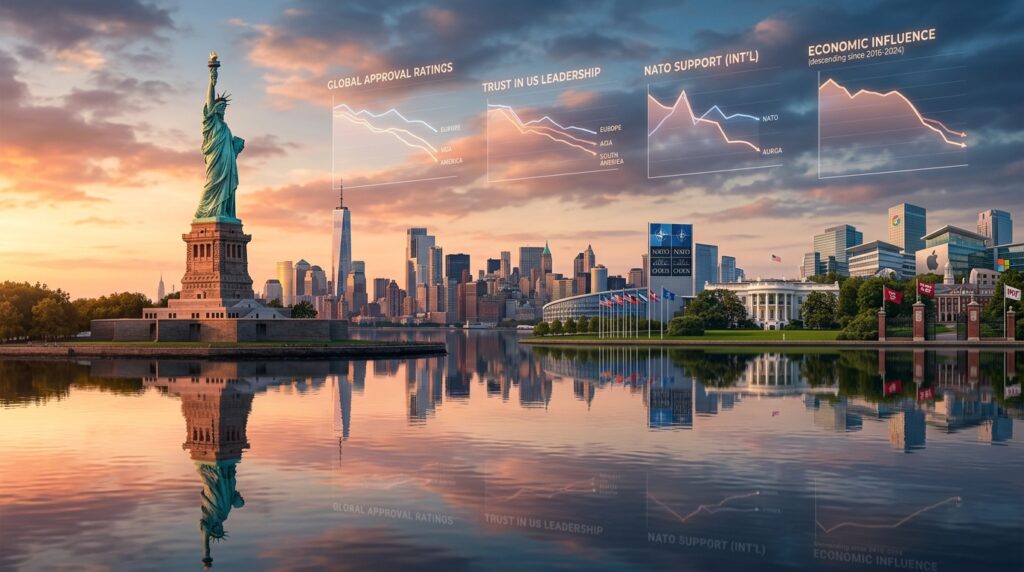
The 2026 Pew Research findings did not emerge suddenly. They represent the culmination of more than two decades of changing international perceptions shaped by wars, economic crises, presidential leadership, technological transformation, and shifting geopolitical realities.
To understand why China now enjoys a more favourable image in many parts of the world, it is necessary to examine how America’s global reputation evolved under successive administrations. The story begins not with Donald Trump, but with the terrorist attacks of September 11, 2001.
The George W. Bush Administration (2001–2009)
Global Sympathy After September 11
The terrorist attacks of September 11, 2001, generated unprecedented international sympathy for the United States. Governments across Europe, Asia, Africa, and the Middle East condemned terrorism and expressed solidarity with the American people. For the first time in its history, NATO invoked Article 5, declaring that an attack against one member constituted an attack against all. The international community broadly supported military action in Afghanistan against al-Qaeda and the Taliban.
At that moment, America’s international reputation was exceptionally strong.
The Iraq War Changed Global Opinion
International attitudes shifted dramatically after the U.S.-led invasion of Iraq in 2003. The Bush administration argued that Iraq possessed weapons of mass destruction and posed an immediate security threat. When those weapons were never found, many governments and independent observers questioned the intelligence assessments that justified the invasion.
The conflict resulted in prolonged instability, large-scale civilian casualties, widespread displacement, enormous financial costs, and regional political consequences that continued for years. Many countries viewed the Iraq War as a turning point that weakened America’s image as a defender of international law and multilateral cooperation.
The Global Financial Crisis
In 2008, another event further affected international perceptions. The collapse of Lehman Brothers triggered the most severe global financial crisis since the Great Depression. Although numerous international factors contributed to the crisis, many people associated it with weaknesses in the American financial system.
The consequences spread rapidly across the world.
- Banking systems came under severe pressure.
- Businesses reduced investment.
- Millions lost jobs.
- International Trade slowed significantly.
- Governments introduced emergency financial measures.
For many international observers, America’s image shifted from economic stability toward financial vulnerability.
The Barack Obama Administration (2009–2017)
A New Diplomatic Tone
Barack Obama entered office promising renewed diplomacy, stronger international partnerships, and greater cooperation with allies. His administration emphasised dialogue, multilateral institutions, climate cooperation, nuclear non-proliferation, and rebuilding relationships that had been strained during the Iraq War.
Major speeches delivered in Cairo, Berlin, and Prague projected an image of cooperation rather than confrontation. International public opinion responded positively. Pew surveys during Obama’s early years showed substantial improvements in global confidence toward American leadership.
America’s Soft Power Recovered
Several factors strengthened America’s international appeal during this period.
- American Universities attracted record numbers of international students.
- Technology Companies expanded their worldwide influence.
- Hollywood continued to dominate global entertainment.
- Scientific Research remained among the world’s strongest.
- Entrepreneurship reinforced America’s innovation leadership.
These developments helped restore significant elements of American soft power.
Challenges Continued
Despite diplomatic improvements, several issues continued affecting international perceptions. Military operations remained active in Afghanistan. Drone strikes in Pakistan, Yemen, and Somalia attracted criticism from human rights organisations. The Syrian civil war exposed limits to American influence, while relations with Russia deteriorated following the annexation of Crimea.
America’s image improved considerably, but it did not fully recover to levels seen before the Iraq War.
The First Donald Trump Administration (2017–2021)
The America First Doctrine
Donald Trump introduced one of the most significant shifts in American foreign policy since the end of the Cold War. His guiding principle, “America First,” emphasised protecting domestic industries, strengthening border security, reducing trade deficits, renegotiating international agreements, and requiring allies to contribute more to collective defence.
Supporters viewed this approach as a long-overdue correction to policies that they believed had disadvantaged American workers and taxpayers. Critics argued that it reduced America’s traditional leadership role within the international system.
Trade Disputes
The Trump administration imposed tariffs on hundreds of billions of dollars’ worth of Chinese imports while also introducing trade measures affecting Canada, Mexico, the European Union, Japan, and several other trading partners.
Supporters believed these actions addressed unfair trade practices and protected American manufacturing.
Critics argued that they increased business uncertainty, disrupted supply chains, and complicated relationships with longstanding allies.
International audiences often viewed these disputes as evidence of a more unilateral American approach to global economic leadership.
NATO and Burden Sharing
President Trump repeatedly urged NATO members to increase defence spending and argued that many allies had relied too heavily on American military protection. His criticism was not entirely new. Previous administrations had expressed similar concerns. However, Trump’s public and direct communication style attracted far greater international attention.
Supporters credit this pressure with encouraging European governments to increase defence budgets.
Critics argue that public questioning of alliance commitments created uncertainty regarding America’s long-term reliability.
Climate Policy
Another important factor influencing international perceptions was America’s withdrawal from the Paris Climate Agreement during Trump’s first administration.
Supporters argued that existing climate commitments placed unfair economic burdens on American industries.
Critics believed the decision weakened international cooperation on climate change and reduced confidence in American global leadership.
Immigration Policy
Immigration became one of the defining issues of Trump’s presidency. International media extensively covered border enforcement, travel restrictions, refugee admissions, family separation policies, and construction of physical barriers along portions of the southern border.
Supporters viewed these measures as necessary for national security and immigration enforcement.
Critics argued that they conflicted with America’s long-standing identity as a nation shaped by immigration.
Regardless of political perspective, immigration policy became closely associated with America’s international image.
The Joe Biden Administration (2021–2025)
Rebuilding Alliances
President Joe Biden sought to strengthen relationships with traditional allies while emphasising diplomacy, NATO cooperation, climate action, and support for democratic partnerships. Many governments welcomed this renewed emphasis on multilateral engagement.
Pew surveys indicated some recovery in international confidence.
New Global Challenges
However, Biden’s presidency also coincided with major international crises.
- Russia’s full-scale invasion of Ukraine.
- Growing strategic competition with China.
- Rapid advances in artificial intelligence.
- Global inflation following the pandemic.
- Supply chain disruptions affecting international commerce.
- The Israel-Hamas conflict and humanitarian concerns in Gaza.
These events complicated America’s diplomatic environment and influenced international perceptions in different regions.
The Return of Donald Trump (2025–2026)
A Different World Than Before
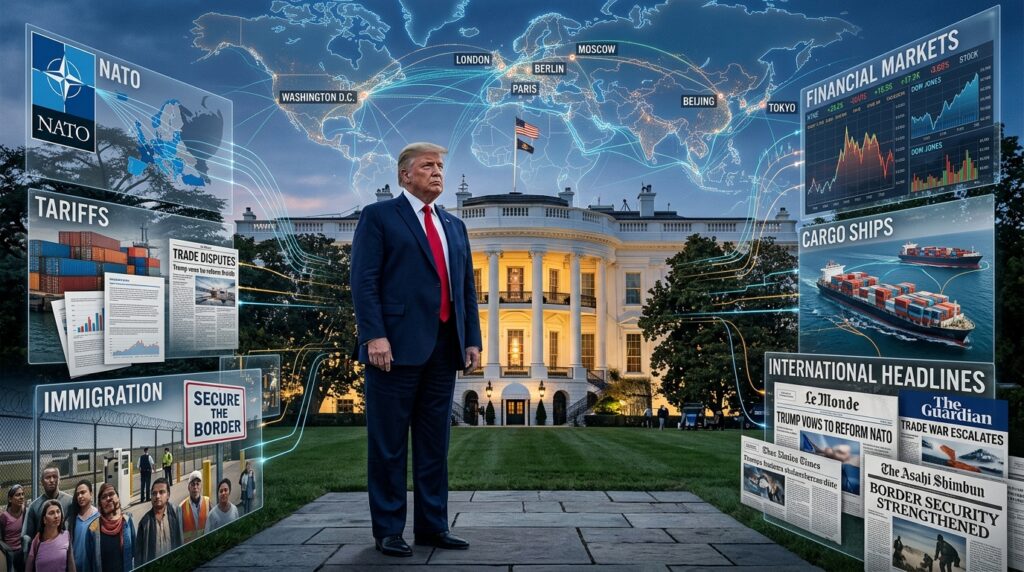
When Donald Trump returned to office, the international environment had changed significantly. China had expanded its economic partnerships across multiple continents. BRICS had welcomed additional members. Artificial intelligence had become a strategic priority. Supply chains were being reorganised, and many countries sought greater strategic autonomy rather than dependence on a single global power.
The geopolitical landscape that Trump inherited differed substantially from the one he left in 2021.
America’s Image Continued Evolving
Public opinion during this period reflected not only current policy decisions but also the cumulative effects of two decades of international developments. The Pew findings therefore cannot be attributed exclusively to one administration.
Instead, they represent the combined impact of changing global economics, technological competition, prolonged conflicts, diplomatic choices, domestic political polarisation, and evolving international expectations.
Was Trump the Primary Cause?
This remains one of the most debated questions in contemporary international politics.
The available evidence suggests that President Trump’s leadership style and policy priorities significantly influenced global perceptions. His positions on trade, alliances, immigration, climate policy, and international institutions shaped how many people viewed American leadership.
However, the broader decline in America’s international image began years before his return to office. Likewise, China’s improving reputation reflects decades of sustained economic growth, expanding trade, infrastructure investment, diplomatic engagement, and increasing influence throughout the developing world.
The Pew survey therefore reflects the convergence of multiple long-term trends rather than the actions of any single leader. To fully understand why global perceptions shifted, it is equally important to examine China’s remarkable economic and diplomatic rise over the past quarter century.
How China Changed the Global Narrative
Understanding why China received more favourable international ratings than the United States requires looking beyond headlines and political rhetoric. China’s improving image did not emerge suddenly. It is the result of more than two decades of sustained economic growth, infrastructure development, diplomatic engagement, technological advancement, and expanding trade relationships across the developing and developed world.
While many countries continue to express concerns about China’s political system and human rights record, they also recognise its growing economic importance. For many governments, China has become an indispensable trading partner, investor, lender, and infrastructure developer.
China’s Economic Transformation
From Manufacturing Hub to Global Economic Power
China’s accession to the World Trade Organisation in 2001 marked a turning point in modern economic history. The country rapidly integrated into global supply chains and became the manufacturing centre for countless consumer and industrial products.
During the following two decades, China experienced extraordinary economic growth, lifting hundreds of millions of people out of poverty while transforming itself into one of the world’s largest economies. Its economic success enabled substantial investment in education, transportation, scientific research, renewable energy, digital infrastructure, and advanced manufacturing.
Today, China plays a central role in global trade and is among the largest trading partners for more than 120 countries.
Economic Influence Became Diplomatic Influence
Unlike the Cold War era, when military alliances largely defined geopolitical influence, the twenty-first century increasingly rewards economic partnerships. China recognised this shift and invested heavily in commercial diplomacy.
Instead of relying primarily on overseas military bases, Beijing expanded its influence through trade agreements, infrastructure financing, industrial cooperation, investment projects, educational exchanges, and development partnerships.
For many developing countries, these initiatives produced visible improvements in transportation, energy production, manufacturing, and employment. Such tangible projects often shape public perceptions more directly than political speeches or diplomatic statements.
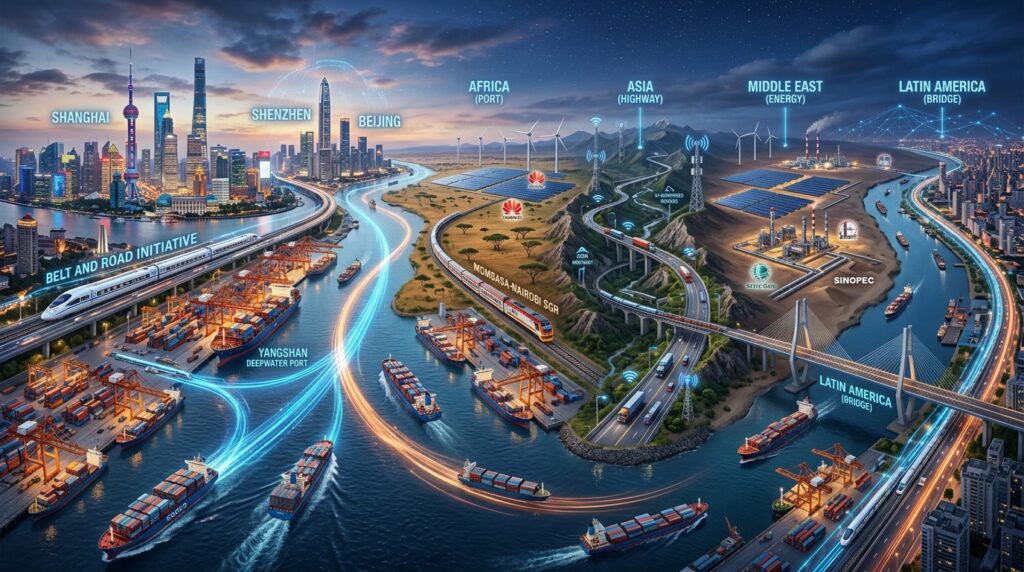
The Belt and Road Initiative
The Largest Infrastructure Program in Modern History
In 2013, President Xi Jinping introduced the Belt and Road Initiative (BRI), one of the most ambitious international development programs ever undertaken. The initiative aims to improve connectivity across Asia, Europe, Africa, Latin America, and parts of the Middle East through large-scale infrastructure investment.
Projects associated with the Belt and Road Initiative include:
- Highways connecting regional markets.
- Railways improving international transportation.
- Deep-water Ports expanding maritime trade.
- Industrial Parks supporting manufacturing.
- Power Plants increasing electricity generation.
- Digital Networks strengthening communication infrastructure.
- Energy Pipelines improving regional energy security.
- Logistics Centres facilitating international commerce.
More than 150 countries and international organisations have signed cooperation agreements relating to the initiative, although participation varies considerably in scale and scope.
Benefits Reported by Supporters
Governments participating in Belt and Road projects frequently identify several advantages.
- Improved Transportation infrastructure.
- Greater Access to electricity.
- Expanded International trade.
- Increased Industrial investment.
- Enhanced Regional connectivity.
- New Employment opportunities.
- Faster Economic development.
Criticisms and Concerns
At the same time, international organisations, economists, and some participating countries have expressed concerns regarding certain projects.
- Debt Sustainability in heavily financed economies.
- Project Transparency during contract negotiations.
- Environmental Impact of infrastructure construction.
- Governance Standards in procurement processes.
- Strategic Dependence on Chinese financing.
- Long-term Financial obligations.
Several governments have renegotiated projects, while others continue expanding cooperation. The overall record differs significantly from country to country, making broad generalisations difficult.
China and the Global South
A Different Diplomatic Approach
One of China’s most effective diplomatic strategies has been its engagement with developing countries, often referred to collectively as the Global South. Chinese leaders consistently emphasise principles such as sovereignty, mutual respect, non-interference in domestic affairs, and shared economic development.
Unlike many Western governments, Beijing generally does not publicly link investment or development assistance to political reforms or governance conditions. Many governments appreciate having an additional major economic partner capable of financing infrastructure and industrial development.
This approach has strengthened China’s influence across Africa, Asia, Latin America, and parts of the Middle East.
Investment Instead of Military Intervention
Another factor influencing international perceptions is the contrast many people draw between American and Chinese engagement abroad. Fairly or unfairly, public opinion often associates the United States with:
- Military Alliances.
- Counterterrorism Operations.
- Economic Sanctions.
- Security Partnerships.
- Democracy Promotion.
- Regional Military Interventions.
China, by comparison, is more frequently associated with:
- Trade Agreements.
- Infrastructure Investment.
- Manufacturing Cooperation.
- Development Financing.
- Technology Partnerships.
- Construction Projects.
This comparison simplifies a much more complex reality. The United States remains one of the world’s largest providers of humanitarian assistance, while China has expanded certain overseas security activities. Nevertheless, public perceptions often depend more on visible experiences than comprehensive policy analysis.
Technology Became a Strategic Asset
China’s rise has not been limited to manufacturing. Over the past twenty years, Chinese companies have become global competitors in multiple advanced industries.
- Artificial Intelligence.
- Electric Vehicles.
- Battery Technology.
- High-speed Rail.
- Renewable Energy.
- E-commerce.
- Telecommunications.
- Digital Payment Systems.
Chinese firms now compete internationally with many established Western corporations, reinforcing perceptions that China has become an innovation-driven economy rather than simply the world’s manufacturing centre.
Alternative International Institutions
China has also supported new international financial institutions designed to complement existing organisations. Examples include the Asian Infrastructure Investment Bank and the New Development Bank established by BRICS members.
Although these institutions remain smaller than the International Monetary Fund and the World Bank, they provide additional financing options for infrastructure and development projects. Many emerging economies welcome greater choice when seeking international investment.
China’s Diplomatic Strategy
Chinese diplomacy increasingly emphasises economic cooperation, regional dialogue, multilateral engagement, and long-term partnerships. Beijing has expanded participation in United Nations peacekeeping missions, climate negotiations, development forums, and regional organisations. Chinese officials frequently describe their country’s role using terms such as cooperation, connectivity, mutual benefit, and shared development.
These messages resonate in many developing countries seeking investment without becoming directly involved in geopolitical rivalry.
Challenges Facing China’s Global Image
Despite improving favorability ratings, China continues to face substantial international criticism. Several issues remain important in shaping global opinion.
- Human Rights concerns in Xinjiang.
- Political Developments in Hong Kong.
- Internet Censorship.
- Military Activity around Taiwan.
- Territorial Disputes in the South China Sea.
- Questions regarding transparency in some overseas projects.
These issues influence perceptions particularly in North America, Europe, Japan, Australia, and several neighbouring Asian countries. Consequently, China’s improving image should not be interpreted as universal approval.
Why China’s Reputation Improved
Several factors help explain why international favorability toward China improved despite continuing criticism.
- Economic Growth created new commercial opportunities.
- Infrastructure Investment produced visible development projects.
- Trade Partnerships expanded across multiple continents.
- Development Financing supported emerging economies.
- Technological Progress strengthened international competitiveness.
- Diplomatic Engagement increased China’s presence in global institutions.
At the same time, declining confidence in certain aspects of American leadership also contributed to the relative improvement in China’s international standing. Public opinion often reflects comparisons rather than absolute judgments.
A World of Two Powerful Nations
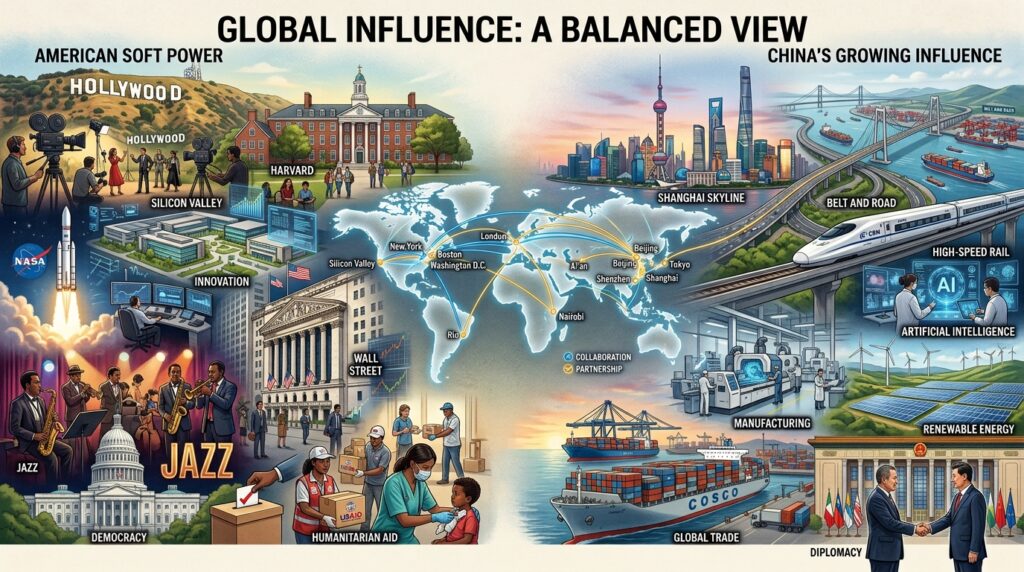
China’s rise does not automatically imply America’s decline. The United States continues to lead the world in numerous fields, including higher education, venture capital, biotechnology, aerospace, entertainment, financial markets, scientific research, and military capability.
The U.S. dollar remains the dominant international reserve currency, while American companies continue shaping the global digital economy. However, influence in the twenty-first century increasingly depends not only on economic and military strength but also on credibility, trust, partnerships, and international reputation.
The Pew findings suggest that China has narrowed the gap in one important dimension of global influence: public perception.
Did Donald Trump Accelerate America’s Declining Global Image?
Perhaps no question generated more discussion following the Pew Research findings than whether President Donald Trump’s policies were primarily responsible for America’s changing international image.
Supporters argue that Trump’s administration strengthened the United States by protecting domestic industries, securing borders, increasing energy production, confronting unfair trade practices, and encouraging allies to contribute more to collective security.
Critics contend that the same policies weakened America’s soft power by creating uncertainty among allies, increasing diplomatic tensions, and reducing confidence in Washington’s long-term international commitments.
An objective examination suggests that both perspectives contain elements of truth.
President Trump neither created America’s reputation challenges nor can he alone explain China’s improving international image. However, many analysts believe his policies and communication style accelerated trends that had already begun years earlier.
The America First Doctrine
A Fundamental Shift in Foreign Policy
The guiding principle of President Trump’s foreign policy was “America First.” The administration argued that previous governments had allowed allies and trading partners to benefit disproportionately from American military protection, open markets, and financial contributions.
The new approach emphasised national sovereignty, economic competitiveness, border security, and reducing what the administration viewed as unfair international arrangements. Domestically, these policies received strong support from many voters who believed globalisation had weakened American manufacturing and employment.
Internationally, reactions were more divided. Many governments interpreted the new approach as a shift away from traditional American leadership toward a more transactional style of diplomacy.
Trade Wars and Tariffs
The Economic Confrontation with China
Trade policy became one of the defining features of the Trump administration. Large tariffs were imposed on hundreds of billions of dollars’ worth of Chinese imports. The administration argued that these measures were necessary because of:
- Intellectual Property theft.
- Forced Technology transfers.
- Industrial Subsidies.
- Trade Imbalances.
- National Security concerns.
Arguments Supporting the Tariffs
Supporters believe the tariffs produced several important benefits.
- Protected Domestic manufacturing.
- Encouraged Supply-chain diversification.
- Reduced Strategic dependence on China.
- Forced Trade negotiations.
- Highlighted Long-standing economic concerns.
Many economists acknowledge that concerns regarding Chinese industrial policies extended well beyond the Trump administration and were shared by both major American political parties.
Arguments Against the Tariffs
Critics argue that the tariffs also produced unintended consequences.
- Higher Consumer prices.
- Increased Costs for manufacturers.
- Disrupted International supply chains.
- Greater Market uncertainty.
- Tensions with traditional allies.
Several governments agreed with Washington’s concerns regarding China but preferred coordinated international action rather than unilateral tariff measures.
NATO and America’s Alliances
Demanding Greater Burden Sharing
President Trump repeatedly argued that many NATO members were spending too little on defence while relying heavily on American military protection. He urged allies to meet agreed defence spending targets and questioned whether the United States should continue bearing a disproportionate share of alliance costs. His criticism generated significant international debate.
Supporters’ Perspective
- European defence spending increased.
- NATO members invested more heavily in military modernisation.
- Alliance burden-sharing became a higher political priority.
Critics’ Perspective
- Public statements created uncertainty regarding alliance commitments.
- European Governments questioned America’s long-term reliability.
- Diplomatic confidence weakened in several allied countries.
Although NATO remains one of the strongest military alliances in history, international surveys indicated that public confidence in American leadership became more divided.
Immigration and America’s International Identity
Immigration policy became another defining issue influencing global opinion. International media devoted extensive attention to border security measures, refugee policies, travel restrictions, deportation efforts, and construction of physical barriers along parts of the U.S.-Mexico border.
Supporters’ View
- Border security is a sovereign responsibility.
- Illegal immigration should be reduced.
- National laws require consistent enforcement.
- Public safety remains a legitimate government obligation.
Critics’ View
- America’s traditional image as a nation of immigrants was weakened.
- Humanitarian concerns attracted international attention.
- Media coverage influenced worldwide perceptions.
Whether viewed positively or negatively, immigration policy became closely associated with America’s global reputation.
Climate Change Policy
Climate policy represented another major difference between Washington and many allied governments. President Trump argued that international climate agreements imposed high economic costs on American workers and industries.
Supporters believed domestic energy production strengthened national economic security.
Critics argued that reduced participation in international climate initiatives weakened American leadership on one of the world’s most significant global challenges.
In Europe especially, climate policy became an important factor influencing public opinion toward the United States.
The Gaza Conflict and Global Opinion
The war in Gaza significantly affected international perceptions of American foreign policy. The United States maintained strong political and military support for Israel while also advocating humanitarian assistance and diplomatic efforts aimed at reducing civilian suffering. Across much of the Middle East, Africa, Latin America, and parts of Europe, many people believed Washington was not applying equal diplomatic pressure to all parties involved in the conflict.
Large demonstrations occurred in numerous countries, reflecting humanitarian concerns regarding civilian casualties and access to aid.
Supporters of U.S. Policy Argued
- Israel has the right to defend itself following terrorist attacks.
- Strategic partnerships remain essential for regional security.
- Diplomatic solutions require negotiation rather than unilateral pressure.
Critics Argued
- Humanitarian concerns required stronger international action.
- Ceasefire efforts should have received greater emphasis.
- American credibility suffered among many international audiences.
The Gaza conflict became one of the most influential issues affecting global public opinion during the survey period.
Relations with Iran
American policy toward Iran also influenced international perceptions. Continuing sanctions, military deployments, regional tensions, and diplomatic confrontations generated concern among governments seeking greater Middle Eastern stability.
Supporters argued that a firm approach discouraged regional aggression and protected allies.
Critics feared that continued escalation increased the risk of wider conflict.
For many international observers, stability rather than confrontation remained the preferred outcome.
Leadership Style and International Confidence
Foreign policy is judged not only by decisions but also by communication. President Trump’s direct and unconventional leadership style attracted extraordinary international attention.
Supporters Viewed Him As
- Decisive.
- Authentic.
- Independent.
- Willing to challenge established institutions.
Critics Viewed Him As
- Unpredictable.
- Confrontational.
- Diplomatically unconventional.
- Less committed to multilateral cooperation.
International opinion surveys consistently demonstrate that confidence in national leaders influences perceptions of their countries. Leadership style therefore became an important element in America’s changing global image.
Evidence Supporting the Trump Administration
A balanced investigation must also examine achievements frequently highlighted by supporters.
- NATO defence spending increased substantially.
- China received greater international scrutiny regarding trade practices.
- Energy production expanded significantly.
- Border security became a central policy priority.
- Manufacturing investment increased in selected sectors.
- Strategic competition with China gained bipartisan support.
From this perspective, declining international popularity does not necessarily indicate declining national strength. History contains numerous examples of powerful countries whose global influence remained substantial despite fluctuations in public opinion.
An Evidence-Based Assessment
The available evidence suggests that President Trump’s administration influenced international perceptions in important ways. Trade disputes, immigration policy, alliance management, climate decisions, leadership style, and responses to international crises all contributed to changing global opinion.
However, attributing the entire shift identified by the Pew survey to President Trump would oversimplify a much broader historical process. America’s changing reputation began well before his return to office and reflects developments extending back more than two decades.
Similarly, China’s improving image is the result of long-term economic growth, expanding trade relationships, infrastructure investment, technological progress, and increasing diplomatic engagement across much of the developing world.
The Pew findings therefore represent the convergence of two long-term trends rather than the success or failure of any single political leader.
Global Opinion Is Not One Opinion
One of the most important lessons from the Pew Research findings is that there is no single global opinion. Different regions evaluate the United States and China through the lens of their own history, economic priorities, security concerns, and political experiences.
A European citizen concerned about NATO may reach different conclusions from an African entrepreneur seeking infrastructure investment, a Southeast Asian government balancing relations between Washington and Beijing, or a Latin American exporter whose economy depends heavily on Chinese trade. Understanding these regional differences is essential for interpreting the survey correctly.
Europe
Security Partnership with the United States
Europe remains America’s closest strategic partner. NATO continues serving as the foundation of European security, particularly following Russia’s invasion of Ukraine. Many European governments continue viewing American military support as indispensable.
Growing Strategic Independence
At the same time, several European leaders increasingly advocate greater strategic autonomy. Public debate focuses on:
- Defence cooperation within Europe.
- Economic resilience.
- Supply-chain Security.
- Climate leadership.
- Reducing dependence on any single global power.
Europe therefore seeks to strengthen its partnership with the United States while maintaining important economic relations with China.
Asia
Balancing Two Superpowers
Asia represents the region where strategic competition between Washington and Beijing is most visible. Countries such as Japan and South Korea continue to rely heavily on American security guarantees while maintaining major trade relationships with China.
Southeast Asian nations generally pursue a balanced approach, strengthening economic cooperation with Beijing while preserving defence and diplomatic ties with Washington. Rather than choosing one side, many governments seek productive relationships with both powers.
Africa
Infrastructure and Development
China’s presence has expanded dramatically across Africa through investment in transportation, energy, telecommunications, manufacturing, and industrial development. Chinese-built roads, bridges, ports, railways, and power plants have become visible symbols of economic cooperation.
At the same time, the United States continues making important contributions through healthcare, humanitarian assistance, education, entrepreneurship, and security cooperation. Public perceptions often reflect whichever partnerships citizens experience most directly.
Latin America
Economic Opportunities
China has become one of Latin America’s largest trading partners, purchasing agricultural products, minerals, energy resources, and manufactured goods. Chinese investment has expanded into renewable energy, transportation, mining, telecommunications, and industrial development. Historical memories of American political involvement also continue influencing public opinion in parts of the region.
Younger generations increasingly evaluate both countries according to economic opportunity rather than Cold War politics.
The Middle East
Security and Energy
The United States has maintained extensive military partnerships throughout the Middle East for decades. China has generally emphasised trade, investment, energy cooperation, and infrastructure development.
The Gaza conflict significantly influenced regional perceptions during the Pew survey period, while China’s role in facilitating dialogue between Saudi Arabia and Iran demonstrated Beijing’s growing diplomatic ambitions. Both countries therefore occupy important but different positions within the region.
Hard Power Versus Soft Power
The Pew survey measured public opinion rather than overall national strength. Hard power includes military capability, economic output, technological leadership, industrial capacity, intelligence resources, and financial influence. Soft power reflects international trust, diplomacy, education, scientific leadership, humanitarian assistance, cultural influence, and global reputation.
The United States remains one of history’s strongest military and economic powers. China has strengthened its position through expanding trade, infrastructure investment, technological innovation, and diplomatic engagement.
The survey indicates that China has narrowed the gap in public perception, not necessarily in every dimension of national power.
Limitations of the Pew Research
Every responsible analysis must acknowledge the limitations of the available evidence.
- The survey covered 36 countries rather than every nation.
- Public opinion changes over time.
- Major international events can influence responses.
- Citizens and governments may hold different views.
- Media coverage influences public perceptions.
- Survey results represent a specific period rather than permanent reality.
These limitations do not reduce the importance of the findings, but they encourage careful interpretation.
Could America Reverse the Trend?
History suggests that international reputation can recover. Several developments could strengthen America’s global image in the future.
- Consistent foreign policy.
- Strong diplomatic engagement.
- Continued Scientific innovation.
- Leadership in artificial intelligence.
- Educational excellence.
- Constructive international cooperation.
The United States continues to possess exceptional strengths in higher education, technology, finance, entrepreneurship, aerospace, biotechnology, and scientific research.
Can China Maintain Its Momentum?
China also faces important long-term challenges.
- Economic growth has moderated.
- Population ageing presents demographic pressures.
- Debt levels remain an economic concern.
- Regional security disputes continue.
- Human rights issues influence international opinion.
- Trade tensions with major economies remain unresolved.
China’s future reputation will depend not only on economic performance but also on how it addresses these broader international concerns.
The World Is Becoming Multipolar
Perhaps the most important conclusion from the Pew findings is not that China has replaced America, but that the international system itself is becoming more multipolar. Countries increasingly seek diversified partnerships rather than exclusive alignment with a single superpower.
Organisations such as BRICS, regional development banks, new trade agreements, and expanding South-South cooperation illustrate this broader transformation. Many governments now pursue strategic autonomy by maintaining productive relationships with both Washington and Beijing.
Final Verdict
The evidence examined throughout this investigation supports a balanced conclusion. China did not improve its international reputation because of a single policy, nor did America’s image decline because of a single president.
Instead, the Pew findings reflect the convergence of multiple long-term developments.
China expanded its influence through sustained economic growth, international trade, infrastructure investment, technological advancement, diplomatic engagement, and stronger partnerships across the Global South.
The United States experienced changing international perceptions influenced by prolonged military conflicts, economic crises, domestic political polarisation, trade disputes, debates over immigration and climate policy, and evolving expectations regarding global leadership.
President Donald Trump’s administration contributed significantly to international perceptions through its leadership style and policy choices. However, attributing the entire shift to his presidency would overlook broader historical and geopolitical forces reshaping the international system for more than two decades.
Likewise, China’s improving image should not be interpreted as universal approval of its political system. Many countries continue valuing American innovation, higher education, democratic institutions, entrepreneurship, scientific leadership, and security partnerships while simultaneously expanding economic cooperation with Beijing.
The Pew Research findings therefore do not announce the end of American leadership or the unquestioned rise of Chinese dominance.
They instead highlight the emergence of a more complex international order in which influence increasingly depends on trust, partnerships, credibility, innovation, diplomacy, and long-term economic cooperation. The twenty-first century is unlikely to belong exclusively to any single nation.
Rather, it is shaping into an era where global leadership will increasingly be measured by the ability to build alliances, solve international challenges, promote sustainable development, encourage technological innovation, and earn the confidence of people around the world.
Frequently Asked Questions
Did Pew Research conclude that China has become the world’s most powerful country?
No. The survey measured public favorability and confidence rather than military, economic, or technological dominance.
Does the survey mean America is declining?
Not necessarily. The United States remains one of the world’s strongest military, economic, technological, and financial powers. The findings relate primarily to international perceptions.
Did Donald Trump alone cause America’s declining global image?
No. His administration influenced international perceptions, but the survey reflects broader historical, political, economic, and geopolitical developments extending over more than two decades.
Why has China’s image improved?
Major contributing factors include expanding trade, infrastructure investment, technological progress, diplomatic engagement, development financing, and stronger economic partnerships with many developing countries.
Will future surveys produce the same results?
Public opinion changes over time. Future international events, economic conditions, leadership changes, diplomatic initiatives, and geopolitical developments may significantly influence subsequent surveys.
An old Urdu proverb says, “زبانِ خلق نقارۂ خدا” (“The voice of the people is like the drumbeat of God”). Similar to the Latin expression Vox Populi, Vox Dei, it reminds us that public opinion deserves careful attention, even though it is not infallible. Surveys such as Pew Research do not determine reality, but they often reveal how people perceive it, and those perceptions can influence diplomacy, trade, elections, and international relations.
References
- Pew Research Centre
- World Bank
- IMF
- WTO
- SIPRI
- United Nations
- AIIB
- OECD
- NATO
- Foreign Affairs
- Council on Foreign Relations