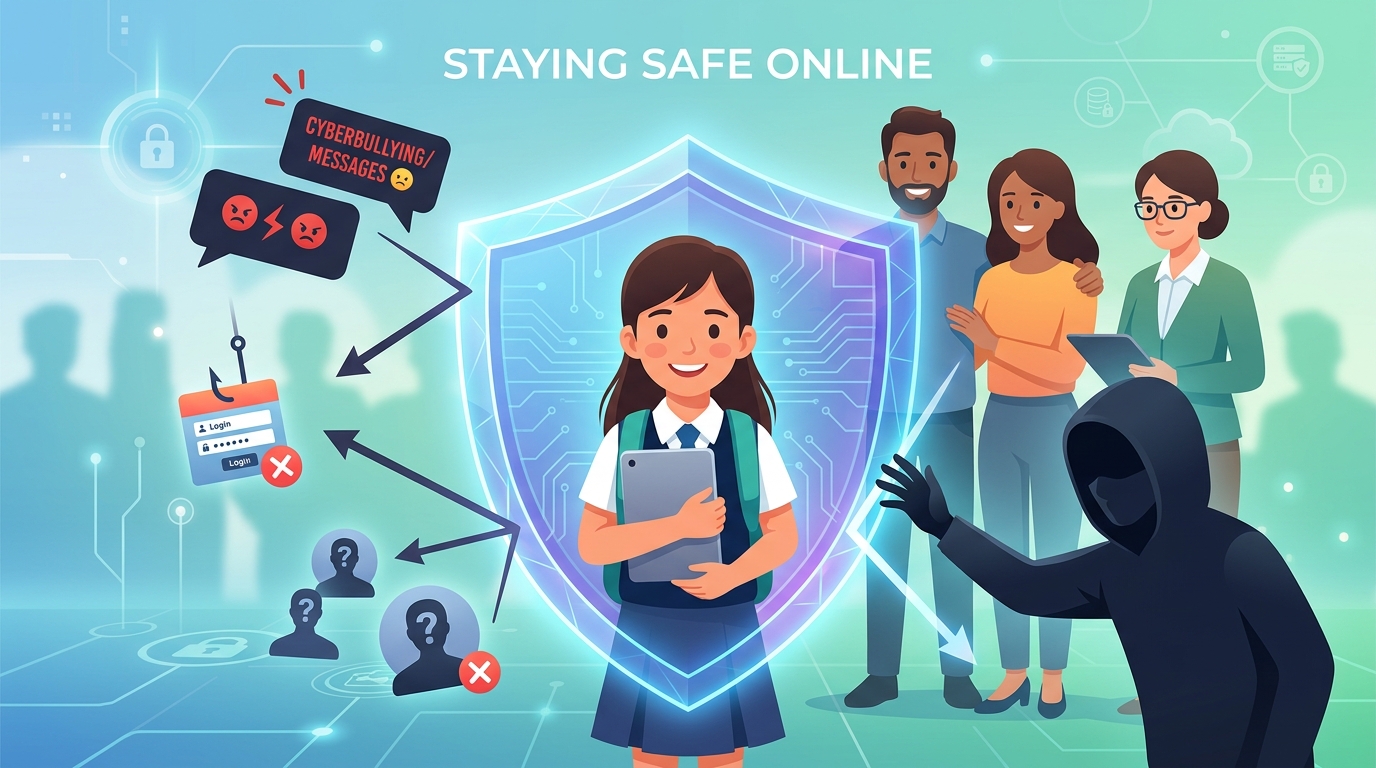

Protecting Children Online Safely:Mobile Phones, Social Media, AI and Screen Time Guide for Parents
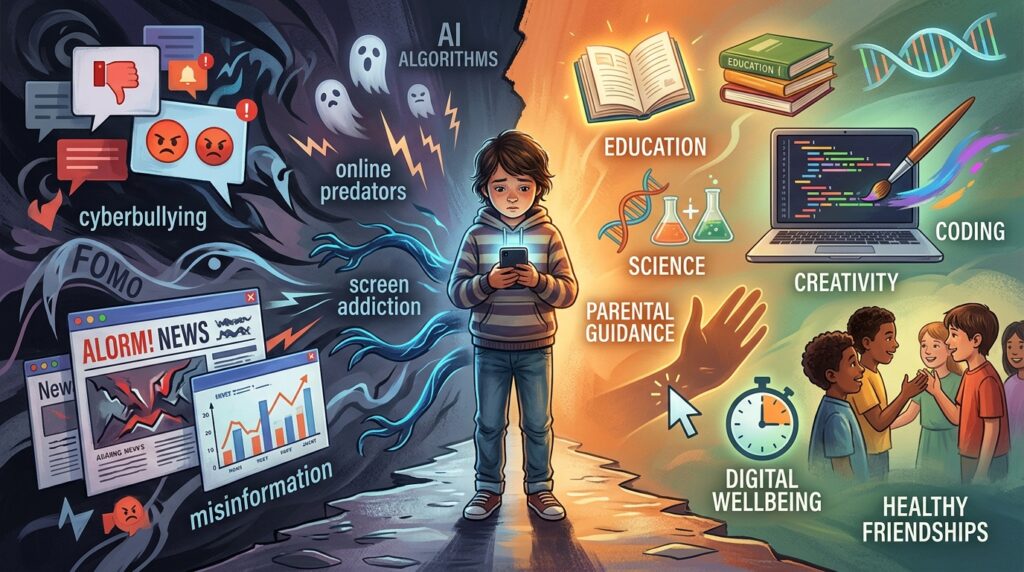
Imagine a seven year old searching for a cartoon on a video platform. Within minutes, artificial intelligence begins recommending hundreds of similar videos based on viewing behavior. Before long, educational content may give way to entertainment, influencer clips, advertising, or even material that parents never intended their child to watch. This invisible guidance is driven not by human judgment but by sophisticated algorithms designed to maximize engagement.
This reality is no longer limited to one country or one generation. Children in New York, London, Sydney, Beijing, Nairobi, São Paulo, and Karachi are growing up in remarkably similar digital environments. Although cultures differ, smartphones, social media platforms, online gaming, streaming services, and AI powered recommendation systems now influence childhood on an unprecedented global scale.
The opportunities are extraordinary. A student living in a remote village can attend online coding classes taught by instructors on another continent. Children can explore ancient civilizations through virtual reality, observe distant galaxies using interactive astronomy applications, collaborate with classmates through digital classrooms, or learn a new language from native speakers across the world. Technology has democratized access to knowledge in ways that were unimaginable only a generation ago.
Yet these same devices also introduce serious challenges. Excessive screen time has been associated with poorer sleep, reduced physical activity, declining attention spans, anxiety, depression, cyberbullying, exposure to online predators, misinformation, privacy violations, financial scams, and addictive patterns of behavior. The very technologies designed to connect people can sometimes increase loneliness, social comparison, and emotional distress.
Governments, educators, pediatricians, psychologists, and technology companies are therefore asking an increasingly important question. How can society preserve the educational and social benefits of digital technology while reducing the risks that accompany constant connectivity?
The answer is not simply banning devices or allowing unrestricted access. Sustainable digital safety depends on balanced policies, informed parenting, responsible technology companies, effective schools, and children who understand how the online world actually works. Digital literacy has become as essential as reading, writing, and mathematics.
Keeping children safe online
Sexual exploitation and abuse is one of the most insidious threats children face online. Artificial intelligence is changing the way they’re exposed to it.
Children are spending more time in the digital world than ever before, often without realizing it. From smart toys and voice assistants to video games, chatbots and learning apps, artificial intelligence (AI) is becoming part of their everyday lives.
Unseen but powerful, AI systems shape children’s digital interactions and choices, suggesting videos to watch, articles to read, music to play and even people to connect with. But the rise of AI-driven technology brings serious risks, especially as changes in digital platforms outpace the safeguards and regulations needed to protect young users.
Most alarming is the threat of technology-facilitated sexual exploitation and abuse. It has never been easier for perpetrators to contact and extort children. Online perpetrators may be someone a child knows or a stranger. They often attempt to earn the child’s trust (or the trust of a caregiver) before manipulating victims into sharing sexually explicit videos or images. In some cases, sexual abuse is livestreamed: From the confines of their homes, perpetrators can direct the abuse of children far away.
Purpose of This Guide
This comprehensive guide examines how countries across the world are responding to concerns about children’s use of smartphones, social media, artificial intelligence, and digital platforms. It combines current research, international policy developments, expert recommendations, and practical parenting strategies into one evidence based resource for families, educators, healthcare professionals, and policymakers.
Rather than encouraging fear of technology, this guide promotes responsible digital citizenship. Readers will discover how to help children build healthy habits, recognize online risks, develop critical thinking skills, and use technology as a powerful tool for education, creativity, communication, and lifelong learning.
Whether you are raising a young child, teaching teenagers, developing public policy, or simply trying to understand the rapidly changing digital world, this guide provides practical insights that can help create safer and healthier online experiences for children everywhere.
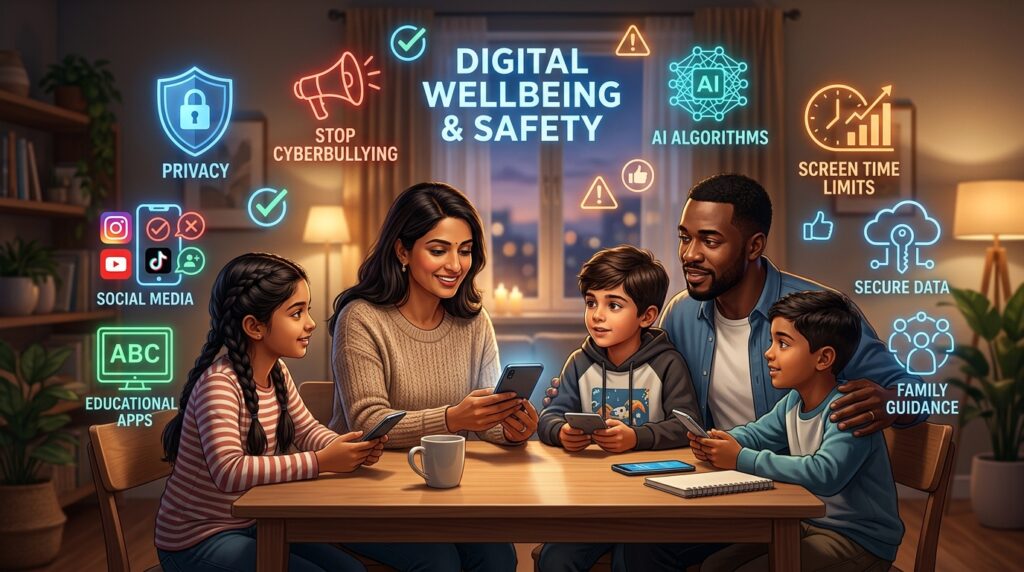
Why This Topic Matters
Nearly every family now faces difficult questions that previous generations rarely encountered.
- What is the right age for a child to own a smartphone?
- How much daily screen time is healthy?
- Should children use artificial intelligence for homework?
- How can parents protect children from cyberbullying?
- Are social media age restrictions actually effective?
- What should families know about online gaming and stranger interactions?
- How can children enjoy technology without becoming dependent on it?
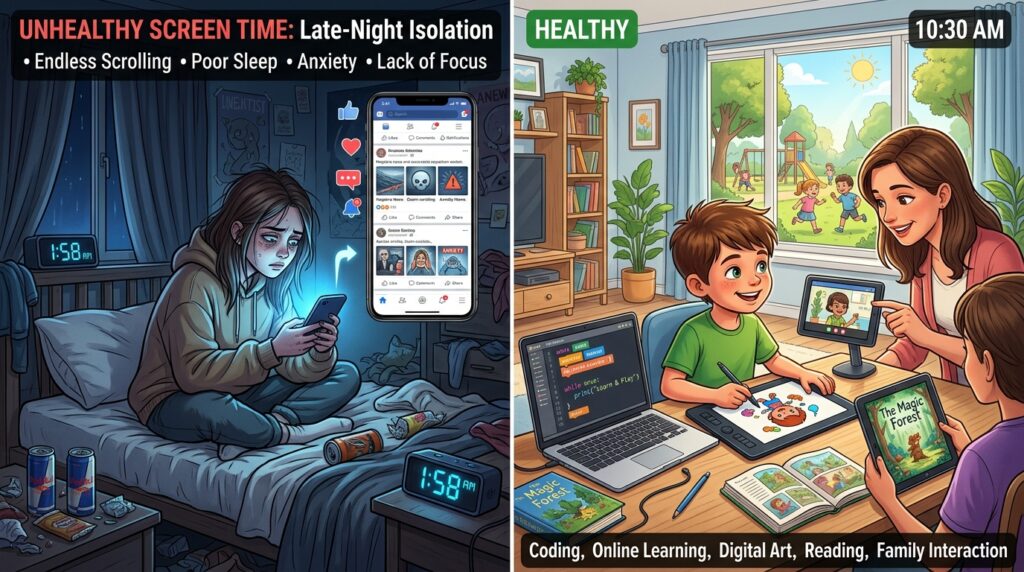
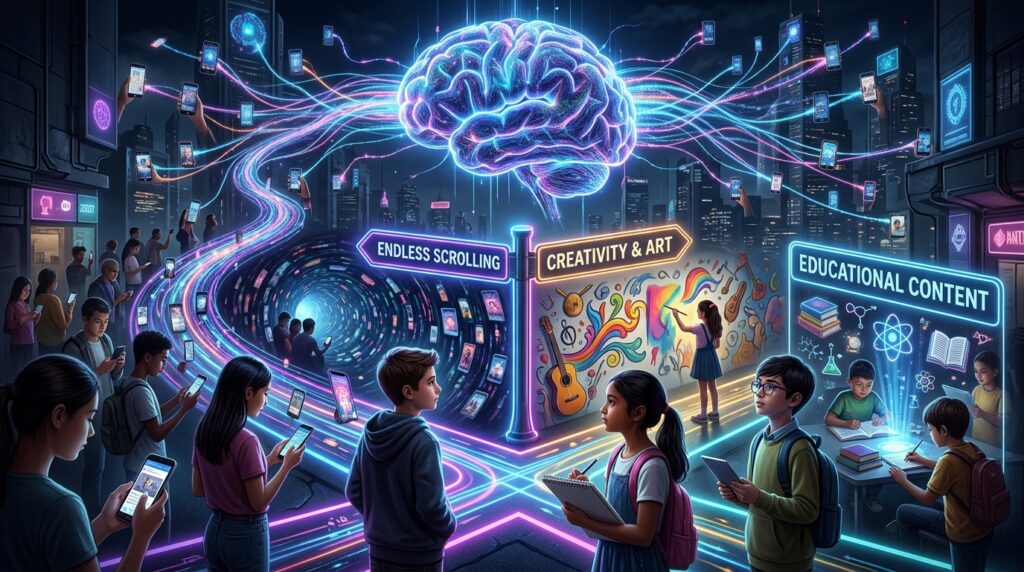
These questions have no universal answers because every child develops differently. However, decades of research increasingly point toward one consistent conclusion. The quality of digital experiences matters far more than simply counting hours spent in front of a screen. Educational activities, creative projects, meaningful conversations, and supervised exploration provide far greater developmental benefits than endless passive scrolling through algorithm driven content.
Parents therefore play a vital role not by eliminating technology from childhood but by teaching children how to use it wisely, critically, responsibly, and safely.
Childhood in the Digital Age
Global Trends in Protecting Children Online
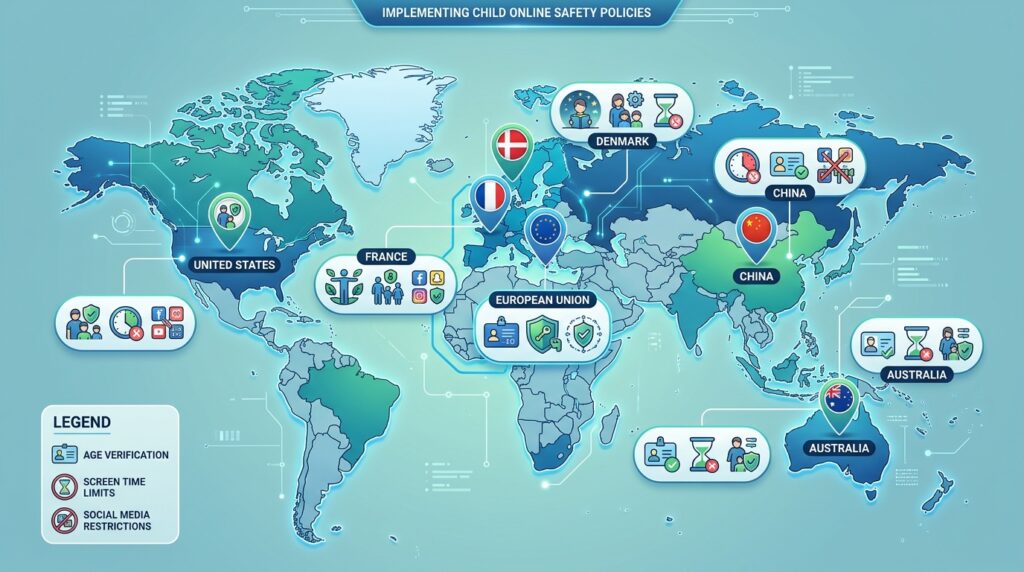
Governments around the world are rethinking how children should access smartphones, social media platforms, online games, and other digital services. While approaches differ, the underlying concern is remarkably similar. Policymakers, educators, and health professionals increasingly recognize that children need stronger protection from addictive digital design, harmful content, cyberbullying, online exploitation, and excessive screen time.
The conversation has shifted significantly over the past few years. Earlier debates focused mainly on internet access and digital inclusion. Today, the emphasis is increasingly on digital wellbeing, online safety, privacy, and age appropriate technology use. Rather than asking whether children should use technology, many countries are now asking how technology should be designed to better protect children.
Although no single model fits every society, examining international approaches offers valuable lessons for parents, schools, and policymakers everywhere.
Australia Takes the Lead
Australia has introduced one of the world’s most ambitious child online safety initiatives. Under legislation scheduled to take full effect in late 2025, major social media platforms are expected to prevent children under the age of 16 from creating or maintaining personal accounts. The responsibility does not fall primarily on parents. Instead, technology companies are expected to implement effective age verification systems and demonstrate that they have taken reasonable steps to prevent underage access. Companies that fail to comply may face substantial financial penalties.
The legislation reflects growing concern over the relationship between social media use and children’s mental health. Australian policymakers argue that technology companies should share responsibility for protecting young users rather than placing the entire burden on families. Early implementation has shown encouraging signs, including the removal of millions of underage accounts. At the same time, experts acknowledge continuing challenges because some teenagers attempt to bypass restrictions through virtual private networks, borrowed devices, or inaccurate age declarations.
The Australian experience demonstrates that legislation alone cannot solve every problem. Effective digital safety still depends on parental involvement, education, and responsible platform design.
Europe Strengthens Child Protection
Across Europe, governments are pursuing similar goals while adopting different legal approaches. France has introduced age related restrictions requiring parental consent for younger teenagers to access many social media services. Denmark has placed children’s digital wellbeing at the center of national policy discussions following concerns about declining life satisfaction among young people.
The European Union has also strengthened protections through the Digital Services Act, which requires large online platforms to better manage risks associated with harmful content, illegal material, targeted advertising, and child safety. Platforms are expected to improve transparency, reduce harmful recommendation systems, and provide stronger safeguards for younger users.
Several European countries are also exploring reliable age verification technologies that protect children’s privacy while preventing unrestricted access to age inappropriate services. Although implementation varies between countries, Europe increasingly views digital wellbeing as a public health issue rather than simply a matter of personal responsibility.
For families, these policies reinforce an important message. Protecting children online requires cooperation between governments, technology companies, schools, healthcare professionals, and parents.
China’s Comprehensive Digital Controls
China has adopted one of the world’s most comprehensive systems for regulating children’s digital activities. Rather than focusing solely on social media accounts, the country has introduced broader controls that include smartphones, applications, online games, and digital content. Children can access a dedicated “Minor Mode” that places limits on screen time according to age groups. Younger children are generally allowed significantly less daily usage than older teenagers. Devices also include overnight restrictions designed to reduce late night screen use and encourage healthy sleep patterns.
Additional safeguards include content filtering, restrictions on communication with strangers, stronger parental supervision tools, and real name registration requirements for many online services. Supporters argue that these measures help reduce excessive screen time and improve children’s wellbeing. Critics, however, raise concerns about privacy, freedom of expression, and the balance between government regulation and individual choice.
Regardless of differing opinions, China’s approach demonstrates how governments are increasingly treating digital childhood as a matter of national policy rather than leaving all responsibility to individual families.
The United States Chooses a Different Path
The United States has not introduced a nationwide social media ban for children. Instead, policymakers have generally focused on encouraging greater transparency, improving parental controls, supporting independent research, and holding technology companies accountable for product design.
The United States Surgeon General has issued public health advisories warning that excessive social media use may contribute to anxiety, depression, poor sleep, cyberbullying, and reduced self esteem among adolescents. Several states have also introduced legislation requiring stronger age verification, parental consent, or additional online safety protections for minors.
American policy discussions often balance child protection with constitutional concerns regarding free speech, privacy, and parental rights. As a result, regulations tend to emphasize informed decision making and platform accountability rather than outright prohibition.
Lessons from Around the World
Although national policies differ, several common themes appear across nearly every country.
- Children deserve stronger online protections than adults.
- Technology companies should share responsibility for digital safety.
- Parents remain the most important influence on children’s online behavior.
- Schools should teach digital literacy alongside traditional academic subjects.
- Healthy technology use depends on education rather than restrictions alone.
These shared priorities suggest that the future of child online safety will likely combine legislation, responsible technology design, education, and active family involvement rather than relying on any single solution.
Getting Involved in Children’s Online Activities
Many parents worry about inappropriate websites, online predators, or cyberbullying. While these concerns are entirely understandable, research consistently shows that active parental involvement is often more effective than relying exclusively on technical restrictions.
Children who regularly discuss their online experiences with trusted adults are generally more willing to report uncomfortable situations, seek advice, and develop healthier digital habits. Open communication creates trust, making it easier for parents to identify potential problems before they become serious.
Instead of asking only, “What are you doing on your phone?” parents might ask questions such as:
- What interesting thing did you learn online today?
- Who do you usually play games with?
- Have you seen anything recently that made you uncomfortable?
- How do you decide whether information online is trustworthy?
- What would you do if someone asked for your personal information?
These conversations encourage critical thinking rather than fear and help children develop confidence when navigating unfamiliar online situations.
Online Safety Rules Every Child Should Know
Every family should establish clear and age appropriate online safety expectations. The following principles provide a strong foundation for responsible digital behavior.
- Follow family rules for using smartphones, tablets, computers, and gaming devices.
- Never share home addresses, school names, phone numbers, passwords, or financial information online.
- Never post photographs or videos that could compromise personal privacy or future reputation.
- Do not arrange to meet anyone first encountered online without parental knowledge and supervision.
- Never respond to threatening, abusive, or suspicious messages.
- Report cyberbullying, harassment, or inappropriate requests immediately to a trusted adult.
- Think carefully before posting because digital content may remain online permanently.
- Remember that not everything seen online is true, especially AI generated or manipulated content.
These simple habits become increasingly valuable as children grow older and begin using more sophisticated digital platforms independently.
How Parents Can Build Healthy Digital Habits
Healthy digital habits develop gradually through consistent guidance rather than punishment. Children learn far more from observing adults than from listening to instructions alone.
Parents can encourage healthier technology use by following several practical strategies.
- Spend time online together and explore educational content as a family.
- Keep internet connected devices in shared family spaces whenever possible.
- Create phone free periods during meals, homework, and family conversations.
- Encourage outdoor activities, sports, reading, music, and creative hobbies every day.
- Discuss how recommendation algorithms influence what children see online.
- Review privacy settings together on new applications and devices.
- Take children’s concerns seriously whenever they report uncomfortable online experiences.
- Model balanced technology use by limiting your own unnecessary screen time.
A child who sees parents constantly checking phones during conversations may struggle to understand why different rules should apply to them. Healthy digital citizenship begins at home and is strengthened through everyday example.
Technology as a Powerful Learning Tool
While public discussion often focuses on digital risks, technology has also created extraordinary educational opportunities for children across the globe. Understanding these benefits helps families make balanced decisions instead of viewing technology as either entirely good or entirely harmful.
Technology Benefits for Children
Learning Without Borders
Digital technology has transformed education by making high quality learning accessible to children regardless of geography. A child living in a rural village can attend virtual science classes, learn computer programming, practice foreign languages with native speakers, or explore museums located thousands of miles away.
Students can watch demonstrations that bring complex scientific concepts to life, conduct virtual chemistry experiments safely, explore the solar system through interactive simulations, or study ancient civilizations using immersive digital reconstructions. Many schools now combine traditional classroom teaching with digital resources that encourage independent learning and critical thinking. For children with physical disabilities or those living in remote areas, online education can provide opportunities that were once difficult or impossible to access.
Real world example: During periods when schools were temporarily closed because of natural disasters or public health emergencies, millions of students continued their education through online classrooms. Although virtual learning could not fully replace face to face interaction, it demonstrated how technology can help maintain educational continuity during challenging times.
Creativity and Innovation
Modern digital devices are far more than entertainment platforms. They allow children to become creators instead of simply consumers. Young learners can compose music, produce short films, design animations, build websites, write stories, create digital artwork, develop mobile applications, and even program robots using beginner friendly coding platforms. These experiences encourage imagination while developing practical skills that may prove valuable throughout adulthood.
Artificial intelligence is also opening new possibilities. Students can use AI powered tools to brainstorm ideas, simplify difficult concepts, practice languages, or receive personalized explanations that match their learning pace. However, children should also understand that AI generated responses may contain errors and should always be verified using reliable educational sources.
Real world example: A twelve year old interested in astronomy can use smartphone applications to identify stars, explore the International Space Station’s location, watch live space launches, and participate in online discussions with astronomy enthusiasts from around the world.
Building Global Connections
Technology has also expanded children’s understanding of different cultures, languages, and perspectives. Carefully supervised communication with students from other countries can promote empathy, cultural awareness, and international friendship.
Language learning applications connect learners with native speakers. Virtual exchange programs allow classrooms from different continents to collaborate on science projects or environmental research. Educational videos introduce children to traditions, wildlife, geography, and history far beyond their local communities. These experiences help children appreciate diversity while preparing them to live and work in an increasingly interconnected world.
Supporting Children with Special Needs
For many children with learning differences or physical disabilities, digital technology can significantly improve independence and educational outcomes. Speech recognition software, text to speech applications, communication devices, visual learning tools, and personalized educational programs provide valuable support that traditional teaching methods alone may not always offer.
Adaptive technologies allow children to participate more fully in classrooms, communicate more effectively, and develop greater confidence in their abilities.
When Healthy Use Becomes Harmful
Despite these benefits, experts increasingly emphasize that positive outcomes depend on balanced and intentional use. Problems usually arise when screens begin replacing sleep, exercise, family interaction, outdoor activities, reading, hobbies, and face to face friendships. Research suggests that the greatest concern is not simply the number of hours spent online but whether digital use becomes compulsive or interferes with healthy childhood development.
A child who spends one hour creating digital artwork differs greatly from another who spends four hours continuously scrolling through emotionally charged social media feeds. Quality matters as much as quantity.
Understanding Screen Addiction
Modern digital platforms are carefully designed to keep users engaged. Infinite scrolling, autoplay videos, personalized recommendations, notifications, rewards, and social approval through likes or comments encourage users to remain online for longer periods. Children and teenagers are particularly vulnerable because the areas of the brain responsible for impulse control and long term decision making continue developing throughout adolescence.
Psychologists increasingly distinguish between frequent technology use and problematic digital behavior. A child who becomes irritable when separated from a phone, loses interest in previously enjoyable activities, neglects homework, or sacrifices sleep for screen time may be showing signs of unhealthy dependence.
Real world example: Many teenagers intend to check a single message before going to bed but continue scrolling for another hour because every swipe presents another interesting video or recommendation. This experience is common because recommendation algorithms continuously adapt to individual viewing habits.
How AI Algorithms Shape Children’s Choices
Artificial intelligence now influences almost every major digital platform. Recommendation systems analyze what children watch, search, like, share, and comment on before selecting additional content designed to capture their attention.
These algorithms do not necessarily distinguish between educational material and sensational content. Their primary objective is often increasing user engagement. This creates both opportunities and challenges. If a child regularly watches mathematics tutorials, science documentaries, or language lessons, recommendation systems may introduce additional educational resources. However, if a child repeatedly views sensational videos, celebrity gossip, or emotionally charged content, algorithms may gradually recommend increasingly similar material.
Real world example: A child searching for information about sharks may initially watch educational documentaries. After several recommendations, the platform may begin suggesting increasingly dramatic videos emphasizing fear rather than science because emotionally intense content often attracts more attention. Parents should explain that recommendations are generated automatically and should not be confused with objective truth or educational quality.
Social Media and Mental Health
Researchers continue investigating the relationship between social media and adolescent mental health. Most experts agree that the relationship is complex and influenced by personality, family environment, offline relationships, and the type of digital activity involved.
Healthy communication with friends can strengthen social connections, particularly for young people experiencing illness, disability, or geographic isolation. However, excessive social comparison, cyberbullying, unrealistic beauty standards, fear of missing out, and constant exposure to emotionally intense content have been associated with increased levels of anxiety, depression, loneliness, and reduced self esteem.
Several studies have reported that adolescents spending more than three hours each day on recreational social media often experience higher rates of emotional distress than peers with more balanced digital habits. While researchers continue examining cause and effect, there is broad agreement that problematic social media use deserves careful attention.
Real world example: A teenager may begin comparing everyday life with carefully edited photographs posted by influencers or classmates, gradually believing that everyone else is happier, more successful, or more attractive. Parents can reduce this pressure by discussing how many online images are carefully selected, edited, or filtered before being shared.
Cyberbullying Never Sleeps
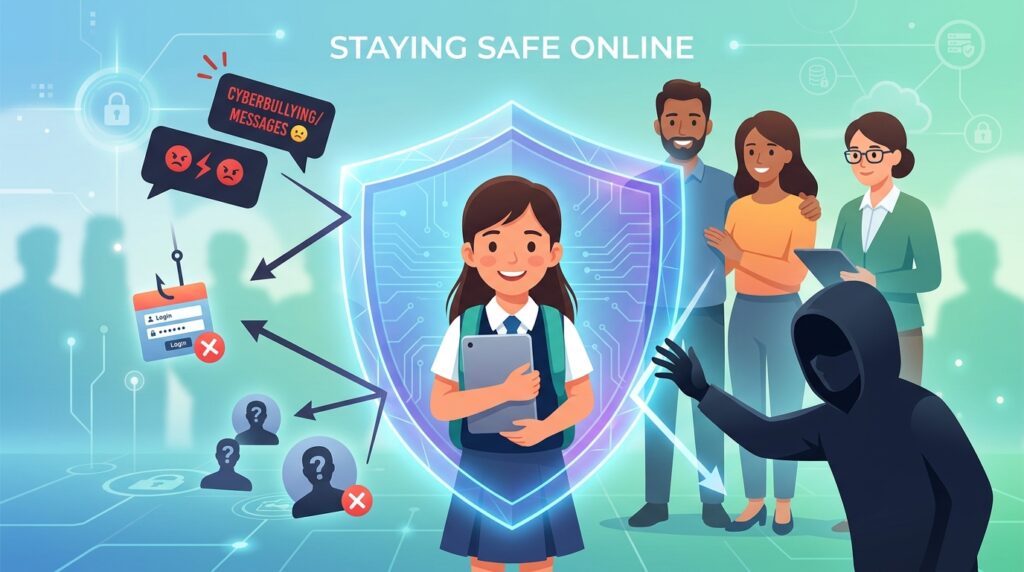
Unlike traditional bullying, cyberbullying can follow children everywhere. Hurtful messages, embarrassing photographs, rumors, or exclusion from online groups can continue long after the school day ends. Because digital communication often occurs privately, parents may not immediately recognize that a child is experiencing harassment.
Warning signs may include sudden reluctance to use digital devices, withdrawal from family activities, declining academic performance, anxiety, changes in sleeping patterns, or unexplained emotional distress. Children should know they will never be blamed for reporting cyberbullying. Encouraging open communication remains one of the most effective protective strategies available to families.
Online Predators and Digital Grooming
One of the most serious online risks facing children is digital grooming. Grooming occurs when an adult gradually builds trust with a child for the purpose of manipulation or exploitation. Unlike the dramatic situations often portrayed in movies, grooming usually develops slowly through friendly conversations, shared interests, compliments, or offers of help.
Predators often target children on social media, messaging applications, multiplayer games, and live streaming platforms where conversations can continue privately without immediate adult supervision. They may pretend to be another child with similar hobbies, gradually encouraging more personal conversations over weeks or even months.
Real world example: A child playing an online football game may regularly communicate with another player who appears friendly and supportive. Over time, that individual begins asking personal questions about school, family routines, or home life before suggesting that they continue the conversation on another messaging application. This gradual process is one of the warning signs parents should discuss openly with their children.
Children should understand that genuine friends never pressure them to keep secrets from their parents, share personal photographs, reveal private information, or arrange face to face meetings without trusted adult involvement.
Online Gaming Is More Than Entertainment
Online gaming has become one of the world’s most popular forms of entertainment for children and teenagers. Millions of young people play cooperative games every day, developing teamwork, communication, strategic thinking, creativity, and problem solving skills.
Educational games can strengthen mathematics, science, geography, history, and language learning while making lessons enjoyable and interactive. Some games even encourage creativity by allowing children to build virtual cities, design structures, write stories, or solve engineering challenges.
However, online gaming also introduces risks that many parents underestimate. Modern multiplayer games often include voice chat, private messaging, in game purchases, advertising, gambling style reward systems, and interaction with strangers from around the world. Children may also encounter offensive language, cyberbullying, scams, or attempts to obtain personal information.
Real world example: A child may receive a message promising free virtual currency or rare gaming items through an external website. After clicking the link, the child unknowingly enters login credentials into a fraudulent page, allowing criminals to steal the gaming account or associated payment information.
Parents should take an interest in the games their children play, understand the age ratings, and occasionally play together. Shared gaming experiences provide valuable opportunities to discuss online behavior, sportsmanship, privacy, and digital safety in a relaxed environment.

The Science of Sleep and Screen Time
Healthy sleep is one of the most important foundations of childhood development. During sleep, the brain consolidates memories, regulates emotions, supports learning, strengthens the immune system, and prepares the body for the next day.
Late night smartphone use can interfere with this natural process in several ways. Blue light emitted by digital screens suppresses melatonin, the hormone that signals the body it is time to sleep. Notifications, exciting videos, online conversations, and interactive games also stimulate the brain at the very time it should be winding down. Insufficient sleep has been associated with reduced concentration, poorer academic performance, emotional instability, increased irritability, slower reaction times, and reduced physical wellbeing.
Real world example: A teenager who stays awake scrolling through short videos until midnight may still spend eight hours in bed but wake feeling tired because sleep quality has been disrupted. Teachers often observe that students experiencing inadequate sleep struggle to concentrate during morning lessons despite appearing physically healthy. Many pediatric specialists recommend avoiding recreational screen use during the hour before bedtime and keeping smartphones outside children’s bedrooms whenever practical.
Every Click Creates a Digital Footprint
Many children assume that deleting a message or photograph removes it permanently. In reality, digital content often survives through screenshots, backups, archived pages, or copies shared by others.
A digital footprint represents the information individuals leave behind through websites, applications, search engines, social media platforms, online purchases, and electronic communication. This information may remain accessible for many years. Universities, scholarship committees, employers, and professional organizations increasingly review publicly available online profiles before making important decisions. Teaching children to think before posting helps protect both their privacy and future opportunities.
Real world example: A humorous photograph shared impulsively at the age of fourteen may seem insignificant today but could later be viewed by university admissions officers or future employers who lack the original context. A useful family rule is simple. Never post anything online that you would be uncomfortable showing to your parents, teachers, or future employer.
Financial Scams Are Increasingly Targeting Children
Cybercriminals no longer focus exclusively on adults. Children and teenagers have become attractive targets because they often spend significant time online while having limited experience identifying fraudulent schemes.
Common scams include fake gaming rewards, free mobile phones, fraudulent competitions, counterfeit shopping websites, phishing emails, malicious downloads, cryptocurrency promotions, and messages claiming that an account has been suspended. Artificial intelligence has also made scams more convincing. Criminals can now generate realistic websites, convincing emails, fake customer service conversations, and even cloned voices that imitate trusted individuals.
Real world example: A teenager receives a message claiming to offer exclusive concert tickets at an unusually low price. The website appears professional, complete with customer reviews and payment options. Only after making payment does the teenager discover that both the website and the tickets were fraudulent. Parents should repeatedly remind children never to share passwords, verification codes, banking information, or payment details without adult approval, regardless of how authentic a message appears.
What Health Experts Recommend
The World Health Organization emphasizes the importance of balancing screen time with adequate physical activity, quality sleep, learning, and social interaction during childhood. The American Academy of Pediatrics encourages families to develop personalized media plans that reflect each child’s age, maturity, educational needs, and daily routine. UNICEF advocates teaching digital literacy alongside traditional safety skills so children can recognize online risks while benefiting from technology’s educational opportunities.
Although recommendations differ slightly between organizations, several principles appear consistently.
- Encourage educational and creative screen use rather than passive consumption.
- Maintain regular physical activity every day.
- Protect healthy sleep routines.
- Keep communication open between parents and children.
- Teach digital literacy from an early age.
- Model healthy technology habits as adults.
These recommendations recognize that technology is now an essential part of modern childhood. The objective is responsible use rather than complete avoidance.
The Most Important Lesson
Parents often ask which application, parental control, or filtering software provides the best protection. While technical tools certainly have value, research consistently suggests that the strongest protective factor is a trusting relationship between children and caring adults. A child who feels comfortable discussing uncomfortable online experiences is far more likely to report cyberbullying, suspicious messages, scams, or inappropriate content before serious harm occurs.
Technology will continue evolving. Artificial intelligence, virtual reality, wearable devices, and immersive digital environments will become increasingly common throughout children’s lives. The greatest gift parents can provide is therefore not simply controlling access to technology but teaching children the judgment, confidence, resilience, and critical thinking needed to navigate an increasingly digital world safely.
Developing Digital Literacy
- Who created this content?
- Is the information supported by reliable evidence?
- Is the content trying to inform, persuade, entertain, or manipulate?
- Has the information been verified by trusted sources?
- Could artificial intelligence have generated or altered this content?
Developing these habits helps children become thoughtful digital citizens instead of passive consumers of online content.
Teaching Children About Artificial Intelligence
Artificial intelligence is rapidly becoming part of everyday life. Children already encounter AI when using search engines, educational platforms, streaming services, online shopping, navigation apps, voice assistants, and social media recommendations. Rather than avoiding AI, families should teach children how to use it responsibly.
AI can explain complex concepts, generate study questions, summarize lengthy articles, assist with language learning, and encourage creativity. However, it can also produce inaccurate information, fabricated references, biased responses, and convincing misinformation.
Real world example: A student asks an AI chatbot to explain photosynthesis. The explanation is accurate and easy to understand. Later, the same student asks the chatbot to provide historical quotations. One quotation appears authentic but was actually generated incorrectly. Without verification, the student may unknowingly submit inaccurate information for schoolwork. Children should therefore view AI as a helpful assistant rather than an unquestionable authority.
Creating Healthy Digital Habits
Healthy technology use develops gradually through consistent daily routines. Families that establish positive habits early often experience fewer conflicts about smartphones and screen time during adolescence. Experts increasingly recommend focusing on balance instead of absolute prohibition. Children need opportunities to explore technology while also developing physical, emotional, and social skills away from digital devices.
Healthy daily routines may include:
- Completing homework before recreational screen use.
- Keeping smartphones away during family meals.
- Scheduling outdoor play every day.
- Encouraging reading alongside digital learning.
- Maintaining regular sleep schedules.
- Creating technology free family activities every week.
- Using educational applications more frequently than passive entertainment.
Real world example: One family introduced a simple rule that every Sunday afternoon would become a technology free family activity. They alternated between hiking, board games, cycling, gardening, and visiting museums. Within a few months, the children themselves began suggesting activities that did not involve screens.
The Family Digital Agreement
Instead of relying solely on restrictions, many child development specialists encourage families to create a shared Digital Agreement. This written agreement establishes clear expectations while encouraging cooperation rather than conflict. A Family Digital Agreement might include:
- Devices remain outside bedrooms during the night.
- No smartphones during meals.
- Homework and household responsibilities come before entertainment.
- Parents know the passwords for younger children’s accounts.
- Unknown friend requests are never accepted without discussion.
- Personal information is never shared online.
- Children immediately report cyberbullying or suspicious messages.
- Parents also follow healthy technology habits.
Perhaps the most important principle is that adults should model the same behavior they expect from their children. A parent who constantly checks emails during family conversations sends mixed messages about healthy technology use.
Real world example: Some families place every smartphone, including those belonging to parents, into a basket before dinner. The simple habit encourages uninterrupted conversation and reminds everyone that meaningful relationships deserve full attention.
How Schools Can Help
Parents cannot shoulder responsibility alone. Schools play an equally important role in preparing children for an increasingly digital future. Modern education should include digital citizenship alongside mathematics, science, history, and language arts. Students should learn how algorithms influence online experiences, how misinformation spreads, how personal data is collected, and how respectful online communication differs from harmful behavior.
Schools can also teach practical cybersecurity skills, including:
- Creating strong passwords.
- Recognizing phishing attempts.
- Protecting personal information.
- Reporting cyberbullying.
- Evaluating online sources.
- Understanding digital copyright.
- Using artificial intelligence responsibly.
These skills prepare students not only for safer childhoods but also for future careers where digital competence will be increasingly valuable.
Responsibilities of Technology Companies
Parents and schools cannot solve digital safety challenges without support from technology companies. Platforms that design products for millions of young users also carry significant ethical responsibilities. Increasingly, governments expect technology companies to provide stronger age verification systems, improved parental controls, greater transparency regarding recommendation algorithms, easier reporting of harmful content, and safer default privacy settings for younger users.
Many companies have introduced screen time reminders, family supervision tools, restricted messaging features, and enhanced protections for teenagers. While these developments represent meaningful progress, experts generally agree that further improvements remain necessary as technology continues evolving.
Preparing Children for the Future
Today’s children will grow up in a world where artificial intelligence, wearable technology, virtual reality, augmented reality, robotics, and immersive digital environments become increasingly common. Many careers they eventually pursue may not even exist today. Preparing children for that future requires much more than teaching technical skills. Young people will also need creativity, adaptability, emotional intelligence, ethical decision making, empathy, resilience, and lifelong curiosity.
Technology will continue changing rapidly, but these human qualities will remain valuable regardless of how digital innovation evolves.
Real world example: A child learning computer programming today may eventually collaborate with artificial intelligence systems rather than simply writing code independently. Success will depend as much on creativity and critical thinking as on technical knowledge.
Challenges That Still Lie Ahead
Despite significant progress, protecting children online remains a complex global challenge. Age verification systems can sometimes be bypassed. Privacy concerns continue surrounding identity verification technologies. Artificial intelligence evolves faster than many regulations. New applications appear regularly, often becoming popular with young people before parents and educators fully understand how they operate.
There is also no universal solution that works equally well across every society. Cultural values, educational systems, internet access, family structures, and legal frameworks vary widely between countries. For this reason, successful child protection strategies must remain flexible, evidence based, and adaptable to changing technologies while respecting children’s rights and developmental needs.
Looking Ahead
The digital world will continue expanding throughout the coming decade. Rather than attempting to shield children from every technological development, families should focus on building lifelong habits that enable children to navigate change confidently and responsibly.
Conclusion
Schools also have an essential responsibility. Digital literacy should become as fundamental as reading, mathematics, and science. Children need practical skills that enable them to evaluate information, recognize misinformation, protect personal data, understand artificial intelligence, identify scams, and behave responsibly online.
Technology companies must continue improving age appropriate design, privacy protections, parental controls, and transparency regarding recommendation algorithms. Governments should develop balanced policies that protect children while respecting innovation, privacy, and fundamental rights.
The digital world will continue evolving throughout the coming decades. Artificial intelligence, virtual reality, wearable technology, robotics, and immersive learning environments will become increasingly common. Preparing children for this future requires more than limiting screen time. It requires nurturing curiosity, empathy, resilience, creativity, ethical decision making, and lifelong learning.
The ultimate goal is not to raise children who fear technology. It is to raise digitally confident young people who understand technology well enough to use it safely, responsibly, and wisely throughout their lives.
Frequently Asked Questions
1. At what age should children receive their first smartphone?
There is no universal age that suits every child. Experts recommend considering emotional maturity, personal responsibility, school requirements, and family circumstances rather than age alone. Many families begin with basic phones before introducing smartphones with appropriate parental supervision.
2. How much screen time is considered healthy?
Current research increasingly emphasizes the quality of screen use rather than focusing only on the number of hours. Educational activities, creativity, communication with family, and skill development provide greater benefits than passive scrolling or excessive gaming. Balance between digital activities, physical exercise, sleep, and face to face interaction remains essential.
3. Does social media cause anxiety or depression?
Research shows a clear association between problematic social media use and increased risks of anxiety, depression, poor sleep, loneliness, and reduced self esteem. However, mental health is influenced by many factors, including family relationships, personality, offline friendships, and existing emotional wellbeing. Healthy, supervised use may also provide valuable social support.
4. Can artificial intelligence help children learn?
Yes. Artificial intelligence can explain difficult concepts, assist with language learning, generate study questions, and encourage creativity. However, children should always verify important information because AI systems sometimes produce inaccurate or misleading responses.
5. What are the warning signs of smartphone addiction?
Possible warning signs include irritability when devices are removed, declining academic performance, sleep disruption, withdrawal from family activities, loss of interest in hobbies, difficulty limiting screen time, and persistent use despite negative consequences.
6. How can parents protect children from cyberbullying?
Create an environment where children feel comfortable discussing online experiences. Teach them never to respond aggressively, save evidence of abusive messages, block offending accounts, report inappropriate behavior to platforms, and seek help from trusted adults immediately.
7. Are parental control applications enough?
Parental controls provide valuable support but cannot replace communication and education. Children who understand online risks and trust their parents are generally better protected than those relying solely on technical restrictions.
8. Are online games safe for children?
Many online games provide educational and social benefits when they are age appropriate and supervised. Parents should review game ratings, understand communication features, monitor in game purchases, and discuss online safety with their children regularly.
9. Why is sleep affected by smartphone use?
Blue light from digital screens suppresses melatonin production while exciting online content keeps the brain alert. Avoiding recreational screen use during the hour before bedtime and keeping devices outside bedrooms can improve sleep quality.
10. What is a digital footprint?
A digital footprint includes the information people leave behind through websites, social media, applications, emails, online purchases, and internet searches. Much of this information may remain accessible for years, making thoughtful online behavior increasingly important.
11. How can families encourage healthier technology habits?
Create shared family rules, schedule regular technology free activities, encourage outdoor play, read together, maintain consistent bedtime routines, and ensure parents model the same healthy digital behaviors expected from children.
12. Will social media bans completely solve the problem?
Age restrictions and legislation can reduce children’s exposure to harmful online environments, but they cannot eliminate every risk. Long term success depends on combining sensible regulation, responsible platform design, digital literacy education, active parenting, and healthy family communication.
References
- World Health Organization. Guidelines on Physical Activity, Sedentary Behaviour and Sleep for Children.
- American Academy of Pediatrics. Family Media Plan and Digital Media Guidance.
- UNICEF. Children in a Digital World Reports.
- U.S. Surgeon General. Advisory on Social Media and Youth Mental Health.
- Common Sense Media. Research on Children’s Digital Wellbeing.
- KidsHealth. Internet Safety for Parents.
- Organisation for Economic Co-operation and Development. Children in the Digital Environment Reports.
- Australian Government eSafety Commissioner.
- European Commission. Digital Services Act.
- Danish Well Being Commission Report.
- Reuters. International reporting on global child online safety legislation.
- Peer reviewed research published in journals including JAMA Pediatrics, The Lancet Digital Health, Nature Human Behaviour, and Pediatrics.