
The Digital Dependency Trap: Is the Modern World Creating Its Own Systemic Crisis?
The Digital Dependency Trap: When banks stop processing payments, aircraft remain grounded and global communication platforms go offline; the problem may be much bigger than a technical failure. Are modern economies becoming dangerously dependent on digital systems they cannot fully control?
https://mrpo.pk/cyberattacks-market-crash-and-microsoft-outage/
Think about waking up one morning and discovering that your banking application is not working. Your money transfer is delayed, your workplace email is unavailable, flights are grounded, and businesses cannot process payments.
You might assume that these are separate technical problems. But what if they reveal something much bigger about the way modern societies operate?
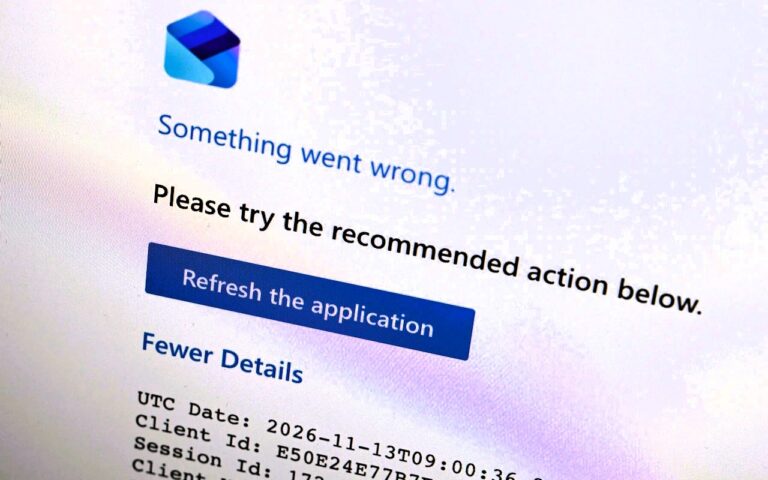
During November 2026, a series of technology disruptions affecting the United States and other countries brought this question into sharp focus. Microsoft services experienced widespread problems. A telecommunications failure forced the Federal Aviation Administration (FAA) to ground flights across the United States. Days later, customers reported difficulties with banking services and digital payments.
Similar incidents had already affected financial institutions in the United Kingdom and Japan.
There is no established evidence that these incidents were part of a coordinated international cyberattack. Their reported causes were different. Nevertheless, they exposed a common weakness: modern societies increasingly depend on interconnected digital systems, while essential services often rely on a relatively small number of technology providers.
This raises an uncomfortable question.
Have governments and corporations created a digital economy that is highly efficient but dangerously vulnerable to failure?
This investigation examines the incidents, their international implications, the economic and geopolitical interests involved, and the measures needed to protect ordinary people.
1. The November 2026 Banking Disruption: What Happened?

On November 16, customers reported problems accessing banking services at several major American financial institutions.
The names appearing in customer complaints included:
- JPMorgan Chase
- Bank of America
- Wells Fargo
- U.S. Bank
- Other financial institutions
Customers reported difficulties accessing online banking, completing transactions and sending money through digital payment services. However, the situation required closer examination.
Chase Identified a Technical Problem
JPMorgan Chase acknowledged a technical issue involving its transaction-processing systems.
According to the Associated Press, a software bug in an on-premises hardware system caused delays in online banking access and transactions. Chase said the problem was temporary and not caused by a cyberattack.
Importantly, reports of problems at several banks did not mean that all those institutions had suffered independent system failures. Some delays involved transactions connected to Chase rather than failures within the other banks themselves.
Why Was Zelle Also Affected?
The incident created confusion because customers also reported difficulties using Zelle, a widely used American digital payment network. Zelle’s operator, Early Warning Services, said its network was operating normally and attributed delays to problems at participating financial institutions.
This distinction is important.
A payment network can operate correctly while a participating bank experiences technical problems. It demonstrates how interconnected financial services can create problems that customers perceive as one large banking failure.
The lesson: A technical problem at one institution can affect customers and transactions involving other institutions without those institutions necessarily experiencing an outage themselves.
Source: Associated Press, November 16, 2026.
2. America’s Aviation Disruption: When Air Traffic Systems Became Unstable

Just three days earlier, on November 13, the United States experienced a nationwide aviation disruption. The FAA ordered a ground stop for departing flights after communication problems affected multiple Air Route Traffic Control Centres. The incident created serious disruption for airlines and passengers.
What Caused the Ground Stop?
The FAA’s November 15 preliminary explanation identified instability in its legacy telecommunications infrastructure. According to the agency:
- Excessive data traffic affected its telecommunications network.
- The system experienced approximately 1,000 connection attempts every four to five seconds.
- Instability began at 17 of the country’s 22 Air Route Traffic Control Centres.
- Two potential originating locations were identified in Amarillo, Texas, and El Dorado, Arkansas.
- Maintenance work involving a new router was taking place at the El Dorado location.
The FAA said its network service provider, L3Harris, blocked the two locations, helping stabilise the system. The agency reported approximately 12,462 flight cancellations that day, although not all were directly caused by the ground stop.
Was It a Cyberattack?
The FAA stated that available evidence provided no indication of a cyberattack or malicious outside actor.
Its investigation was continuing. The agency also highlighted the problem of ageing telecommunications equipment and the need to modernise essential aviation infrastructure.
This incident demonstrates that sophisticated countries can experience serious disruptions because of relatively ordinary technical problems. A router, communication network or outdated system can affect an entire national transportation network.
Source: FAA – Nationwide Ground Stop Questions and Answers.
3. Microsoft: When a Global Technology Provider Experiences Problems
On November 12–13, Microsoft experienced a major disruption affecting Microsoft 365 services. Affected products included:
- Outlook
- Microsoft Teams
- Exchange Online
- Other Microsoft 365 services
Users across numerous countries reported difficulties accessing services. Reports emerged from the United States, the United Kingdom, India, Australia and other countries. The Philippines Supreme Court also reported a disruption to its digital judicial platform.
What Went Wrong?
Microsoft’s preliminary investigation identified a problem involving systems responsible for establishing connections to Exchange Online. Traffic shifts during routine network maintenance exposed an underlying software defect. Requests began accumulating faster than affected servers could process them, eventually exhausting their available capacity.
Microsoft classified the incident as a technical problem rather than a cyberattack or an AI-related incident. This is an important example of how routine maintenance can expose weaknesses that remain hidden during normal operations.
Why Does This Matter?
Millions of businesses, government departments and institutions depend on Microsoft services for communication and daily operations. When one major provider experiences problems, organisations that have no direct relationship with one another can face similar difficulties.
This is not necessarily a security breach. It is a consequence of shared technological dependence.
Source: Microsoft incident report MO1550821, November 2026.
4. The Problem Is Not Limited to America

The international picture makes the investigation more significant. Several countries have experienced disruptions involving financial institutions, digital infrastructure and technology providers. These incidents had different causes, but they reveal similar weaknesses.
United Kingdom: Google Cloud Disrupts Banking Services
On October 20, 2026, a power failure at a Google Cloud data-centre facility in London disrupted services used by several financial institutions.
Affected institutions included:
- Lloyds Bank
- Halifax
- HSBC
- Revolut
Customers experienced difficulties accessing banking applications and certain financial services. The disruption lasted approximately seven hours at the affected facility.
The Bank of England, Prudential Regulation Authority and Financial Conduct Authority subsequently examined the incident. Their November 4 communication confirmed that Google’s services met the legal criteria for designation as critical third-party services to the UK financial sector.
This is a significant development. It means regulators recognise that a disruption at a technology company could threaten the stability or confidence of the wider financial system. The incident also demonstrated that banks can be affected by failures outside their own physical infrastructure.
Source: Bank of England – Critical Third Parties and Google Cloud Disruptions.
Japan: One Technical Failure Affects 128 Banks
Japan experienced another important incident on November 6. A system failure involving Shinkin Kyodo Centre disrupted ATM services at 128 regional cooperative banks. Customers temporarily experienced difficulties conducting transactions and withdrawing or depositing money.
The operators attributed the incident to equipment malfunction rather than a cyberattack. Services were restored later that day.
The important lesson is that 128 separate financial institutions can depend on a shared technical network. Their individual identities do not necessarily mean their underlying infrastructure is independent. Japan’s experience demonstrates why backup systems and alternative infrastructure are essential.
Source: Nippon.com, November 6, 2026.
Other Countries: The Wider Internet Problem
The problem extends beyond banking and major technology companies.
Cloudflare’s third-quarter 2026 internet disruption report recorded 49 disruptions between July and September.
These included:
- Electricity-related internet outages.
- Natural disasters affecting telecommunications.
- Government-directed internet shutdowns.
- Connectivity disruptions associated with armed conflict.
Countries affected included Cuba, Honduras, Ukraine, Nepal, Colombia and Ethiopia. The causes differed considerably.
Nevertheless, the findings demonstrate that digital connectivity depends on electricity, physical infrastructure, telecommunications networks and political stability.
Even the most advanced digital services cannot function without these foundations.
Source: Cloudflare – What Took the Internet Offline in Q3 2026.
5. Are These Incidents Connected?
This is perhaps the most important investigative question.
When several major disruptions occur within days or weeks, people naturally begin looking for a common explanation. However, timing alone does not establish a connection.
Consider the reported causes:
| Incident | Country | Reported explanation |
|---|---|---|
| Microsoft disruption | Global | Software defect and server capacity problems |
| FAA ground stop | United States | Telecommunications instability |
| Chase banking disruption | United States | Software bug in an on-premises hardware system |
| Google Cloud outage | United Kingdom | Data-centre power failure |
| Shinkin banking disruption | Japan | Equipment malfunction |
These are different technical failures. There is currently no established evidence that they resulted from one coordinated international operation.
However, the incidents share an important characteristic. They expose the consequences of dependence on complex systems that support multiple organisations simultaneously.
Three Possibilities Worth Investigating
1. Independent Technical Failures
Different organisations experienced unrelated software, equipment, power or network problems. This explanation is consistent with the available findings.
2. Common Structural Vulnerabilities
The incidents were unrelated, but exposed similar weaknesses in interconnected infrastructure. This is a well-established area of concern among financial regulators and cybersecurity experts.
3. Deliberate Cyber Interference
A hostile organisation could exploit vulnerabilities or deliberately target critical infrastructure.
This possibility deserves investigation, but there is no established evidence connecting the recent incidents to a coordinated attack. We must distinguish between identifying a vulnerability and proving that someone deliberately exploited it.
6. Could Foreign Adversaries Exploit America’s Digital Vulnerabilities?
Modern economies depend on financial networks, telecommunications, transportation systems and cloud infrastructure. These systems can become attractive targets for hostile governments and criminal organisations.
Potential objectives include:
- Disrupting financial transactions.
- Interfering with transportation.
- Obtaining confidential information.
- Undermining public confidence.
- Creating economic pressure.
- Testing national emergency response systems.
Countries with advanced cyber capabilities, including China, Russia, Iran and North Korea, feature in international cybersecurity assessments.
However, mentioning these countries as potential sources of cyber threats does not establish responsibility for any particular incident.
What Is Cyber Pre-positioning?
Cyber pre-positioning means gaining access to important computer networks before any disruption occurs. An attacker may attempt to identify weaknesses, establish persistent access or collect sensitive information. The actual disruption, if one is planned, may occur much later.
This makes cybersecurity difficult because the absence of an immediate attack does not necessarily mean that a network is secure. Nevertheless, there is no evidence that the November 2026 incidents discussed here resulted from such activity.
7. The Artificial Intelligence Factor: A New Financial Security Challenge
Artificial intelligence is changing how banks, businesses and governments operate. It can improve security, but it can also create new risks.
How Banks Use AI
Financial institutions increasingly use AI for:
- Detecting suspicious transactions.
- Identifying possible fraud.
- Monitoring unusual account activity.
- Assessing financial risks.
- Improving customer support.
- Automating administrative operations.
These applications can improve efficiency and help identify suspicious activity faster than traditional methods.
The Rise of AI Agents
AI agents go beyond answering questions.
They can perform tasks, interact with software and execute actions when given the necessary permissions. In financial services, potential applications include processing payments, managing accounts and assisting with financial operations.
However, giving automated systems access to sensitive accounts creates new security concerns. An incorrectly configured or compromised agent could potentially perform unauthorised actions.
How Criminals Can Exploit AI
AI can also help criminals create more convincing attacks.
Examples include:
- Fake voices imitating bank employees or family members.
- Deepfake video used for identity fraud.
- Personalised phishing messages.
- Automated social engineering.
- Synthetic identities.
- Faster discovery of software vulnerabilities.
The danger is not that AI automatically creates a financial crisis. The danger is that it can increase the speed, scale and sophistication of existing threats.
The International Monetary Fund examined these risks in its June 2026 report, Artificial Intelligence and Cybersecurity in the Financial Sector. The IMF highlighted the danger of common technology providers and shared infrastructure amplifying the effects of cyber incidents. It also recommended stronger international cooperation, better governance and improved recovery capabilities.
Source: IMF – Artificial Intelligence and Cybersecurity in the Financial Sector.
8. The Digital Dependency Trap: Is Systemic Vulnerability a Consequence of Economic Design?
This is the central argument of our investigation.
Modern digital infrastructure did not develop by accident. Governments, financial institutions and corporations deliberately moved towards digital services, centralised systems, automation and outsourcing. Their objectives were understandable:
- Reduce operating costs.
- Improve efficiency.
- Speed up transactions.
- Expand services.
- Increase productivity.
- Improve customer convenience.
However, these decisions also created dependencies.
The Concentration Problem
Imagine that ten banks use the same cloud provider. Each bank believes it has modern and reliable infrastructure. But if that provider experiences a major failure, all ten banks could experience problems at the same time.
The same principle applies to software platforms, telecommunications networks and payment processing systems. This creates what experts call concentration risk. The problem is not necessarily that one company has done something wrong. The problem is that too many essential services may depend on the same provider.
Who Is Responsible?
Four groups deserve closer examination.
Governments and Policymakers
Governments encouraged digital transformation and outsourcing. They must now ensure that essential services have adequate backup arrangements.
Technology Corporations
Large technology providers have gained considerable influence over the infrastructure used by businesses, governments and financial institutions. Their responsibility should extend beyond providing efficient services. They must also demonstrate reliability, transparency and effective recovery arrangements.
Financial Institutions
Banks must understand the risks created by external technology providers and maintain alternative arrangements for essential services.
Regulators
Regulators must assess risks that individual companies may overlook because they focus primarily on their own operations.
Was This Vulnerability Deliberately Planned?
There is no evidence that governments or corporations deliberately designed these systems to fail.
However, there is a legitimate question about whether the pursuit of efficiency and profitability received greater attention than long-term resilience. A company may choose one large technology provider because it is cheaper and easier to manage.
But when hundreds of organisations make the same decision, their individual choices can create a collective weakness. This is a systemic problem arising from economic and technological decisions.
The digital dependency trap may therefore be an unintended consequence of deliberate economic choices rather than a deliberately planned international crisis.
9. Who Wins and Loses When Digital Infrastructure Fails?
A major digital disruption would not affect everyone equally. Some would suffer direct financial losses, while others could gain new business opportunities.
The Biggest Losers
Ordinary People
Customers could experience delayed salaries, interrupted payments and difficulties accessing financial services. People who depend entirely on digital banking may face particular problems.
Small Businesses
Small businesses often lack alternative payment systems, dedicated IT departments and financial reserves. Even a short interruption could affect daily income.
Banks and Financial Institutions
Banks may face reputational damage, increased security costs, customer complaints and regulatory scrutiny.
Governments
Governments could face public criticism over infrastructure failures, national security and dependence on private technology providers.
Developing Economies
Countries with limited financial and technological resources may find it more difficult to recover from prolonged disruptions.
Potential Commercial Beneficiaries
Some industries could benefit from increased demand for digital protection.
Cybersecurity Companies
Businesses offering network protection, identity verification and threat detection could attract more customers. Examples include Palo Alto Networks, CrowdStrike, Fortinet and Cloudflare.
Cloud Infrastructure Providers
Organisations may invest in alternative cloud services and geographically separated backup systems. Major providers include Amazon Web Services, Microsoft Azure, Google Cloud and Oracle Cloud Infrastructure.
Data Centre Operators
Demand could increase for secure data storage, backup facilities and disaster recovery centres.
AI Security Developers
Companies developing AI tools for fraud detection, network monitoring and cybersecurity could benefit from increased investment.
However, commercial opportunities do not guarantee higher profits. Competition, costs and market valuations remain important.
Could Criminal Organisations Benefit?
Unfortunately, yes.
Cybercriminals could exploit confusion during outages through:
- Fake bank messages.
- Fraudulent customer support calls.
- Phishing websites.
- False reports about frozen accounts.
- Ransomware attacks.
Disinformation networks could also spread false claims about financial collapse or alleged cyberattacks. An important distinction must remain clear: benefiting from an incident does not prove responsibility for causing it.
10. The Geopolitical Competition: Who Could Gain Strategic Advantage?
Digital infrastructure is becoming an important part of national power. Countries that control essential technologies may enjoy economic and strategic advantages.
United States
The United States has major advantages in cloud computing, AI, cybersecurity and software development. Companies such as Microsoft, Amazon and Google play important roles in the global technology economy.
However, the country also faces the challenge of dependence on interconnected private infrastructure.
China
China has invested heavily in domestic technology, telecommunications, AI and digital payment systems. Greater international concern about dependence on American technology could create opportunities for Chinese technology companies.
However, security concerns, international restrictions and political tensions could limit their expansion.
European Union
Europe has an opportunity to strengthen its digital independence. Its policymakers are increasingly concerned about dependence on external cloud and technology providers. Greater investment in domestic infrastructure could improve its strategic position.
India
India has a large technology workforce and an expanding software and digital services industry. Increased demand for cybersecurity, cloud management and digital recovery services could create new opportunities.
Gulf Countries
Saudi Arabia, the UAE and Qatar have significant financial resources to invest in AI, data centres and digital infrastructure. They could become important regional technology centres.
Developing Countries
Countries such as Pakistan, Bangladesh and several African economies face a different challenge. Their priority should be developing reliable domestic capabilities while maintaining access to international technology. Without investment, they risk becoming increasingly dependent on infrastructure controlled elsewhere.
11. Pakistan: Why Digital Infrastructure Resilience Matters
Pakistan is also part of this global transformation. Digital banking, mobile wallets, online payments and government services are becoming increasingly important. Several areas deserve particular attention.
Banking and Digital Payments
Pakistan’s digital financial ecosystem includes:
- Raast.
- 1LINK.
- Commercial banking applications.
- ATM networks.
- Mobile wallets.
These services make financial transactions easier, but their reliability depends on secure and resilient infrastructure.
Telecommunications
Mobile networks, internet connectivity and international communication links support banking, commerce and government operations. Disruptions can affect several sectors simultaneously.
Government Services
Digital identity, public administration and online services are increasingly important. NADRA and other public institutions must maintain reliable systems and appropriate backup arrangements.
Cybersecurity Preparedness
Pakistan needs continued investment in:
- Banking cybersecurity.
- Disaster recovery systems.
- Skilled cybersecurity professionals.
- Secure telecommunications.
- Independent backup infrastructure.
- Public awareness about digital fraud.
The State Bank of Pakistan, the Pakistan Telecommunication Authority and relevant cybersecurity institutions have important roles in this effort. The key question is whether Pakistan’s growing digital dependence is being matched by sufficient investment in resilience. This is an area requiring further investigation through official regulatory reports and institutional disclosures.
12. Is the World Preparing for a Global Digital Crisis?

The international community is not ignoring these problems. Several organisations are already working to strengthen digital resilience and improve cooperation.
However, their responsibilities differ, and there is no single global authority controlling every aspect of digital infrastructure protection.
G7: International Financial Cybersecurity Exercises
The G7 Cyber Expert Group conducted a cross-border coordination exercise on May 18, 2026. The exercise simulated a major cyberattack affecting financial institutions across all G7 countries. Participants included finance ministries, central banks, banking regulators and financial market authorities.
The purpose was to improve communication, crisis management and recovery during an international financial emergency. This is an important step towards coordinated financial cybersecurity.
Source: US Treasury – G7 2026 Cross-Border Coordination Exercise.
Financial Stability Board: Common Incident Reporting
The Financial Stability Board has developed the Format for Incident Reporting Exchange (FIRE). It provides a common framework for financial institutions to report cyber and operational incidents. The purpose is to reduce differences between national reporting systems and improve information sharing across borders.
This matters because delayed or inconsistent reporting can make international crisis management more difficult.
Source: FSB – Format for Incident Reporting Exchange.
International Monetary Fund
The IMF examines how cybersecurity threats, AI and shared technology providers could affect financial stability. Its recommendations include better cooperation between governments, financial institutions and technology companies.
United Nations and International Telecommunication Union
The UN system and ITU work on international digital development, telecommunications standards and infrastructure resilience. Their wider role is important because digital infrastructure problems can cross national borders and affect essential public services.
Is There a Global Emergency Response Authority?
Not yet.
International organisations have developed cooperation frameworks, reporting standards and emergency exercises.
However, there is no single global authority empowered to direct governments and private technology companies during every type of international digital infrastructure emergency. This remains an important gap.
13. What Needs to Change? Building a More Resilient Digital Economy
Preventing every technical failure is unrealistic. The real objective should be to ensure that one failure does not bring essential services to a halt. Several measures deserve priority.
A. Independent Backup Systems
Banks, hospitals, airports and government departments should maintain alternative systems that can operate when their primary technology fails.
B. Reduce Excessive Technology Concentration
Organisations should avoid placing every essential service with one provider. Multiple providers and independent infrastructure can reduce the impact of a single failure.
C. Modernise Ageing Infrastructure
The FAA incident demonstrated the risks associated with outdated telecommunications systems. Governments must invest in modernisation without introducing new weaknesses during the transition.
D. Strengthen International Cooperation
Countries should exchange cybersecurity information, conduct joint exercises and develop common emergency procedures.
E. Improve Corporate Accountability
Technology companies providing essential services should have clear responsibilities for reliability, incident reporting and recovery.
F. Introduce Stronger AI Controls
AI systems handling sensitive financial and government operations should operate under strict access controls, human monitoring and continuous monitoring.
G. Protect Developing Countries
International cooperation should include technical assistance, training and affordable cybersecurity resources for countries with limited capabilities. A global digital economy cannot be resilient if large parts of the world remain poorly protected.
14. What Can Ordinary People Do?
Individuals cannot control the infrastructure behind global banking or telecommunications. However, sensible preparation can reduce personal risks.
- Maintain access to more than one payment method.
- Keep some emergency cash for temporary disruptions.
- Enable multifactor authentication.
- Use strong and unique passwords.
- Keep banking applications and devices updated.
- Never share verification codes.
- Verify transactions before submitting them again.
- Contact banks through official channels.
- Be suspicious of messages claiming that accounts have been frozen.
Most importantly, do not panic when a digital service stops working. A temporary outage does not automatically mean money has disappeared or a bank has collapsed.
15. The Future: Are We Building a Safer Digital World or a More Fragile One?
The digital revolution has transformed modern society. People can transfer money across borders, communicate instantly, access government services and conduct business without visiting physical offices.
These are genuine achievements.
But progress has also created new dependencies.
A power failure can affect telecommunications. A cloud outage can disrupt financial services. A software defect can interrupt business operations across several countries.
The problem is not technology itself.
The problem is building essential services around systems without giving sufficient attention to what happens when they fail. The world is also entering a new phase of technological competition.
Artificial intelligence, cloud computing, cybersecurity and data infrastructure are becoming important sources of economic and geopolitical power.
Countries that invest in reliable and independent systems may gain an advantage. Those who depend excessively on external providers could face greater risks.
The international community has started addressing these challenges through financial regulation, cybersecurity exercises and information-sharing frameworks.
But cooperation must move beyond preparing for cyberattacks. It must also address ordinary technical failures, equipment breakdowns, electricity disruptions and failures at third-party providers.
The most important question is not whether the world can prevent every digital failure. It is a question of whether modern society can continue functioning when one occurs.
The digital economy was built to make life easier, faster and more efficient. Now it must also be built to survive failure.
Editorial and Evidence Statement
This article distinguishes confirmed incidents, official explanations, established systemic risks and potential future threats. It does not claim that the incidents discussed were part of a coordinated cyberattack or a deliberately planned crisis. Interpretations concerning economic incentives, geopolitical competition and digital dependency are analytical assessments rather than allegations of wrongdoing.
Frequently Asked Questions
1. Were the November 2026 banking outages caused by a cyberattack?
There is no established evidence that the Chase banking disruption was caused by a cyberattack. Chase attributed the problem to a technical issue involving a software bug. Other banks reported that their own systems were operating normally, although some transactions involving Chase experienced delays.
2. Were the Microsoft outage, FAA ground stop and banking disruption connected?
No connection has been established. The reported causes were different: a Microsoft software defect, FAA telecommunications instability and a Chase software bug. Their close timing raised questions, but timing alone does not prove coordination.
3. Can one technology company disrupt banking services in several countries?
Yes. Banks may depend on shared cloud infrastructure, software providers and telecommunications networks. A failure affecting one important provider can disrupt several financial institutions simultaneously.
4. Could artificial intelligence create a global financial security crisis?
AI could increase financial risks by making fraud, cyberattacks and vulnerability discovery faster. However, it can also strengthen fraud detection and cybersecurity. Strong controls, monitoring and human oversight are essential.
5. Who benefits financially from digital infrastructure disruptions?
Cybersecurity companies, backup infrastructure providers, data centre operators and AI security developers could experience increased demand. However, greater demand does not automatically guarantee higher profits.
6. Is the world preparing for a major digital infrastructure crisis?
Yes, through initiatives involving the G7, Financial Stability Board, IMF and UN institutions. However, international cooperation remains divided, and there is no single global authority coordinating every type of digital infrastructure emergency.
References and Further Reading
- Associated Press: November 16, 2026, reporting on the Chase software bug and banking transaction delays.
- Federal Aviation Administration: November 15, 2026, Nationwide Ground Stop Questions and Answers.
- Bank of England: November 4, 2026, Critical Third Parties Regime and Google Cloud Service Disruptions.
- Nippon.com: November 6, 2026, Glitch Briefly Disrupts ATMs at 128 Shinkin Banks in Japan.
- GMA News: November 13, 2026, reporting on the global Microsoft 365 disruption.
- Cloudflare: October 27, 2026, What Took the Internet Offline in Q3 2026.
- International Monetary Fund: June 30, 2026, Artificial Intelligence and Cybersecurity in the Financial Sector.
- US Department of the Treasury: July 31, 2026, G7 2026 Cross-Border Coordination Exercise.
- Financial Stability Board: April 15, 2025, Format for Incident Reporting Exchange (FIRE).