
Nvidia Under Scrutiny: Jensen Huang, China and the Battle for AI Power
Nvidia Under Scrutiny. Jensen Huang acknowledged extramarital affair involving Nvidia’s chief executive has developed into an extraordinary corporate and geopolitical controversy. Reports of alleged Chinese intelligence involvement, questions surrounding Singapore-based Megaspeed and an independent board investigation have raised concerns about the security of strategically important AI technology.
A personal relationship has become an unlikely entry point into one of the most sensitive questions facing the global technology industry: how vulnerable are the companies developing the world’s most powerful artificial intelligence systems to foreign intelligence operations?
Jensen Huang, founder and chief executive of Nvidia, has acknowledged being unfaithful to his wife and apologised to his family and colleagues. The admission came amid reports that the woman involved, Chinese businesswoman Alice Huang, also known as Huang Le, had been assessed by US intelligence as an asset of China’s Ministry of State Security (MSS).
Nvidia’s board has responded by initiating an independent investigation into reports that its chief executive was targeted by a foreign intelligence effort.
The controversy has attracted attention from US lawmakers, prompted a response from Beijing and raised questions about the commercial activities of Singapore-based Megaspeed International, a company associated with Alice Huang and Nvidia’s cloud computing ecosystem.
However, important distinctions must be maintained. The alleged intelligence connection has not been publicly established through independently verified evidence. Singapore has denied investigating Alice Huang personally, although it confirms an ongoing investigation into Megaspeed. Nvidia, meanwhile, says it has no reason to believe that its trade secrets or US national security information were compromised.
This is therefore not simply a story about an executive’s private life. It is an investigation into the intersection of personal vulnerability, corporate governance, international business networks, semiconductor export controls and the growing strategic importance of artificial intelligence.
The central question is whether an alleged foreign intelligence operation could have exploited a personal relationship to gain access to information or influence surrounding one of the world’s most important technology companies.
1. Why Jensen Huang and Nvidia Matter to the World
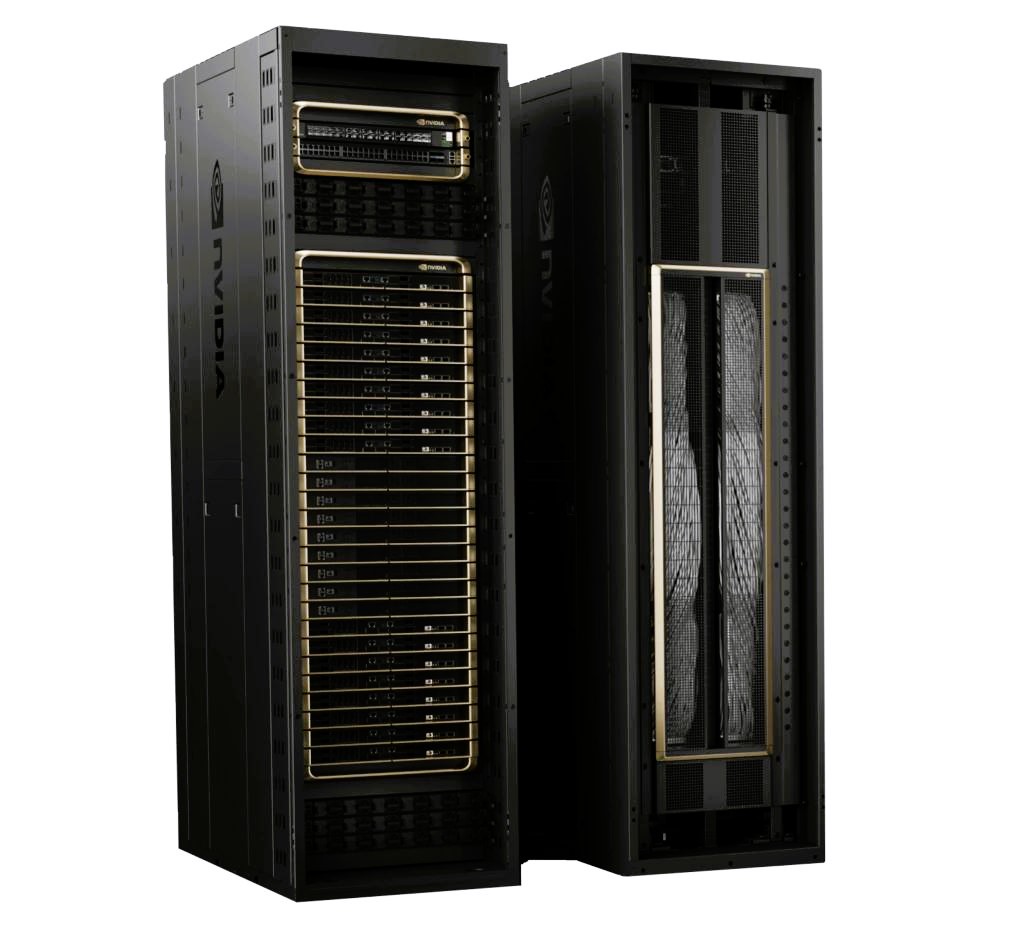
Founded in 1993 by Jensen Huang, Chris Malachowsky and Curtis Priem, Nvidia initially became known for developing graphics processing units (GPUs), particularly for computer graphics and gaming. The company’s fortunes changed as researchers discovered that GPUs could perform the enormous number of parallel calculations required by modern artificial intelligence.
Nvidia subsequently developed an ecosystem of advanced processors, networking systems, software, and integrated computing platforms. Its CUDA software platform became particularly important because it allows developers to build and run applications optimised for Nvidia hardware.
Today, Nvidia supplies much of the computing infrastructure supporting the development and operation of advanced AI systems.
Its technology serves:
-
Generative AI and large language models.
-
Scientific research and advanced simulations.
-
Autonomous vehicles and robotics.
-
Medical research and drug discovery.
-
Industrial automation and engineering.
-
Cybersecurity and intelligence analysis.
-
Advanced defence and military research.
Nvidia is consequently more than a semiconductor manufacturer. It is a major supplier of the infrastructure upon which the modern AI economy is being built.
Why the CEO’s position matters
Huang has led Nvidia for more than three decades. His influence reaches beyond administration to technological strategy, commercial negotiations, customer relationships, and engagement with governments. He has also become an influential participant in Washington’s discussions about American semiconductor exports and international AI competition.
A chief executive in this position may possess commercially sensitive information about:
-
Future processor development.
-
Product launch schedules.
-
Customer relationships.
-
Supply-chain arrangements.
-
Commercial negotiations.
-
Competitive strategies.
-
International market plans.
Such information can be valuable to competitors and potentially relevant to foreign governments.
This does not mean that Huang automatically has access to classified US government intelligence. Rather, it illustrates why information available to the head of a strategically important technology company can have wider implications.
2. The Affair and the Intelligence Allegations: Separating Fact from Suspicion
The controversy intensified following reports connecting Jensen Huang with Alice Huang, also known as Huang Le. The two are not related. On November 8, Huang sent a message to Nvidia employees acknowledging that he had been unfaithful to his wife.
He apologised to his family, children, colleagues and the company’s board, accepted responsibility for his conduct and expressed his commitment to Nvidia. He also supported the independent investigation and stated his commitment to protecting the company and supporting American national security. His admission is significant, but its scope should not be exaggerated.
Huang did not publicly identify the woman in his apology. Nor did he admit knowing that she was allegedly connected to Chinese intelligence.
On November 9, President Donald Trump said that Huang had told him he had no idea the woman was a spy. Trump said he believed him. This is the president’s account of their conversation, not independent proof of Huang’s knowledge or innocence.

What is established and what remains alleged?
| Established or officially documented | Reported but not publicly proven |
|---|---|
| Huang acknowledged infidelity. | Alice Huang was recruited by the MSS. |
| Nvidia announced an independent investigation. | The relationship was deliberately cultivated for intelligence purposes. |
| Singapore confirmed investigations into Megaspeed. | Confidential Nvidia information was obtained. |
| US lawmakers requested a congressional briefing. | Any intelligence operation successfully compromised Nvidia. |
The distinction is essential. A personal relationship does not establish espionage, and an intelligence assessment is not equivalent to a judicial finding. The investigation must determine whether any actual access, information transfer or improper influence occurred.
3. Alice Huang and Megaspeed: Following the Business Connections

According to Reuters reporting and corporate records, Huang built a career in Chinese finance before entering the AI computing sector.
Megaspeed was originally incorporated in Singapore in 2015 as 7Road International. It subsequently changed its name and underwent ownership changes.
Alice Huang became its controlling shareholder in March 2023, according to research based on corporate records. She also held senior positions in the company’s Indonesian subsidiary.

In November 2023, Megaspeed’s shares were transferred to Singapore-based SwiftData. The ultimate control of SwiftData could not be established by the research cited in Reuters reporting.
Research by C4ADS suggested that Alice Huang might have continued exercising influence over Megaspeed, but this has not been conclusively established. Megaspeed describes itself as an Nvidia business partner in the Asia-Pacific region and appears in Nvidia’s cloud partner directory.
These connections are important because cloud computing companies can purchase large numbers of advanced processors and subsequently provide computing services to customers who do not own the physical hardware.
The reported chip purchases
Megaspeed attracted scrutiny after reports that it had committed to purchase approximately $2 billion worth of Nvidia processors.
Separately, Reuters reviewed trade records showing that Megaspeed’s Indonesian subsidiary imported Nvidia hardware between 2024 and 2026, including H100 processors and related components.
These shipments reportedly came from suppliers including Giga Computing, a Gigabyte subsidiary. The H100 is among the advanced processors subject to US restrictions on exports to China.
However, the documented shipments to Indonesia do not themselves establish an export-control violation. Nor does the value of a purchasing commitment necessarily represent completed purchases or the total value of hardware ultimately delivered.
Why the business structure deserves investigation
The important questions concern the complete commercial chain:
-
Who financed Megaspeed’s expansion?
-
Who ultimately owned or controlled its relevant subsidiaries?
-
Who purchased its computing services?
-
Where were the servers physically installed?
-
Who had administrative access to the infrastructure?
-
Were any restricted processors or computing services made available to unauthorised customers?
These questions are more important than simply establishing whether Alice Huang held a particular company title. The investigation must distinguish between legal ownership, operational control, beneficial ownership and informal influence. It must also avoid treating a business association with Nvidia as evidence of wrongdoing.
4. Singapore’s Official Clarification: An Important Distinction
One of the most significant developments occurred on October 31, 2026.
The Wall Street Journal had reported that Singaporean officials were concerned about Alice Huang’s relationship with Jensen Huang and her alleged connections to Chinese intelligence. Its reporting also suggested that Singapore authorities had questioned her in 2025. Singapore’s Ministry of Home Affairs subsequently issued an explicit clarification.
It stated that neither the Singapore government nor its officials had made the claims attributed to them concerning Alice Huang. It also said that no investigation had been conducted in respect of her. However, the ministry confirmed that investigations into Megaspeed were ongoing.
This distinction is crucial.
Singapore’s government is investigating a company whose commercial activities have attracted scrutiny. That does not mean it has confirmed the alleged intelligence relationship or investigated Alice Huang personally. The ministry also explained its position on foreign export restrictions.
Singapore does not automatically enforce unilateral export controls imposed by other countries. Nevertheless, it does not condone businesses using Singapore to circumvent or violate foreign export restrictions. It expects companies operating within its jurisdiction to take relevant international regulations into account.
The government also disclosed that four individuals and four companies had been charged between February 2025 and July 2026 in cases involving fraud against suppliers of servers. Those cases should not be confused with the Megaspeed investigation or treated as evidence against Alice Huang.
Why Singapore’s position matters
Singapore is an important international financial, logistics and technology centre. Its regulatory credibility depends on maintaining a business environment in which international companies can operate while complying with applicable laws.
The government’s clarification also highlights a broader journalistic responsibility: allegations attributed to unnamed intelligence sources must not be presented as official government findings when the government explicitly disputes that attribution.
5. China’s Ministry of State Security: Understanding the Intelligence Dimension
Modern intelligence operations are not limited to military secrets or classified government documents. Commercial information, technological development, supply chains, investment networks and access to influential decision-makers can also have strategic value.
How intelligence collection can operate
Human intelligence, commonly called HUMINT, involves obtaining information through human sources and relationships.
Potential methods include:
-
Developing access to influential individuals.
-
Cultivating relationships through legitimate commercial activities.
-
Using professional intermediaries.
-
Gathering information through informal discussions.
-
Exploiting personal trust and social networks.
-
Seeking access to confidential business information.
Social engineering can also involve manipulating trust to encourage people to disclose information or provide access they would otherwise protect.
These methods are not exclusive to China. Intelligence services in major countries employ different forms of human and technical intelligence collection.
What information could be strategically valuable?
In the context of Nvidia, potential intelligence targets could include:
-
Future processor development plans.
-
Advanced AI product roadmaps.
-
Semiconductor supply-chain vulnerabilities.
-
Major customer relationships.
-
Commercial negotiations.
-
Internal assessments of Chinese competitors.
-
Export-control policy discussions.
-
Strategic investment plans.
This is an explanation of possible intelligence interests, not evidence that Alice Huang obtained any such information. The central investigative task is to establish whether any confidential information was actually accessed, transferred or misused.
6. Why AI Chips Have Become Strategic National Assets
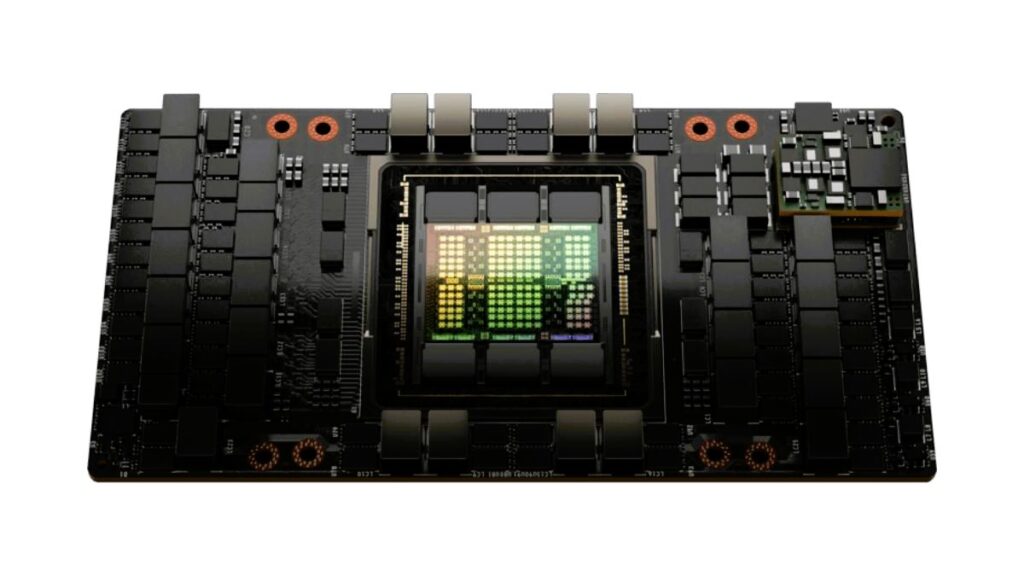
Nvidia’s H100, H200 and Blackwell-generation products belong to a category of high-performance computing hardware used in advanced AI infrastructure. However, the strategic value of AI computing does not depend exclusively on owning physical processors.
An organisation can obtain computing capacity by:
-
Purchasing processors.
-
Building and operating its own data centre.
-
Leasing computing capacity from a cloud provider.
-
Accessing remote servers through commercial arrangements.
This creates a complicated international regulatory environment. A processor manufactured in one country may be purchased by a company registered in another, installed in a third country and used remotely by customers elsewhere.
Consequently, export-control enforcement may need to examine more than physical shipments. Customer identity, beneficial ownership, end use and access to computing services can also matter.
Hardware, software and technological advantage
Nvidia’s competitive position is not based on processors alone. Its CUDA software ecosystem, networking technologies and integrated computing platforms make its products attractive to developers and large technology companies. This combination creates a powerful technological ecosystem that is difficult for competitors to replicate quickly.
It also explains why access to Nvidia’s commercial strategy, product roadmaps and computing infrastructure could be strategically significant.
7. The US–China Semiconductor Rivalry
The allegations must be considered against the background of growing technological competition between Washington and Beijing. The United States has increasingly treated advanced semiconductors as strategically sensitive technologies.
Its export-control policies seek to restrict China’s access to certain advanced computing processors and semiconductor manufacturing capabilities.
From the Biden restrictions to the Trump administration
In October 2022, the Biden administration introduced major restrictions on advanced computing chips and semiconductor manufacturing equipment destined for China. Further restrictions followed as technology developed and companies adapted their products and supply chains.
The policy objective was to limit China’s ability to acquire computing capabilities that could strengthen its advanced AI and military research. However, the restrictions also created difficult commercial decisions for American companies.
China is a significant technology market. Restricting sales can reduce revenue and potentially encourage Chinese customers to adopt domestic alternatives.
Nvidia has argued that American companies should remain competitive in international markets rather than surrendering commercial opportunities entirely.
The H200 licensing policy in 2026
The Trump administration subsequently adjusted the policy concerning certain advanced processors. On December 8, 2025, President Trump announced that certain Nvidia H200 and comparable processors could be supplied to approved Chinese customers under controlled conditions.
On January 13, 2026, the US Department of Commerce’s Bureau of Industry and Security announced a change to its licensing approach. Applications involving the Nvidia H200, AMD MI325X and comparable products could receive case-by-case review, provided specified security and compliance conditions were satisfied.
These included:
-
Demonstrating sufficient semiconductor supply for US customers.
-
Avoiding the diversion of manufacturing capacity away from American demand.
-
Appropriate customer screening and export-compliance procedures.
-
Independent third-party testing in the United States.
The policy did not create unrestricted permission to export advanced processors to China. Each relevant transaction remained subject to licensing review and applicable conditions.
Why this matters to the Huang controversy
Huang has been an influential advocate of maintaining American competitiveness in international AI markets, including China. The allegations could intensify debate about whether commercial engagement with Chinese technology customers creates unacceptable security risks.
Some US policymakers may argue that tighter restrictions are necessary. Others may warn that excessive restrictions could weaken American technology companies and accelerate China’s domestic semiconductor development. The challenge is to protect strategic capabilities without unnecessarily undermining legitimate international trade.
8. Nvidia’s Independent Investigation: What Must Be Established?
On November 8, 2026, Nvidia’s board announced an independent investigation following reports that its founder and CEO had been targeted by a foreign intelligence effort. A committee of independent directors, assisted by outside independent legal counsel, will oversee the investigation.
The board stated that it had no reason to believe US national security or Nvidia’s confidential information had been compromised. It also expressed confidence in Huang and his leadership team. Huang pledged to cooperate fully. This is an important corporate response, but the investigation must address several distinct issues.
Personal and professional relationships
-
When did the relationship begin?
-
What was its nature and frequency?
-
Were the interactions connected to legitimate business activities?
-
Did any potential conflicts of interest arise?
Information security
-
Were corporate devices or confidential communications involved?
-
Was sensitive information discussed outside authorised channels?
-
Did any unauthorised individual gain access to company systems?
-
Was confidential information transferred to third parties?
Commercial and compliance procedures
-
Did the relationship influence Nvidia’s dealings with Megaspeed?
-
Were relevant transactions properly screened?
-
Were customer due-diligence procedures followed?
-
Did employees raise security concerns?
Board oversight
-
When did the board become aware of the allegations?
-
Were potential conflicts disclosed?
-
Did internal reporting procedures function properly?
-
Were existing safeguards adequate?
Nvidia’s position deserves equal consideration
The company has emphasised that its CEO meets thousands of customer executives every year. It has also stated that its cloud customers in Asia receive ordinary business information rather than trade secrets or information related to US national security.
This is an important part of Nvidia’s response. The investigation must test relevant security procedures and evidence rather than assume that personal access automatically translates into access to confidential technology.
9. Washington Responds: Congressional Oversight and Reported FBI Interest
The controversy has attracted attention from senior US lawmakers. On November 5, 2026, three Republican House committee chairmen requested a joint, closed-door briefing from Jensen Huang.
The request came from:
-
Brian Mast, chairman of the House Foreign Affairs Committee.
-
John Moolenaar, chairman of the House Select Committee on China.
-
Rick Crawford, chairman of the House Permanent Select Committee on Intelligence.
Their letter requested a briefing on November 18 concerning Huang’s interactions with Alice Huang and Nvidia’s security procedures against foreign intelligence operations. The lawmakers cited concerns about China’s possible access to sensitive American technology and information.
This is a request for congressional information, not a completed hearing or a finding of wrongdoing.
The FBI question
On November 9, President Trump said the FBI was looking into the matter. He did not publicly explain the scope of any federal inquiry or identify specific investigative steps. Accordingly, the existence and precise status of any FBI investigation should not be overstated beyond the president’s public statement.
The issue also presents a political challenge for Washington. Huang is an influential American technology executive who has participated in discussions with the Trump administration about AI leadership and semiconductor exports. The government must balance commercial competitiveness with its responsibility to protect national security. Any response must be based on evidence rather than political loyalty or commercial influence.
10. China’s Response: Denial and Global Political Strains
China has rejected the allegations.
On November 9, Foreign Ministry spokesperson Guo Jiakun described the claims as groundless smears against China.
Beijing’s position is that allegations of Chinese espionage should not be used to undermine China’s technological development or restrict legitimate commercial activity. However, an official denial does not independently disprove an intelligence allegation.
Equally, a reported intelligence assessment does not establish that espionage has been proven.
This distinction is particularly important in an environment where both governments have strategic interests in the semiconductor industry.
The controversy could add pressure to:
-
US–China technology negotiations.
-
Semiconductor export licensing.
-
International cloud computing arrangements.
-
Singapore’s position as a regional technology centre.
-
Commercial partnerships between American and Asian technology companies.
The danger is that an unresolved intelligence allegation becomes another instrument of geopolitical confrontation before the underlying evidence is properly examined.
11. Nvidia Shares Fall: Investor Confidence and Financial Exposure
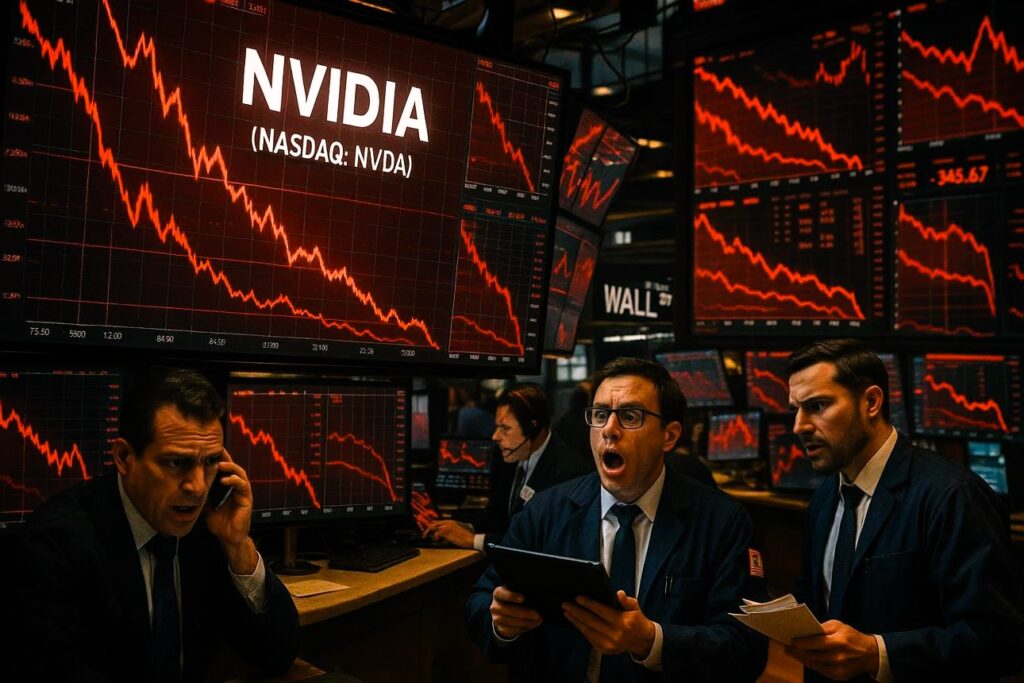
However, it would be misleading to attribute the entire decline to the affair or the intelligence allegations. Nvidia shares had already faced pressure amid broader concerns about the sustainability of AI-related investment and technology valuations.
Other factors include:
-
Expectations for future AI infrastructure spending.
-
Demand from major cloud providers.
-
Competition in advanced processors.
-
Semiconductor supply constraints.
-
US–China export restrictions.
-
Wider technology market sentiment.
-
Investor confidence in Jensen Huang’s leadership.
The shareholder lawsuit
On November 9, Nvidia and Jensen Huang were named in a proposed shareholder class-action lawsuit filed in federal court in San Jose, California. The complaint alleges that investors were not adequately informed about risks associated with Huang’s reported relationship and the related national security concerns. The plaintiffs claim that the alleged lack of disclosure harmed investors and seek unspecified damages.
These are allegations in a legal complaint, not judicial findings that Nvidia or Huang violated securities laws. The lawsuit nevertheless introduces another potential source of corporate exposure: whether material information was disclosed appropriately to shareholders.
12. Corporate Governance: Can a CEO Become a National Security Vulnerability?
The controversy raises an important question for multinational technology companies. Corporate governance traditionally focuses on financial performance, shareholder protection, regulatory compliance and executive accountability. Companies operating in strategically sensitive industries face additional responsibilities.
Their executives may possess information that is valuable to commercial competitors and foreign governments. Personal relationships, financial interests and professional networks can create potential vulnerabilities when they intersect with access to sensitive corporate information. This does not justify unlimited scrutiny of executives’ private lives.
The legitimate concern arises when private conduct creates demonstrable conflicts of interest, security risks or opportunities for unauthorised access.
Why institutional safeguards matter
Companies such as Nvidia need safeguards that do not depend entirely on the personal judgment of a powerful executive.
These include:
-
Independent board oversight.
-
Effective information-security controls.
-
Clear conflict-of-interest disclosure rules.
-
Beneficial ownership and customer screening.
-
Export-control compliance programmes.
-
Secure communication systems.
-
Whistleblower protection.
-
Independent internal audits.
-
Succession and crisis-management planning.
The central lesson is that corporate security must be institutional rather than personality-dependent. Even a highly successful executive cannot be the sole safeguard protecting a strategically important company.
13. What Could Happen Next? Five Possible Outcomes
The consequences will depend on evidence that has not yet been made public.
| Possible outcome | Potential implications |
|---|---|
| No evidence of information compromise | Nvidia may restore confidence, although reputational concerns could remain. |
| Attempted targeting established, but no successful access | Stronger executive security and information-protection procedures. |
| Unauthorised access to confidential information was established | Serious corporate, regulatory and potentially national security consequences. |
| Governance or disclosure failures have been established | Leadership pressure, shareholder litigation and possible regulatory action. |
| Export-control violations established | Enforcement proceedings and tighter scrutiny of AI hardware and cloud computing arrangements. |
These are analytical possibilities, not predictions. The independent board inquiry, any US government investigation and Singapore’s investigation into Megaspeed must be assessed separately.
14. Implications for the Global AI Industry
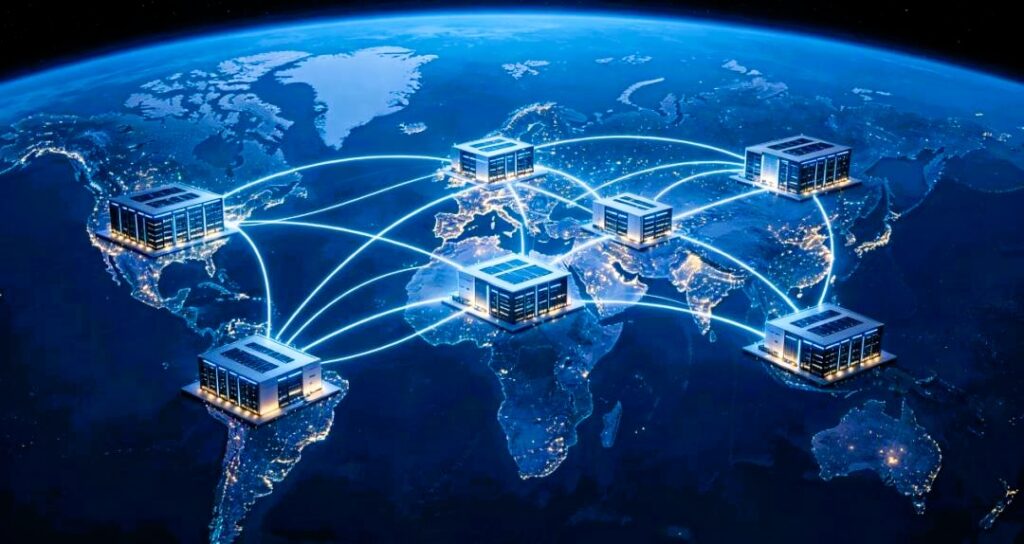
The controversy could have consequences beyond Nvidia.
The global AI industry depends on international cooperation among semiconductor manufacturers, cloud providers, research institutions, software developers and investors. If governments become increasingly concerned about intelligence collection and technology diversion, they may demand stronger controls. Possible developments include:
Stronger customer verification: Semiconductor companies may face greater pressure to establish the identities and ultimate ownership of customers purchasing advanced processors.
Greater cloud-computing oversight: Regulators may examine who controls and accesses computing infrastructure, not simply where physical processors are installed.
Increased corporate accountability: Technology companies may strengthen procedures for managing conflicts of interest and protecting confidential information.
More complicated international investment: Cross-border partnerships could face additional scrutiny over ownership, financing and end users.
Further technological fragmentation: The United States and China could move towards increasingly separate technology ecosystems, carrying implications for innovation, investment and consumer costs.
There is also a danger that excessive restrictions could undermine legitimate scientific collaboration and commercial competition. The challenge for policymakers is to protect genuinely sensitive technology without treating every international business relationship as a national security threat.
15. The Questions That Remain Unanswered
Despite extensive reporting, the central issues remain unresolved.
-
What specific evidence led US intelligence agencies to reportedly assess Alice Huang as an MSS asset?
-
Was she formally recruited, and what was the alleged nature of her assignment?
-
What information, if any, did she obtain from Jensen Huang?
-
Did the relationship create access to confidential Nvidia information or influence corporate decisions?
-
What were her precise ownership and management interests in Megaspeed at the relevant times?
-
Were Nvidia processors or computing services diverted to unauthorised customers?
-
What did Nvidia’s senior management and independent directors know, and when?
-
Were customer-screening and export-compliance procedures adequate?
-
What will the independent board investigation establish?
-
What is the precise scope of the reported FBI involvement?
-
Will the congressional briefing produce further information?
-
Could the controversy affect Jensen Huang’s long-term leadership?
These questions should remain open until credible evidence provides answers.
Conclusion: The Real Story Is Bigger Than an Affair
The controversy surrounding Jensen Huang illustrates how closely connected private conduct, corporate responsibility and national security have become in the modern technology industry.
A personal relationship involving a corporate executive would ordinarily remain a private matter. But when that executive leads a company supplying strategically important AI computing infrastructure, credible allegations of foreign intelligence targeting deserve serious examination. That does not make the allegations proven.
Nvidia’s board must establish whether confidential information was exposed, whether corporate procedures were followed and whether the company’s interests were adequately protected.
US authorities must establish the factual basis and scope of any intelligence concerns. Singapore must be allowed to investigate Megaspeed without its findings being confused with allegations concerning Alice Huang personally. China’s position should also be assessed against verifiable evidence rather than political assumptions.
The larger issue is the growing strategic value of artificial intelligence.
AI processors are no longer simply commercial products. They are building blocks of economic competitiveness, scientific advancement, military research and national technological independence.
Companies designing, manufacturing, distributing and operating this infrastructure therefore carry responsibilities that extend far beyond their balance sheets.
The most important lesson is that national security cannot depend on the personal judgment, reputation or vigilance of a single executive. It must be protected through strong institutions, transparent governance, verifiable compliance and independent oversight.
Whether the allegations against Alice Huang are ultimately substantiated or disproved, the episode has exposed a question the global technology industry can no longer afford to ignore:
In an age when access to artificial intelligence increasingly means access to strategic power, who is protecting the people, companies and information behind it?
Frequently Asked Questions (FAQs)
1. Who is Alice Huang, and why is she connected to Jensen Huang?
Alice Huang, also known as Huang Le, is a Chinese businesswoman associated with Singapore-based Megaspeed International. Media reports identified her as the woman involved in Jensen Huang’s acknowledged extramarital affair. US intelligence reportedly assessed her as an asset of China’s Ministry of State Security, although this allegation has not been publicly proven.
2. Has Jensen Huang admitted to having a relationship with a Chinese intelligence agent?
Jensen Huang admitted being unfaithful to his wife and apologised to his family and colleagues. He did not publicly identify the woman or admit to knowing of any intelligence connection. President Trump subsequently said Huang told him he had no idea the woman was allegedly a spy.
3. What is Megaspeed International, and why is it under investigation?
Megaspeed is a Singapore-based cloud computing company and an Nvidia cloud partner. It has attracted scrutiny over suspicions that its business arrangements may have helped Chinese customers obtain advanced Nvidia processors subject to US export restrictions. Singapore has confirmed investigations into Megaspeed but explicitly denied investigating Alice Huang personally.
4. Why are Nvidia AI processors important to national security?
Advanced GPUs provide the computing power needed to develop sophisticated AI systems. These systems have applications in scientific research, intelligence analysis, cybersecurity, industrial development and military research. Access to advanced processors and large computing clusters has consequently become a strategic concern for governments.
5. Has Nvidia confirmed that its confidential technology was compromised?
No. Nvidia’s board has stated that it has no reason to believe that company secrets or US national security information were compromised. Its independent investigation is intended to examine the available evidence.
6. How could the controversy affect Nvidia and the global AI industry?
The controversy could increase regulatory scrutiny, affect investor confidence and encourage stronger controls over international semiconductor sales and cloud computing services. Its longer-term implications will depend on the findings of corporate and government investigations.
Editorial Perspective (EP)
The Nvidia controversy illustrates a fundamental challenge of the modern technological age: commercial success and national security are increasingly interconnected.
Global technology companies operate across borders, employ international workforces and depend on complex networks of suppliers, investors and customers. This interconnectedness drives innovation and economic opportunity, but it also creates vulnerabilities that governments and corporations must address.
National security, however, must not become a convenient justification for unsubstantiated accusations, political pressure or indiscriminate restrictions on international commerce.
The appropriate response is evidence-based investigation, transparent corporate governance, consistent enforcement of export regulations and equal accountability regardless of nationality or political influence.
Ultimately, protecting strategic technology is a shared institutional responsibility, not a matter of placing unquestioning trust in powerful individuals or governments.