

Global Tech Stocks Crash: Politics, Profits and the AI Revolution
Global Tech Stocks Crash: How America’s midterm elections, rising AI infrastructure costs and intelligent automation are reshaping the global technology industry.
https://mrpo.pk/us-china-technology-competition/

Introduction: When the AI Boom Hit a Wall
Imagine investing hundreds of billions of dollars in a technology that promises to transform almost every industry. You build enormous data centres, purchase increasingly powerful computer chips, recruit specialised engineers and persuade investors that artificial intelligence represents the next great economic revolution.
Then the financial markets begin asking an uncomfortable question:
What happens if the technology transforms the world but fails to generate the profits investors have been promised?
That question is becoming increasingly important for the global technology industry.
On November 5, 2026, American technology stocks suffered one of their sharpest declines in recent years. The Nasdaq Composite plunged 5.52%, the S&P 500 fell 4.36%, and the Dow Jones Industrial Average declined 3.44%.
Approximately $3 trillion in market capitalisation disappeared from S&P 500 companies during the selloff. Nvidia fell more than 9%, while semiconductor shares experienced particularly heavy selling.
The shock quickly spread across international markets. Japan’s Nikkei suffered a particularly severe decline on November 6, while South Korean and Taiwanese technology shares also came under substantial pressure.
Yet the following trading session in the United States brought a partial recovery in technology shares, demonstrating how quickly market sentiment can change.
The immediate political backdrop was the November 3 US midterm election, in which Democrats secured control of both chambers of Congress, ending unified Republican control of the legislative branch during President Donald Trump’s remaining two years in office.
Investors feared that the new political balance could bring greater scrutiny of artificial intelligence, restrictions on data-centre development and additional environmental and infrastructure requirements.
However, attributing the entire market decline to the election would be misleading.
The selloff exposed several interconnected concerns:
-
Political uncertainty surrounding the expansion of AI infrastructure.
-
Rising electricity, financing and construction costs.
-
Questions about whether enormous AI investments will generate adequate returns.
-
Growing competition and pressure on established technology business models.
-
The possibility that AI agents could disrupt traditional software and outsourcing industries.
These developments point towards a much bigger transformation.
The first phase of the AI revolution was about building the technology. The next phase may be about proving that it can deliver sustainable economic value.

1. The US Midterm Elections: A Political Shock to Technology Investors
The November 2026 midterm elections changed the political balance in Washington.
Democrats won control of the House of Representatives and the Senate, while Donald Trump remained president.
This created a divided government, with the White House controlled by Republicans and Congress controlled by Democrats.
Why did this matter to technology investors?
The Trump administration had supported rapid AI development, technology investment and the expansion of America’s digital infrastructure.
Many investors had consequently expected a relatively favourable political environment for the industry.
Democratic victories introduced uncertainty about that expectation.
Several Democratic politicians have advocated stronger AI oversight, greater accountability for technology companies and more scrutiny of large data-centre projects.
Investors began considering whether these priorities could increase construction costs, delay projects or restrict the speed of infrastructure expansion.
What Can a New Congress Actually Change?
Congress can legislate, investigate companies, conduct oversight hearings, influence federal budgets and establish regulatory frameworks.
However, a change in congressional control does not automatically translate into immediate restrictions.
The new Congress will begin its term in January 2027. Legislation must still pass the required parliamentary processes and receive presidential approval or survive a presidential veto.
Moreover, local authorities and state governments have considerable influence over land use, construction permits, electricity infrastructure and environmental requirements.
This distinction matters because the November market reaction reflected anticipated political developments, not an already implemented nationwide AI ban.
The election created uncertainty about future investment conditions. It did not immediately stop the construction of American data centres.
2. The Data Centre Controversy: Who Pays for the AI Revolution?
Artificial intelligence may appear to exist entirely inside computers and mobile phones.
In reality, it depends on enormous physical infrastructure.
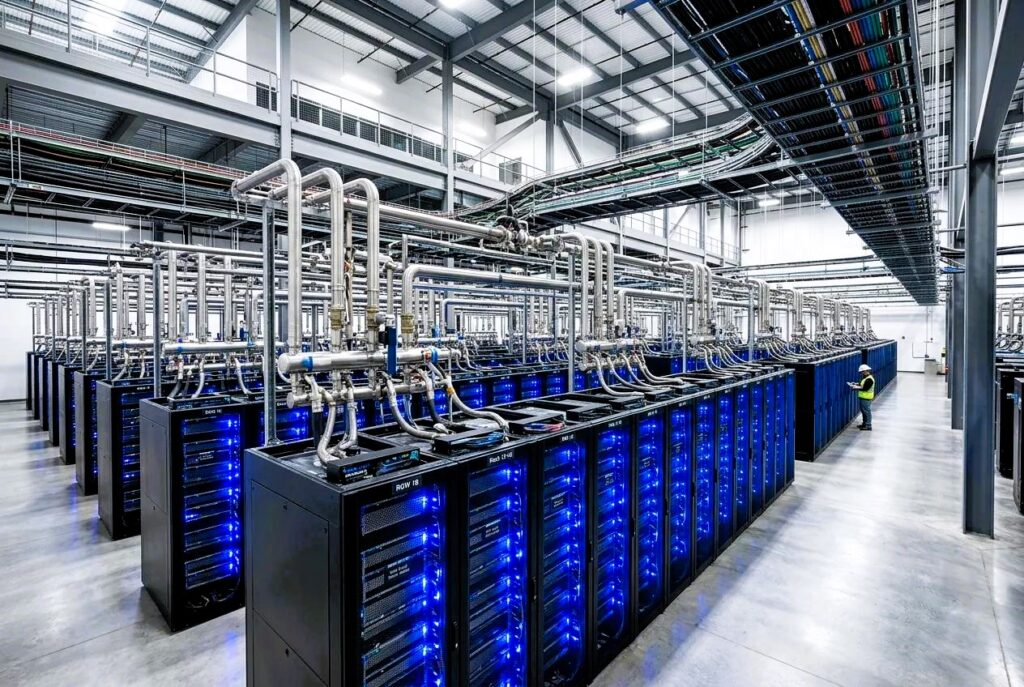
Advanced AI systems operate through data centres containing thousands of specialised processors. These facilities require continuous electricity, cooling systems, communication networks, water and supporting infrastructure.
Their expansion is creating an increasingly difficult question for governments and communities:
Should ordinary citizens bear additional infrastructure costs to support the commercial expansion of powerful technology companies?
The Electricity Challenge
The International Energy Agency’s updated outlook estimates that global data-centre electricity consumption could increase from approximately 485 terawatt-hours in 2025 to 950 terawatt-hours by 2030.
That would represent around 3% of global electricity demand.
Electricity consumption by AI-focused data centres is projected to grow even faster, potentially tripling during this period.
These figures illustrate the scale of the challenge.
A data centre may require electricity comparable to the consumption of a substantial town or industrial facility, depending on its size and computing capacity.
The consequences extend beyond the technology company operating it.
They can include:
-
Greater pressure on regional electricity grids.
-
Expensive upgrades to transmission and distribution networks.
-
Competition for available electricity.
-
Increased demand for power generation.
-
Potential upward pressure on household electricity bills where infrastructure costs are passed on to consumers.
The actual impact on household bills depends on electricity-market regulation, utility investment arrangements, location and who pays for new infrastructure.
It is therefore important not to assume that every new data centre automatically increases household bills.
Water, Land and Environmental Pressure
Electricity is not the only concern.
Some data centres use substantial quantities of water for cooling, although consumption varies considerably according to cooling technology, climate and facility design.
Other concerns include:
-
Land acquisition and changes in local land use.
-
Noise from cooling equipment and backup generators.
-
Air pollution from certain forms of power generation.
-
Construction-related environmental damage.
-
Additional pressure on roads and public utilities.
The environmental impact also depends on how the electricity is generated.
A data centre powered by renewable or nuclear electricity has a different emissions profile from one dependent on coal or natural gas.
The IEA’s energy analysis highlights the importance of a diversified electricity supply, including renewables, natural gas and nuclear power, in meeting projected demand.
Voters Begin Pushing Back
Public resistance has become more than an isolated community concern.
According to Ballotpedia’s November 6 reporting, voters favoured limiting data-centre development in 40 of the 41 local ballot measures decided on November 3.
The measures included outright restrictions, partial bans, temporary moratoriums and additional planning requirements.
This is an important political development.
It does not mean that 40 communities rejected artificial intelligence itself. Rather, voters were expressing concerns about the conditions under which large infrastructure projects should proceed.
The underlying demand is understandable: technological development should not come at an unfair cost to local residents.
The emerging conflict is between national ambitions for technological leadership and the everyday economic interests of citizens.
3. Why Nvidia and Semiconductor Companies Are Particularly Vulnerable
To understand the financial consequences, it is necessary to understand the business model supporting the AI boom.
Nvidia is one of the most important suppliers of advanced processors used in artificial intelligence.
Its graphics processing units, or GPUs, perform the extensive calculations required to train and operate sophisticated AI models.
The commercial chain works broadly as follows:
-
AI developers build increasingly capable models.
-
Cloud computing companies invest in data centres.
-
Data-centre operators purchase processors and supporting equipment.
-
Businesses and individuals pay for AI-powered services.
-
Technology companies expect the resulting income to justify their investments.
This has created substantial demand for advanced chips.
However, the business cycle also creates vulnerability.
If companies delay data-centre construction, they may postpone processor purchases. This could affect suppliers’ future revenue growth and investors’ expectations.
That explains why Nvidia and other semiconductor companies were particularly exposed during the November selloff.
But the semiconductor industry is much larger than one American company.
It includes:
-
Advanced processor designers.
-
Semiconductor foundries.
-
Memory-chip manufacturers.
-
Chipmaking equipment suppliers.
-
Electronic component producers.
-
Packaging and testing companies.
Companies across this chain have different levels of exposure to AI investment.
A slowdown in one part of the industry can therefore affect suppliers in several countries.
Does Nvidia’s Decline Mean AI Demand Is Disappearing?
Not necessarily.
Nvidia serves international customers, and demand for computing is not limited to American data-centre projects.
The important question is whether future spending will grow as quickly as investors previously expected.
A company can remain technologically dominant while its share price declines because investors have revised their expectations about future growth.
This is an important distinction between the performance of a business and the valuation of its shares.
4. The AI Investment Bubble: When Spending Outruns Returns
Perhaps the most significant financial issue behind the selloff is the enormous amount of capital being committed to artificial intelligence.
Microsoft, Amazon, Alphabet and Meta are among the major technology companies competing to expand their AI capabilities.
Their investments include:
-
Data-centre construction.
-
Advanced processors and memory.
-
Cloud-computing infrastructure.
-
Electricity supply and cooling.
-
Research and development.
-
Networking and storage systems.
These investments may create enormous long-term opportunities.
However, they also introduce financial risks.
Spending Is Not the Same as Profit
Consider a hypothetical company investing $50 billion in data-centre infrastructure.
That expenditure does not automatically generate $50 billion in revenue.
The company must attract customers, sell computing capacity and generate sufficient income over time.
It must also account for:
-
Electricity and cooling expenses.
-
Employee salaries.
-
Equipment maintenance.
-
Financing and interest costs.
-
Depreciation of expensive infrastructure.
-
Replacement of ageing processors.
-
Competition and falling service prices.
Depreciation is particularly important.
AI processors and data-centre equipment can become commercially less attractive as newer generations appear.
A company may therefore have to replace expensive equipment before its original investment has generated the expected returns.
Five Questions Investors Are Asking
1. Is AI infrastructure expanding too quickly?
Are companies building more computing capacity than customers will actually need?
2. Can AI services generate sufficient revenue?
Are businesses willing to pay enough for AI products to justify their operating costs?
3. Are current stock valuations realistic?
Have investors already priced in years of expected growth?
4. Will competition reduce profit margins?
As more companies offer AI services, could prices fall and profitability weaken?
5. Will borrowing become a problem?
If financing costs remain high, can companies continue expanding infrastructure without putting excessive pressure on their balance sheets?
These questions are particularly important for smaller data-centre operators and infrastructure companies that depend more heavily on borrowing and external financing.
Reuters reported that investors were already retreating from the AI trade before the November election, partly because of concerns about spending, financing conditions and uncertain returns.
What Is the AI Trade?
The AI trade refers to investment strategies built around companies expected to benefit from the growth of artificial intelligence.
These include semiconductor manufacturers, cloud providers, software companies, data-centre operators and electricity infrastructure businesses.
The problem arises when investment enthusiasm becomes disconnected from actual financial performance.
Stock prices may rise because investors expect extraordinary future growth.
If that growth takes longer to materialise, valuations can fall even when the underlying technology continues improving.
This is why a market correction should not automatically be interpreted as proof that AI itself is a failed technology.
5. The Patil Effect: When AI Starts Challenging the Software Industry
The infrastructure debate is only one side of the AI revolution.
Another potentially more disruptive development concerns the traditional software industry.
In February 2026, Anthropic’s new capabilities for Claude Cowork attracted considerable attention from investors.
The company introduced plugins designed to automate professional tasks across areas such as legal work, sales, marketing and data analysis.
The developments contributed to a selloff in software, data analytics and professional services shares.
Reuters reported that investors were concerned about the possibility that AI systems could perform work previously handled by specialised software and professional service providers.
The market reaction became associated in media coverage with the term Patil Effect.

Who Is Rahul Patil?
Rahul Patil joined Anthropic as Chief Technology Officer on October 7, 2025.
According to Anthropic’s official announcement, he oversees engineering across product development, computing infrastructure, inference, data science and security.
He previously served as CTO of Stripe and held senior engineering positions at AWS, Microsoft and Oracle.
An important qualification is necessary: the Patil Effect is a media label describing market concerns associated with Anthropic’s AI developments. It is not a formally recognised economic theory, and there is no basis for attributing the entire software-sector disruption to one executive.
Why AI Agents Are Different from Traditional Software
Traditional software generally performs specific functions.
For example:
-
Accounting applications manage financial records.
-
Human resource systems maintain employee information.
-
Customer relationship management software tracks customers and sales.
-
Legal applications organise contracts and documents.
-
Business management platforms coordinate operations.
Businesses frequently purchase multiple applications and employ people to move information between them.
AI agents introduce a different possibility.
Instead of merely responding to questions, they can potentially perform several connected tasks through a single workflow.
Imagine a company reviewing hundreds of commercial contracts.
An AI agent might:
-
Read and organise the documents.
-
Extract important financial conditions.
-
Compare contractual clauses.
-
Identify unusual provisions.
-
Prepare summaries.
-
Highlight potential legal risks for human examination.
This does not mean that the AI system can independently replace qualified lawyers or make legally binding decisions.
It means that substantial portions of document-intensive work may become faster and less dependent on manual processing.
Similar developments are possible in accounting, marketing, research, software development and customer support.
Why Software Investors Became Nervous
Traditional software companies often earn recurring income through subscriptions.
Their customers pay monthly or annual fees for individual applications or licences.
But if AI agents can perform several functions through one integrated platform, businesses may question whether they still need as many separate subscriptions.
This could place pressure on the traditional software business model.
The threat is not simply that AI will replace software.
It is that AI may change what customers are willing to pay for.
6. The SaaSpocalypse: Is the Traditional Software Business Model Under Threat?
The term SaaSpocalypse combines Software as a Service, or SaaS, with apocalypse.
It describes fears that AI could seriously disrupt the conventional software subscription industry.
For years, SaaS companies benefited from a relatively predictable model.
A business purchased software licences for its employees and paid recurring fees.
The provider received a regular revenue stream, while the customer gained access to specialised applications.
AI agents could change this relationship.
Instead of purchasing multiple applications for different tasks, a business might increasingly use an AI platform to coordinate work across several systems.
Which Businesses Face the Greatest Exposure?
Potentially vulnerable areas include:
-
Basic data-processing applications.
-
Repetitive administrative software.
-
Routine document-management services.
-
Some customer-support platforms.
-
Standardised business reporting tools.
-
IT outsourcing is based heavily on repetitive tasks.
However, the vulnerability differs from company to company.
Businesses with unique datasets, established customer relationships, regulatory expertise and deeply integrated systems may retain substantial competitive advantages.
Why Traditional Software Will Not Simply Disappear
AI systems need reliable infrastructure.
Businesses still require secure databases, cybersecurity, access controls, financial records, audit trails, regulatory compliance and dependable data management.
In many cases, AI agents will operate through existing software rather than replace it completely.
Established companies may also integrate AI into their own products.
The industry could therefore move towards a hybrid model in which traditional software provides the underlying infrastructure while AI agents perform increasingly complex tasks.
The most important commercial shift may be from charging primarily for software access or employee licences towards charging for computing usage, completed tasks or business outcomes.
This is a potential transformation, not an inevitable outcome.
7. India’s IT Industry: An Early Warning for the Global Employment Market
India offers an important example of how AI disruption could affect economies dependent on software development and outsourcing.
Companies such as Tata Consultancy Services, Infosys, Wipro and HCLTech provide software development, technical support, consulting and business services to international clients.
Their operations have traditionally relied heavily on skilled employees working on projects for global businesses.
This model has created significant employment opportunities.
However, AI automation could alter the economics of some services.
The Employment Challenge
Consider a hypothetical software project that previously required 100 programmers.
If advanced AI tools allow the same tasks to be completed by a smaller team, the company may need fewer employees for that particular project.
Potentially exposed areas include:
-
Entry-level programming.
-
Routine software testing.
-
Basic coding and maintenance.
-
Data processing.
-
Customer support.
-
Standardised administrative operations.
This does not mean that every programming job will disappear.
Complex software architecture, security, system integration, quality assurance and client management still require substantial human expertise.
Nevertheless, companies may need fewer people to complete certain categories of work.
Reuters reported that Anthropic’s new AI tools intensified concerns about traditional outsourcing and professional services, contributing to pressure on Indian technology shares in February 2026.
Could AI Also Create New Employment?
Yes.
Growing demand may emerge for professionals specialising in:
-
AI implementation and integration.
-
Cybersecurity.
-
Data governance.
-
AI system evaluation.
-
Robotics.
-
Automation management.
-
Human supervision of AI systems.
-
Industry-specific AI applications.
The challenge is the transition.
New opportunities may require different skills from those held by workers whose existing roles become automated.
This raises an important question for developing countries:
Can education systems, businesses and governments retrain workers quickly enough to prevent technological progress from widening economic inequality?
India’s experience may offer an early indication of what other outsourcing-dependent economies could face, including Pakistan, Bangladesh, the Philippines and several other emerging markets.
8. Asia’s Exposure: Why Japan, South Korea and Taiwan Matter
The American selloff quickly spread across Asian financial markets because the region occupies a central position in the global technology supply chain. However, these economies have different strengths and different vulnerabilities.

Taiwan: Advanced Semiconductor Manufacturing
Taiwan plays a critical role in manufacturing advanced chips used in AI processors. A prolonged reduction in global chip orders could affect its semiconductor industry and wider economy.
South Korea: Memory Chips and Electronics
South Korea is particularly important in advanced memory chips and semiconductor manufacturing. Companies such as Samsung and SK Hynix are exposed to fluctuations in demand for AI-related hardware.
Japan: Equipment and Industrial Technology
Japan has an important role in semiconductor materials, manufacturing equipment, electronic components and precision industrial technology.
On November 6, Japan’s Nikkei fell sharply, while South Korean and Taiwanese markets also experienced substantial losses. The initial declines in South Korea and Taiwan exceeded 8% before some losses were recovered.
How Does an American Investment Decision Affect Asian Workers?
Consider a US technology company planning a new AI data centre.
It orders processors, memory chips, electronic components and specialised equipment from suppliers across several countries.
If the project is delayed, suppliers may receive fewer orders.
They may postpone factory expansion, reduce production forecasts, or reconsider hiring.
The effects can spread to contractors, logistics companies, industrial suppliers and local communities.
This is how an investment decision made in one country can affect employment and industrial activity thousands of kilometres away.
It also explains why the global technology industry cannot be understood simply by looking at American stock-market performance.
9. The US-China AI Competition: Innovation Versus Infrastructure
Artificial intelligence has become more than a commercial competition.
It is increasingly connected to national security, military capabilities, industrial policy and geopolitical influence.
The United States and China are competing across several important areas:
-
Advanced semiconductor technology.
-
AI research and development.
-
Military and autonomous systems.
-
Robotics and industrial automation.
-
Cloud computing.
-
Global technology markets.
-
Domestic manufacturing capacity.
The United States has major strengths in advanced chip design, software ecosystems, cloud infrastructure and private-sector research investment.
China, meanwhile, has substantial manufacturing capacity, an extensive industrial supply chain and a major role in electronics production.
It is also investing in domestic semiconductor capabilities and alternative AI computing infrastructure.
Could US Regulation Benefit China?
Some investors fear that additional restrictions, higher infrastructure costs or lengthy approval processes could make the United States less attractive for certain technology investments.
If companies face greater difficulties building new facilities, countries with more favourable investment conditions could gain an advantage.
China could benefit in some areas.
However, the competition is not determined by regulation alone.
Access to advanced chips, manufacturing equipment, skilled researchers, electricity, international markets and reliable supply chains also matters.
Nor does a less restrictive regulatory environment automatically guarantee technological leadership.
The Energy Advantage
Energy availability could become one of the most important factors in the next stage of AI competition.
Countries capable of supplying reliable and affordable electricity may attract data-centre investment.
This could include a combination of:
-
Solar and wind power.
-
Hydroelectricity.
-
Nuclear energy.
-
Natural gas.
-
Battery storage.
-
Modern transmission networks.
The IEA’s research identifies electricity supply as a significant challenge for the expansion of AI infrastructure.
The real challenge for America is therefore not simply choosing between regulation and innovation.
It is finding a balance that protects public interests while maintaining the infrastructure, investment and research capabilities necessary for technological progress.
10. Who Will Win and Who May Lose in the New AI Economy?
The AI revolution is unlikely to produce equal benefits across every industry. Some businesses may experience substantial growth, while others could struggle to maintain their existing revenue models.
| Industry | Potential opportunities | Principal risks |
|---|---|---|
| Semiconductor manufacturers | Growing demand for advanced computing | Reduced infrastructure spending |
| Cloud computing | AI hosting and enterprise services | High operating and capital costs |
| Data-centre operators | Demand for computing capacity | Electricity costs and financing |
| Traditional software | AI integration and new products | Subscription disruption |
| IT outsourcing | AI-supported productivity | Reduced demand for routine services |
| Cybersecurity | Greater demand for digital protection | More sophisticated AI-powered attacks |
| Energy providers | Rising electricity demand | Infrastructure and environmental constraints |
| Robotics | Industrial automation | High development and implementation costs |
The New Rule of Technology Investment
During the initial AI boom, investors often rewarded companies simply because they were associated with artificial intelligence.
That approach may become less reliable.
Investors increasingly need to distinguish between technological promise and commercial performance.
The companies best positioned to succeed may be those demonstrating:
-
Genuine customer demand.
-
Sustainable revenue growth.
-
Profitable business models.
-
Efficient use of computing resources.
-
Financially manageable infrastructure investments.
-
Strong competitive advantages.
-
The ability to adapt to changing customer requirements.
In other words, the next phase may reward companies that make money from AI rather than simply promise to do so.
11. What Does the Selloff Mean for Ordinary People?
Stock-market reports frequently focus on billionaires, investors and corporate valuations.
But the economic consequences of a prolonged technology downturn could reach much further.
Employment and Wages
If companies reduce technology investment, suppliers and service providers may reconsider hiring plans.
At the same time, increasing automation could put pressure on jobs involving repetitive administrative, technical and professional tasks.
Workers may face greater competition for positions requiring advanced digital skills.
Household Electricity Costs
The expansion of data centres may create additional pressure on electricity infrastructure.
Where utility companies pass infrastructure costs on to consumers, households could face higher bills.
The extent of this risk depends on regulation, investment arrangements and the availability of new electricity supplies.
Pensions and Retirement Savings
Many pension funds, retirement portfolios and investment funds hold shares in major technology companies, directly or indirectly.
A prolonged decline in technology valuations could therefore affect retirement savings and long-term investment returns.
However, the effect will vary according to portfolio composition and the duration of the downturn.
Developing Economies
Countries that depend on technology exports, outsourcing and foreign investment may be particularly exposed to a slowdown in the global AI economy.
For Pakistan, India, Bangladesh and the Philippines, the challenge is twofold.
They must prepare workers for AI-driven changes while developing the infrastructure, education and digital capabilities needed to participate in the new economy.
Countries that fail to adapt could find themselves competing for fewer traditional outsourcing opportunities.
Those who invest in skills, reliable electricity, digital infrastructure and local innovation could discover new opportunities.
The Wealth Effect
A prolonged decline in financial markets can also influence consumer behaviour.
Households that see their investment portfolios lose value may reduce discretionary spending.
This can affect businesses beyond the technology sector.
Reuters reported that the latest selloff was raising concerns about broader financial conditions, including the possibility that weaker investment and falling asset values could affect economic growth.
It is important, however, not to confuse a stock-market correction with an established economic recession.
The two can be connected, but they are not the same event.
12. What Happens Next? Three Possible Scenarios
The future remains uncertain. However, three developments deserve particular attention.
Scenario One: A Controlled Market Correction
Technology shares stabilise after the initial shock.
AI development continues, but investors become more selective.
Companies with strong revenues, manageable costs and genuine customer demand perform better than those depending primarily on future expectations.
This would represent a correction in market valuations rather than the collapse of the AI industry.
Scenario Two: A Political and Infrastructure Slowdown
The new Congress pursues stronger AI oversight.
State and local authorities introduce additional requirements for data-centre construction.
Some projects face delays, while companies reconsider their investment plans.
Electricity costs, financing conditions and environmental requirements become more important factors in deciding where new facilities are built.
This could slow infrastructure expansion without necessarily stopping AI development.
Scenario Three: Structural Disruption of the Software Industry
AI agents become increasingly capable of performing complex business tasks.
Companies reduce their dependence on certain traditional software subscriptions and routine outsourcing services.
Established technology businesses are forced to redesign their products, pricing and employment structures.
Some adapt successfully.
Others lose customers, revenue and market share.
This could become a much more significant transformation than an ordinary stock-market correction.
Which Scenario Is Most Likely?
These scenarios are not mutually exclusive.
Political restrictions may slow some infrastructure projects while AI adoption continues elsewhere.
Traditional software companies may lose market share in some areas while becoming major AI service providers in others.
The most likely outcome may be a combination of all three, with different consequences for different industries and countries.
13. The Bigger Question: Who Should Pay for the AI Revolution?
Behind the market figures, political debates and corporate investment decisions lies a fundamental question.
Who should bear the costs of building the infrastructure that powers artificial intelligence, and who should receive its benefits?
Technology companies argue that enormous investments are necessary to maintain innovation and international competitiveness.
Communities want affordable electricity, responsible land use and protection of their environmental resources.
Workers want secure employment and opportunities to adapt.
Investors want sustainable returns.
Governments want technological leadership without sacrificing public interests.
These concerns are not necessarily incompatible.
Artificial intelligence has the potential to improve medical research, accelerate scientific discoveries, increase industrial productivity and make essential services more accessible.
But its success should not be measured exclusively through corporate valuations, the wealth of technology executives or the number of data centres constructed.
A meaningful technological revolution should also deliver:
-
More affordable and accessible services.
-
Better employment opportunities.
-
Higher productivity and wages.
-
Improved education and healthcare.
-
Responsible use of natural resources.
-
Fairer distribution of economic benefits.
The objective should not be to stop technological progress.
It should be to ensure that technological progress serves society rather than requiring society to absorb its costs without receiving a fair share of its benefits.
Conclusion: The AI Revolution Is Not Ending, But Its Rules Are Changing
The November 2026 technology selloff has exposed several tensions within the global AI economy.
The Democratic victory in the US midterms introduced political uncertainty.
Public opposition to data-centre expansion demonstrated that communities are increasingly concerned about electricity, water and infrastructure costs.
Investors questioned whether enormous AI investments could generate sustainable financial returns.
Meanwhile, the developments associated with Anthropic’s Claude Cowork and the so-called Patil Effect highlighted a different challenge: AI agents could disrupt the software and outsourcing industries that were once expected to benefit from the technology revolution.
These are connected developments, but they are not identical problems.
One concerns the political and physical conditions under which AI infrastructure can expand.
Another concerns whether the enormous capital committed to AI can produce adequate returns.
The third concerns how AI itself may transform established businesses, professional services and employment.
The market decline does not prove that AI is a bubble destined to burst. Nor does it mean that established technology companies will disappear.
It does, however, suggest that investors are becoming less willing to accept ambitious promises without demonstrable commercial results.
The global economy is entering a period in which technological capability alone may not guarantee commercial success.
Companies will have to demonstrate financial discipline, governments will have to balance innovation with public accountability, and workers will need opportunities to adapt.
Ultimately, the greatest test of artificial intelligence will not be how many trillions of dollars its companies are worth.
It will be whether it makes human life more productive, affordable and secure.
The first phase of the AI revolution was about building the technology. The next phase will be about proving its economic and social value.
And that may produce a very different generation of winners and losers.
Frequently Asked Questions
1. Why did global technology stocks crash in November 2026?
The November 5 selloff followed the Democratic victory in the US midterm elections, which raised concerns about potential AI regulation and restrictions on data-centre expansion. However, high AI investment costs, financing pressures and doubts about future profitability were also important factors.
2. How much market value disappeared during the selloff?
Approximately $3 trillion in market capitalisation was erased from S&P 500 companies during the November 5 decline. This represents a fall in the combined market value of listed companies, not $3 trillion physically withdrawn from the economy.
3. Why was Nvidia particularly affected?
Nvidia supplies advanced processors used in AI infrastructure. If technology companies reduce or postpone data-centre investments, demand for these processors could grow more slowly than investors expect. Its share price is therefore particularly sensitive to changes in AI spending expectations.
4. What is the Patil Effect?
The Patil Effect is a media term associated with market concerns following Anthropic’s introduction of AI capabilities in Claude Cowork. These developments raised fears that AI agents could disrupt traditional software, data analytics and professional services. It is not an established economic theory.
5. Will AI replace traditional software companies?
Not necessarily. AI agents may automate tasks previously performed through separate applications, putting pressure on some subscription-based business models. However, established software companies can adapt by integrating AI into their products, while secure databases, cybersecurity and specialised business systems will remain important.
6. Could artificial intelligence cause widespread unemployment?
AI could reduce demand for certain repetitive programming, administrative, data-processing and customer-support jobs. It may also create new opportunities in AI development, cybersecurity, automation and data management. The overall employment impact will depend on adoption rates, education, retraining and the ability of economies to create new work.
Purpose of This Article
This article examines the political, financial, technological and social developments behind the November 2026 global technology stock selloff. It explores how American election results, AI infrastructure investments, semiconductor supply chains and emerging AI agents could reshape global financial markets, traditional software businesses and employment opportunities.
It distinguishes confirmed developments from investor concerns and possible future scenarios.
Author’s Perspective
Technological progress should not be judged solely by the wealth it creates for investors or the market value of corporations.
Every major industrial transformation changes the relationship between capital, labour, government and society. Artificial intelligence will be no different.
The real challenge is ensuring that its economic benefits are widely shared, while its financial, environmental, and employment costs are managed responsibly.
A technology revolution that makes companies richer but leaves ordinary people more vulnerable would represent an incomplete measure of progress.
References and further reading
-
Reuters, November 5, 2026: Nasdaq posts biggest daily drop in 19 months on fears of AI regulations.
-
Associated Press, November 2026: Democrats win control of Congress in the 2026 midterms.
-
Ballotpedia, November 6, 2026: Voters favour limiting data-centre development in 40 of 41 local ballot measures.
-
International Energy Agency: Key Questions on Energy and AI.
-
Reuters, February 3, 2026: Anthropic’s new AI tools deepen selloff in data analytics and software stocks.
-
Anthropic, October 7, 2025: Rahul Patil joins Anthropic as Chief Technology Officer.
-
Reuters, November 6, 2026: Global technology selloff and its wider financial-market implications.
-
Reuters, November 6, 2026: Technology selloff, growth concerns and global economic risks.