Hisense 55-Inch U8QG Review: Is This Mini-LED TV Worth Buying?
Hisense 55-Inch U8QG Review. Imagine watching a movie at night. The scene turns dark, a tiny light appears in the distance, and suddenly the screen makes you feel as if you are looking through a window rather than watching television. Now imagine getting that experience without paying the premium usually associated with flagship OLED televisions.
https://mrpo.pk/amazon-fire-tv-43-omni-series/
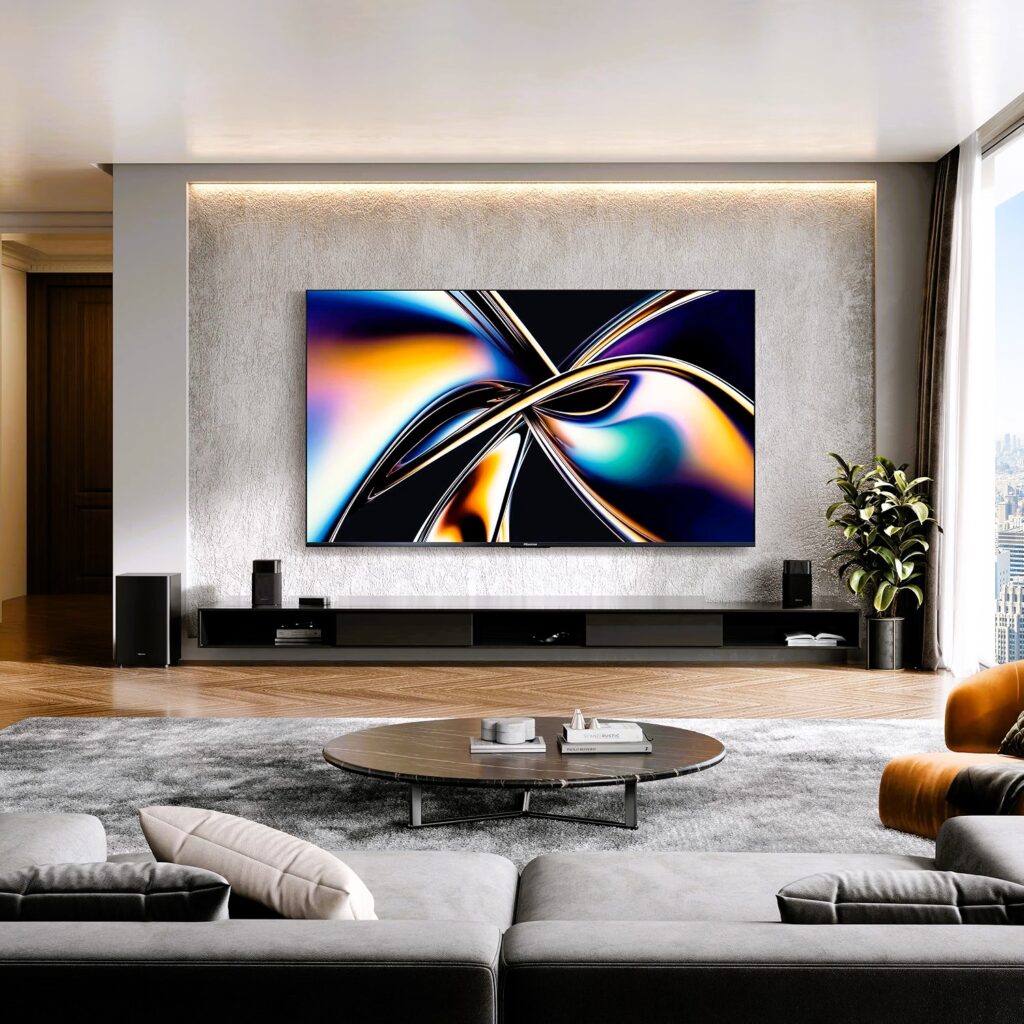
Comprehensive product review | 4K Mini-LED | QLED | Google TV | Gaming and Home Entertainment
That is the promise of the Hisense 55U8QG ULED Mini-LED 4K Google TV.
With an advertised peak brightness of up to 5,000 nits, a native 165Hz refresh rate, advanced local dimming, Dolby Vision IQ, and an unusually ambitious 4.1.2-channel sound system, this television looks impressive on paper.
But impressive specifications do not automatically translate into an impressive everyday experience. How well does it handle movies, sports, gaming, ordinary television broadcasts, and streaming? Are its headline specifications genuinely useful, or are some of them more marketing than meaningful performance?
Let’s examine the television carefully, including its strengths, limitations, and the people who should consider buying it.
Editorial transparency: This is an independently prepared, research-based review, not a claim of personal ownership or hands-on testing. Real-world observations are distinguished from advertised specifications and manufacturer claims.
1. Hisense U8QG: At a glance https://a.co/d/0dfO3oD2
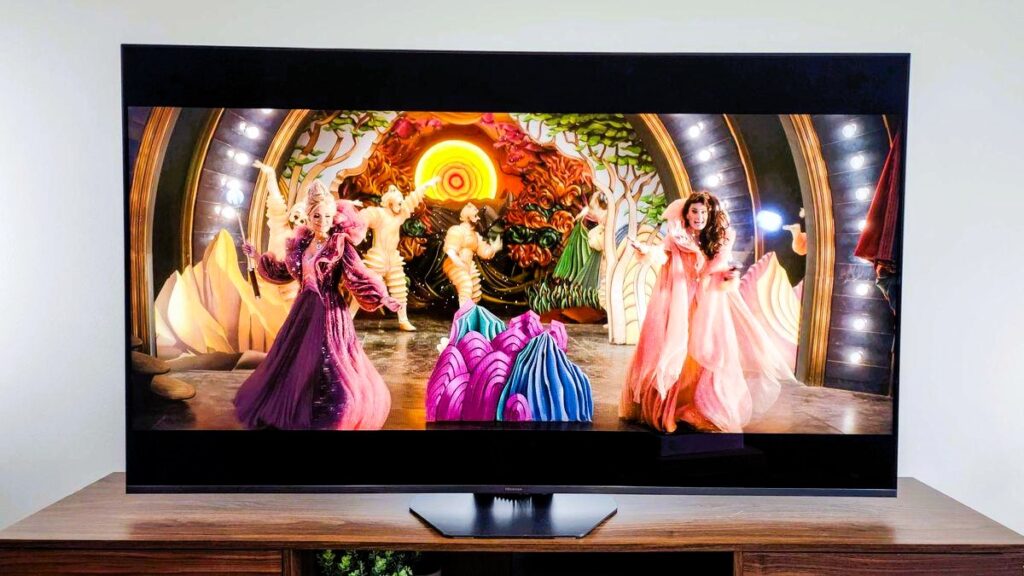
The U8QG is a premium-oriented LCD television that combines Mini-LED backlighting with Quantum Dot colour technology. Rather than relying on a conventional LED backlight, it uses numerous tiny LEDs arranged in independently controlled dimming zones.
This allows the television to produce brighter highlights, deeper blacks, and better contrast than many conventional LED and QLED televisions.
Here are its principal specifications.
| Feature | Hisense 55U8QG |
|---|---|
| Screen size | 55 inches (54.6-inch actual) |
| Resolution | 4K UHD (3840 × 2160) |
| Display technology | LCD, Mini-LED Pro, QLED |
| Backlighting | Full-array local dimming |
| Advertised peak brightness | Up to 5,000 nits |
| Native refresh rate | 165Hz |
| Maximum gaming refresh rate | Up to 288Hz at 1080p |
| Variable refresh rate | Yes |
| HDR formats | Dolby Vision IQ, HDR10, HDR10+, HLG |
| Smart platform | Google TV |
| Sound system | 4.1.2-channel |
| Audio technologies | Dolby Atmos |
| Picture technologies | IMAX Enhanced, Filmmaker Mode |
| Gaming connectivity | HDMI 2.1, USB-C display input |
| AI processing | Hi-View Engine Pro |
Specifications are based on the manufacturer’s model-specific specification sheet and independent testing. Some advertised capabilities depend on input, resolution, settings, and connected equipment.
2. Picture Quality: The Biggest Attraction
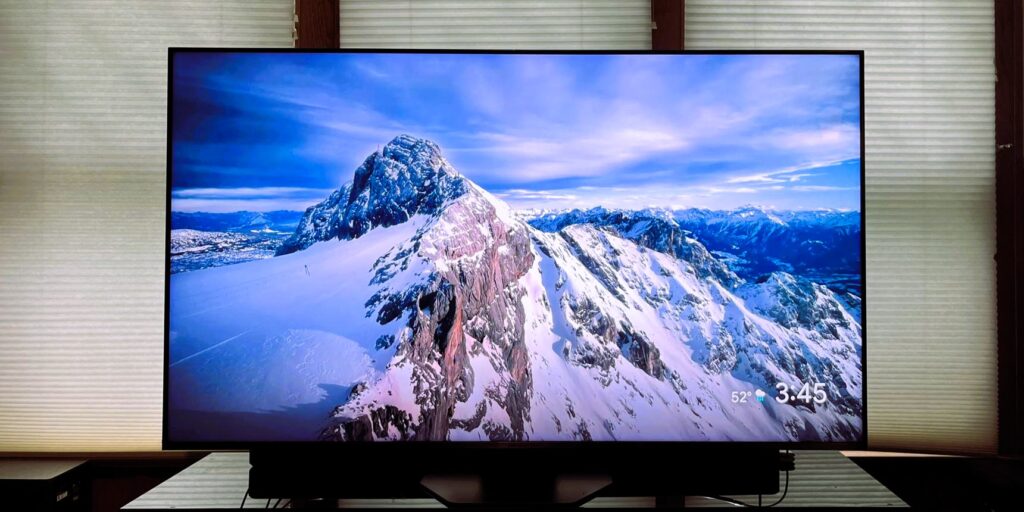
Its combination of Mini-LED backlighting, local dimming, and Quantum Dot colour reproduction is designed to deliver an impressive viewing experience.
Mini-LED technology and local dimming
Mini-LED is one of the most important features of this television.
Traditional LED televisions often struggle to reproduce dark scenes accurately. When a bright object appears against a dark background, light from the backlight can spread into neighbouring areas. This creates a visible glow, commonly called blooming.
Mini-LED technology addresses this problem by using smaller LEDs and dividing the backlight into independently controlled zones.
The 55-inch U8QG is listed with approximately 1,008 local dimming zones. This is a substantial number for a television of this size.
What does this mean in everyday viewing?
Imagine watching a space documentary. The background is almost completely black, while distant stars and planets appear against it.
A conventional LED television may produce a greyish background or a noticeable halo around bright objects. The U8QG’s local dimming system can keep the background much darker while illuminating the stars.
However, Mini-LED is not OLED. Some blooming can still occur around bright subtitles, stars, and small objects against dark backgrounds.
Independent testing by RTINGS found excellent black levels and very good local dimming precision, although some blooming remains visible.
5,000 nits: How bright is that?
Hisense advertises peak brightness of up to 5,000 nits.
That is an exceptionally ambitious figure, particularly for a television in this category.
For context, many conventional televisions struggle to produce the intense highlights required for particularly impressive HDR presentation.
High brightness helps reproduce:
-
Sunlight reflecting from water.
-
Bright clouds and snowy landscapes.
-
Flames and explosions in action movies.
-
Reflections from metal and glass.
-
Dramatic lighting in HDR films.
It also helps when watching television in a brightly illuminated room.
However, there is an important distinction between advertised peak brightness and sustained real-world brightness. The 5,000-nit figure should not be interpreted as the brightness of the entire screen throughout a movie.
Independent testing of the U8QG’s 65-inch version found HDR highlights exceeding 4,000 nits in certain test conditions. The 55-inch model has not been independently tested to the same extent, so its exact performance should not be assumed to be identical.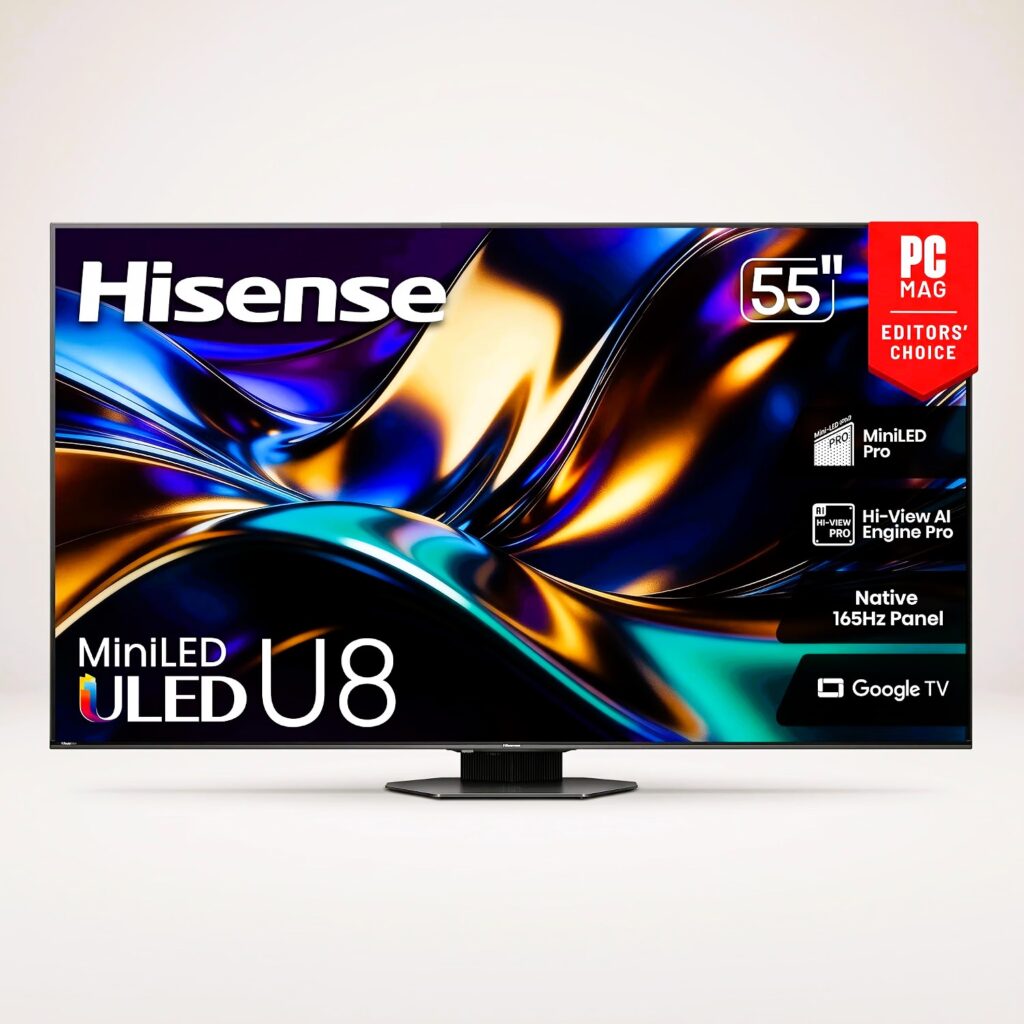
QLED and Quantum Dot colours
Mini-LED controls how light is distributed. QLED technology improves colour reproduction through Quantum Dot materials.
The combination is particularly useful for HDR content.
Colours such as deep reds, rich greens, and bright blues can appear more vibrant without losing as much intensity at higher brightness levels.
For example, a nature documentary featuring tropical forests, colourful birds, and coral reefs can look particularly attractive.
One qualification: vivid colours are not always accurate colours. Some picture modes may exaggerate saturation, so viewers who prefer a natural cinematic appearance should experiment with Filmmaker Mode and colour settings.
Dolby Vision IQ and HDR10+
The U8QG supports several major HDR standards:
-
Dolby Vision IQ
-
Dolby Vision
-
HDR10+
-
HDR10
-
HLG
This is an important advantage because different streaming services and movie studios use different HDR formats.
Dolby Vision IQ also uses ambient-light information to adjust picture presentation according to the viewing environment.
In practical terms, you have greater flexibility when watching content from different sources.
Verdict: Picture quality is a major selling point, particularly for people who enjoy bright HDR movies, documentaries, and streaming content.
3. Gaming Performance: A Serious Contender
The advertised 165Hz native refresh rate is higher than the 120Hz commonly found on many mainstream televisions.
But what does it actually mean?
Native 165Hz refresh rate
A 165Hz display can refresh the picture up to 165 times per second.
This can make fast-moving images appear smoother, particularly when connected to a suitably powerful gaming PC.
For competitive games, including racing, shooting, and sports titles, higher refresh rates can provide a more responsive visual experience.
However, a television’s refresh rate does not automatically make every game run at 165 frames per second.
The connected computer or console must also produce the required frame rate.
288Hz gaming capability
Hisense also advertises a gaming refresh rate of up to 288Hz.
There is an important technical distinction here: this is available at 1080p, not native 4K.
For a PC gamer who prioritises extremely high frame rates over resolution, this may be useful.
For most console gamers, 4K at 120Hz is likely to be more relevant.
VRR, FreeSync and G-SYNC compatibility
Variable Refresh Rate synchronises the television’s refresh rate with the frame output of a compatible gaming device.
This helps reduce screen tearing and stuttering when frame rates fluctuate.
The U8QG supports:
-
HDMI Forum VRR
-
AMD FreeSync
-
NVIDIA G-SYNC compatibility
-
Auto Low Latency Mode
RTINGS measured input lag at approximately 4.9ms at 4K and 165Hz in Game Mode, which is excellent for responsiveness.
There are limitations, however. Its pixel transitions are not particularly fast, meaning some motion blur can remain despite the impressive refresh rate. Also, VRR and the 288Hz mode are not available through its USB-C display input.
Is it suitable for PlayStation 5 and Xbox?
Yes, it is a feature-rich television for modern gaming consoles.
4K gaming up to 120Hz with compatible games, along with VRR support.
Neither console can take full advantage of the television’s 165Hz or 288Hz PC-oriented modes.
Verdict: Excellent gaming connectivity and responsiveness, although the headline refresh rate should not be confused with a guaranteed improvement in motion clarity.
4. Sound Quality: An Ambitious Built-In System
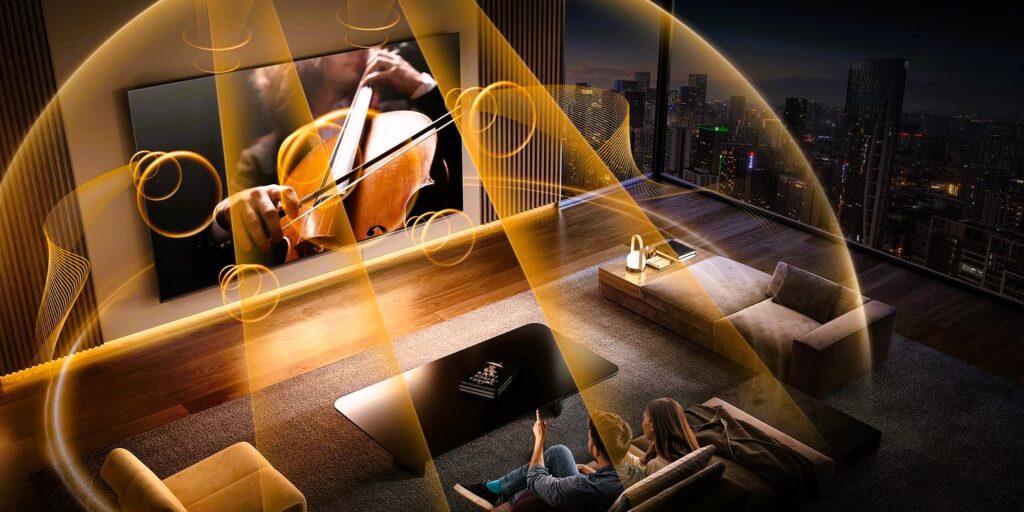
Most slim televisions offer relatively modest built-in speakers. Hisense has attempted to go beyond that limitation by incorporating a more elaborate speaker arrangement.
The system is designed to deliver:
-
Four main audio channels.
-
A dedicated bass channel.
-
Two height channels.
-
Dolby Atmos support.
The two height channels are intended to create a greater sense of vertical space, helping compatible soundtracks feel more immersive.
Imagine watching an aircraft fly overhead in an action movie or hearing rain and thunder during a dramatic scene. Dolby Atmos-compatible content has the ability to create a more spacious sound presentation than conventional stereo television audio.
Can it replace a soundbar?
For ordinary television viewing, news, documentaries, and casual entertainment, the integrated sound system should be a welcome advantage.
However, it is important not to expect the performance of a dedicated premium home-theatre system.
TechRadar praised the expanded speaker arrangement but identified distortion from the built-in subwoofer when handling deep bass effects.
A separate soundbar or surround-sound system remains the better option for people who want powerful bass, greater volume, and more convincing cinematic sound.
Verdict: Better-equipped than many television sound systems, but not a complete replacement for dedicated home-theatre equipment.
5. Google TV: Smart Entertainment Without Extra Equipment
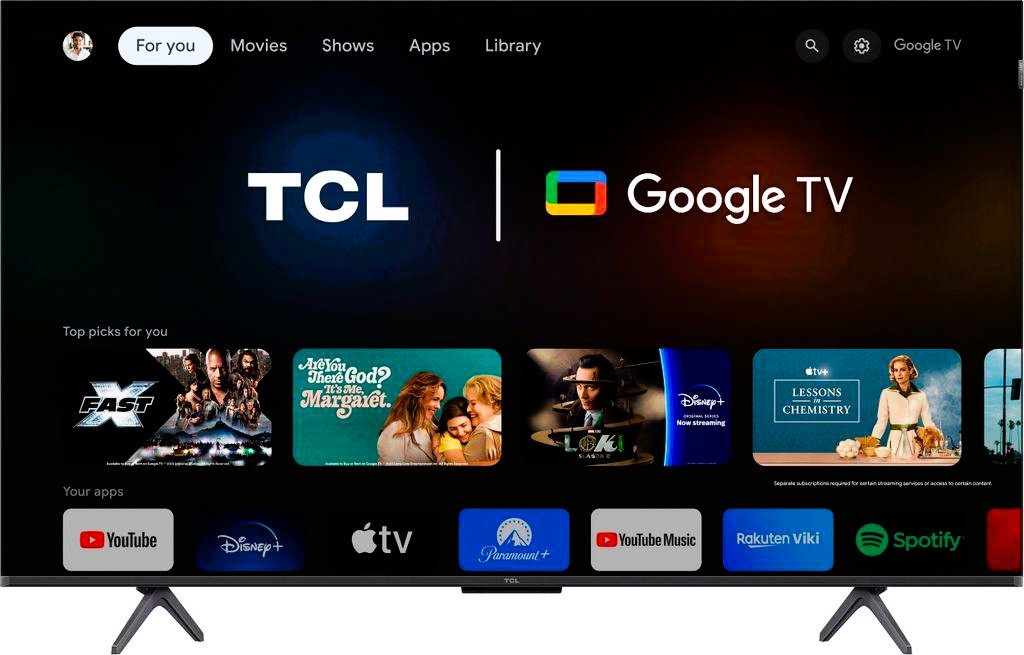
The U8QG uses Google’s Google TV platform.
This is a significant convenience because the television can function as an entertainment hub without requiring an additional streaming device.
Depending on regional availability and app support, users can access services such as:
-
YouTube
-
Netflix
-
Amazon Prime Video
-
Disney+
-
Google Play services
-
Other compatible streaming applications
Google TV also offers personalised recommendations, voice search through Google Assistant, and access to a large app ecosystem.
Why this matters
Consider a household where different family members enjoy different entertainment.
One person watches documentaries, another prefers films, and children want cartoons or educational programmes.
Google TV brings these choices together in one interface.
It also supports casting and compatible smart-home features.
One caution: streaming applications, subscriptions, voice services, and certain Google features vary by country. Buyers outside the United States should verify local app availability before purchasing.
6. Design, Connectivity and Everyday Convenience
The rear design is understandably thicker than that of many conventional LED televisions because Mini-LED backlighting and the integrated audio system require additional space.
Connectivity
The U8QG provides modern connectivity options, including:
-
HDMI 2.1 connections for high-bandwidth gaming.
-
USB ports for compatible storage devices and accessories.
-
USB-C display input for compatible computers.
-
Wi-Fi and Bluetooth connectivity.
-
Ethernet networking.
-
Digital audio connectivity.
One useful feature for PC users is the USB-C display input. It provides an alternative way to connect a compatible computer without relying exclusively on HDMI.
However, remember that USB-C does not provide every gaming feature available through HDMI. In particular, RTINGS found that VRR and 1080p at 288Hz are unavailable through this input.
Installation and placement
At 55 inches, the television is suitable for many medium-sized living rooms and bedrooms.
Before purchasing, consider:
-
Whether your existing television stand can accommodate its feet.
-
Whether your wall mount supports the model’s VESA mounting requirements.
-
Whether the rear housing leaves sufficient space against the wall.
-
Whether your seating arrangement provides a reasonably central viewing position.
A 55-inch screen can be a very enjoyable experience, but placement matters. A television with excellent picture quality cannot compensate for an uncomfortable viewing distance.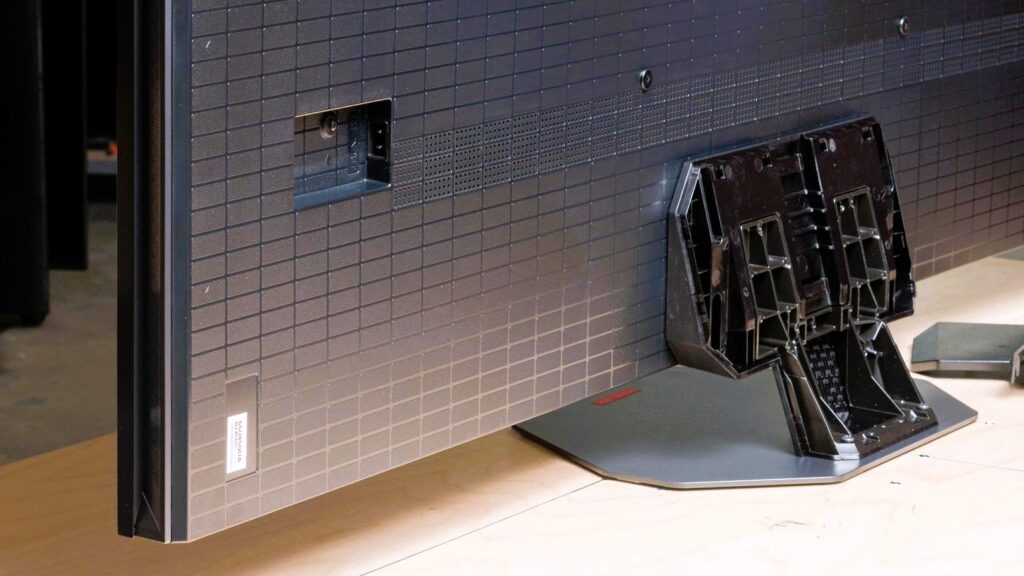
7. Important Drawbacks: What Buyers Should Know
No television is perfect, and the U8QG deserves a balanced assessment.
Its specifications are impressive, but independent testing reveals several limitations worth considering before spending your money.
1. Viewing angles are not ideal
This is particularly important for the 55-inch model.
RTINGS reports that the 55-inch and 75-inch versions are believed to use ADS Pro panels, while the tested 65-inch model uses a VA panel.
ADS Pro panels generally offer wider viewing angles but can have lower native contrast than VA panels.
This means the 55U8QG may behave differently from the extensively tested 65-inch version.
If your family regularly watches television from sofas positioned on opposite sides of a large living room, this distinction deserves attention.
The picture may lose some consistency when viewed from more extreme angles.
2. Blooming is not completely eliminated
Mini-LED technology significantly reduces blooming, but it does not eliminate it.
You may occasionally notice a halo around:
-
White subtitles on dark backgrounds.
-
Stars against a black sky.
-
Bright objects in dark movie scenes.
This is a limitation of local-dimming LCD technology rather than a problem unique to Hisense.
3. HDR brightness can sometimes be excessive
A television capable of producing exceptionally bright highlights sounds wonderful.
However, more brightness is not always better.
RTINGS identified an issue with HDR tone mapping on the tested U8QG. Its picture processing can make certain scenes considerably brighter than the content creator intended.
This may disappoint viewers who prefer accurate, reference-quality cinematic presentation.
Fortunately, picture settings can be adjusted, and Filmmaker Mode offers a useful starting point.
4. Fast motion is not always perfectly clear
The 165Hz refresh rate looks impressive in the specifications.
Nevertheless, independent testing found slower pixel transitions that can produce visible blur trails during fast-moving content.
This is an important reminder that refresh rate and pixel response time are two different things.
A high refresh rate does not automatically guarantee perfect motion clarity.
5. Built-in bass has limitations
The 4.1.2-channel arrangement is ambitious, but the integrated subwoofer has been reported to distort when reproducing demanding low-frequency effects.
Movie enthusiasts who enjoy powerful explosions, deep musical bass, and cinematic sound may still want an external sound system.
6. Google TV depends on software and connectivity
Smart televisions are only as convenient as their software experience.
Google TV offers a large application ecosystem, but performance, app compatibility, and connectivity can vary.
WIRED also reported occasional Google TV connection issues during its review.
A reliable home internet connection is important, particularly for 4K streaming.
7. The 55-inch version needs its own evaluation
This is perhaps the most important purchasing consideration.
Many published U8QG reviews use the 65-inch version. It is tempting to assume that the same results apply to every screen size.
That assumption is not entirely safe.
The 55-inch version has fewer advertised dimming zones than the larger models and is reported to use a different panel type.
Consequently, buyers should look for independent measurements of the actual 55U8QG rather than relying entirely on 65-inch reviews.
8. Hisense U8QG: Pros and Cons
What makes it attractive
-
Exceptionally high advertised HDR brightness.
-
Mini-LED backlighting with extensive local dimming.
-
Vibrant Quantum Dot colour reproduction.
-
4K resolution and native 165Hz refresh rate.
-
Up to 288Hz at 1080p for compatible PC gaming.
-
HDMI 2.1, VRR, FreeSync and G-SYNC compatibility.
-
Dolby Vision IQ and HDR10+ support.
-
Google TV and its extensive app ecosystem.
-
Unusually ambitious integrated 4.1.2-channel audio.
-
No OLED-style permanent burn-in risk.
-
Some blooming around bright objects and subtitles.
-
Limited viewing-angle consistency.
-
HDR tone mapping can over-brighten scenes.
-
Motion blur remains despite the high refresh rate.
-
The built-in subwoofer may distort with deep bass.
-
Direct reflections can be distracting.
-
USB-C does not support all HDMI gaming features.
-
55-inch performance should not be assumed to be identical to the 65-inch version.
-
Regional Google TV applications and services may differ.
9. Who Should Buy the Hisense 55U8QG?
The U8QG is not necessarily the ideal television for everybody. Its suitability depends on how you intend to use it.
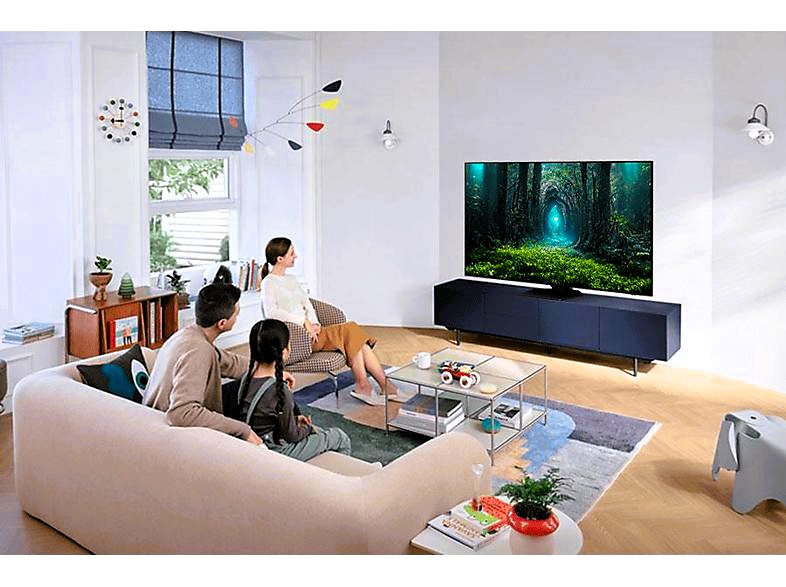
A strong option for households watching movies, television programmes, YouTube, and sports. Its high brightness is especially useful in well-lit rooms.
Particularly attractive for people who can use its 165Hz 4K or 288Hz 1080p capabilities. Check your graphics card and connection requirements first.
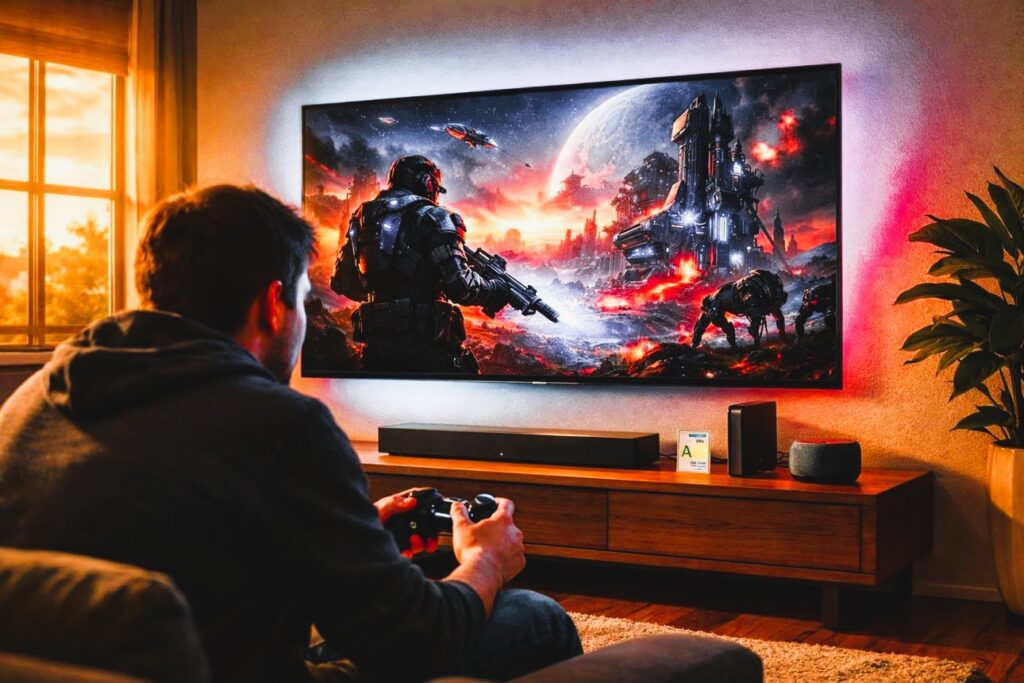
An attractive choice for bright HDR movies, colourful films, and streaming. However, serious cinema purists may prefer a television with more accurate HDR tone mapping.
Its brightness, colour reproduction, and upscaling are useful for watching sports. Some motion blur and screen-uniformity limitations are worth considering.
Who should consider alternatives?
-
People who regularly watch from wide seating positions.
-
Viewers who prioritise the most accurate cinematic HDR presentation.
-
Competitive gamers who are particularly sensitive to motion blur.
-
Buyers expect premium surround sound without additional equipment.
-
People who can purchase a superior OLED or competing Mini-LED television at a similar price.
10. How Does It Compare With OLED?
| Feature | Hisense U8QG | Typical OLED TV |
|---|---|---|
| Backlighting | Mini-LED zones | Self-emissive pixels |
| Black levels | Excellent, but some blooming | Near-perfect |
| Peak brightness | Extremely high advertised brightness | Varies by model |
| HDR highlights | Very impressive | Excellent, model-dependent |
| Viewing angles | More limited | Generally wider |
| Burn-in risk | No OLED-style burn-in | Possible over time |
| Bright-room viewing | Excellent | Depends on the model |
| Gaming | 165Hz native | Depends on the model |
OLED televisions have a fundamental advantage: every pixel produces its own light and can switch off independently.
This means OLED can reproduce genuinely black pixels without the local-dimming limitations of Mini-LED.
The U8QG, however, has a strong advantage in its advertised brightness capability, which can be particularly attractive in bright rooms.
My assessment: If your priority is extremely bright HDR viewing and versatility in a well-lit living room, the Hisense is compelling. If perfect blacks, wide viewing angles, and cinematic precision are more important, an OLED deserves serious consideration.
11. Is the Hisense U8QG Good Value for Money?
The answer depends heavily on its actual selling price.
The U8QG competes in a category where buyers may also consider televisions from Samsung, Sony, TCL, and LG.
Its attraction is the combination of high brightness, Mini-LED technology, gaming capabilities, HDR support, and integrated audio.
However, buying a television should involve more than comparing specifications.
Consider these questions:
-
Is its price significantly lower than that of comparable OLED televisions?
-
Does the seller provide a proper manufacturer’s warranty?
-
Is the exact 55U8QG model supported in your country?
-
Are replacement parts and after-sales service accessible?
-
Does the price justify its advantages over less expensive Mini-LED alternatives?
For buyers in Pakistan, there is an additional consideration. Imported televisions may have different warranty arrangements, regional software limitations, and potentially expensive repairs. Confirm the voltage compatibility, warranty provider, and availability of local servicing before purchasing.
I would not recommend paying a substantial premium simply because the television advertises 5,000 nits or 165Hz.
A good purchase is one where actual performance, reliability, and price come together.
12. Final Verdict: Should You Buy It?
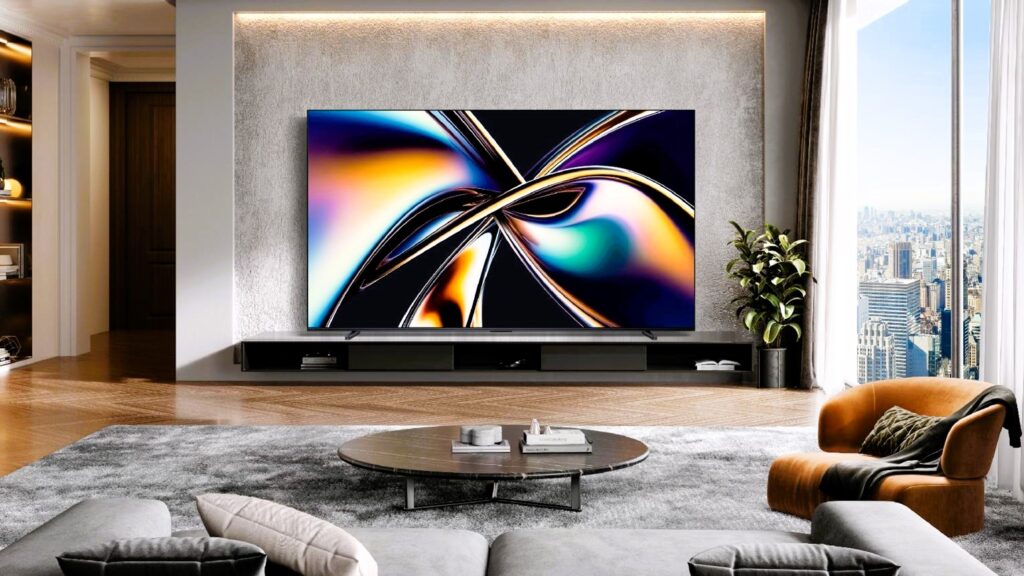
The Hisense 55U8QG is an ambitious television that demonstrates how far Mini-LED technology has progressed.
Its combination of Quantum Dot colours, extensive local dimming, exceptionally high advertised brightness, advanced gaming features, and Google TV makes it an attractive entertainment package.
Its most impressive qualities are its HDR brightness, strong contrast, gaming connectivity, and versatility.
Nevertheless, there are compromises. Viewing angles, motion clarity, HDR accuracy, and built-in bass performance are not without limitations.
The difference between a specification sheet and a satisfying television becomes particularly important here.
A 165Hz refresh rate sounds wonderful, but it cannot compensate for slow pixel transitions. Similarly, 5,000 nits is an impressive headline, but picture accuracy matters just as much as brightness.
My recommendation: The Hisense 55U8QG deserves serious consideration if you want a bright, feature-rich 4K television for movies, sports, streaming, and gaming. It becomes particularly attractive when available at a competitive discount.
However, I would first seek independent confirmation of the 55-inch panel’s performance and compare its price with competing OLED and Mini-LED models.
It is a promising television, but an informed purchase is always better than an impulsive one.
13. Frequently Asked Questions (FAQs)
1. Is the Hisense 55U8QG a good television for watching movies?
Yes. Its Mini-LED backlighting, local dimming, Quantum Dot colours, Dolby Vision IQ, and HDR10+ support make it suitable for movies and streaming. Its high brightness produces impressive HDR highlights. However, some blooming and HDR tone-mapping inaccuracies may affect viewers who prioritise cinematic accuracy.
2. Does the Hisense 55U8QG support 4K at 165Hz?
Yes. It supports native 4K resolution at up to 165Hz with a compatible source and connection. You need a sufficiently capable PC to take advantage of this refresh rate. The PlayStation 5 and Xbox Series X generally target up to 4K at 120Hz.
3. What is the difference between Mini-LED and OLED?
Mini-LED uses many small LEDs behind an LCD panel to control brightness through local dimming zones. OLED uses individually illuminated pixels that can switch off completely. OLED generally produces better blacks and viewing angles, while Mini-LED televisions can deliver exceptionally high brightness.
4. Does the Hisense U8QG have good built-in sound?
It offers an integrated 4.1.2-channel speaker arrangement with Dolby Atmos support. This is more ambitious than the audio systems found in many conventional televisions. However, its built-in subwoofer can distort during demanding bass effects. A dedicated soundbar or home-theatre system remains preferable for serious movie enthusiasts.
5. Is the Hisense 55U8QG suitable for PS5 and Xbox gaming?
Yes. It supports HDMI 2.1, 4K at 120Hz, VRR, and Auto Low Latency Mode. These features make it a strong gaming option. Its 165Hz and 288Hz capabilities are primarily useful for compatible PC gaming rather than current mainstream consoles.
6. Is the Hisense 55U8QG worth buying?
It can be an excellent purchase if its price is competitive and you value brightness, HDR performance, gaming features, and smart-TV convenience. However, compare it with OLED and other Mini-LED televisions before buying. Also, check the warranty and regional compatibility of the exact 55-inch model.
14. References and Further Reading
The following sources provide additional technical information and independent assessments.
1. Manufacturer specification sheet: Hisense U8QG official specification sheet. Detailed specifications, display technology, refresh rate, and HDR formats.
2. RTINGS: Hisense U8QG independent laboratory review. Extensive testing of brightness, contrast, gaming, motion handling, and picture quality. Note that the tested unit was the 65-inch model.
3. TechRadar: Hisense U8QG review. Assessment of picture quality, gaming features, and integrated sound.
4. WIRED: Hisense U8QG review. Independent observations concerning brightness, colour reproduction, picture processing, and usability.
Testing caveat: Results from one screen size should not automatically be applied to another. Buyers should consult model-specific testing wherever available.
15. Affiliate Disclosure
Affiliate Disclosure
This article may contain affiliate links. If you purchase a product through one of these links, we may earn a small commission at no additional cost to you.
Our recommendations and opinions are based on available product specifications, independent reviews, and research. Affiliate relationships do not influence our editorial assessments. We aim to provide honest, balanced, and useful information to help readers make informed purchasing decisions. Thank you for supporting our website.