What If Someone Says I Can’t Vote? Know Your Rights 2026 U.S. Guide
What If Someone Says I Can’t Vote?
You finally reach the front of the line.
You give your name.
Then someone says:
“You can’t vote.”
That sentence can stop a voter in their tracks.
But who is saying it?
A poll worker?
A poll watcher?
Another voter?
A campaign volunteer?
A security officer?
Or simply someone who thinks they know the rules?
The answer matters.
So does the reason.
https://mrpo.pk/2026-us-midterm-elections/
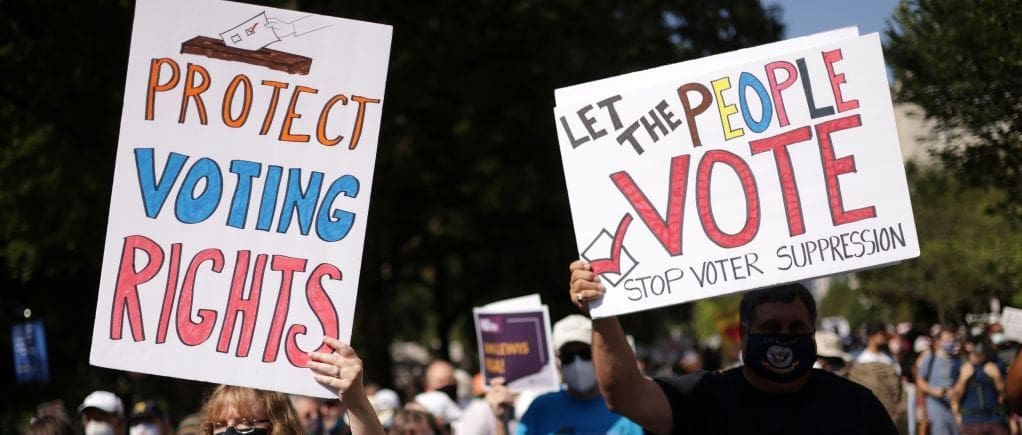
There are legitimate reasons a voter may be unable to cast a regular ballot. Your registration may not be valid, you may be at the wrong polling place, you may not meet a state identification requirement, or another legal issue may need to be resolved.
But a person at the polling place does not get to invent election law on the spot.
Federal law protects eligible voters in federal elections, while state law determines many of the practical procedures used at polling places. The U.S. Election Assistance Commission stresses that voters should contact their state or local election office for the rules that apply in their jurisdiction.
So what should you do when someone says you cannot vote?
Don’t panic. Don’t start a fight. And don’t leave before you understand why.
Ask questions.
Get the official answer.
And if necessary, ask what voting option the law provides in your situation.
Who can vote?
You can vote in U.S. federal, state, and local elections if you:
- Are a U.S. citizen (some areas allow non-citizens to vote in local elections only), including:
- U.S. citizens living outside of the United States. Learn more from the U.S. Department of State about voting as a U.S. citizen abroad.
- U.S. citizens who were born abroad and have never lived in the United States. Your eligibility to vote is based on the state where your parents last lived or were registered to vote. Find out what states may permit you to vote absentee.
- Dual citizens living in the United States or abroad
- Meet your state’s residency requirements
- You can be experiencing homelessness and still meet these requirements.
- Are 18 years old on or before Election Day
- In almost every state, you can register to vote before you turn 18 if you will be 18 by Election Day.
- Some states allow 17-year-olds who will be 18 by Election Day to vote in primaries.
- Are registered to vote by your state’s voter registration deadline. North Dakota does not require voter registration.
Who cannot vote?
- Non-citizens, including permanent legal residents, cannot vote in federal, state, and most local elections.
- Some people cannot vote after being convicted of a felony or if they are currently serving time for other types of crimes. Rules are different in each state. Check this guide from vote.gov to understand the laws in your state.
- Some people who have a mental disability may not be able to vote. Learn about your voting rights. Rules vary by state.
- U.S. citizens residing in U.S. territories cannot vote for president in the general election.
Contact your state or local election office for any questions about who can and cannot vote.
First Question: Who Told You That You Cannot Vote?
This is the first thing to establish.
Not every person standing inside or around a polling place has the same authority.
A poll worker is involved in administering the voting process.
A poll watcher or election observer may be authorised to monitor election activity, but the rules governing what observers may do vary by state. The EAC says poll watchers must observe without violating voter privacy or disrupting the election.
Another voter has even less authority.
Someone standing in line cannot simply declare:
“You are not allowed to vote.”
That is not how election administration works.
If another person tells you that you cannot vote, politely ask a poll worker or election official to clarify the situation.
Ask One Simple Question
If someone tells you that you cannot vote, don’t begin with an argument.
Ask:
“Could you please explain the official reason?”
That question does several useful things.
It identifies the problem.
It allows the election worker to correct a misunderstanding.
And it moves the conversation away from personal opinion and toward the actual voting rules.
If the answer is:
“Your name isn’t on the list,”
That is a registration issue.
If the answer is:
“This isn’t your polling place,”
That is a location issue.
If the answer is:
“You don’t have the required identification.”
That is an ID issue.
If the answer is:
“There is a question about your eligibility.”
Ask what procedure is available to resolve that question.
Different problems can have different solutions.
A Missing Name Does Not Automatically Mean You Cannot Vote
This is one of the most important points in the entire Election-Day emergency series.
Suppose you are at your assigned polling place.
The worker checks the voter list.
Your name isn’t there.
That does not necessarily mean you should simply walk away.
The EAC states that, under the federal provisional-voting framework, voters who say they are registered but do not appear on the list of eligible voters, or whose eligibility is questioned by a poll worker, generally must be offered a provisional ballot, subject to specified state and federal exceptions.
The exact process varies by state.
So ask:
“Can I cast a provisional ballot in this situation?”
If you are offered one, complete it carefully and ask how to check its status afterwards.
For the detailed explanation, see the companion article:
Can I Vote Provisionally? What Is a Provisional Ballot?
What If Someone Says, “You’re Not Registered”?
Ask whether that is the official determination.
There is a difference between:
“I cannot find your name.”
and:
“The election records show you are not registered, and you are not eligible to vote.”
Those statements are not necessarily equivalent.
Ask the poll worker to check your information.
Confirm that you are at the correct polling location.
Explain if you recently moved or changed your name.
If the issue cannot be resolved, ask what procedure applies.
In jurisdictions covered by the federal provisional-ballot requirements, an eligible voter who claims to be registered but is not found on the list may be entitled to a provisional ballot.
What If Someone Says You’re at the Wrong Polling Place?
This can be a genuine problem.
Your polling place is generally assigned according to your residential address.
USA.gov says voters should go to their assigned voting location because their name may not appear on the roster at another location. Polling places can also change between elections.
So if a poll worker says you are at the wrong location, don’t immediately assume you are being denied your right to vote.
Ask:
“Can you tell me where my assigned polling place is?”
Then verify the information through your state or local election office.
If you are sent somewhere else, write down the address.
Don’t rely on memory when Election Day is already becoming complicated.
What If You Are Told You Cannot Vote Because of Your ID?
Voter-identification rules are not uniform across the United States.
Each state establishes its own requirements, and the documents accepted can differ. USA.gov specifically advises voters to check their state’s voter-ID requirements before going to the polls.
So don’t assume:
“America requires this one particular ID.”
It doesn’t.
The relevant question is:
“What does my state require, and what happens if I don’t have it?”
Some jurisdictions may provide another way to establish eligibility or may use provisional voting in certain circumstances.
Ask the poll worker what your state’s procedure is.
What If Your Name and ID Don’t Match?
A name mismatch can happen after:
- Marriage
- Divorce
- A legal name change
- A clerical update
- A registration record that has not yet been updated
Don’t immediately assume that a mismatch means you are disqualified.
Explain the situation.
Ask the poll worker how the jurisdiction handles it.
Depending on state law, you may be asked to provide additional information, update your registration, or use another voting procedure.
The important thing is not to let someone turn a complicated administrative question into a simple:
“You can’t vote.”
Ask for the actual rule.
What If You Recently Moved? Someone Says I Can’t Vote?
A recent move can create several different problems.
You may be registered at your previous address.
You may have updated your registration, but the change may not yet appear.
You may be at the wrong polling place.
Or your state may have a special procedure for voters who move shortly before an election.
Tell the poll worker that you moved.
Then ask:
“What does my state require voters who recently moved to do?”
Do not guess.
The rules depend on the state, the type of move, and when it occurred.
What If Someone Says Your Registration Was Removed?
Voter-registration lists are maintained by election officials, and federal law establishes requirements for list maintenance.
The EAC explains that voter lists must be maintained through uniform and nondiscriminatory procedures. Federal law also places limits on when and how voters may be removed from registration lists.
If you are told that your registration is no longer active, ask:
“Can you tell me what the official record shows?”
If you believe there is an error, ask what procedure exists to address it.
Do not assume that a missing record automatically proves wrongdoing.
But don’t assume the record is necessarily correct either.
Check.
What If a Poll Watcher Challenges You?
This can be intimidating.
You may see someone observing the process and suddenly hear:
“I challenge this voter.”
The rules for election observers and challenges vary significantly by state.
A poll watcher may have an authorised role in observing election procedures, but that does not mean the person personally controls whether you can vote.
The EAC explains that poll watchers may observe and monitor elections, but their activities are governed by state law and must not violate voter privacy or disrupt the election.
If someone challenges your eligibility, don’t argue directly with the challenger.
Turn to the poll worker.
Ask:
“What is the official procedure for resolving this challenge?”
Then follow the instructions given by the authorised election officials.
What If the Challenge Is Based on Something False?
Election officials, not another voter, should apply the relevant voting rules.
If someone makes a claim about your eligibility, ask the poll worker to explain the official procedure.
Don’t attempt to prove your case by shouting.
Instead:
- Ask what the challenge is about.
- Ask the authorised poll worker what the law requires.
- Provide whatever information the official procedure permits.
- Ask whether you can cast a provisional ballot if applicable.
- Keep any paperwork you receive.
The objective is to get your situation handled through the election system rather than through an argument in the voting line.
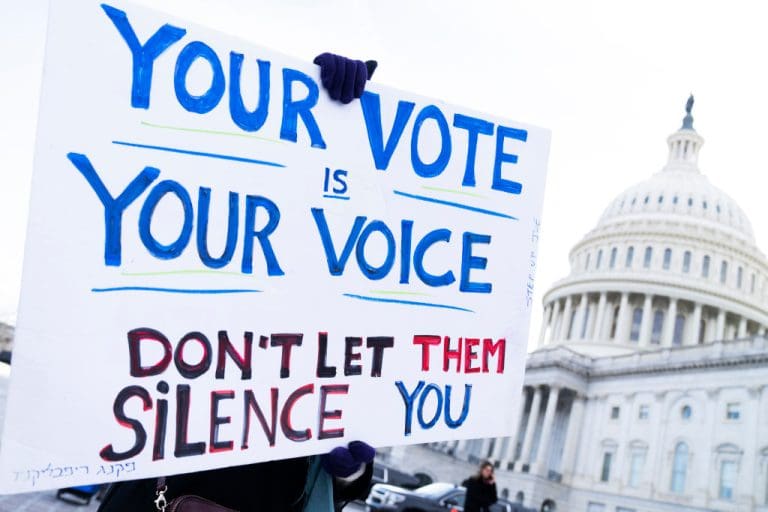
What If Someone Intimidates or Harasses You?
This is different from an ordinary eligibility dispute.
The EAC states that voters generally have the right not to be intimidated or harassed while voting.
If another person is threatening, harassing, or attempting to intimidate you, tell a poll worker or election official.
If there is an immediate safety threat, seek appropriate emergency assistance.
Do not physically confront the person.
Your job is to vote safely.
It is the responsibility of election officials and appropriate authorities to deal with disruptive or unlawful conduct.
What Counts as Voter Intimidation?
Not every uncomfortable interaction is automatically unlawful voter intimidation.
That distinction matters.
A poll worker asking for required identification is not necessarily intimidation.
A poll worker explaining that you are at the wrong polling place is not necessarily intimidation.
A poll watcher observing the process within the rules is not necessarily intimidation.
The problem arises when conduct crosses legal boundaries.
Federal and state laws protect voters from discrimination, intimidation, and interference in various circumstances. The specific legal standard depends on the facts and applicable law.
If you believe someone is trying to frighten you into abandoning your vote, report the conduct rather than trying to settle the issue yourself.
What If Someone Is Giving You False Voting Information?
Election Day can produce a strange mixture of fact, rumour, misunderstanding, and confidently delivered nonsense.
Someone may tell you:
“You can’t vote because you aren’t wearing the right colour.”
Or:
“You need your original birth certificate.”
Or:
“Your registration card expired.”
Or:
“You have to vote for the party you registered with.”
Some statements may be wrong.
Others may contain a small piece of truth but omit important state-specific details.
The safest response is:
Ask an authorised election worker.
For federal elections, HAVA requires voting locations to post information about voting rights, voting procedures, provisional ballots, and how voters can contact appropriate officials if they believe their rights have been violated.
Use those official resources.
Don’t let the loudest person in the room become your election lawyer.
What If a Poll Worker Is the Person Telling You That You Can’t Vote?
This situation requires more care.
A poll worker may legitimately determine that you cannot cast a regular ballot for a particular reason.
For example, you could be at the wrong polling location or fail to meet a state requirement.
But if you believe the decision is incorrect, ask:
“What is the reason I cannot vote on a regular ballot?”
Then ask:
“Is there another procedure available to me?”
Depending on the circumstances, that may include a provisional ballot.
The EAC states that HAVA requires provisional ballots in specified circumstances and requires eligible provisional ballots to be counted.
If you remain concerned, ask for the appropriate local or state election official.
What If You Are Told There Is No Provisional Ballot?
The federal provisional-ballot requirement has specific exceptions, including certain states with same-day registration systems and North Dakota, which does not require voter registration.
That means you should not assume every state handles the situation identically.
Ask:
“What voting procedure does this state use when a voter’s eligibility cannot be confirmed?”
This is a better question than:
“Why won’t you give me a provisional ballot?”
You are asking for the legally applicable procedure rather than assuming what that procedure must be.
What If You Are Disabled and Someone Says You Cannot Vote Independently?
Federal law provides important accessibility protections.
The EAC explains that voters with disabilities have the right to vote privately and independently and to use accessible voting equipment. The ADA also requires state and local election officials to provide equal access to voting.
If you need assistance, ask the poll worker what assistance is available.
You may also have the right to receive help from a person of your choice under applicable rules, with some limitations.
A disability does not by itself remove a person’s right to vote.
What If You Need Language Assistance?
Language can become a voting barrier.
The EAC states that federal voting laws include language-access protections in certain jurisdictions, and HAVA requires voting information to be provided at polling places.
If you have difficulty understanding voting instructions, ask whether language assistance is available.
You do not need to pretend you understand complicated instructions when you don’t.
Ask.
What If You Make a Mistake on Your Ballot?
Making a mistake does not necessarily mean your voting attempt is over.
The EAC lists among voters’ federal rights the ability to ask for another ballot if they make a mistake, subject to the applicable procedures.
If you realise you made an error, don’t try to repair it yourself unless the voting system specifically instructs you to do so.
Ask a poll worker.
Different voting systems have different correction procedures.
What If Someone Tells You to Leave While You Are Still in Line?
This is a serious situation.
The EAC states that voters generally have the right to vote if they are still in line when the polls close.
So if closing time arrives while you are already in line, do not simply assume you have missed your opportunity.
Stay in line and follow the instructions of election officials.
However, exact procedures can vary, particularly where courts have issued orders affecting voting hours.
If someone tells you to leave, ask an authorised poll worker what the official instruction is.
What If the Polls Are Supposed to Be Closed but People Are Still Voting?
This can happen when voting hours are extended or when court orders affect the closing time.
The EAC explains that if a court extends voting hours in a federal election, voters casting ballots during the extended period may be required to use provisional ballots under the federal framework.
Again, the practical point is simple:
Follow the instructions of the authorised election officials.
Don’t rely on rumours spreading through the line.
What If You Believe Your Voting Rights Have Actually Been Violated?
Document what happened.
Write down:
- The polling place
- The approximate time
- What you were told
- Who told you
- The reason given
- Whether you asked for a supervisor
- Whether you were offered a provisional ballot
- Whether you were given written instructions
- Any official contact information provided
Stay factual.
Don’t embellish.
Don’t guess at motives.
You may need those details when speaking with an election official later.
Who Should You Contact?
Start with the state or local election office.
That office is generally the best source for the rules governing your particular polling place.
The EAC provides links to state and territory election offices and emphasises that election procedures are primarily administered at the state and local level.
For potential violations of federal voting-rights laws, the U.S. Department of Justice Voting Section also handles voting-rights matters.
In 2026, the Justice Department has stated that its Civil Rights Division’s Voting Section is available to receive questions and complaints involving possible federal voting-rights violations through Election Day.
If you are facing an immediate physical threat, treat that as a safety matter and contact appropriate emergency authorities.
What You Should Not Do
Election Day frustration can turn a manageable problem into a much bigger one.
Don’t:
- Threaten: Do not threaten poll workers, observers, or other voters.
- Fight: Do not physically confront someone who challenges you.
- Destroy: Do not damage election equipment or materials.
- Shout: Do not turn a disagreement into a disturbance.
- Guess: Do not rely on rumours about election law.
- Leave Immediately: Don’t walk away before asking what official options are available.
- Ignore Paperwork: Keep any provisional-ballot or election-office instructions you receive.
You are trying to preserve your opportunity to vote, not create another problem.
A Real-Life Example
Imagine Linda arrives at her polling place.
A poll watcher tells her:
“Your name isn’t on the list. You can’t vote.”
Linda is nervous.
But instead of arguing with the poll watcher, she asks a poll worker:
“Can you please check my registration?”
The poll worker searches again.
Linda is at the correct location, but there is still a registration problem.
She asks:
“What are my options under the state’s rules?”
The poll worker explains the applicable procedure and, where permitted, offers provisional voting.
Linda completes the required paperwork and asks how she can check whether the ballot was counted.
That is the important lesson.
Linda did not assume the poll watcher was correct.
She also did not assume the poll watcher was acting improperly.
She asked the authorised election official to explain the rule.
That is exactly the approach voters should take when the situation becomes confusing.
The Three Questions to Remember
If someone tells you that you cannot vote, remember these three questions:
1. Why?
Ask for the official reason.
2. What is the procedure?
Ask what the law allows you to do in your situation.
3. Who can confirm it?
Ask for the appropriate election official or supervisor if necessary.
These questions turn an emotional confrontation into a procedural problem.
And procedural problems can often be resolved.
Election-Day Rights Checklist
Before leaving the polling place, remember:
- Ask Questions: You have the right to seek information about the voting process.
- Know Your Location: Make sure you are at your assigned polling place.
- Ask About Provisional Voting: If your eligibility cannot be confirmed, ask whether provisional voting is available.
- Stay in Line: If you are already in line when polls close, ask election officials about your rights.
- Request Assistance: Ask for permitted voting assistance if you need it.
- Protect Your Privacy: Voting should be private and independent.
- Document Problems: Write down factual details if you believe something went wrong.
- Contact Officials: Use your state or local election office for authoritative answers.
The Bottom Line
Someone telling you “You can’t vote” is not, by itself, the end of the story.
First, find out who is saying it and why.
A legitimate election rule may prevent you from casting a regular ballot.
You may be at the wrong polling place.
Your registration may not be confirmed.
You may have an identification problem.
Or another legal requirement may apply.
But if there is an unresolved eligibility question, federal law provides provisional-voting protections in specified circumstances, while state law determines many of the details.
And if someone is intimidating or harassing you, tell an authorised election official.
The smartest Election-Day response is rarely anger.
It is a question:
“What does the official procedure say I should do?”
Then follow the answer.
Your vote deserves something better than a shouting match in a school hallway.
It deserves a fair chance to be processed according to the law.
Frequently Asked Questions
1. Can a poll watcher tell me that I cannot vote?
A poll watcher may have an authorised role in observing or challenging aspects of the election depending on state law, but poll watchers do not have unlimited authority. Their activities are governed by state rules and cannot violate voter privacy or disrupt voting. If a poll watcher says you cannot vote, ask an authorised poll worker to explain the official situation.
2. What should I do if a poll worker says I cannot vote?
Ask calmly why you cannot cast a regular ballot and what procedure applies. If the issue is registration or another eligibility question, ask whether provisional voting or another state-authorised procedure is available.
3. Can someone stop me from voting because my name isn’t on the voter list?
A missing name can create an eligibility problem, but it does not always mean you should simply leave. Under the federal provisional-voting framework, voters who claim to be registered but are not on the list may generally be offered a provisional ballot, subject to specified exceptions and state procedures.
4. What if someone intimidates or threatens me at the polling place?
Tell a poll worker or election official immediately. Federal voting protections include safeguards against intimidation and harassment. If you face an immediate physical threat, seek appropriate emergency assistance rather than confronting the person yourself.
5. Can I vote if I am still in line when the polls close?
The EAC states that voters generally have the right to vote if they are still in line when the polls close. Follow the instructions of election officials, particularly if voting hours have been affected by a court order.
6. Who should I contact if I believe my voting rights were violated?
Start with your state or local election office because it administers the applicable election procedures. For possible violations of federal voting-rights laws, the U.S. Department of Justice Civil Rights Division’s Voting Section is another official resource.
References
- U.S. Election Assistance Commission — Overview of Federal Election Laws
- U.S. Election Assistance Commission — Voter FAQs
- U.S. Election Assistance Commission — Your Federal Voting Rights
- U.S. Election Assistance Commission — Provisional Voting
- USA.gov — Find Your Polling Place
- USA.gov — Voting on Election Day
- U.S. Department of Justice — Civil Rights Division, Voting Section
- U.S. Department of Justice — 2026 Election Monitoring and Voting Rights Information
Author
Maj Hamid Mahmood (Retired) holds an MA in Political Science, an LLB, and a PGD (HRM). His military background, academic training in political science, and legal education provide a multidisciplinary perspective for examining international conflicts, security affairs, political developments, and the human consequences of war.