2026 US Midterm Elections: What Voters Need to Know
The 2026 US midterm elections could reshape Congress and President Trump’s political power. Here is what voters need to know about the races, issues, economy, voting rules and possible outcomes.
2026 US Midterm Elections: What Voters Need to Know
Author Credentials
Maj Hamid Mahmood (Retired) holds an MA in Political Science, an LLB, and a Postgraduate Diploma in Human Resource Management (PGD-HRM). His academic and professional background supports his research-based writing on politics, law, governance, public policy, and global affairs.
This article is based on publicly available government records, election authorities, court decisions, established research institutions and reporting from reputable news organisations.
The purpose is informational, not partisan.
Political claims are treated as claims rather than facts unless supported by evidence. Where the law, courts or available evidence leave important questions unresolved, that uncertainty is identified rather than hidden.
Election laws, court rulings, candidates and campaign conditions can change. This article will be updated as the 2026 election develops.
The Election That Could Change Washington
The president is not on the ballot.
But his power is.
That is the paradox of the 2026 US midterm elections.
On November 3, Americans will vote for members of Congress and, depending on where they live, governors and other state and local officials.
Every seat in the House of Representatives is up for election. About one-third of the Senate is also contested. USAGov identifies November 3, 2026, as the next congressional election date. (USAGov)
At first glance, that sounds like a routine congressional election.
It isn’t.
The results could determine whether President Donald Trump’s administration works with a Congress broadly aligned with its agenda or confronts a chamber, or chambers, controlled by the opposition.
That difference could affect legislation, government spending, investigations, oversight and the administration’s ability to turn political promises into federal policy.
But there is a more important question than “Who will win?”
What are Americans actually voting on?
This guide looks beyond campaign slogans and daily political drama.
It examines the structure of the election, the issues likely to influence voters, the economy, voting rules, redistricting, campaign money, misinformation and the possible consequences of different congressional outcomes.
The goal is simple:
Give voters the information they need to understand what their vote can actually change.
The Election That Could Change Washington
What Are the 2026 US Midterm Elections?
Midterm elections occur halfway through a president’s four-year term. Unlike a presidential election, Americans are not choosing a president. They are choosing representatives and senators, along with numerous state and local officials.
The House of Representatives
All 435 voting seats in the House are contested every two years. The House is therefore particularly sensitive to changes in voter turnout and political mood. A relatively small shift in support across competitive districts can change which party controls the chamber. The House has 435 members, with representation allocated among states according to population. (USAGov)
The Senate
Senators serve six-year terms. Only about one-third of Senate seats normally face election during a single cycle. That creates an important difference. A party can perform strongly in House races while failing to win control of the Senate because the particular Senate seats being contested may favour one party.
State and Local Elections
The midterms extend far beyond Washington.
Depending on the state, voters may also choose:
Governors
State Legislators
Attorneys General
Secretaries of State
Judges
Local Officials
Ballot Measures
These races matter because states exercise substantial authority over issues ranging from education and healthcare to election administration.
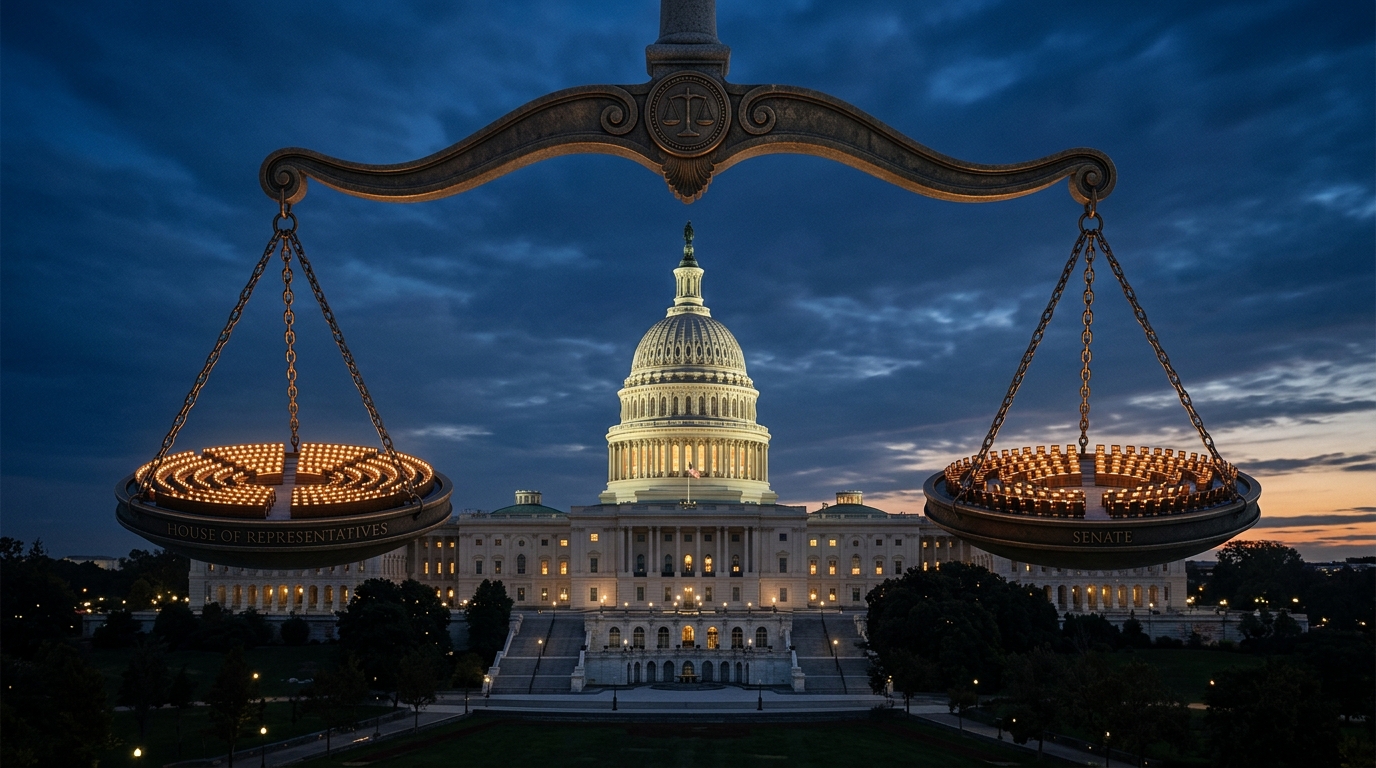
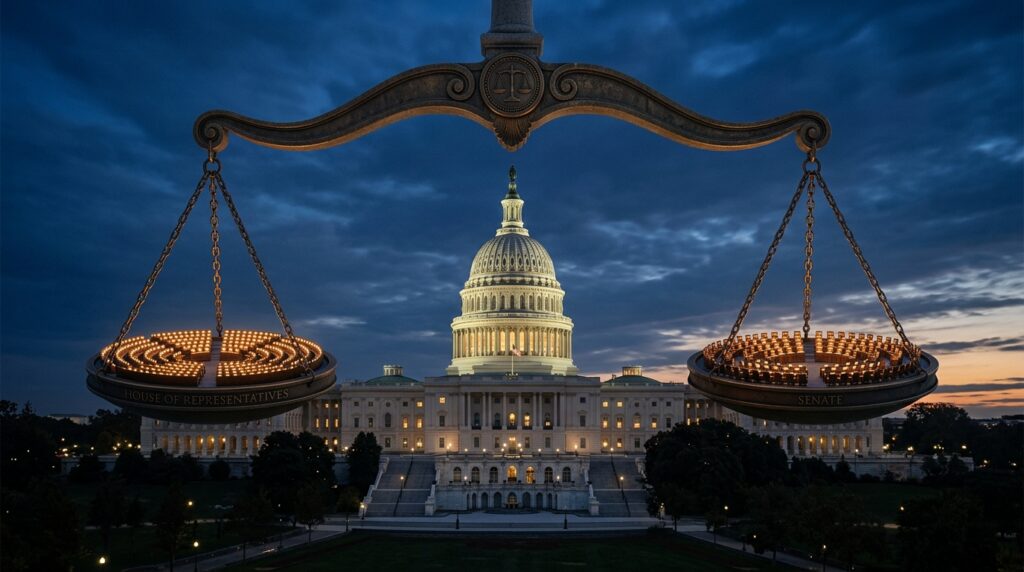
Why Congressional Control Matters
Consider two possible mornings after Election Day.
In one Washington, President Trump has a Congress broadly willing to support his legislative priorities.
In another, at least one chamber is controlled by Democrats.
The president would still be president.
But the political environment would be dramatically different.
Congress writes federal legislation.
Congress controls federal spending.
Congress conducts oversight.
The Senate has important confirmation powers.
The executive branch implements laws but does not possess unlimited authority to rewrite them.
That separation of powers is why a midterm election can become a referendum on the direction of government without putting the presidency itself on the ballot.
Why Congressional Control Matters
The Three Big Election Outcomes
The exact consequences will depend on the size of the majorities and the issues involved. But three broad scenarios illustrate the stakes.
Republicans Retain Both Chambers
A Republican-controlled House and Senate would generally provide President Trump with a more favourable legislative environment. The administration could have an easier path for priorities requiring congressional action. That would not mean unlimited power. Senate rules, internal Republican disagreements, courts, state authority and individual lawmakers could still create obstacles.
Democrats Win One Chamber
Divided government would produce a different Washington.
The administration could face stronger congressional oversight and greater difficulty passing legislation opposed by the chamber controlled by Democrats.
Investigations could become more prominent.
Budget negotiations could become harder.
Democrats Win Both Chambers
A Democratic House and Senate would create the strongest congressional check on the Trump administration.
The president would still control the executive branch.
But Congress could exercise much greater influence through legislation, spending decisions, oversight and investigations.
These are institutional scenarios, not election predictions.
That distinction is important.
A serious election analysis should explain what different results could mean without pretending to know the result before voters cast their ballots.
Why Midterms Usually Challenge the President’s Party
American history gives the governing party a difficult starting point. The president’s party has usually lost House seats in midterm elections.
Brookings’ historical analysis found that the president’s party lost House ground in 20 of the 22 midterm elections from 1938 through 2022. (USAGov)
But history is not destiny.
Why Does the Pattern Exist?
Several forces can work together.
Turnout: Presidential elections generally attract more voters than midterms.
Enthusiasm: Opposition voters can become especially motivated during midterms.
Presidential Approval: The president’s popularity can affect congressional voting.
Economic Conditions: Voters often judge the governing party through the economy.
Political Fatigue: Supporters of the winning presidential party may be less motivated two years later.
Local Candidates: Congressional candidates can outperform or underperform their party.
The important lesson is not that Republicans or Democrats are destined to lose.
It is that midterm elections operate differently from presidential elections.
The Trump Factor
The 2026 election presents an unusual political question.
Donald Trump is not running for president.
Yet his presidency will be impossible to separate from the campaign.
For Republicans, Trump’s political influence can help energise the party’s base.
For Democrats, opposition to Trump can provide a powerful reason to vote.
That creates a critical question:
Will 2026 behave like a traditional midterm—or become another national referendum on Trump?
There is no definitive answer yet. That is precisely why turnout deserves close attention.
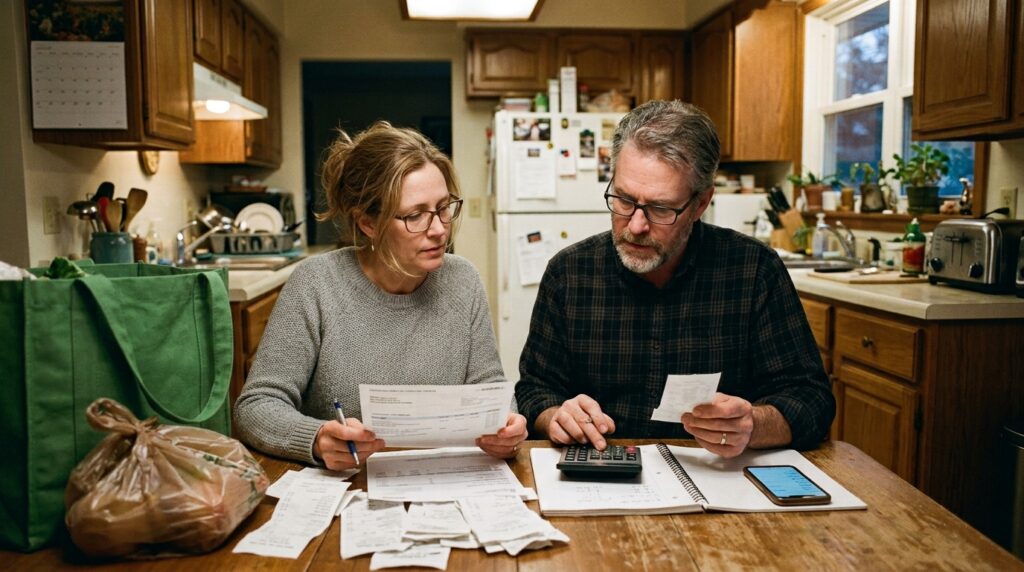
The Economy May Be the Election’s Kitchen-Table Test
Political campaigns talk about ideology.
Families talk about bills.
A voter may hear that inflation is improving.
Then walk into a supermarket and discover that the weekly grocery bill is still painfully high.
Both things can be true.
That difference between economic data and economic experience could become one of the defining stories of the 2026 election.
Recent Reuters reporting found that cost-of-living concerns are weighing heavily on voters, while a Reuters/Ipsos poll in August found Democrats narrowly ahead of Republicans on which party voters trust more to manage the economy—37% to 36%. (Reuters)
What Does “The Economy” Mean to Voters?
For an ordinary household, it may mean:
Groceries: Can the weekly food budget still stretch far enough?
Housing: Can a family afford rent or a mortgage?
Energy: What does the monthly utility bill look like?
Healthcare: How much do insurance and treatment cost?
Wages: Are earnings keeping pace with expenses?
Employment: Is a stable job available?
Interest Rates: Can people afford to borrow money?
This is why economic statistics alone may not predict voter behaviour. People don’t experience GDP. They experience the grocery receipt.
The Economy May Be the Election’s Kitchen-Table Test
The Issues That Could Shape the 2026 Vote
Different states and districts will have different priorities.
Still, several issues are likely to dominate national political messaging.
Cost of Living
Affordability has become a particularly important political vulnerability for the Trump administration.
Recent reporting has shown Republicans facing voter frustration over food and fuel costs, even as the administration argues that its policies will deliver longer-term economic benefits. (Reuters)
The political question is straightforward:
Do voters believe their financial situation is improving?
Immigration
Immigration remains one of the defining issues in American politics.
The debate extends across:
Border Security
Deportation
Asylum
Legal Immigration
Work Visas
State and Federal Authority
Humanitarian Concerns
The challenge for voters is separating political promises from actual governmental authority.
Healthcare
Healthcare combines personal experience with national policy.
Voters may be concerned about:
Insurance Costs
Prescription Prices
Medicare
Medicaid
Hospital Costs
Reproductive Healthcare
Access to Treatment
A useful question is:
What can Congress actually change?
That question often gets lost beneath campaign rhetoric.
Abortion
Abortion remains an important political issue after the Supreme Court’s 2022 decision overturning Roe v. Wade. Its political importance varies significantly by state.
The 2022 midterms demonstrated that abortion could influence voter behaviour even when economic conditions appeared likely to dominate the election conversation. That history makes it dangerous to assume that the most discussed economic issue will automatically be the most powerful voting issue.
Trade and Tariffs
Trade policy is no longer merely a Washington economic debate. It can reach the kitchen table through prices, employment and business costs. The current US-Canada trade conflict illustrates the problem.
AP reported in August that new US tariffs and Canada’s planned response were creating economic anxiety in battleground states including Maine, Michigan, Ohio and Alaska. (AP News)
For voters, the question becomes:
Do tariffs protect American industries—or raise costs for American consumers?
The answer depends heavily on the product, industry, time period and economic conditions. That complexity deserves more than a campaign slogan.
The Voting Rules Battle
Perhaps no part of the 2026 election requires more careful attention than voting rules. The United States does not operate under one simple national election system. States administer elections under a framework shaped by state law, federal law and court decisions.
The Voting Rules Battle
Mail Voting Is Under Legal Pressure
The issue became especially urgent in August 2026.
The US Postal Service issued rules aimed at tightening mail-ballot procedures, but implementation has been challenged in court. Reuters reported that a federal judge had blocked enforcement while litigation continued. (Reuters)
On August 24, the Supreme Court lifted one judicial obstacle to the administration’s broader mail-ballot effort, while another injunction remained in place. The underlying legal disputes have not been completely resolved. (Reuters)
This creates a crucial distinction.
A proposed rule is not necessarily an enforceable rule.
A court ruling in one case does not automatically settle every related question.
A federal policy does not necessarily operate identically in every state.
That is why voters should verify their own state’s current rules rather than relying on viral political posts.
Mail Voting Is Under Legal Pressure
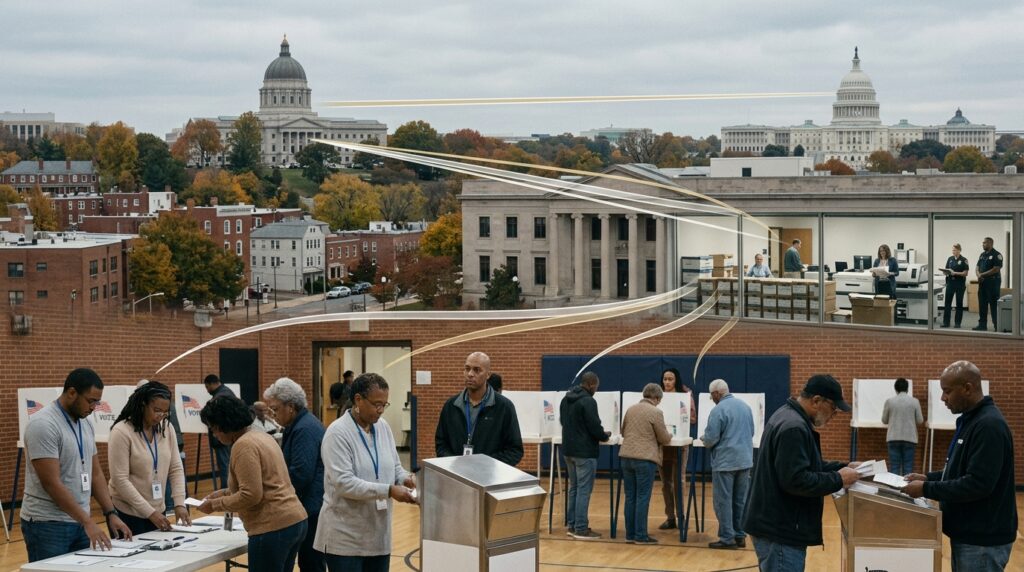
Who Actually Runs an American Election?
The answer is more complicated than most headlines suggest. Election administration involves multiple layers.
Federal Government
Federal law establishes requirements affecting federal elections.
Congress
Congress has constitutional authority to regulate aspects of congressional elections.
State Governments
States play a central role in establishing election procedures.
Local Election Officials
Counties and municipalities often handle registration, polling places, ballots and vote administration.
Courts
Courts interpret election laws and can block or permit government actions. This layered system is one reason election disputes can become complicated very quickly. It is also why a national political announcement may not immediately change what a voter experiences at the local polling place.
Who Actually Runs an American Election?
Redistricting: The Battle Before Election Day
Here is an overlooked reality of congressional politics:
The election can be partly shaped before voters cast a single ballot.
That happens through redistricting. Congressional district boundaries determine which voters are grouped.
A district can become more competitive, or much safer for one party, without a single voter’s political views changing.
Why Redistricting Matters in 2026
Redistricting can affect:
Competitive Districts
Incumbent Safety
Party Balance
Minority Representation
Campaign Spending
House Control
That makes district boundaries part of the political battlefield. A useful question for voters is therefore not only:
“Who is running?”
It is also:
“Why does this district look the way it does?”
The Battleground States and Districts
Political analysts love to publish lists of battlegrounds. But a battleground is not a permanent label. A race can change because of:
Candidate Quality
Fundraising
Redistricting
Presidential Approval
Economic Conditions
Local Issues
Turnout
Campaign Scandals
The 2026 primary season has already reshaped several major contests, including races in Florida, Wyoming and Alaska. (AP News)
The better approach is to watch why a race becomes competitive. That gives voters more useful information than a simple ranking of “Top 10 Battlegrounds.”
Candidates Matter More Than the Headlines Suggest
Political parties dominate national coverage. But voters elect individuals. A congressional candidate can sometimes outperform the party’s national performance. The reverse is also true. A weak candidate can turn a normally safe seat into a competitive one.
What Should Voters Examine?
Look beyond campaign advertisements.
Investigate:
Voting Record
Policy Positions
Professional Background
Campaign Promises
Financial Disclosures
Major Donors
Endorsements
Public Statements
Relevant Experience
Most importantly, ask:
Can this office actually do what the candidate promises?
That single question can eliminate a surprising amount of political noise.
Follow the Money
Every major election produces another contest that voters rarely see directly. The race for campaign dollars. Candidates and political organisations spend enormous sums on:
Television Advertising
Digital Advertising
Polling
Staff
Travel
Fundraising
Grassroots Organizing
Legal Operations
But the amount of money is only half the story. The more revealing question is:
Who supplied the money?
Campaign-finance records can reveal networks of wealthy donors, political organisations, business interests, labour groups and ideological groups attempting to influence an election. That is why campaign finance deserves investigation rather than simply being reported as a fundraising scoreboard.
AI Could Change the Information War
The 2026 voter faces another problem that previous generations did not. Artificial intelligence can now produce convincing:
Videos
Photographs
Audio
Political Statements
Social-Media Posts
The danger is not only completely fabricated material. A real video can also be cropped, edited or stripped of context.
A Better Way to Check Political Claims
Before sharing an explosive political post, ask:
Who published it?
What is the original source?
Is the video complete?
Is there independent confirmation?
Does an official record support the claim?
Is the date correct?
Could AI or editing have altered the material?
That final question will become increasingly important.
A Better Way to Check Political Claims
What the 2026 Midterms Can Actually Change
This is where voters should focus.
A congressional election can affect:
Federal Legislation
Government Spending
Congressional Oversight
Investigations
Committee Leadership
Confirmation Battles
Policy Negotiations
The Political Direction of Congress
But winning Congress does not give a party unlimited power. The Constitution still divides authority among the executive, legislative and judicial branches. States also retain substantial powers. Courts can review government action. Political majorities can disagree internally.
What the Midterms Cannot Do
The midterms cannot simply remove the president because voters dislike his policies.
They cannot give Congress unlimited authority.
They cannot make every campaign promise automatically become federal law.
They cannot eliminate the courts.
They cannot erase state authority.
And they cannot guarantee that either party will get everything it wants.
That may sound obvious.
Election coverage often makes it sound otherwise.
Three Questions to Watch Until Election Day
Instead of following every political headline, watch three larger indicators.
Is the Economy Improving in Voters’ Eyes?
National economic statistics matter.
But voter perception matters too.
Which Party Has the Stronger Turnout Machine?
A highly motivated minority can sometimes matter more than a larger but disengaged voting population.
Are the Battlegrounds Actually Moving?
Don’t trust a single poll.
Look for sustained changes across multiple polls, districts and demographic groups.
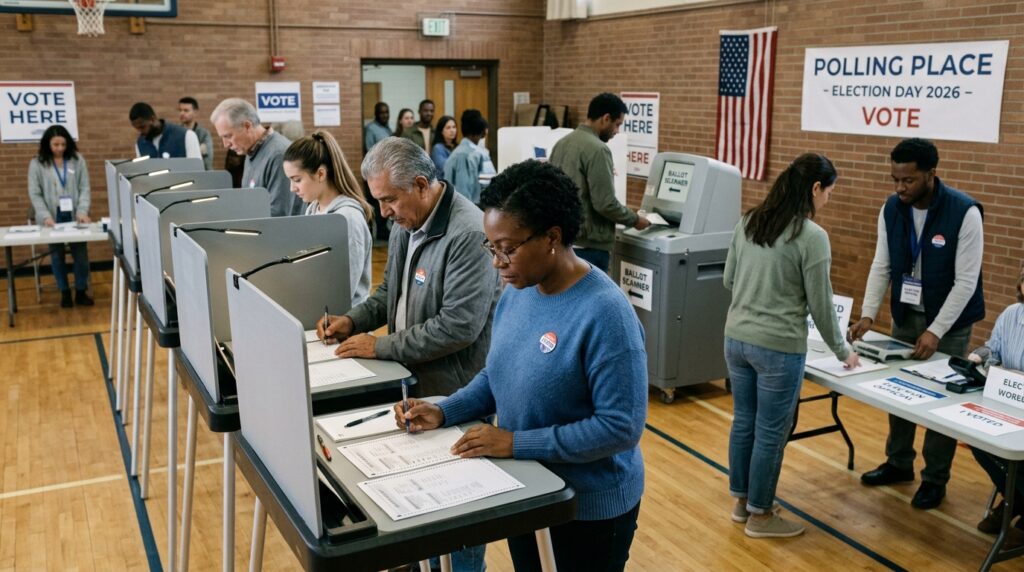
What Should an Ordinary Voter Do?
You do not need to spend six hours a day following Washington. You need a reliable process.
Step 1: Check Your Registration
Make sure your registration is current.
Step 2: Find Your Actual Ballot
Your ballot may contain congressional, state and local races that receive little national coverage.
Step 3: Research the Candidates
Look at records, policies, experience and campaign financing.
Step 4: Check Official Voting Rules
Voting deadlines, identification requirements and mail-voting procedures vary by state. USAGov provides state-specific information on registration, early voting, absentee voting and election dates. (USAGov)
Step 5: Verify Before Sharing
Political misinformation spreads faster than corrections.
Don’t help it.
The Bigger Question Behind the 2026 Election
The 2026 US midterm elections are ultimately about more than Democrats versus Republicans.
They are about how political power is distributed.
The voters will decide who occupies hundreds of congressional seats.
But the consequences will reach much further.
Congressional control can influence legislation, spending, investigations, oversight and the political environment surrounding the presidency.
That is why the election matters even to Americans who normally ignore politics.
Don’t Ask Only Who Is Winning
Election coverage often reduces politics to a scoreboard.
Democrats up three.
Republicans down two.
Candidate X leads candidate Y.
Another poll appears.
Then another.
The numbers move.
The news cycle moves.
The audience moves on.
But the most useful question is different:
What actually changed?
Did a law change?
Did a court issue a ruling?
Did the economic picture change?
Did a district change?
Did voters change their priorities?
Did turnout change?
Did a candidate’s position change?
That is the difference between following political noise and understanding an election.
The Bottom Line
The 2026 US midterm elections could become one of the most consequential congressional elections of the decade.
Not because Americans are electing a president.
They aren’t.
The significance lies elsewhere.
They are deciding who controls Congress and, with it, how much legislative and oversight power the administration will face during the second half of Trump’s term.
The economy could matter.
Immigration could matter.
Healthcare could matter.
Abortion could matter.
Trade could matter.
Election rules could matter.
But no single issue is guaranteed to dominate everywhere.
America’s political map is too diverse.
The smartest way to follow this election is therefore not to ask:
“Who should I support?”
That is ultimately a personal decision.
Instead, ask:
What are the candidates promising?
What can their office actually do?
What evidence supports their claims?
Who is funding them?
What has changed since the last election?
And finally:
What will my vote actually change?
That is where meaningful election analysis begins.
2026 US Midterm Elections: The Bottom Line
Frequently Asked Questions
When Are the 2026 US Midterm Elections?
The 2026 congressional general election is scheduled for November 3, 2026. Voters will elect members of the House, the Senate seats contested in this cycle, and numerous state and local officials. (USAGov)
How Many House Seats Are Up for Election in 2026?
All 435 voting seats in the U.S. House of Representatives are contested every two years. (USAGov)
Are Voters Choosing a President in the 2026 Midterms?
No. The 2026 elections are congressional and other state and local elections. The next presidential election is scheduled for November 7, 2028. (USAGov)
Why Are the 2026 Midterms Important?
The results could determine which party controls the House and Senate. That can affect legislation, federal spending, congressional investigations, oversight and the administration’s ability to advance its policy agenda.
Can Voting Rules Change Before the 2026 Election?
Yes. Election laws and administrative rules can change through legislation, executive action, agency decisions and court rulings. The 2026 mail-voting dispute demonstrates why voters should verify current rules through official state election authorities rather than relying on older articles or social-media posts. (Reuters)
Where Can I Find Official Voting Information?
USAGov provides information on voting dates, registration deadlines, early voting, absentee voting and state election offices. Voters should ultimately verify their individual requirements with their state or local election authority. (USAGov)
What We Will Investigate Next
This article is the pillar guide to the 2026 US midterm elections.
The deeper questions deserve their own investigations.
2026 Senate Battlegrounds
Which Senate races could determine control of the chamber?
2026 House Battlegrounds
Which districts could decide control of the House?
The 2026 Voting Rules
What has changed, what is being challenged and what rules actually apply to voters?
Mail Voting Under the Microscope
What does the current legal battle mean for absentee and mail voters?
Who Really Controls US Elections?
How federal, state and local authorities divide election power.
The Economy and the Midterms
Are voters responding to economic statistics—or their everyday financial reality?
AI and the 2026 Election
How synthetic media and AI-generated political content could influence voters.
Follow the Money
Who is financing the 2026 campaigns and where is the money going?
What Happens If Republicans Win?
A constitutional and political analysis of a Republican-controlled Congress.
What Happens If Democrats Win?
A constitutional and political analysis of Democratic congressional control.
Editorial Method
Our election coverage will follow five principles:
Evidence Before Opinion
Primary Sources Where Possible
Clear Separation of Fact and Analysis
Equal Scrutiny of Political Claims
Explicit Acknowledgement of Uncertainty
The objective is not to tell readers what political conclusion to reach. It is to make that conclusion better informed.
Author’s Note
Political information is increasingly consumed in fragments: a headline here, a viral video there, a poll on social media and a campaign advertisement five minutes later. That makes context more valuable, not less.
This series will therefore focus on the questions that often disappear beneath the daily political noise.
What changed?
What is actually supported by evidence?
Who has the authority to act?
What remains uncertain?
And most importantly:
What does it mean for the voter?
That is the standard we will use throughout our 2026 US midterm elections coverage.
USA.gov — Congressional, State and Local Elections: Official federal information about congressional and midterm elections. USA.gov Election Information
USA.gov — When to Vote: Official information on election dates, registration deadlines, early voting and absentee voting. USA.gov When to Vote
USA.gov — Election Day: Official information about polling places, voter identification and voting procedures. USA.gov Election Day Information
Brookings Institution: Historical analysis of presidential-party performance during midterm elections. (USAGov)
Reuters: Current reporting on the 2026 mail-voting legal battle. (Reuters)
Reuters/Ipsos: Current polling and voter attitudes toward the economy and the Trump administration. (Reuters)
Associated Press: Current reporting on the economic and political impact of US-Canada trade tensions. (AP News)