Trump’s Second Term Staff Changes, Informal Advisors, and the Secret Rooms Where Power Really Happens
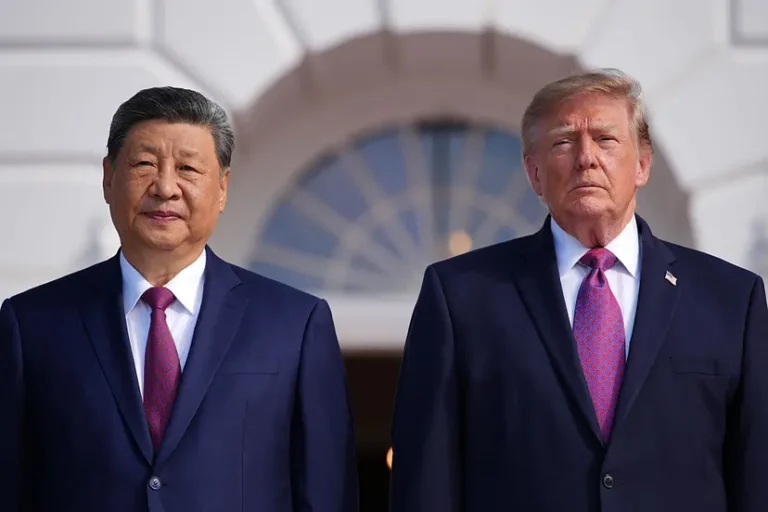
Trump’s Second Term Staff Changes: Have you ever wondered who really helps a U.S. President make the biggest decisions? Not just the people with official titles, but the trusted friends, family members, and deal-makers who work quietly in the background? In President Donald Trump’s second term, that question has become one of the biggest stories in American politics, and it is being watched closely from London to Beijing, from Kyiv to Riyadh.
https://mrpo.pk/u-s-elections-spark-new-conflicts/
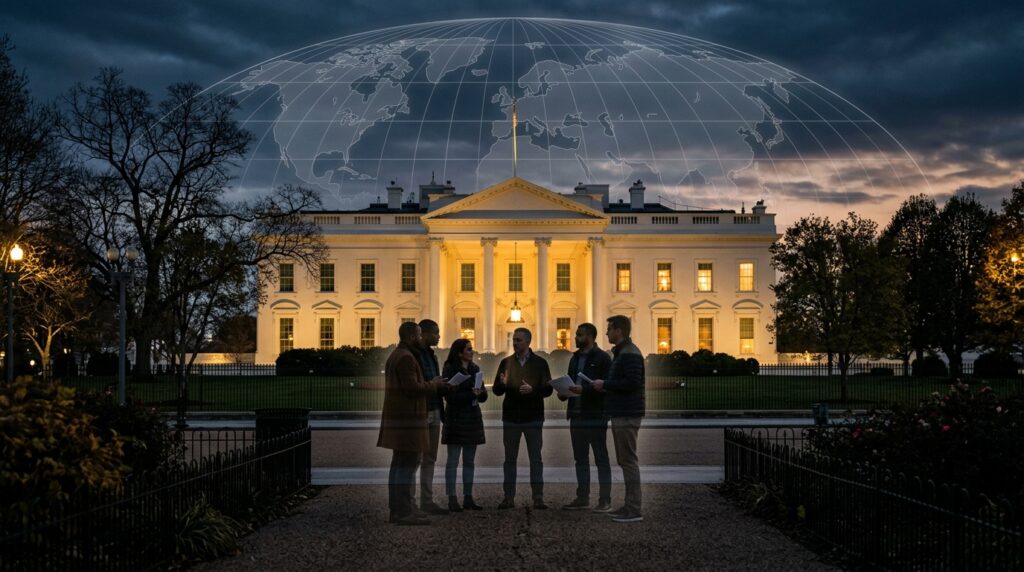
From sudden staff departures to personal envoys flying around the world, and from high-security rooms called SCIFs to the risk of future investigations, this article explains it all in simple language. Whether you live in the United States or follow global news from anywhere else, you will understand how power works behind the scenes in 2026 and why these American decisions matter to the rest of the planet.
Trump’s staff departures fuel speculation about possible turmoil ahead

Several members of Donald Trump’s staff are reportedly departing as the administration faces or worries about what might happen next. Trump enters the second half of his term facing critical job openings among his senior White House staff.
This means whoever comes off the bench confronts a complex situation directly: a potential Democratic-controlled Congress, a prolonged war in the Middle East, and an open Republican presidential primary.
Given the situation ongoing, James Braid, announced his exit. On the contrary, Press secretary Karoline Levitt said would exit the week before Replacements for not yet made public.
These departures do not ensure administration friction, but they cast doubt at an already tenuous time when the president is facing a multitude of challenges both foreign and domestic.
“I think people are seeing the writing on the wall and thinking Republicans probably aren’t going to have the House, might not have the Senate either, or things are going to be stalled,”
“People are thinking, ‘what are my post administration business prospects? Is it worth taking these hits every single day, being part of these battles, and how does that hurt my prospects when I go to the private sector?
The statement from White House spokesperson Taylor Rogers said: “Trump has built the greatest political movement in history, staffing his administration with talented, dedicated patriots who work tirelessly to execute his agenda.”
Leavitt said on X that she decided to exit the White House after returning to work from her second child. She further explained, “I have felt in my heart that I cannot be the best mom my two young children deserve while devoting the constant time, energy, and attention required of the White House Press Secretary.”
The announcements raised questions over who could replace one of the president’s loyal aides; as some believed the personnel changes would not make a significant difference given that administration hurdles would be too difficult to clear.
What Are the Latest Staff Departures in Trump’s White House?
Since Trump returned to office in January 2025, several key people have left the White House. Some left for family reasons. Others moved to private jobs. A few were pushed out.
Notable examples include Karoline Leavitt, who stepped back for family reasons, and James Braid, who left his legislative affairs role. Changes involving figures like David Warrington and others in senior posts have also been reported. Cabinet-level shifts have drawn attention, with reports about people such as Pam Bondi, Kristi Noem, and Tulsi Gabbard facing pressure or leaving.
Turnover is normal in any White House, but the timing and reasons matter because they show how the team is changing as the 2026 midterm elections approach.
Why Do So Many Staff Members Leave?
Staff turnover happens for several clear reasons.
Family and Personal Life
Working in the White House means long hours, constant travel, and high stress. Some people choose family over the job.
Better Opportunities Outside
Private companies and lobbying firms often offer higher pay and less pressure. After gaining experience and connections, many staff members take those offers.
Political Risk
With the 2026 midterms coming, some officials worry about investigations if Democrats gain more power in Congress. Leaving early can feel safer.
Internal Conflicts and Firings
Not every departure is voluntary. Differences in style, loyalty tests, or policy disagreements sometimes lead to people being forced out.
Think of it like a sports team. Some players leave for personal reasons, some get better contracts elsewhere, and some get cut when the coach wants a new lineup.
What Happens If Democrats Control Congress After 2026?
A Democratic-controlled Congress (especially the House, and potentially both chambers after the 2026 midterms) would shift the balance of power under the U.S. Constitution’s separation of powers. Congress holds independent authority under Article I to conduct oversight of the executive branch, investigate potential wrongdoing or policy failures, issue subpoenas for documents and testimony, hold public hearings, and control the legislative agenda (including appropriations and confirmations in the Senate).
This is a longstanding institutional check, not unique to any one president or party; it intensifies under divided government, as political science research and historical patterns (including Trump’s first term after 2018 and other administrations) consistently show.
Why investigations, subpoenas, oversight, and stalled agendas would likely occur
-Constitutional and institutional reasons:
Congress’s oversight role exists to ensure laws are faithfully executed, expose waste/fraud/abuse, inform legislation, and hold the executive accountable. Subpoena power allows committees to compel information; refusal can lead to contempt proceedings (civil or criminal). Under unified government, the president’s party often soft-pedals aggressive probes of its own administration. Under divided government, the opposition party has both the incentive and the tools (committee gavels, majority votes) to pursue them more vigorously.
– Political incentives:
Democrats have publicly signalled they view many of Trump’s second-term actions (immigration enforcement, foreign policy including Iran-related matters, financial dealings, family business ties, cryptocurrency ventures, pardons, agency staffing/firings, and handling of issues like the Epstein files) as ripe for scrutiny. They frame this as accountability and “corruption” oversight; Republicans often describe it as partisan “witch hunts” or harassment that distracts from governing. Historical precedent includes the Democratic House’s probes of Trump in 2019–2020 (leading to two impeachments) and Republican probes of prior Democratic administrations.
– Stalled agendas:
A Democratic House could block or heavily amend Trump’s legislative priorities (tax, immigration, deregulation, etc.) by refusing to advance bills. Budget/appropriations fights, debt-limit negotiations, and confirmations (if the Senate also flips) become leverage points. Even without full control, a Democratic House can use hearings and investigations to create political pressure that slows executive actions. Divided government historically produces less major legislation and more gridlock.
Current polling and analysis as of August 2026 suggest Democrats have a plausible path to the House (needing a modest net gain amid historical midterm losses for the president’s party and Trump’s lower approval ratings); the Senate is harder but possible. Outcomes remain uncertain.
Who is potentially vulnerable
Vulnerability stems from proximity to decision-making, involvement in contested policies, financial/business ties, or prior public controversies. Democratic leaders (e.g., potential Oversight Chair Robert Garcia and Judiciary Chair Jamie Raskin) have named specific areas and individuals in public comments. Key categories include:
– White House and senior administration officials:
Chief of Staff Susie Wiles, deputy chiefs (e.g., Stephen Miller), counsel’s office staff, press/legislative aides, and national security personnel. They could face subpoenas for testimony/documents on decision-making processes, communications, or policy implementation. Current and former aides have historically been targeted.
– Cabinet secretaries and agency heads:
Those overseeing high-profile or controversial areas (Homeland Security/ICE on immigration tactics and deportations; Justice Department on prosecutions, pardons, and “weaponisation” claims; Health and Human Services or FDA on health/vaccine policies; Defense/Pentagon on foreign policy, contracts, and Iran-related actions; Treasury/IRS on tax and financial enforcement). Recent or outgoing officials (e.g., former AG Pam Bondi, former DHS Secretary Kristi Noem) have already drawn Democratic interest.
– Trump family members and business associates:
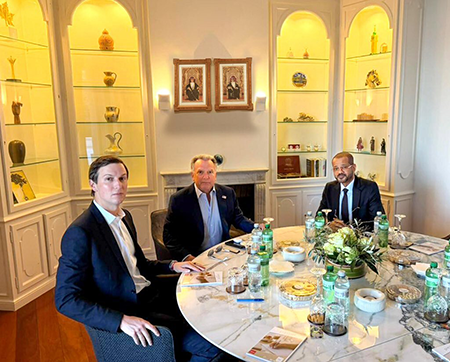
Son-in-law Jared Kushner (foreign envoy role), Donald Trump Jr., Eric Trump, and related entities. Focus areas include federal contracts/loans awarded to companies tied to them, cryptocurrency ventures reported in financial disclosures (~$1.2 billion in some filings), and potential conflicts of interest. Democrats have cited these as priorities for “financial corruption” probes.
– Outside advisers, donors, contractors, and private entities:
Lobbyists, former campaign aides (e.g., Corey Lewandowski), companies receiving government awards, banks or financial firms handling Trump-related transactions, and entities linked to cryptocurrency or real-estate dealings. Defence contractors and firms connected to Trump family investments have been flagged.
– The president himself:
Direct subpoenas of a sitting president are rare and legally contested (executive privilege claims often arise), but impeachment remains a tool (Democrats have discussed it as available, though some prioritise investigations first). Related probes could examine official acts, finances, or family benefits.
Practical realities and limits:
The White House can (and historically has) asserted executive privilege, delay compliance, or litigate subpoenas, leading to prolonged fights (as in Trump’s first term). Courts ultimately referee many disputes. Private parties have additional privileges (e.g., attorney-client). Not every subpoena succeeds, and outcomes depend on evidence, political will, and public reaction. Both parties have used oversight aggressively when in the minority or majority; the intensity often tracks the level of partisan polarisation.
In short, a Democratic Congress would restore the classic checks-and-balances dynamic of divided government: more scrutiny of the executive, potential legal and political pressure on officials and associates, and greater difficulty advancing a unified agenda. The precise scope would depend on election results, specific committee leadership, and the facts that emerge.
Who Is Steve Witkoff and Why Does He Matter?
Steve Witkoff is a billionaire real estate developer and longtime friend of President Trump. In the second term, he serves as Special Envoy to the Middle East and Special Envoy for Peace Missions.
He has acted as a de facto personal envoy to Russian President Vladimir Putin. “De facto” means he does the job in practice, even if it is not his only official title. Trump trusts him to talk directly with Putin and other world leaders.
Witkoff has also worked closely with Jared Kushner, Trump’s son-in-law, on high-stakes talks involving the Middle East, Ukraine, and Iran. Supporters say this personal style gets results faster. Critics worry it skips normal diplomatic rules and raises questions about conflicts of interest.
Other Key Informal Advisors in Trump’s Second Term
Trump has always preferred a small circle of trusted people. Besides official staff, these informal advisors often have real influence:
- Jared Kushner – No official title, but still helps with major foreign deals
- Donald Trump Jr. – The most politically active of Trump’s children; gives regular advice
- Elon Musk – Had an early formal role on government efficiency; still has personal access
- David Sacks – Continues advising on technology and AI from outside government
- Tucker Carlson and other media figures – Influence through conversations and public comments
- Longtime allies such as Peter Navarro on trade issues
These people often speak directly with the president by phone, at Mar-a-Lago, or during informal meetings. Their power comes from trust, not from a government paycheck.
Do Informal Advisors Get Access to Secret Documents?
Usually, no. Classified information is tightly controlled.
To see official secret documents, a person needs a formal security clearance, a clear “need to know,” and proper authorisation. Purely informal advisors without official roles generally do not receive this access. They may get high-level summaries or briefings if the president chooses, but not the raw secret files.
Steve Witkoff, because he holds formal envoy titles, does receive clearances for his work. Jared Kushner’s situation in the second term is different. He has no official position, and reports indicate he has operated without the same formal clearance process used in the first term.
Sharing classified information with uncleared people is against the law.
What Are SCIFs and How Do They Work?
SCIF stands for Sensitive Compartmented Information Facility. People pronounce it “skiff.”
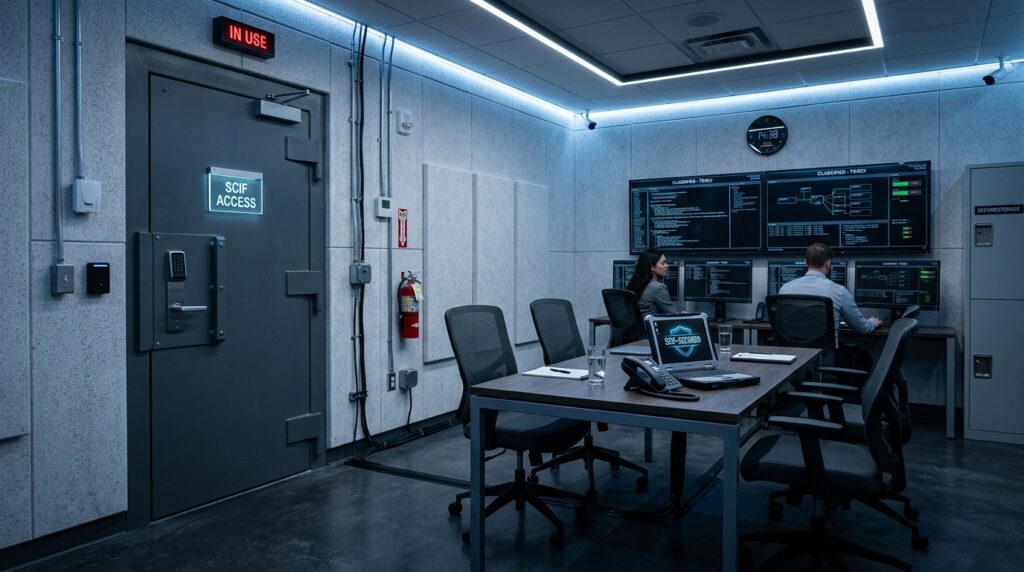
A SCIF is a special secure room (or sometimes an entire building) where the most sensitive U.S. intelligence is stored, discussed, and worked on. These rooms protect information about how the government collects secrets, information that could cause serious damage if it leaked.
How a SCIF Works in Everyday Life
- Thick, soundproof walls so no one outside can hear conversations
- Special shielding that blocks electronic spying
- Strict rules: no cell phones, smartwatches, or personal devices allowed inside
- Only people with the highest clearances and a real need to know can enter alone
- Visitors without full clearance must be escorted at all times
The White House Situation Room is a famous SCIF. SCIFs also exist in the Pentagon, CIA buildings, embassies, and even temporary versions that can be set up when the president travels. Think of a SCIF like a bank vault for secrets. You cannot just walk in. Everything inside stays protected.
Global Impact Analysis: Why the World Is Watching Closely
American decisions never stay inside American borders. The way Trump runs his second term, with high staff turnover, heavy reliance on informal advisors, and a personal-envoy style of diplomacy, has real effects on countries across the globe.
Diplomacy Becomes Faster but Less Predictable
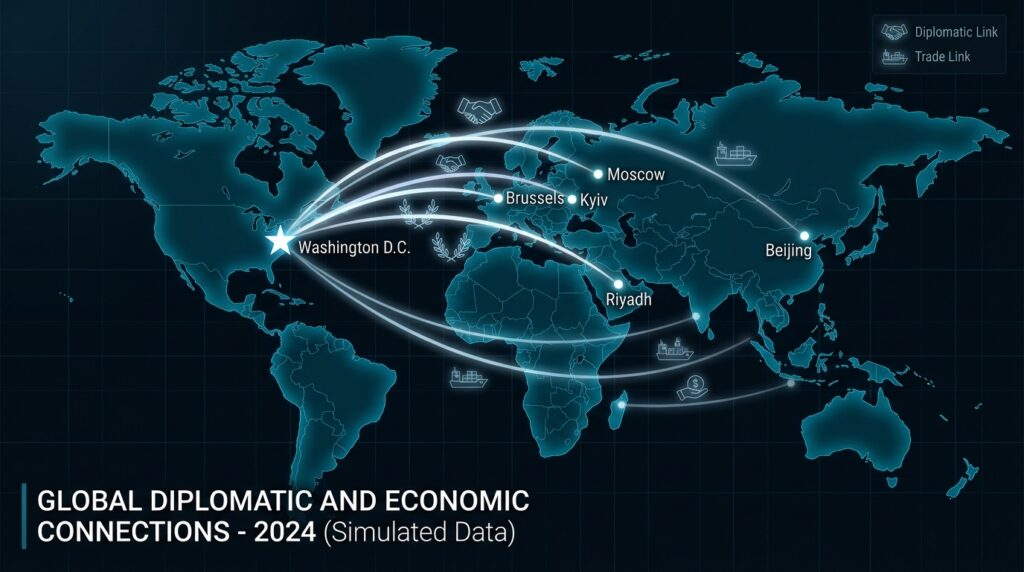
When leaders like Witkoff and Kushner handle talks with Russia, Iran, or Middle Eastern countries, deals can move quickly because they report straight to the president. Some governments like this direct approach. Others feel nervous. Traditional allies in Europe and Asia sometimes struggle to know who really speaks for the United States.
The Russia-Ukraine War and Middle East Conflicts Feel the Biggest Effects
Witkoff’s role as a personal channel to Vladimir Putin has already shaped peace discussions. Whether those talks succeed or fail, the results will affect energy prices, refugee flows, and security across Europe. In the Middle East, the same personal style has influenced ceasefire efforts and relations with Israel, Saudi Arabia, and Iran.
Alliances Face Quiet Strain
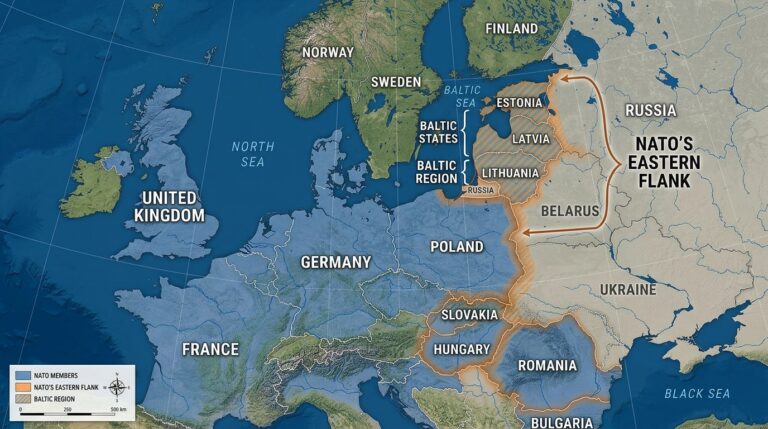
NATO members and partners in the Indo-Pacific notice when key U.S. officials leave or when decisions seem to bypass normal channels. Trust is built on consistency. Rapid staff changes and reliance on a small circle of friends can make allies wonder whether today’s policy will still be in place next year.
Economic and Trade Ripples Spread Worldwide
Informal advisors who focus on business and deal-making often push for trade agreements or tariff changes. These moves affect farmers in Brazil, factories in Germany, tech companies in South Korea, and oil markets in the Gulf. When U.S. policy shifts quickly, global markets feel the uncertainty.
Future Investigations Could Freeze American Power
If Democrats gain control of Congress in 2026 and launch major investigations or subpoenas, the White House may spend more time defending past decisions than making new ones. For the rest of the world, this creates a pause. Negotiations slow down. Aid packages get delayed. Military planning becomes harder.
Security Rules Still Matter Globally
Even while informal advisors play large roles, the existence of SCIFs and strict clearance rules shows that the United States still tries to protect its most sensitive secrets. Other nations study these systems. How America balances personal trust with formal security affects how much other countries believe U.S. intelligence and promises.
Historical Leaders and the Stress of Power
History keeps proving the same point: power brings influence, but it also brings restlessness. The head that wears the crown may look strong from the outside, yet it rarely rests easy.
Abraham Lincoln suffered from deep melancholy, what we now call clinical depression, while leading the country through the Civil War. Winston Churchill spoke of his “black dog” of dark moods during the pressure of World War II. Franklin D. Roosevelt carried the weight of the Great Depression and a world war while living with the effects of polio. Many other leaders, from Queen Elizabeth I to modern presidents, have faced anxiety, exhaustion, and isolation.
The constant decisions, public scrutiny, and responsibility for millions of lives take a real toll. Some leaders channel the pressure into determination. Others become more irritable or suffer health problems. The pattern has repeated for centuries.
Frequently Asked Questions
Why do so many people leave the White House during a president’s term?
Staff leave for family reasons, better-paying private jobs, political risk before midterm elections, or because of internal disagreements. High stress and long hours also play a big role.
What does “de facto personal envoy” mean?
It means someone acts as the president’s main representative in practice, even if that is not their only official job title. Steve Witkoff has played this role with Russian President Vladimir Putin.
Can informal advisors like Jared Kushner see top-secret documents?
Usually no. Only people with formal security clearances and a clear “need to know” get access to classified information. Informal advisors without official roles typically receive only high-level summaries.
What is a SCIF and why is it important?
A SCIF is a specially built secure room where the most sensitive U.S. intelligence is discussed and stored. It protects secrets from being overheard or electronically stolen.
How does White House staff turnover affect other countries?
Frequent changes can make U.S. foreign policy feel less predictable. Allies may find it harder to know who to talk to, and ongoing negotiations on issues like Ukraine or the Middle East can slow down.
What happens if Democrats win control of Congress in 2026?
They can hold investigations, issue subpoenas, and increase oversight of the Trump administration. This could delay new policies and force officials to spend more time answering questions instead of governing.
References
- Politico reporting on Trump White House staff and inner circle (2025–2026)
- The New York Times coverage of Jared Kushner’s informal role and security clearance history
- Wikipedia entries on Steve Witkoff and Sensitive Compartmented Information Facilities (SCIFs)
- AP News and Reuters reports on diplomatic talks involving Witkoff and Kushner
- Intelligence Community Directive 705 and related U.S. government standards on SCIF construction and access
- Analyses from Foreign Policy and The Washington Post on global effects of U.S. personnel changes
- Historical studies on presidential mental health and leadership stress, including work on Abraham Lincoln and Winston Churchill
Final Thoughts
Power in Washington is never only about the people with official titles. Sometimes the most important conversations happen in private, or inside a locked room called a SCIF. As the 2026 midterms approach, the combination of staff turnover, informal advisors, and possible congressional investigations will shape the rest of Trump’s term, and the choices other nations make in response.
Understanding these behind-the-scenes details helps anyone following global politics see the full picture, not just the headlines. The decisions made in a few rooms in Washington continue to reach every corner of the world.
Purpose of the Article
This article explains, in simple language, how power works behind the scenes in President Trump’s second term. It covers staff departures, informal advisors, secure facilities like SCIFs, possible congressional investigations, and the global effects of these changes. The goal is to help readers around the world understand the real pressures of leadership and why decisions made in Washington affect countries far beyond the United States.