Why Healthy Habits Hurt. Have you ever decided to turn your life around, start eating ultra-clean, wake up at 5:00 AM, hit the gym daily, and suddenly end up feeling exhausted, moody, or bloated? You expect to feel like a superhero within a week. Instead, your head aches, your stomach hurts, and you can barely drag yourself off the couch.
You are not alone. This confusing reaction happens to millions of people every single day.
“When we force radical health changes on our bodies too quickly, our internal systems treat those good intentions as a biological threat.”
The truth is simple: true physical vitality requires balance. Doing too much too fast can backfire on your body.
Here is an in-depth breakdown of why healthy habits can sometimes make you feel worse, real-life examples of how this happens, and how you can fix it.
Can a Healthy Habit Ever Become Unhealthy?
Habits are good. They help bring structure to your life.
It stands to reason, then, that healthy habits are doubly good. Not only do they provide stability and routine, but they come with health-boosting, life-improving benefits.
Three healthy habits that get the most attention are exercise, a well-balanced diet and sleep, and for good reason. Each plays a hugely beneficial role in your overall health and well-being. But can these three healthy habits ever be taken to such extremes that they become unhealthy?
How much exercise is too much?
The benefits of regular exercise are certainly there, ranging from improved mood and better sleep to a healthy heart, strong bones and weight control. That’s why it’s recommended that adults get at least 150 minutes of moderate-intensity exercise and two strength training sessions in every week.
But, in today’s world, exercise isn’t just something people do — it’s something many of us track. From smartwatches and fitness apps to heart rate zones, recovery scores, VO2 max estimates and daily activity goals, there’s no shortage of data available about your workouts. While these metrics can be motivating and informative, they can also create pressure to constantly do more, making it easy to overlook an important part of fitness: recovery.
1. Biological Adaptation and the Transition Trap
Making sudden, radical upgrades to your daily diet seems like a great idea. However, making massive changes overnight often triggers a severe physical shock to your internal systems.
The Gut Microbiome Shift and Sudden Dietary Shock
Your digestive system is home to trillions of tiny bacteria known as your gut microbiome. These microbes help break down your food, produce vitamins, and protect your immune system.
When you routinely eat refined carbs and processed foods, your microbiome adapts to digest them. If you suddenly switch to a high-fibre whole-food diet overnight, your body does not have enough of the right bacteria ready to process that sudden influx.
All that undigested fibre ends up fermenting inside your digestive tract. This sudden microbial shift causes uncomfortable gas, severe bloating, and brain fog before your beneficial bacteria can rebalance.
Real Life Example: The Green Smoothie Shock
Consider Sarah, an office worker who decided to start a strict health kick. On Monday morning, she replaced her regular breakfast of white toast and eggs with a massive smoothie filled with fresh kale, raw spinach, chia seeds, and green apples.
By Wednesday afternoon, Sarah was suffering from painful stomach cramps and intense bloating at her desk. She assumed she was allergic to healthy food. In reality, her gut was simply overwhelmed by receiving a month’s worth of raw plant fibre in just two days. Once she reduced her smoothie size and increased her fibre intake gradually over three weeks, her stomach pain completely disappeared.
Metabolic Recalibration and Withdrawal Symptoms
Cutting out processed sugar, sodas, or morning coffee is excellent for long-term health. However, doing so abruptly forces your body into a state of physical withdrawal.
Sugar triggers feel-good chemicals like dopamine in your brain, while caffeine tightens blood vessels and alters blood pressure to keep you alert. When you drop these substances cold turkey, your blood sugar drops temporarily, your brain struggles without its quick dopamine hits, and your blood pressure shifts. This causes heavy fatigue, irritability, and pounding headaches during the first few days of cellular transition.
Real Life Example: The Energy Drink Crash
Take Alex, a college student who drank two energy drinks every afternoon while studying. Wanting to improve his health, he quit caffeine cold turkey on a Monday morning.
By Tuesday afternoon, Alex had a pounding migraine, shaky hands, and felt like he was walking through deep water. He assumed his new healthy lifestyle wasn’t working. In truth, his body was experiencing classic caffeine withdrawal. Had he slowly scaled down his intake from two drinks to one, and then to half a can over a week, he would have avoided the miserable headache entirely.
2. Physiological Overdrive: When More Becomes Toxic
Exercise and sleep tracking are core pillars of wellness, but pushing them to extremes can put your central nervous system into hyperdrive.
Overtraining, Allostatic Load, and Cortisol Dysfunction
Exercise is a form of healthy physical stress. During a workout, your muscle fibres experience microscopic tears, and your body releases a stress hormone called cortisol. When you rest, your body repairs those muscle fibres and builds you back stronger.
However, your body cannot distinguish between the physical stress of exercise and the mental stress of a difficult job or financial worry. All of this combines into what scientists call your total allostatic load. If your overall stress is high and you add daily high-intensity workouts without proper rest, your cortisol levels stay permanently elevated. This leads to chronic inflammation, poor sleep, unexplained weight gain, and systemic burnout.
Physiological Overdrive: When More Becomes Toxic
Real Life Example: The Daily Runner Burnout
Look at Mark, a corporate manager under heavy work deadlines who decided to get fit by running five miles every morning. The first three days felt fantastic and empowering.
By day six, Mark could barely pull himself out of bed. His joints ached, he felt exhausted at work, and he caught a bad head cold. Mark thought he was just out of shape. In reality, he was overtraining. His body was overflowing with cortisol, and his immune system crashed because he wasn’t giving his muscles or mind a single rest day.
Sleep Optimisation Anxiety (Orthosomnia)
Smartwatches and sleep rings are popular tools for monitoring health. However, becoming obsessed with your nightly sleep data can actively destroy your rest.
Medical experts refer to this condition as orthosomnia, a state where worrying about achieving a perfect sleep score on a fitness tracker creates so much anxiety that it keeps you awake. Staring at a bad sleep score on your phone screen triggers a real stress response, making you feel physically exhausted even if you rested fairly well.
“Obsessing over health numbers can turn self-care into a source of constant, invisible stress.”
Real Life Example: The Sleep Score Trap
Consider Maya, who bought a high-tech smart ring to monitor her rest. Every morning, the app gave her a sleep quality score from 1 to 100.
If Maya woke up and saw a low score of 52, she would panic and tell herself, “I am going to have a terrible, unproductive day.” Even on mornings when she woke up feeling completely refreshed, seeing a poor score on her screen made her feel instantly tired and anxious. The psychological stress of a low score was doing far more damage than her actual sleep quality.
3. Psychological Mechanisms and Cognitive Load
Wellness routines can sometimes take over your mind, turning simple everyday choices into major sources of anxiety.
Orthorexia Nervosa and the Identity Trap
Eating clean is a positive goal, but when it turns into an unhealthy obsession with food purity, it can hurt your well-being. This pattern is known as orthorexia nervosa.
When someone develops orthorexia, eating stops being a way to nourish the body and becomes a rigid test of self-control. People with this condition experience deep anxiety over unmeasured ingredients, fear eating out at restaurants, and isolate themselves socially. The constant worry over avoiding “unclean” ingredients elevates chronic stress, which completely cancels out the physical benefits of the clean food.
Real Life Example: The Social Friction of Pure Eating
Take David, a fitness enthusiast who adopted an ultra-strict organic, seed-oil-free diet. He stopped going out for dinners with friends, refused to eat family holiday meals, and spent hours every night meticulously preparing his own food.
Instead of feeling vibrant, David felt lonely, anxious, and constantly stressed. His stomach was always in knots due to the anxiety of accidentally eating an “unapproved” food. His rigid search for perfect health was actively damaging his mental stability and social connection.
Decision Fatigue and the Habit-Tracking Burden
Managing dozens of daily health tasks, taking multiple supplements, tracking step counts, logging water intake, hitting fasting windows, and measuring calories requires immense mental energy.
Your brain has a limited amount of willpower each day. When you overload your daily routine with complex micro-habits, you create decision fatigue. This mental overload burns out your brain, leaving you feeling mentally drained, cranky, and frustrated by mid-afternoon.
Decision Fatigue and the Habit-Tracking Burden
4. Environmental and Hidden Biomechanical Mismatches
Not every “healthy” food or routine works for every single human body. Sometimes, popular wellness habits conflict directly with your unique genetics or biological clock.
Undiagnosed Sensitivities Disguised as Healthy Foods
Superfoods like spinach, almonds, berries, and sweet potatoes are packed with vitamins. However, they also contain natural plant compounds like oxalates, histamines, or FODMAPs.
While most people digest these compounds easily, individuals with sensitive digestive tracts or underlying gut imbalances can struggle to process them. Consuming huge amounts of these superfoods can trigger skin flare-ups, joint pain, brain fog, and heavy fatigue.
Real Life Example: The Green Smoothie Joint Pain
Consider Elena, who started drinking a green smoothie made with raw spinach, almond milk, and almond butter every afternoon. Within two weeks, she developed stiff joints in her hands and felt unusually exhausted.
A medical test revealed that Elena was highly sensitive to oxalates, compounds found in high amounts in raw spinach and almonds. When she swapped her daily spinach smoothie for cooked greens, blueberries, and pumpkin seeds, her joint pain and fatigue vanished within days.
Undiagnosed Sensitivities Disguised as Healthy Foods
Disrupted Circadian Rhythms from Mistimed Habits
Timing is everything when it comes to healthy behaviours. Doing the right health habit at the wrong time of day can disrupt your internal body clock (circadian rhythm).
For example, engaging in intense weightlifting or taking freezing cold showers late at night boosts your core body temperature and spikes adrenaline. This prevents your body from producing melatonin, the hormone needed for deep, restorative sleep. Even though exercise and cold therapy are healthy, doing them too late damages your sleep quality and leaves you feeling exhausted the next day.
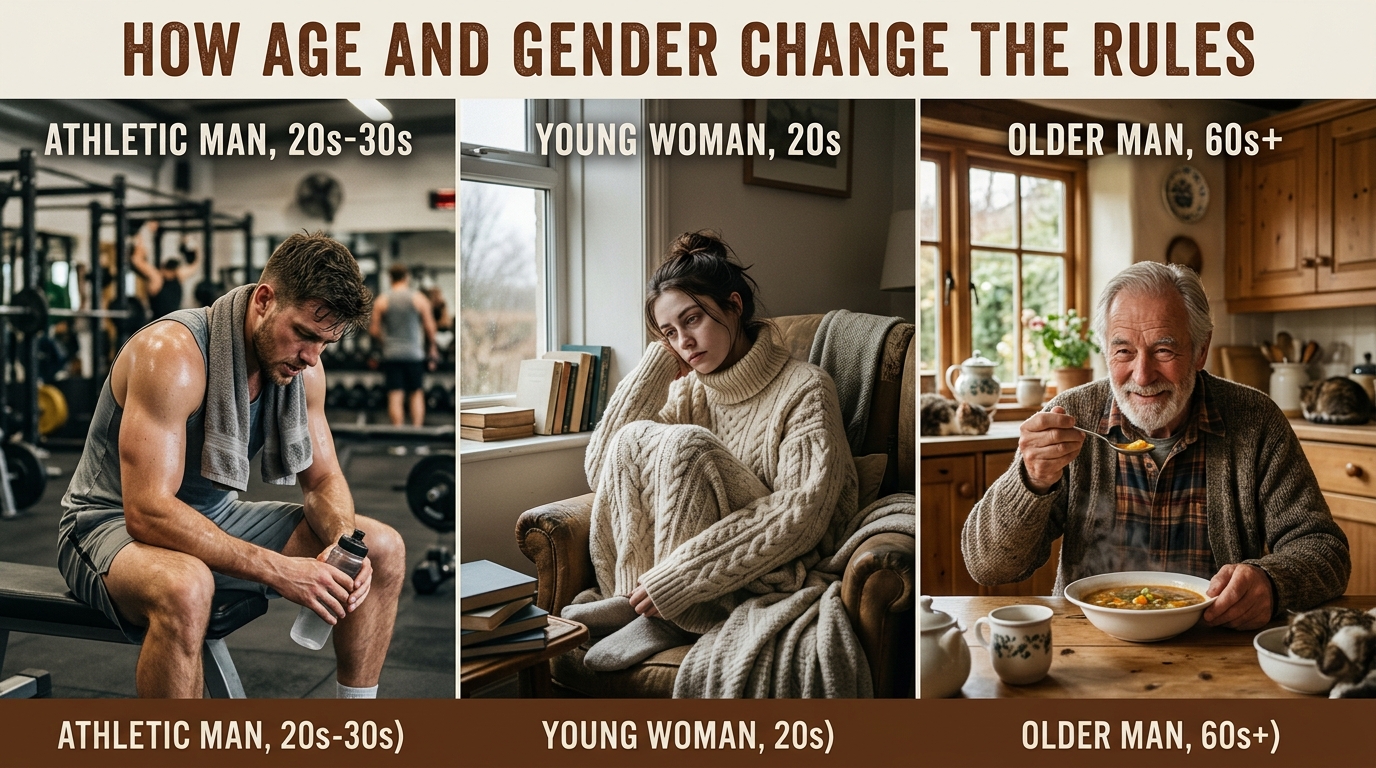
5. How Age and Gender Change the Rules
Healthy habits do not affect everyone the same way. Men, women, and older adults have unique biological needs that change how their bodies handle stress, food, and exercise.
Men and the Push Through It Trap
Men often fall into the trap of treating health like a heavy competition. They ignore deep fatigue and try to power through workouts even when their bodies need rest.
When men combine heavy daily weightlifting with strict fasting, their stress hormone levels stay high. This constant stress suppresses testosterone production. Instead of building strong muscles and gaining energy, they end up feeling sluggish, irritable, and weak.
Real Life Example: The Fasting and Gym Burnout
Consider Jason, a 35-year-old man who started lifting heavy weights every morning while doing 24-hour fasts twice a week. Within three weeks, his strength dropped, he felt midday brain fog, and he became unusually short-tempered with his co-workers. His body was overtrained and starved of fuel, forcing his hormones out of balance.
Women and Hormonal Sensitivity
A woman’s body is very sensitive to energy drops and sudden lifestyle changes due to monthly hormonal cycles.
Cutting carbs too low or doing intense cardio daily can signal to a woman’s brain that food is scarce. This triggers the body to slow down thyroid function to save energy. As a result, women may experience hair thinning, cold hands and feet, irregular periods, and stubborn fatigue.
Real Life Example: The Zero Carb Disruption
Take Lisa, a 28-year-old who started a zero-carb diet while attending daily high-intensity boot camps. Instead of feeling lighter, her energy crashed, her monthly cycle became irregular, and she felt constantly freezing in her air-conditioned office. Her thyroid was simply slowing down to protect her from extreme stress.
Older Adults and the Digestibility Factor
As we age, our digestion and recovery systems naturally slow down. Sudden health changes that work for younger people can easily cause problems for older adults.
For instance, stomach acid production naturally decreases with age. If an older adult tries to dramatically increase heavy protein intake overnight, it often causes bad acid reflux, severe indigestion, and stomach heaviness. Similarly, jumping into raw fibre diets without extra water can cause severe constipation rather than gut health.
Real Life Example: The Raw Fibre Overload
Look at Robert, a 65-year-old retiree who decided to switch overnight to eating large raw kale salads and drinking raw vegetable juice. Within four days, he suffered from severe abdominal cramps and bloating. His digestive tract was moving too slowly to process the tough, raw plant walls. Swapping to light, cooked vegetables solved his stomach pain instantly.
How Age and Gender Change the Rules
6. Strategic Framework: Moving from Rigid to Adaptive Health
To prevent healthy habits from burning you out, you need to transition from a rigid approach to an adaptive mindset that respects your body’s current stress capacity.
Actionable Steps for Diagnosis and Adjustment
Step 1: Audit and Isolation (Reset to Baseline). If you feel exhausted by your health routine, temporarily remove non-essential habits like intense supplements, tracking gadgets, and extreme workouts. Return to simple basics: consistent sleep, plain water, simple light movement, and balanced whole meals.
Step 2:Gradual Re-entry (Titrate Slowly). Add new habits back one at a time. If you want to increase your fibre, add just 5 grams per week instead of doubling your intake overnight. If you start running, alternate between walking and jogging to let your joints adjust.
Step 3:Bio-Individual Calibration (Listen to Internal Cues). Pay attention to how your body actually feels rather than what an app, scale, or online trend tells you. If a routine leaves you feeling constantly drained, adapt it to fit your personal capacity.
Strategic Framework: Moving from Rigid to Adaptive Health
Frequently Asked Questions
Why do men lose strength when they work out too hard without rest?
Working out too hard without resting keeps stress hormones like cortisol high. Chronic high cortisol lowers testosterone production in men, causing muscle loss, weak recovery, and persistent tiredness.
Why do sudden low-carb diets make women feel cold and tired?
Women’s bodies rely on carbs to help convert thyroid hormones into their active form. When carbs drop too low alongside intense stress, thyroid output decreases, leading to cold sensitivity, low energy, and sluggish metabolism.
Why do older adults struggle with sudden increases in protein or raw veggies?
As people age, stomach acid and digestive speed naturally decline. Sudden jumps in heavy meats or raw, fibrous plants cause food to sit longer in the stomach, leading to indigestion, reflux, and painful gas.
Why do I feel extremely tired after I start eating healthy food?
Your body uses extra energy to adapt to fresh whole foods, especially when clearing out refined sugars and processing heavy fibre. This fatigue usually lasts just a few days as your metabolic system resets.
What is orthosomnia and how does it make me tired?
Orthosomnia is anxiety caused by obsessing over sleep metrics on fitness trackers. Worrying about getting a bad sleep score creates real physical stress, making you wake up feeling tired even if you slept long enough.
Should I stop my new healthy routine if it makes me feel sick or drained?
You do not need to quit completely. Dial back the intensity. Make smaller changes, reduce meal portion sizes of new foods, or swap high-intensity workouts for walking until your body adjusts.
Medical Disclaimer
The information provided in this article is for educational and informational purposes only and is not intended as medical advice. It should not be used to diagnose, treat, cure, or prevent any health condition, nor should it replace professional medical judgment. Always consult a qualified healthcare provider or doctor before making any significant changes to your diet, exercise routine, or lifestyle. Never disregard professional medical advice or delay seeking it because of something you have read in this article.
Scientific References and Sources
Harvard T.H. Chan School of Public Health: The Microbiome and Human Health — Explains how rapid dietary changes disrupt gut microbial balance and trigger temporary digestive pain.
National Institutes of Health (NIH): Overtraining Syndrome and Endocrine Dysfunction — Details how excess physical stress alters testosterone and cortisol levels in men and women.
Journal of Clinical Sleep Medicine: Orthosomnia: Are Fitness Trackers Disrupting Our Sleep? — Demonstrates how tracking sleep data can trigger anxiety and daytime fatigue.
The North American Menopause Society: Ageing, Stomach Acid, and Nutrient Absorption — Outlines how declining digestive enzymes in older adults affect protein and raw fibre breakdown.