The Cost of Peace: Inside the Versailles Deal
The Cost of Peace. Discover how the historic 2026 Islamabad Memorandum at Versailles flipped the rules of war, forcing a $300 billion reconstruction plan.
https://mrpo.pk/the-deal-that-nobody-believes/
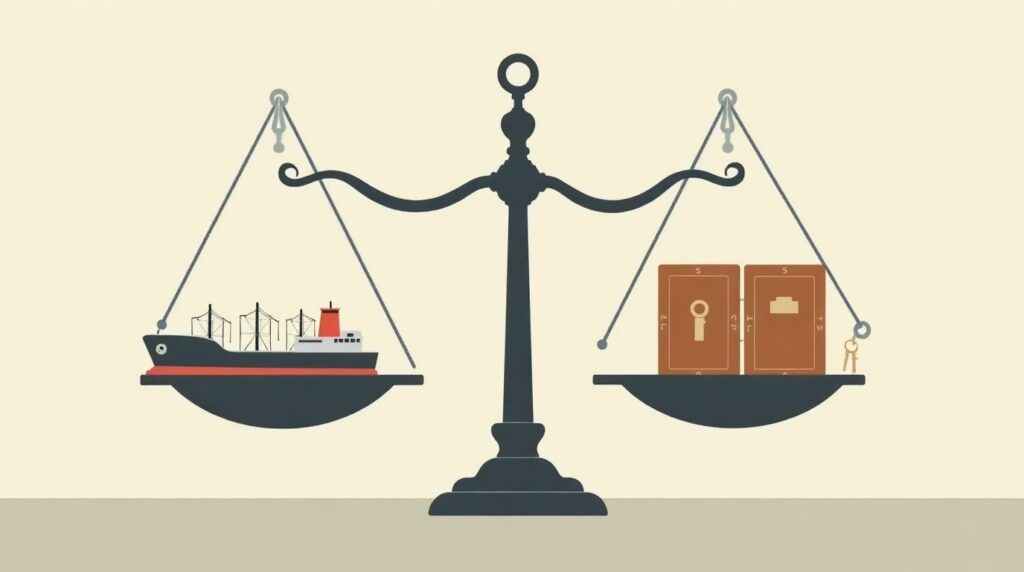
The Eighty-Day Standoff
History teaches us a simple rule about war: the winner takes all, and the loser pays the price. Usually, the defeated nation has to pay for the damage left behind, return seized assets, and accept whatever tough conditions the winner imposes.
But in June 2026, a historic meeting at the famous Palace of Versailles in France completely upended this rule. The world watched as the United States signed a major peace agreement called the Islamabad Memorandum.
Instead of punishing Iran, the United States agreed to lift harsh blockades, return billions of dollars in frozen funds, and back a massive $300 billion plan to help rebuild Iran. This marked the end of an intense, eight-month struggle that changed global politics forever.
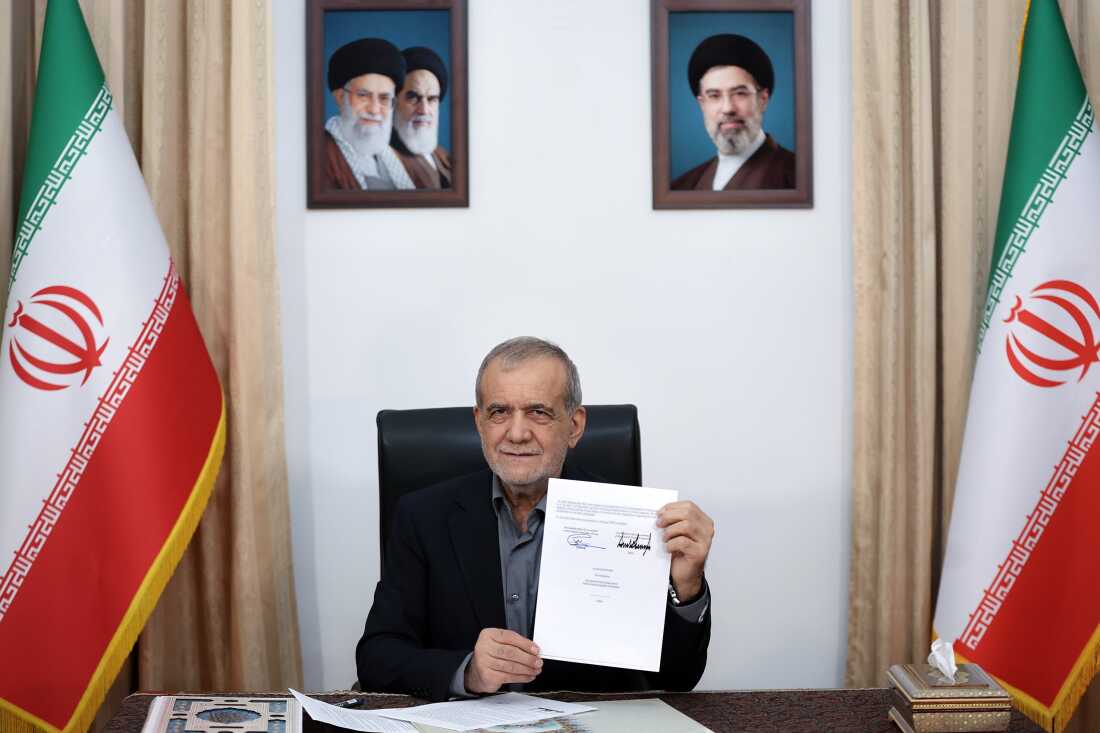
In this photo provided by the Islamic Republic News Agency (IRNA), Iranian President Masoud Pezeshkian displays a memorandum of understanding signed with U.S. President Trump aimed at ending the war and launching negotiations on a broader agreement, in Tehran, Iran, early Thursday.
What you need to know about the preliminary U.S.-Iran agreement signed by Trump
US lifts naval blockade
There was immediate progress after the preliminary agreement to end the three-and-half month conflict that has killed thousands of people across the Middle East, rocked the global economy and pushed millions more into poverty around the world, according to the United Nations.
The United States lifted its naval blockade on Iran.
The short memorandum of understanding also promises to end military operations on all fronts and reopen the Strait of Hormuz, the crucial waterway through which much of the world’s oil, gas and fertilizer must pass to reach global markets.
The agreement prompted President Trump to celebrate on Truth Social writing: “Ships of the World, start your engines. Let the oil flow!”
But there are still many potential pitfalls. Even before the agreement was signed, Trump made its fragility clear: “It’s a memorandum of understanding,” he said at the G7 summit in France. “If I don’t like it, if they don’t behave, we’ll go right back to dropping bombs right smack in the middle of their head.”

The Roots of the June 2025 Conflict
To understand how this happened, we have to look back at the first war that broke out in June 2025. For years, tension had been building in the Middle East. Israeli Prime Minister Benjamin Netanyahu wanted to destroy Iran’s military power and its nuclear program once and for all.
Many political experts and media networks believe that U.S. President Donald Trump started this war mainly to help Netanyahu. The announced goals of the war were huge:
-
To completely stop Iran’s government.
-
To destroy all of Iran’s secret nuclear facilities.
-
To cut off Iran’s connections with its regional allies.
When the brief June 2025 war ended, the US and Israel declared “mission accomplished.” They claimed they had heavily damaged Iran’s military. However, Iran’s core leadership and defensive systems remained completely intact, quietly preparing for what was to come next.
Why the Second War Sparked in 2026
The peace from the first war did not last long because the root problems were never truly solved. On February 28, 2026, a second war began. The US and Israel launched a massive new bombing campaign called Operation Epic Fury.
Flawed Intelligence and New Strikes
The US and Israel claimed they had new intelligence showing that Iran was rapidly building more missiles and upgrading its nuclear materials. They used this as a reason to attack again. This time, the airstrikes targeted deep, underground command centres and top leaders inside Iran.
Iran’s Smart Defence Strategy
Even though the attacks were incredibly heavy, Iran did not panic. Instead of trying to match the superpower’s raw military strength in the skies, Iran used a clever strategy to survive the strikes and hit back where it hurt the most: the global economy.
How Iran Blocked Global Energy
Iran’s most powerful weapon wasn’t a massive army; it was its geography. Iran sits right next to the Strait of Hormuz, a narrow water passageway where one-fifth of the world’s oil travels every single day.
[Global Oil Supply] ---> || Strait of Hormuz (Iran Controlled) || ---> [World Markets]
Iran completely shut down this waterway. They placed advanced sea mines and threatened Western naval ships with large waves of anti-ship missiles.
This move created an immediate global emergency. Oil prices skyrocketed, causing massive panic in markets worldwide. At the same time, the US and Israel were running out of expensive air-defence missiles. The cost of fighting an endless war of attrition quickly became too high for the West to sustain.
Trump Changes His War Strategy
As the economic damage grew, President Trump’s approach shifted from aggressive threats to a desire for a quick deal. He was facing an election year and feared a massive domestic recession.
Trump frequently mentioned that he did not want to become another Herbert Hoover, the US president who made critical mistakes that plunged America deep into the Great Depression. To avoid this political disaster, Trump decided to act more practically and look for a way out.
Sidelining Prime Minister Netanyahu
This shift in strategy left Israel completely isolated. Trump’s language toward the Israeli Prime Minister changed dramatically. He openly criticised Netanyahu’s choices and labelled him a “small partner” in the conflict. Iran used secret diplomatic channels to show Washington that the conflict could end immediately if the US stopped backing Israel’s regional goals.
The Humiliating Deal at Versailles
-
Historic Symbolism: The deep irony of signing the framework agreement at the Palace of Versailles, the exact site where Germany was subjected to historic humiliation 107 years prior. In 2026, the venue instead bore witness to the United States signing a framework under heavy operational and economic pressure.
-
The $300 Billion Reconstruction Fund: Framing this massive financial package not merely as aid, but as a structural acknowledgement of war damages won through battlefield resilience and unyielding negotiation.
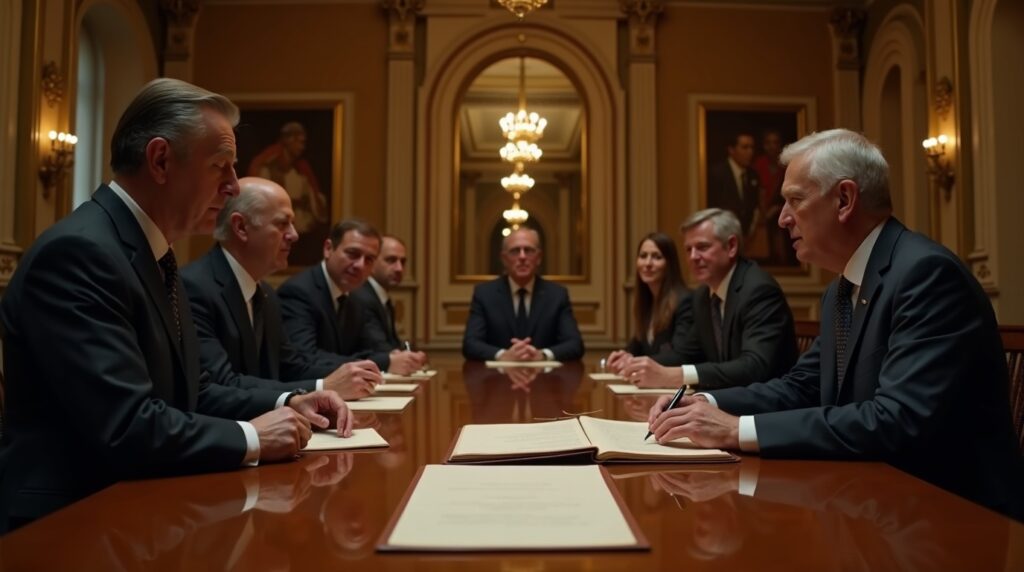
To settle the conflict, leaders met at the Palace of Versailles in France to sign the Islamabad Memorandum, which was put together with the help of Pakistan, Qatar, and Saudi Arabia.
The choice of venue carried heavy historical irony. Exactly 107 years earlier, the famous Treaty of Versailles was signed in the very same palace, forcing a defeated Germany to accept humiliating terms and pay massive war damages. In 2026, the roles reversed, and the United States was the party forced to agree to tough terms under intense economic pressure.
The Five Conditions of the Agreement
The peace deal contains five major conditions. Amazingly, four of these conditions must be fulfilled entirely by the United States:
-
End the War: The US must permanently stop all military actions against Iran and its allies.
-
Lift Port Blockades: The US must immediately remove its naval ships blocking Iranian ports.
-
Return Frozen Funds: The US must send back billions of dollars of Iran’s financial assets that were frozen in global banks.
-
Remove Oil Sanctions: The US must allow Iran to freely sell its oil to world markets again.
In return, Iran had only one main commitment: to reaffirm its peaceful nuclear limits and spend 60 days negotiating its future enrichment boundaries.
The $300 Billion Economic Victory
The biggest surprise of the Versailles agreement is the creation of a $300 billion plan for Iran’s reconstruction, funded by the US and Gulf nations.
In the history of warfare, the loser is the one who pays for damages. Because the US and its partners agreed to fund the rebuilding of Iran, the deal serves as a formal admission of the failure of the military campaign.
Iran proved to the world that modern wars are not just won by having the biggest planes or the most bombs. By protecting its borders, controlling key trade routes, and using smart diplomacy, Iran turned a massive military assault into an undeniable political and economic victory.
Frequently Asked Questions
-
What was the primary difference in stated objectives between the June 2025 war and the February 2026 war?
The June 2025 campaign focused on the broad degradation of Iran’s regional proxy command lines and external missile logistics. Conversely, the February 2026 escalation (Operation Epic Fury) targeted direct, hardened domestic infrastructure and high-level leadership command centres, driven by Western intelligence claims of rapid enrichment acceleration.
-
Why is the $300 billion reconstruction package viewed as an economic victory for Iran rather than standard humanitarian aid?
In classical international law, the losing party is typically forced to pay war indemnities. By securing a $300 billion fund to rebuild its infrastructure as a prerequisite for regional stability, Iran successfully inverted this dynamic, turning a Western military campaign into a guaranteed, massive capital injection for its domestic economy.
-
How did Iran manage to diplomatically isolate Israeli Prime Minister Netanyahu during the negotiations?
Iran demonstrated a strict, calculated proportionality in its asymmetric operations, indicating to international backchannels that its maritime restrictions would ease if U.S. policy decoupled from Israel’s long-term regional objectives. This deepened domestic economic anxieties in Washington, leading President Trump to openly criticise Netanyahu’s decisions and label him a “small partner.”
-
What is the historical significance of the Palace of Versailles as the venue for this agreement?
The Palace of Versailles is historically tied to the 1919 Treaty of Versailles, which imposed severe, humiliating economic penalties on a defeated Germany. The signing of the 2026 Islamabad Memorandum at the same site creates a striking historical irony, positioning the world’s preeminent superpower as the party forced to grant sweeping concessions under immense structural pressure.
-
What tactical leverage did Iran hold that forced the U.S. to lift the naval blockade and oil sanctions?
Iran utilised its geographical dominance over the Strait of Hormuz. By completely closing the Strait, deploying advanced anti-ship missile systems, and creating an unsustainable attrition rate for Western naval defences, Tehran triggered severe oil shocks and global shipping panics that Washington could not politically or financially sustain.
-
How did President Trump’s approach change over the course of the eight-month conflict?
Initially adopting an aggressive posture aimed at forcing total Iranian capitulation, Trump shifted toward a transactional, risk-averse approach as the economic fallout grew. Fearing a deep domestic recession that would draw comparisons to Herbert Hoover’s handling of the Great Depression, he opted for a pragmatic diplomatic exit via regional mediators.
Purpose of the Article
The purpose of this article is to provide an unvarnished, analytical investigation into the 2025–2026 Middle Eastern conflicts for an international audience. By breaking down complex military actions into clear, accessible concepts, the piece strips away mainstream war rhetoric to expose the real economic and strategic drivers behind the conflict. It aims to explain how modern asymmetric warfare has flipped the classical historical rules of “winner and loser,” demonstrating to readers how defensive resilience and geographic control can be successfully converted into massive diplomatic and financial leverage.
Editorial Position (EP) Statement
This publication maintains a strictly independent, analytical stance on global geopolitical conflicts. We believe that true journalistic integrity requires looking past official military press releases to evaluate the tangible outcomes of warfare, specifically, oil market stability, financial treaties, and shifting diplomatic alliances.
Our position is that conventional military dominance no longer guarantees geopolitical victory. We view the Islamabad Memorandum signed at Versailles not through a lens of political bias, but as a clear historical turning point where economic reality and regional strategy forced a global superpower to make historic concessions. We are committed to presenting these shifts objectively, focusing on economic data, historical parallels, and the real-world limits of foreign intervention.
Strategic Research References
-
The Islamabad Memorandum of Understanding: Official 14-point framework agreement between the United States and the Islamic Republic of Iran, facilitated by Pakistan, Qatar, and Saudi Arabia (June 2026).
-
Operation Epic Fury Operational Assessment: U.S. Department of War Fact Sheet and Central Command (CENTCOM) deployment logs outlining target distributions, interceptor depletion rates, and naval engagement costs (March–April 2026).
-
The Asymmetric Corridor: Global maritime trade data and energy disruption analysis focused on the closure of the Strait of Hormuz between February 28 and June 17, 2026.
-
The Hoover Analogy in Modern Geopolitics: Academic reviews and intellectual commentary tracking the shift in White House communication strategies during the peak economic shocks of mid-2026.