
BYD Blade Battery 2.0 sodium-ion batteries 2026
Powering the Future: How New Batteries Are Making Electric Cars Better, Cheaper, and Safer in 2026
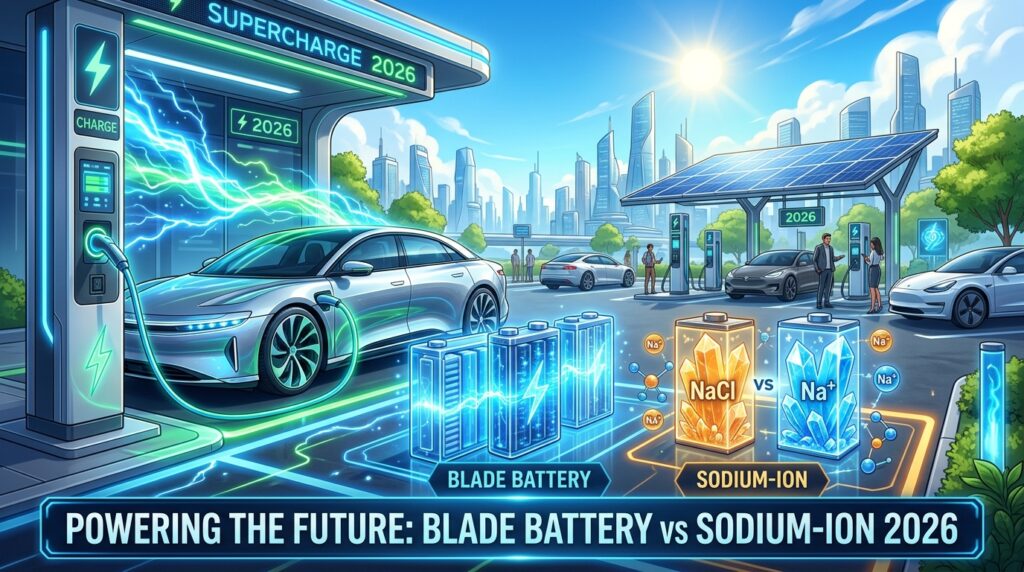
BYD Blade Battery 2.0. Have you ever worried about running out of battery on a long trip? Or waited hours for your car to charge? What if you could add hundreds of miles of driving range in the time it takes to enjoy a quick coffee , and do it with safer, cheaper batteries made from common materials like salt?
https://mrpo.pk/xis-diplomatic-masterclass/
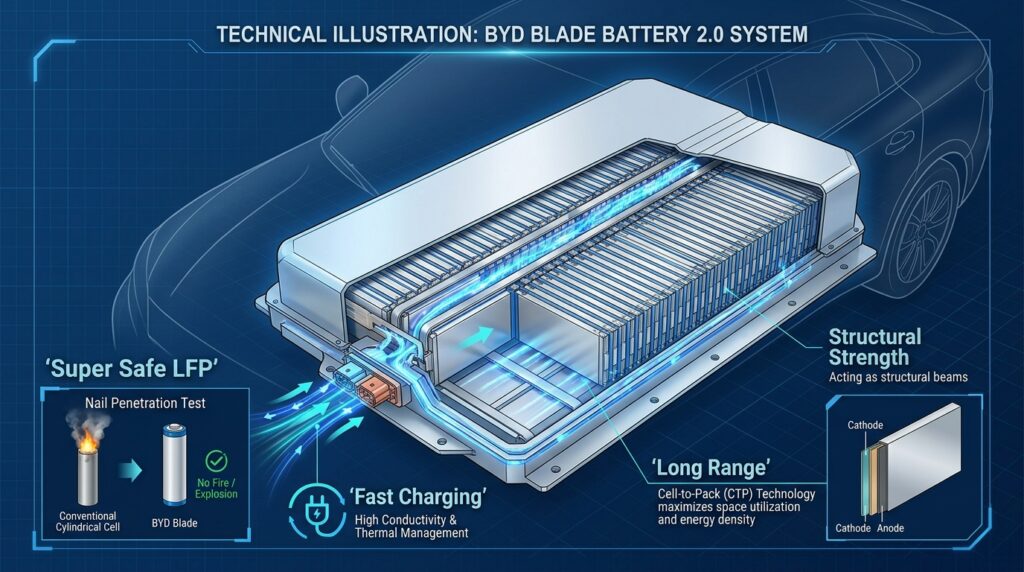
These exciting changes are happening right now in 2026. Big improvements in BYD’s Blade Battery 2.0 (a lithium iron phosphate or LFP type) and sodium-ion batteries are solving the biggest problems with electric vehicles (EVs). They make EVs more practical for families, more affordable, and better for the planet.
BYD Blade 2.0 compared to 1.0
BYD’s Blade Battery 2.0, introduced in March 2026, represents a significant leap over the first-generation Blade Battery 1.0 launched in 2020. While the first generation revolutionized battery safety and packaging efficiency, the second generation introduces sweeping material overhauls to dramatically improve charging speed, energy density, and cold-weather performance.
However, the Blade 1.0 design improved throughout the applications and as a step the Blade 2.0 is ~8% gravimetric improvement. Still very significant, but not the headline values we see when compared to the original Blade launch.
Purpose of the Article:
To educate and inform general readers about the latest 2026 advancements in EV battery technology, specifically BYD’s Blade Battery 2.0 (LFP) and sodium-ion batteries.
Key Goals:
– Explain these technologies in simple, easy-to-understand language.
– Highlight benefits: faster charging, better safety, lower costs, longer range, and improved cold-weather performance.
– Compare the two battery types clearly and show how they complement each other.
– Build confidence in EV adoption by covering real-world uses, pricing, major companies (BYD & CATL), and future outlook.
– Inspire readers to consider electric vehicles and sustainable energy.
Why Batteries Matter More Than Ever
Electric cars help reduce pollution and fight climate change by using electricity instead of gasoline. But many people still hesitate because of range (how far you can drive), charging time, safety fears, and high prices.
New batteries fix these issues head-on. BYD’s Blade 2.0 offers super-fast charging and long range. Sodium-ion batteries bring down costs and work great in cold weather. Together, they are making EVs a smart choice for more people worldwide.

A Quick Look at How EV Batteries Have Changed
Batteries for cars have come a long way. Old ones were heavy and short-lived. Lithium-ion batteries changed the game, and LFP (Lithium Iron Phosphate) became popular for being very safe and long-lasting.
BYD improved LFP with its Blade design — strong, flat cells that resist fires. Now, sodium-ion batteries are the new star. They use sodium (from table salt) instead of lithium, making them cheaper and more available. China leads with companies like BYD and CATL.
BYD’s Blade Battery 2.0: Safer, Faster, and Longer Range
BYD launched Blade Battery 2.0 in early 2026. It keeps the safe LFP chemistry but adds major upgrades.
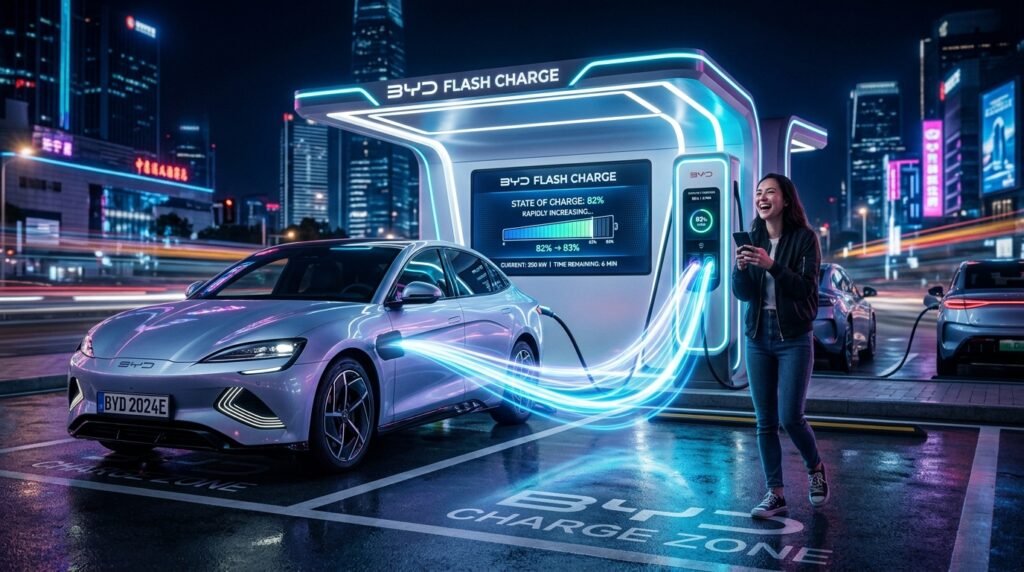
- Super-Fast Charging: 10% to 70% in about 5 minutes, and 10% to 97% in 9 minutes with Flash chargers. It even works well at -30°C.
- Long Range: Over 1,000 km in some tests (real-world is still impressive, like 700-800+ km).
- Energy Density: 190-210 Wh/kg — packs hold more power without getting too heavy.
- Safety: Passes extreme tests without fire or explosion. Many BYD cars get top crash-test scores.
- Long Life: Can last over a million kilometres in some cases with very little wear.
You’ll see it in cars like the updated Seal, Dolphin, and premium models. BYD is also building thousands of Flash charging stations.
Sodium-Ion Batteries: The Affordable New Choice
Sodium-ion batteries are the exciting new option rolling out in 2026. CATL’s Naxtra leads the pack.
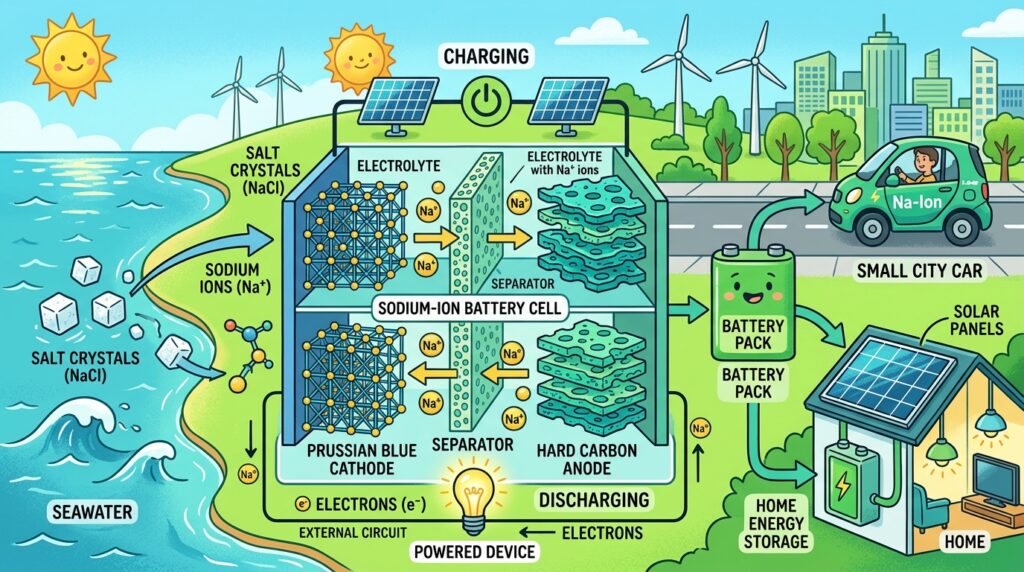
How They Work: Sodium ions move back and forth, similar to lithium batteries. Factories can use existing equipment, which speeds things up.
Big Advantages:
- Low Cost: Sodium is everywhere and cheap — no need for scarce lithium.
- Great in Cold Weather: Performs well from -40°C to hot temperatures.
- Safety: Very stable and safe to ship or store at zero charge.
- Long Life: 4,000 to 10,000+ cycles depending on the version.
- Energy Density: 100-175 Wh/kg (getting better fast) — perfect for city driving and home storage.
Real Use in 2026: First mass-production cars from Changan and others hit the roads. Also great for scooters, trucks, and big grid storage systems.
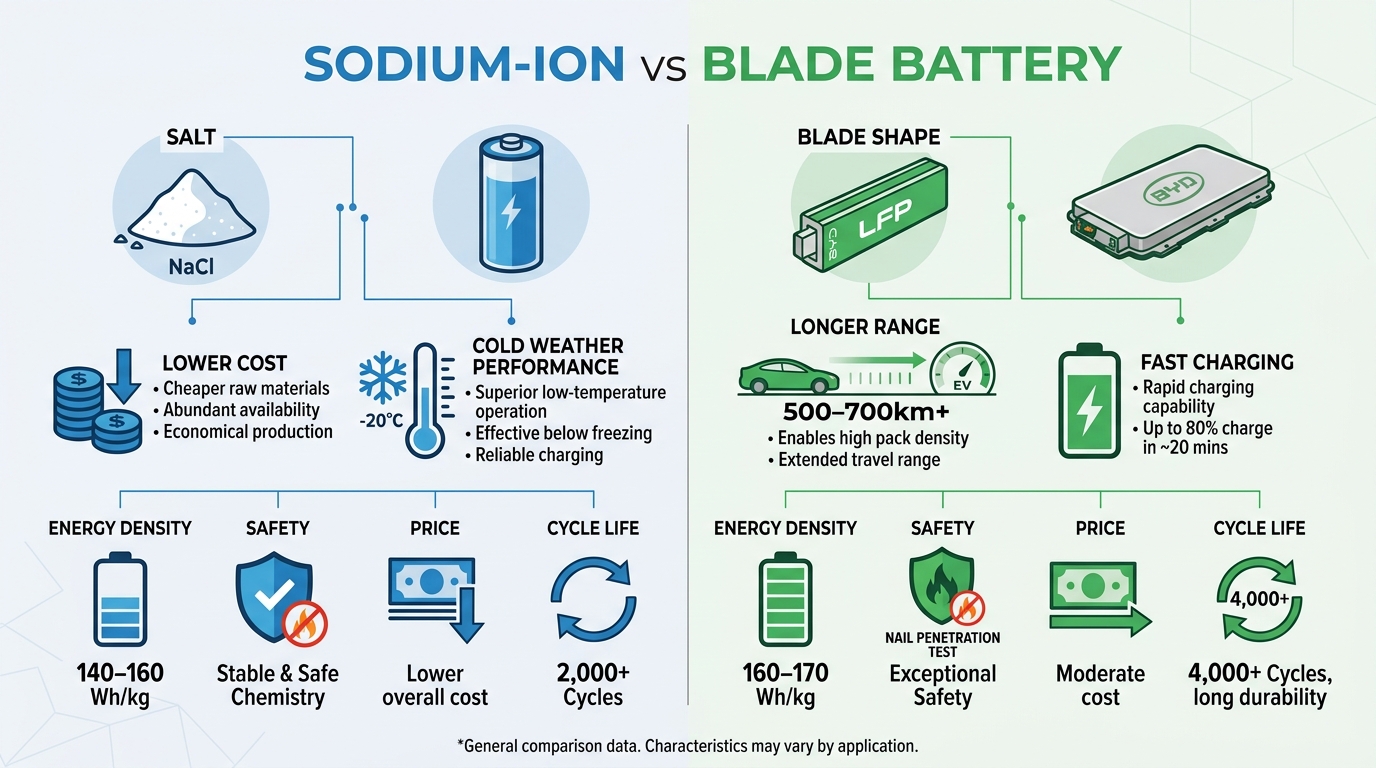
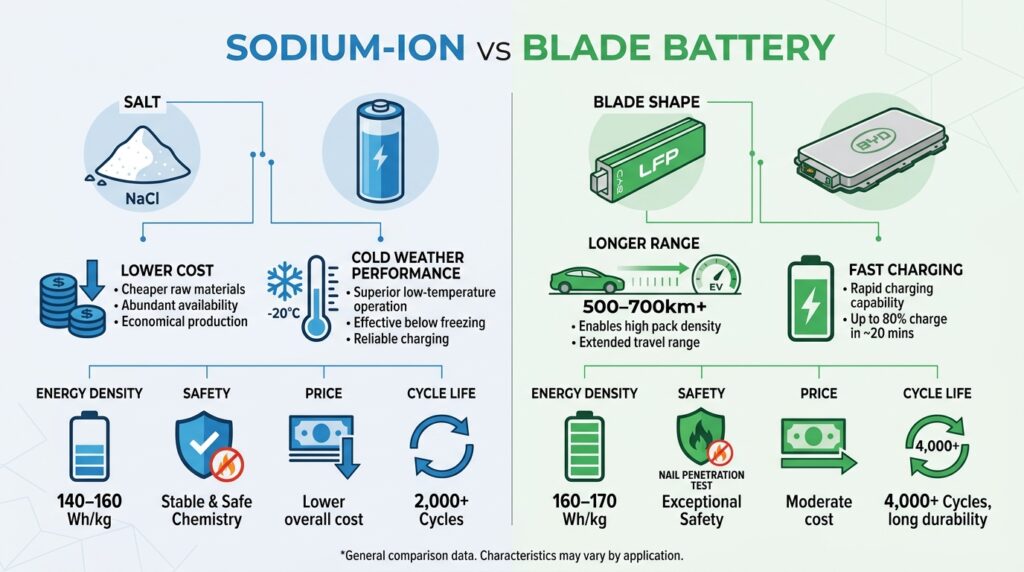
Side-by-Side Comparison: Sodium-Ion vs LFP (Blade)
| Feature | Sodium-Ion | LFP Blade 2.0 | Winner |
|---|---|---|---|
| Energy Density | 100–175 Wh/kg | 190–210 Wh/kg | LFP (longer range) |
| Cost | Much lower potential | $55–80/kWh | Sodium (budget wins) |
| Safety & Cold | Excellent, edges in cold | Very safe | Sodium for a cold |
| Cycle Life | 4,000–10,000+ | 3,000–8,000+ | Tie / Sodium improving |
| Best For | City cars, storage | Family cars, long trips | Both complement each other |
They are teammates, not rivals. Many future systems may even combine them.
Major Companies Leading the Way
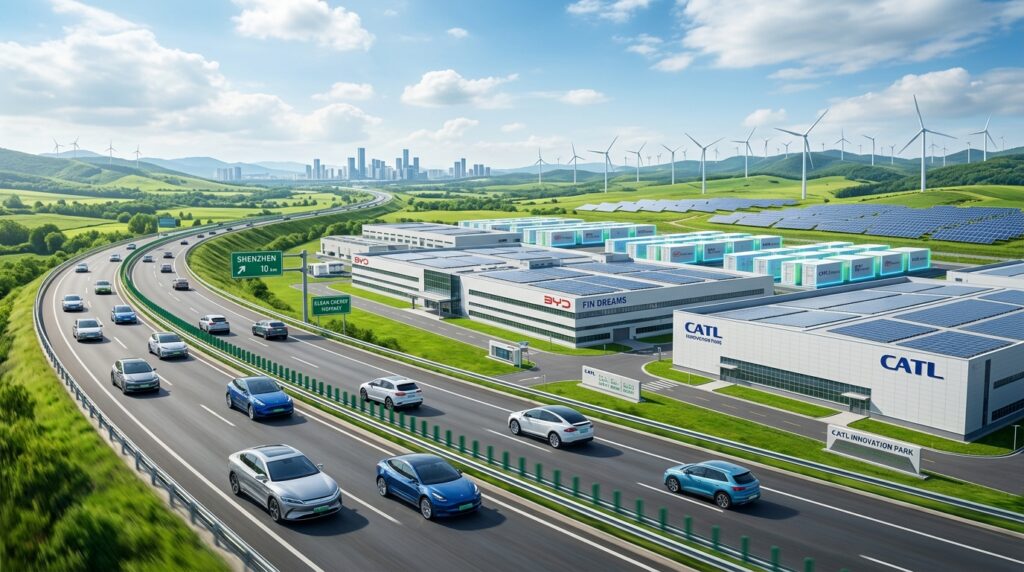
- CATL: The world’s biggest battery maker (around 40% market share). They lead sodium-ion with Naxtra and supply many car brands.
- BYD: Expert in Blade LFP and making both cars and batteries. They are scaling fast globally.
Other players like LG and SK On exist, but China currently leads production.
Prices, Longevity, and Cheaper Options for You
Battery prices keep falling. Average packs were around $108/kWh or lower in 2025, with LFP often cheaper. Sodium-ion aims for even lower costs soon.
Both types last a long time, often 8+ years or hundreds of thousands of miles. This saves you money over time through warranties and low maintenance.
Great News for Buyers: More EVs under $25,000–$30,000 are coming. Sodium helps make short-range and cold-climate options affordable. Faster charging and longer life mean less worry and lower total costs.
Real-World Impact and Broader Benefits
These batteries speed up EV sales, store renewable energy better, and reduce reliance on rare minerals. They create jobs, cut pollution, and support energy independence. Challenges like building charging stations remain, but progress is quick.
What’s Coming Next?
Expect even better versions soon, plus early solid-state batteries for luxury cars. By 2030, EVs should feel as easy as gas cars or better.
Conclusion: A Brighter, Cleaner Future
BYD’s Blade Battery 2.0 and sodium-ion technology are big steps toward affordable, safe, and practical electric cars for everyone. They solve real problems and open the door for more people to go green.
Ready to join the electric future? Test drive an EV, stay informed, and support smart energy choices. The battery revolution is here, and it’s powering a better tomorrow.
Frequently Asked Questions (FAQs)
1. What is the main difference between Blade Battery and sodium-ion?
Blade (LFP) offers better range and proven performance for everyday driving. Sodium-ion is cheaper, works better in extreme cold, and uses abundant materials — ideal for budget cars and storage.
2. How fast can these new batteries really charge?
BYD Blade 2.0 can go 10-70% in about 5 minutes with Flash chargers. Real-world results are impressive and getting better with new stations.
3. Are these batteries safe?
Yes! Both are among the safest options. They resist fires much better than older lithium types and pass tough crash tests.
4. Will sodium-ion batteries make EVs much cheaper?
Yes, potentially 30% or more lower material costs. This could bring more cars under $25k and lower home storage prices.
5. How long do these batteries last?
Both last many years, often 3,000 to 10,000+ charge cycles. That’s hundreds of thousands of miles for most drivers.
6. When will I see these in cars outside China?
BYD and partners are expanding globally in 2026–2027. Sodium-ion will start in more affordable models and storage systems soon.
References
- BYD Official Announcements & Reuters (2026)
- CATL Press Releases on Naxtra (2026)
- BloombergNEF Battery Price Reports (2025-2026)
- Industry analyses from IEA, Benchmark Minerals, and independent EV sites.
This article is for educational purposes. Check latest specs with manufacturers.