
Xi’s Diplomatic Masterclass: Putin’s Warm Welcome in Beijing Right After Trump
Xi’s Diplomatic Masterclass, imagine two of the world’s most powerful leaders visiting the same city just days apart, each greeted with grand ceremonies, yet the subtle differences speak volumes. In May 2026, Russian President Vladimir Putin arrived in Beijing for a high-stakes state visit with Chinese President Xi Jinping, shortly after Xi hosted U.S. President Donald Trump.
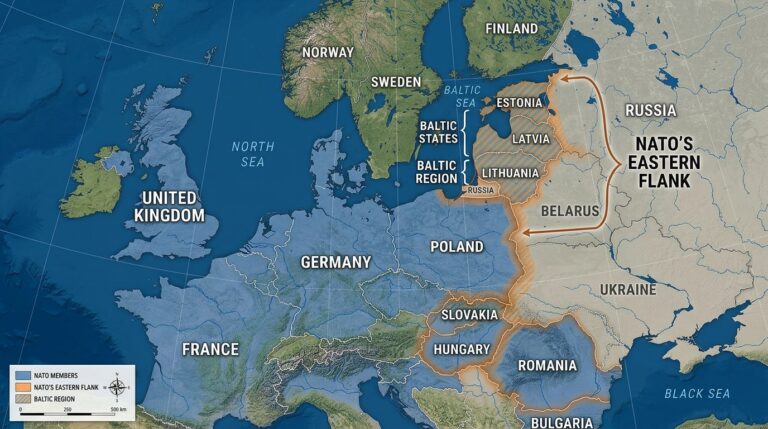
This back-to-back diplomacy has captured global attention as a symbol of China’s rising influence and the deepening Sino-Russian strategic partnership in a changing world.
https://mrpo.pk/inside-trumps-2026-china-summit/
Purpose of This Article
This article provides a clear, balanced, and easy-to-understand analysis of the key outcomes from the May 2026 Putin-Xi summit. It explains the major agreements, compares the visits with Trump’s, explores important projects such as Power of Siberia 2 and GLONASS-BeiDou cooperation, and answers the most common questions readers ask.
China’s Xi gives Putin a red-carpet welcome – and makes a veiled jab at the US

Maxim Shemetov/Reuters
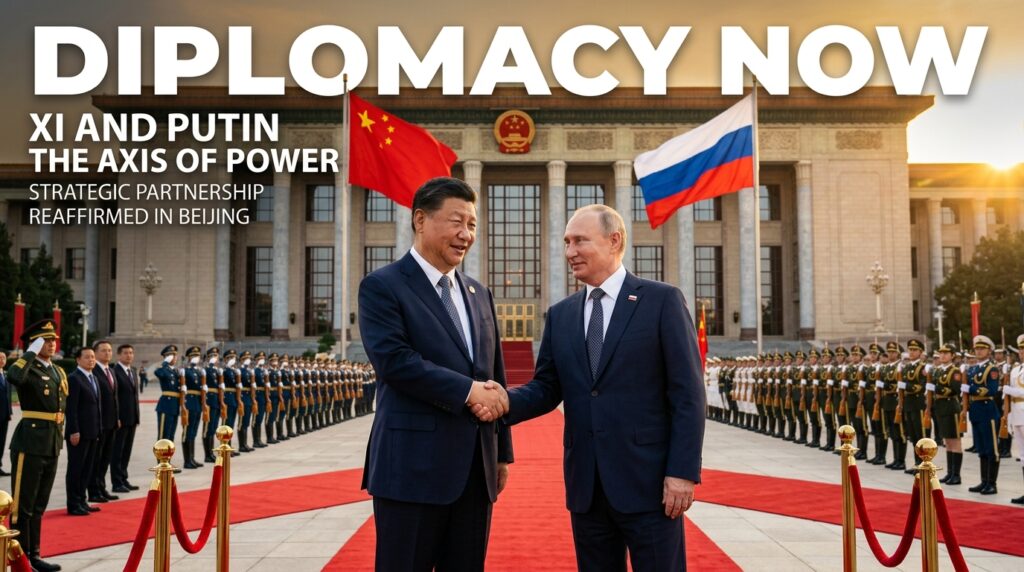
Chinese leader Xi Jinping hailed ties with Russia as a force for “calm amid chaos” during a meeting with Vladimir Putin in Beijing on Wednesday, days after Xi hosted President Donald Trump for a landmark US-China summit.
Xi alluded to an increasingly fractious international situation – and took a veiled jab at the US – as he sat down with Putin in the Great Hall of the People for meetings kicking off the Russian leader’s roughly 24-hour state visit in the Chinese capital.
“The international situation is marked by intertwined turbulence and transformation, while unilateral hegemonic currents are running rampant,” Xi said, using Beijing’s typical language to criticize what it sees as American foreign policy overreach.
In the face of this, China and Russia should enhance their “comprehensive strategic coordination,” Xi said, according to Chinese state media.
Striking Similarities and Telling Differences in the Two Visits
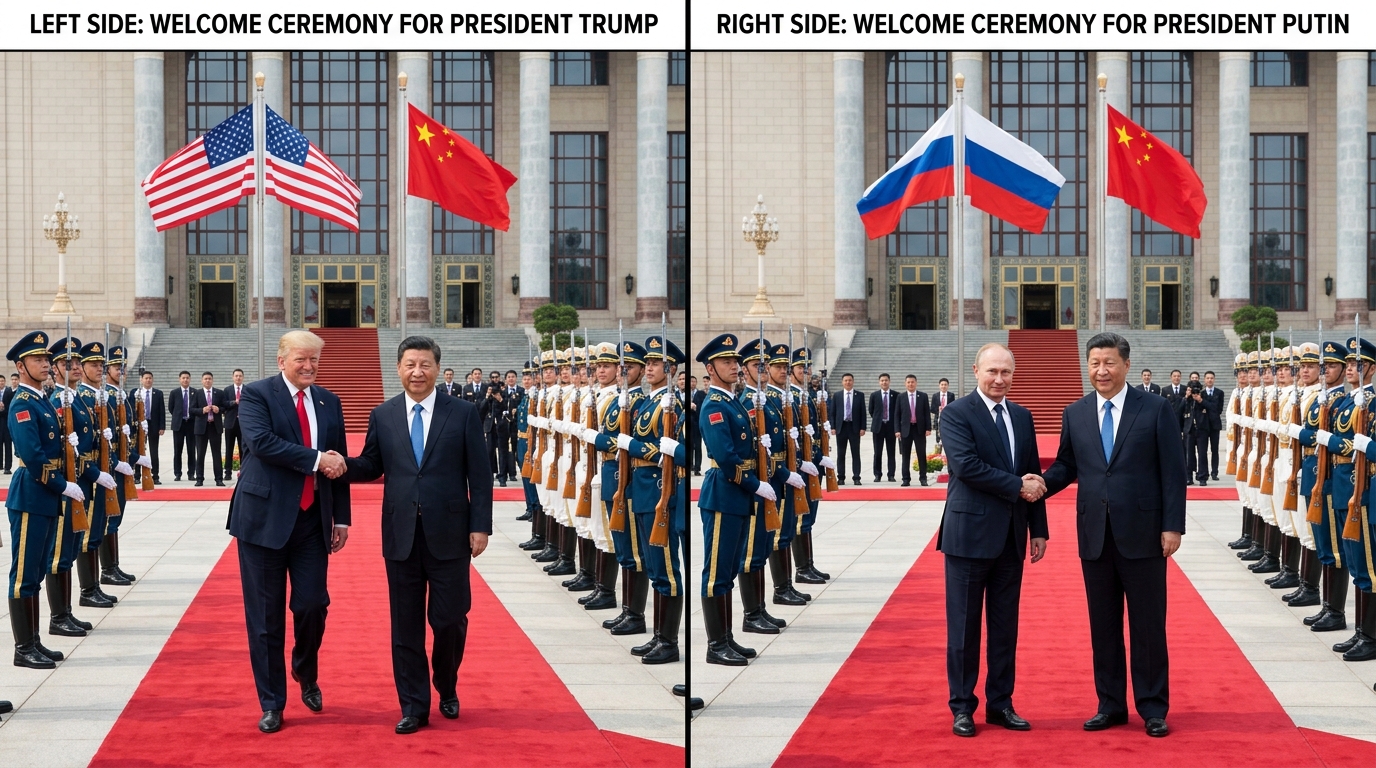
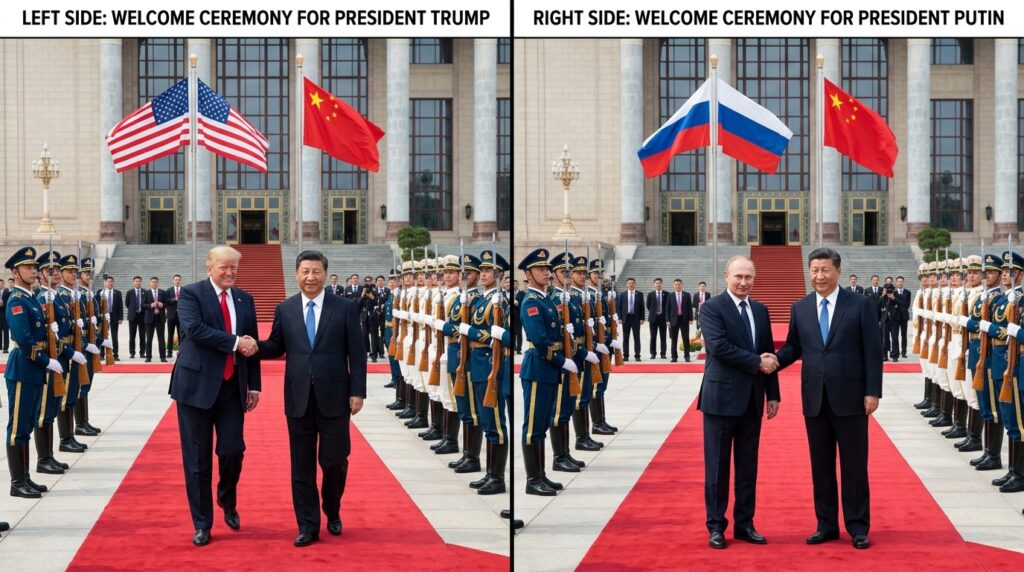
International media couldn’t resist comparing the two visits. Headlines described the welcomes as near mirror images: red carpets, military honour guards, 21-gun salutes, marching bands, and cheering children waving flags at the Great Hall of the People.
Yet sharp-eyed observers noted important differences. Putin was greeted at the airport by China’s powerful Foreign Minister Wang Yi, a top Politburo member. Trump received a welcome from Vice President Han Zheng, a more ceremonial figure. Many outlets interpreted this as China giving its Russian partner a higher strategic priority.
While Trump’s visit focused heavily on business and trade, Putin’s produced more concrete outcomes, including energy deals and broad strategic coordination. The warm “old friends” atmosphere stood out during the Russian leader’s stay.
Power of Siberia 2: A Game-Changing Energy Link
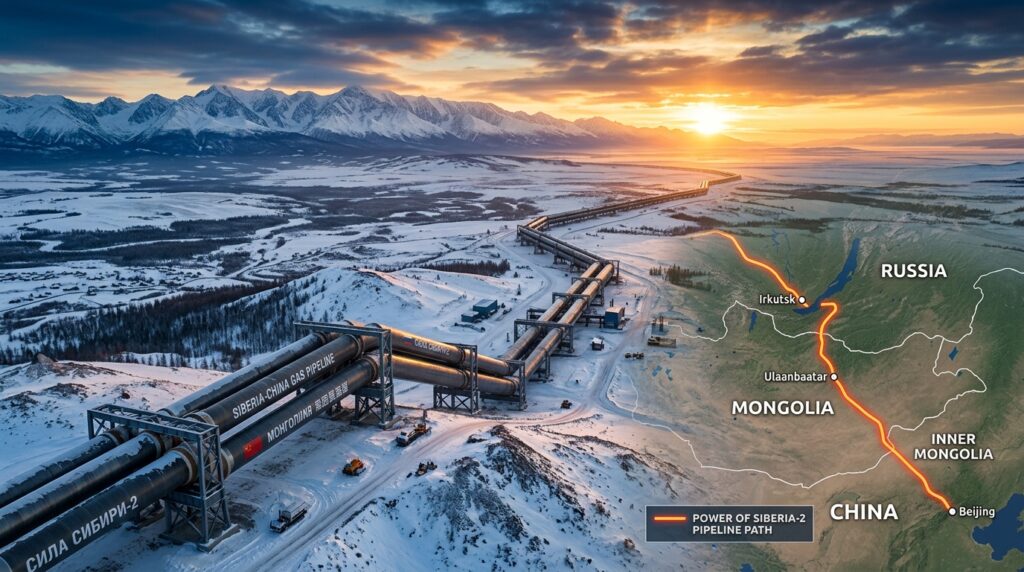
One of the summit’s biggest highlights was energy cooperation. The two sides advanced plans for Power of Siberia 2,
What is Power of Siberia 2? It is a new 2,600-kilometre (about 1,615 miles) pipeline that will carry natural gas from Russia’s Yamal region through Mongolia to China. When finished, it can deliver around 50 billion cubic meters of gas every year.
Together with the existing Power of Siberia 1 pipeline and other routes, Russia could send more than 100 billion cubic meters of gas to China each year in the future.
Why is this important?
- Before the Ukraine war, Russia sold most of its gas to Europe. Now Europe has cut back sharply.
- China gets cheap, reliable energy.
- Russia keeps earning money from energy sales.
Timeline: Construction is expected to start soon, with first gas possibly flowing between 2030 and 2033. It will take several more years to reach full speed.
This deal helps Russia survive Western sanctions and gives China more energy security. Europe, on the other hand, must rely more on expensive LNG (liquefied natural gas) from other countries.
Satellites Teaming Up: GLONASS and BeiDou Integration
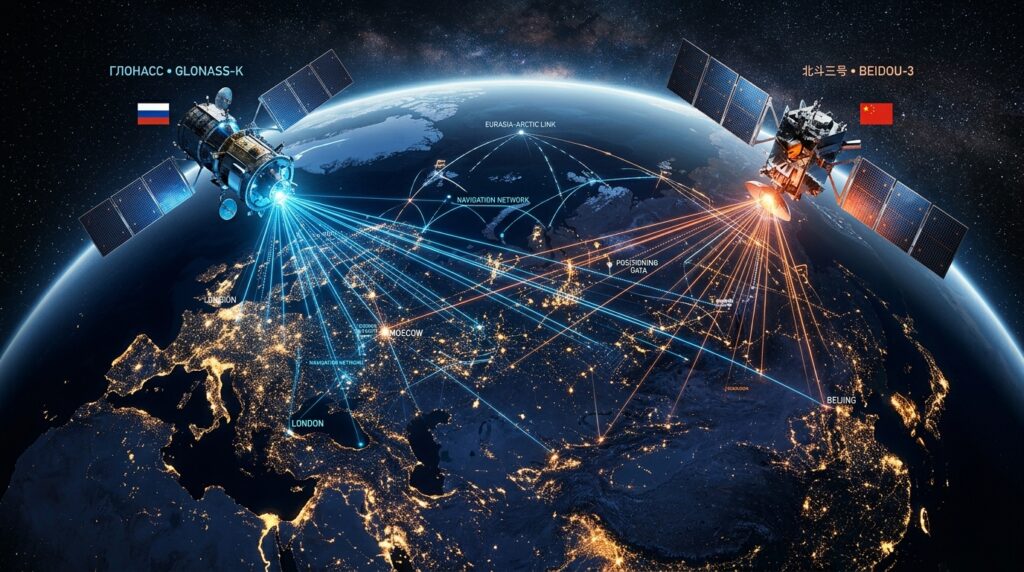
Beyond energy, the leaders pushed forward cooperation in space technology. Russia’s GLONASS and China’s BeiDou navigation systems, both alternatives to America’s GPS, are being made more compatible.
These improvements mean better accuracy for smartphones, vehicles, and critical infrastructure. The agreements include improved timing synchronisation and shared ground-monitoring stations across both countries. Russia’s GLONASS and China’s BeiDou navigation systems (like GPS) are learning to work together.
Countering US Dominance: Directly challenges GPS reliance. In a Taiwan or Ukraine escalation, it allows operations despite Western jamming/denial efforts.
Your phone or car can already use signals from multiple systems for better accuracy. Now, Russia and China are making their equipment extra compatible with shared ground stations and better timing.
Why care? More satellites in the sky mean stronger signals in cities, mountains, or the far north.
Military Side of the Satellite Partnership
These satellites are not just for maps and deliveries.
Military uses in simple terms:
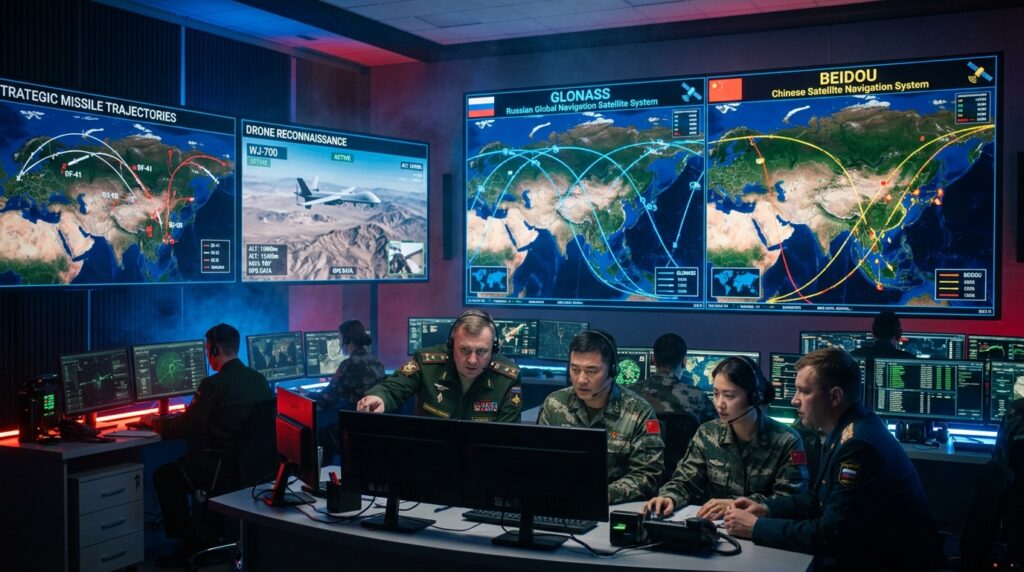
- Guided missiles and drones can hit targets more precisely.
- Troops and vehicles can navigate even if enemy forces try to jam signals.
- Commanders can keep operations perfectly timed.
China’s BeiDou can send short messages in remote areas. Russia’s system shines near the Arctic. Together, they make both armies harder to blind in a conflict.
Strategic and Geopolitical Importance
This integration reduces reliance on US-controlled GPS, a core “no-limits” partnership element. It supports:
- De-dollarisation and parallel systems, in trade, logistics, and infrastructure (e.g., Belt and Road, Eurasian connectivity, Power of Siberia projects).
- Military applications: Enhanced PNT for precision strikes, command/control, drone navigation, and situational awareness. Dual-use nature means civilian cooperation aids military interoperability (e.g., joint exercises, potential Taiwan or Ukraine scenarios). Both nations view it as countering “Western hegemony” in space tech.
- Economic leverage: Promotes joint standards, equipment exports, and influence in the Global South/BRICS via alternatives to GPS-dominated ecosystems.
- Eurasian logistics: Critical for border management, transport corridors, agriculture, and energy infrastructure.
Asymmetry note: China’s BeiDou is more advanced globally (full constellation since 2020, with unique features like short messaging). Russia benefits from China’s scale and tech push, while China gains GLONASS’s strengths (e.g., high-latitude coverage) and a reliable partner against sanctions/isolation.
Satellites Teaming Up: GLONASS and BeiDou Integration
Military Applications of GLONASS-BeiDou Cooperation
The integration also carries important military value. Using both systems together improves precision for missiles and drones, helps troops navigate when signals are jammed, and strengthens command and control. This cooperation enhances strategic independence for both nations.
Why This Summit Caught Everyone’s Attention
Putin received the royal treatment, red carpet, soldiers in perfect lines, and a loud 21-gun salute. China’s top diplomat greeted him personally. This showed how important the visit was.
The two countries promised to build a “multipolar world” where no single country bosses everyone else. They criticised Western sanctions and NATO’s moves in Asia.
A trade fact that surprises many: Business between Russia and China now hits about $240 billion a year, and almost all of it uses Russian rubles and Chinese yuan instead of U.S. dollars.
International media have intensely analysed the May 2026 Putin-Xi summit through direct comparisons with Donald Trump’s visit just days earlier. Headlines and coverage emphasise the deliberate similarities in pomp, subtle differences in substance and protocol, and Xi Jinping’s skilful balancing act between the US and Russia.
Top Headlines Highlighting Comparisons
Here are some of the most prominent and representative headlines:
– The Guardian: “Same but different: how Xi and China welcomed Trump and Putin” This piece stresses mirrored choreography but notes deliberate differences.
– Bloomberg: “Spot the Difference: Putin Gets Trump Treatment From Xi in China” Focuses on near-identical visuals (red carpet, honour guard, cheering children) while highlighting telling protocol variations.
– BBC: “Xi basks in spotlight as he hosts Putin days after Trump” and videos asking “How did Xi treat Trump and Putin on their China visits?” Emphasises Xi projecting strength by hosting both leaders grandly.
– CNBC: “Taiwan was central in Xi’s meeting with Trump but not with Putin” Highlights stark contrasts in substance and priorities.
– Reuters: “Putin in China live: Moscow and Beijing warn Trump’s Golden Dome plan threatens stability” — Notes joint criticism of US policies shortly after Trump’s visit.
– New York Times: “As a Weakened Putin Follows Trump to Beijing, Iran War Offers an Opening” Portrays Putin in a relatively weaker position.
– Channel News Asia: “Putin, Xi hail ‘unyielding’ ties in talks after Trump visit.”
– South China Morning Post / Others: “How will Putin’s China visit compare to Trump’s?” A common framing in pre-visit coverage.
Common Themes in Media Analysis
1. Optics: Near Mirror Image
Media repeatedly describes the welcomes as “almost identical” or a “near mirror image”: red carpets, military honour guards, 21-gun salutes, marching bands, and children waving flags. Bloomberg’s “Spot the Difference” approach became popular for visual breakdowns.
2. Subtle but Meaningful Differences
– Airport greeting: Putin met by Foreign Minister Wang Yi (high-ranking but not the highest); Trump by Vice President Han Zheng (seen as more ceremonial). Many outlets interpreted this as China giving Russia a higher strategic priority.
– Substance: Trump’s visit was business-heavy (CEOs, trade talks) but light on breakthroughs. Putin has produced more concrete agreements (energy, 40 deals) and warmer personal language (“dear friend,” Chinese poetic idioms).
– Tone: Putin-Xi described as “old friends” with “unyielding” or “unprecedented” ties; Trump-Xi more transactional.
3. Xi as Global Diplomatic Hub
Headlines portray Xi as the centre of attention, skillfully hosting both powers without choosing sides. Phrases like “talking to everyone, tied to no one” and “Everyone needs Xi” appear frequently.
4. Geopolitical Signalling
Western media often frames the back-to-back visits as China reinforcing its Russia partnership while keeping US channels open. Russian/Chinese media downplays comparisons and stresses substance over ceremony. Kremlin spokesman Dmitry Peskov dismissed ceremony-focused analysis, urging focus on “deep geopolitical substance.”
Overall Media Narrative
International coverage treats the visits as a masterclass in Chinese diplomacy grand pageantry for both, but tailored deliverables and priorities. Western outlets focus on risks to US influence and bloc-hardening, while others see it as evidence of multipolarity. The visual similarities made for compelling side-by-side coverage, turning the summits into one of the defining diplomatic stories of May 2026.
This framing underscores China’s growing leverage: it can roll out the red carpet equally while advancing different strategic goals with each visitor.
Answering the Big Questions Everyone Is Asking
How much can Power of Siberia 2 replace Russia’s lost European gas sales?
It helps significantly in the long term, but won’t fully restore previous revenues soon. China pays lower prices, and full capacity will take years to achieve.
Is China mainly sending a message to America?
Partly yes. The warm reception for Putin right after Trump’s visit signals that China won’t isolate Russia. At the same time, the partnership is genuinely deep and driven by mutual needs.
New World Order / Multipolarity: Joint statements criticised “unilateral bullying,” NATO expansion into Asia-Pacific, Japan’s military moves, and Western sanctions/interference. They promoted a “just and equitable global governance system,” rejected “law of the jungle” politics, and positioned the partnership as a stabilising force and alternative to US-led order. Issues like Ukraine, Iran (condemning strikes as illegal), and broader global south alignment were addressed.
How deep does the military cooperation go?
It focuses on technology sharing, joint exercises, and systems like navigation satellites rather than a full military alliance.
Will the ruble-yuan trade weaken the U.S. dollar globally?
It already works extremely well between the two countries. Nearly all of their $240 billion annual trade now skips the dollar. Worldwide change is slower but steadily growing.
Is Russia becoming too dependent on China?
This is a real risk. China’s much larger economy gives Beijing more leverage. Both sides benefit today, but Russia must manage long-term balance carefully.
Xi’s Diplomatic Masterclass: What This Means for the World
For Europe, the shift means higher energy costs. For the United States, it creates a more complex diplomatic environment. Countries in the Global South see new options for trade and technology. Overall, the summit reinforces the move toward a multipolar world.
Looking Ahead
The May 2026 Putin-Xi summit showcased a practical, interest-driven partnership built on energy security, technological cooperation, and strategic coordination. While both leaders speak of equality, the relationship shows clear asymmetries, with China holding growing influence.
Watch for real progress on the Power of Siberia 2 pipeline and wider adoption of combined GLONASS-BeiDou technology. These developments will reveal how this Sino-Russian strategic partnership shapes the future.
What This Means for You and the World
For Europe: Higher energy bills and factories working harder to compete. For America, A tougher challenge is managing two big powers that support each other. For regular people everywhere: Changes in energy prices, new options in phones and cars (using BeiDou), and a world with more competing power centres instead of one clear leader.
Final Thoughts: A Partnership Built to Last?
The 2026 Putin-Xi summit paints a clear picture: Russia and China are building a strong practical alliance in energy, money, technology, and security. They call it equal friendship, but real life shows China holds more cards.
Watch these signs in the coming years:
- Actual construction of Power of Siberia 2
- New phones and cars using the combined satellite systems
- More countries are joining the ruble-yuan style trade
This partnership will likely keep growing as long as both feel pressure from the West. Understanding it helps us see where our world is heading.
This article is based on official summit reports, energy data, and expert analysis as of May 2026.
Expert Perspective Statement
The Sino-Russian strategic partnership is one of the most significant geopolitical developments of our time. It is driven by practical mutual interests rather than ideology alone. While challenges like economic asymmetry exist, the partnership continues to deliver tangible results in energy, technology, and diplomacy. Understanding these developments is essential for anyone interested in global affairs, energy markets, or future technology standards.
References
- Official joint statements from the Ministry of Foreign Affairs of the People’s Republic of China and the Kremlin (May 2026)
- Reports from Reuters, Bloomberg, BBC, The Guardian, and South China Morning Post
- Energy data and pipeline updates from Gazprom and CNPC
- Analysis of navigation systems from Roscosmos and the China Satellite Navigation Office
- Expert commentary from international relations think tanks (2026)