“I Am the Boss”: The Hidden Reasons Why Trump Stopped Netanyahu From Bombing Iran
I Am the Boss: The Hidden Reasons Why Trump Stopped Netanyahu From Bombing Iran. The Myth of the Imperial Presidency: Why the Strait of Hormuz and Mid-Terms Forced Trump to Corner Netanyahu.
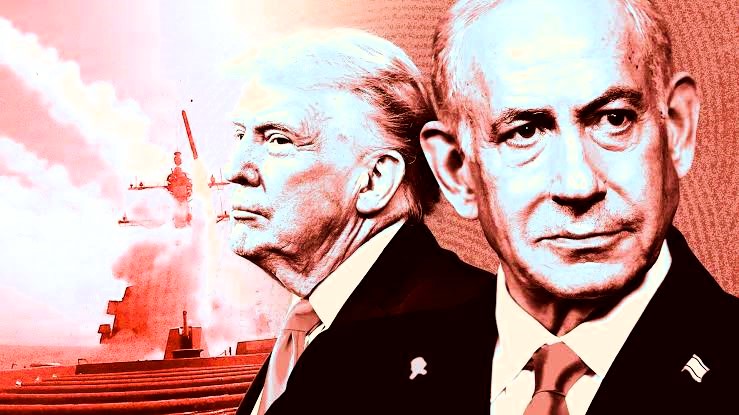
Imagine standing on a playground where the biggest, loudest bully suddenly stops mid-swing, drops his fists, and asks to sit down and talk. It shocks everyone who doesn’t understand what is happening behind the scenes.
This is exactly what we are witnessing in the high-stakes world of global geopolitics. For months, Washington issued terrifying warnings, threatening to turn its adversaries into smoking ruins. Yet, following Iran’s massive ballistic missile strike on Israel, the aggressive rhetoric vanished.
Instead, President Donald Trump turned around and gave Israeli Prime Minister Benjamin Netanyahu a blunt, public reality check: “I am the boss. He is not the boss.”
To understand why the world’s premier superpower suddenly pivoted from a fierce war hawk to a peace dove, we must look behind the curtain. The truth isn’t found in proud political speeches. It is found in empty fuel tanks, hidden military losses, lopsided economic math, and a profound fear of an unmanageable two-front global war. To secure a long-term strategy, a new Trump-Iran deal, Netanyahu must accept is quietly becoming Washington’s priority over regional escalation.
“We must disenthrall ourselves, and then we shall save our country.”
— President Abraham Lincoln
Today, Washington is being forced to wake up from its own illusions.
The Problem With the Idea That Netanyahu Made Trump Attack Iran
Netanyahu has been an ardent and very public advocate for unseating the Iranian regime for four decades. It might even be considered his life’s work. He has pursued this mission relentlessly with every U.S. president and with every member of Congress who visited Israel. During Trump’s first term and now again in the second term, Netanyahu has pressed hard for regime change in Iran. Although past presidents ignored or rejected Netanyahu’s appeals for any number of well-thought-out reasons, Trump offered him an open door.
To be sure, Netanyahu was not the only foreign leader pushing for Trump to attack Iran. Foremost among these was Saudi Crown Prince Mohammed Bin Salman. Other reports indicate Arab Gulf leaders have been urging Trump not to stop before further degrading Iranian military capabilities. The difference between Netanyahu and Arab leaders was that the latter told Trump quietly what they wanted but would not be honest with their own people. Still, Trump alone is responsible for the United States’ participation.
Trump and Netanyahu are skilled politicians, and both are adept at the art of the con. In this case, however, there was no con. Trump proved to be a willing and full partner. He was risk-ready and caught up in a self-generated aura of military power and invincibility after taking President Nicolás Maduro from Venezuela. He was poorly advised by a coterie of advisers unwilling to say anything to him other than yes— perhaps with the exception of Vice President JD Vance, who has backed Trump publicly but has expressed reservations in the past.
Decoding the “I Am the Boss” Dictat: The 1956 Suez Precedent
When Donald Trump publicly repeated that Netanyahu has no choice but to follow America’s lead, it shattered the illusion of a friction-free partnership. Trump went so far as to warn that if Israel launches a solo attack on Iran, it will get the same treatment from him that America’s 47 past presidents gave, meaning absolute, cold diplomatic and logistic isolation.
This public humiliation of a close ally is not unprecedented. It is a modern re-enactment of the 1956 Suez Crisis.
During that conflict, Britain, France, and Israel secretly allied and invaded Egypt to seize the Suez Canal. American President Dwight D. Eisenhower was furious because the invasion threatened global stability. Eisenhower didn’t drop bombs on his allies; he used the power of the U.S. Treasury. He threatened to sell off America’s holdings of the British Pound, a move that would have destroyed the British economy overnight. Britain and its allies backed down within days.
“We cannot subscribe to one law for the weak and another for the strong…”
— President Dwight D. Eisenhower
Trump is playing the exact same card today. Israel’s war machine runs entirely on American lifelines, from missile interceptors to heavy ordnance. By asserting absolute dominance, Trump is reminding Tel Aviv that the puppet cannot pull the strings of the puppeteer when American domestic survival is on the line. In this high-stakes landscape, any sustainable Trump-Iran deal Netanyahu opposes will likely be forced upon him by Washington’s financial realities.
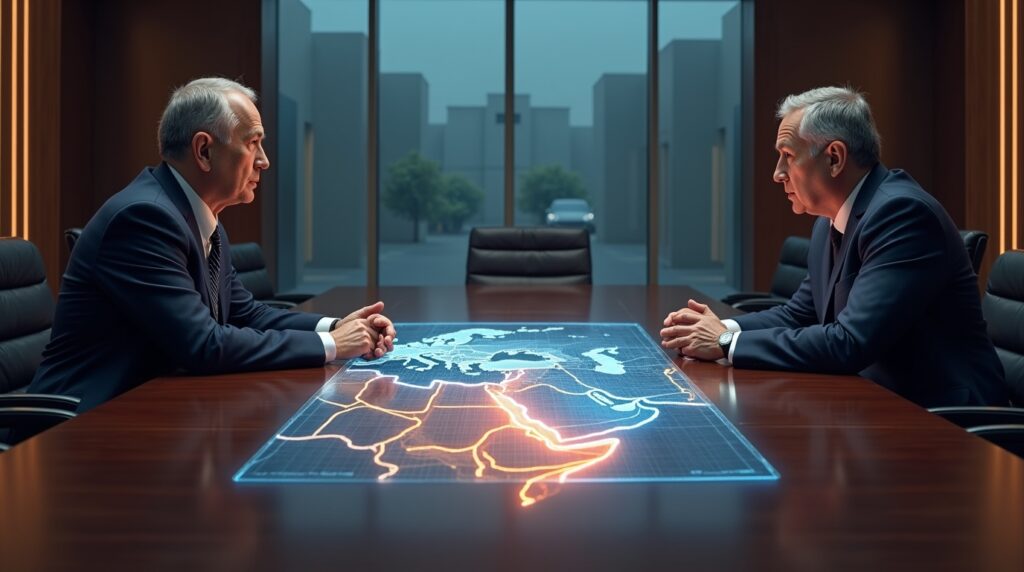
The Hardliners’ Paradox: Why Military Pressure Failed in Tehran
For decades, Western foreign policy circles operated under a flawed assumption: if you squeeze Iran hard enough with military threats and economic sanctions, the regime will eventually break. This has proven to be a massive strategic miscalculation.
In political psychology, if you constantly corner a state and threaten its sovereign survival, it does not become compliant; it hardens. Decades of Western aggression did not make Iran surrender. Instead, it systematically pushed aside the moderate Iranian diplomats who wished to engage with the West, and propelled the most unyielding, tactically aggressive military commanders of the Islamic Revolutionary Guard Corps (IRGC) directly into the centre of state power.
By attempting to break Iran’s resolve through kinetic posturing, the West accidentally engineered its own worst nightmare: a hyper-defiant leadership in Tehran that views Western threats not as a deterrent, but as an invitation to strike first.
https://mrpo.pk/why-iran-refuses-to-break/
The Strategic Oil Depletion: The Asymmetric Math of the Strait of Hormuz
Now, let us analyse the unyielding mathematics of energy and geography that truly terrified the White House.
The United States maintains an ultimate energy safety net known as the Strategic Petroleum Reserve (SPR), massive emergency supplies of oil hidden in deep underground salt caverns. Following years of aggressive drawdowns to artificially stabilise global prices, the SPR has plummeted to its lowest operational levels since 1982.
Compounding this vulnerability, the global market faces a staggering shortfall of nearly one billion barrels of oil. This is not merely an American headache. Washington carries the structural burden of keeping its European allies and the UK economically alive. Their industrial sectors cannot function without affordable fuel.
This brings us to the ultimate maritime chokepoint: the Strait of Hormuz.
Iran understands it cannot defeat the U.S. Navy in a conventional fleet-to-fleet engagement. It doesn’t need to. Iran’s military doctrine relies on highly effective asymmetric warfare. They have positioned thousands of advanced ballistic missiles hundreds of feet deep inside solid mountain bunkers that are entirely impervious to Western conventional bunker-busters. Simultaneously, they possess the capability to flood the narrow shipping lanes of the Strait with hundreds of smart sea mines.
If Iran seals that chokepoint, global oil prices will skyrocket beyond manageable levels. The Western economic framework would buckle under catastrophic inflation overnight. No amount of Western airpower can force a shipping lane open when the waters are heavily mined, and the skies are raining anti-ship missiles. This structural vulnerability makes a Trump-Iran deal the only viable path to avert an energy crisis.
The Two-Year Clock: How US Mid-Term Elections Restrain the White House
There is an old, cynical saying by President Harry S. Truman:
“If you want a friend in Washington, get a dog.”
— President Harry S. Truman
In American domestic politics, geopolitical loyalty ends the moment an election cycle begins.
Under the U.S. Constitution, the entire House of Representatives faces election every two years. It is a brutal, unforgiving mechanism. If the electorate is financially strained, they ruthlessly vote the ruling party out of power.
With voting cycles fast approaching across critical states, the direct domestic fallout of Middle Eastern instability, namely, rising gas prices and stubborn inflation, is alienating voters. The American public is directing its fury straight at the Republican majority.
If Trump’s party loses control of Congress in these midterms, his presidency is effectively crippled. He will remain the commander-in-chief on paper, but he will be a “paper tiger”incapable of passing legislation, authorising domestic budgets, or easily funding foreign military adventures. Tehran understands this democratic vulnerability perfectly, using America’s own election calendar as a strategic counterweight against White House policy.
The Financial Realities: War Shortages and the Bleeding Air Defence Math
Behind closed doors, the Pentagon is grappling with a logistical crisis that the administration is desperately attempting to conceal from the public: the unsustainable depletion of men and material.
The continuous deployment of carrier strike groups and round-the-clock air defence patrols has pushed American military readiness to a dangerous breaking point. More critically, the lopsided financial math of modern tech-warfare is unsustainable for the West.
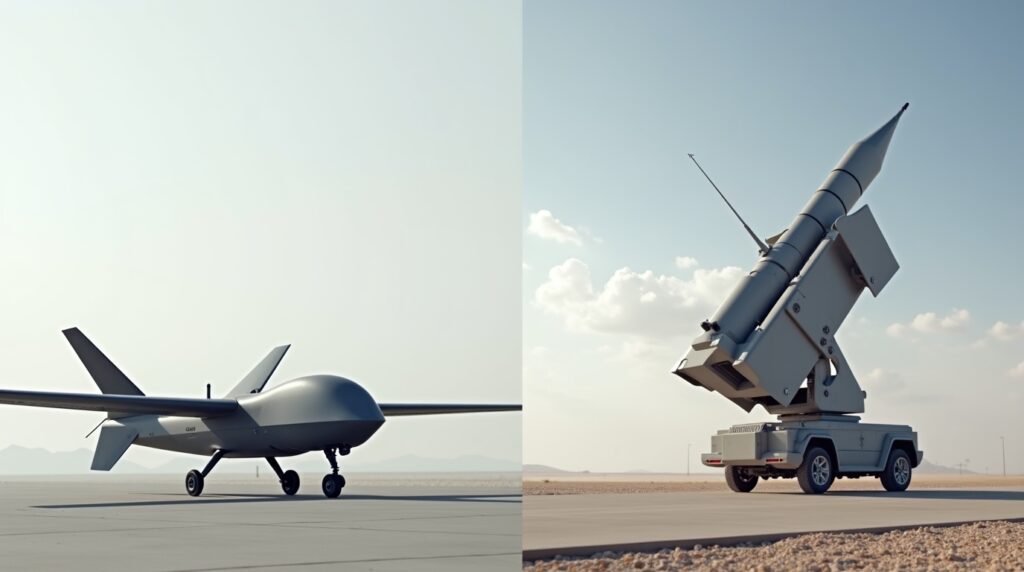
An adversarial attack drone or ballistic missile costs anywhere from $20,000 to $100,000 to manufacture. Conversely, the Western air defence interceptors required to shoot them down, such as the Patriot PAC-3 or naval SM-6 missiles, cost between $2 million and $4 million per shot.
Iran and its regional axis are not attempting to out-shoot the West; they are attempting to bankrupt it. American stockpiles of advanced precision munitions are being drained faster than domestic defence factories can replace them, leaving the superpower dangerously exposed. This rapid depletion forces the administration to realise that a diplomatic Trump-Iran deal that Netanyahu opposes is cheaper than military bankruptcy.
The Strategic Windfall: How China and Russia Capitalised on Washington’s Iran Miscalculations
The military strikes and maximum pressure campaigns orchestrated by the Trump administration against Tehran, first the sharp, escalatory engagements in June 2025 and later the sweeping, multi-front campaign launched on February 28, 2026, were designed to enforce absolute American hegemony over Persian Gulf energy flows. Instead, they triggered massive, cross-regional ripples.
While Washington remains bogged down in complex indirect negotiations in Islamabad, trying to salvage a fragile ceasefire and reopen a blockaded Strait of Hormuz, Moscow and Beijing have quietly extracted major financial, tactical, and diplomatic gains in a span of just one year.
1. Moscow’s Financial Lifeline and Strategic Distraction
For the Kremlin, the conflict came at a moment of severe fiscal vulnerability. By early 2026, Russian energy revenues were under intense pressure, with oil export earnings dipping and the state facing looming cuts across non-security spending. The outbreak of the 2026 Iran war completely inverted this trajectory.
-
The Energy Revenue Surge: The supply shock from the Persian Gulf conflict sent global crude prices soaring past $100 a barrel. To prevent an outright global energy collapse, the Trump administration was forced to deliver an unexpected windfall: temporarily waiving secondary sanctions to keep Russian oil flowing to global markets.
-
Fiscal Deficit Reversal: Economic analysis suggests this geopolitical premium could funnel between $45 billion and $97 billion in additional budget revenues into the Kremlin’s coffers in 2026 alone. This cash injection effectively erases Russia’s fiscal deficit, replenishes its sovereign wealth fund, and secures the financial runway to sustain its domestic defence spending for years to come.
-
Tactical Symmetry & Intelligence Testing: Russia has utilised the conflict as a proxy theatre to counter Western intelligence. By feeding Tehran satellite imagery regarding the movements of American naval assets, troop positioning, and aircraft, Moscow has successfully turned the conflict into a direct tit-for-tat for Western intelligence sharing in Ukraine. Furthermore, Iran’s drone strike patterns closely mirrored Russian tactics, serving as a live-fire testing ground for joint operational strategies.
-
Geopolitical Distraction: With Washington’s military, diplomatic, and logistics capabilities consumed by the volatile Middle Eastern theatre, pressure has eased on the European front, allowing Russia greater strategic room to consolidate its regional ambitions.
2. Beijing’s Geoeconomic Integration and “Malacca” Blueprint
China has played a highly calculated dual game since the February 2026 strikes, balancing its dependency on Middle Eastern oil with its long-term strategy to position itself as the dominant, stable alternative to a volatile United States.
-
Securing Discounted Energy Baselines: Under the umbrella of their existing 25-year comprehensive cooperation agreement, China has continued to absorb Iranian crude at highly discounted, below-market prices. While the rest of the world grappled with soaring inflationary supply chain costs, Beijing capitalised on its deep financial and investment ties to lock down cut-rate energy flows.
-
The Taiwan and Maritime Blockade Blueprint: For Beijing’s military planners, the U.S.-led operations against Tehran have provided an invaluable, real-time case study. China has meticulously analysed Washington’s weapon performance, missile defence inventories, tactical vulnerabilities, and systemic munitions shortages. This data offers a direct tactical blueprint for how the U.S. might attempt a naval blockade or intervention in a potential flashpoint over Taiwan or the Strait of Malacca.
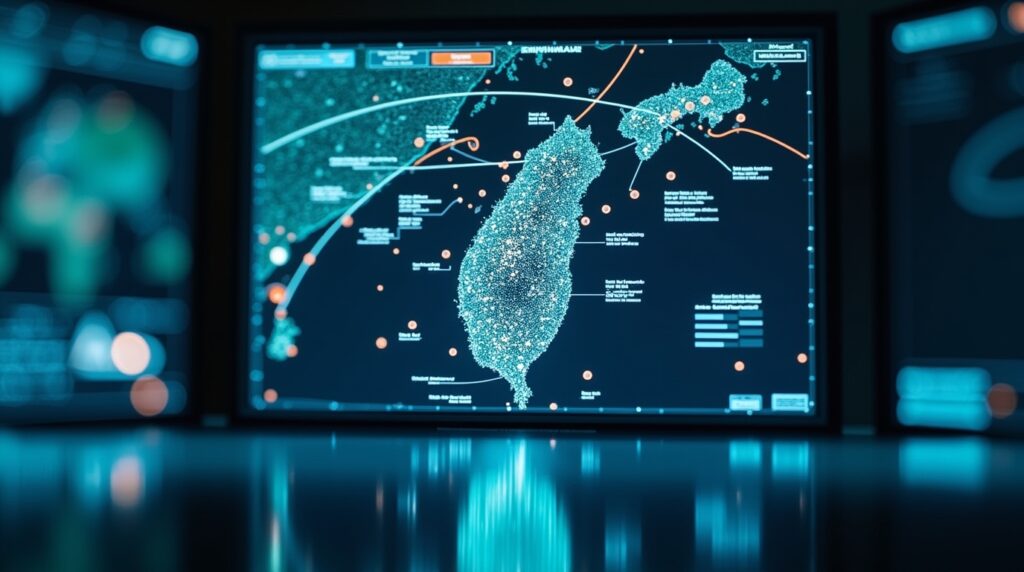
Beijing’s Geoeconomic Integration and “Malacca” Blueprint: Close-up of a maritime command centre radar display screen showing tactical naval tracking vectors in the Taiwan Strait. -
The Diplomatic “Peace Broker” Pivot: As unilateral U.S. and Israeli actions disrupted regional stability, China seized the diplomatic high ground. By dispatching Middle East envoy Zhai Jun to facilitate mediation, Beijing positioned itself as the rational, mediating global superpower. This carefully calibrated ambiguity allows China to deepen economic ties with Gulf states while framing the United States as a fundamentally destabilising force in global commerce.
Structural Realignments (2025–2026)
The short-term geopolitical shifts resulting from the conflict illustrate how quickly global dynamics can change when regional stability is disrupted:
| Nation | Strategic Advantage Gained (Past 12 Months) | Long-Term Geoeconomic Outcome |
| Russia | Sanctions relief on oil exports, massive unexpected budget revenues, and intelligence testing via proxy tracking. | Elimination of fiscal deficit; sustained capability for prolonged defence spending; diversion of Western military focus. |
| China | Access to discounted Iranian crude; real-time mapping of U.S. weapon systems and blockade strategies. | Acceleration of alternative trade routes; positioning as a primary diplomatic mediator in West Asia. |
| United States | Severe military entanglement; domestic stagflation risks; multi-front diplomatic gridlock. | Fractured alliances with key maritime trade partners; loss of unilateral leverage over critical supply chains. |
The Structural Legacy: The lasting impact of these conflicts is not found in the initial military maneuvers, but in the rapid weaponization of global feedstock, semiconductor components, and energy supply lines. By forcing a global economic realignment, the past year has demonstrated that heavy-handed interventions can inadvertently accelerate the transition toward a multipolar global order dominated by Washington’s primary rivals.
The Ultimate Nightmare: The Taiwan Double-Front Collapse
The gravest danger of an uncontrolled war with Iran is not located in the Middle East; it lies across the globe in East Asia.
Global geopolitics is a merciless game of multi-theatre chess. If the United States empties its munition stockpiles, drains its remaining strategic oil reserves, and pins its entire naval deployment inside the Persian Gulf, it leaves the rest of the globe completely unguarded.
Beijing is watching this play out with calculated patience. If China observes that the American military machine is entirely bogged down in a war of attrition with Iran, it creates the ultimate strategic window to launch an aggressive, full-scale unification campaign against Taiwan.
Should this double-front escalation occur, the global consequences would be immediate and catastrophic:
- The Global Tech Collapse: Taiwan produces over 90% of the world’s most advanced microchips. A conflict there would instantly halt the global production of everything from smartphones to medical equipment and automobiles.
- Total Military Overextension: The United States would find its supply lines fractured, forced to choose which vital theatre to abandon due to a lack of ready troops and ammunition.
Conclusion: Reality Check for the Warmongers
As President John F. Kennedy wisely stated during the height of the Cold War:
“Mankind must put an end to war, or war will put an end to mankind.”
— President John F. Kennedy
Donald Trump’s sudden shift toward diplomacy was not driven by humanitarian altruism. It was driven by cold, unyielding arithmetic. He looked at the depleted oil caverns, the ruinous air defence cost-curves, the shifting global currencies, the restless domestic voters, and the shadow of China waiting on the Taiwan front.
He realised that an escalatory war with Iran is a strategic trap designed to dismantle American global dominance. Iran recognised its leverage, Washington acknowledged its structural limits, and Netanyahu was abruptly reminded of his dependency. The grand illusion of total war has been shattered, paving the way for a complex Trump-Iran deal that Netanyahu must ultimately yield to under the unyielding realities of the 21st century.
Frequently Asked Questions (FAQs)
1. Why is the Strait of Hormuz considered such a powerful weapon for Iran?
The Strait of Hormuz is the world’s most critical energy chokepoint, with roughly 20% to 30% of global oil and liquefied natural gas passing through it daily. Because it is highly narrow, Iran does not need a large navy to close it; they can use deeply buried anti-ship missiles and cheap sea mines to halt all commercial shipping. This would immediately trigger a catastrophic global energy shortage and economic collapse.
2. What did Trump mean by telling Netanyahu, “I am the boss”?
Trump was reasserting the absolute structural hierarchy of the U.S.-Israel alliance. Because Israel relies almost entirely on American financial aid, weapon resupplies, and diplomatic vetoes at the United Nations to sustain its military operations, Trump was reminding the Israeli leadership that they cannot make unilateral decisions that endanger American economic and electoral interests.
3. How do U.S. Mid-Term elections affect foreign military policy?
In the U.S., the entire House of Representatives is voted upon every two years. If foreign wars cause domestic gas prices and inflation to spike, voters will punish the President’s party by voting them out of Congress. If the President loses Congress, they lose control of the national budget and legislative power, rendering them politically paralysed at home.
4. Why are Western air defence systems facing a crisis against cheaper drones?
Modern warfare suffers from an asymmetric cost problem. Adversarial attack drones cost as little as $20,000 to produce, whereas the sophisticated Western interceptor missiles used to destroy them cost between $2 million and $4 million per shot. This allows adversaries to economically deplete and bankrupt Western military stockpiles simply by launching waves of cheap, mass-produced projectiles.
5. What is the link between a war with Iran and a Chinese invasion of Taiwan?
The U.S. military does not possess infinite resources. If the U.S. depletes its advanced missile stockpiles, drains its oil reserves, and commits its naval fleets to a major war with Iran, it creates a severe power vacuum in East Asia. China could exploit this moment of American overextension to launch a military campaign against Taiwan with minimal fear of a strong U.S. intervention.
6. What is the “Petrodollar” and why does it matter to this conflict?
For decades, global oil has been traded almost exclusively in U.S. Dollars, requiring countries worldwide to hold vast reserves of American currency, which keeps the U.S. economy uniquely powerful. If major conflicts force oil-producing nations to bypass the dollar and sell oil in other currencies (like the Chinese Yuan), the U.S. Dollar will lose its global dominance, severely devaluing the wealth of everyday American citizens.
Expert Perspective (EP) Statement: As a retired military officer and investigative analyst, I have tracked the structural mechanics of modern warfare from traditional deterrence to today’s lopsided wars of attrition. This detailed timeline reveals a hard reality: tactical air dominance cannot override brutal economic realities. When mass-produced, low-cost drone waves can drain multi-million dollar air defense systems, and a single geographic bottleneck can choke global energy markets, conventional power projection hits its absolute limit.