
Why Iran Refuses to Break: Nukes, Sanctions, and the Double Standards Fueling a Middle East Standoff
Why Iran Refuses to Break. Despite sanctions, assassinations, and military strikes, Iran remains one of the most resilient states in the Middle East. The question is no longer whether Tehran can survive pressure; it is why decades of pressure have failed to change its strategic behaviour.
https://mrpo.pk/trumps-secretive-deal-talks-new-iran-gamble-israels-anxiety/
As tensions between Iran, Israel, and the United States continue to reshape the region, understanding the motivations, fears, and calculations behind all sides has become essential. This article examines the military, political, and nuclear dimensions of one of the world’s most dangerous rivalries.
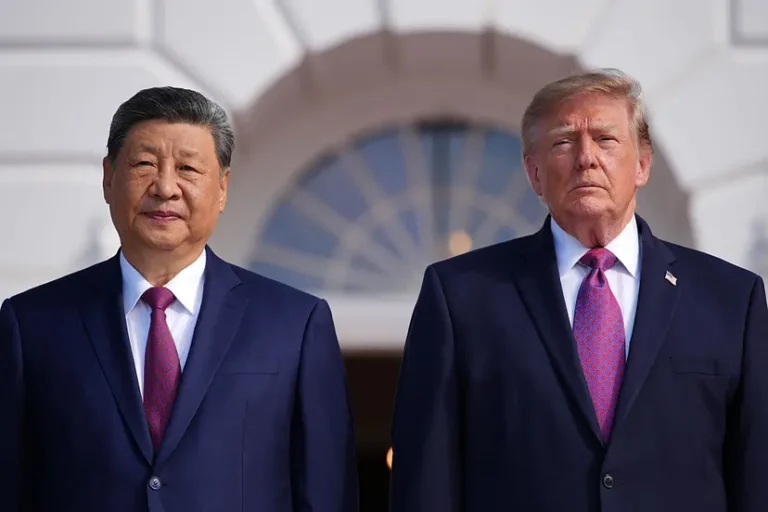
Trump ends Iran meeting without announcing ‘final determination’ on deal
President Donald Trump ended a meeting in the White House Situation Room without announcing his final decision on whether to approve a deal to pause the three-month-old Iran war, an administration official told CNBC on Friday afternoon.
Trump earlier Friday said on Truth Social that he would be making his “final determination” during that meeting, after listing everything that Iran must do for him to approve a deal.
Iran “must agree” to never have a nuclear weapon, and the Strait of Hormuz must be “immediately open” to unrestricted shipping traffic, with no tolls being imposed, Trump demanded in the Friday morning post.
He also said the retaliatory U.S. naval blockade against Iran in the Gulf of Oman “will now be lifted,” though it was unclear if he meant that step would only be taken if the prior conditions were met.
Trump also stated that enriched material buried at the site of last year’s attacks on Iran’s nuclear facilities will be “unearthed” by the U.S., in close coordination and conjunction with the Islamic Republic of Iran, plus the International Atomic Energy Agency, and DESTROYED.”
“No money will be exchanged, until further notice,” Trump added. “Other items, of far less importance, have been agreed to.”“I will be meeting now, in the Situation Room, to make a final determination,” he said.
Understanding Iran’s Resilience After Military Strikes and Sanctions
The Punches That Didn’t Knock Iran Out
For decades, Iran has faced international sanctions, covert operations, cyberattacks, targeted assassinations, and military pressure. Yet the Islamic Republic remains intact, its regional influence persists, and its nuclear program continues to generate international concern.
The events of 2024 and 2025 offer a clear illustration of this resilience.
Two Direct Military Confrontations in Twelve Months
April 2024: Iran’s Direct Response to Israel
Following the strike on Iran’s consulate in Damascus, Tehran launched approximately 350 drones and missiles toward Israel. The attack marked a significant escalation, representing Iran’s first direct large-scale strike against Israeli territory.
June 2025: Strikes on Iran’s Nuclear Infrastructure
In June 2025, Israel and the United States targeted major Iranian nuclear facilities, including Fordow, Natanz, and Isfahan. Several senior Islamic Revolutionary Guard Corps (IRGC) commanders and military leaders were reportedly killed.
While President Donald Trump described Iran’s nuclear program as “obliterated,” subsequent intelligence assessments suggested that significant portions of Iran’s enriched uranium stockpile survived underground.
Why Iran Did Not Collapse
Sanctions Created a Culture of Strategic Endurance
Years of economic restrictions have shaped what many Iranian analysts describe as “strategic patience.” Rather than forcing capitulation, sanctions have encouraged a national mindset centred on survival and resistance.
For Tehran, enduring pressure is often presented domestically as a strategic victory.
Hardliners Replaced Pragmatists
The 2025 strikes weakened parts of Iran’s more pragmatic political and military establishment. Many analysts argue that the resulting leadership transition strengthened hardline factions that are less inclined toward compromise with Western powers.
Rather than moderating Iranian policy, external pressure may have reinforced the influence of those advocating resistance.
Military Capabilities Recovered Faster Than Expected
Intelligence assessments indicate that substantial portions of Iran’s missile launchers, drone fleet, and coastal defence systems remained operational after the strikes.
According to international nuclear monitoring assessments, Iran could potentially resume limited uranium enrichment activities within months if sufficient infrastructure remains intact.
Why Iran Refuses to Break: Iran’s Missile Capabilities Continue to Evolve
Iran has invested heavily in missile technology, emphasising precision, survivability, and reduced warning times.
Recent assessments suggest that newer missile systems can:
- Reduce interception response times.
- Improve targeting accuracy.
- Increase operational flexibility.
- Complicated regional missile defence systems.
For Tehran, missiles remain a critical deterrent against conventionally superior adversaries.
The Strait of Hormuz: Iran’s Strategic Leverage
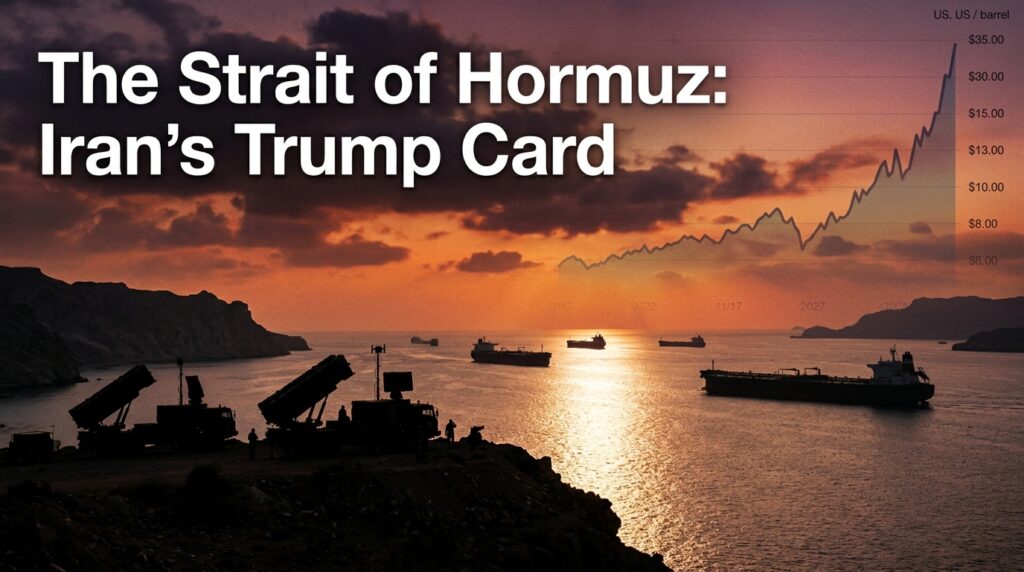
Iran’s most powerful geopolitical tool may not be its missiles or nuclear infrastructure but its location.
The Strait of Hormuz handles roughly one-fifth of global oil shipments. Any serious disruption could immediately affect energy markets worldwide.
This geographic reality significantly increases the potential economic cost of any large-scale military campaign against Iran.
Iran’s Regional Allies Versus America’s Gulf Partnerships
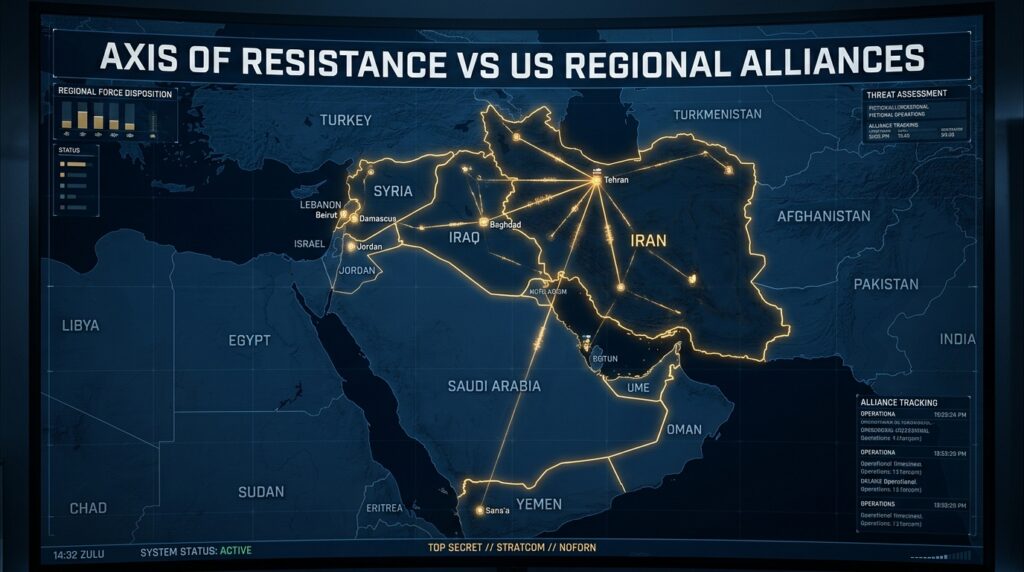
The “Axis of Resistance”
To compensate for conventional military disadvantages, Iran has spent decades cultivating a network of allied movements and armed groups across the Middle East.
These relationships were largely developed through the IRGC Quds Force and include:
Hezbollah in Lebanon
Often regarded as the most capable non-state military actor in the region, Hezbollah remains Iran’s most significant strategic partner.
The Houthis in Yemen
The Houthis have demonstrated the ability to target Red Sea shipping routes and launch long-range attacks beyond Yemen’s borders.
Iraqi Shia Militias
Groups such as Kata’ib Hezbollah have historically focused on opposing American military presence in Iraq and remain closely aligned with Tehran.
Hamas and Palestinian Islamic Jihad
Although organizationally independent, both groups have maintained varying levels of cooperation with Iran.
Syria
The government of President Bashar al-Assad has long been one of Tehran’s most important state allies.
A Network, Not a Unified Army
Analysts frequently note that the “Axis of Resistance” operates as a decentralised network rather than a centrally controlled alliance.
This structure provides flexibility but can also limit coordinated responses during major crises.
The Gulf States and American Military Presence
On the opposite side of the regional security architecture are Gulf Cooperation Council (GCC) states hosting significant American military assets.
These include:
- Qatar – Home to Al Udeid Air Base.
- Bahrain – Headquarters of the U.S. Fifth Fleet.
- United Arab Emirates – Host of Al Dhafra Air Base.
- Saudi Arabia – Longstanding U.S. security partner.
The fundamental divide is clear: Iran’s security strategy relies heavily on non-state partners, while the United States relies on formal alliances with recognised governments.
The Nuclear Question That Refuses to Disappear
What Survived the 2025 Strikes?
One of the central debates following the June 2025 attacks concerns the fate of Iran’s enriched uranium stockpile.
Reports indicate that while facilities suffered substantial damage, portions of Iran’s uranium inventory may have remained buried but intact beneath damaged infrastructure.
Why Enriched Uranium Matters
The primary international concern is not merely possession of uranium but enrichment levels.
Iran’s stockpile of uranium enriched to 60 per cent purity remains particularly controversial because:
- It is significantly closer to weapons-grade material.
- Further enrichment requires less time.
- It potentially shortens nuclear breakout timelines.
The Difference Between Capability and Possession
A crucial distinction often overlooked in public debate is the difference between:
- Possessing a nuclear weapon.
- Possessing the capability to rapidly build one.
The International Atomic Energy Agency (IAEA) has not publicly concluded that Iran currently possesses an operational nuclear weapon.
However, concerns persist regarding how quickly Iran could potentially move toward weaponisation if it chose to do so.
The Fatwa Versus Verification Debate
Iran’s leadership has repeatedly argued that nuclear weapons are religiously forbidden under a fatwa issued by Supreme Leader Ali Khamenei.
Critics counter that international verification mechanisms depend on inspections and transparency rather than religious declarations. This tension lies at the heart of the dispute between Tehran and many Western governments.
Israel’s Nuclear Ambiguity and the Debate Over Double Standards
Israel’s Policy of Nuclear Ambiguity
Unlike Iran, Israel never joined the Nuclear Non-Proliferation Treaty (NPT).
For decades, Israel has maintained a policy often described as “nuclear ambiguity,” neither officially confirming nor denying possession of nuclear weapons.
Independent estimates generally suggest that Israel possesses a nuclear arsenal, though exact numbers remain uncertain.
Why Iran Faces Sanctions While Israel Does Not
The Legal Argument
Iran signed the Nuclear Non-Proliferation Treaty and accepted inspection obligations.
Israel never became a treaty member.
Supporters of current international policy argue that Iran is judged according to commitments it voluntarily accepted, whereas Israel cannot technically violate a treaty it never joined.
The Political Argument
Critics argue that geopolitical alliances, rather than legal principles alone, explain the difference in treatment.
They point to the close strategic relationship between Israel and the United States as a major factor influencing international responses.
Growing Debate Within Western Institutions
Questions regarding consistency in nuclear non-proliferation policy are increasingly being raised within Western political circles. Some lawmakers, analysts, and international observers argue that long-term regional stability requires a more uniform approach toward all nuclear-capable states in the Middle East.
Can a Nuclear-Free Middle East Ever Become Reality?
The Middle East Nuclear-Weapon-Free Zone Proposal
The idea of a nuclear-weapon-free Middle East has existed for more than five decades.
The proposal would require:
- Universal regional participation in the NPT.
- Comprehensive IAEA inspections.
- Elimination of all nuclear weapons programs in the region.
- Equal verification standards for all states.
Why the Proposal Keeps Failing
Israel Wants Peace First
Israel argues that broader regional peace and recognition must precede discussions about its strategic deterrent.
Arab States and Iran Want Disarmament First
Many regional governments argue that lasting peace requires addressing nuclear asymmetry before broader normalisation.
Deep Mutual Distrust
Repeated wars, proxy conflicts, assassinations, and military strikes have left all parties reluctant to make the first concession.
Great-Power Politics
The involvement of external powers, particularly the United States and Russia, adds another layer of complexity to any regional arms-control framework.
Key Takeaways
Iran’s Survival Strategy
Iran’s resilience stems from a combination of strategic geography, ideological commitment, military adaptation, and decades of experience operating under pressure.
The Nuclear Dispute Is About More Than Weapons
The debate is not solely about whether Iran possesses a bomb. It is also about deterrence, trust, inspections, regional power balances, and competing interpretations of international law.
The Double-Standard Debate Is Expanding
Questions regarding Israel’s undeclared nuclear capabilities and Iran’s treaty obligations increasingly influence discussions about fairness, credibility, and non-proliferation policy.
The hypocrisy charge is going mainstream
This isn’t just Iran’s complaint anymore. US Congress, Aug 2025: 30 Democrats told the State Department that “a policy of official ambiguity… makes coherent nonproliferation policy in the Middle East impossible”. They asked: “What nuclear weapons capability does Israel have?” including warheads, doctrine, and red lines.
EU Parliament, Nov 2023: Asked to freeze the EU-Israel Association Agreement until Israel discloses its program and lets the IAEA into Dimona.
Triggered after Israeli minister Amichai Eliyahu said dropping “some kind of atomic bomb” on Gaza was “an option”. Analyst Walter Pincus: “Israel’s stance on nuclear arms complicates efforts against Iran”.
Gawdat Bahgat: Iran’s program is “partially formed on the potential threat of a nuclear Israel”.
Middle East Nuclear-Weapon-Free Zone. The idea is 50 years old. Iran and Egypt proposed it at the UN in 1974. It would mean:
- Every state in the region gives up nukes.
- Everyone joins the NPT.
- All nuclear sites go under IAEA watch, including Israel’s Dimona. Iran renewed the call at the UN in 2025: “Such a zone will be possible should the US hold Israel to account through making it accede to the NPT… and put all its weapons and facilities under IAEA safeguard”.
Frequently Asked Questions
1. Does Iran have nuclear weapons right now?
No. The IAEA has not found evidence that Iran built a bomb. But Iran has 440.9 kg of 60% enriched uranium as of June 2025. At that level, breakout to weapons-grade 90% could take “days to weeks”. “A bit more than 200 kg” is believed to have survived the strikes.
2. Why doesn’t the US force Israel to sign the NPT?
Because of alliance politics and US law. Israel refuses absent regional peace. A US executive order bans officials from confirming Israeli nukes, which prevents triggering aid cutoff laws. The US voted against the 2016 UN resolution calling on Israel to join the NPT.
3. Is Iran’s Supreme Leader’s fatwa against nukes legally binding?
No. A fatwa is a religious ruling, not a treaty. The NPT is legally binding. IAEA can’t verify a fatwa, but it can verify uranium. That’s why inspections matter to the US/EU.
5. Why did Trump say Iran’s program was “obliterated” if uranium survived?
US intelligence assessed the strikes “buried much of Iran’s highly enriched uranium stockpile at Isfahan, but didn’t destroy it”. IAEA chief Grossi said “annihilated is too much”, but facilities suffered “enormous damage”. The difference is between destroying buildings and destroying material.
The Core Problem Remains Unresolved
Until regional powers agree on a common security framework, the Middle East is likely to remain trapped between competing fears:
- Iran fears encirclement and regime change.
- Israel fears existential threats.
- Gulf states fear regional instability.
- The United States fears nuclear proliferation.
As a result, sanctions continue, military deterrence expands, and the search for a lasting solution remains elusive.
References
1. Daily Maverick – Iranian resilience and pain threshold
2. Reuters – Iran’s 60% uranium stock and IAEA assessment post-strikes
3. CNN – Breakout time from 60% to 90% and uranium not destroyed
4. IISS – Strikes “significantly disrupted” but didn’t destroy key facilities
5. Haaretz – US policy of ambiguity makes nonproliferation “impossible”
6. UN Press – 2016 vote on Middle East NWFZ: 147-6
7. Wikipedia MENWFZ – Israel only non-party to NPT in region
8. Jerusalem Post – Axis of Resistance as “loose network”
9. Reuters – Iran’s 60% stock enough for 10 weapons