
The Price of Friendship: The Asymmetry in US-Pakistan Relations
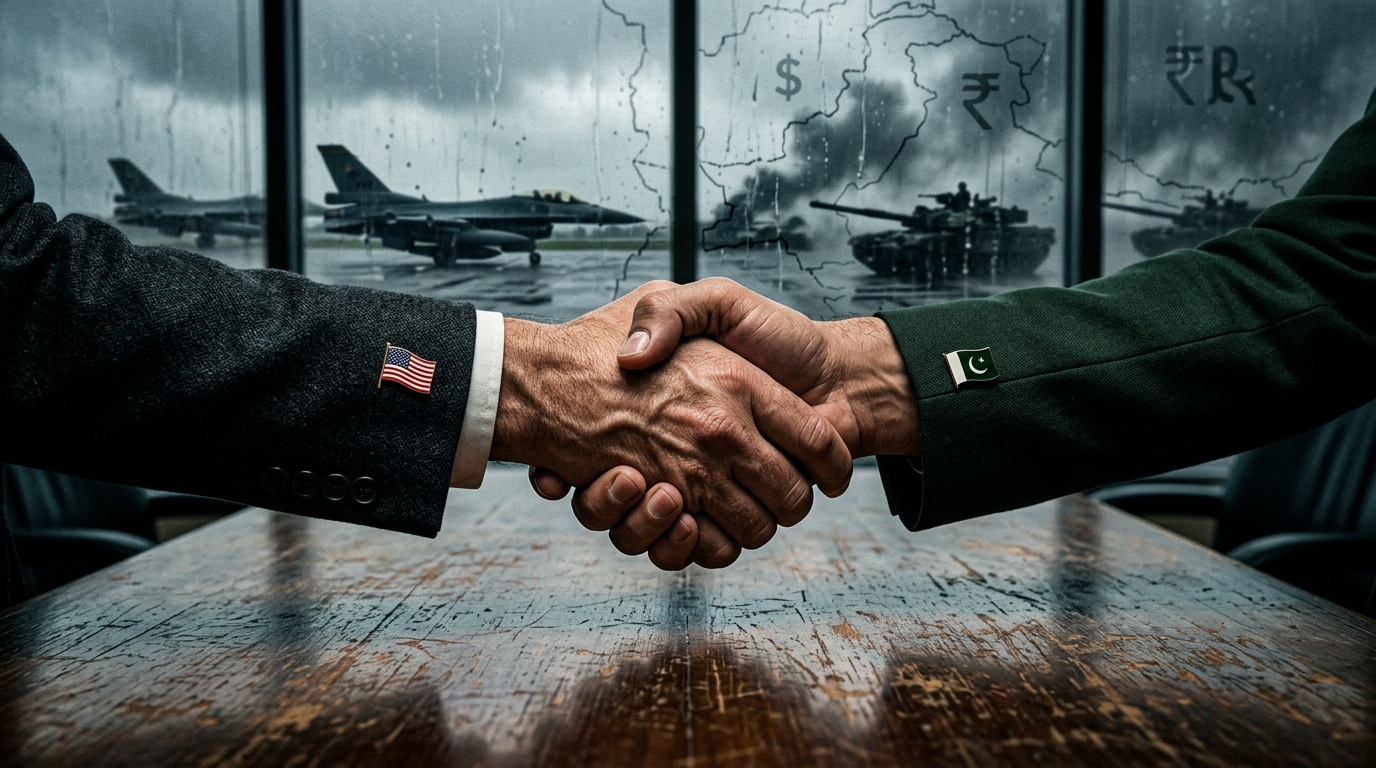
The price of friendship. For decades, the relationship between the United States and Pakistan has been a global political rollercoaster. To the outside world, it is often described using grand terms like “major non-NATO ally” or “true friendship.” But a closer look at history reveals a very different blueprint.
https://mrpo.pk/pakistan-in-the-global-spotlight/
“States have no permanent friends or allies; they only have permanent interests.”
— Lord Palmerston
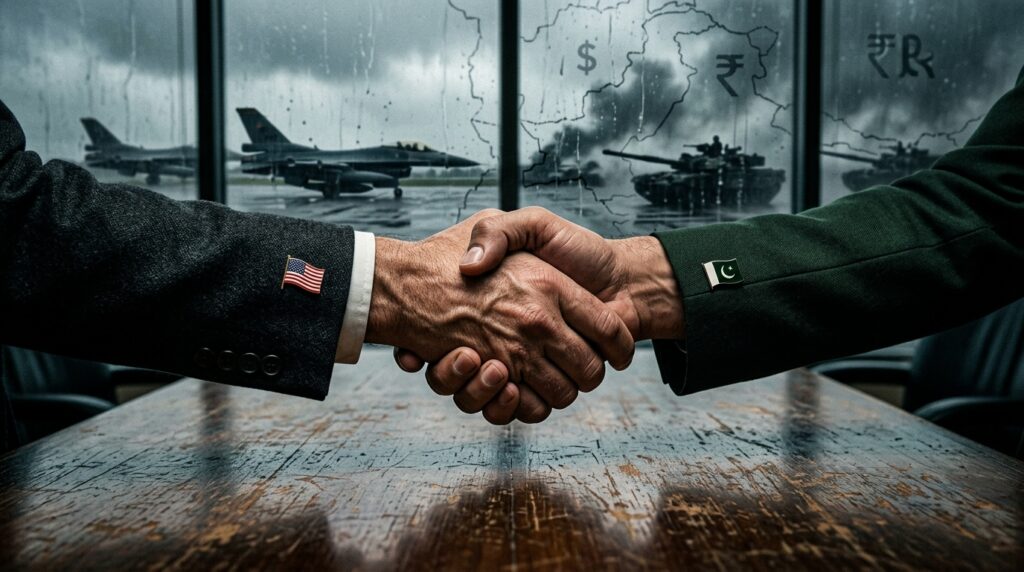
The Asymmetry in US-Pakistan Relations. This connection is rarely built on mutual trust. Instead, it is a highly transactional partnership. When Washington faces an international crisis, Pakistan becomes an indispensable strategic partner. But when the dust settles, the patterns remain exactly the same: the superpower moves on, leaving Islamabad to manage the long-term domestic and regional fallout alone.
Article Purpose and Editorial Philosophy
The purpose of this article is to provide a clinical, evidence-based analysis of the historically transactional and episodic nature of U.S.-Pakistan relations. It seeks to demonstrate how bilateral alignments have traditionally prioritised immediate global security imperatives over long-term democratic stability or mutual trust.
The Historical Blueprint: Security Rents and Democratic Detours
The peaks of U.S.-Pakistan alignments have systematically bypassed Pakistan’s democratic evolution. For Washington, a centralised, non-democratic executive has historically offered a faster, more predictable mechanism for executing immediate security agendas.
The Cold War and the Containment Era (1950s–1960s)
Seeking a bulwark against Soviet expansionism in Asia, the U.S. brought Pakistan into its security architecture through the Southeast Asia Treaty Organisation (SEATO) in 1954 and the Central Treaty Organisation (CENTO) in 1955.
Friends Not Masters
-
- Cold War Alliance: The U.S. praised Ayub Khan for opening Pakistan to Western military alliances—specifically the Central Treaty Organisation (CENTO) and Southeast Asia Treaty Organisation (SEATO)—and for providing critical airbases to monitor the Soviet Union. [1, 2, 3]
- Economic Development: His era is frequently referred to as a “Decade of Development.” Western leaders, including U.S. President John F. Kennedy and World Bank President Robert McNamara, widely praised Pakistan’s economic growth, often citing it as a model for the developing world. [1]
- Infrastructure and Aid: The U.S. strongly supported Ayub Khan’s infrastructure projects. He was praised for the construction of the Mangla Dam, which was heavily funded and assisted by the United States through the Indus Basin Development Fund.
- [1]https://encrypted-vtbn1.gstatic.com/video?q=tbn:ANd9GcRmRESOBLgwxF3aQ0LcGvSsq-eT3erMWdxsdwtETYmQYlKpzwP4
While the U.S. administration praised Ayub Khan’s autocratic stabilisation of Pakistan, the relationship was primarily transactional. The dynamic shifted and cooled significantly in the mid-1960s when the U.S. increased military assistance to India following the 1962 Sino-Indian War, a move that Ayub Khan actively opposed and warned against. [1, 2, 3]
General Ayub Khan’s 1967 autobiography, Friends Not Masters, serves as a foundational text for understanding the transactional nature of the U.S.-Pakistan alliance. Writing while still in office, Ayub Khan detailed his disillusionment with a partnership he felt was often one-sided.
This alliance deepened significantly under Pakistan’s first military regime, led by General Ayub Khan. In his autobiography Friends Not Masters, Ayub Khan noted that by 1954, Pakistan was compelled to align with the West in the interest of its security. The U.S. valued Ayub Khan’s centralised authority for its predictability. In exchange for military and economic aid, Pakistan allowed the U.S. to establish the Badaber surveillance base near Peshawar to fly U-2 spy planes deep into Soviet airspace.
Yet, Ayub Khan famously cautioned that developing nations seek assistance based on mutual respect; they want “friends, not masters.” The transactional nature of the bond became evident during the 1965 Indo-Pakistani War. Despite Pakistan’s alliance status, Washington declared neutrality and imposed an arms embargo on both nations. Because Pakistan was almost entirely reliant on American hardware, the embargo severely degraded its defence capabilities, leaving a lasting impression of U.S. unreliability within the Pakistani state apparatus.
From “Masters” to “Bilateralism”: The Bhutto Challenge
While General Ayub Khan’s work expressed a polite disillusionment with the West, Zulfiqar Ali Bhutto’s The Myth of Independence (1969) fundamentally challenged the concept of strategic autonomy. Writing shortly after leaving government, Bhutto shifted the narrative from a plea for mutual respect to a cold demand for total geopolitical independence.
Bhutto introduced the concept of “Bilateralism,” arguing that Pakistan should maintain independent, parallel relationships with all global superpowers, including the U.S., the Soviet Union, and China, based strictly on Pakistan’s own domestic interests. He framed the U.S.-Pakistan relationship through the lens of neo-colonialism, contending that if a nation’s foreign policy is dictated by the global strategy of a superpower, that nation is independent in name only.
Stung by the 1965 arms embargo, Bhutto concluded that conventional alliances were inherently unreliable. He realised that true strategic autonomy required a self-reliant deterrent that did not depend on a foreign master’s spare parts or political whims. This logic directly spawned Pakistan’s nuclear project, famously driven by his declaration: “We will eat grass, even go hungry, but we will get one of our own.”
Comparison at a Glance
| Feature | Ayub’s Friends Not Masters | Bhutto’s The Myth of Independence |
| Tone | Disappointed, seeking fairness. | Defiant, seeking total autonomy. |
| View of Alliances | Necessary but frustrating. | A form of neo-colonial bondage. |
| China Relation | A cautious secondary option. | The primary strategic counterweight. |
| Goal | To be a respected ally. | To be a “Power” in its own right. |
The Afghan-Soviet War and the Pressler Trap (1979–1990)
The Soviet invasion of Afghanistan in December 1979 transformed Pakistan overnight from a sanctioned state into a vital frontline ally. Following the 1977 coup by General Zia-ul-Haq, the military regime faced intense international isolation. The Afghan crisis provided General Zia with immediate geopolitical legitimacy.
The U.S. channelled billions of dollars in covert funding, sophisticated weaponry (including Stinger missiles), and logistics through the CIA and Pakistan’s ISI to fund the anti-Soviet Mujahideen. Throughout the 1980s, the Reagan administration repeatedly waived non-proliferation laws to keep aid flowing to Islamabad, despite knowing Pakistan was actively developing its nuclear deterrent.
However, to appease a sceptical Congress, the Pressler Amendment was enacted in 1985. It mandated that most assistance to Pakistan would be suspended unless the U.S. President certified annually that Pakistan did not possess a nuclear explosive device.
As soon as Soviet forces withdrew from Afghanistan in 1989, Pakistan’s strategic utility to Washington evaporated. In October 1990, President George H.W. Bush refused to issue the Pressler certification. Aid was instantly frozen, and military sales were halted.
Under a mutually signed agreement, Pakistan had already paid roughly $658 million for 28 new F-16 fighter jets. Under the Pressler sanctions, the U.S. refused to deliver the aircraft, yet held onto the cash. The jets were parked in the Arizona desert, and the dispute dragged on for nearly a decade. The issue was only partially resolved in late 1998 when the Clinton administration agreed to return approximately $467 million, largely compensated via food commodities and technical offsets rather than a direct cash refund.
The sudden American exit left Pakistan to deal with the destabilising aftermath of the Afghan War alone, including a massive refugee crisis, an influx of sophisticated weaponry, and a raging civil war on its western border that eventually gave rise to the Taliban.
The War on Terror: The “Darling Friend” Redux (2001–2011)
The pattern repeated itself with precision following the September 11 attacks in 2001. Once again, Pakistan was ruled by a military leader, General Pervez Musharraf, who had seized power in a 1999 coup and faced Western sanctions. Following an ultimatum by the U.S., Musharraf aligned Pakistan completely with the U.S. global war initiative.
In exchange for logistical access, intelligence sharing, and military operations, the U.S. lifted all nuclear and coup-related sanctions. Billions of dollars in Coalition Support Funds (CSF) flowed into Islamabad, and in 2004, the U.S. formally designated Pakistan a Major Non-NATO Ally.
Despite the outward warmth, the relationship was plagued by deep mutual distrust. Washington accused Islamabad of playing a “double game” by harbouring the Afghan Taliban leadership, while Pakistan felt its immense sacrifices, losing over 70,000 citizens and billions in economic damage to domestic terrorism triggered by the alliance, were completely unappreciated. This era culminated in the unilateral U.S. raid that killed Osama bin Laden in Abbottabad in 2011, pushing ties to a historic low.
The Modern Horizon: The U.S.-Iran Peace Deal
President Donald Trump publicly thanked what he called Pakistan’s “great prime minister and field marshal, two fantastic people!!!” in a Truth Social post Friday praising Prime Minister Shehbaz Sharif and Pakistan’s military chief, Asim Munir.
Sharif quickly responded on X, “On behalf of the people of Pakistan, Field Marshal Syed Asim Munir, and on my behalf, I express my deep and profound appreciation for your kind and gracious words.”
The public exchange capped a remarkable rise for Munir, who has become one of the few foreign officials trusted both by Trump and by Iran’s security establishment.
The public statements from U.S. Secretary of Defence Pete Hegseth at the Shangri-La Dialogue—lauding Prime Minister Shehbaz Sharif and Chief of Defence Forces Field Marshal Asim Munir for their critical role in mediating the U.S.-Iran war peace negotiations- perfectly illustrate the current dynamic. Hegseth’s overt praise of a “true friendship” developing with Islamabad underscores the timeless reality of great-power diplomacy: tactical utility will always override ideological rhetoric.
The Realpolitik Exchange
When the U.S. found itself entangled in an armed conflict with Iran, threatening global energy corridors like the Strait of Hormuz, Washington’s immediate priority became finding an effective diplomatic circuit breaker. Because Pakistan served as the official interlocutor and successfully mediated the ceasefire agreements, the U.S. administration naturally showered the deal’s orchestrators with public praise.
For the setup in Islamabad, providing this vital diplomatic bridge to Washington serves as the ultimate geopolitical currency. The return on investment is immediately visible in two critical areas:
- The Economic Lifeline (IMF Cushioning): In an era where Pakistan’s economy is fragile, Western nodding is indispensable. The U.S. holds decisive voting power and structural influence within the International Monetary Fund (IMF). By becoming an indispensable strategic facilitator in the Middle East peace process, Pakistan ensures that Washington keeps the financial pipeline open, smoothing the way for vital bailout packages that keep the domestic economy from default.
- The Legitimacy Shield: High-level interactions and public accolades by the U.S. Defence Secretary provide the current administration and the military leadership with a powerful shield against domestic political pressure. It signals to domestic opponents that the international community fully endorses the current governance matrix, rendering domestic legal or political grievances secondary to global stability.
The Missing Links: The IP Pipeline and Cheap Energy
Despite the public praises, a critical gap persists in the current strategic discourse: the complete omission of tangible bilateral benefits that directly impact Pakistan’s industrial survival and its people.
The Iran-Pakistan (IP) Gas Pipeline
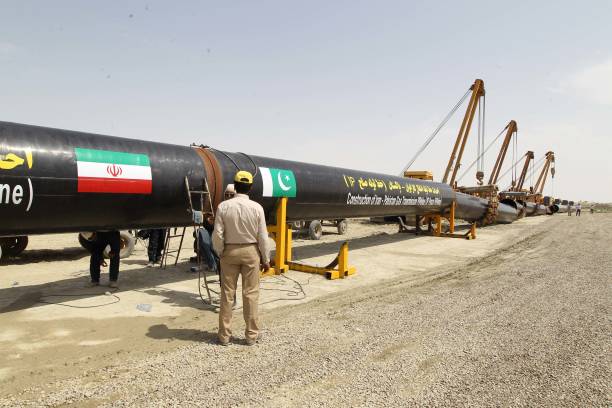
The Iran-Pakistan gas pipeline (the “Peace Pipeline”) represents the ultimate litmus test for Pakistan’s strategic autonomy. Pakistan’s local gas reserves are depleting rapidly, crippling industrial hubs in Karachi, Faisalabad, and Lahore. The IP pipeline is designed to supply 750 to 870 million cubic feet of gas per day, enough to single-handedly rescue Pakistan’s textile, fertiliser, and power-generation sectors.
While Iran completed its section of the pipeline years ago, Pakistan stalled construction on its 785-kilometre section due to the persistent threat of unilateral US secondary sanctions. This delay carries an $18 billion legal guillotine, as Iran holds the right to take Pakistan to the International Court of Arbitration for failing to complete its portion of the project.
By acting as the indispensable mediator brokering the 2026 US-Iran ceasefires, Pakistan’s absolute minimum diplomatic demand behind closed doors must be a specific US sanctions waiver to finally construct and operationalise the pipeline without triggering economic penalties.
Direct Import of Cheap Iranian Oil
The second missing link is the massive economic relief that direct, formal imports of Iranian crude oil would bring to ordinary Pakistani citizens. Currently, Pakistan imports the vast majority of its oil from the Gulf Arab states via maritime tankers. Importing oil directly from neighbouring Iran via land routes or short-distance coastal shipping would drastically cut freight costs, insurance premiums, and transit times.
Furthermore, due to Western sanctions restricting its global market access, Iran routinely offers its crude oil and petroleum products at steep discounts compared to international benchmarks. Transitioning to discounted Iranian oil would drastically reduce domestic petrol and diesel prices, curbing inflation and lowering production costs for the average citizen.
If Pakistan acts as the vital diplomatic bridge to defuse a global war yet returns from the negotiating table without securing a sanctions waiver for the IP pipeline or cheap energy imports, it will have repeated the exact historic pattern described by Zulfiqar Ali Bhutto: performing a high-risk security service for a superpower while leaving its own long-term industrial and economic survival in jeopardy.
Core Questions and Answers
1. Can Pakistan realistically sustain a “true friendship” with the United States without severely damaging its relations with China and its immediate neighbour, Afghanistan?
No, a completely uncritical alignment with the U.S. introduces severe regional friction. Unlike past decades, Pakistan’s long-term economic and infrastructure survival is deeply anchored to the China-Pakistan Economic Corridor (CPEC). Furthermore, the western border is increasingly hostile; Afghanistan’s leadership has actively engaged in defence pacts with Russia and security dialogues with India’s NSA Ajit Doval in Moscow following cross-border tensions. Pakistan must play a delicate balancing act rather than taking a definitive side.
2. In a highly transactional era that focuses strictly on economic value, what concrete leverage does Pakistan possess to secure favourable economic or trade concessions from Washington?
Pakistan’s primary leverage remains geographical and tactical, acting as a security gatekeeper or diplomatic mediator, as seen in the recent U.S.-Iran negotiations. However, in the modern landscape, this “security rent” has depreciated. Western nations are heavily focused on technology supply chains and high-value trade, areas where Pakistan currently lacks significant leverage.
3. Does external validation or economic padding from Western institutions (like the IMF) and the U.S. inadvertently allow Pakistani authorities to ignore pressing domestic economic reforms and political stability?
Yes. Historically, direct financial injections, CSF reimbursements, or smoothed IMF pathways have acted as temporary economic crutches. This allows the ruling elite to delay structural overhauls, such as expanding the tax net, restructuring the energy circular debt, or fostering local industrialisation, because the immediate crisis is temporarily padded by geopolitical rewards.
Frequently Asked Questions (FAQs)
Q1: What was the Salala Post Attack of 2011?
A: On November 26, 2011, U.S.-led NATO forces launched an unprovoked, 84-minute aerial assault on two Pakistani military border check-posts (“Boulder” and “Volcano”) in the Salala area of Mohmand Agency. The strike resulted in the martyrdom of 24 Pakistani soldiers, including Major Mujahid Mirani and Captain Usman Ali.
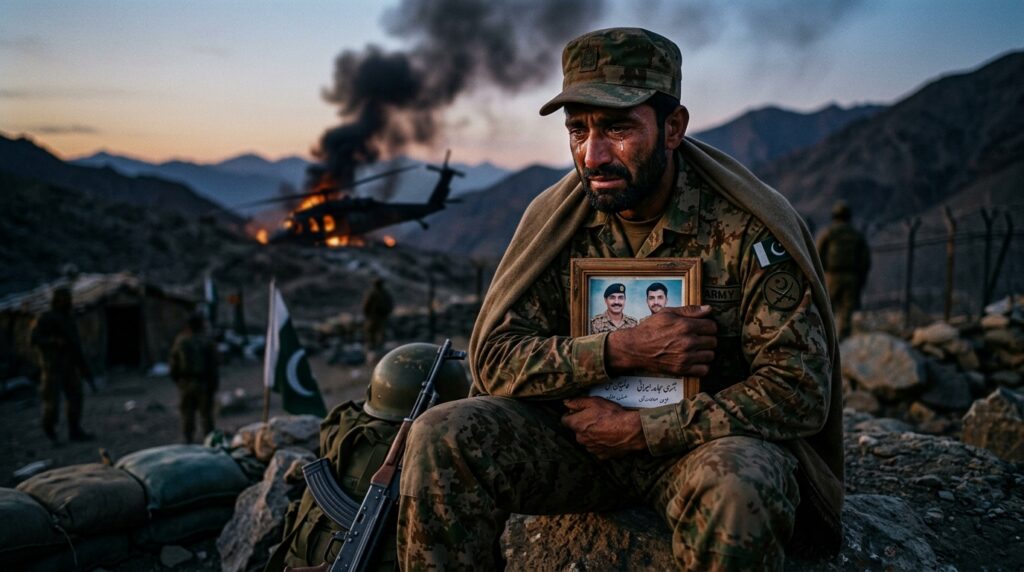
A: President Barack Obama refused to issue a direct personal apology for seven months due to domestic political considerations. Finally, on July 3, 2012, U.S. Secretary of State Hillary Clinton issued a statement saying “we are sorry for the losses suffered,” which Pakistan accepted to reopen blocked NATO supply lines. No direct financial compensation or reparations were ever paid to the families of the martyrs, though billions in previously frozen Coalition Support Funds were subsequently released.
A: Centralised or military-led regimes offer Washington rapid, top-down execution of strategic and security decisions without the political friction, parliamentary debates, or public dissent that typically characterise a fragmented civilian democracy.
A: Passed by the US Congress in 1985, the Pressler Amendment banned U.S. aid and military sales to Pakistan unless the U.S. President certified annually that Pakistan did not possess a nuclear explosive device. In 1990, following the Soviet withdrawal from Afghanistan, the certification was denied, freezing 28 F-16 fighter jets that Pakistan had already paid $658 million for.
A: Pakistan has acted as the primary mediator and diplomatic conduit to broker ceasefires and manage negotiations between Washington and Tehran. This has elevated Pakistan’s short-term strategic utility to the U.S., resulting in warm public praise from U.S. officials and smoother pathways for IMF financial packages.
A: Historically, there is a clear gap between Washington’s democratic rhetoric and its actual foreign policy practice. Whenever regional security imperatives (like the Cold War, the War on Terror, or Middle Eastern conflicts) arise, the U.S. consistently prioritises stability and tactical cooperation over the domestic state of human rights, rule of law, or democratic governance within Pakistan.
Editorial Philosophy (EP) Statement
-
Clinical Scrutiny: We prioritise evidentiary consistency and a neutral, investigative tone to establish professional credibility.
-
Geopolitical Realism: Our analysis frames international relations through the lens of tactical utility and national interest rather than ideological rhetoric.
-
Historical Accountability: We document past events, such as the Pressler Amendment, the F-16 dispute, and the Salala incident, to provide necessary context for modern diplomatic shifts.
-
Zero-Footprint Personalisation: While utilising expert-level insights, we ensure the narrative remains accessible and objective, avoiding personal bias to focus on documented strategic patterns.
References and Further Reading
- The Pressler Legacy: Kux, D. (2001). The United States and Pakistan, 1947-2000: Disenchanted Allies. Woodrow Wilson Center Press.
- The Post-9/11 Transactional Era: Musharraf, P. (2006). In the Line of Fire: A Memoir. Simon & Schuster.
- The Salala Incident & Diplomatic Standoff: Foreign Policy Review Committee Report (2012). Review of Engagement with U.S./NATO/ISAF. Ministry of Foreign Affairs, Islamabad.
- Recent Geopolitical Shifts (2026): US defense chief hails growing ‘true friendship’ with Pakistan amid Iran peace efforts. Anadolu Agency, May 30, 2026.
- Regional Security Dynamics: 2026 Iran war ceasefire framework and mediation pathways. IISS Shangri-La Dialogue Security Summit Proceedings, Singapore (May 2026).
For a deeper look into how these local political disruptions and border dynamics are viewed on the ground in Pakistan, you can watch the comprehensive video analysis on YouTube: US-Pakistan True Friendship & Economic Analysis.