
Iran Before 1979: Modernisation, Monarchy, and the Road to Revolution
Iran Before 1979: Modernisation, Monarchy, and the Road to Revolution. Discover what Iran was like before 1979. Explore the Pahlavi monarchy, the White Revolution, oil wealth, modernisation, and the forces that ultimately led to the Islamic Revolution.
https://mrpo.pk/iran-explained-from-ancient-persia-to-modern-geopolitics/
The Iranian revolution—A timeline of events
Iran’s Islamic Revolution shook the world in 1979, with currents that continue to be felt today. Decades later, the details of this watershed event—which redrew the geopolitical order in many ways—are worth recalling. On the eve of the revolution’s 40th anniversary, we here at Brookings have put together a timeline featuring key events that led to the fall of the Pahlavi dynasty and the rise of the Islamic Republic.
https://www.brookings.edu/articles/the-iranian-revolution-a-timeline-of-events/
“History rarely changes because of a single event. Revolutions are often the result of decades of progress, conflict, hope, and disappointment.”
For many people around the world, Iran is synonymous with the Islamic Revolution of 1979. Images of Ayatollah Ruhollah Khomeini, mass demonstrations, and the establishment of the Islamic Republic dominate popular perceptions of the country.
Yet an important question often goes unanswered.
What was Iran like before 1979?
The answer is far more complex than the contrasting narratives frequently presented in political debates. Some describe pre-1979 Iran as a modern, prosperous nation moving confidently toward the future. Others portray it as an authoritarian monarchy marked by inequality and political repression.
Both perspectives contain elements of truth.
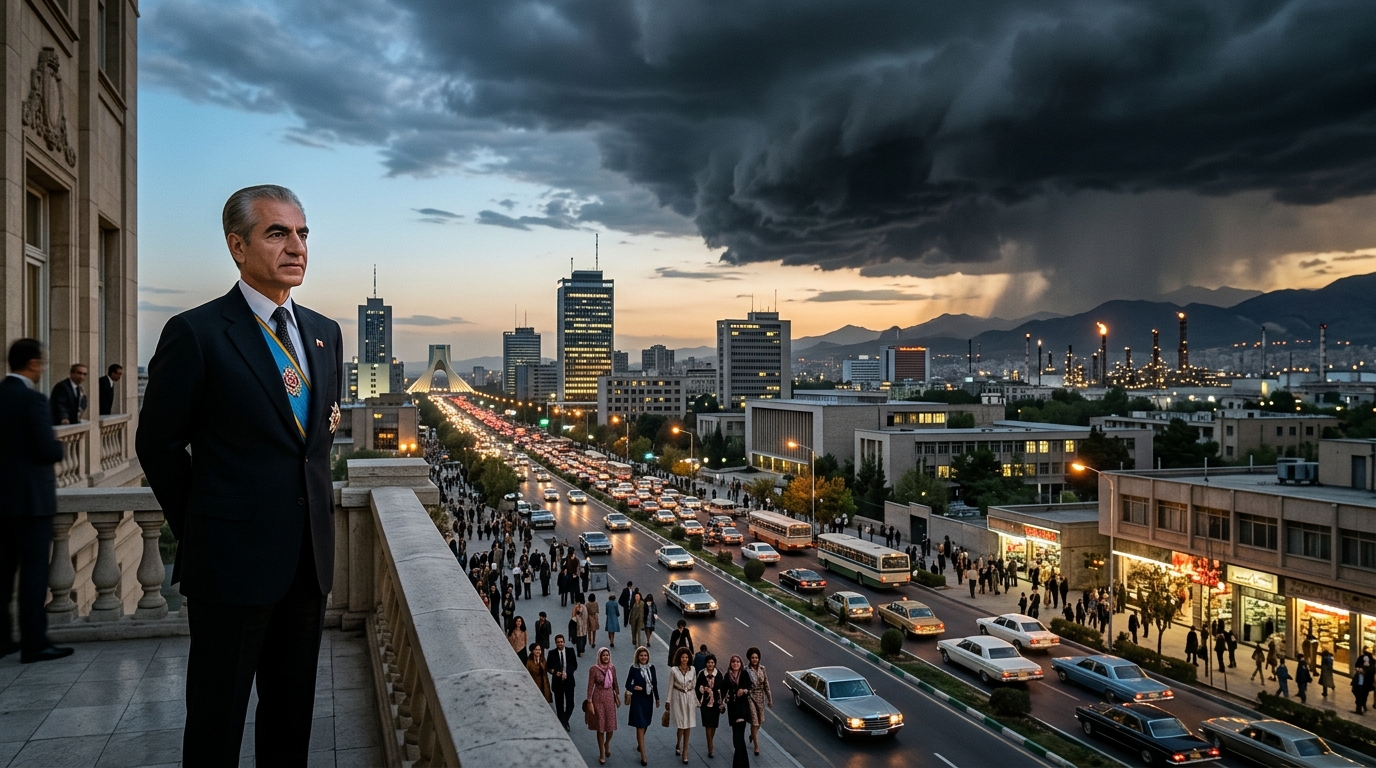
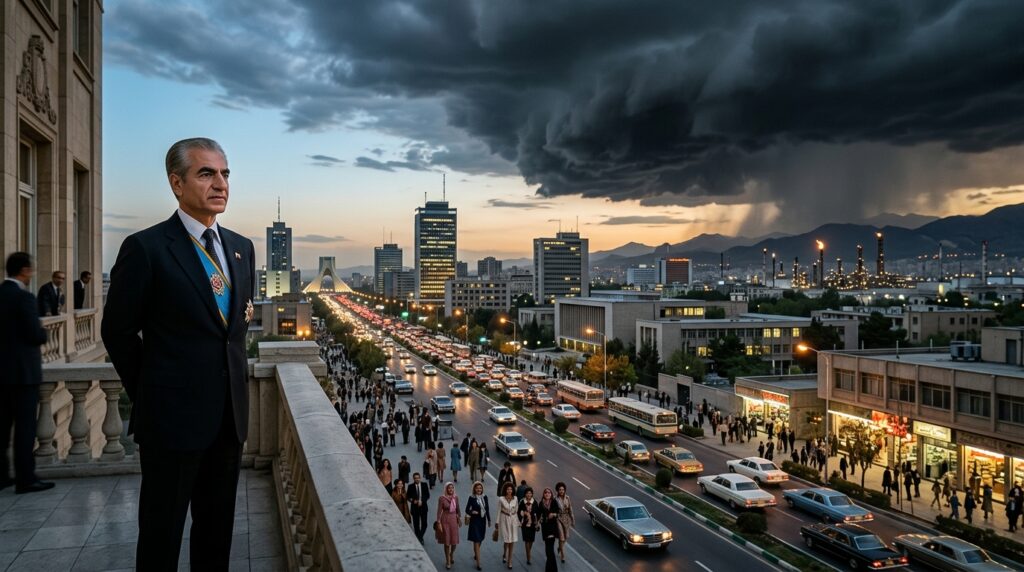
Before the revolution, Iran experienced one of the fastest periods of modernisation in the Middle East. Roads, universities, industries, hospitals, and modern infrastructure expanded rapidly. Education improved dramatically, women gained new legal rights, and oil revenues transformed the country’s economy.
At the same time, political freedoms remained limited. Economic development did not benefit everyone equally. Traditional religious institutions felt increasingly marginalised, while many ordinary Iranians believed that rapid modernisation was occurring without sufficient political participation or respect for cultural identity.
Understanding these competing realities is essential for understanding not only why the Islamic Revolution occurred but also why modern Iran continues to follow a unique political and social path.
This article explores the Iran that existed before 1979, a nation balancing ancient traditions with ambitious modernisation, remarkable economic growth with political tensions, and optimism about the future alongside growing public dissatisfaction.
The Rise of the Pahlavi Dynasty
Reza Shah Builds a Modern Nation
The collapse of the Qajar dynasty in the early twentieth century left Iran politically fragmented and economically weak.
Foreign powers, particularly Britain and Russia, exercised enormous influence over Iranian affairs. Tribal leaders controlled large parts of the countryside, infrastructure was underdeveloped, literacy remained low, and the central government struggled to exercise effective authority.
Into this environment stepped Reza Khan, a military officer whose determination and organisational abilities rapidly elevated him within Iran’s armed forces. In 1925, he became Reza Shah Pahlavi, founding the Pahlavi dynasty and launching one of the most ambitious modernisation programs in Iranian history. His vision was straightforward:
Build a strong, independent, modern nation capable of standing alongside the world’s leading powers.
Creating a Strong Central Government
One of Reza Shah’s priorities was restoring state authority. For centuries, many regions had operated with considerable autonomy under tribal chiefs and local rulers. Reza Shah believed that national unity required a powerful central government capable of enforcing laws consistently across the country.
His administration reorganised government ministries, strengthened the judiciary, expanded taxation systems, and created a professional civil service. Although these reforms reduced local autonomy, they also brought greater administrative stability to a country that had long experienced political fragmentation.
Iran Before 1979:Building the Foundations of Modern Iran
Modern nations require more than political authority; they require infrastructure. Recognising this, Reza Shah launched major public works projects that transformed Iran’s physical landscape. Road networks connected previously isolated provinces. Bridges linked remote communities. Telegraph and communication systems expanded.
Most importantly, construction began on the Trans-Iranian Railway, an engineering achievement stretching from the Caspian Sea in the north to the Persian Gulf in the south. Completed in 1938, the railway symbolised Iran’s determination to modernise through its own national effort rather than relying solely on foreign investment.
These infrastructure projects stimulated commerce, strengthened national integration, and enhanced military mobility.
Reforming Education
Reza Shah viewed education as the foundation of national progress. New primary and secondary schools were established across the country. Teacher training programs expanded. Modern curricula emphasised science, mathematics, engineering, and national history.
One of the most significant milestones came in 1934 with the establishment of the University of Tehran, Iran’s first modern university. The institution became a centre for higher education, producing doctors, engineers, lawyers, scientists, and administrators who would shape Iran’s development for decades.
Education also fostered a stronger sense of national identity by promoting the Persian language and teaching Iran’s rich pre-Islamic and Islamic history.
Strengthening National Identity
Unlike many leaders of the period, Reza Shah sought to reconnect modern Iran with its ancient Persian heritage. Historical monuments such as Persepolis received increased attention. National celebrations highlighted the achievements of Cyrus the Great, Darius I, and other figures from ancient Persia.
Persian language reforms encouraged greater linguistic standardisation.
These initiatives reflected the belief that national pride should be rooted in Iran’s long civilizational history while embracing modern institutions. For many Iranians, modernisation did not mean abandoning the past—it meant building upon it.
Expanding Opportunities for Women
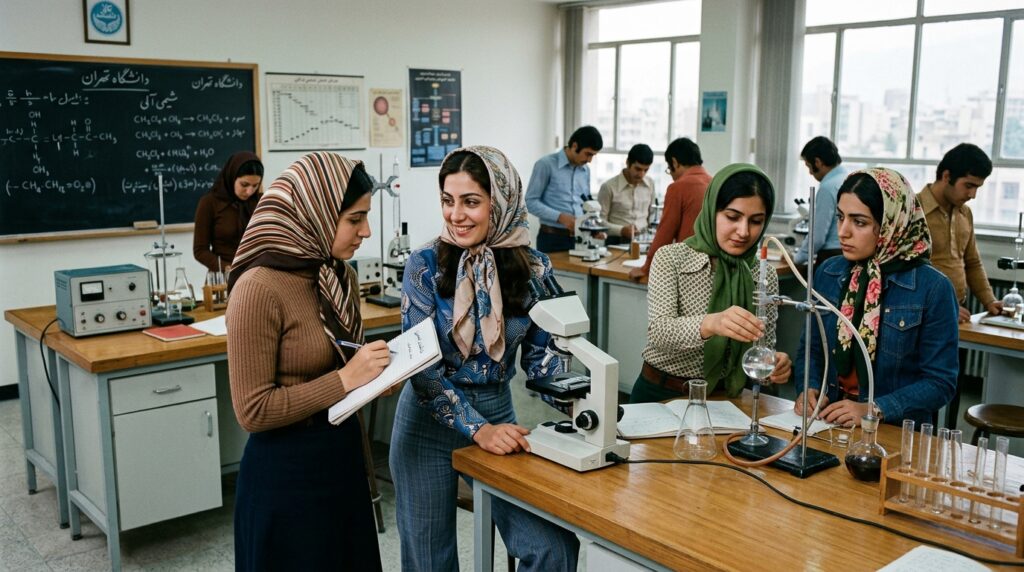
Reza Shah also introduced reforms affecting women’s education and public participation. Girls’ schools expanded throughout the country. Women increasingly entered professions such as teaching, nursing, and medicine. Government policies encouraged greater participation of women in public life.
One of the most controversial reforms was the 1936 decree discouraging the wearing of the traditional veil in public institutions. Supporters viewed the measure as promoting modernisation and gender equality. Critics regarded it as an unnecessary intrusion into personal and religious life.
The differing reactions illustrated a challenge that would become increasingly significant throughout the twentieth century:
How could Iran modernise while respecting its deeply rooted cultural and religious traditions?
Mohammad Reza Shah Takes the Throne
A Young King in a Changing World
The outbreak of the Second World War dramatically altered Iran’s political future. Although Iran declared neutrality, Britain and the Soviet Union feared that Reza Shah’s growing relationship with Germany might threaten Allied supply routes.
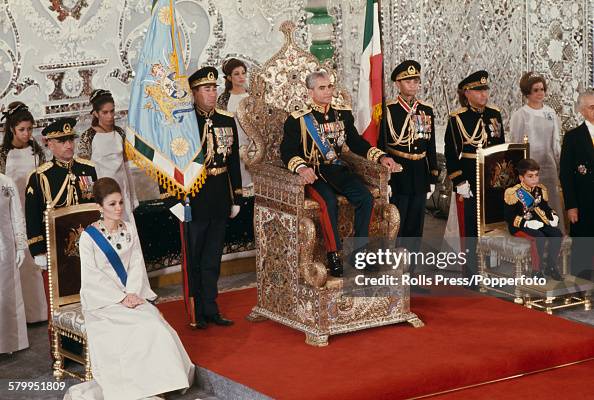
In 1941, Allied forces occupied Iran. Under intense pressure, Reza Shah abdicated the throne in favour of his twenty-one-year-old son,
Mohammad Reza Shah Pahlavi.
The young monarch inherited a nation undergoing rapid transformation but facing enormous geopolitical pressures. The Second World War had elevated oil to unprecedented strategic importance. The emerging Cold War further increased Iran’s significance because of its geographic position bordering the Soviet Union. Iran was no longer simply an ancient civilisation.
It had become one of the world’s most strategically important countries.
A Delicate Balance
Unlike his father, Mohammad Reza Shah initially possessed limited political authority. Power was shared among parliament, influential politicians, religious leaders, tribal elites, and foreign governments. For much of the 1940s and early 1950s, Iran experienced a lively political atmosphere. Numerous political parties emerged. Independent newspapers flourished. Public debates became increasingly energetic. Yet this openness also exposed deep disagreements over Iran’s future.
At the centre of these debates stood one issue above all others:
Oil.
The Oil That Changed Everything: Iran Before 1979
Iran’s Greatest Strategic Asset
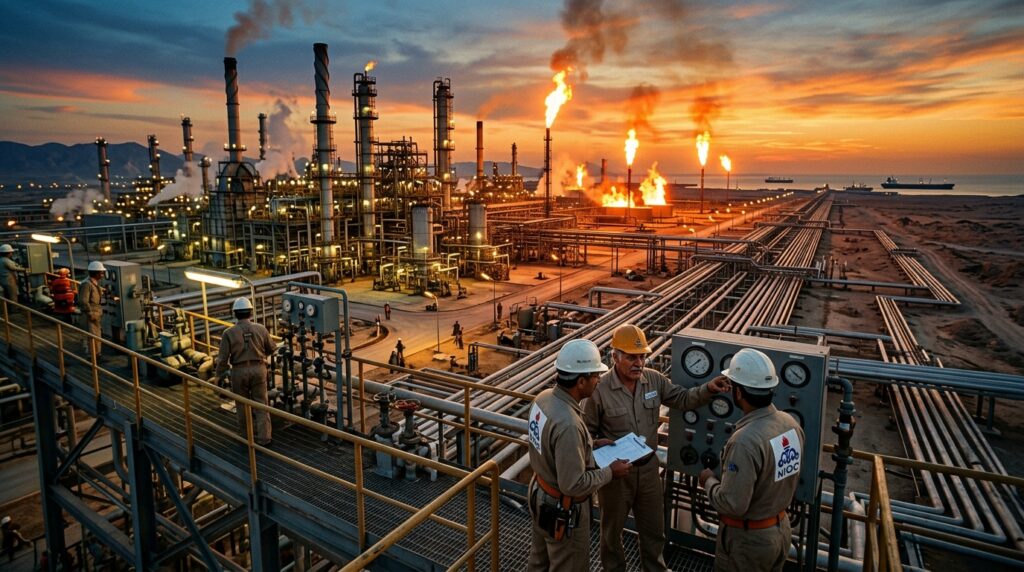
Few natural resources have shaped a nation’s destiny as profoundly as oil has shaped Iran’s. By the early twentieth century, enormous petroleum reserves had been discovered beneath Iranian soil.
The Anglo-Iranian Oil Company, later renamed BP, controlled much of the country’s oil production. Although Iran received revenue from oil exports, many citizens believed that foreign companies benefited disproportionately from the nation’s natural wealth. These concerns fueled growing nationalist sentiment.
Many Iranians argued that a country possessing one of the world’s richest energy reserves should exercise greater control over its own resources.
Mohammad Mossadegh and Oil Nationalisation
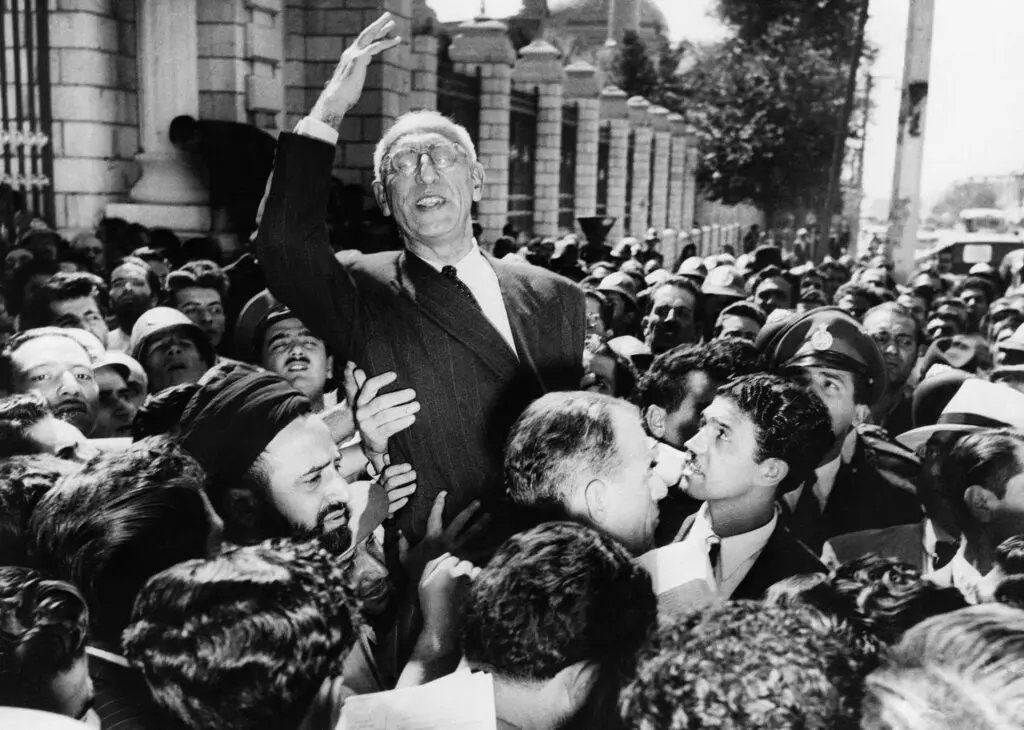
The movement reached its peak under Prime Minister Mohammad Mossadegh, one of Iran’s most respected nationalist leaders. In 1951, his government nationalised the Iranian oil industry. The decision generated enormous public support inside Iran. Many citizens viewed nationalisation as an affirmation of national sovereignty and economic independence.
However, the move also provoked a major international crisis. Britain imposed economic sanctions. Oil exports declined sharply. Political tensions intensified.
During the Cold War, the United States also became increasingly concerned that prolonged instability might strengthen communist influence in Iran.
The 1953 Coup
In August 1953, a coup removed Mossadegh from power. Historical records released over subsequent decades have confirmed the involvement of British intelligence and the U.S. Central Intelligence Agency in supporting elements that opposed Mossadegh’s government. The Shah, who had briefly left the country during the crisis, returned to Iran with significantly strengthened authority.
The events of 1953 became one of the defining moments in modern Iranian history. Supporters of the coup argued that it preserved political stability during a dangerous period of Cold War competition. Critics contend that it undermined Iran’s democratic development and fostered long-lasting distrust of foreign intervention. Regardless of one’s perspective, the consequences were profound.
The monarchy emerged considerably stronger.
Opposition movements became increasingly constrained. And the relationship between Iran and Western powers entered a new phase that would influence events leading up to 1979.
The White Revolution
A Bold Vision for Modernisation
By the early 1960s, Mohammad Reza Shah believed Iran needed faster and more comprehensive reforms. His answer was an ambitious national modernisation program known as the White Revolution. Unlike violent political revolutions, the White Revolution aimed to transform society through government-led reforms rather than armed conflict.
Introduced in 1963, the program sought to modernise agriculture, education, industry, healthcare, and public administration while accelerating economic growth. Supporters viewed it as one of the most ambitious modernisation efforts in the developing world. Opponents believed it concentrated too much power in the monarchy and disrupted traditional social structures.
Both interpretations continue to shape historical debate.
Land Reform
One of the White Revolution’s most significant initiatives redistributed large landholdings owned by wealthy landlords. Millions of acres were divided among tenant farmers. The objective was to reduce feudal land ownership, increase agricultural productivity, and improve rural living standards.
For many farming families, land ownership represented a historic opportunity. However, implementation proved uneven.
Some farmers lacked access to modern equipment, irrigation systems, or financial support, limiting the reforms’ long-term effectiveness.
Education for Every Village
Perhaps the White Revolution’s greatest success was education.
The government created the Literacy Corps, sending thousands of young graduates into rural communities to teach reading, writing, mathematics, and basic science. Villages that had never possessed formal schools suddenly welcomed trained instructors. Literacy rates rose steadily throughout the 1960s and 1970s.
A better-educated population also created greater expectations for employment, political participation, and social mobility, expectations that would later influence revolutionary sentiment.
Expanding Women’s Rights
The White Revolution significantly expanded women’s participation in public life. Women received the right to vote. They became eligible to run for public office. Educational opportunities increased dramatically.
More women entered universities, professions, and government service. Family protection laws introduced legal reforms affecting marriage and divorce, though these changes remained controversial among conservative religious leaders. For many urban families, these reforms represented meaningful social progress.
For others, they symbolised excessive Westernisation imposed from above rather than emerging through gradual social consensus.
Healthcare and Rural Development
The White Revolution also sought to improve healthcare. Medical teams were dispatched to underserved rural regions.
Vaccination campaigns expanded. New clinics and health centres were established. Programs addressing sanitation and clean drinking water improved public health outcomes in many communities.
These initiatives contributed to rising life expectancy and declining infant mortality.
Building a Modern Economy
Industrialisation accelerated under government planning. Factories producing automobiles, steel, cement, textiles, consumer goods, and machinery multiplied across the country. Large infrastructure projects continued to expand transportation networks, airports, ports, and electrical grids.
By the early 1970s, Iran was increasingly viewed as one of the Middle East’s fastest-modernising economies.
Yet modernisation alone could not answer every question facing Iranian society. As prosperity grew, so too did expectations and with them, new political, cultural, and religious debates that would eventually reshape the nation’s future.
In Part Two, we will examine Iran’s economic boom, everyday life during the 1960s and 1970s, the emergence of political opposition, and the growing forces that placed the monarchy on a collision course with revolution.
Iran Before 1979:The Oil That Changed Everything
Oil, Nationalism, and the Rise of Mohammad Mossadegh
By the late 1940s, Iran stood at the centre of one of the world’s most strategic industries, oil. Beneath its deserts and mountains lay immense petroleum reserves that fueled industries, navies, and economies across the globe. Yet despite this abundance, many Iranians believed they had become little more than spectators, while others profited from their national wealth.
The British-controlled Anglo-Iranian Oil Company (AIOC), the predecessor of today’s BP, dominated Iran’s oil industry. Although the company generated enormous revenues, critics argued that Iran received only a fraction of the profits. Living conditions for many Iranian workers in Abadan, then home to the world’s largest oil refinery, contrasted sharply with the prosperity generated by the oil fields.
Across Iran, a powerful question echoed through parliament, universities, bazaars, and newspapers:
“How can one of the world’s richest oil-producing nations remain economically dependent while others grow wealthy from its resources?”
The question gave rise to a movement that would redefine Iran’s modern history.
Mohammad Mossadegh: The Nationalist Who Challenged an Empire
In 1951, Dr Mohammad Mossadegh became Prime Minister of Iran with overwhelming support from Parliament and the public. Born into an aristocratic family and educated in European law, Mossadegh was a passionate believer in constitutional government, parliamentary democracy, and national sovereignty.
Unlike many politicians of his era, Mossadegh cultivated an image of simplicity and personal integrity. He rejected authoritarian rule and argued that the Shah should remain a constitutional monarch rather than an absolute ruler.
His political vision rested upon three principles:
- Constitutional rule under the 1906 Constitution.
- Democratic governance through Parliament.
- Iranian ownership of Iranian resources.
To millions of Iranians, he became the embodiment of national dignity.
“The wealth beneath Iran’s soil belongs first to the Iranian people.”
Although expressed in different forms throughout his speeches, this principle became the defining philosophy of his government.
The Nationalisation of Iranian Oil
Mossadegh believed political independence could never exist without economic independence. In one of the boldest decisions in modern Middle Eastern history, his government nationalised the Anglo-Iranian Oil Company in 1951. For Iranians, the move represented far more than an economic policy.
It symbolised:
- Restoration of national sovereignty.
- Economic justice.
- Freedom from foreign domination.
- Fulfilment of Iran’s constitutional aspirations.
Celebrations erupted across the country as Parliament overwhelmingly endorsed the legislation. However, in London, the decision was viewed as a direct challenge to Britain’s economic and strategic interests.
Britain’s Response: From Diplomacy to Economic Pressure
Britain refused to recognise the nationalisation. Instead, it launched a coordinated campaign to pressure the Iranian government. Its measures included:
Economic Embargo
British authorities effectively blocked Iran from exporting much of its oil, depriving the government of its principal source of revenue.
Withdrawal of Technical Expertise
British engineers and specialists left Iranian oil installations, creating serious operational difficulties.
Naval Pressure
The Royal Navy maintained a presence in the Persian Gulf, discouraging foreign companies from purchasing Iranian crude oil.
International Legal Challenge
Britain brought the dispute before the International Court of Justice, arguing that Iran had violated international agreements. In 1952, however, the Court ruled that it lacked jurisdiction over the dispute—a diplomatic victory for Mossadegh and a setback for Britain.
Economic Crisis at Home
While nationalisation won widespread public support, its economic consequences were severe. Oil exports collapsed. Government revenues declined dramatically. Inflation increased. Public finances deteriorated. Unemployment rose.
Mossadegh argued that temporary hardship was the unavoidable price of genuine independence. His opponents believed the country was moving toward economic collapse. This growing divide intensified political tensions throughout Iran.
A Constitutional Clash with the Shah
Although Mossadegh never sought to abolish the monarchy, he insisted that the Shah should reign, not govern. He attempted to strengthen Parliament and place the armed forces under civilian authority. These reforms brought him into direct conflict with Mohammad Reza Shah, who believed the monarchy required greater executive authority to preserve stability.
The struggle evolved into a constitutional crisis. Supporters viewed Mossadegh as defending democracy. His opponents accused him of concentrating excessive power in his own hands.
Cold War Politics Enter the Equation
The conflict over oil soon became entangled with the rapidly intensifying Cold War. The early 1950s witnessed profound geopolitical anxiety. The Soviet Union had acquired nuclear weapons. China had become communist. The Korean War was raging. Washington increasingly feared that political instability in strategically important countries could create opportunities for Soviet expansion.
Iran occupied an especially sensitive position. Sharing a long border with the Soviet Union and possessing some of the world’s largest oil reserves, Iran was considered indispensable to Western strategic planning.
Although Mossadegh himself remained a committed nationalist rather than a communist, American policymakers became increasingly concerned that prolonged instability might strengthen the communist Tudeh Party. Whether this danger was imminent remains debated among historians, but within Washington, it became an increasingly influential perception.
Why Britain and the United States Decided to Act
Britain’s motivations were primarily economic and strategic. The loss of the Anglo-Iranian Oil Company represented not only a significant financial blow but also threatened Britain’s global influence. British officials also feared that if Iran successfully nationalised foreign-owned oil assets, other countries might follow suit.
The United States initially attempted to mediate between Britain and Iran. However, following Dwight D. Eisenhower’s election in 1952, American policy shifted. The Eisenhower administration concluded that:
- Iran’s deteriorating economy could lead to political collapse.
- Communist influence might expand during prolonged instability.
- Soviet access to Iranian oil and territory posed an unacceptable strategic risk.
- Preserving a pro-Western government had become a Cold War priority.
These assessments ultimately persuaded Washington to cooperate with Britain.
Operation Ajax: The 1953 Coup
In August 1953, British intelligence (MI6) and the U.S. Central Intelligence Agency (CIA) jointly implemented Operation Ajax, a covert operation designed to remove Mossadegh from office.
The operation included:
- Coordinating with sympathetic military officers.
- Supporting pro-Shah political figures.
- Financing propaganda campaigns.
- Encouraging public demonstrations.
- Facilitating a transfer of power.
After several days of uncertainty and unrest, Mossadegh’s government fell. The Shah, who had briefly fled the country, returned to Iran. General Fazlollah Zahedi became Prime Minister.
For many Iranians, the events of August 1953 profoundly altered perceptions of foreign involvement in their country’s affairs.
A Turning Point That Shaped Modern Iran: Iran Before 1979
The overthrow of Mossadegh remains one of the most consequential episodes in Iran’s modern history. To many Iranians, it confirmed that foreign powers were willing to intervene when their strategic or economic interests were threatened. For Britain and the United States, the operation achieved its immediate objective of restoring a friendly government.
Yet its long-term consequences proved far more complex.
The coup strengthened the Shah’s authority, deepened Iranian distrust of Western governments, and became a powerful symbol of foreign interference. More than two decades later, memories of 1953 would fuel revolutionary sentiment during the Islamic Revolution of 1979.
Understanding Mohammad Mossadegh is, therefore, essential to understanding modern Iran. His story is not simply about oil or geopolitics; it is about the enduring struggle between national sovereignty, foreign interests, constitutional government, and great-power rivalry that continues to shape Iranian politics to this day.
Frequently Asked Questions (FAQs)
1. Why was Iran considered one of the most modern countries in the Middle East before 1979?
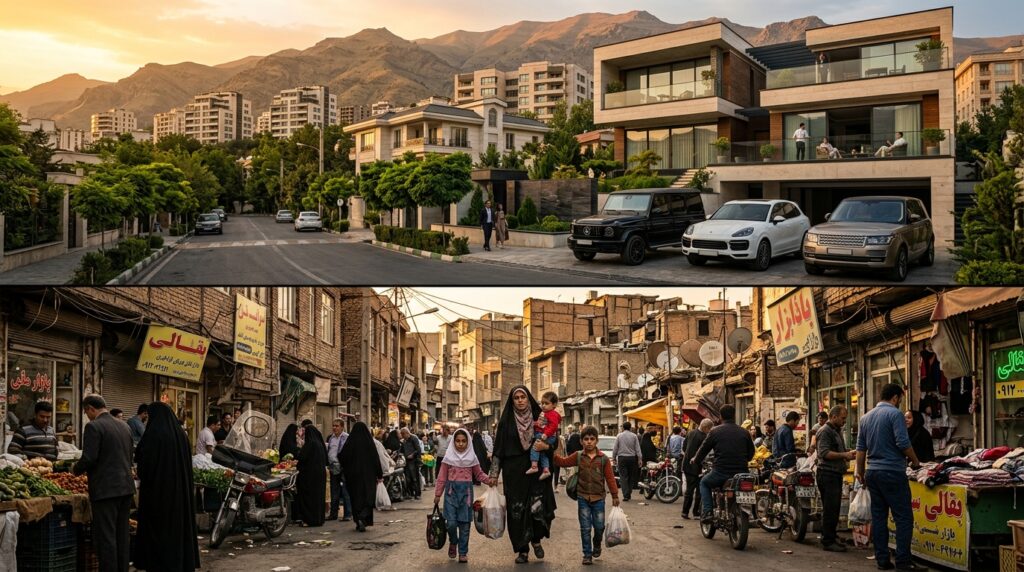
Before 1979, Iran experienced rapid economic growth driven by oil revenues and the Shah’s modernisation policies. Major cities expanded with new highways, universities, industries, airports, and modern healthcare facilities. Women gained greater educational and professional opportunities, and Iran became an important regional economic and military power. However, these benefits were not shared equally across society, leaving many rural and lower-income communities dissatisfied. (Wikipedia)
2. What was the White Revolution?
The White Revolution was a series of reforms launched by Shah Mohammad Reza Pahlavi in 1963. It included land redistribution, women’s suffrage, expansion of education through the Literacy Corps, industrial development, healthcare improvements, and infrastructure projects. While these reforms modernised many aspects of Iranian society, they also weakened traditional institutions and increased opposition from influential religious leaders and parts of the rural population. (Wikipedia)
3. Why did many Iranians oppose the Shah despite economic progress?
Although Iran’s economy grew rapidly during the 1960s and 1970s, political freedoms remained limited. Opposition parties were suppressed, censorship increased, and the intelligence agency SAVAK became widely feared for monitoring and imprisoning political opponents. At the same time, inflation, corruption, unequal distribution of wealth, and perceptions of excessive Western influence contributed to growing public discontent. (Wikipedia)
4. How did the 1953 coup influence Iran before the revolution?
The 1953 coup removed Prime Minister Mohammad Mossadegh after he nationalised Iran’s oil industry and restored the Shah’s authority. Many Iranians viewed the coup as foreign interference by the United States and the United Kingdom. This event shaped Iranian nationalism for decades and became one of the key historical grievances that fueled opposition to the monarchy before the 1979 Revolution. (AP News)
5. Did women have more rights before the 1979 Islamic Revolution?
Yes. During the Pahlavi era, women gained the right to vote, greater access to higher education, employment opportunities, and legal reforms that improved family rights. Many women became doctors, lawyers, professors, engineers, and members of parliament. However, these reforms were concentrated mainly in urban areas, and many conservative religious groups opposed them as symbols of unwanted Westernisation. (Wikipedia)
6. Was the Iranian Revolution caused by religion alone?
No. Religion played a central role in mobilising opposition under Ayatollah Ruhollah Khomeini, but the revolution resulted from multiple factors. Political repression, economic inequality, corruption, resentment over foreign influence, rapid social change, and dissatisfaction with authoritarian rule all combined to create widespread support for revolutionary change. Historians generally view the revolution as the product of political, economic, social, and religious forces acting together rather than a purely religious uprising. (Wikipedia)
References
- Amanat, Abbas. Iran: A Modern History. Yale University Press, 2017.
- Abrahamian, Ervand. A History of Modern Iran. Cambridge University Press, 2008.
- Kinzer, Stephen. All the Shah’s Men: An American Coup and the Roots of Middle East Terror. Wiley, 2008.
- Milani, Abbas. The Shah. Palgrave Macmillan, 2011.
- Ramazani, Rouhollah K. “Iran’s White Revolution: A Study in Political Development.” International Journal of Middle East Studies, Cambridge University Press. (Cambridge University Press & Assessment)
- Encyclopaedia Britannica. “Iranian Revolution” and “Mohammad Reza Shah Pahlavi.” (Wikipedia)