Pakistan’s Saudi Dilemma: Will the Yemen War Test Its New Defence Pact?
A Defence Pact Meets a New War
Pakistan’s Saudi Dilemma: Will the Yemen War Test Its New Defence Pact? Pakistan has entered a security arrangement with Saudi Arabia and Türkiye at precisely the moment when the region is becoming more dangerous.
On August 7, 2026, Pakistan, Saudi Arabia and Türkiye signed the Makkah Joint Defence Agreement. The agreement states that an armed attack against any one of the three countries will be regarded as an attack against all three. Pakistan describes the arrangement as defensive and consistent with the right of individual and collective self-defence under Article 51 of the UN Charter. (Ministry of Foreign Affairs Pakistan)
https://mrpo.pk/makkah-defence-pact/
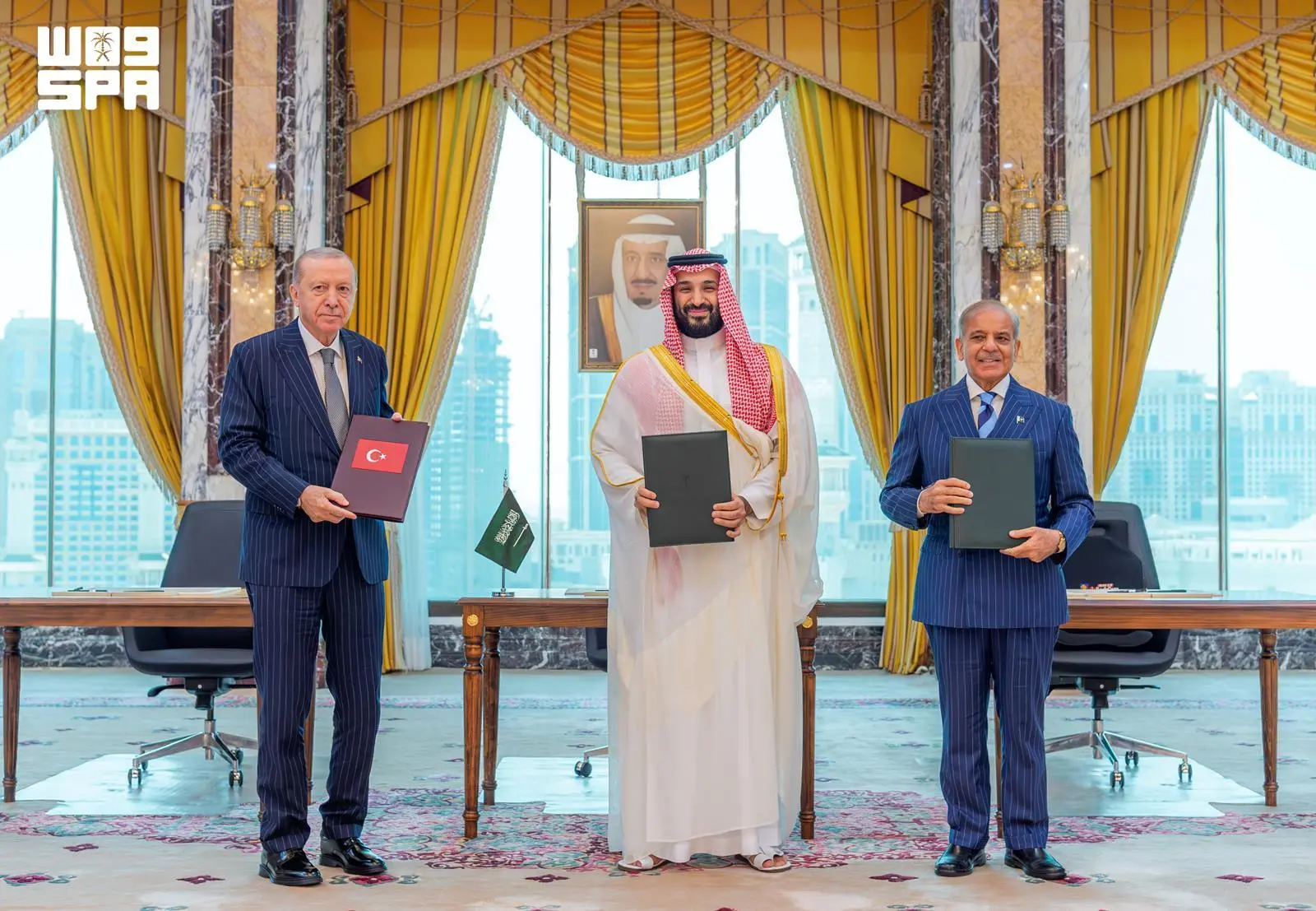
That wording now faces its first serious strategic test.
The Houthis in Yemen have intensified attacks against Saudi Arabia while expanding their presence along the Red Sea. Saudi Arabia has responded militarily. The fighting is no longer simply another chapter in Yemen’s long civil war. It is becoming entangled with the security of the Red Sea, Bab el-Mandeb, Saudi energy infrastructure, Iran’s regional position, and the wider confrontation involving the United States.
For Pakistan, the dilemma is unusually complicated.
It has a formal defence relationship with Saudi Arabia. It has now entered a trilateral defence arrangement with Saudi Arabia and Türkiye. It has important economic ties with Riyadh. At the same time, it shares a sensitive border with Iran and has repeatedly tried to maintain communication with Tehran. And there is another problem that receives less attention outside Pakistan:
Can Islamabad build a durable national strategy when its own political landscape remains deeply divided?
The question is therefore bigger than whether Pakistan will send troops to Yemen. The real question is this:
How can Pakistan honour its defence commitments, protect Saudi Arabia, avoid becoming a direct participant in the Yemen war, preserve its relationship with Iran, and still maintain enough domestic political consensus to sustain whatever decision it makes?
Yemen Has Become a Saudi Security Problem Again
The Yemen conflict has never been a simple two-sided war. The Houthis emerged as a powerful political and military movement in northern Yemen. After Yemen’s political transition deteriorated, they seized Sana’a in 2014. Saudi Arabia and its partners intervened militarily in 2015 after the internationally recognised Yemeni government lost control of much of the country.
A ceasefire in 2022 reduced large-scale fighting, but it did not produce a permanent political settlement. The renewed escalation shows why Yemen remains so difficult to contain.
The Houthis possess missiles, drones, and other weapons capable of threatening Saudi territory and maritime traffic. Iranian support has strengthened their capabilities, although describing the Houthis simply as an Iranian proxy can obscure their own political and military calculations.
In September 2026, the conflict entered another dangerous phase. Houthi forces have expanded along Yemen’s Red Sea coast, while Saudi Arabia has carried out strikes against Houthi positions. Reuters reported fresh exchanges of attacks on September 17 and described the fighting as threatening major energy and maritime routes. (Reuters)
The humanitarian consequences are also growing. The renewed fighting has displaced more than 100,000 people inside Yemen, with some civilians attempting dangerous sea crossings toward Djibouti. (Reuters)
This matters to Pakistan because a conflict that begins in Yemen does not necessarily remain geographically contained there.
Why Bab el-Mandeb Matters to the World
At the southern entrance to the Red Sea lies the Bab el-Mandeb Strait. It connects the Red Sea with the Gulf of Aden and ultimately the Indian Ocean. Ships using the Suez Canal route between Asia and Europe pass through this maritime corridor. If Bab el-Mandeb becomes unsafe, ships can avoid it by sailing around Africa’s Cape of Good Hope.
That sounds simple.
It isn’t.
The longer route means additional fuel, insurance, crew time and shipping costs. Those costs eventually reach consumers. The strategic importance becomes even greater when Bab el-Mandeb is considered alongside the Strait of Hormuz. One route connects the Persian Gulf with the Indian Ocean. The other connects the Red Sea with the Indian Ocean. Disruption of both would put extraordinary pressure on global energy markets.
Recent shipping data already show how sensitive maritime traffic has become to the conflict. Reuters reported sharp reductions in shipping through both Hormuz and Bab el-Mandeb amid the current escalation. (Reuters)
For Pakistan, this is not an abstract global problem.
Pakistan imports substantial quantities of energy. Higher oil and gas prices increase transportation costs, inflation and pressure on foreign exchange reserves. Reuters reported that the current regional energy disruption is already affecting Pakistan, with the government using fuel subsidies while the country faces concerns over gas supplies. (Reuters)
So Pakistan has a national interest in keeping the conflict from spreading.
Saudi Arabia’s Vulnerability Is Bigger Than Its Oil Fields
Saudi Arabia has spent years improving its ability to protect its energy infrastructure. It also has alternative routes for moving oil, including the East-West pipeline linking eastern oil-producing areas with the Red Sea. But alternative infrastructure does not eliminate vulnerability.
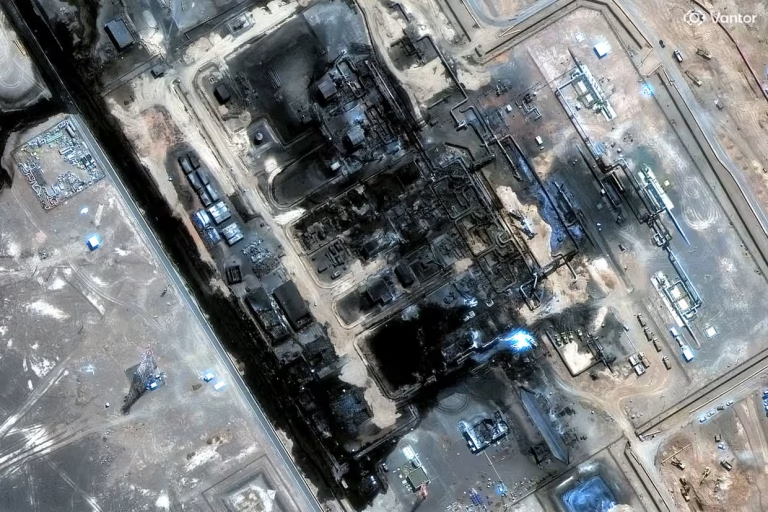
The recent fighting has demonstrated that missiles and drones can threaten military installations, cities and energy infrastructure without requiring an invading army to cross a conventional border.
The East-West pipeline has itself been affected by the current escalation, adding another layer to Saudi Arabia’s security concerns. (Reuters)
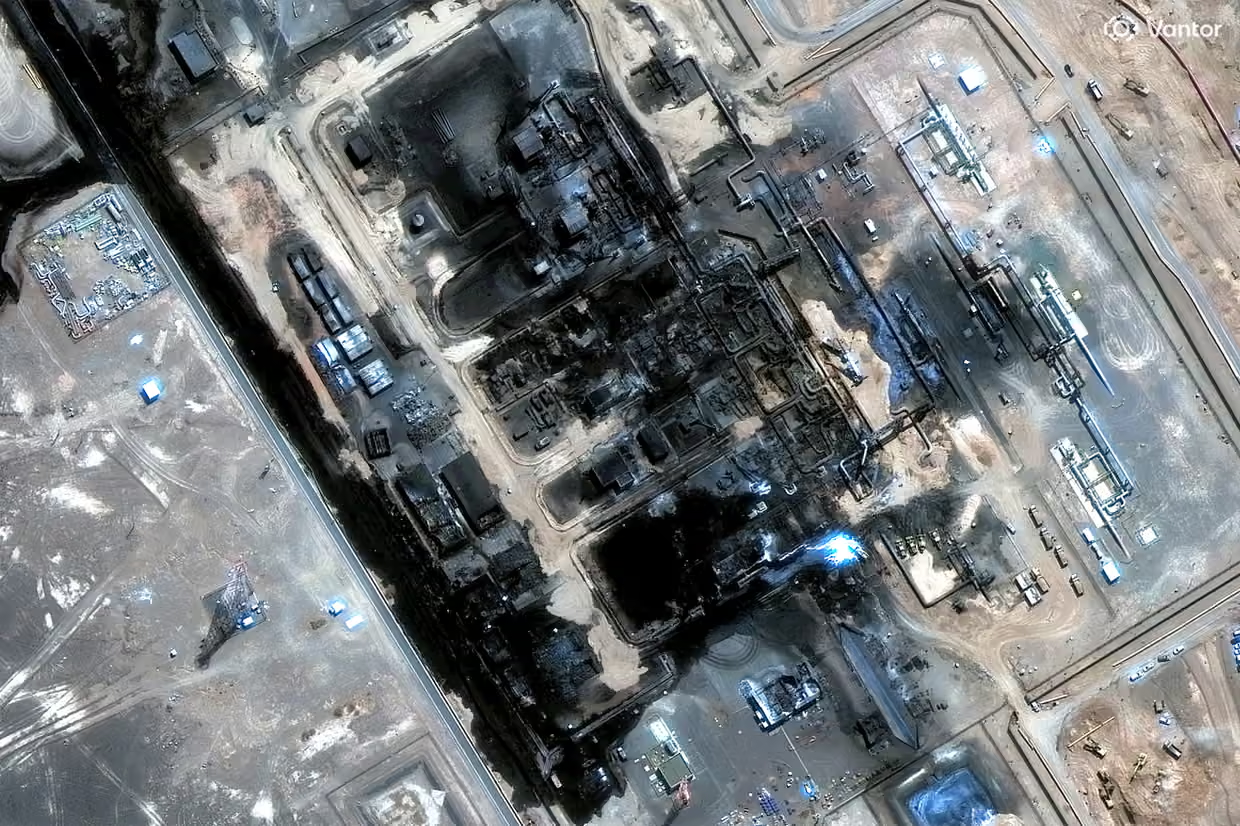
The Houthi advance toward the Red Sea therefore creates a difficult strategic equation for Riyadh. Saudi Arabia does not necessarily need to control Yemen. But it cannot easily ignore an armed movement capable of threatening its territory while gaining influence around one of the world’s most important maritime chokepoints.
What Exactly Does the Makkah Defence Agreement Require?
This is the most important legal and political question.
The August 7 agreement states that an armed attack against one member will be regarded as an attack against all three. (Ministry of Foreign Affairs Pakistan)
Pakistan, however, has repeatedly described the agreement as defensive rather than offensive. That distinction matters enormously.
A missile striking Saudi territory is easier to classify as an external armed attack than fighting between Saudi forces and a non-state armed group inside Yemen.
The difficult questions therefore, begin at the edges:
- Does An Attack By A Non-State Group Automatically Trigger Collective Defence?
- Does An Attack From Yemeni Territory Count In The Same Way As An Attack By A State?
- Does Defending Saudi Territory Require Pakistani Troops?
- Could Intelligence, Air Defence, Logistics Or Training Satisfy A Defence Commitment?
- Who Determines That The Treaty Has Been Triggered?
- Who Authorises Pakistani Military Action?
- How Long Would A Deployment Last?
- What Happens If Pakistani Personnel Become Casualties?
- Where Does Defensive Support End And Offensive War Begin?
These questions are not technical footnotes. They could determine whether Pakistan becomes a supporting partner, a defensive shield, a mediator or a combatant.
Türkiye’s Position: Support for Saudi Arabia, But Also Diplomacy
Türkiye adds another important dimension to the arrangement. Ankara has strongly condemned Houthi attacks against Saudi Arabia and reaffirmed support for Saudi sovereignty and territorial integrity. But Türkiye’s public position also contains another element: diplomacy.
On September 8, the Turkish Foreign Ministry condemned the Houthi attacks while warning that such actions undermine diplomatic efforts to achieve a lasting political solution in Yemen. It called for the attacks to stop. (Ministry of Foreign Affairs of Türkiye)
That combination is significant. Türkiye is supporting Saudi Arabia’s security without publicly presenting the Yemen conflict simply as a military problem requiring an open-ended war. The three countries also met in Istanbul on August 31 through the Strategic Political and Defence Committee created under the Makkah Agreement.
They agreed to institutionalise cooperation, strengthen collective deterrence and defence, and continue supporting de-escalation and peaceful resolution of crises. A permanent secretariat is to be established in Saudi Arabia, initially headed by a Pakistani secretary-general for three years. The countries also agreed to expand defence-industry cooperation and joint technology development and production. (Ministry of Foreign Affairs Pakistan)
That institutional development is important because the Makkah arrangement is still young. It is building structures before it has had time to develop the detailed procedures normally required for a mature collective-defence system.
An alliance is still taking shape
The trilateral arrangement itself remains a work in progress.
Ministers and military officials from Saudi Arabia, Pakistan, and Turkey met in Istanbul on 31 August to establish a permanent secretariat in Saudi Arabia and pledge cooperation on defence technology.
Why the Macca defence pact hasn’t triggered action against the Houthis
But experts say the pact is still a general framework rather than an integrated military command. Specifics of the pact, including air defence assistance, intelligence sharing, and protection of Saudi military installations or naval operations, are yet to be seen, as is the question of participation in offensive operations against the Houthis.
“A lot of institutional development is required at the moment, particularly in inter-military planning and interoperability among the armed forces of the three countries,” Cheema said. The countries also need to establish clear procedures for responding to threats from both state and non-state actors, he said.
Khan, Pakistan’s foreign ministry spokesman, acknowledged the limitations last week, describing the pact as an “umbrella agreement” whose institutional mechanisms would take time to develop. “At this stage, I don’t think we should be discussing this topic in the context of its operationalisation,” he told journalists.
https://www.middleeasteye.net/news/houthi-attacks-expose-gaps-pakistans-defence-pact-saudi-arabia
Pakistan’s Strategic Position Is More Complicated Than the Treaty Language
Pakistan has another important commitment. In September 2025, Islamabad and Riyadh signed a bilateral Strategic Mutual Defence Agreement under which aggression against either country is treated as aggression against both.
The new trilateral Makkah arrangement therefore adds another layer to an already close Pakistan-Saudi security relationship.
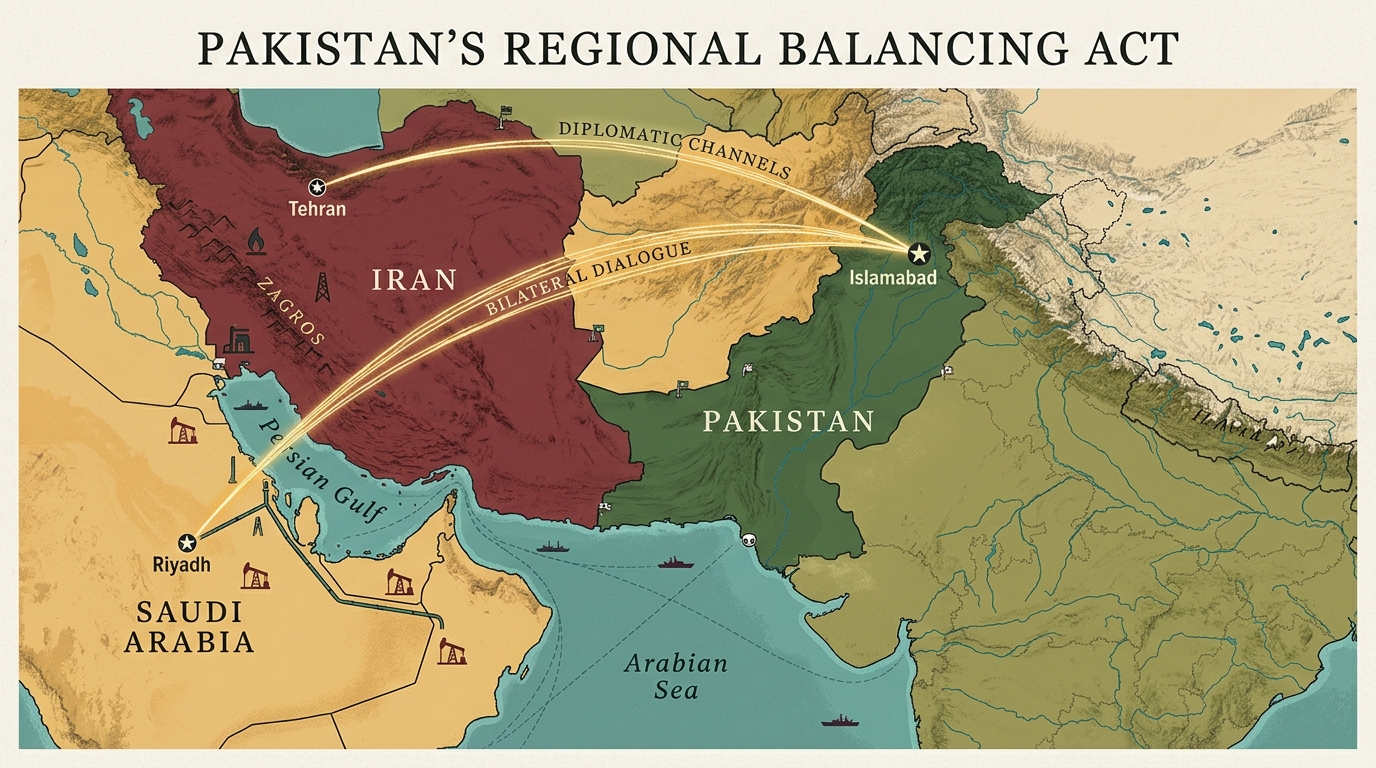
But Pakistan’s relationship with Iran makes the situation far more delicate.
Pakistan and Iran share a long and sometimes difficult border.
In January 2024, the two countries even exchanged cross-border strikes before quickly moving toward de-escalation.
Islamabad, therefore, has to consider two different security realities at the same time.
Saudi Arabia is an important strategic and economic partner.
Iran is Pakistan’s immediate neighbour.
A direct Pakistani military operation against the Houthis could therefore be interpreted in Tehran as something much larger than a Saudi defence mission. That could create pressure along Pakistan’s western border precisely when its armed forces already face security challenges elsewhere.
Pakistan’s Old Yemen Lesson: 2015 Still Matters
Pakistan has faced a similar question before. In 2015, when Saudi Arabia launched its military intervention in Yemen, Islamabad was asked to participate.
Pakistan’s parliament ultimately supported neutrality in the conflict while expressing commitment to Saudi Arabia’s territorial integrity and security. That decision reflected a basic Pakistani calculation:
Supporting Saudi Arabia does not necessarily mean joining every Saudi military operation.
The strategic environment has changed since then. Pakistan now has a formal bilateral defence agreement with Saudi Arabia and a trilateral agreement with Saudi Arabia and Türkiye. But the old lesson remains relevant. There is a difference between:
Defending Saudi Arabia
and
Fighting a war inside Yemen.
The Makkah Agreement does not automatically answer every question created by that distinction.
Pakistan’s Political Landscape: The Hidden Strategic Constraint
This may ultimately prove to be one of the most important parts of the entire equation. Pakistan may have the military capability to provide different forms of assistance. The harder question is whether its political system can generate broad enough ownership for a decision that could have consequences for years.
The PML-N-led federal government currently has a parliamentary majority with PPP support. But relations between the coalition partners have experienced significant strains. On September 12, 2026, coordination committees from the two parties met to address outstanding disagreements. (Dawn)
At the same time, opposition politics remains highly confrontational.
PTI and JUI-F have recently discussed coordinating on national issues and opposition activities, including security and governance matters. (Dawn)
This does not mean Pakistan lacks a functioning government. It means something more specific:
A parliamentary majority is not automatically the same thing as a broad national consensus on war.
That distinction becomes critical when a decision involves potentially sending Pakistani forces into another country’s conflict.
Why Domestic Political Division Matters
Imagine Pakistan providing air defence assistance to Saudi Arabia.
A government may describe that as treaty-based defensive support.
The opposition could ask whether the same assistance is gradually drawing Pakistan into a wider conflict.
Now imagine Pakistani troops suffer casualties.
The political argument changes immediately.
Questions would follow:
- Who authorised the deployment?
- Was Parliament properly consulted?
- Was the mission defensive or offensive?
- What were the rules of engagement?
- How long will the troops remain?
- What is the exit strategy?
- What happens if Iran responds?
- What happens if the conflict spreads?
These questions cannot be answered successfully through government statements alone. They require political ownership.
The Civil-Military Dimension Cannot Be Ignored
Pakistan’s foreign and security policy has historically involved a powerful role for the military establishment.
That does not mean civilian institutions are irrelevant.
It means that any serious national-security decision requires coordination between political leadership, military leadership and diplomatic institutions.
The military may determine what is operationally possible.
The civilian government determines the political mandate and diplomatic direction.
Parliament provides democratic oversight.
The Foreign Office manages international consequences.
If these institutions send different signals, Pakistan’s external partners may become uncertain about the durability of its policy.
For a defence pact, consistency matters.
A treaty commitment cannot be treated as one government’s temporary policy preference.
The Real Test: Government Policy or National Strategy?
There is a crucial difference between the two.
A government policy can change when governments change.
A national strategy is designed to survive political transitions.
Pakistan therefore needs clarity on several red lines before the crisis becomes even more dangerous.
What Pakistan Could Agree On
A workable national consensus does not require every political party to agree on every aspect of Saudi Arabia, Iran or Yemen.
It could instead focus on a smaller set of principles:
Defend Pakistan First. Pakistan’s own territorial security must remain the first priority.
Honour Treaty Commitments. Existing agreements with Saudi Arabia and the Makkah framework cannot simply be ignored.
Keep Defence Defensive. Protection of Saudi territory should not automatically become participation in offensive operations inside Yemen.
Keep Iran Channels Open. Diplomatic communication with Tehran remains important even when Pakistan disagrees with Iranian policies.
Protect Economic Security. Energy supplies, remittances, trade routes and foreign-exchange stability must be part of the strategic calculation.
Consult Parliament. Major military commitments should have sufficient parliamentary understanding and political ownership.
Define The Mission. Any deployment should have a clearly defined purpose, command structure, rules of engagement, and duration.
Define The Exit. Pakistan should know what conditions would allow a mission to end before forces are committed.
This is what national consensus could mean in practical terms.
It does not require political unanimity.
It requires agreement on the country’s strategic red lines.
Pakistan’s Three Possible Paths
The current crisis does not necessarily force Pakistan into a simple choice between “fight” and “do nothing.” There are at least three broad approaches.
1. Diplomatic Containment
Pakistan could continue using its relationships with Saudi Arabia, Iran and other regional actors to push for de-escalation.
This would be consistent with Islamabad’s current public position.
Pakistan has already urged restraint and continued dialogue.
Its geographic position gives it a reason to keep communication channels open with both Gulf partners and Iran.
The difficulty is that diplomacy becomes harder when missiles and drones are already flying.
2. Defensive Support Without Entering Yemen
Pakistan could provide assistance designed specifically to protect Saudi territory.
This could include:
- Air-defence support
- Intelligence sharing
- Technical assistance
- Training
- Surveillance
- Cybersecurity
- Protection of critical infrastructure
- Maritime security cooperation
- Logistics and maintenance
This approach would test how broadly the Makkah Agreement’s collective-defence principle is interpreted without necessarily turning Pakistan into a combatant inside Yemen. But even defensive assistance can become dangerous if personnel are attacked or if the mission expands gradually.
3. Direct Military Intervention
The most consequential possibility would be Pakistani combat involvement in Yemen.
That could include air operations, naval operations or ground forces.
Such a decision would carry much wider consequences.
Pakistan would have to consider:
- Military overstretch
- Casualties
- Relations with Iran
- Domestic political opposition
- Sectarian tensions
- Terrorist exploitation
- Economic costs
- India and Afghanistan
- Long-term occupation or mission creep
- International diplomatic consequences
The history of Yemen demonstrates how quickly a limited military objective can become a much longer strategic problem.
Iran: The Relationship Pakistan Cannot Afford to Break
Iran’s role cannot be separated from the Yemen question.
The Houthis have received Iranian support, including assistance that has strengthened their military capabilities. But Iran’s influence should not be confused with complete command over every Houthi decision.
For Pakistan, the practical issue is simpler.
Any Pakistani combat operation against the Houthis would inevitably have implications for Pakistan-Iran relations.
That makes diplomacy particularly important.
Pakistan could support Saudi security while simultaneously communicating to Tehran that it does not seek a direct confrontation with Iran.
This balancing act will become more difficult if attacks on Saudi territory continue.
Reuters reported on September 11 that Pakistan had already been trying to communicate with Iranian officials while facing pressure to reconcile its Saudi defence role with its relationship with Tehran. (Reuters)
The challenge is to prevent a Saudi-Houthi conflict from becoming a Pakistan-Iran conflict.
What About the United States?
The United States remains an important part of the equation.
Washington has enormous military capabilities in the region, but the current crisis demonstrates that American involvement cannot automatically be assumed to mean direct U.S. combat operations against the Houthis.
Recent reporting indicates that Saudi Arabia has sought greater U.S. assistance while Washington has focused on forms of support rather than committing to a major direct intervention against the Houthis. (Reuters)
This matters for Pakistan.
If Washington remains reluctant to expand another military front, pressure could increase on regional partners to carry more of the security burden.
That is precisely the kind of situation in which Pakistan must distinguish between sharing the burden of defence and inheriting someone else’s war.
China Has Its Own Interest in De-Escalation
China also has an important stake. Beijing depends heavily on stable energy supplies from the Gulf and secure maritime trade routes.
Reuters reported on September 17 that Saudi Arabia had appealed to China to use its relationship with Iran to help restrain the Houthis. China subsequently urged Tehran to use its influence to prevent further escalation. (Reuters)
For Pakistan, this creates another diplomatic possibility. Islamabad does not have to carry the entire burden of mediation. Regional and global powers all have reasons to prevent the conflict from closing major energy routes.
The Gulf States Are Not All Playing the Same Game
The Arab Gulf is not a single strategic actor.
Saudi Arabia has direct security concerns because of its geographical proximity to Yemen.
The UAE has its own interests in southern Yemen, maritime security and regional trade.
Oman has traditionally maintained channels with multiple sides and has played an important diplomatic role in Yemen-related discussions.
Qatar also maintains diplomatic relationships that can provide channels for dialogue.
This matters because a regional solution will probably require more than military deterrence.
The broader Gulf environment has multiple competing interests, and Pakistan must avoid treating every Gulf state as having identical priorities.
The Humanitarian Question
There is another dimension that cannot be left to the final paragraph. Yemen has already suffered years of war, displacement, economic collapse, and humanitarian distress. Renewed fighting creates another cycle.
If Pakistan becomes involved militarily, its policy should therefore include humanitarian considerations from the beginning.
A defence strategy that protects one country’s territory while ignoring civilian consequences in another country risks deepening the very instability it is intended to contain.
The displacement reported during the current escalation is a reminder that the human cost is immediate, not theoretical. (Reuters)
What Should Pakistan Watch Before Taking the Next Step?
Several developments will reveal where the crisis is heading.
The Definition Of An Armed Attack
If attacks against Saudi Arabia continue, the three governments will have to clarify what qualifies as an armed attack under the Makkah framework.
The Geographic Expansion Of The Conflict
The closer fighting moves toward Bab el-Mandeb and international shipping routes, the greater the pressure for outside military involvement.
Saudi Requests
What Riyadh specifically asks Pakistan to provide will matter enormously. Air-defence assistance is strategically different from combat operations inside Yemen.
Türkiye’s Role
Ankara’s future decisions will show whether the Makkah framework develops primarily as a defence-cooperation mechanism or becomes a more operational military arrangement.
Iran’s Response
Pakistan will closely watch Tehran’s reaction to Saudi-Houthi fighting and to any Pakistani support for Saudi Arabia.
Pakistan’s Parliament
The degree of parliamentary consultation will indicate whether the government’s position is being transformed into a broader national strategy.
Domestic Political Unity
If major political parties agree on basic national-security principles, Islamabad will have greater room to manoeuvre.
If the issue becomes another partisan battlefield, Pakistan’s foreign-policy options could narrow.
The Most Important Question Is Not “Will Pakistan Fight?”
That question is too simplistic.
Pakistan has several possible levels of involvement.
It could mediate.
It could provide diplomatic support.
It could strengthen Saudi defensive capabilities.
It could assist with intelligence and surveillance.
It could help secure maritime routes.
Or, under dramatically different circumstances, it could become directly involved in combat.
The crucial issue is therefore not simply military capability.
It is political authority, strategic clarity and control over escalation.
Pakistan’s problem is not a lack of military power. It is the difficulty of converting military capability into a politically durable national strategy during a period of deep political mistrust. The first strategic test of the Makkah Agreement may therefore not happen on a battlefield.
It may happen inside Pakistan’s Parliament.
Conclusion: Pakistan Needs a Strategy Before It Needs a Deployment
The Makkah Joint Defence Agreement has changed the strategic language surrounding Pakistan, Saudi Arabia, and Türkiye. But a defence agreement is only as clear as the rules governing its use.
Pakistan has strong reasons to protect its relationship with Saudi Arabia. It also has strong reasons to avoid being dragged into an open-ended war in Yemen.
It must protect its own economic interests.
It must keep its western border from becoming another security front.
It must preserve communication with Iran.
It must maintain relations with Türkiye, the United States, China and the Gulf states.
And it must ensure that a decision of potentially historic consequence is not reduced to another episode in Pakistan’s domestic political confrontation. The sensible strategic question is therefore not whether Pakistan should simply “choose Saudi Arabia” or “choose neutrality.” It is more precise:
What form of collective defence can Pakistan provide that fulfils its commitments, protects Saudi Arabia, limits escalation, preserves diplomatic space with Iran and remains sustainable inside Pakistan’s own political system?
That is the real test of the Makkah Agreement. And Pakistan would be wise to answer that question before the next missile forces it to.
Frequently Asked Questions
What Is The Makkah Joint Defence Agreement?
It is a defence agreement signed by Pakistan, Saudi Arabia and Türkiye on August 7, 2026. It states that an armed attack against one member will be regarded as an attack against all three and calls for stronger defence cooperation. Pakistan describes it as defensive and consistent with collective self-defence under Article 51 of the UN Charter. (Ministry of Foreign Affairs Pakistan)
Does The Agreement Automatically Require Pakistan To Fight In Yemen?
The public text does not simply state that Pakistan must send combat troops into Yemen whenever Saudi Arabia is attacked. The critical issue is how an “armed attack” is interpreted and what form of collective defence the three governments decide is appropriate.
What Is Türkiye’s Position On The Houthis?
Türkiye has condemned Houthi attacks against Saudi Arabia and reaffirmed Saudi sovereignty and territorial integrity. At the same time, Ankara has said the attacks undermine diplomatic efforts for a lasting political settlement in Yemen. (Ministry of Foreign Affairs of Türkiye)
Why Is Bab el-Mandeb Important?
Bab el-Mandeb connects the Red Sea with the Gulf of Aden and the wider Indian Ocean. Disruption can force commercial ships to take much longer routes around Africa, increasing fuel, insurance and transport costs and affecting global energy markets.
Why Is Iran So Important To Pakistan’s Decision?
Pakistan shares a border with Iran and has its own security and economic interests there. Because the Houthis receive Iranian support, direct Pakistani military involvement against them could have consequences for Pakistan-Iran relations.
Why Does Pakistan’s Domestic Politics Matter?
A major overseas military commitment can last longer than a single government. Pakistan’s coalition politics remain strained while opposition parties are also coordinating around national issues. Broad parliamentary consultation could therefore affect the political durability of any major security decision. (Dawn)
Author
Maj Hamid Mahmood (Retired) holds an MA in Political Science, LLB, and PGD (HRM). His military background, academic training in political science, and legal education provide a multidisciplinary perspective for examining international conflicts, security affairs, political developments, and the human consequences of war.
Purpose Of This Article
This article examines the strategic dilemma facing Pakistan after the Makkah Joint Defence Agreement, focusing on the Yemen conflict, Saudi security, Türkiye’s position, Iran, Bab el-Mandeb, global energy routes and Pakistan’s domestic political environment. Its purpose is to explain the choices and risks involved rather than reduce a complicated regional crisis to a simple question of war or peace.
EP Statement
Essential Point: Pakistan’s challenge is not merely whether it will defend Saudi Arabia. The deeper challenge is defining the limits of that defence before a regional conflict forces Islamabad to make those decisions under pressure.
References
- Pakistan Ministry of Foreign Affairs — Makkah Joint Defence Agreement and subsequent official statements. (Ministry of Foreign Affairs Pakistan)
- Republic of Türkiye Ministry of Foreign Affairs — statement on Houthi attacks against Saudi Arabia, September 8, 2026. (Ministry of Foreign Affairs of Türkiye)
- Reuters — Pakistan’s balancing role between Saudi Arabia and Iran amid escalating Houthi tensions, September 11, 2026. (Reuters)
- Reuters — Renewed Saudi-Houthi fighting and risks to regional energy and maritime routes, September 17, 2026. (Reuters)
- Reuters — Humanitarian displacement resulting from renewed Yemen fighting, September 15, 2026. (Reuters)
- Dawn — Pakistan’s PML-N/PPP coalition tensions, September 12, 2026. (Dawn)
- Dawn — PTI and JUI-F coordination on national political issues, September 12, 2026. (Dawn)
- Pakistan Ministry of Foreign Affairs — Strategic Political and Defence Committee meeting, Istanbul, August 31, 2026. (Ministry of Foreign Affairs Pakistan)