Healthy Diet but Still Tired? Supplements, Old Remedies, and Real-Life Answers
Healthy Diet but Still Tired: You eat your vegetables. You choose whole grains over white bread. You drink water instead of soda. So why do you still feel exhausted by 3 PM, catch every cold that goes around, or struggle to focus? If you eat well but still feel tired, you may ask: do you need supplements if you eat well?
https://mrpo.pk/still-tired-after-sleeping/
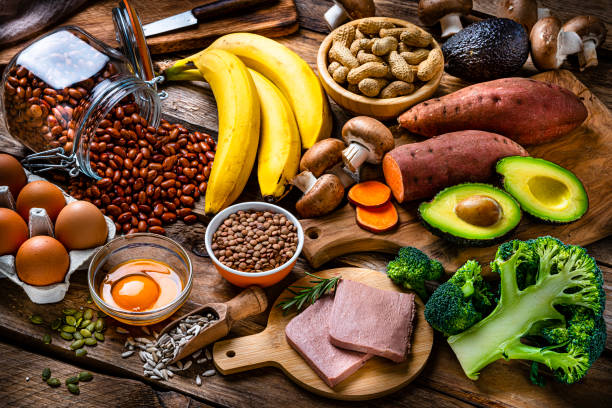
Here is the uncomfortable truth: eating well is essential, but it is not always sufficient. Modern food is less nutritious than it used to be; your body’s needs are unique, and your life stage changes what you require. The purpose of this article is to help you understand when a healthy diet is enough, when supplements can help, and which old household remedies still deserve a place in your home.
Purpose of this article: This article, Healthy Diet but Still Tired, helps readers answer one practical question: do you need supplements if you eat well? It explains why a healthy diet is still the foundation, why modern food and individual factors can create nutrient gaps, which traditional household remedies have evidence and which need caution, and how needs differ for men, women, and children. It also gives real-life examples and a simple framework for deciding whether bloodwork, targeted supplements, or a diet change is the right next step.
Why Eating Well Is Still the Foundation
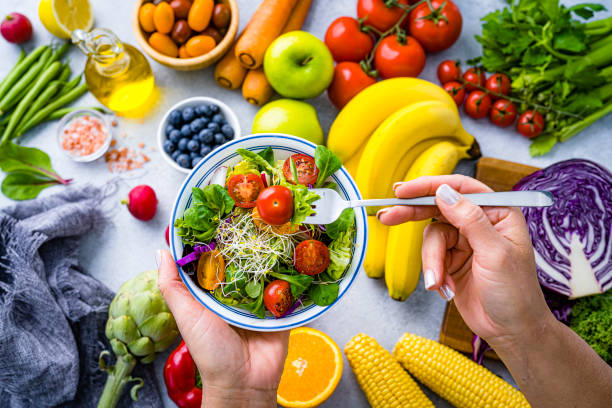
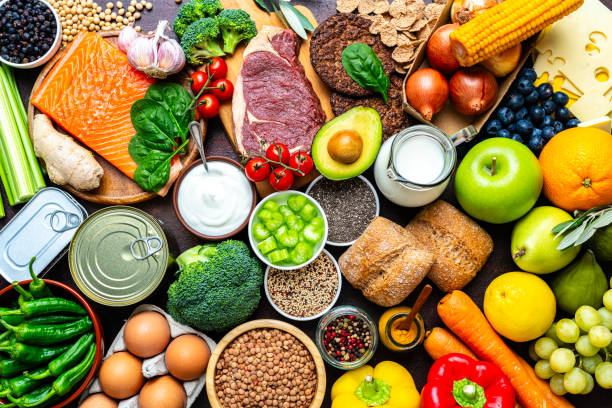
Before considering any pill or powder, it is worth remembering what food does that supplements cannot. Whole foods provide fibre, healthy fats, and thousands of plant compounds called phytonutrients that work together in ways scientists still do not fully understand. A vitamin C tablet will never replicate the full synergy of an orange.
Research consistently shows that people who eat a diet rich in fruits, vegetables, whole grains, and lean proteins have better health outcomes than those who rely on supplements alone. No capsule can undo the damage of a diet built on ultra-processed food, added sugar, and refined carbohydrates. The World Health Organization emphasizes that healthy eating patterns are the foundation of good health.
So the first rule is simple: food first. But the second rule is equally important: food alone does not always cover every base.
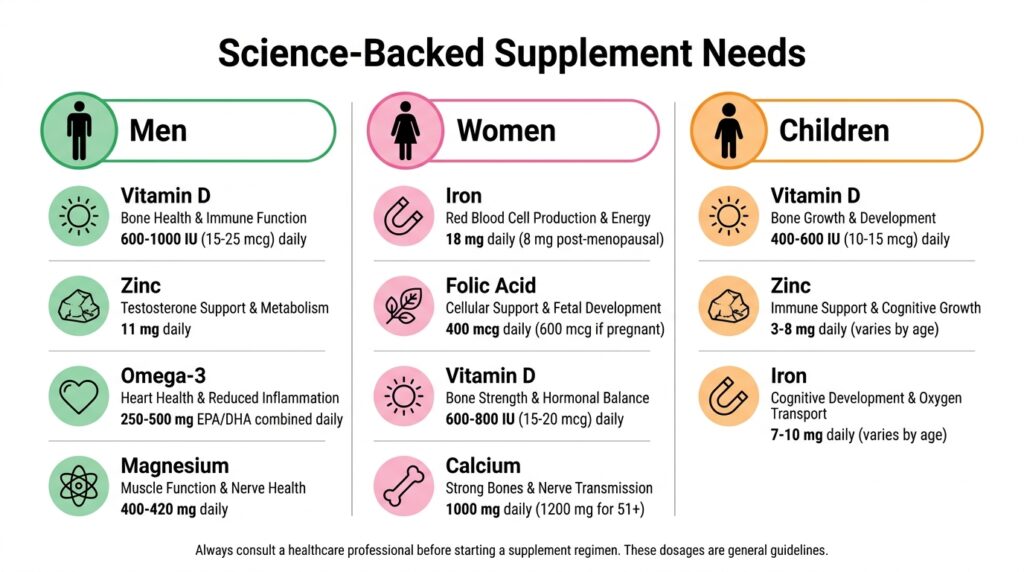
Science-Backed Supplement Needs: Men, Women, and Children
The Modern Problem: Even Good Food May Have Fewer Nutrients
Here is something most people do not know. The broccoli you ate today is not the same broccoli your grandparents ate. Over the past 60 to 70 years, plant breeders have focused on increasing crop yields, often at the expense of nutritional quality. Modern varieties of fruits and vegetables contain fewer minerals than older varieties grown before 1960.
Intensive agricultural practices have depleted micronutrients from the soil, which directly lowers the nutrient density of crops. Rising atmospheric carbon dioxide levels make the problem worse by reducing the concentration of zinc, iron, and protein in staple food crops. This does not mean food is useless. It means that even a conscientious eater may fall short on certain nutrients without realising it.
What Traditional Household Remedies Get Right and Wrong
Long before vitamin shops existed, families relied on kitchen ingredients to treat everyday ailments. Some of these practices have real scientific backing. Others are harmless traditions. A few are genuinely dangerous, especially for children.
Honey for cough is perhaps the best-studied example. Multiple randomised controlled trials have found that honey is as effective as the over-the-counter cough suppressant dextromethorphan for relieving nighttime coughs. The Mayo Clinic notes that honey can be a reasonable option for adults and children over one year old. However, honey must never be given to infants under one year of age due to the risk of infant botulism.
Ginger for nausea is another remedy with solid evidence. A meta-analysis of 13 studies involving over 1,100 patients found that ginger was significantly more effective than placebo for relieving pregnancy-related nausea. It is also used for motion sickness and intestinal cramps.
Chicken soup, saltwater gargles, and warm compresses for congestion are comfort measures that can ease symptoms, even if they do not cure the underlying illness. The key is to treat these remedies as supportive care, not as replacements for medical treatment when something serious is going on.
What should you avoid? Never give aspirin to children. Do not use undiluted essential oils on skin. Do not delay medical care for a persistent symptom because you are trying a home remedy first.
Do You Need Supplements If You Eat Well? The Short Answer
For most healthy adults who eat a varied diet, supplements are not strictly necessary. However, several factors can create nutrient gaps even when your diet looks good on paper.
Soil and food quality. As discussed above, modern crops are less nutrient-dense. You may need to eat more of certain foods to get the same vitamins and minerals your ancestors obtained from smaller portions.
Your genes. Some people carry variations in genes like MTHFR that make it harder to convert certain B vitamins into their active forms. For these individuals, standard food sources and ordinary supplements may not be sufficient.
Absorption problems. Conditions like celiac disease, Crohn’s disease, and irritable bowel syndrome can damage the gut lining and reduce nutrient absorption. Even with a perfect diet, the body may struggle to extract what it needs.
Chronic stress. Stress depletes magnesium, a mineral involved in over 300 cellular processes including energy production and nervous system regulation. Magnesium deficiency is common, and low levels can worsen stress, sleep, and mood.
Life stage and biology. Men, women, and children have different nutritional demands. These differences are not minor. They can mean the difference between feeling well and feeling depleted.
What Men, Women, and Children Actually Need
Men
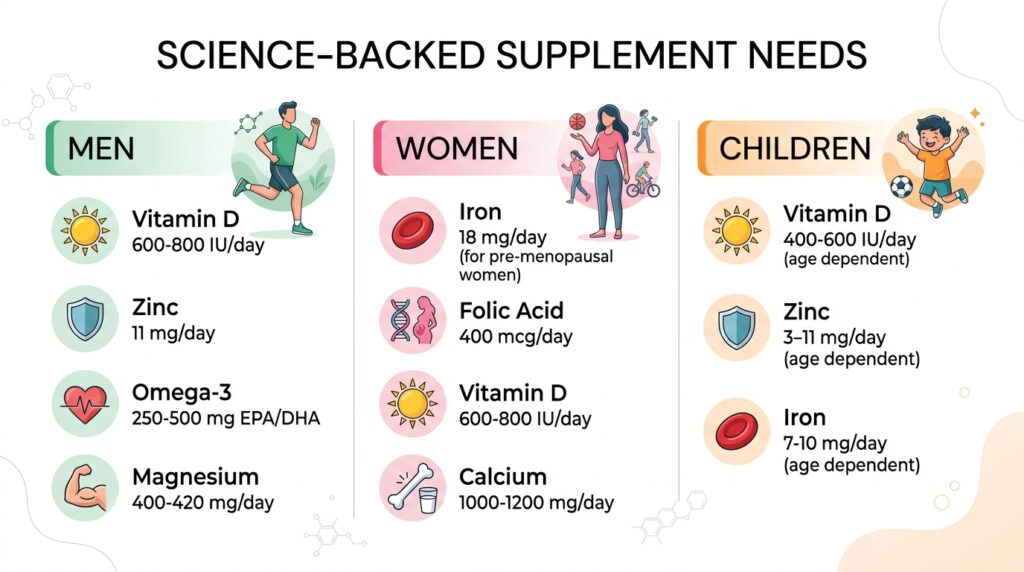
Vitamin D deficiency is widespread among men, particularly those who work indoors. A study of over 85,000 adults found that 61.3 per cent of men had vitamin D deficiency. Zinc is another common gap, especially for men who exercise heavily, since zinc is lost through sweat. Omega-3 fatty acids support heart health, and research shows they may be particularly beneficial for cardiovascular markers.
Women
Iron deficiency is a major concern for women of reproductive age, especially those with heavy menstrual bleeding. A study of 454 women with heavy periods found that 42.8 per cent had low ferritin, the protein that stores iron. Iron deficiency with or without anaemia affects quality of life daily.
Vitamin D deficiency is also more common in women than men, affecting 68.6 per cent of women in one large study. Calcium and folate are additional nutrients women should monitor, particularly during pregnancy and breastfeeding.
Children
Children who are picky eaters may not get enough iron, vitamin D, or zinc from food alone. Vitamin D is especially difficult to obtain through diet, since few foods naturally contain it. Zinc plays a critical role in immune function and growth, and research shows that zinc supplementation can reduce the incidence and duration of respiratory infections in children. Omega-3 fatty acids support brain development, with some studies showing modest benefits for attention and learning.
For children, supplements should always be chosen with pediatric guidance. Adult doses are not appropriate, and some products formulated for adults can be harmful to a child’s developing system. The NIH Office of Dietary Supplements provides reliable information on safe nutrient levels.
Real-Life Examples That Make This Concrete
A 45-year-old man with fatigue. He eats a balanced diet and exercises regularly, but works long hours indoors. Blood work reveals vitamin D deficiency. His doctor recommends a daily D3 supplement and 15 minutes of midday sun exposure. Within three months, his energy levels improve.

A 32-year-old vegan woman with heavy periods. She eats spinach and lentils daily but still feels exhausted. Testing shows low ferritin. Her dietitian recommends an iron supplement alongside vitamin C to improve absorption. She also adds a B12 supplement, which is essential for anyone following a vegan diet.
A 5-year-old picky eater. He refuses most vegetables and meats. His paediatrician checks iron and vitamin D levels. Both are low. A children’s multivitamin with iron and a structured feeding plan help fill the gaps while his palate gradually expands.
A 70-year-old woman with muscle cramps. She eats well but takes a medication that depletes magnesium. Her doctor recommends magnesium glycinate, and her cramps and sleep quality improve.
How to Decide What Is Right for You
Start with a food diary. Track everything you eat for one week using an app or a notebook. Look for patterns. Are you getting five servings of fruits and vegetables daily? Are you eating fatty fish twice a week? Are you getting enough sunlight?
Next, get bloodwork done. Do not guess. Ask your doctor to check vitamin D, ferritin, B12, and a basic metabolic panel. These tests give you a clear picture of where you stand.
Then, target specific gaps. A generic all-in-one supplement is rarely the best answer. If your vitamin D is low, take vitamin D. If your iron is low, take iron with the guidance of a professional. More is not better. Fat-soluble vitamins like A, D, E, and K can build up to toxic levels if taken in excess.
Finally, use traditional remedies wisely. Honey for a cough, ginger for nausea, and chicken soup for a cold are reasonable comfort measures. They are not cures for serious illness. And for children, always check with a paediatrician before giving any supplement or remedy.
Frequently Asked Questions
Can I get all the nutrients I need from food alone?
In theory, yes. In practice, modern food is less nutrient-dense than it once was, and individual factors like genetics, stress, and absorption can create gaps. Many people benefit from targeted supplementation, especially for vitamin D, magnesium, and omega-3s.
Is it safe to give my child a multivitamin?
Children’s multivitamins can be helpful for picky eaters, but they should be chosen with pediatric guidance. Never give a child an adult supplement. Some nutrients, like iron, can be toxic to children in large doses.
Do old home remedies like honey and ginger actually work?
Some do. Honey is as effective as certain over-the-counter cough medicines for nighttime cough, and ginger has strong evidence for relieving nausea. Others, like onion in socks, have no scientific support. Always prioritize safety, especially with children.
How do I know if I need a supplement?
The best approach is bloodwork. Symptoms like fatigue, muscle cramps, and frequent illness can signal a deficiency, but they can also have other causes. Testing removes the guesswork and lets you target specific nutrients.
Are supplements regulated and safe?
In many countries, supplements are regulated as food, not drugs, which means they do not undergo the same safety and efficacy testing as medications. Choose products from reputable brands that use third-party testing.
What is the biggest mistake people make with supplements?
Taking too many. More is not better. High doses of certain vitamins and minerals can cause toxicity, interfere with medications, and waste money. Focus on filling specific gaps rather than taking a shotgun approach.
Conclusion
Food remains the best foundation for health. Yet modern soil, individual genetics, stress, and life stage can leave gaps that a healthy diet alone may not fill. The answer to whether you need supplements if you eat well is not a simple yes or no. It depends on your bloodwork, your symptoms, your age, and your sex.
Traditional household remedies still have a place for comfort and mild symptoms, but they are not a substitute for medical care. Men, women, and children each have unique needs. Before you buy another bottle of pills, check your plate, your bloodwork, and your life stage. For children, always ask a paediatrician first.
Disclaimer: This article is for educational purposes only and is not medical advice. It does not replace consultation with a qualified doctor, dietitian, pharmacist, or paediatrician. Supplements and traditional remedies can interact with medicines and may be harmful in some people, especially children, pregnant or breastfeeding women, older adults, and people with long-term health conditions.
Always speak with a healthcare professional before starting, stopping, or changing any supplement or remedy. If you have persistent fatigue, pain, or other symptoms, seek medical care.
References
- Iftikhar M, et al. Serum vitamin D status in adults from Peshawar, Pakistan. Khyber Medical University Journal. 2025;17(3):352-356.
- Rugeri L, et al. Evaluation of coagulation disorders and iron deficiency in women with heavy menstrual bleeding. International Journal of Gynecology and Obstetrics. 2025.
- Shane-McWhorter L. Ginger. Merck Manual Professional Edition. 2025.
- Mayo Clinic. Honey: An effective cough remedy? 2024.
- MDPI. An alarming decline in the nutritional quality of foods. Foods. 2024;13(6):877.
- MitoQ. Magnesium and the stress response.
- Omega-3 fatty acids and cardiovascular risk markers: A meta-analysis. Nutrition, Metabolism and Cardiovascular Diseases. 2025.
- Zinc supplementation and immune function in pediatric patients. VHL Regional Portal.
- Omega-3 fatty acids and children’s development: A review. MDPI. 2026.
- NHS Specialist Pharmacy Service. Managing complementary products in children. 2025.
- How deficient are we? Vitamin D status in 85,892 Turkish adults. BMC Public Health. 2026;26:856.
- World Health Organization. Healthy diet fact sheet.