Still tired after sleeping for eight or nine hours? Discover common causes, differences for men, women and older adults, plus when persistent fatigue needs medical attention.
6 Reasons Why You Wake Up Tired, Even After a Long Night’s Sleep
If you regularly wake up exhausted despite seemingly getting enough sleep, one (or more) of these factors may be at play.
1. A possible sleep disorder
If you’re feeling foggy and tired during the day, it could be a sign of an underlying sleep disorder, like sleep apnea.
“Sleep apnea is a condition where you either stop breathing or don’t breathe as well as you could while you sleep,” Dr. Roth explains. “This can lead to a lot of awakenings in the middle of the night that you may not even be aware of.”
Even if you don’t fully wake up, your brain may repeatedly shift into a lighter stage of sleep to keep you breathing. That constant interruption can keep you from reaching deep, restorative sleep. And that can leave you tired the next day.
You Slept All Night. So Why Are You Still Exhausted?
You went to bed on time.
You slept for eight hours.
Perhaps even nine.
Then the alarm rings.
You open your eyes and immediately feel as if someone has made a terrible administrative error.
Surely, this cannot already be morning.
Yet it is.
And the same question appears again:
Why am I still tired after sleeping?
This is one of the most frustrating health problems because the obvious answer often seems to be wrong.
People tell you to get more sleep.
So you sleep more.
And somehow, you still wake up tired.
The reason is simple, although finding the actual cause may not be.
Sleeping for enough hours is not always the same as getting restorative sleep.
You can spend eight hours in bed while experiencing repeated sleep interruptions. You may have an irregular body clock, stress, medication effects, nutritional problems, a sleep disorder, or another health issue contributing to persistent fatigue.
The number of hours on the clock does not always tell the full story of what happened while you were asleep.
The important question is not simply:
“How long did I sleep?”
It is:
“Why did that sleep fail to restore me?”
Why Am I Still Tired After Sleeping
Tired, Sleepy, or Fatigued: They Are Not Always the Same
People often use these words interchangeably.
Medically and practically, they can describe different experiences.
Sleepiness
Sleepiness means you have a strong tendency to fall asleep.
You may struggle to stay awake while reading, watching television, sitting quietly, or travelling as a passenger.
Mental exhaustion: Concentration and memory become more difficult.
Low motivation: Even simple tasks feel harder to begin.
Reduced stamina: Your energy disappears more quickly than expected.
Understanding which one you are experiencing can help identify possible causes. A person who keeps falling asleep during the day may need a different evaluation from someone who feels physically exhausted but cannot sleep properly at night.
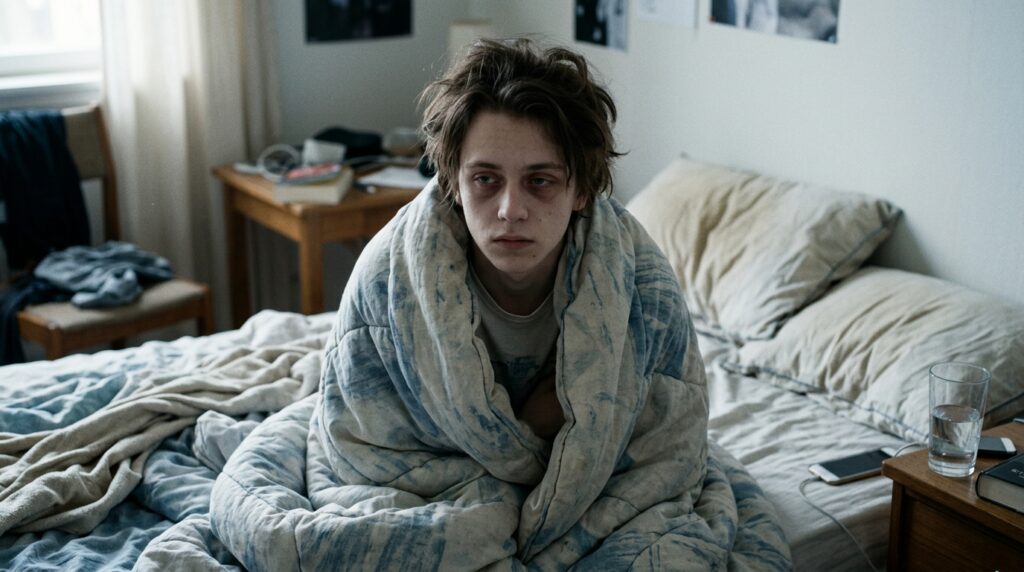
Man_sitting_on_bed_exhausted_
Eight Hours in Bed Does Not Guarantee Eight Hours of Good Sleep
This is one of the biggest misunderstandings about sleep.
You may go to bed at 10 p.m.
You may wake at 6 a.m.
Your calculation says:
Eight hours. Perfect.
Your body may disagree.
During those eight hours, you could have experienced:
Repeated awakenings: Brief interruptions may reduce sleep quality.
Breathing disturbances: Sleep-related breathing problems can fragment sleep.
Physical discomfort: Pain, temperature, or movement may repeatedly disturb you.
Mental stress: A racing mind can interfere with restorative sleep.
Environmental disruption: Noise, light, or an uncomfortable bedroom can affect sleep.
You may not remember every awakening. That is what makes poor-quality sleep particularly frustrating. You wake up believing that you slept continuously. Your body wakes up believing otherwise.
Sometimes the mystery is not how long you slept. It is what kept interrupting the sleep you do not remember.
Eight Hours in Bed Does Not Guarantee Eight Hours of Good Sleep
Poor Sleep Quality May Be the Real Problem
Sleep is not a simple off switch. During a healthy night, your body moves through different stages of sleep. Repeated disruptions can interfere with the normal process. Possible signs of poor sleep quality include:
Frequent waking: You repeatedly wake during the night.
Unrefreshing mornings: You wake feeling as tired as when you went to bed.
Daytime sleepiness: You struggle to remain alert.
Morning headaches: You regularly wake with headaches.
Poor concentration: Your thinking feels slower or foggy.
Irritability: Small problems feel disproportionately annoying.
One bad night is normal. Several bad nights can happen to anyone. But if this pattern continues for weeks, it is worth investigating.
Could Sleep Apnea Be Keeping You Exhausted?
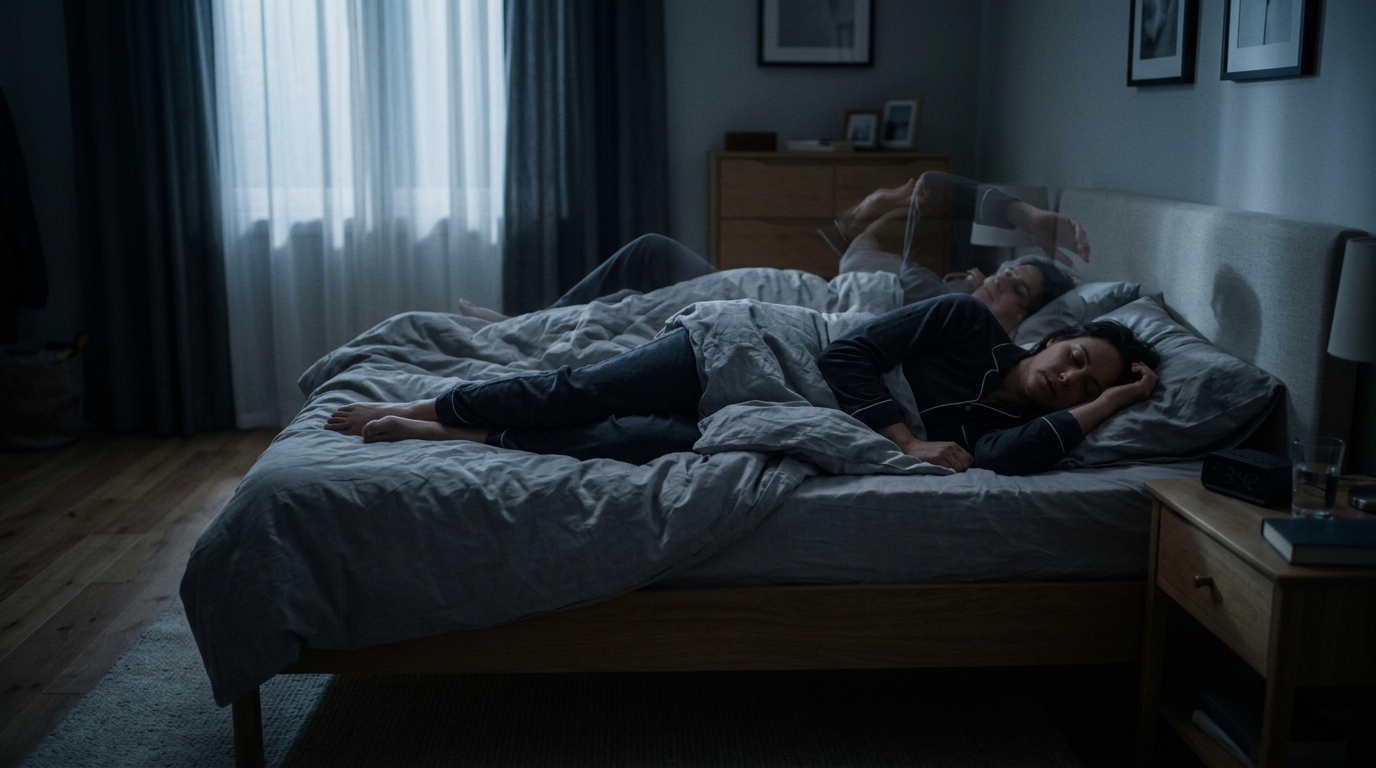
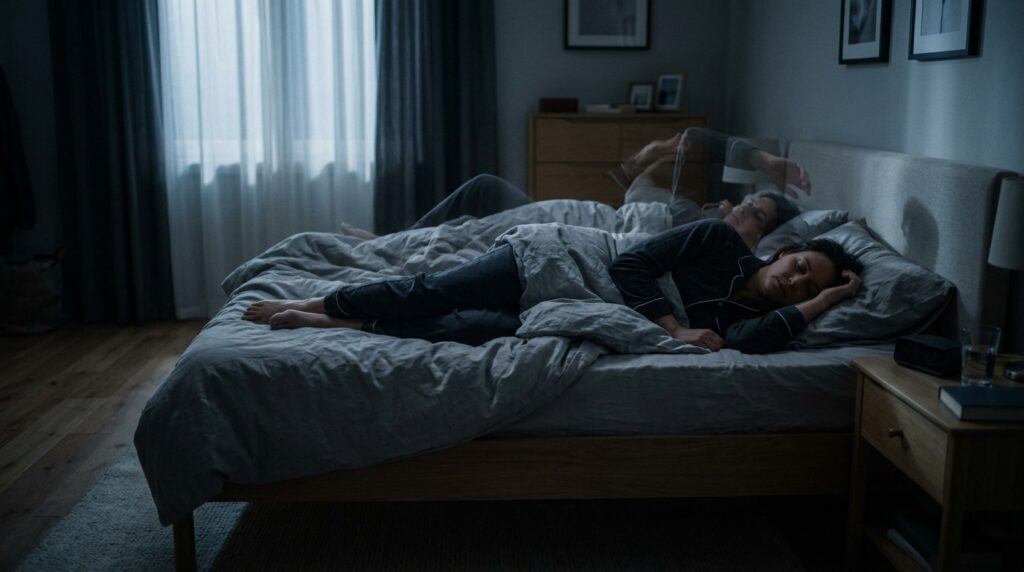
Sleep apnea is one of the important causes to consider when someone sleeps for many hours but still wakes exhausted. In obstructive sleep apnea, breathing can repeatedly stop and restart during sleep. The person may not remember these interruptions. A partner may notice them first.
Possible warning signs include:
Loud snoring: Snoring that is frequent or unusually loud.
Gasping or choking: Sudden breathing sounds during sleep.
Morning headaches: Headaches may occur after waking.
Daytime sleepiness: You struggle to stay awake during normal activities.
Poor concentration: Mental focus becomes more difficult.
A Real-Life Example
Consider a man in his late forties.
He works long hours and assumes his constant exhaustion is simply the price of being busy. He drinks coffee throughout the day. He falls asleep quickly every night. So, naturally, he believes he has no sleep problem.
His wife notices something different.
He snores loudly.
Sometimes he suddenly stops breathing.
Then he gasps and begins breathing again.
He wakes in the morning convinced that he slept for eight hours. But his body may have spent the night repeatedly struggling to maintain normal breathing.
The lesson is simple:
Falling asleep easily does not automatically mean you are sleeping well.
Persistent tiredness combined with loud snoring, choking, gasping, or observed breathing pauses should be discussed with a healthcare professional.
Could Sleep Apnea Be Keeping You Exhausted?
Your Body Clock May Be Out of Sync
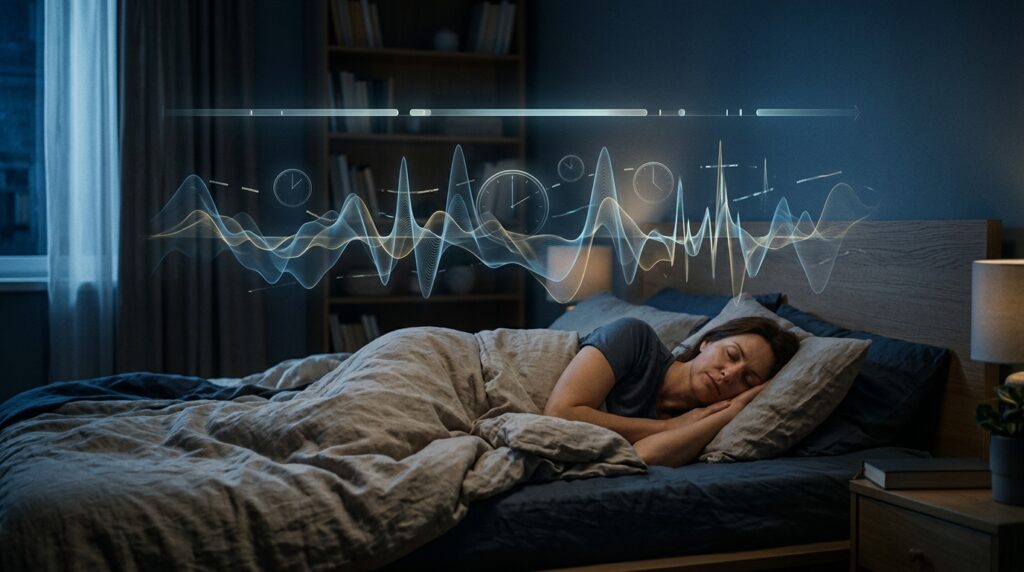
Your body has its own internal timing system. This is often called the circadian rhythm. It helps regulate when you feel sleepy and when you feel alert. Problems can occur when your lifestyle repeatedly conflicts with this internal rhythm.
Common causes include:
Irregular bedtimes: Sleeping at dramatically different times each night.
Shift work: Working nights or rotating schedules.
Late-night light exposure: Bright screens and artificial light can affect sleep timing.
Frequent travel: Crossing time zones can disrupt the body clock.
Weekend schedule changes: Sleeping very late on weekends and waking early during the week.
Imagine sleeping at 2 a.m. every weekend and then suddenly trying to sleep at 10 p.m. on Sunday. Your alarm may be ready for Monday. Your body clock may still be somewhere around Saturday.
Your schedule may say, “Sleep now.” Your body clock may reply, “Who exactly gave you that authority?”
Consistency can matter more than people realise.
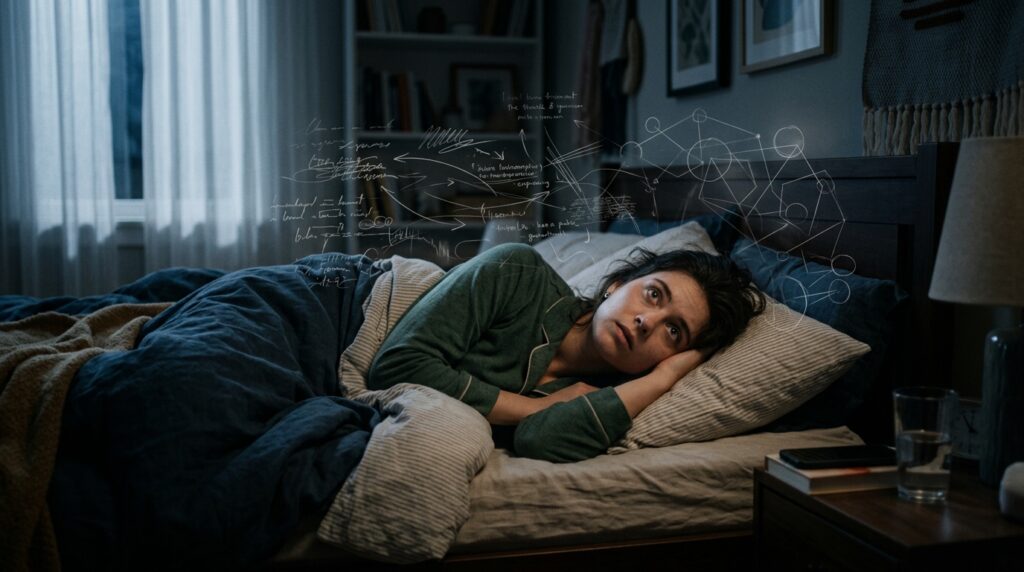
Stress Can Enter the Bedroom With You
You can leave the office.
You can turn off the lights.
You can place your phone on the table.
But that does not mean your brain has gone home.
Stress can interfere with falling asleep and staying asleep.
Your mind may begin replaying:
Unfinished work: Tomorrow’s responsibilities suddenly become urgent.
Financial worries: Bills become louder at midnight.
Family concerns: Problems feel larger when the house is quiet.
Past conversations: Your brain decides to reopen an argument from five years ago.
Future fears: Every possible disaster suddenly deserves detailed planning.
A Real-Life Example
A woman in her mid-thirties has a demanding job and two young children.
She sleeps from 11 p.m. until 7 a.m.
On paper, she is getting eight hours.
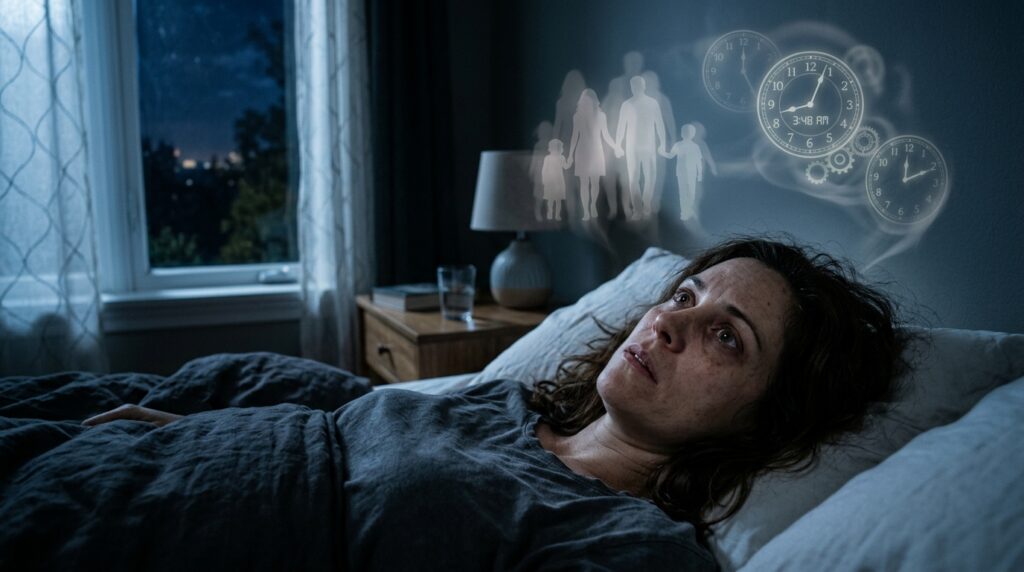
In reality, she wakes twice to check on her children, once because of a notification, and spends long periods thinking about the next day’s responsibilities. By morning, she has technically spent eight hours in bed. She has not necessarily received eight hours of restorative sleep.
Sometimes the body is lying down while the mind is still running a marathon.
Why Am I Still Tired After Sleeping: Woman_lying_restlessly_in_bed_
How Persistent Tiredness Can Affect Men
Men often explain tiredness through work, physical activity, or age. Sometimes that explanation is correct. Sometimes it delays attention to an underlying problem. For men, persistent tiredness may sometimes be associated with factors such as:
Sleep apnea: Loud snoring and breathing interruptions deserve attention.
Work-related stress: Long hours and irregular schedules can reduce sleep quality.
Alcohol use: Alcohol may make some people sleepy but can disrupt normal sleep later in the night.
Cardiometabolic health: Conditions affecting blood pressure, blood sugar, and overall metabolic health can contribute to fatigue.
Medication effects: Some medicines may contribute to tiredness or daytime drowsiness.
Mental health pressures: Men may sometimes describe depression or emotional stress as tiredness, irritability, anger, or loss of motivation rather than sadness.
A Real-Life Example
A 52-year-old man begins falling asleep in front of the television every evening.
He assumes:
“I am getting older. This is normal.”
But his tiredness is affecting his concentration at work.
He snores heavily.
He wakes with headaches.
He has gained weight.
Rather than accepting exhaustion as an unavoidable part of middle age, he decides to discuss the symptoms with his doctor.
That decision matters.
Getting older can change sleep patterns, but persistent exhaustion should not automatically be explained away by age.
How Persistent Tiredness Can Affect Women
Women can experience additional factors that may influence energy and sleep throughout different stages of life.
These can include:
Menstrual blood loss: Heavy periods can contribute to iron deficiency and anaemia.
Pregnancy: Hormonal and physical changes can significantly affect sleep and energy.
Postpartum sleep disruption: Caring for an infant can produce repeated sleep interruptions.
Perimenopause and menopause: Hormonal changes, hot flashes, and night sweats can interfere with sleep.
Thyroid conditions: Thyroid problems can occur in both men and women and may contribute to fatigue.
Caregiving responsibilities: Some women experience substantial sleep disruption while caring for children, parents, or other family members.
A Real-Life Example
A 44-year-old woman begins waking repeatedly during the night. She feels unusually warm. Sometimes she experiences sweating at night. During the day, she struggles with fatigue and concentration. She assumes that stress is the only explanation. However, age-related hormonal changes and other health factors may also be relevant. The important lesson is not to self-diagnose. It is to avoid dismissing persistent symptoms as simply:
“I am busy.”
Busy people can also become unwell.
How Persistent Tiredness Can Affect Women
Why Older Adults May Feel Tired After Sleeping
Sleep patterns often change with age. Older adults may wake more frequently during the night and may experience changes in how deeply or continuously they sleep. However, persistent daytime exhaustion should not automatically be considered a normal and unavoidable part of ageing.
Older adults may experience additional factors such as:
Multiple medications: Some medicines can contribute to drowsiness or fatigue.
Chronic pain: Pain can repeatedly interrupt sleep.
Frequent urination: Nighttime bathroom visits can fragment sleep.
Sleep apnea: Sleep-disordered breathing can occur at any age.
Medical conditions: Heart, lung, kidney, thyroid, and other health conditions may affect energy.
Reduced physical activity: Inactivity can contribute to reduced stamina.
Social isolation: Loneliness and emotional stress can affect sleep and overall well-being.
A Real-Life Example
An older man wakes three or four times every night. He visits the bathroom. His arthritis causes discomfort. He takes several medications. During the day, he feels exhausted and assumes:
“This is what old age feels like.”
But his tiredness may have several contributing factors, some of which could potentially be addressed. Healthy ageing does not mean expecting to feel energetic every hour of every day. It also does not mean accepting severe, persistent fatigue without asking why.
Age may change the body. It should not automatically silence its warning signals.
Why Am I Still Tired After Sleeping:Why Older Adults May Feel Tired After Sleeping
Depression and Emotional Exhaustion Can Feel Physical
Fatigue is not always caused by a physical condition. Depression, anxiety, grief, and prolonged emotional stress can affect energy, sleep, motivation, and concentration. Depression does not always look like constant sadness. Sometimes it looks like:
Low energy: Everything feels harder than usual.
Oversleeping: You sleep longer but still feel unrefreshed.
Insomnia: You cannot fall asleep or remain asleep.
Loss of interest: Activities you once enjoyed feel meaningless.
Mental fog: Concentration becomes difficult.
Physical heaviness: Even simple tasks feel exhausting.
A person may say:
“I don’t feel sad. I just don’t have the energy for anything.”
That feeling deserves attention. The mind and body are not separate machines. What affects one can influence the other.
Could Your Medication Be Making You Tired?
Sometimes the cause of persistent tiredness may be related to medication. Some medicines can contribute to drowsiness or fatigue. Depending on the medicine and the individual, examples may include:
Antihistamines: Some can cause significant drowsiness.
Sleep medicines: Residual effects may continue into the next day.
Pain medicines: Certain medications can cause sedation.
Blood pressure medicines: Some may contribute to fatigue.
Mental health medicines: Effects can vary depending on the medication and individual.
Do not stop prescribed medication simply because you suspect it may be contributing to tiredness. Instead, ask your healthcare professional:
“Could any of my medicines be contributing to my fatigue?”
That is a safer and more useful starting point.
Iron Deficiency and Other Nutritional Problems
Persistent fatigue can sometimes be related to nutritional deficiencies or inadequate nutrition. Iron deficiency and anaemia are well-known examples.
Possible symptoms may include:
Low energy: Ordinary activities feel more difficult.
Weakness: Physical strength and stamina may decline.
Shortness of breath: This may occur during activity.
Dizziness: Some people may experience light-headedness.
Pale skin: This can occur in some cases.
However, fatigue does not automatically mean iron deficiency. The same applies to vitamin supplements. The internet often turns every symptom into a shopping opportunity.
You feel tired.
Someone recommends vitamin D.
Someone else recommends B12.
Another person recommends iron.
Soon your kitchen resembles a small pharmacy.
A supplement should solve a known problem, not become a lottery ticket for unexplained symptoms.
Appropriate testing and professional guidance are usually more useful than guessing.
Thyroid and Blood Sugar Problems Can Affect Energy
The thyroid plays an important role in regulating body processes. Thyroid disorders can affect energy levels. Blood sugar problems can also contribute to fatigue. Depending on the condition, additional symptoms may occur. These can include:
Weight changes: Unexplained gain or loss may be relevant.
Temperature sensitivity: Feeling unusually cold or hot can sometimes provide clues.
Changes in appetite: Significant changes may deserve attention.
Increased thirst: This can occur with some blood sugar problems.
Frequent urination: Persistent changes should be discussed with a healthcare professional.
Palpitations: An unusually fast or irregular heartbeat should not be ignored.
Fatigue alone cannot diagnose any of these conditions.
But persistent tiredness combined with other symptoms may help guide appropriate medical evaluation.
What About ME/CFS and Long-Lasting Fatigue?
Myalgic encephalomyelitis/chronic fatigue syndrome, often called ME/CFS, is a complex condition involving severe fatigue and other symptoms. The fatigue associated with ME/CFS is not simply the normal tiredness people experience after a busy week. It can significantly affect daily functioning. Some people experience worsening symptoms after physical or mental exertion, often referred to as post-exertional malaise. Sleep may also fail to provide the expected sense of restoration.
ME/CFS should not be self-diagnosed from an online article.
Persistent, disabling fatigue requires proper medical evaluation. The important point is this:
Not all fatigue improves simply by sleeping longer.
Can Sleeping Too Much Make You Feel Worse?
Many people assume the answer to tiredness is always more sleep. Not necessarily. If you regularly sleep for long periods and still wake feeling unrefreshed, the underlying issue may not be a lack of opportunity for sleep. Possible explanations can include:
Poor sleep quality: Long sleep may still be fragmented.
Irregular schedules: The body clock may be disrupted.
Sleep disorders: Certain conditions can affect restorative sleep.
Depression: Some people experience increased sleep alongside persistent fatigue.
Medication effects: Medicines can influence both sleep and daytime alertness.
Underlying health conditions: Persistent symptoms may require evaluation.
If eight hours does not restore you, automatically increasing sleep to ten or twelve hours may not solve the problem.
Sometimes the answer is more sleep. Sometimes the answer is understanding why sleep is not working.
The Weekend Catch-Up Problem
Many people live on a cycle of sleep deprivation.
During the week:
Sleep too little.
At the weekend:
Sleep as much as possible.
Then Monday arrives with all the warmth of an unpaid bill. Sleeping longer may help recover from insufficient sleep. However, large differences between weekday and weekend schedules can disrupt your regular sleep pattern. A more consistent sleep schedule may help support a healthier rhythm. If you constantly need dramatically more sleep on days off, consider whether your weekday schedule is allowing enough opportunity for rest.
Your body may be collecting a debt.
And it has no interest in forgiving it.
Your Bedroom May Be Working Against You
Your bedroom does not need expensive furniture or a luxury hotel mattress. But it should support sleep rather than constantly compete with it.
Consider:
Temperature: Is the room uncomfortably hot or cold?
Light: Are outside lights or screens affecting your sleep?
Noise: Are traffic, television, or household sounds disturbing you?
Comfort: Does your mattress or pillow support comfortable sleep?
Screen habits: Are you consuming stimulating content until the moment you try to sleep?
Routine: Do you have a reasonably consistent sleep schedule?
Small environmental changes may not solve every case of fatigue. But removing obvious obstacles is a sensible place to begin.
A Seven-Day Sleep and Energy Check
Before assuming you need a complicated solution, observe your pattern for one week.
Keep a simple record of:
Bedtime: Note when you get into bed.
Estimated sleep time: Record when you believe you actually fall asleep.
Night awakenings: Write down any awakenings you remember.
Wake-up time: Record when you finally get up.
Daytime naps: Include their timing and duration.
Caffeine intake: Note what you consume and when.
Physical activity: Record significant exercise or exertion.
Medication changes: Include new medicines or timing changes.
Morning energy: Rate how rested you feel.
Daytime fatigue: Note when tiredness becomes strongest.
Patterns can become easier to see when written down. You may discover that your “eight hours” is actually six and a half. Or that your worst fatigue follows nights when you wake repeatedly. Or that your tiredness appears unrelated to sleep and may need further investigation.
A Seven-Day Sleep and Energy Check
When Should You See a Doctor?
Occasional tiredness is normal. Persistent or unexplained fatigue deserves more attention. Consider speaking with a healthcare professional if your tiredness:
Lasts for weeks: The problem continues despite adequate rest.
Affects daily life: Work, relationships, driving, or ordinary activities become difficult.
Is worsening: Your energy continues to decline.
Occurs with weight changes: Unexplained weight loss or gain is present.
Includes breathing symptoms: Shortness of breath, gasping, or chest discomfort occurs.
Includes sleep disturbances: Loud snoring or observed breathing pauses are present.
Includes unusual weakness: Your physical strength changes noticeably.
Includes persistent fever or sweats: These symptoms require proper evaluation.
Causes excessive daytime sleepiness: You struggle to stay awake in situations where alertness is important.
Seek urgent medical attention for severe symptoms such as serious breathing difficulty, chest pain, fainting, sudden confusion, or other emergency symptoms. And one important safety point:
Do not drive if you are struggling to stay awake.
What Might a Healthcare Professional Check?
There is no single universal test for fatigue. A proper evaluation depends on your age, sex, symptoms, medications, lifestyle, and medical history. A healthcare professional may ask about:
Sleep habits: Your bedtime, wake-up time, and nighttime awakenings.
Breathing symptoms: Snoring, choking, or observed breathing pauses.
Daily energy: When your tiredness is worst.
Medical history: Existing health conditions and recent illnesses.
Medication use: Prescription, over-the-counter, and supplement use.
Mood and stress: Emotional health can affect sleep and energy.
Diet and lifestyle: Nutrition, hydration, and activity levels.
Additional symptoms: Weight changes, pain, fever, thirst, or other concerns.
Depending on the situation, blood tests or other investigations may be considered. If a sleep disorder is suspected, a sleep study may also be appropriate. The purpose is not to test everything. It is to investigate intelligently.
Stop Treating Exhaustion as a Personality Trait
Modern life has created a strange admiration for exhaustion.
People say:
“I only slept four hours.”
And somehow expect applause. Being constantly exhausted is not automatically proof that you are hardworking. Sometimes it is proof that something needs to change.
That change may be simple.
A better sleep schedule.
Less late-night screen exposure.
More consistent routines.
A discussion about medication.
Treatment for an underlying health condition.
Support for stress or emotional health.
Or simply permitting yourself to rest without feeling guilty.
Rest is not laziness. Persistent exhaustion is not a personality trait.
Your body is not always asking you to push harder. Sometimes it is asking you to pay attention.
The Bottom Line
If you are still tired after sleeping, do not focus only on the number of hours you spend in bed. Look at the full picture.
Ask yourself:
Am I getting restorative sleep?
Am I waking repeatedly during the night?
Do I snore, gasp, or experience breathing interruptions?
Is stress keeping my mind active at night?
Could medication be contributing?
Are age-related changes affecting my sleep?
Are there symptoms specific to my stage of life or overall health?
For some people, the answer will be simple. For others, persistent tiredness may point toward a sleep disorder, nutritional problem, medication effect, hormonal issue, emotional health concern, or another medical condition.
The goal is not to become frightened by every possible explanation. It is to stop dismissing persistent exhaustion. Waking up tired after one bad night is normal. Feeling drained after an unusually demanding week is understandable.
But waking exhausted day after day, despite giving yourself enough opportunity to sleep, deserves a closer look. Your body may not be asking for another cup of coffee. It may be asking for an answer.
Frequently Asked Questions
Why am I still tired after sleeping for eight hours?
You may be spending enough time in bed but not getting restorative sleep. Frequent awakenings, stress, sleep apnea, an irregular body clock, medication effects, and other health conditions can contribute to waking unrefreshed.
Can men and women experience persistent tiredness differently?
Yes. Both men and women can experience fatigue for many of the same reasons, but certain life stages and health factors can differ. Heavy menstrual bleeding, pregnancy, postpartum sleep disruption, and menopause can affect women, while sleep apnea and some lifestyle or health patterns may be particularly important considerations for men. Individual evaluation remains essential.
Is it normal for older adults to feel tired every day?
Sleep patterns can change with age, but persistent exhaustion should not automatically be dismissed as a normal part of ageing. Medications, chronic pain, sleep disorders, frequent nighttime urination, reduced activity, and medical conditions may contribute.
Can sleep apnea make you tired even if you sleep all night?
Yes. Sleep apnea can repeatedly interrupt breathing and fragment sleep, even when you do not remember waking. Loud snoring, gasping, choking, morning headaches, and excessive daytime sleepiness are important symptoms to discuss with a healthcare professional.
Can vitamin deficiency cause constant tiredness?
Some nutritional deficiencies, including iron deficiency, can contribute to fatigue. However, fatigue has many possible causes. It is better to identify a deficiency through appropriate testing rather than taking multiple supplements without knowing the cause.
When should I see a doctor about being tired?
Consider medical advice if tiredness lasts for weeks, worsens, interferes with daily life, does not improve with adequate rest, or occurs with symptoms such as breathing problems, significant weight changes, persistent fever, night sweats, unusual weakness, loud snoring, or excessive daytime sleepiness.
References
National Heart, Lung, and Blood Institute — Sleep Health and Sleep Disorders
Centers for Disease Control and Prevention — Sleep and Sleep Health
MedlinePlus — Fatigue and Sleep Disorders
National Health Service — Tiredness and Fatigue
National Institute of Neurological Disorders and Stroke — Sleep Disorders
National Institute of Diabetes and Digestive and Kidney Diseases — Thyroid and Metabolic Health
Editorial Note
This article is intended for general educational purposes and should not be used as a substitute for professional medical diagnosis or treatment. Persistent, unexplained, worsening, or disabling fatigue should be discussed with a qualified healthcare professional.