Trump Bans CNN and Politico: Why Is He Angry at the Media?
Trump Bans CNN and Politico. Let’s examine why Donald Trump has announced a ban on CNN, MS NOW and Politico from the White House, what reasons he has actually given, how the conflict developed, and what the dispute means for presidential power, press access and the public’s right to know.
https://mrpo.pk/the-great-power-game/
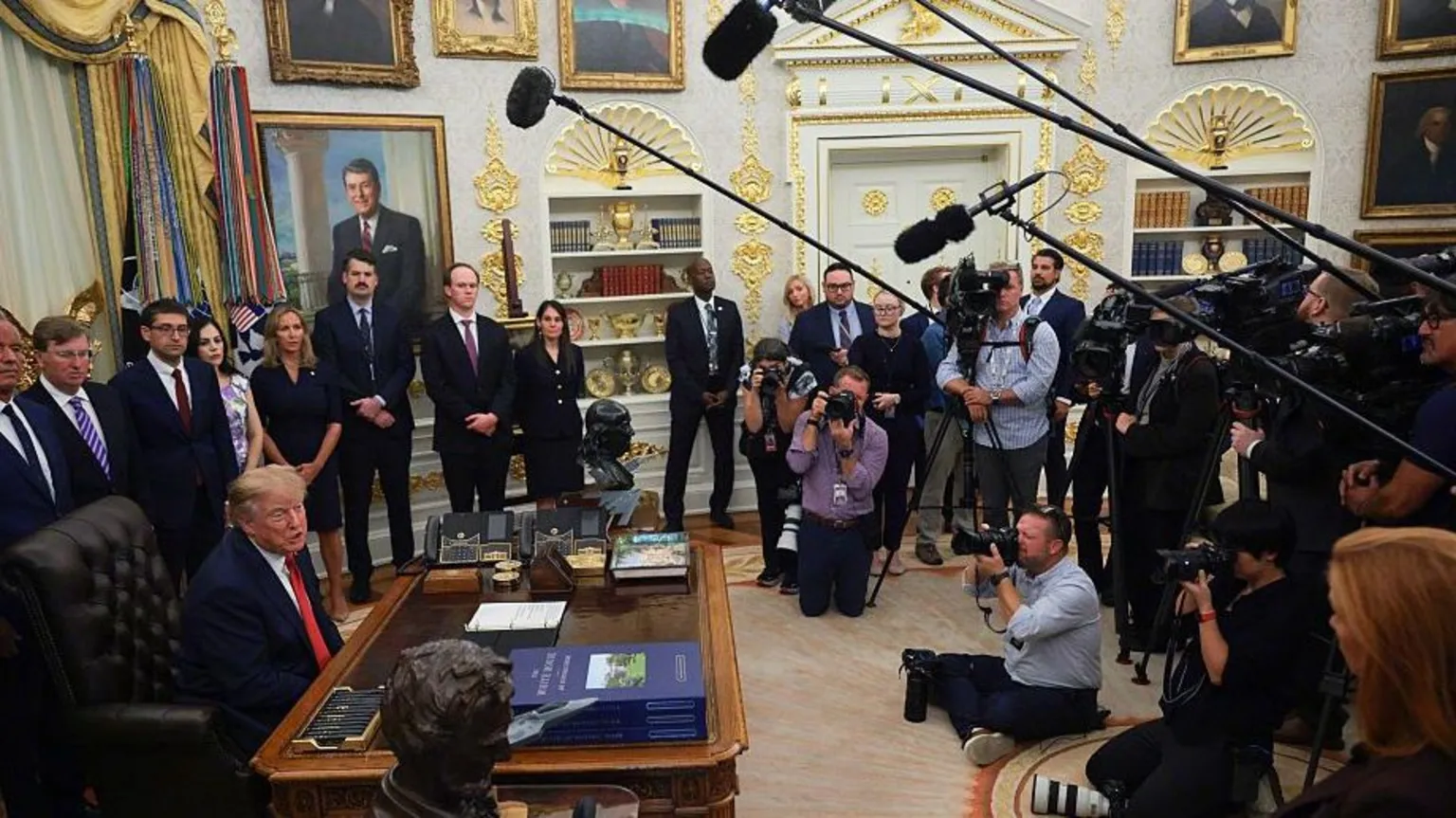
EP statement: The latest Trump-media confrontation is not simply another presidential complaint about unfavorable headlines. It raises a larger question:
Can a president control access to the White House based on whether he likes the way a news organization reports on him?
On September 18, 2026, Donald Trump announced that CNN, MS NOW, and Politico would be banned from the White House, accusing them of publishing what he called “fake news,” “fiction,” and “lies.” He also warned that other outlets could follow. (Reuters)
But there is an important detail hiding underneath the dramatic headline.
Trump did not identify one particular article, broadcast, or investigation that triggered the decision.
When reporters asked why he was doing it now, Trump said there was “no reason” for the timing and described the decision as the result of a cumulative buildup of stories over the previous two years. (CBS News)
That makes this story much bigger than CNN. It is about the relationship between the most powerful office in the United States and the people whose job is to scrutinize it.
What exactly did Trump announce?
Trump made the announcement on Truth Social, saying he was banning CNN, MS NOW and Politico from the White House “effective immediately.”
He accused the three organizations of repeatedly reporting “FAKE NEWS” and said media outlets should not be able to report what he described as “FICTION and LIES” about the president, his administration, or the United States. He added that other “Fake News Media Outlets” could follow. (Reuters)
Later, when reporters asked about other possible targets, Trump specifically mentioned The New York Times and The Washington Post. He complained that these organizations deliberately turn positive developments into negative stories. (The Washington Post)
But there is still an unresolved practical question:
What does “ban” actually mean?
At the time of the announcement, the White House had not clearly explained whether the organizations would lose their White House credentials, be excluded from the press pool, be barred from the grounds, or simply be denied access to certain presidential events.
Indeed, journalists from the targeted organizations were still working at the White House after Trump’s announcement. (PBS)
So the political announcement was clear. The legal and administrative mechanism was not.
Why is Trump angry with CNN?
Trump’s hostility toward CNN is not new.
It goes back more than a decade, and it became a defining feature of his first presidential campaign.
During the 2016 campaign and his first presidency, Trump repeatedly attacked CNN as “fake news.” In January 2017, for example, he refused to take a question from CNN correspondent Jim Acosta at a press conference and told him that CNN’s organization was “terrible.” The confrontation became one of the earliest symbols of the Trump-CNN relationship. (The Guardian)
The relationship deteriorated further after Trump entered the White House.
In February 2017, Trump famously described several major news organizations as the “enemy of the American people.” CNN was among the outlets he repeatedly singled out. (CNN Transcripts)
This was not simply a disagreement about one story. Trump developed a broader argument:
Mainstream media organizations were not merely reporting negatively about him; in his view, they were politically hostile to him and his administration.
That distinction is important.
A president can complain about inaccurate reporting. Presidents have done that for generations. Trump took the argument further by repeatedly questioning the legitimacy of major news organizations themselves.
The Jim Acosta confrontation
The most important earlier CNN-White House battle came in 2018.
CNN correspondent Jim Acosta challenged Trump during a White House press conference. The administration subsequently suspended Acosta’s White House press credentials.
In November 2018, the White House suspended CNN reporter Jim Acosta’s press credentials after a heated exchange with President Trump during a press conference. CNN challenged the suspension in federal court.
A federal judge issued a temporary restraining order requiring the White House to restore Acosta’s access, finding that the administration had not provided sufficient due process before taking away his credential. The White House subsequently restored his pass, and the immediate legal confrontation ended.
The episode became an important example in the broader debate over whether a president can restrict a journalist’s access because of the journalist’s conduct or reporting. That episode created an important legal precedent for understanding today’s dispute. The government may have substantial control over security and access to restricted presidential spaces.
But punishing a journalist because of the journalist’s reporting or viewpoint creates a very different constitutional problem.
That distinction has returned to the center of the debate in 2026.
What does Trump say about Politico?
Trump’s complaint about Politico has an additional dimension. He has repeatedly criticized the federal government’s spending on Politico subscriptions. During his first year back in office, Trump highlighted government payments to Politico and portrayed them as evidence of inappropriate government support for a media organization.
There is, however, an important factual correction.
Federal agencies did spend more than $8 million on Politico products in fiscal year 2024, but those payments were primarily subscriptions and professional information services, not government grants to make Politico publish favorable stories.
USAID’s portion was only about $44,000 over fiscal years 2023 and 2024. Politico Pro was a subscription service used by government agencies to track legislation, regulations and policy developments. (FactCheck.org)
And there is another awkward fact for anyone trying to portray the arrangement as uniquely a Biden-era phenomenon.
The federal government also purchased Politico subscriptions during Trump’s first presidency. Federal obligations to Politico during Trump’s 2017–2020 term totaled about $10.2 million. (FactCheck.org)
Trump’s latest explanation nevertheless specifically linked Politico’s White House access to the roughly $8 million in government purchases, saying he objected to the money spent by the Biden administration. (The Washington Post)
So there are two different issues here:
Government subscriptions: A procurement question about whether taxpayers should pay for expensive information services.
Press access: A constitutional question about whether the government can exclude a news organization because of its reporting.
They should not be confused.
What about MS NOW?
MS NOW is also part of the same dispute. Trump’s announcement grouped it with CNN and Politico as organizations whose reporting he considers unacceptable. The larger significance is that the target list is not limited to one network or one journalist. It includes organizations representing different parts of the political and media ecosystem.
That makes the dispute less about an individual reporter and more about who gets access to the presidency.
Is this simply Trump attacking “liberal media”?
That is one interpretation of the political context, but the documented facts are more complicated. Trump has certainly focused heavily on organizations that he believes provide hostile coverage. At the same time, his conflicts with the press have not been limited to one ideological category.
His administration has fought with the Associated Press, for example, over the organization’s decision to continue using “Gulf of Mexico” rather than adopt Trump’s preferred “Gulf of America.”
The AP was subsequently excluded from some presidential events. (The Associated Press)
The dispute eventually went to federal court.
A district judge ruled in April 2025 that the government could not punish the AP because of its choice of terminology and wrote that when the government opens presidential spaces to journalists, it cannot exclude journalists because of their viewpoints. (The Associated Press)
An appeals court later gave the administration greater latitude concerning restricted spaces such as the Oval Office and Air Force One, leaving important questions unresolved. (The Associated Press)
That legal fight matters enormously to the CNN case.
The bigger battle: Who controls access to the president?
For ordinary Americans, it may sound like a bureaucratic argument.
It is not.
Presidents conduct important business behind closed doors. Journalists who receive access to the Oval Office, Air Force One, presidential meetings and briefings provide information that millions of citizens cannot obtain themselves.
The White House, therefore, has limited physical space. Someone has to decide which journalists enter. The difficult constitutional question is:
Can the president use that limited access as a reward for favorable coverage or a punishment for unfavorable coverage?
That is where “viewpoint discrimination” enters the argument. The term sounds technical, but the basic idea is simple. Imagine that the government says:
You can cover me if you praise me, but you cannot cover me if you criticize me.
That is fundamentally different from saying:
There are only five seats, and we must rotate them fairly.
The first is based on viewpoint. The second is an ordinary access-management problem.
Federal courts have already confronted this distinction in the AP case. (AP News)
Why the First Amendment matters
The First Amendment to the U.S. Constitution protects freedom of speech, religion, assembly, petition, and the press. In this context, press protection limits the government’s ability to punish or discriminate against journalists because of their reporting or viewpoint.
It does not mean every journalist has an unlimited right to enter every room in the White House.
The government can control access to secure areas.
Presidents can decide whom they interview.
Officials do not have to answer every reporter’s question.
But courts have increasingly focused on what happens when access is restricted because the government dislikes what a journalist says or writes.
The Knight First Amendment Institute and other press-freedom advocates have argued that excluding news organizations from the presidential press pool because of their coverage would violate the First Amendment. (CBS News)
The White House Correspondents’ Association has also argued that constitutional press protections do not depend on whether a president likes a news organization’s coverage or questions. (The Washington Post)
That is why this fight is likely to end up in court.
Trump has a much larger media war underway
The CNN-POLITICO-MSNOW announcement should not be viewed in isolation. Trump’s second presidency has seen an unusually broad confrontation with news organizations.
His administration has:
- Restricted Associated Press Access: The AP was excluded from certain presidential events following its decision not to adopt Trump’s preferred name for the Gulf of Mexico. (The Associated Press)
- Changed Press-Pool Control: The White House moved to exercise greater control over the composition of the presidential press pool, reducing the traditional role of the White House Correspondents’ Association. (The Associated Press)
- Fought With CNN: Trump’s clashes with CNN date back to his first campaign and included the Jim Acosta press-credential battle. (The Guardian)
- Threatened Additional Outlets: Trump has now named The New York Times and The Washington Post among organizations he considers “fake news.” (The Washington Post)
- Used Litigation: Trump has pursued lawsuits against a number of major media organizations, including The New York Times, The Wall Street Journal, the BBC and others. (The Washington Post)
Taken together, these incidents show a sustained confrontation rather than a one-day quarrel.
Why does Trump react so strongly to negative coverage?
There are several documented elements.
Trump treats media coverage as part of political combat
Trump’s political career was built partly through direct communication with voters.
Television interviews, rallies and, later, social media allow him to communicate without traditional media intermediaries.
His repeated criticism of mainstream journalism reflects his long-standing belief that major news organizations often frame his actions unfairly.
That argument has resonated with many Americans who already distrust traditional media.
But there is an important distinction between criticizing journalism and using government power to restrict journalism.
The first is ordinary political speech.
The second raises constitutional questions.
Trump believes negative coverage damages his political movement
Trump told reporters on September 18 that the targeted outlets “purposely write negative news” because, in his view, they want to diminish Republicans and his administration. (PBS)
That is Trump’s stated interpretation. It should not automatically be treated as an established fact about the motives of journalists. News organizations make editorial judgments, and their coverage can certainly contain errors, bias or strong criticism. But determining whether a particular story is false requires examining the evidence behind that story—not simply whether the president dislikes its conclusion. That distinction is central to a functioning press system.
The uncomfortable truth: News organizations can get things wrong
There is another side that should not disappear in the political drama.
CNN, Politico, The New York Times, The Washington Post and other major organizations have all faced criticism over reporting errors, sourcing problems, corrections and editorial decisions.
Journalists are not infallible.
They can make mistakes.
They can pursue stories too aggressively.
They can misunderstand events.
They can allow political assumptions to influence coverage.
A healthy press should therefore be open to criticism.
But that creates an important question:
Who gets to decide whether a news organization deserves punishment?
If the answer is “the president being covered,” a serious conflict of interest immediately appears. The president has a direct political interest in how the public perceives his administration. The press exists partly to investigate that administration. That tension is not a bug in democracy. It is part of the system.
Why the timing matters
Trump said there was no single event behind the announcement.
He described it as the accumulation of stories over roughly two years. (CBS News)
That statement is significant.
It means the ban is not being presented as punishment for one specific false report.
Instead, Trump appears to be responding to an overall pattern of coverage that he considers hostile.
That makes the dispute more difficult to resolve.
If one article were the problem, the administration could identify it, provide evidence and demand a correction.
But if the complaint is essentially:
“Your coverage of my presidency is consistently too negative.”
Then the dispute becomes a question of editorial viewpoint. And that is precisely where constitutional concerns become sharper.
Could other media outlets be next?
Trump himself suggested they could be.
He specifically mentioned The New York Times and The Washington Post when asked about other organizations.
That means the current three-outlet list may not be the final list. (Al Jazeera)
It also creates uncertainty for every organization covering the White House. If access depends on presidential approval of coverage, editors may have to consider whether aggressive reporting could result in losing access. That creates what constitutional lawyers sometimes worry about as a chilling effect.
A government does not necessarily need to censor a journalist directly. If journalists fear losing access, financial opportunities or professional standing because of critical reporting, they may become more cautious. The crucial question is whether that fear changes the journalism.
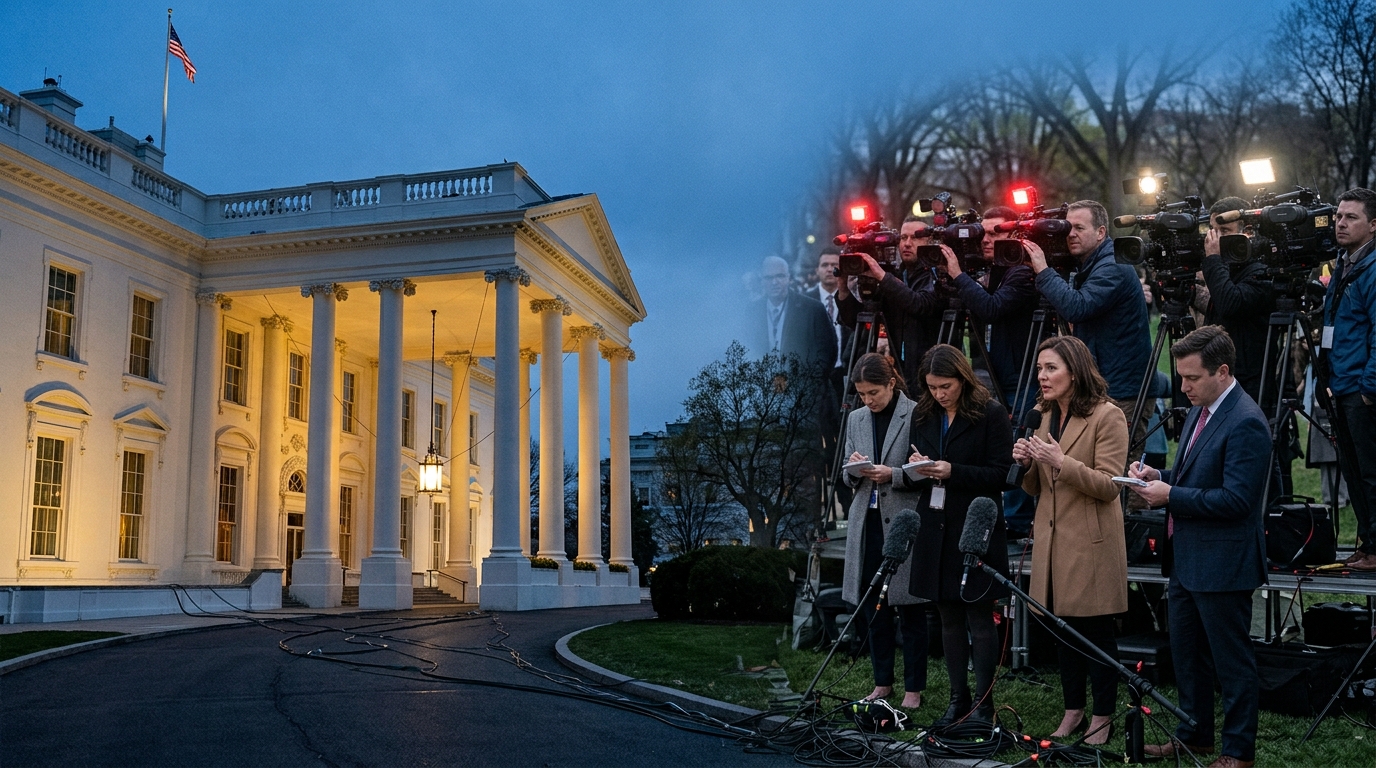
Does banning a reporter silence the media?
Not completely.
CNN can still report on Trump.
Politico can still investigate the administration.
MS NOW can still broadcast.
The New York Times can still publish.
Social media, independent websites, podcasts and other platforms can distribute information. So a White House ban is not equivalent to shutting down a news organization.
But access matters.
A journalist who is physically present can hear an exchange, ask a follow-up question, observe body language, witness an event and obtain information directly.
A reporter watching from outside must rely more heavily on video feeds, statements, other journalists and secondary sources. For that reason, press access is not merely a privilege. It can affect the quality and immediacy of public information.
The global significance
This story matters outside the United States. The American presidency is one of the most closely watched political institutions in the world. What happens in the Oval Office affects:
- Wars and Security: U.S. decisions influence conflicts and alliances around the world.
- Global Markets: Presidential decisions can move currencies, stocks, oil and commodity markets.
- Trade: Tariff and trade policies affect manufacturers and consumers across borders.
- Foreign Policy: Statements about NATO, China, Russia, Iran, Israel and other countries can have immediate international consequences.
- Democratic Norms: Other governments often point to American institutions when discussing press freedom and democratic accountability.
That makes the White House press corps more than an American media story. If journalists cannot independently question the U.S. president, people in other countries may also receive less direct scrutiny of decisions that affect them.
What is really being fought over?
Strip away the insults, personalities and social-media posts and the argument becomes remarkably simple.
Trump says:
The media publishes false and deliberately negative coverage, and he should not be required to give access to organizations he believes are acting dishonestly.
The targeted media organizations say:
The government cannot punish journalists or news organizations because the president dislikes their reporting.
Press-freedom advocates say:
The First Amendment prevents the government from discriminating against journalists because of their viewpoints.
The unresolved legal question is:
How far can a president go in controlling access to limited White House spaces while still complying with constitutional protections?
That is the question the courts may ultimately have to answer.
The deeper issue: Who watches the watchers?
There is an old democratic principle that power needs scrutiny.
The president has enormous power.
Congress has power.
The courts have power.
The military has power.
Federal agencies have power.
Corporations have power.
And the media has power too.
Journalists can damage reputations, influence elections and shape public debate. They therefore deserve criticism when they make mistakes.
But the media’s power and the government’s power are not identical.
A newspaper can publish a bad story.
A television network can broadcast a misleading report.
A president can publicly challenge it.
But the government also controls physical access to the institution journalists are covering.
That changes the equation.
The question facing the United States is therefore not simply whether CNN is fair to Trump.
It is whether the government’s access to the president can be conditioned on journalistic approval of the president.
That is a much larger question.
What happens next?
Several developments are likely to determine the significance of Trump’s announcement.
Court Challenge: CNN, Politico, or another organization could seek immediate judicial relief if access is actually revoked.
Definition Of The Ban: The White House will need to clarify whether the restriction covers the grounds, press offices, briefings, the Oval Office, presidential travel, or the press pool.
Press-Pool Rules: The administration’s existing control over the presidential press pool will remain an important part of the dispute.
Additional Outlets: Trump’s comments suggest that more organizations could be targeted.
Congressional Reaction: Lawmakers may debate whether the administration’s policy respects constitutional press protections.
Judicial Interpretation: Courts may have to draw a sharper line between legitimate control of limited presidential spaces and viewpoint-based exclusion.
The legal outcome cannot yet be known. But the constitutional argument is already clear enough to understand.
Final Takeaway
Donald Trump’s latest clash with CNN, MS NOW and Politico is the newest chapter in a relationship that has been hostile since his first presidential campaign.
Trump’s stated complaint is that these organizations produce persistently negative, false, or dishonest coverage. He says the decision is cumulative rather than triggered by one particular story. He has also indicated that other major outlets could be targeted. (Reuters)
But the most important issue is not whether Trump likes CNN. Nor is it whether CNN likes Trump.
It is whether a democratic government can restrict journalists’ access because it dislikes what they report.
America has always had hostile presidents, aggressive reporters and bitter press conferences. The unusual part begins when political disagreement becomes a question of government-controlled access. That is why this story deserves attention far beyond the White House briefing room. The real battle is not simply Trump versus CNN.
It is about the boundary between presidential power and an independent press—and ultimately about how much information citizens can obtain about the people exercising power in their name.
Frequently Asked Questions
1. Why did Trump ban CNN from the White House?
Trump said CNN repeatedly publishes what he considers “fake news,” fiction and lies about his administration. He did not identify one specific story that triggered the announcement and said the decision resulted from cumulative coverage over the previous two years. (Reuters)
2. Why was Politico included?
Trump has separately criticized federal government spending on Politico subscriptions. He specifically linked Politico’s treatment to approximately $8 million in government purchases during the Biden administration. Those payments were primarily subscriptions and professional information services, not grants for favorable coverage. (FactCheck.org)
3. Has Trump fought with CNN before?
Yes. His conflict with CNN dates back to his first presidential campaign and presidency. One of the best-known episodes occurred in 2018, when the White House suspended CNN reporter Jim Acosta’s press credentials. CNN sued, and a federal judge ordered the credential restored. (The Guardian)
4. Can a U.S. president legally ban a news organization from the White House?
The answer depends heavily on what “ban” means and which presidential space is involved. Courts have recognized substantial presidential control over some restricted spaces, while also holding that the government cannot punish journalists simply because of their viewpoints. The AP litigation has already produced conflicting or evolving rulings on different aspects of presidential press access. (The Associated Press)
5. Could The New York Times and Washington Post be banned too?
Trump indicated that other outlets could be targeted and specifically mentioned both organizations when questioned by reporters. However, at the time of the September 18 announcement, no comparable formal ban against those two outlets had been announced. (The Washington Post)
6. Why does this matter to people outside America?
The White House makes decisions affecting international security, trade, financial markets, wars, alliances and diplomacy. The ability of journalists to independently question the U.S. president therefore affects the information available not only to Americans but also to people and governments around the world.
Author:
Maj Hamid Mahmood (Retired) holds an MA in Political Science, an LLB, and a PGD (HRM). His military background, academic training in political science, and legal education provide a multidisciplinary perspective for examining international conflicts, security affairs, political developments, and the human consequences of war.
References
- Reuters — Trump says he is banning CNN, MS NOW and Politico from the White House
- Associated Press — Trump targets more news outlets
- CBS News — Trump says he’s banning CNN, Politico and MS NOW
- The Washington Post — Trump says he’s banning CNN, MS NOW and Politico
- AP — AP wins reinstatement to White House events after judge rules government can’t bar journalists
- FactCheck.org — Government subscriptions to Politico and other news services