
Saudi Arabia’s NEOM Reality Check: From Desert Dream to Costly Reality
Saudi Arabia’s NEOM Reality Check: From Desert Dream to Costly Reality. What happens when a country tries to build a city that looks like science fiction? Saudi Arabia’s answer was NEOM.
Announced in 2017 as a major part of Vision 2030, NEOM was presented as one of the most ambitious development projects in modern history. It promised futuristic cities, clean energy, artificial intelligence, luxury tourism, advanced industries and a completely new way of living.
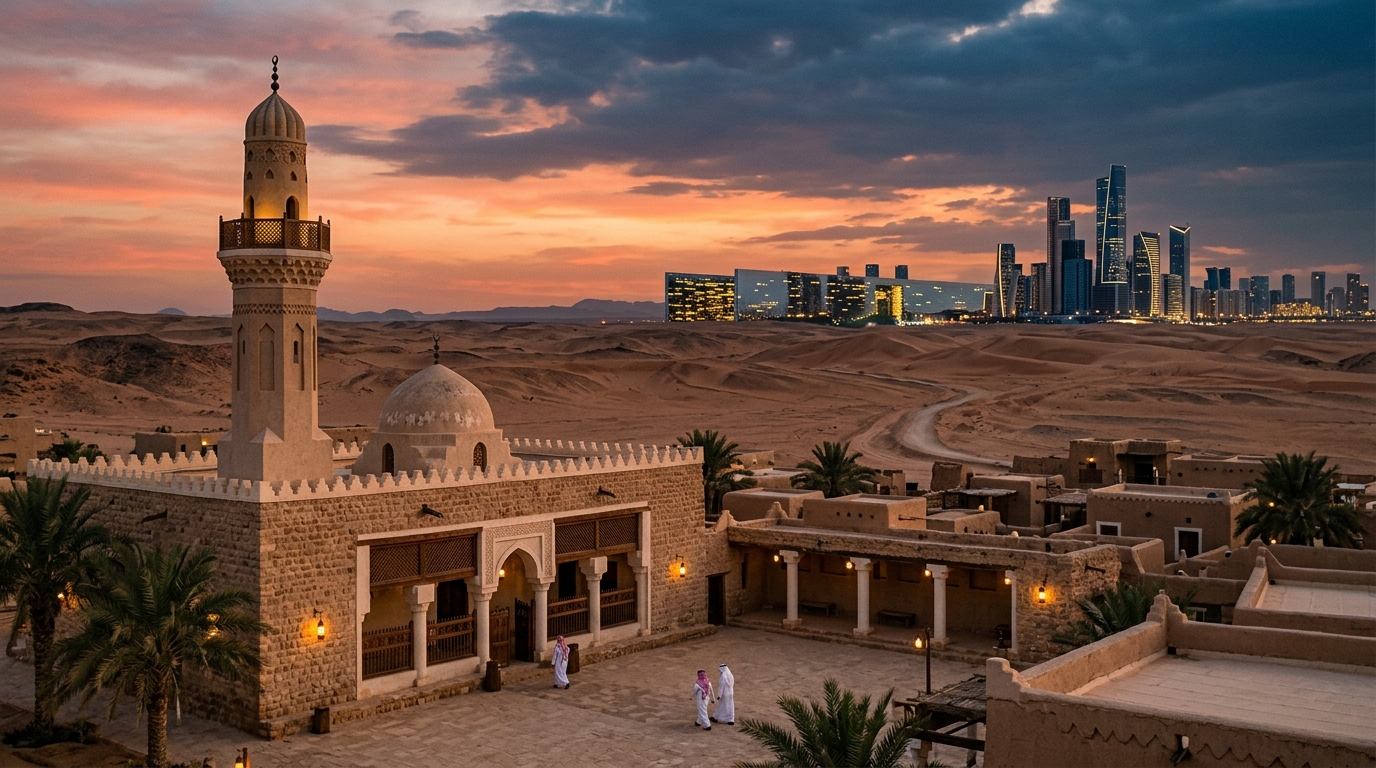
At its centre was The Line, a proposed 170-kilometre-long city made of two enormous mirrored structures, rising up to 500 meters high. It was supposed to house millions of people without traditional roads or private cars.
The images were breathtaking. The promises were even bigger. Nearly a decade later, however, the question is no longer whether NEOM can change the world. The question is how much of the original dream can actually be built. The answer emerging in 2025 and 2026 is complicated. NEOM is not dead. But it is changing.
The Line has been dramatically reduced from its original ambition. Trojena has suffered major setbacks. Other Saudi megaprojects have also faced delays and financial reviews. At the same time, Saudi Arabia is putting greater attention on projects that can produce more practical economic returns, including logistics, industry, artificial intelligence, data centres and energy. The story of NEOM is therefore becoming less about futuristic architecture and more about a difficult question:
Can Saudi Arabia turn an extraordinary vision into a financially sustainable reality?
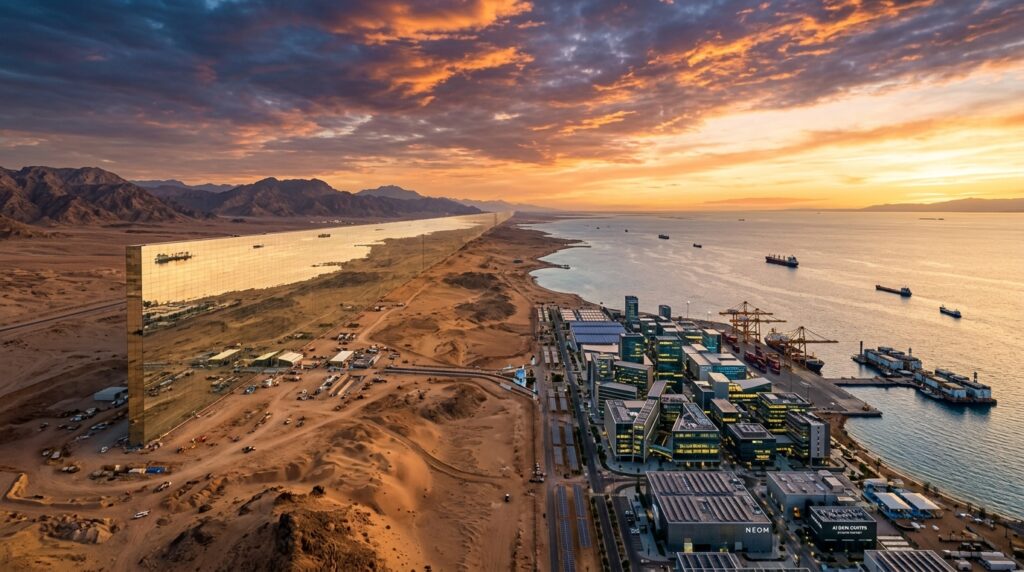
NEOM: Saudi Arabia’s $500 Billion Giga-Project, Scope Cuts, and What’s Actually Being Built
NEOM: Saudi Arabia’s Giga-Project Reality Check 2026
NEOM is the most ambitious — and most contested — giga-project in Saudi Arabia’s Vision 2030 portfolio. Announced by Crown Prince Mohammed bin Salman at the inaugural Future Investment Initiative in October 2017 with a USD 500 billion price tag, NEOM was pitched as a cross-sector economic zone the size of Belgium, built from scratch on Saudi Arabia’s northwestern coast. The concept bundled a 170-kilometre linear city, a floating industrial port, a desert ski resort, luxury islands, and a coastal lifestyle corridor under a single corporate umbrella owned by the Public Investment Fund.
The reality in 2026 is more sober. An internal audit reported by The Wall Street Journal in 2024 projected NEOM’s full build-out cost at approximately USD 8.8 trillion — roughly 25 times the Saudi annual budget and nine times its annual GDP. Approximately USD 50 billion has been spent. The Line’s 2030 population target was cut from 1.5 million to roughly 300,000. Construction on the Line was effectively suspended in September 2025.
Trojena lost its 2029 Asian Winter Games hosting bid in February 2026, with the event reassigned to Almaty, Kazakhstan. Long-time CEO Nadhmi Al-Nasr departed in November 2024 amid worker mistreatment allegations and missed milestones. The Mukaab — a related but separate Riyadh project under New Murabba — was paused at the earthworks stage in early 2026.
What survives is real. Oxagon’s port is operational and handling cargo. The NEOM Green Hydrogen complex is roughly 90 percent complete with first export shipments targeted for late 2026. Sindalah opened to invited guests in October 2024. Trojena’s tunnels and base infrastructure continue, even without the Olympics deadline. NEOM in 2026 is a scaled industrial and tourism cluster, not the city of the future from the launch films — but it is being built, and it remains the financial centerpiece of Vision 2030’s diversification programme
The Dream Behind NEOM
NEOM was born from Saudi Arabia’s Vision 2030 program. The country’s leadership wants to reduce its dependence on oil and create new sources of income through tourism, technology, manufacturing, logistics, mining, renewable energy and international investment. NEOM was designed to become the showcase for that transformation.
The project covers a huge area in northwestern Saudi Arabia along the Red Sea. Its major developments include The Line, OXAGON, Trojena and Sindalah. Each was designed for a different purpose. The Line was to become a futuristic residential city.
OXAGON was planned as an industrial and logistics centre.
Trojena was designed as a mountain tourism destination, including a controversial plan for skiing.
Sindalah was developed as a luxury island destination.
Together, they were supposed to create something that did not exist anywhere else. Saudi Arabia would not simply modernise an existing city. It would build the future from scratch.
Who Designed, Funded and Built NEOM?
NEOM is not the creation of one architect, one company or even one government department. It is a huge state-backed economic machine. At the top is Crown Prince Mohammed bin Salman, who announced NEOM in 2017 and chairs Saudi Arabia’s Public Investment Fund, or PIF. PIF is the financial engine behind many of Saudi Arabia’s giant development projects.
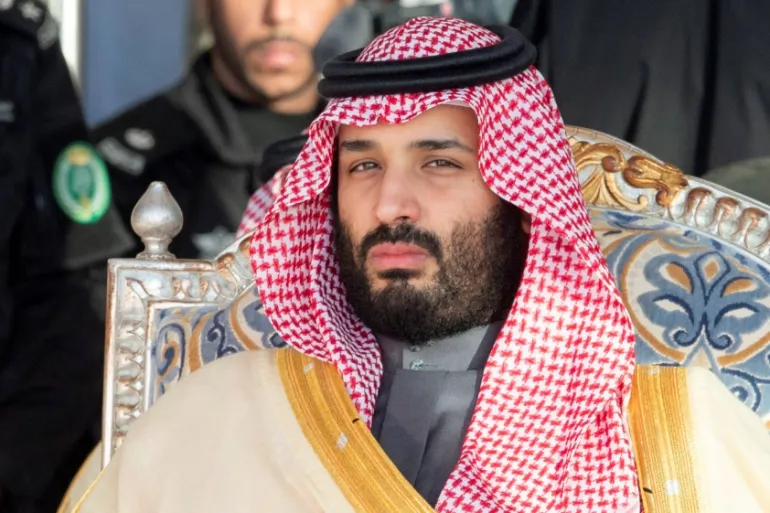
NEOM Company was established in 2019 to develop the project. PIF’s financial documents have described NEOM Company as wholly owned by PIF. In simple terms, the basic structure is:
Saudi leadership → Vision 2030 → PIF → NEOM Company → international planners, engineers, contractors and investors
This matters because NEOM is not simply a private real-estate project. The strategic ownership and financial risk are overwhelmingly Saudi. International companies are involved as architects, engineers, contractors, technology providers, hotel operators, industrial partners and financiers.
For The Line, major international firms have been involved in planning and engineering. Gensler was selected for urban design and planning work, while Mott MacDonald was involved in engineering design and infrastructure. Other major international companies have been involved in different NEOM projects and construction packages.
Companies associated with the wider NEOM construction and infrastructure ecosystem have included ACWA Power, Saudi Binladin Group, Webuild, Samsung C&T, Hyundai Engineering & Construction, Bechtel, Jacobs and AECOM, among others.
But there is an important distinction. A company receiving a construction contract is not necessarily an investor or owner. A bank financing a project does not necessarily own part of NEOM. An engineering company designing a structure does not carry the same financial risk as PIF. This distinction is important when judging who is actually paying for the dream.
The Line Was the Ultimate Symbol
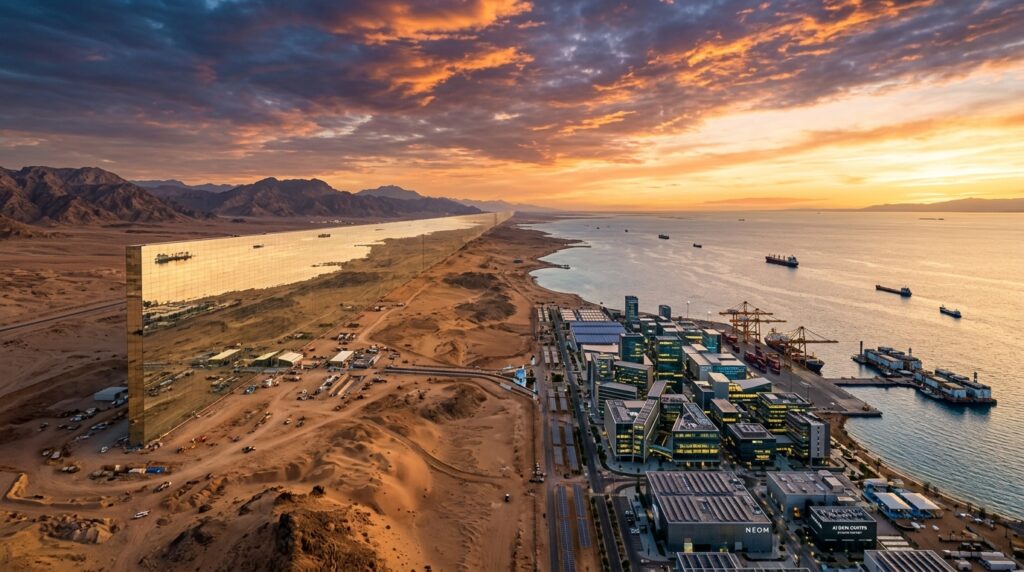
Nothing represented NEOM more than The Line. The original concept called for a 170-kilometre-long linear city with mirrored outer walls and buildings reaching about 500 meters high. It was planned to accommodate millions of residents. There would be no traditional highways running through the city. High-speed transport would connect different sections, while residents were promised that their basic needs would be within a short walk.
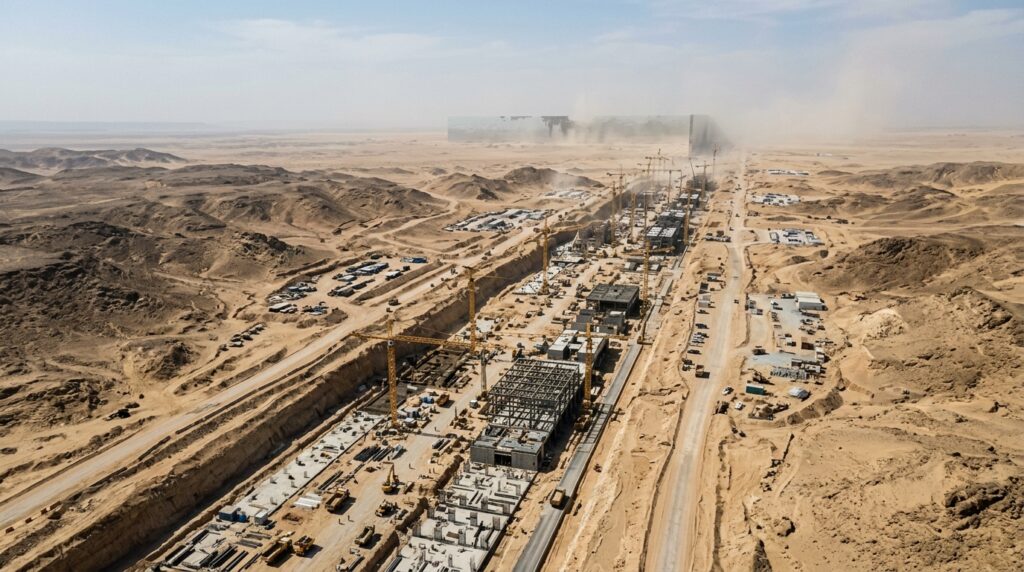
On paper, it was elegant. In practice, it presented enormous challenges. A city of this size needs much more than impressive buildings. It needs water systems, electricity, hospitals, schools, waste treatment, telecommunications, food supplies, emergency services, transport and housing. And all of these systems have to be built in an almost empty desert.
Then comes the building itself.
A 170-kilometre mirrored megastructure would face extraordinary challenges involving heat, dust, wind, structural movement, maintenance, transportation and the supply of enormous quantities of steel, concrete and specialised glass. The question was never simply whether engineers could build it. The question was whether they could build it fast enough, cheaply enough and reliably enough to justify the cost.
The First Reality Check
As construction progressed, the original timetable began to look increasingly difficult. In 2025, Reuters reported that PIF recorded an $8 billion write-down on several major Saudi gigaprojects. The value of its gigaproject investments had fallen by more than 12 per cent from 2023 to 2024. The reported reasons included cost increases, delays and changing market conditions. This does not mean Saudi Arabia has run out of money. It means something more important.
The Kingdom is becoming more selective about where it spends its money. That is a major change in strategy.
The Line Gets Smaller
The clearest example is The Line. The original 170-kilometre vision has been reduced dramatically. Earlier reporting by The Wall Street Journal indicated that the first phase was being reduced to roughly 1.5 miles, or about 2.4 kilometres, rather than attempting to build the entire city by 2030. This does not mean the entire Line has officially disappeared.
It means the original scale and timetable have become increasingly unrealistic. That distinction matters. A project can survive while its original dream changes beyond recognition. That appears to be happening with The Line.
The $500 Billion Question
NEOM was initially promoted with a price tag of around $500 billion. But as the project expanded, so did the potential bill. The problem with giant megaprojects is that the first estimate is rarely the final estimate. New infrastructure creates new requirements. New requirements create new contracts. New contracts create new costs. And delays make everything more expensive.
Building a city for millions requires much more than constructing skyscrapers.
Where will the workers come from?
Who will live there permanently?
Where will food come from?
How will hospitals operate?
How will schools be staffed?
How much electricity and water will residents need?
How will millions of people travel?
And, most importantly:
Who will pay for it all?
The Missing Ingredient: A Real City
Cities do not become successful simply because someone builds impressive buildings. London, Singapore, New York and other major global cities developed powerful economic ecosystems over long periods. People moved there because jobs, education, business, culture, family life and opportunity already existed.
NEOM is attempting something much harder.
First build the city.
Then convince millions of people to move there.
A wealthy tourist may visit a luxury resort for a week.
That does not mean the tourist will move a family to a newly constructed desert city.
NEOM therefore faces a basic economic challenge:
Can it create enough jobs, businesses, services and social life to make people want to stay?
Why NEOM Was Designed to Be Different
There is another side of NEOM that makes the project particularly interesting. NEOM was never presented as simply another Saudi city. From the beginning, it was supposed to have a special regulatory environment designed to attract international investors, companies and residents. Saudi officials described NEOM as a special economic environment with regulations intended to support international investment.
NEOM has also emphasised that it remains under Saudi sovereignty.
It is not a separate country.
However, its special regulatory ambitions created an obvious question:
How different would life inside NEOM actually be from life elsewhere in Saudi Arabia?
That question has never been completely answered.
The Western Lifestyle Question
NEOM was designed to attract the world. That means international tourists, wealthy investors, foreign professionals, technology companies and global hotel brands. But attracting international visitors involves more than building luxury hotels. It means creating restaurants, beaches, entertainment, sports, nightlife and social spaces that international visitors recognise. This is where NEOM began to acquire a reputation as an extension of a Western or European-style lifestyle. The comparison is not entirely fair.
NEOM’s planners were not necessarily trying to copy Europe.
They were trying to compete with global destinations such as Dubai, Singapore, Monaco and other luxury tourism hubs.
But many of the lifestyle features associated with those destinations are sensitive in Saudi Arabia.
Alcohol is one example.
Gambling is an even bigger one.
Nightlife, mixed social spaces and some forms of entertainment also raise cultural questions.
So NEOM was not merely asking:
“How do we build a futuristic city?”
It was also asking:
“How much of the global lifestyle should exist inside it?”
Alcohol and Gambling: Fact Versus Rumour
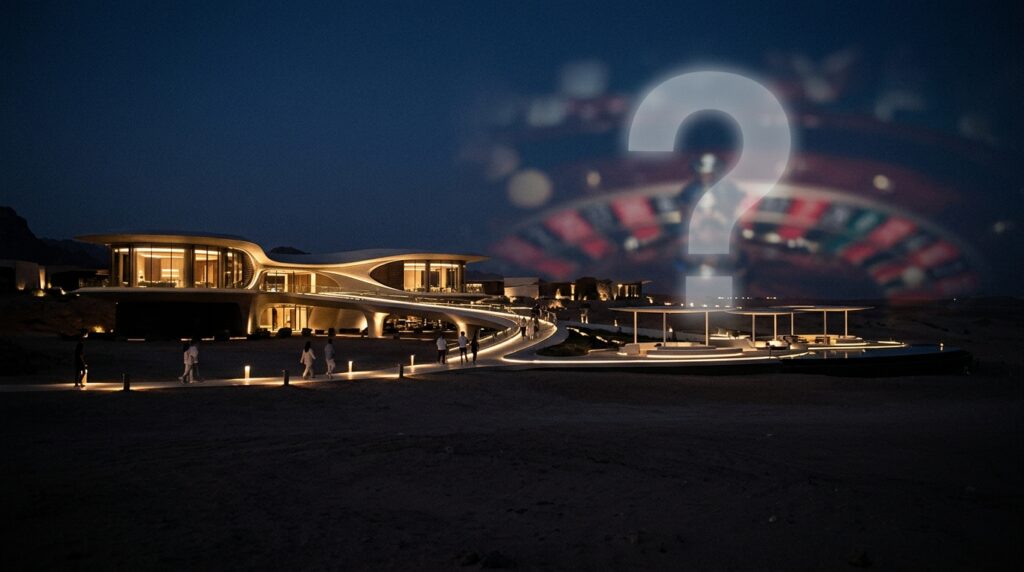
This subject needs careful treatment because some claims about NEOM have gone much further than the available evidence. There is no reliable public evidence that Saudi Arabia has officially approved ordinary casinos throughout NEOM. However, the casino question did not appear from nowhere.
A senior NEOM tourism official was asked whether alcohol and gambling could eventually be permitted. He answered that nothing was off the table and that NEOM needed to benchmark itself against competing international destinations. That statement helped fuel speculation about casinos and Western-style entertainment.
Alcohol is a separate but equally important issue.
Saudi Arabia historically prohibited alcohol.
Yet that position has already begun to change in tightly controlled ways.
In 2024, Saudi Arabia opened its first official alcohol store in Riyadh for non-Muslim diplomats. By late 2025, access was reportedly expanded to certain non-Muslim Premium Residency holders. The system remains highly restricted.
The significance is not the size of the store.
It is the direction of travel.
Saudi Arabia is testing how far controlled liberalisation can go without triggering a major social or religious backlash.
That makes the NEOM question much more serious.
Why the Secrecy?
Why have so many details about NEOM’s future lifestyle remained unclear? There are several possible reasons.
First is domestic sensitivity. Saudi Arabia is the birthplace of Islam and home to Makkah and Madinah, Islam’s two holiest cities. Alcohol and gambling are especially sensitive subjects in such a country.
Second is commercial confidentiality.
Huge projects involve negotiations between governments, contractors, hotel groups, technology companies and investors. Many details can remain confidential until agreements are finalised.
Third is uncertainty.
NEOM itself has changed dramatically since 2017.
A plan announced today may be redesigned tomorrow. Keeping some proposals private allows planners to change direction without publicly admitting that an earlier promise has failed.
Fourth is politics.
A public announcement that casinos or widespread alcohol consumption would be allowed in a Saudi development could generate controversy far beyond the NEOM project itself. This may help explain why some of the most sensitive lifestyle questions have remained surrounded by ambiguity, leaks and unofficial reports. But secrecy has a downside. When governments do not clearly publish the rules, speculation fills the vacuum. That is exactly what has happened with NEOM.
The Islamic Identity Test
This may ultimately be NEOM’s most difficult challenge. Saudi Arabia is not simply another country building a modern city.
It is an Islamic kingdom with a unique religious role in the Muslim world. NEOM, meanwhile, is designed to become a highly international environment. So the question becomes:
How do you build a globally competitive society without losing the religious and cultural identity of the country that created it?
This is not necessarily a battle between Islam and modernisation. Islam does not reject knowledge, science, technology, trade or economic development. The deeper issue is boundaries.
Can Saudi Arabia modernise without simply copying Western social values?
Can it attract international investment without abandoning its cultural identity?
Can it build world-class tourism without making gambling or alcohol central to the tourism model?
Can it create special economic rules without creating a completely different social system?
These questions are much bigger than NEOM’s architecture.
What Does Islam Require?
The Islamic debate should also be handled carefully. The Qur’an explicitly prohibits intoxicants and gambling in Surah Al-Ma’idah, 5:90. Islam also places strong emphasis on justice, honesty, human dignity, fair dealing and responsible use of wealth. Therefore, the Islamic question surrounding NEOM is not limited to alcohol and casinos. It also concerns:
How will workers be treated?
Will contracts be fair?
Will wealth benefit society or remain concentrated among elites?
Will the environment be protected?
Will corruption be controlled?
Will human dignity be respected?
Will the project create productive opportunities or mainly luxury enclaves for wealthy people?
These questions may ultimately matter more than whether a resort serves alcohol.
The Worker Question
There is another uncomfortable part of the NEOM story. Someone has to build this futuristic world. Thousands of migrant workers have been involved in construction. International reporting has raised concerns about worker accommodation, safety and working conditions around the huge construction sites. This creates a difficult contrast.
NEOM promises an extraordinary future for wealthy residents and international visitors. But much of its physical foundation is being built by workers who may never experience that lifestyle. That does not automatically make NEOM wrong. But it creates an important test.
Can a project marketed as a model for the future also become a model of fairness for the people who build it?
For an Islamic society, this is not a minor question. Justice and human dignity are central Islamic values.
Trojena: Another Reality Check
The problems are not limited to The Line. Trojena was planned as a huge mountain tourism destination and was supposed to host the 2029 Asian Winter Games. The idea was extraordinary. A winter sports destination in Saudi Arabia.
Artificial snow.
Ski slopes.
Luxury hotels.
A new lake.
A completely new tourism economy.
But in 2026, major setbacks emerged. Saudi Arabia cancelled major construction contracts connected with Trojena and abandoned plans to host the 2029 Asian Winter Games there. The development itself was not necessarily abandoned entirely, but its original timetable and ambitions suffered a major blow. That raises another question:
How much should a country spend to create a natural environment that does not exist naturally?
Security Adds Another Risk
NEOM sits in a strategically sensitive region on the Red Sea. Regional conflict can affect tourism, construction, shipping, insurance and investor confidence. The conflict involving Iran in 2026 also disrupted regional shipping routes. The Port of NEOM subsequently attracted some importers looking for alternative routes.
Reuters reported that the port was being used by some importers, although activity remained limited and concentrated mainly on certain types of traffic. This is an interesting development. NEOM’s most practical assets may eventually prove more valuable than its most spectacular ones. The Line attracts headlines. A functioning port can move goods.
The Strategic Pivot
Saudi Arabia has not abandoned Vision 2030. Instead, it appears to be changing how it spends money on it. This may be the most important development in the entire NEOM story. Instead of putting unlimited resources into spectacular residential structures, Saudi Arabia is increasingly interested in projects that can produce measurable economic returns.
Logistics.
Mining.
Manufacturing.
Artificial intelligence.
Data centres.
Energy.
Technology.
Tourism infrastructure.
These projects may be less glamorous than a 170-kilometre mirrored city. But they can generate jobs, exports, technology and business activity without requiring an entirely new civilisation to be created first.
OXAGON May Be More Important Than The Line
OXAGON is one of the most interesting parts of NEOM’s changing strategy.
It focuses on industry, manufacturing and logistics.
That may sound less exciting than The Line.
It may also be more practical.
A port can generate revenue.
A factory can create jobs.
A logistics hub can move goods.
An industrial cluster can attract companies.
These are economic activities that can be measured more easily than a futuristic city whose success depends on millions of people eventually moving there.
The AI Pivot
The most significant strategic shift may be artificial intelligence. Saudi Arabia wants to become a major global AI player. AI, however, requires something very physical.
Data centres.
Computing power.
Electricity.
Cooling.
Fibre networks.
Land.
Capital.
NEOM can provide many of these things. In August 2026, Saudi AI company Humain and DataVolt announced plans for a data centre in OXAGON with an initial capacity of about 100 megawatts. This is a very different kind of NEOM project. It is not primarily about futuristic architecture. It is infrastructure for the digital economy.
Why AI Makes More Economic Sense
Artificial intelligence is creating huge global demand for computing infrastructure. Saudi Arabia has several advantages.
It has large financial resources.
It has large areas of land.
It has strong solar energy potential.
It can build large power projects.
It sits between Europe, Asia and Africa.
It can invest on a scale that many private companies cannot match. Most importantly, Saudi Arabia does not have to persuade millions of people to live inside a data centre. It needs customers. That is a much simpler business model.
The Financial Pressure
The biggest threat to NEOM is not technology.
It is money.
Saudi Arabia remains a wealthy country, but its public finances are still heavily influenced by oil.
When oil prices fall, government revenue comes under pressure.
At the same time, Saudi Arabia is trying to finance a huge number of projects.
PIF has to choose between competing priorities.
NEOM is competing for capital with projects such as Qiddiya, Diriyah, New Murabba, Roshn and major investments in mining, AI, energy, manufacturing and defence.
Saudi Arabia can borrow.
It can issue bonds.
It can use sovereign wealth.
It can delay projects.
But it cannot spend unlimited money on every dream at the same time.
That is why priorities matter.
The $6 Billion Exit Bill Needs Caution
Claims that Saudi Arabia will definitely pay $6 billion in termination fees should be treated carefully. Large cancellations can certainly create enormous costs. There can be contractor claims, cancellation payments, equipment costs, worker demobilisation, unfinished structures and legal disputes. But the final amount depends on individual contracts and settlements.
The safest conclusion is therefore to treat the widely reported $6 billion figure as an estimate rather than a confirmed final bill. The larger point remains valid:
Changing or cancelling a megaproject after billions have already been committed can be extremely expensive.
Sometimes, however, stopping early can still be cheaper than continuing. That is the difficult calculation Saudi planners now face.
NEOM Is Part of a Wider Reality Check
The problem is not limited to NEOM. Saudi Arabia has been reviewing several giant projects.
In January 2026, Reuters reported that work on Riyadh’s huge Mukaab project was suspended while its financing and feasibility were reassessed. The wider New Murabba development was not necessarily cancelled, but the central Mukaab structure became uncertain.
Reuters also reported that Saudi Arabia was shifting more attention toward logistics, mining, AI and other sectors expected to provide stronger near-term returns. This suggests that NEOM’s problems are part of a much wider adjustment. Saudi Arabia is not giving up on development. It is learning that not every grand idea needs to be built at the same time.
Is NEOM a Failure?
That depends on how we define failure. If the test is:
Will Saudi Arabia build the original 170-kilometre Line exactly as announced?
The evidence increasingly suggests no. If the question is:
Will Saudi Arabia develop the entire NEOM region?
That remains uncertain. If the question is:
Can NEOM create valuable industries, tourism, logistics and technology?
That remains possible. In fact, some parts could eventually succeed even if the original vision is dramatically reduced.
The Bigger Lesson
NEOM demonstrates something important about modern sovereign wealth.
Money can accelerate development.
But money cannot eliminate engineering problems.
Money cannot instantly create a population.
Money cannot guarantee tourists will come.
Money cannot manufacture natural snow without enormous expense.
Money cannot turn a desert into a successful city overnight.
And money cannot replace careful planning.
NEOM is therefore more than a Saudi construction story.
It is a giant experiment in what happens when a government tries to build the future at extraordinary speed.
From Science Fiction to Economic Reality
The original NEOM vision was designed to inspire.
It succeeded.
The images were unforgettable.
A giant mirrored city in the desert.
Flying taxis.
Robots.
Artificial intelligence.
Clean energy.
Luxury resorts.
Skiing in the mountains.
A new global society.
But inspiration is only the first step.
Then comes engineering.
Then financing.
Then operations.
Then people.
Then profitability.
This is where NEOM has entered its most difficult phase.
The dream now has to become a business.
The Unanswered Question About Identity
There is also a question that cannot be answered by accountants.
What kind of society will NEOM become?
Saudi Arabia wants NEOM to be modern enough to compete with the world’s leading cities.
It also wants it to remain part of Saudi Arabia.
That means the Kingdom must balance four goals:
Global competitiveness.
Economic freedom.
Saudi cultural identity.
Islamic values.
These goals can coexist.
But they can also collide.
The more NEOM tries to imitate the lifestyle of global luxury destinations, the more difficult it may become to explain what makes it distinctly Saudi. That is why the debate over alcohol, gambling, nightlife and special regulations matters. The issue is not simply entertainment. It is about the limits of cultural change.
Could NEOM Create Two Different Social Environments?
Imagine a foreign professional living in NEOM under special rules while a Saudi citizen elsewhere follows the country’s more traditional framework. If the two environments eventually develop very different rules concerning alcohol, entertainment, personal behaviour, and commercial activity, Saudi Arabia could face an unusual situation.
One country.
Very different lifestyles.
That does not necessarily mean two legal systems.
But it could create two very different social environments.
And if foreign residents receive freedoms unavailable to ordinary Saudis, another question could arise:
Would Saudis eventually demand the same freedoms?
This is one reason why the NEOM experiment is so sensitive.
The Real NEOM Experiment
The most important experiment may not be The Line.
It may not be flying taxis.
It may not be artificial intelligence.
It may not even be the futuristic architecture.
The real experiment is whether Saudi Arabia can create a globally competitive society without losing the cultural and religious identity that makes the Kingdom unique.
If NEOM succeeds, Saudi Arabia could demonstrate that modernisation does not require cultural surrender.
If it fails, critics may argue that it became an expensive luxury enclave designed primarily for international elites.
And if it creates different rules for different groups, the Kingdom will face an even harder question:
Who decides which parts of modern life are compatible with Islam, and who gets to live under those rules?
The Final Reality Check
NEOM is not dead.
But the original NEOM is clearly changing.
The Line has been scaled back.
Trojena has suffered major setbacks.
Other Saudi megaprojects are being reviewed.
The cost of the original vision has become harder to justify.
At the same time, OXAGON, logistics, renewable energy, artificial intelligence and data centres are gaining importance.
The most revealing development may therefore be this:
Saudi Arabia is moving from building the future people imagined to building the infrastructure the future actually needs.
That is not necessarily the collapse of NEOM.
It may be its most important reality check.
And perhaps its best chance of survival.
The Line may never become the 170-kilometre city that once captured the world’s imagination.
But NEOM could still become something more practical and, perhaps, more valuable.
The final question is no longer:
“Can Saudi Arabia build the impossible?”
It is:
“Can Saudi Arabia decide what is worth building?”
Frequently Asked Questions
1. What is NEOM?
NEOM is a massive Saudi development project created as part of Vision 2030. It includes several planned developments, including The Line, OXAGON, Trojena and Sindalah, covering a large area in northwestern Saudi Arabia.
2. Who owns and funds NEOM?
NEOM Company is owned by Saudi Arabia’s Public Investment Fund, or PIF. PIF is the main financial force behind NEOM and several other Saudi giga-projects.
3. What happened to The Line?
The original concept called for a 170-kilometre-long linear city. The first phase has been dramatically reduced, with earlier reporting pointing to an initial section of roughly 2.4 kilometres. The broader vision has been delayed and reconsidered.
4. Will NEOM have casinos and alcohol?
There is no reliable public evidence that ordinary casinos have been officially approved throughout NEOM. However, senior NEOM officials have previously said alcohol and gambling were not ruled out when discussing the project’s international tourism ambitions. Saudi Arabia has also introduced tightly controlled access to alcohol for certain non-Muslims, showing that its traditional restrictions are being tested in limited ways.
5. Why is NEOM sometimes described as Westernised?
NEOM was designed to attract international tourists, investors and workers. Its luxury resorts, international entertainment and proposed special regulations have led to comparisons with global destinations such as Dubai and other international tourism hubs. The extent to which NEOM’s lifestyle will differ from traditional Saudi society remains unclear.
6. What is NEOM focusing on now?
NEOM is increasingly emphasising industrial development, logistics, renewable energy, artificial intelligence, data centres, and other infrastructure. The OXAGON industrial zone and planned AI data centre developments are examples of this more practical direction.
Purpose of the Article
To examine the reality behind Saudi Arabia’s ambitious NEOM megaproject, including the scaling back of The Line, rising costs, financial and construction challenges, questions surrounding its proposed lifestyle, its relationship with Saudi Arabia’s Islamic identity, and the shift toward more practical investments such as AI, logistics and infrastructure.
EP Statement
EP Statement:
NEOM was sold as a vision of the future. This article asks a simpler question: What remains when the dream meets financial pressure, engineering limits, cultural realities and economic priorities? It separates confirmed facts from speculation and examines whether NEOM is failing, evolving, or simply becoming a very different project from the one originally promised.
https://mrpo.pk/saudi-anti-corruption-campaign/
References
- Saudi Arabia Public Investment Fund, NEOM announcement and Vision 2030 materials.
- Reuters, reporting on Saudi Arabia’s gigaproject write-downs and changing investment priorities.
- Reuters, reporting on Saudi Arabia’s oil revenue and Vision 2030 financing pressures.
- Reuters, reporting on the Port of NEOM and changing Red Sea trade routes.
- Reuters, reporting on Humain and DataVolt’s planned OXAGON data center.
- Reuters, reporting on the suspension and review of Riyadh’s Mukaab project.
- The Wall Street Journal, reporting on the scaling back of The Line.
- The Wall Street Journal, reporting on NEOM’s regulatory ambitions, construction and worker conditions.
- U.S. Department of State, Saudi Arabia investment climate and special economic zones reporting.
- Associated Press, reporting on Saudi Arabia’s controlled alcohol policy.
- Saudi Press Agency, official statements concerning NEOM’s sovereignty and regulatory framework.
- NEOM, official information concerning The Line, OXAGON and other developments.