Greenland Security Deal: Why the U.S., Denmark, and Trump Are Reshaping the Arctic
The U.S. Greenland security deal with Denmark could reshape Arctic security. Here is what the agreement means for Trump, Greenland, Russia, China, and NATO.
https://mrpo.pk/european-troops-in-greenland/
Author:
Maj Hamid Mahmood (Retired) holds an MA in Political Science, an LLB, and a PGD (HRM). His military background, academic training in political science, and legal education provide a multidisciplinary perspective for examining international conflicts, security affairs, political developments, and the human consequences of war.
Greenland Is Not For Sale. But America Is Getting More Access
For years, one sentence seemed to explain the Greenland dispute:
Greenland is not for sale.
Now something much more complicated is happening. The United States, Denmark, and Greenland say they are preparing a new security agreement that will strengthen American security access and military activity in Greenland. President Donald Trump has described it as giving the United States permanent control over Greenland’s security and said Washington will develop a larger military presence there.
But Greenland is not becoming American territory.
Denmark says its sovereignty remains intact. Greenland’s right to self determination is also recognized. The agreement still requires the necessary parliamentary procedures before it can fully enter into force. (Al Jazeera)
That makes this story far more interesting than the simple question of whether Trump “got Greenland.” He did not get ownership.
He may, however, be getting something Washington considers strategically more important: long-term military access to one of the most important locations in the Arctic. And that could have consequences far beyond Greenland.
US and Denmark reach deal over Greenland after Trump annexation threats
The US and Denmark have announced a deal on Greenland’s security, resolving a diplomatic dispute sparked by President Donald Trump’s threats to seize the territory by force.
Trump said the agreement would grant the US “permanent control over security, and all other needs”.
Denmark’s Prime Minister said the deal “strengthens security in the Arctic and the North Atlantic area” but did not address specifics in the agreement that Trump mentioned in a social media post.
The deal comes after months of threats by Trump to “take” Greenland, which is a semi-autonomous Danish territory, over national security concerns – citing its strategic location for defence purposes and its mineral wealth.
Trump said the deal came with “no cost to the United States” and would grant the US the ability “to do what is necessary” to “secure and defend the security of Greenland”, in a post on Truth Social.
He said it included a rule that no US adversary could maintain a military presence in Greenland or “make sensitive investments in Greenland, without our express written approval”.
Denmark’s Prime Minister Mette Frederiksen confirmed that the agreement would be signed at the United Nations General Assembly next week.
She said the agreement “strengthens our common security in the Arctic and the North Atlantic area” while also “at the same time recognizes the sovereignty and territorial integrity of the Kingdom and the right of the Greenlandic people to self-determination”.
https://www.bbc.com/news/articles/c63d7lexyym1o
Purpose of This Article
The purpose of the article, Greenland Security Deal, is to explain the Greenland security deal in simple language and place it in its historical and strategic context.
It examines why Greenland matters to the United States, what Trump has actually achieved, why Denmark agreed to the arrangement, what it means for Greenland, and how Russia, China and NATO may respond. The article also looks at the larger question:
Who gains the most from the new Arctic security arrangement?
What Exactly Has Happened?
On September 18, 2026, Trump announced that the United States had reached an agreement with Denmark and Greenland concerning security in Greenland.
Trump said the agreement would give Washington permanent control over security and other security needs on the island. He also said the United States would begin developing a larger military presence in suitable areas.
According to Trump, countries considered American adversaries would not be allowed to establish military bases, maintain military forces or make sensitive investments in Greenland without U.S. approval. (Al Jazeera)
However, there is an important difference between Trump’s description and the legal status of Greenland.
The agreement does not transfer Greenland to the United States.
Denmark and Greenland have stated that the arrangement recognizes the sovereignty and territorial integrity of the Kingdom of Denmark and the right of Greenland’s people to self determination. (The Guardian)
The full legal text has not yet been publicly released.
That matters.
Until the actual agreement is published and approved through the required parliamentary procedures, some details about American military powers remain unclear.
So the safest description at this stage is:
The United States appears to be gaining broader and more permanent security access to Greenland, while Denmark retains sovereignty.
Why Does America Care So Much About Greenland?
Look at a map.
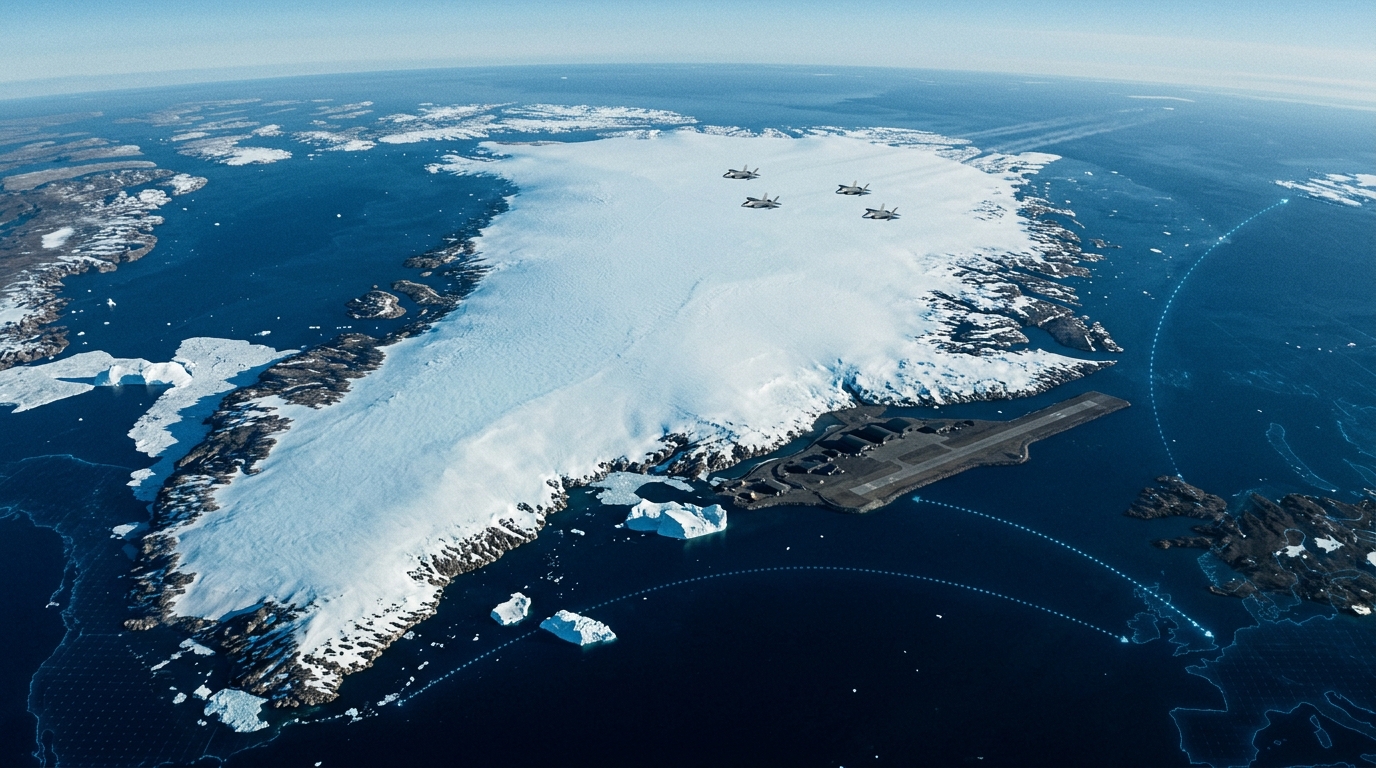
Greenland sits between North America and Europe, close to the North Atlantic and the Arctic Ocean.
That location gives it enormous military value.
The Arctic is no longer simply a frozen wilderness at the top of the world. It is becoming an important military, economic, and transportation region.
NATO describes the Arctic and High North as increasingly important to collective security. The Alliance also points to Russia’s growing military activity and China’s increasing interest in energy, minerals and Arctic sea routes. (NATO)
Greenland can help the United States with several important missions.
Missile Warning
Greenland’s location is useful for detecting missiles approaching North America.
Space Surveillance
The existing U.S. facility at Pituffik supports important space and missile warning activities.
Arctic Surveillance
American forces can monitor aircraft, ships and other activity in the northern region.
North Atlantic Security
Greenland sits close to the sea routes linking North America and Europe.
Military Mobility
American forces can potentially move aircraft, personnel and equipment through Greenland more easily.
Strategic Competition
Greenland also sits in the middle of growing competition between the United States, Russia, and China.
This is why the island matters far more than its small population might suggest.
Greenland’s Military History With America
The present dispute cannot be understood without looking back.
The United States became deeply interested in Greenland during the Second World War.
When Nazi Germany occupied Denmark in 1940, Greenland suddenly became strategically important to Washington.
The United States established a military presence on the island because of fears that Greenland could become vulnerable to enemy activity.
The Cold War made the situation even more important.
In 1951, the United States and Denmark signed a major defense agreement concerning Greenland. The agreement gave the United States broad rights to establish and operate military facilities there.
America’s presence eventually included what was then called Thule Air Base, now known as Pituffik Space Base.
So American military access to Greenland is not new.
It has existed for decades.
The present agreement is therefore better understood as an attempt to strengthen and extend an existing strategic relationship rather than create one from nothing.
The 2004 Agreement Is Also Important
A 2004 agreement between the United States, Denmark, and Greenland updated the earlier defense arrangement. It recognized Greenland’s changing political status and its greater self-government.
The agreement stated that Thule was the only U.S. defense area in Greenland at that time. It also provided for consultation with Danish and Greenlandic authorities about significant changes to American military operations and facilities. (State.gov)
This history explains an important point.
America already had substantial military rights in Greenland.
Trump’s new agreement is therefore significant because it could make those rights broader, more permanent or easier to use.
The exact extent will become clearer when the full agreement is released.
The Trump Greenland Story: Greenland Security Deal
The current agreement is the latest chapter in a remarkable political story.
During Trump’s first presidency, he publicly discussed the possibility of the United States purchasing Greenland from Denmark.
Denmark rejected the idea.
Greenland also made clear that it was not for sale.
The issue returned with much greater force after Trump returned to the White House.
Trump repeatedly argued that Greenland was important to American national security. His administration also raised concerns about Russian and Chinese activity in the Arctic.
At various points, Trump’s statements about acquiring Greenland created serious tension with Denmark, a NATO ally.
The dispute raised an extraordinary question.
Could America’s most powerful military ally really threaten to take territory belonging to another NATO member?
That possibility alarmed European governments and many people in Greenland.
The current agreement represents a very different outcome.
The United States is not taking Greenland.
Instead, Washington appears to be securing greater military access through an agreement with Denmark and Greenland. (The Guardian)
Is This a Big Victory for Trump?
There is a simple way to answer this.
Politically, Trump can present the agreement as a major achievement. Strategically, the United States appears to be gaining several things it wanted. But Trump did not achieve his earlier goal of acquiring Greenland itself.
That distinction matters.
Trump originally talked about American ownership or control of Greenland.
That has not happened.
Greenland remains part of the Kingdom of Denmark.
But Washington may now receive many of the practical military benefits it was seeking.
The agreement is expected to provide permanent American access and overflight rights and may allow the United States to expand its military presence. (CBS News)
So Trump can reasonably point to increased American influence and military access as a result of his pressure and negotiations.
At the same time, the agreement also shows the limits of his original demand.
America gets greater security access. Denmark keeps sovereignty. Greenland keeps its political status.
That is a compromise, not an American takeover.
Why Denmark Agreed
Denmark faces a difficult reality.
Greenland is enormous.
It is larger than Western Europe but has a very small population.
Defending and monitoring such a vast Arctic territory is extremely difficult and expensive.
Denmark is also a NATO member and has an obvious interest in keeping the Arctic secure.
A stronger American military presence can provide Denmark with greater security without giving up sovereignty.
That creates a practical bargain.
Washington gets more military access.
Denmark gets stronger defense support.
Greenland remains within the Danish Kingdom.
NATO gets a stronger position in the Arctic.
For Copenhagen, this may be a way to reduce the security pressure around Greenland while protecting its constitutional position.
What Does Greenland Get?
This is perhaps the most difficult question.
Greenland has its own government and enjoys extensive self-government within the Kingdom of Denmark.
There is also a long-running political debate over eventual independence.
For Greenland, its growing strategic importance can be both an opportunity and a danger.
The island can potentially gain:
- Greater Security
- More Infrastructure
- More International Attention
- Greater Economic Opportunities
- Greater Political Leverage
But there are also concerns.
More foreign military activity could mean greater militarization of Greenland.
The people of Greenland may also worry about how much control they retain over their own territory.
That is why the reference to Greenland’s right to self-determination in the new arrangement is politically important. Denmark has emphasized that the agreement recognizes that right. (Al Jazeera)
For Greenland, the central question may eventually become:
Can we benefit from our strategic importance without allowing powerful countries to decide our future for us?
Russia Has a Problem
Russia is the largest Arctic military power.
Moscow has invested heavily in military infrastructure across its Arctic territory.
NATO says Russia has developed an Arctic Command, reopened older Soviet era facilities and expanded military infrastructure such as airfields and ports. (NATO)
A stronger American presence in Greenland could therefore improve the Western ability to watch Russian activity in the Arctic and North Atlantic.
This could include monitoring:
- Russian Aircraft
- Naval Activity
- Submarines
- Missile Activity
- Arctic Shipping
- Space Operations
But there is an important distinction.
Russia is not losing a military base in Greenland.
It never had one.
The main effect is that Moscow may find it harder to establish a future strategic foothold there.
In simple terms:
The United States is trying to close the door before Russia can walk through it.
China Has a Different Problem
China is not an Arctic coastal state, but Beijing has developed growing economic and strategic interests in the region.
China wants access to Arctic shipping routes, energy resources, critical minerals and scientific opportunities.
NATO says China’s Arctic interest is growing and that China is seeking access to energy, critical minerals and sea routes. NATO also says increasing cooperation between Russia and China has strategic implications for the Alliance. (NATO)
Greenland is important because of its natural resources and location.
A Chinese company investing in a mine may look like a normal commercial transaction.
But in a major power rivalry, infrastructure can have strategic value.
An airport can matter.
A port can matter.
A communications system can matter.
A satellite facility can matter.
A mining project can matter.
That is why Trump’s reported restrictions on sensitive Chinese or Russian investments could be strategically important.
The new arrangement appears designed not only to prevent foreign military bases but also to limit certain forms of strategic economic influence.
Why the Arctic Is Becoming a New Great Power Arena
For centuries, the Arctic was protected by geography and ice.
That is changing.
Climate change is reducing sea ice in parts of the region and making some northern sea routes more accessible for longer periods.
NATO says these changes are altering the military and economic environment of the High North. (NATO)
The Arctic contains potential reserves of minerals, energy, and other resources.
It also connects important parts of North America, Europe and Asia.
That makes the region increasingly valuable.
The Arctic is therefore moving from the edge of international politics toward its center.
Greenland is sitting right in the middle of that transformation.
NATO Is Already Strengthening the Arctic
The Greenland agreement is not happening in isolation.
NATO launched Arctic Sentry in February 2026 to strengthen deterrence and defense in the Arctic and High North.
The Alliance says the activity brings together national and NATO activities across the region.
NATO is also increasing surveillance, space capabilities, maritime resources and other Arctic capabilities. (NATO)
This means the Greenland agreement fits into a much larger trend.
The West is building a stronger military network across the northern region.
The reason is clear.
Russia has strengthened its Arctic military position.
China’s economic and strategic interests are growing.
And the physical environment of the Arctic is changing.
Who Gains the Most?
There is no single answer because each side gains something different.
The United States
Washington appears to gain the largest direct strategic benefit.
The United States may receive stronger and more permanent access to Greenland, greater military freedom and stronger protection against rival powers establishing a foothold.
Denmark
Denmark preserves sovereignty over Greenland while gaining stronger American security involvement.
Greenland
Greenland gains greater strategic importance, potential investment and a stronger position in negotiations with both Denmark and the United States.
But Greenland also faces difficult questions about sovereignty, military activity and its future relationship with Denmark.
NATO
NATO gains a stronger northern defense position and better access to a strategically important area.
Russia
Russia gains little directly from the agreement.
Its main concern is the strengthening of American and NATO military capabilities close to the Arctic approaches.
China
China may face greater restrictions on strategic investment and infrastructure development in Greenland.
That could reduce Beijing’s ability to build long-term influence there.
The Real Winner May Be Geography
There is an interesting twist to this entire story.
The real power behind the Greenland dispute may not be oil, minerals or even military bases.
It may simply be location.
Greenland sits where North America, Europe and the Arctic meet.
That makes it valuable whether Washington owns it or not.
The United States does not necessarily need Greenland to become an American state.
It needs the island to remain available for American defense while preventing rival powers from establishing a strategic position there.
The new agreement appears to move Washington closer to that goal.
What Remains Unclear?
The biggest problem with many headlines about the agreement is that the complete legal text has not yet been made public.
That means several important questions remain unanswered.
Will the United States be able to build new military facilities without further approval?
How many American troops could eventually be stationed there?
What exactly counts as a sensitive foreign investment?
What authority will Greenland retain over American military activities?
What happens if Greenland becomes independent from Denmark?
How much will the United States spend on new infrastructure?
Can the agreement be changed or cancelled in the future?
These are not small details.
They could determine whether this is simply an updated defense arrangement or a major transformation of America’s military position in Greenland.
A Deal Bigger Than Greenland
The Greenland security agreement is really about something much larger.
It is about who will shape the Arctic in the next generation.
Russia already has a powerful military presence in its Arctic territories.
China is seeking economic and strategic access.
NATO is increasing its military activity.
The United States wants stronger control of the approaches to North America and the North Atlantic.
And Greenland sits directly in the middle.
That makes this agreement strategically important even though the island itself is not changing hands.
What Does This Mean for the Future?
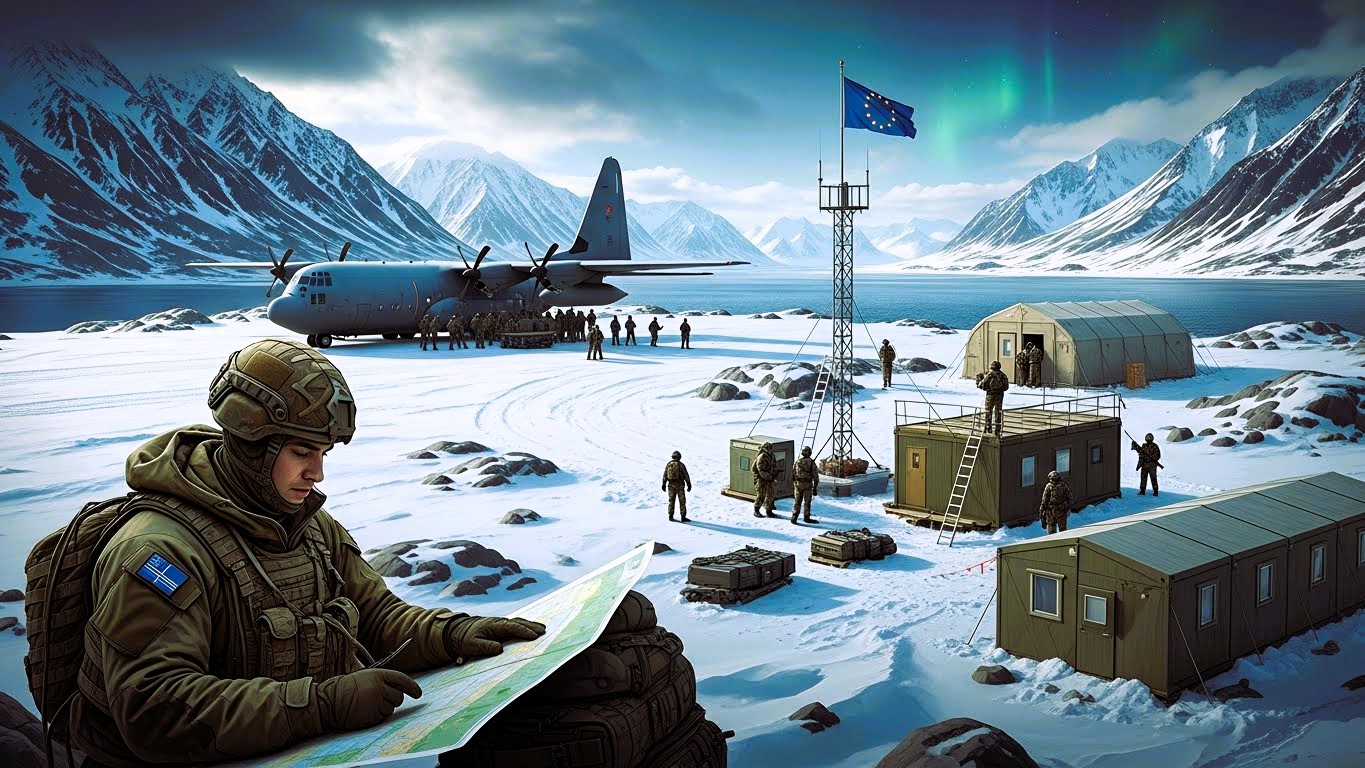
European troops in Greenland. The most likely long-term effect is a stronger American military position in the Arctic.
But the political consequences will depend on what happens next.
If the agreement strengthens Greenland’s security while respecting its political rights, it could become a durable framework for cooperation.
If Greenlanders believe that major decisions are being made over their heads, however, political resistance could grow.
The same applies to Denmark.
The United States has gained greater access, but Washington must still manage its relationship with a NATO ally whose sovereignty it previously challenged.
Russia will watch the development closely.
China will also examine whether economic opportunities in Greenland are becoming more restricted.
And NATO will have to balance stronger Arctic defense with the need to maintain political unity.
Final Analysis
The Greenland security deal is best understood as a strategic compromise with major consequences.
Trump did not acquire Greenland.
Denmark did not surrender Greenland.
Greenland did not become American territory.
But the United States appears to be gaining something it considers extremely valuable: long term military access and a stronger role in determining the security environment of Greenland.
That is why the agreement can be presented as a significant achievement for Trump while still falling short of his earlier demand for American ownership.
For Russia, it means a stronger American position in the Arctic.
For China, it may mean fewer opportunities to build strategic economic influence.
For Denmark, it offers greater security while preserving sovereignty.
For Greenland, it brings both opportunity and a difficult political question about how to protect its own future.
And for the world, it confirms something that was once easy to overlook.
The Arctic is becoming one of the next great arenas of global power competition.
The real question is no longer simply who owns Greenland.
It is:
Who will shape the future of the Arctic, and how much say will Greenland itself have in deciding that future?
Frequently Asked Questions
1. Is the United States taking control of Greenland?
No. The available information indicates that Greenland remains part of the Kingdom of Denmark. The new arrangement is about security, military access and strategic cooperation. Denmark has specifically said that its sovereignty and territorial integrity remain recognized. (Al Jazeera)
2. Why is Greenland important to the United States?
Greenland has a highly strategic location between North America, Europe and the Arctic. It can support missile warning, space surveillance, military operations and monitoring of Arctic and North Atlantic activity.
3. Is the Greenland security deal a victory for Trump?
Trump can present it as a major foreign policy achievement because the United States appears to be gaining greater security access without acquiring Greenland. However, his earlier goal of acquiring the territory itself has not happened.
4. How does the agreement affect Russia?
A stronger American military position in Greenland could improve Western monitoring of Russian activity in the Arctic and North Atlantic. It could also make it more difficult for Russia to establish a future military foothold in Greenland.
5. How does the agreement affect China?
China’s growing Arctic interests include shipping, minerals, energy and infrastructure. Restrictions on sensitive foreign investment could reduce Beijing’s ability to develop strategically important economic links in Greenland.
6. Does Greenland support the agreement?
The government of Greenland has supported moving toward the agreement, describing it as strengthening security for Greenland, Denmark, the United States and the Western alliance. However, the agreement still requires the necessary parliamentary procedures, and the full legal details have not yet been made public. (The Guardian)
References
- NATO, Arctic Security. NATO’s official overview of the changing security environment in the Arctic, including Russian military activity, China’s growing interest and NATO’s Arctic Sentry initiative. (NATO)
- U.S. Department of State, 2004 Agreement on the Defense of Greenland. The official text explaining the relationship between the United States, Denmark and Greenland and the framework governing American military activity. (State.gov)
- Associated Press, September 18, 2026. Reporting on Trump’s announcement, the proposed expansion of the American military presence and the continued sovereignty of Denmark and Greenland. (AP News)
- ABC News, September 18, 2026. Reporting on the existing U.S. defense agreement and the new proposal for permanent access and overflight rights. (ABC News)
- The Guardian, September 18, 2026. Reporting on the agreement, Greenland’s self determination and Denmark’s sovereignty position. (The Guardian)
- Al Jazeera, September 18, 2026. Reporting on Trump’s description of the agreement and the requirement for parliamentary approval. (Al Jazeera)