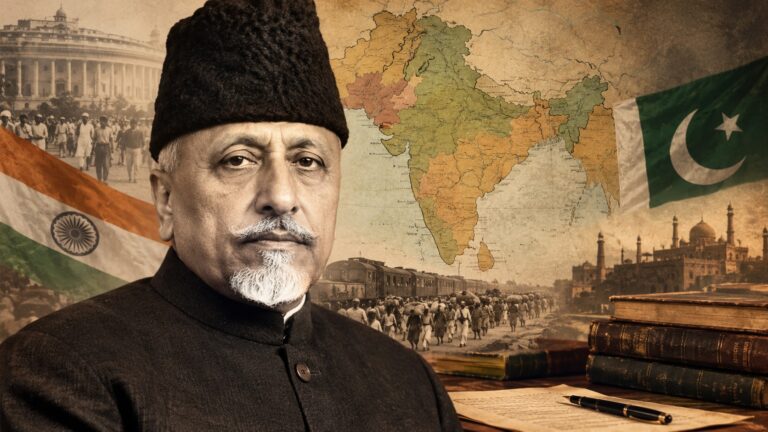

Is Pakistan Free to Decide Its Own Diplomacy? Debt, Fear and the Qur’anic Warning
Oct 18, 2026 · @Ehsan Mughees
Pakistan is sovereign in form but constrained in practice, and the main causes are internal. This concise edition of the full study is laid out for WordPress, with the publishing kit (SEO fields, excerpt, tags, image brief, FAQ and social text) after the references.
Part 1. The post
Reading time: about 8 minutes
Key takeaways
- Pakistan has acted independently where it built its own strength, as in the nuclear field, and has lost room where it depended on others to stay solvent.
- The chief causes are internal: a narrow tax base, borrowing, elite capture, and a security establishment stronger than elected institutions.
- External powers use these weaknesses; they did not create them.
- The Qur’an places the root of lost freedom in the community’s own condition (Q 13:11) and names fear of poverty as Satan’s tool (Q 2:268).
- The same verses permit treaties, trade and justice with peaceful non-Muslims (Q 60:8), and dependence on Muslim patrons carries the same risk.
- The first remedy is a return of state and individual to the Qur’an and the Sunnah.
Contents
- Introduction
- Background: independence and constraint
- Internal causes
- External pressures
- What the Qur’an says
- Mapping the verses to Pakistan
- Limits of the argument
- Recommendations
- Conclusion
- Frequently asked questions
1. Introduction
Many Pakistanis feel that the country’s biggest decisions are not made in Islamabad alone. A loan is negotiated, an alliance announced, a foreign leader courted, and the question returns: is the state choosing, or being told? The feeling is sharpened by the founding promise of a state created in the name of Islam and self-determination.
The feeling has a factual basis. Pakistan has turned to the International Monetary Fund repeatedly, most recently in 2023 and 2024. It relies on rollovers and deposits from friendly states. Its tax collection is low for its economy’s size, so it must borrow. Its foreign and security policy has long been shaped more by the military establishment than by elected institutions. Yet the record is not one of simple obedience: Pakistan built a nuclear deterrent under sanctions, declined to send troops to Yemen after a parliamentary vote in 2015, and has not recognized Israel.
For Muslims a further question arises. The Qur’an warns of the hostility of those who reject the truth, forbids taking them as protectors in place of the believers, and names fear of poverty as a device of Satan. This study therefore asks one question: is Pakistan free to take its own national and international diplomatic decisions, and if not, why? It examines internal causes first, then external pressures, then the relevant verses.
2. Background: independence and constraint
A state is diplomatically free when it can define its own interests, refuse a powerful partner at acceptable cost, choose partners without becoming captive to one, and keep faith with its declared principles.
Evidence of independence. Nuclear weapons developed under sanctions; the 2015 Yemen vote; continued non-recognition of Israel; a lasting partnership with China despite Western displeasure; refusal to join the 2003 Iraq invasion; and the handling of the May 2025 confrontation with India largely on Pakistan’s own terms.
Evidence of constraint. Repeated IMF programs with conditions on taxes, energy prices and the budget; dependence on deposits from Saudi Arabia, the UAE and China; FATF grey-listing from 2018 to 2022; past alignments (SEATO and CENTO, the Afghan war, the post-2001 partnership) driven by aid and security needs; and visible hedging among patrons in 2025 and 2026.
The pattern is sovereign in form, constrained in substance.
3. Internal causes
Internal causes come first because they decide how much leverage outsiders can use.
- The economic base. A tax-to-GDP ratio of roughly 9 to 10 percent (to be verified), chronic deficits, a narrow export base and heavy energy imports force repeated borrowing. A government that must seek finance every few years cannot easily refuse the lender’s politics.
- Elite capture. Powerful groups have resisted fair taxation and reform. Borrowing replaces reform and passes the cost to future generations.
- Civil-military imbalance. Policy on India, Afghanistan, the United States and China has long been shaped chiefly by the military establishment. Continuity then depends on individuals, not institutions. Constitutional changes in late 2025 are reported to have concentrated military authority further (to be verified).
- Instability and polarization. Frequent crises make a coherent foreign policy and credible negotiating position hard to keep.
- Weak human capital. Low spending on education and research leaves a state that remains a buyer and borrower.
- A dependency mentality. Decades of aid-based thinking put the question “what will the donor allow?” before “what is our interest and duty?”
- A moral and religious layer. The economy rests largely on interest-bearing debt, against which the Qur’an issues a grave warning (Q 2:275 to 279); injustice and breach of trust (Q 4:58), disunity (Q 8:46) and neglect of consultation (Q 42:38) are named failures; and a report in Sunan Abu Dawud foretells that nations would call against the Muslims because wahn, love of the world and dislike of death, had settled in their hearts.
4. External pressures
- The West and the financial institutions. The IMF, World Bank, trade preferences and the dollar system give leverage; FATF shows finance can be used as policy.
- A deep partner in arms, infrastructure and loans, with fewer political conditions than the West but real debt and security expectations.
- The Gulf. Deposits, oil facilities and jobs for millions of Pakistanis come from Muslim states, to whom Pakistan also finds it hard to say no.
- India, Afghanistan and great-power rivalry. A standing rivalry, a volatile western border and United States-China competition push Pakistan to hedge.
- Hostile intent. Some actors do work against Pakistan’s interests, but such efforts succeed mainly where internal weakness already exists.
The two sets of causes form a cycle: weakness creates the need for foreign money, money brings conditions, conditions narrow choices, and narrow choices deepen dependence.
5. What the Qur’an says
Every verse below was checked against the translation of Abdullah Yusuf Ali (see References) and against its context. Each is rated for its bearing on the question.
Enmity and its aims. Q 3:118 to 120 warns against taking outsiders into one’s inner counsel, and promises that constancy and righteousness defeat their cunning. Q 2:120 says approval from those of other faiths cannot be fully won. Rating: Strong.
Alliance and loyalty (wilayah). Q 3:28 forbids preferring unbelievers as friends and helpers over believers, except by way of precaution. Q 5:51 forbids taking Jews and Christians as protectors, and Q 60:1 forbids secret affection and the passing of secrets to enemies of the faith; it was revealed on the occasion of Hatib ibn Abi Balta’a, who disclosed the Prophet’s plans, and the Prophet did not declare him an unbeliever (Sahih al-Bukhari, Sahih Muslim). Rating: Strong.
Fear of poverty and Satan. Q 2:268 says Satan threatens with poverty while Allah promises forgiveness and bounty. Q 3:175 says it is Satan who suggests fear of his followers. Q 5:52 describes those “in whose hearts is a disease” who run to the powerful saying “we do fear lest a change of fortune bring us disaster”. Q 9:24 lists “the commerce in which ye fear a decline” among things that must not outrank obedience to Allah. Rating: Strong, as to motive.
Honour. Q 4:139 asks of those who take unbelievers as friends: is it honour they seek among them? All honour is with Allah. Rating: Strong.
The counterbalance. Q 60:8 and 60:9 say Allah does not forbid kindness and justice toward those who have not fought the believers over faith or expelled them, and forbids friendship and protection only toward those who did. Treaties, trade and justice with peaceful non-Muslims are therefore permitted, as the Prophet’s own treaties (the Covenant of Madina, Hudaybiyya) and trade show.
Strength and unity. Q 13:11 says Allah does not change a people’s lot unless they change what is in their hearts. Q 8:60 commands preparation of strength; Q 8:46 and Q 3:103 warn against dispute and division.
Two verses in the full study are rated weaker: Q 4:101 (a remark on enmity incidental to the rules for shortening prayer) and Q 83:1 to 3 (fraud in measure, applied to public burdens only by analogy).
6. Mapping the verses to Pakistan
| Pakistani reality | Key verses | Strength of link |
| Chronic borrowing and IMF dependence | Q 2:268; 2:275 to 279; 9:24; 5:52 | Strong |
| Seeking favour from great powers | Q 4:139; 2:120 | Strong |
| Disunity and civil-military discord | Q 3:103; 8:46; 42:38 | Strong |
| Alliances, basing, intelligence sharing | Q 60:1; 5:51; 3:28 | Moderate; depends on terms |
| Trade and treaties with China, EU, US | Q 60:8 to 9; 8:61 | Permitted; judged by purpose |
| Dependence on Gulf Muslim states | Q 2:268; 5:52; 49:10 | Important and often overlooked |
| Fear of FATF and sanctions | Q 3:175 | Strong as psychology only |
The link that stands out is Q 5:52. It describes the logic of fear-driven alliance: a weak party hastens toward a power not because it is persuaded but because it fears a reversal of fortune. The same logic applies whether the patron is the IMF, a great power or a wealthy Muslim state, which is why the Qur’an’s concern is the posture of fear and not the religion of the partner.
7. Limits of the argument
- The verses concern loyalty and intent, not every contact. Q 60:8 and the Prophet’s treaties rule out reading every friendly dealing with non-Muslim states as a sin.
- Not every hardship is a divine punishment. Q 2:155 and Q 3:186 describe hardship as a test; linking a particular outcome to a particular sin is moral reflection, not certain knowledge.
- Some promises are conditional. Q 3:139 ties mastery to true faith, and Q 4:141’s promise that unbelievers will not be given “a way” over believers is read in different ways by the commentators.
- Many diplomats argue a poor, nuclear-armed state in a hard neighbourhood must engage every power. This study agrees the cure is internal and differs only in adding that the failure has a moral dimension.
8. Recommendations
- Return to the Qur’an and the Sunnah. The state and every individual should take them as the first reference for conduct and policy (Q 4:59; Q 6:153). In the farewell sermon the Prophet said that what he left would keep the community from going astray if held fast: the Book of Allah (Sahih Muslim). In practice: laws and policies examined against the sources by qualified scholars and the legislature; a time-bound plan to reduce interest-based public finance; honest earning, taxes and zakat paid in full; and trusts rendered (Q 4:58).
- Repair the economic base. Broaden and enforce taxation, move from debt to production and exports, invest in education and technology as part of the duty of preparation (Q 8:60).
- Repair the institutions. Civilian supremacy over policy, a National Security and Foreign Policy Council with parliamentary oversight, and a merit-based foreign service.
- Follow principles in foreign policy. Treaties and trade with all who do not fight Pakistan or its faith; no binding alliance or intelligence arrangement that harms Muslims; fidelity and transparency in commitments (Q 16:91, 8:58); diversified partners; principled positions on Kashmir and Palestine; and trust in Allah joined with effort (Q 65:2 to 3), without deciding from fear.
9. Conclusion
Pakistan is not fully free in its diplomatic decisions. It is a sovereign state whose room to refuse is limited by money, institutional imbalance and fear. The causes are chiefly internal, and outside powers use what the country’s own weakness leaves open. The Qur’an and the Sunnah point to the same diagnosis and the same remedy: the community’s inner condition changes first (Q 13:11), honour is not borrowed from patrons (Q 4:139), and for those who fear Allah “He prepares a way out” (Q 65:2).
Allah knows best.
10. Frequently asked questions
Is Pakistan’s foreign policy independent? Partly. Pakistan has acted independently in nuclear policy, in non-recognition of Israel and in refusing some military requests, but its room to refuse is limited by debt, reliance on deposits and the dominance of the security establishment.
Does the Qur’an forbid friendship with non-Muslim countries? No. Q 60:8 permits kindness and justice toward those who have not fought the believers over faith. What is forbidden is binding loyalty to those hostile to the faith (Q 60:9, 60:1), especially in place of the believers.
What does the Qur’an say about fear of poverty? Q 2:268 names it as Satan’s threat; Q 9:28 answers the fear of economic loss with the promise that Allah will enrich from His bounty. Hadith teach reliance on Allah together with effort.
Is dependence on Muslim states also a problem? Yes. The fear-driven logic described in Q 2:268 and Q 5:52 does not depend on the patron’s religion.
What is the first step toward more independence? The study’s first recommendation is a return of state and individual to the Qur’an and the Sunnah, followed by economic and institutional repair.
Part 2. References
A. Qur’anic texts (translation of Abdullah Yusuf Ali)
The text follows a Tanzil-based edition. Punctuation and capitalization follow the source, and a final full stop has been added where it was missing. Check against a printed edition before publishing.
2:120. Never will the Jews or the Christians be satisfied with thee unless thou follow their form of religion. Say: “The Guidance of Allah,-that is the (only) Guidance.” Wert thou to follow their desires after the knowledge which hath reached thee, then wouldst thou find neither Protector nor helper against Allah.
2:155. Be sure we shall test you with something of fear and hunger, some loss in goods or lives or the fruits (of your toil), but give glad tidings to those who patiently persevere.
2:268. The Evil one threatens you with poverty and bids you to conduct unseemly. Allah promiseth you His forgiveness and bounties. And Allah careth for all and He knoweth all things.
2:275. Those who devour usury will not stand except as stand one whom the Evil one by his touch Hath driven to madness. That is because they say: “Trade is like usury,” but Allah hath permitted trade and forbidden usury. Those who after receiving direction from their Lord, desist, shall be pardoned for the past; their case is for Allah (to judge); but those who repeat (The offence) are companions of the Fire: They will abide therein (for ever).
2:279. If ye do it not, Take notice of war from Allah and His Messenger: But if ye turn back, ye shall have your capital sums: Deal not unjustly, and ye shall not be dealt with unjustly.
3:28. Let not the believers Take for friends or helpers Unbelievers rather than believers: if any do that, in nothing will there be help from Allah: except by way of precaution, that ye may Guard yourselves from them. But Allah cautions you (To remember) Himself; for the final goal is to Allah.
3:103. And hold fast, all together, by the rope which Allah (stretches out for you), and be not divided among yourselves; and remember with gratitude Allah’s favour on you; for ye were enemies and He joined your hearts in love, so that by His Grace, ye became brethren; and ye were on the brink of the pit of Fire, and He saved you from it. Thus doth Allah make His Signs clear to you: That ye may be guided.
3:118. O ye who believe! Take not into your intimacy those outside your ranks: They will not fail to corrupt you. They only desire your ruin: Rank hatred has already appeared from their mouths: What their hearts conceal is far worse. We have made plain to you the Signs, if ye have wisdom.
3:119. Ah! ye are those who love them, but they love you not,- though ye believe in the whole of the Book. When they meet you, they say, “We believe”: But when they are alone, they bite off the very tips of their fingers at you in their rage. Say: “Perish in your rage; Allah knoweth well all the secrets of the heart.
3:120. If aught that is good befalls you, it grieves them; but if some misfortune overtakes you, they rejoice at it. But if ye are constant and do right, not the least harm will their cunning do to you; for Allah Compasseth round about all that they do.
3:139. So lose not heart, nor fall into despair: For ye must gain mastery if ye are true in Faith.
3:175. It is only the Evil One that suggests to you the fear of his votaries: Be ye not afraid of them, but fear Me, if ye have Faith.
3:186. Ye shall certainly be tried and tested in your possessions and in your personal selves; and ye shall certainly Hear much that will grieve you, from those who received the Book before you and from those who worship many gods. But if ye persevere patiently, and guard against evil,-then that will be a determining factor in all affairs.
4:58. Allah doth command you to render back your Trusts to those to whom they are due; And when ye judge between man and man, that ye judge with justice: Verily how excellent is the teaching which He giveth you! For Allah is He Who heareth and seeth all things.
4:59. O ye who believe! Obey Allah, and obey the Messenger, and those charged with authority among you. If ye differ in anything among yourselves, refer it to Allah and His Messenger, if ye do believe in Allah and the Last Day: That is best, and most suitable for final determination.
4:101. When ye travel through the earth, there is no blame on you if ye shorten your prayers, for fear the Unbelievers May attack you: For the Unbelievers are unto you open enemies.
4:139. Yea, to those who take for friends unbelievers rather than believers: is it honour they seek among them? Nay,- all honour is with Allah.
4:141. (These are) the ones who wait and watch about you: if ye do gain a victory from Allah, they say: “Were we not with you?”- but if the unbelievers gain a success, they say (to them): “Did we not gain an advantage over you, and did we not guard you from the believers?” but Allah will judge betwixt you on the Day of Judgment. And never will Allah grant to the unbelievers a way (to triumphs) over the believers.
5:51. O ye who believe! take not the Jews and the Christians for your friends and protectors: They are but friends and protectors to each other. And he amongst you that turns to them (for friendship) is of them. Verily Allah guideth not a people unjust.
5:52. Those in whose hearts is a disease – thou seest how eagerly they run about amongst them, saying: “We do fear lest a change of fortune bring us disaster.” Ah! perhaps Allah will give (thee) victory, or a decision according to His will. Then will they repent of the thoughts which they secretly harboured in their hearts.
6:153. Verily, this is My way, leading straight: follow it: follow not (other) paths: they will scatter you about from His (great) path: thus doth He command you. that ye may be righteous.
8:46. And obey Allah and His Messenger; and fall into no disputes, lest ye lose heart and your power depart; and be patient and persevering: For Allah is with those who patiently persevere.
8:58. If thou fearest treachery from any group, throw back (their covenant) to them, (so as to be) on equal terms: for Allah loveth not the treacherous.
8:60. Against them make ready your strength to the utmost of your power, including steeds of war, to strike terror into (the hearts of) the enemies, of Allah and your enemies, and others besides, whom ye may not know, but whom Allah doth know. Whatever ye shall spend in the cause of Allah, shall be repaid unto you, and ye shall not be treated unjustly.
8:61. But if the enemy incline towards peace, do thou (also) incline towards peace, and trust in Allah: for He is One that heareth and knoweth (all things).
9:24. Say: If it be that your fathers, your sons, your brothers, your mates, or your kindred; the wealth that ye have gained; the commerce in which ye fear a decline: or the dwellings in which ye delight – are dearer to you than Allah, or His Messenger, or the striving in His cause;- then wait until Allah brings about His decision: and Allah guides not the rebellious.
9:28. O ye who believe! Truly the Pagans are unclean; so let them not, after this year of theirs, approach the Sacred Mosque. And if ye fear poverty, soon will Allah enrich you, if He wills, out of His bounty, for Allah is All-knowing, All-wise.
13:11. For each (such person) there are (angels) in succession, before and behind him: They guard him by command of Allah. Allah does not change a people’s lot unless they change what is in their hearts. But when (once) Allah willeth a people’s punishment, there can be no turning it back, nor will they find, besides Him, any to protect.
16:91. Fulfil the Covenant of Allah when ye have entered into it, and break not your oaths after ye have confirmed them; indeed ye have made Allah your surety; for Allah knoweth all that ye do.
42:38. Those who hearken to their Lord, and establish regular Prayer; who (conduct) their affairs by mutual Consultation; who spend out of what We bestow on them for Sustenance.
49:10. The Believers are but a single Brotherhood: So make peace and reconciliation between your two (contending) brothers; and fear Allah, that ye may receive Mercy.
60:1. O ye who believe! Take not my enemies and yours as friends (or protectors),- offering them (your) love, even though they have rejected the Truth that has come to you, and have (on the contrary) driven out the Prophet and yourselves (from your homes), (simply) because ye believe in Allah your Lord! If ye have come out to strive in My Way and to seek My Good Pleasure, (take them not as friends), holding secret converse of love (and friendship) with them: for I know full well all that ye conceal and all that ye reveal. And any of you that does this has strayed from the Straight Path.
60:8. Allah forbids you not, with regard to those who fight you not for (your) Faith nor drive you out of your homes, from dealing kindly and justly with them: for Allah loveth those who are just.
60:9. Allah only forbids you, with regard to those who fight you for (your) Faith, and drive you out of your homes, and support (others) in driving you out, from turning to them (for friendship and protection). It is such as turn to them (in these circumstances), that do wrong.
65:2. Thus when they fulfil their term appointed, either take them back on equitable terms or part with them on equitable terms; and take for witness two persons from among you, endued with justice, and establish the evidence (as) before Allah. Such is the admonition given to him who believes in Allah and the Last Day. And for those who fear Allah, He (ever) prepares a way out.
65:3. And He provides for him from (sources) he never could imagine. And if any one puts his trust in Allah, sufficient is (Allah) for him. For Allah will surely accomplish his purpose: verily, for all things has Allah appointed a due proportion.
83:1. Woe to those that deal in fraud.
83:2. Those who, when they have to receive by measure from men, exact full measure.
83:3. But when they have to give by measure or weight to men, give less than due.
B. Hadith and other reports
Cited by core message and source, without hadith numbers, which vary between editions. Verify against standard editions before publishing.
- Hatib ibn Abi Balta’a and the letter to Quraysh: Sahih al-Bukhari (Kitab al-Maghazi; Tafsir of Surat al-Mumtahana); Sahih Muslim (Fada’il al-Sahaba).
- The nations summoning one another against the Muslims, and wahn, from Thawban: Sunan Abu Dawud (Kitab al-Malahim), graded authentic by al-Albani.
- The farewell sermon and the Book of Allah, from Jabir: Sahih Muslim (Kitab al-Hajj).
- The Covenant of Madina and the Treaty of Hudaybiyya: Sira of Ibn Hisham (from Ibn Ishaq); Sahih al-Bukhari (Kitab al-Shurut).
C. Background reading
Tafsir al-Tabari, Tafsir Ibn Kathir, Tafsir al-Qurtubi and Tafsir al-Razi, for contexts of revelation. Economic and political particulars should be updated from the IMF, the State Bank of Pakistan and the Ministry of Finance before publication.