Europe’s Cost-of-Living Protests 2026: What Happened, Why People Are Angry, and Who Benefits Politically?
Europe’s Cost-of-Living Protests 2026:A country can look prosperous on paper while ordinary people struggle to pay rent, buy food, or secure a decent education for their children.
https://mrpo.pk/israel-zionism-and-the-green-party-revolt/
Europe’s October 2026 protests have brought that contradiction into focus. Demonstrations in France, Italy, Portugal and Belgium have highlighted economic insecurity, housing costs and public services, while Albania has experienced a related but distinct wave of anti-government unrest.
The deeper question is not simply why people marched. It is why economic frustration is becoming a test of political legitimacy, public trust and governments’ ability to improve everyday life.
Purpose of this article: To investigate the reported protests, examine their economic and political causes, compare household pressures, and assess their implications for Europe and the wider world.
EP statement: Europe’s Cost-of-Living Protests 2026. Protests highlight a widening gap between economic performance and everyday affordability. Their long-term significance will depend on whether governments can improve purchasing power, expand access to housing, protect essential services and restore public trust while safeguarding peaceful protest.
What Happened Across Europe? Europe’s Cost-of-Living Protests
Reports published on October 17 and 18 described major demonstrations in France, Italy, Portugal and Belgium. France experienced extensive unrest, while Italy and Belgium reported confrontations between some demonstrators and police. Housing affordability was a central concern in Portugal.
Albania’s protests had a different political background, involving corruption allegations, education, employment prospects and opposition to a controversial coastal development.
These events should not be treated as one centrally organized European uprising. Although several movements shared concerns about economic security, their immediate causes and political demands differed.
France: Economic Frustration Meets Political Crisis
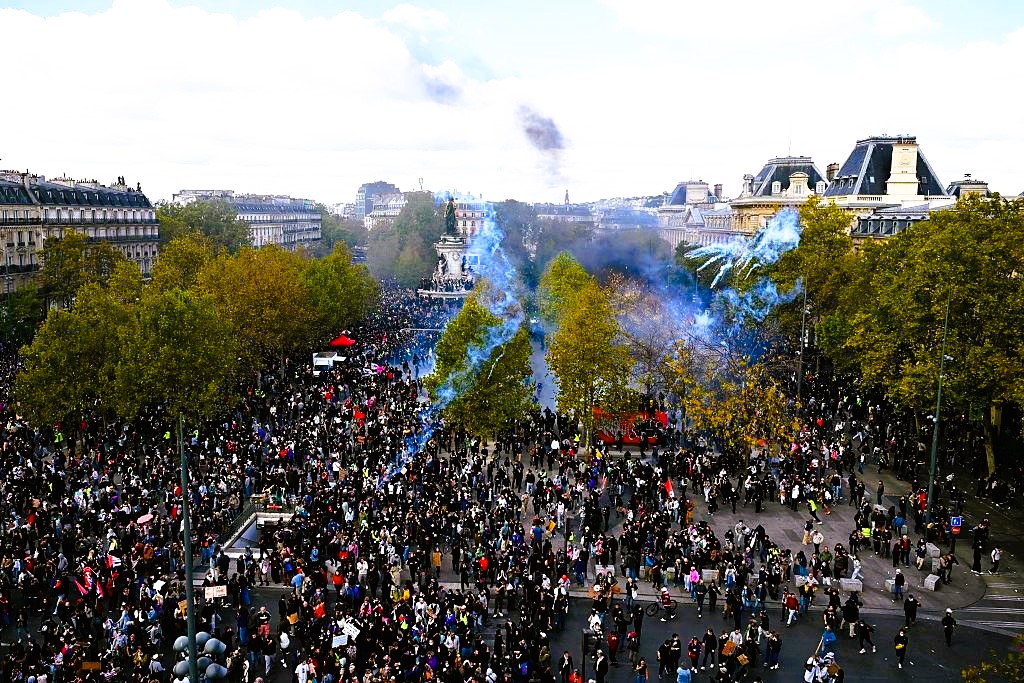
France became the main focus of the reported unrest. Demonstrations brought together students, workers, trade union supporters and other people frustrated by living costs, public spending decisions and confidence in political leadership.
Reports cited a French Interior Ministry estimate of more than 550,000 participants nationwide. Prime Minister Sébastien Lecornu was reported to have said that approximately 1,200 people had been arrested and around 150 police officers injured. These figures should be checked against updated official releases.
How peaceful demonstrations turned violent
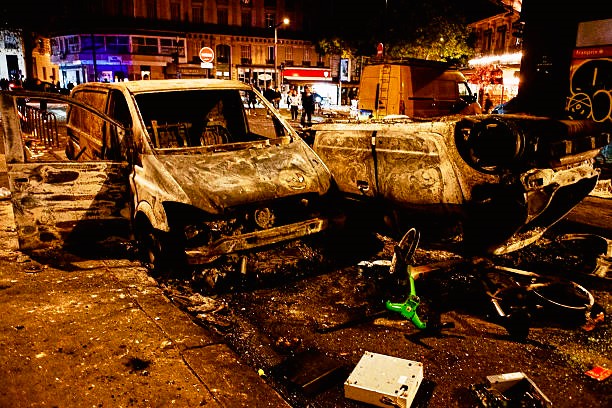
Reports described peaceful marches alongside incidents of looting, arson, property damage and clashes with police. A fire severely damaged the historic town hall in Limoges, while other cities reported attacks on buildings and commercial premises.
President Emmanuel Macron condemned the destruction and called for those responsible to face prosecution.
A crucial distinction remains: the actions of violent individuals cannot fairly be attributed to every demonstrator. Nor does violence establish that the underlying economic complaints are unfounded.
Why is Frances vulnerable to unrest?
France has a long history of mass mobilization, including the Yellow Vest movement and protests over pension reform. Three factors help explain the sensitivity of the present situation:
- Purchasing power: Prices can remain painfully high even when inflation slows.
- Public services: Disputes over education, spending and service quality can become wider arguments about fairness.
- Political trust: When citizens believe institutions are unresponsive, individual policy disagreements can become a challenge to government legitimacy.
Political opponents may use unrest to criticize the government’s handling of security or living standards. However, claims about electoral gains require polling and election evidence rather than speculation.
Italy: Living Costs and the Politics of Order
In Italy, demonstrations in Milan and other cities included concerns about economic conditions and public services. Reports described clashes between some demonstrators and police in Milan, where officers deployed tear gas and water cannons.
Prime Minister Giorgia Meloni condemned the violence.
The economic pressure behind the demonstrations
The central question is whether earnings, employment opportunities and public services give households enough security to manage essential expenses.
When rent, food, transport and energy consume a growing share of income, even modest additional costs can create serious hardship. Younger adults may face particular difficulty when insecure employment coincides with expensive housing.
The demonstrations alone do not establish the precise contribution of each factor. That requires comparable statistics on real wages, household expenditure, employment and housing costs.
The political consequences
Meloni’s government faces two competing responsibilities: maintaining public order and demonstrating that legitimate economic grievances receive serious attention.
A government may gain short-term support by emphasizing law and order. It risks losing credibility if citizens believe their everyday problems are being ignored.
Portugal: Housing Has Become a Political Fault Line
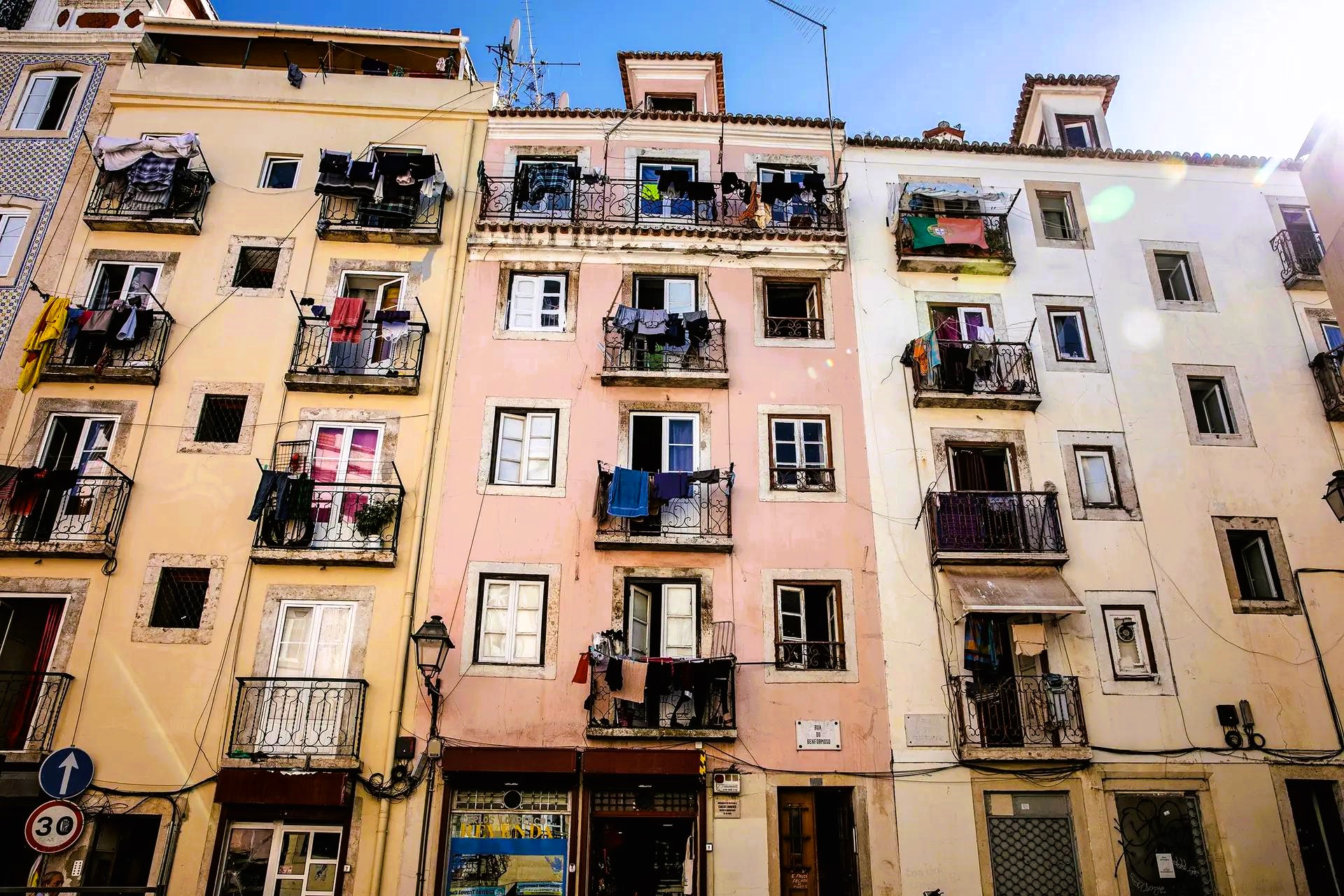
Portugal’s demonstrations focused heavily on housing affordability and wages. Reports described marches in Lisbon and other locations, alongside tent camps intended to draw attention to the difficulties of finding affordable accommodation.
Why housing costs matter
Housing is not an ordinary consumer purchase. People need somewhere to live, and unaffordable accommodation affects employment, family life, education and financial security.
Several pressures can combine:
- Housing demand grows faster than the supply of suitable homes.
- Rents rise faster than the incomes of many tenants.
- Young people struggle to establish independent households.
- Workers are priced out of the cities where their jobs are located.
Tourism, investment demand, construction costs, planning rules and local supply conditions can all influence housing markets. Their relative importance varies by location and requires evidence.
What should governments measure?
A credible housing strategy should examine affordable-home construction, public housing availability, rental costs relative to income and the effectiveness of tenant protections.
Rent regulation may help some tenants, but its effects depend on design and local market conditions. Poorly designed restrictions can discourage rental supply. Subsidies may provide immediate relief without resolving a shortage of homes.
Portugal’s challenge is to combine immediate assistance with reforms that make adequate housing more accessible over time.
Belgium: Student Protests and the Cost of Education
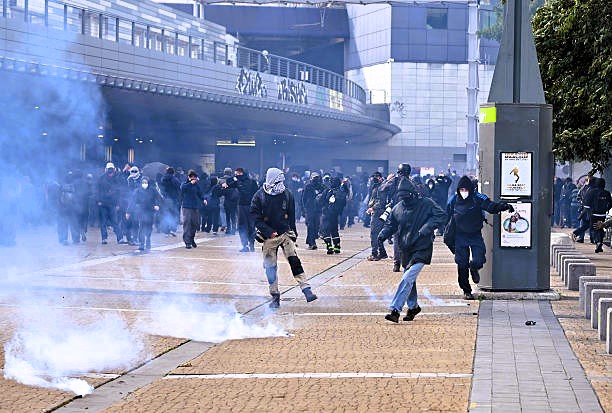
Belgium experienced demonstrations involving students and other protesters, particularly in Brussels and Liège. Reports described concerns about education costs, classroom conditions and public spending. Some confrontations escalated, prompting police to deploy tear gas and water cannons.
Why education costs matter
Education is often presented as a route to social mobility. That promise becomes less convincing when students face rising accommodation, transport and food costs alongside tuition fees.
For governments, education spending creates difficult budget choices. Reducing expenditure may help meet fiscal targets, but cuts that weaken teaching quality or access can create long-term economic and social costs.
The relevant question is whether reforms are supported by transparent evidence and whether students have meaningful opportunities to be heard.
Albania: Corruption Allegations and a Controversial Resort
Albania’s protests require separate treatment because their roots extend beyond the demonstrations reported elsewhere in Europe.
Student-led unrest included demands for Prime Minister Edi Rama to resign. Protesters raised concerns about corruption, education, employment opportunities and the country’s political direction.
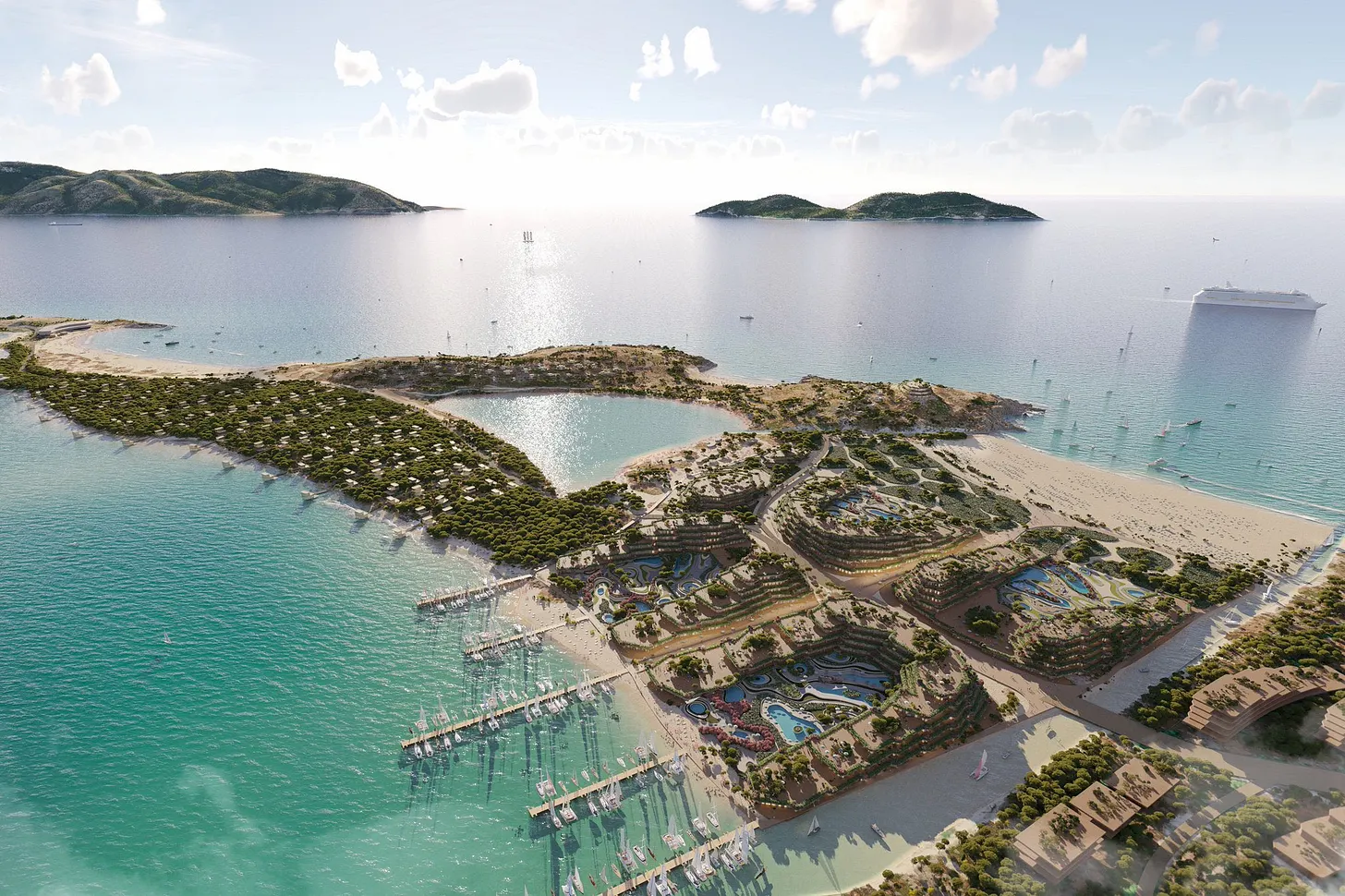
The controversy also involves a proposed luxury tourism development associated with Jared Kushner, the son-in-law of U.S. President Donald Trump, and his business interests.
Who benefits from development?
Critics have raised concerns about environmental protection, transparency and the use of valuable coastal land. Supporters of tourism investment point to potential employment and economic growth.
These competing claims require examination of planning documents, environmental assessments, land agreements, ownership disclosures and relevant legal proceedings. Allegations of corruption must not be treated as proven merely because protests have occurred.
Albania’s European Union membership ambitions make governance, judicial independence, transparency and the rule of law especially important.
The controversy raises legitimate questions about who benefits from development, who bears its environmental costs and how public decisions are made. It does not, by itself, establish misconduct by any individual.
Are These Protests One European Movement?
The similarities are real, but so are the differences.
France experienced broad demonstrations and serious incidents of violence. Italy’s protests combined economic concerns with other political demands. Portugal’s demonstrations focused strongly on housing and wages. Belgium saw prominent student concerns about education. Albania’s movement had a more direct anti-government dimension alongside environmental and investment disputes.
The reporting does not establish that these demonstrations were directed by a single organization. A more accurate interpretation is that separate national movements emerged amid overlapping pressures. This matters because the solutions also differ: housing reform cannot resolve every education dispute, and stronger policing cannot repair a loss of trust in public institutions.
The Economic Explanation: Why Slower Inflation Does Not Mean Life Is Affordable
One of the most common misunderstandings in economic reporting is the difference between inflation and the price level. Inflation measures how quickly prices change. When inflation slows, prices may still rise, just more slowly. Unless prices actually fall, households continue paying the higher amounts established during earlier inflationary periods.
For example, if a household’s essential expenses rise from 1,000 to 1,200 units of currency, the increase is 20%. If inflation subsequently slows, the household does not automatically return to spending 1,000. If wages have not kept pace, purchasing power remains under pressure.
Comparing inflation, real wages and housing costs
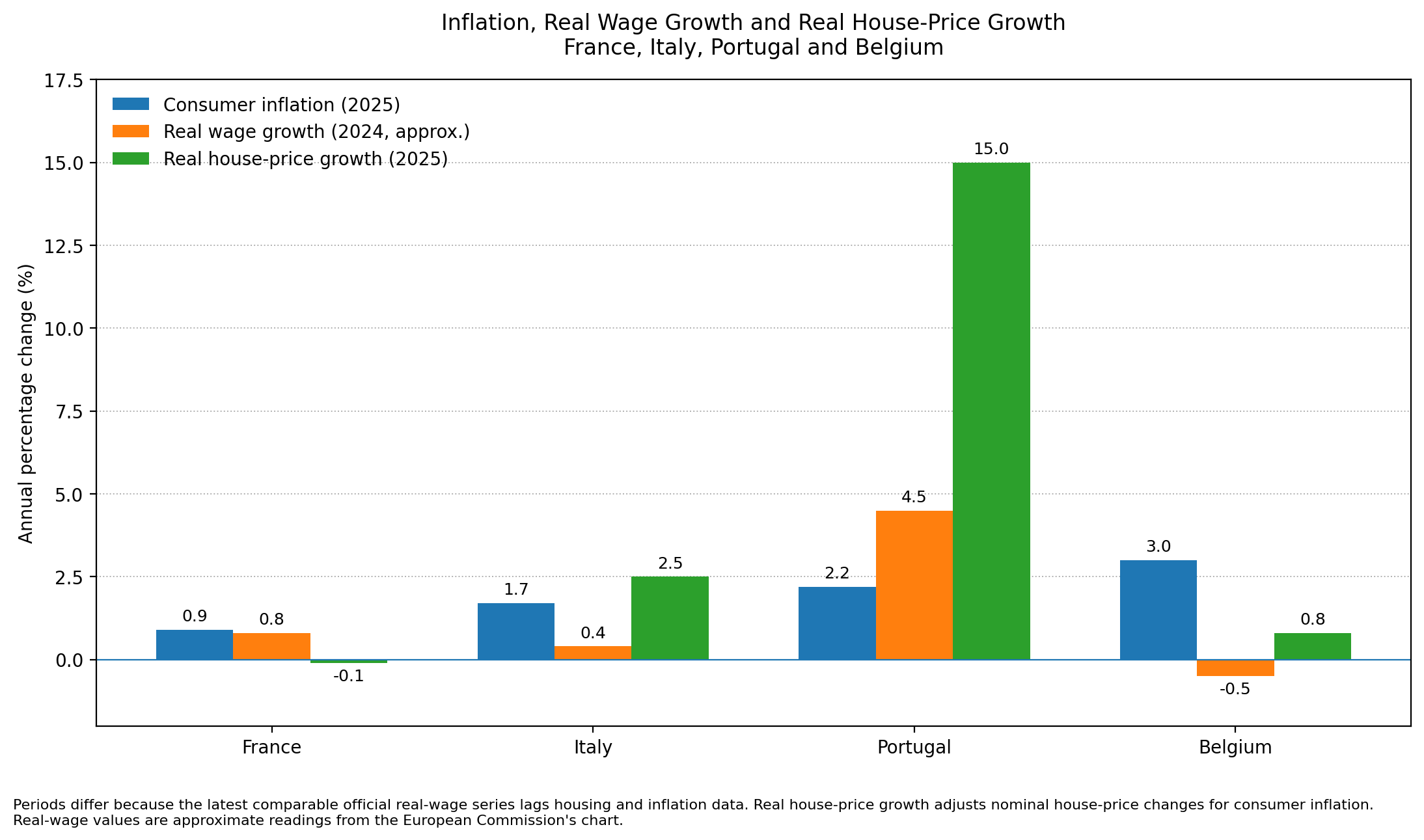
Editorial note: The chart is provisional. Verify the plotted values against official downloadable data before treating the differences as conclusive. House-price growth is not the same as rent inflation or overall housing expenditure.
Five indicators that reveal household pressure
1. Real wages: Are earnings rising faster or slower than consumer prices?
2. Housing affordability: How much disposable income goes toward rent, mortgage payments and essential housing costs?
3. Food and energy: How much income remains after paying for necessities?
4. Public services: Are education, transport, healthcare and other essential services accessible and adequately funded?
5. Employment security: Can workers rely on stable income, sufficient hours and realistic opportunities for advancement?
For international comparisons, researchers should use Eurostat, national statistical offices, the European Commission and the OECD. Figures must refer to comparable periods and definitions.
Official data sources:
- Eurostat: Inflation and consumer prices
- Eurostat: House-price statistics
- European Commission: Economic forecasts and analysis
- OECD: Wages and earnings
Who Pays, Who Benefits and Who Is Accountable?
Economic hardship becomes politically explosive when people believe the burdens are distributed unfairly.
Households may accept difficult circumstances more readily when rules are applied consistently, public money is used responsibly and political leaders share the sacrifices they demand.
The opposite can occur when people perceive that ordinary families face rising bills while powerful interests receive preferential treatment or escape accountability.
That perception does not prove corruption in any particular case. It does justify examining public spending, procurement, lobbying, taxation and the distribution of government assistance.
European support for Ukraine and domestic pressures
| Country | Military aid (€bn) | Financial & humanitarian aid | Public pressures to compare |
|---|---|---|---|
| France | 5.96 | Verify dataset | Inflation, housing, purchasing power |
| Italy | 1.70 | Verify dataset | Living costs, wages, public debt |
| Belgium | 2.76 | Verify dataset | Household costs, taxes, housing |
| Portugal | 0.30 | Verify dataset | Housing affordability, wages, inflation |
Source: Kiel Institute Ukraine Support Tracker; military figures via Statista. Figures are cumulative allocations, not annual payments.
Editorial note: Financial and humanitarian aid should be shown in its own column for each country. EU-level assistance must also be handled carefully because it is funded collectively and should not be counted twice. The household pressures are important context, but they cannot automatically be attributed to Ukraine aid alone.
Europe’s Ukraine Aid and the Cost-of-Living Burden
European governments have committed substantial resources to supporting Ukraine since Russia’s full-scale invasion in February 2022. This support includes military equipment, financial assistance, humanitarian aid and help for Ukrainian refugees. Meanwhile, households across Europe have faced pressure from inflation, rising housing costs and concerns about wages and public services.
The following comparison examines military assistance and financial and humanitarian support associated with France, Italy, Belgium and Portugal. It places these commitments alongside the economic pressures facing their populations, raising an important question: how do governments balance international obligations with the everyday needs of their own citizens?
Aid commitments alone do not explain Europe’s cost-of-living crisis, and the fiscal impact differs according to whether support takes the form of grants, loans, guarantees or donated equipment. The purpose of this comparison is to examine public spending priorities and their wider economic context, not to assume that Ukrainian aid caused the protests.
Public debt and fiscal restraint
Governments face genuine constraints. Public debt, interest payments, demographic pressures and investment needs can limit their ability to increase spending indefinitely.
Reducing deficits may protect fiscal stability, but the composition of budget adjustments matters. Cuts that weaken education, housing, or essential services can impose immediate costs and damage long-term productivity.
Conversely, borrowing without credible plans for sustainable growth can leave future taxpayers with greater liabilities.
The debate is not simply austerity versus unlimited spending. It is whether governments can use resources efficiently, reduce waste, prioritize essential services and maintain financial stability without placing disproportionate burdens on people with limited means.
Impact on the United States?
The European demonstrations may influence American political debate about inflation, housing, immigration, public spending and law and order.
However, the specific statements attributed to President Donald Trump and Vice President JD Vance in the original draft should not be quoted without identifiable primary sources, such as verified public posts, transcripts or recorded statements.
The Albanian resort controversy has a more specific American connection through business interests associated with Jared Kushner and Ivanka Trump. That connection raises questions about investment transparency and environmental safeguards, but does not by itself prove misconduct or establish government involvement. Any assessment should distinguish private business activity from official American foreign policy.
What Governments Should Do Next
A credible response to public frustration should include:
- Reliable data: Explain inflation, wage trends, housing affordability and public spending transparently.
- Targeted assistance: Support households facing genuine hardship and assess whether programmes work.
- Housing reform: Address supply constraints, affordable construction and rental-market conditions.
- Education protection: Evaluate spending decisions against their effects on access and quality.
- Independent investigations: Ensure that corruption allegations and development decisions are examined impartially.
- Protection of peaceful protest: Distinguish peaceful demonstrators from those who commit violence.
- Measurable results: Publish clear indicators and timelines so citizens can assess progress.
No single policy will solve every problem. The strongest response combines immediate relief with reforms that improve long-term opportunity and institutional accountability.
What the Protests Mean for the Global Economy
Prolonged instability could affect investor confidence, tourism, consumer spending and political cooperation. But demonstrations do not automatically produce a recession or financial crisis.
The consequences depend on the duration and scale of disruption, the sectors affected, government responses and more extensive economic conditions.
For other countries, the lesson is that economic growth and national wealth do not guarantee public satisfaction when essential living costs rise faster than people’s ability to pay them.
Conclusion: The Real Test Is Whether Living Standards Improve
Europe’s October 2026 protests have brought economic insecurity, housing affordability, education and political accountability into the spotlight.
They do not prove that European governments are collapsing or that one cause explains every demonstration. They do show why economic success cannot be judged solely by growth rates or slower inflation.
Citizens also judge governments by whether they can afford a home, provide for their families, access good schools and trust public institutions.
Violence must be addressed through lawful and proportionate measures. Peaceful protest must remain a democratic right. Economic grievances deserve evidence-based examination rather than dismissal or political exaggeration.
Ultimately, Europe’s leaders face a straightforward test: can they turn public frustration into practical improvements in living standards, opportunity and trust?
The answer will matter far beyond Europe.
Frequently Asked Questions
1. Why did people protest across Europe in October 2026?
Reported demonstrations reflected economic and social grievances, including living costs, housing affordability, wages, education and public services. The priorities differed between countries.
2. Were the protests coordinated across Europe?
The available reporting describes separate demonstrations with overlapping concerns. It does not establish that they were directed by one central organization.
3. What happened during the French protests?
Reports described large demonstrations, along with looting, fires, and clashes in several locations. Official figures for participants, arrests and injuries should be checked against updated releases.
4. Why is housing such a major issue in Portugal?
Housing costs relative to household income have made accommodation increasingly difficult for many people. Supply, wages, investment demand and local market conditions all influence possible solutions.
5. Why were students protesting in Belgium and Albania?
Belgian demonstrations included concerns about education costs and spending decisions. In Albania, students raised concerns about education and employment alongside broader demands for political accountability.
6. Will these protests affect the United States?
They may influence political debate about economic insecurity, immigration and governance. Their actual effect on American policy, elections or the economy requires further evidence.
Author: Maj Hamid Mahmood (Retired), MA Political Science, LLB, PGD (HRM). His military background, political science and legal education inform analysis of international conflicts, security affairs, political developments and the human consequences of war.
References and Research Sources
- Al Jazeera: Reporting on demonstrations in Belgium, Italy, Portugal and France, October 17, 2026.
https://www.aljazeera.com/news/2026/10/17/cost-of-living-protests-hit-belgium-italy-portugal-and-france - Reuters: Reporting on French demonstrations and unrest, October 17, 2026.
https://www.reuters.com/world/students-trade-unions-yellow-vests-set-protest-across-france-2026-10-17/ - Reuters: Reporting on Albania’s protests and the government’s response, October 2026.
https://www.reuters.com/world/albanian-pm-says-mass-protests-threat-eu-membership-not-government-2026-10-18/ - Associated Press: Reporting on Albanian protests and the controversial resort project.
https://apnews.com/article/2c04ef79a5bbbfcf054b161111c85b50 - Eurostat: Official European Union statistics on inflation, housing and household living conditions.
https://ec.europa.eu/eurostat - European Commission: Economic analysis and forecasts.
https://economy-finance.ec.europa.eu/ - OECD: Comparative economic data and analysis on wages, purchasing power and housing.
https://www.oecd.org/
Editorial note: This article reflects reporting available for the October 17–18, 2026, developments. Protest counts, arrests, injuries and political consequences may change. Verify developing-event claims and statistical comparisons against primary sources before publication.