Muslim Americans’ Political Breakthrough: A New Era in US Democracy?
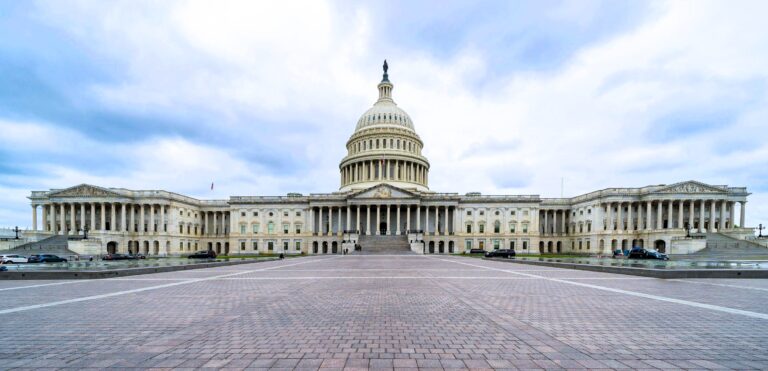
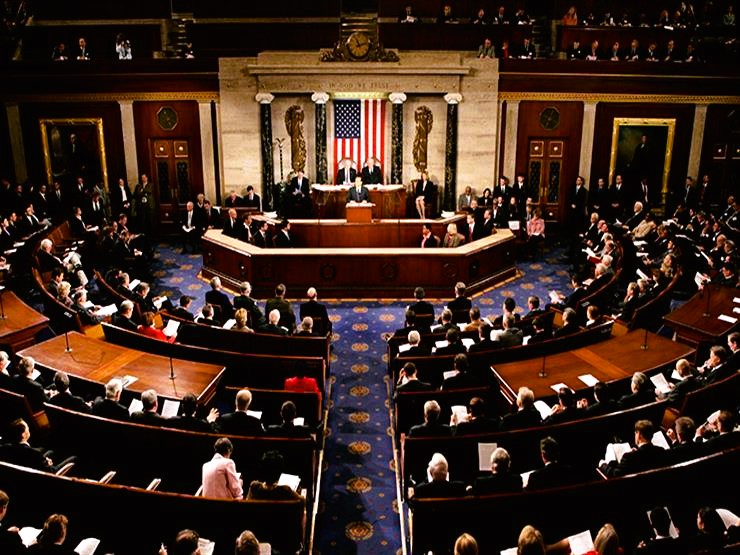
Muslim Americans’ Political Breakthrough. A political minority once frequently discussed through the language of immigration, national security and religious identity is increasingly becoming part of the institutions that shape American public policy.
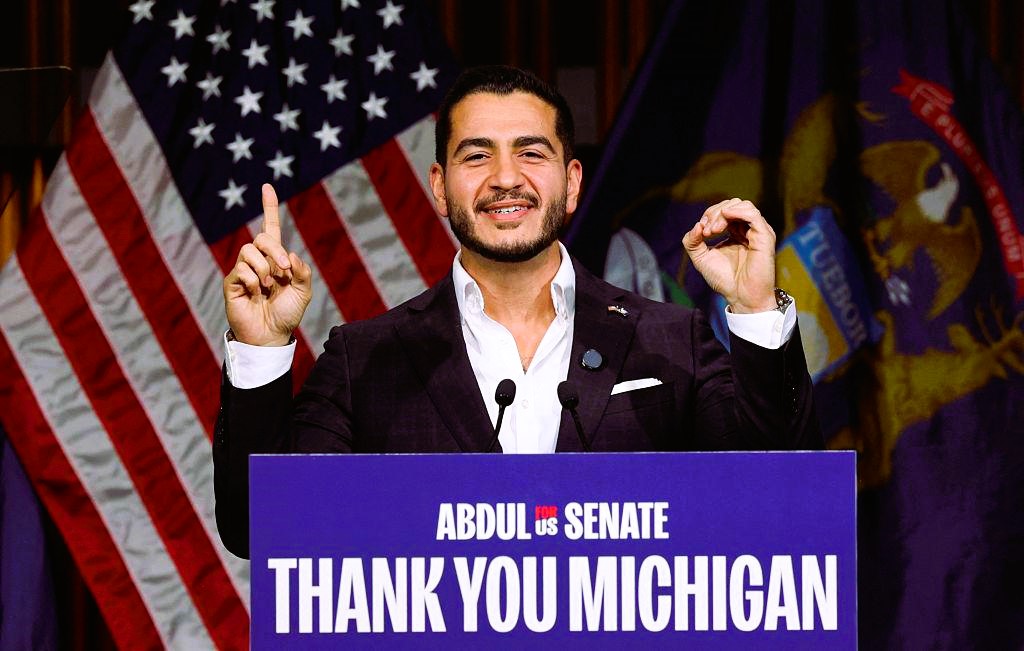
On November 3, 2026, American voters elected Dr. Abdul El-Sayed to the United States Senate, making him the first Muslim ever elected to that chamber. Elsewhere, Muslim candidates secured congressional, state legislative, judicial and local government victories across the country.
By November 5, the Council on American-Islamic Relations (CAIR) had recorded at least 97 confirmed Muslim electoral victories across 21 states, including 38 state legislative victories. Another 15 candidates were leading in races awaiting final results, while six contests remained too close to call.
The significance extends well beyond the number of winning candidates. These elections unfolded amid controversy over Gaza, the US-Israel war with Iran, immigration, economic pressures, campaign financing and increasingly confrontational political rhetoric directed at Muslim candidates.
Yet the victories also reveal something more complicated than a religious community gaining representation. Muslim Americans are building political alliances with voters from different ethnic, religious and social backgrounds, challenging established political networks and competing for influence within America’s democratic institutions.
The central question is no longer simply whether Muslim Americans can win elections.
It is whether their growing political representation can translate into lasting influence over the policies that affect Americans at home and America’s relationships with the wider world.
1. The Numbers Behind a Historic Election
The preliminary results published by CAIR and CAIR Action on November 5 provide the clearest available snapshot of Muslim American electoral participation.
| Election measure | Reported result |
|---|---|
| Confirmed electoral victories | 97 |
| States represented | 21 |
| State legislative victories | 38 |
| Candidates leading in uncalled races | 15 |
| Contests too close to call | 6 |
| Candidates tracked | 168 |
| Candidates who lost | 50 |
The 97 victories surpassed the 82 Muslim electoral victories reported by CAIR in the 2022 midterm elections, representing an increase of approximately 18%.
The candidates represented different levels of government, including the US Senate, House of Representatives, state legislatures, courts, county administrations, municipalities, school boards and educational institutions.
These figures require an important qualification.
They represent CAIR and CAIR Action’s preliminary candidate-tracking project, not a government-certified national census of Muslim elected officials. The organizations also acknowledge that additional candidates may have won beyond those identified in their tracker.
Nevertheless, the results demonstrate a substantial expansion of Muslim participation in American electoral politics. The distinction between national and local victories is also important. A senator may influence national legislation and foreign policy, but a school board member, municipal councillor, or local judge can have a more immediate impact on people’s everyday lives.
The 2026 results therefore represent more than a collection of high-profile congressional victories. They reveal political participation spreading across different levels of American government.
2. Abdul El-Sayed: America’s First Muslim Senator
The most historically significant individual victory belongs to Dr. Abdul El-Sayed. The Michigan Democrat defeated Republican Mike Rogers in the November 3 election, securing an open Senate seat and becoming the first Muslim elected to the United States Senate. His victory was particularly remarkable because he had never previously held elected office.
From Michigan to Oxford and Columbia
El-Sayed was born in Michigan to Egyptian immigrant parents. He studied biology and political science at the University of Michigan, where he developed an interest in public health and the social conditions affecting people’s lives.
A Rhodes Scholarship took him to the University of Oxford, where he completed doctoral research in public health. He subsequently earned his medical degree from Columbia University in New York.
An important distinction deserves clarification. Although El-Sayed holds an MD and a doctorate in public health, he did not complete a medical residency or obtain a licence to practise medicine. He chose a career in public health rather than conventional clinical practice. His professional work focused on disease prevention, public health administration and the relationship between poverty, inequality and health outcomes.
In 2015, he became Detroit’s health commissioner. He later directed Wayne County’s health department between 2022 and 2025.
From Political Defeat to National Leadership
His first major electoral campaign came in 2018, when he challenged established Democratic politicians in Michigan’s gubernatorial primary. He lost to Gretchen Whitmer by a substantial margin.
Rather than abandoning politics, he continued developing his public profile through public health work, writing, media appearances and grassroots political organizing. Eight years later, he returned to electoral politics with a considerably broader political platform.
What Did He Promise Voters?
His campaign focused on economic inequality and the everyday pressures facing American families. His principal proposals included:
- Medicare for All and universal healthcare.
- Reducing medical costs and household financial pressures.
- Limiting the influence of wealthy donors and outside political spending.
- Higher taxes on the wealthiest Americans.
- Stronger workers’ rights and economic protections.
- Greater accountability in American foreign policy.
- Ending unconditional American military assistance to Israel.
His campaign attracted support from progressive political figures, including Senator Bernie Sanders and Representative Alexandria Ocasio-Cortez. However, his journey through the Democratic primary was particularly difficult.
The AIPAC Spending Controversy
His opponent, Representative Haley Stevens, received substantial financial support from the American Israel Public Affairs Committee (AIPAC) and affiliated political groups.
According to Associated Press reporting, AIPAC and its affiliated groups spent close to $30 million supporting Stevens in the August 4 Democratic primary. This represented the organisation’s largest investment in a single race at that time.
El-Sayed nevertheless won the primary by fewer than 15,000 votes, a margin of less than one percentage point.
He then defeated Republican Mike Rogers in the November general election.
His victory became an important example of how grassroots campaigning can overcome substantial financial disadvantages.
However, it would be misleading to conclude that campaign spending no longer matters or that one election has permanently weakened established lobbying networks. The more precise conclusion is that financial power does not guarantee electoral success.
El-Sayed’s victory also gave progressive Democrats a significant argument ahead of the 2028 presidential election: candidates advocating substantial economic and foreign-policy changes can win in competitive states.
His achievement was simultaneously a personal political breakthrough, a milestone in religious representation and a victory for a particular progressive political programme.
3. A New Congressional Generation
El-Sayed’s Senate victory was not an isolated development. CAIR confirmed six Muslim victories in the House of Representatives, bringing the number of confirmed congressional victories to seven when the Senate seat is included. These included three newly elected House members and three incumbents securing reelection.
Adam Hamawy: From Military Medicine to Congress
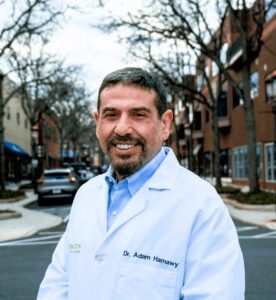
Adam Hamawy’s journey offers one of the most compelling human-interest stories of the election.
A doctor, military veteran and humanitarian medical worker, he grew up in a working-class family in Old Bridge, New Jersey.
He received an ROTC scholarship and studied at Rutgers University before earning his medical degree from Rutgers New Jersey Medical School.
During his medical training, he treated victims and first responders at a field hospital following the September 11 attacks.
He subsequently served in the New Jersey Army National Guard and rose to the rank of lieutenant colonel in the US Army.
During the Iraq War, he worked as a combat trauma surgeon. His professional and humanitarian experience later took him to conflict and disaster areas in several countries.
In 2024 and 2025, he participated in medical missions to Gaza, treating injured Palestinians. His experiences there became a defining influence on his decision to enter politics.
His campaign emphasised healthcare affordability, humanitarian protection, military accountability and the relationship between domestic social spending and overseas military expenditure.
Hamawy defeated his Republican opponent in New Jersey’s 12th Congressional District.
He became the first Muslim elected to represent New Jersey in Congress.
His election brings an unusual combination of military service, medical expertise and humanitarian experience into the House of Representatives. It also demonstrates how professional experience outside conventional politics can become the foundation for an electoral campaign.
Darializa Avila Chevalier: Challenging Established Political Power
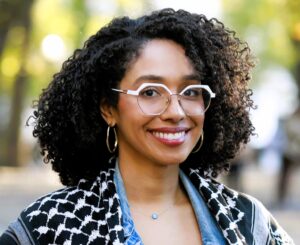
Darializa Avila Chevalier’s election in New York’s 13th Congressional District represents a different political journey.
Coming from a working-class Dominican family, she developed her political identity through immigrant-rights activism and community organizing.
She studied at Columbia University and worked with Families for Freedom, an organization supporting families affected by deportation proceedings. She also worked as an investigator in a public defender’s office in Harlem.
Her political interests include immigration policy, racial discrimination and the treatment of Black immigrants within the American legal system.
Her election demonstrates an important dimension of Muslim American political representation. It is not restricted to candidates of Arab, South Asian, or Middle Eastern origin.
The American Muslim community includes people from African, Caribbean, Latino, European, South Asian, Arab and other backgrounds.
Her victory also illustrates how grassroots activism can challenge established political networks and produce new congressional leadership.
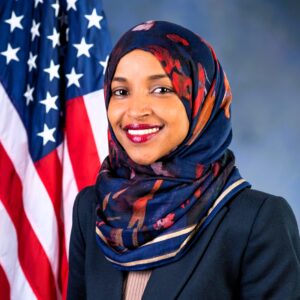
Ilhan Omar: From a Refugee Camp to Congress
Ilhan Omar remains one of the most internationally recognisable Muslim politicians in the United States.
Born in Somalia, she left the country with her family during the civil war.
Her family spent several years in a refugee camp in Kenya before eventually settling in Minneapolis, Minnesota.
Before entering national politics, she worked in community education, policy advocacy and political organizing.
She first entered the Minnesota House of Representatives. In 2018, she became one of the first two Muslim women elected to the US Congress.
Her political work has included healthcare, immigration reform, education, civil liberties, workers’ rights and Palestinian human rights.
Her reelection in 2026 demonstrates that the political influence developed by Muslim women in the 2018 election cycle has not disappeared.
Rashida Tlaib: The Palestinian-American Congressional Voice
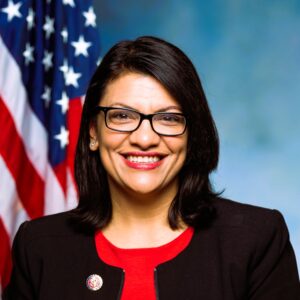
Rashida Tlaib was born in Detroit to Palestinian immigrant parents. Her family background and experience growing up in a working-class household helped shape her interest in public service.
She studied at Wayne State University and earned a law degree from Thomas M. Cooley Law School.
In 2008, she became the first Muslim woman elected to the Michigan legislature.
She entered Congress in 2019 and has since become one of the most prominent congressional critics of unconditional American military assistance to Israel.
Her work has also addressed environmental protection, housing, workers’ rights and economic inequality. Her reelection in 2026 represents the maintenance of a political career that began with local community activism.
André Carson and Lateefah Simon: Established Voices
Two other important congressional victories deserve attention.
André Carson, an African-American Muslim, represents Indiana’s 7th Congressional District. He first entered Congress through a special election in 2008 and has since become an established political figure.
Lateefah Simon, an African-American civil rights activist, represents California’s 12th Congressional District. Her professional background includes decades of work on racial justice, criminal justice reform and social equality.
Both secured reelection in 2026. Their presence is important because it demonstrates that Muslim political representation in America is not exclusively an immigrant phenomenon. It also illustrates the connection between civil rights activism and elected public service.
Aisha Wahab: A Separate Election Milestone
Aisha Wahab deserves mention, although her November result requires a separate qualification. The daughter of Afghan refugees, Wahab experienced foster care before being adopted by an Afghan-American family.
She entered local government through the Hayward City Council and subsequently became the first Afghan-American woman elected to the California State Senate in 2022.
She entered the US House through a special election in August 2026. In the November general election, she declared victory in her campaign for a full congressional term.
However, CAIR’s November 5 announcement still listed her result as pending final confirmation. The organisation reported that she was leading with 56.53% in unofficial results available on November 4. Her story illustrates the possibilities of political participation across generations and institutions.
4. Muslim Women and the Expansion of Political Representation
The growing presence of Muslim women in American politics deserves particular attention. Their political achievements challenge conventional assumptions about religious identity, gender and public leadership.
Women such as Ilhan Omar, Rashida Tlaib and Lateefah Simon have already established national profiles. Others have developed influence through state legislatures and local government. Among the important names included in CAIR’s election tracking are:
- Aber Kawas, New York.
- Iman Jodeh, Colorado.
- Maryam Khan, Connecticut.
- Madinah Wilson-Anton, Delaware.
- Nabeela Syed, Illinois.
- Saba Haider, Illinois.
- Zaynab Mohamed, Minnesota.
- Munira Abdullahi, Ohio.
- Meriam Sabih, Pennsylvania.
Aber Kawas’s victory is particularly significant. She became the first Palestinian American and first Muslim woman elected to the New York State Legislature, according to CAIR.
Their backgrounds differ considerably. Some entered politics through civil rights activism; others through professional careers, local government, or community organizations.
The importance of their success lies not simply in the number of women elected. It is the expansion of the communities, experiences and perspectives represented in American public institutions.
Representation, however, does not automatically guarantee agreement on political priorities. These women, like other elected officials, will have to balance personal convictions, party positions and the needs of their constituencies.
5. Beyond Washington: State Legislatures, Courts and Local Government
The national headlines focus on Congress, but much of the political significance of the 2026 results lies elsewhere. CAIR reported 38 Muslim victories in state legislative elections. These victories extended across states with different political traditions and demographic characteristics.
Examples include:
| State | Elected representatives |
|---|---|
| Colorado | Iman Jodeh |
| Connecticut | Maryam Khan, Saud Anwar, MD Rahman |
| Delaware | Madinah Wilson-Anton |
| Georgia | Sheikh Rahman, Farooq Mughal, Akbar Ali |
| Illinois | Nabeela Syed, Abdelnasser Rashid, Saba Haider |
| Maryland | Amar Mukunda, Sarah Wolek, Sean Stinnett |
| Michigan | Abbas Alawieh, Alabas Farhat, Jalal Abdallah |
| Minnesota | Omar Fateh, Zaynab Mohamed, Mohamud Noor |
| Nevada | Hanadi Nadeem |
| New York | Aber Kawas, Robert Jackson, Charles Fall |
| North Carolina | Haseeb Fatmi, Mujtaba Mohammed |
| Ohio | Ismail Mohamed, Munira Abdullahi |
| Oregon | Kayse Jama |
| Pennsylvania | Meriam Sabih, Jason Dawkins, Tarik Khan |
| Texas | Salman Bhojani |
This is a representative selection rather than a complete list of all 38 victories. Another important statewide victory was Keith Ellison’s reelection as Minnesota attorney general.
Why State Legislatures Matter
American state legislatures exercise substantial authority over everyday public policy.
Their responsibilities include:
- Public education and school funding.
- Healthcare regulation.
- Housing and land-use policy.
- State taxation and public expenditure.
- Employment protections.
- Criminal justice and public safety.
- Environmental regulation.
A national political victory may receive international attention, but state-level decisions can directly affect millions of households. The 2026 results therefore indicate an expansion of Muslim participation in the institutions where many practical public policies are developed.
Judicial Elections: Representation in the Legal System
CAIR also reported eight judicial victories.
Among the winners were:
- Mariam Saad Bazzi, Michigan Court of Appeals.
- Charlene Mekled Elder, Wayne County Circuit Court.
- Helal A. Farhat, Wayne County Circuit Court.
- Aliyah S. Sabree, Wayne County Circuit Court.
- Mariam Mokri, Minnesota District Court.
- Rashad A. Hauter, North Carolina District Court.
- Sam Hamadani, North Carolina District Court.
- Andrea S. Jarmon, Washington District Court.
Judges occupy a different position from legislators. They are expected to apply the law independently rather than advance a political or religious programme. Their importance lies in the administration of justice, constitutional protections, due process and public confidence in the legal system.
Religious identity should never determine how a judge interprets the law. Judicial independence and professional integrity remain the essential standards.
Municipal Government and Education
The local victories also included:
- Yousef Rabhi, Mayor of Ann Arbor, Michigan.
- Mohamed T. Khairullah, Mayor of Prospect Park, New Jersey.
- Letticia Plummer, Harris County Judge, Texas.
- Sana Siddiqui, Raleigh City Council, North Carolina.
- Zohaib Qadri, Austin City Council, Texas.
- Yasmin Shafiq, Herndon Town Council, Virginia.
An important clarification for international readers: the position of Harris County Judge is an elected county executive role, not the same as a courtroom judgeship. Muslim candidates also secured positions on educational and university governing bodies.
These included representatives from the University of Michigan, Wayne State University, the Ann Arbor and Dearborn school boards, and community college districts. Such positions influence educational budgets, institutional governance, local priorities and public services.
They may receive less national attention than a Senate election, but their effects can be felt directly by local families.
6. The Historical Context: Muslim Political Participation Did Not Begin in 2026
The 2026 results should not be portrayed as the beginning of Muslim political representation in America. They are better understood as an acceleration of a process that has developed over several decades. In 2006, Keith Ellison became the first Muslim elected to the US House of Representatives.
Two years later, André Carson entered Congress, becoming the second Muslim member of the House. In 2018, Rashida Tlaib and Ilhan Omar became the first two Muslim women elected to Congress. Other Muslim Americans subsequently entered state legislatures, municipal administrations and public institutions.
In 2025, Zohran Mamdani’s election as New York City’s first Muslim mayor attracted international attention. His inauguration in 2026 further demonstrated the increasing visibility of Muslim political leadership in one of America’s most influential cities. The broader demographic context is also relevant.
Pew Research Center estimated that the Muslim population in the United States had grown to approximately 5.5 million people in 2026, compared with an estimated 2.4 million in 2007. The community includes American-born Muslims as well as immigrants and their descendants from many regions.
However, population growth alone does not explain political influence. Electoral success depends on voter registration, turnout, geographic concentration, political organization, candidate credibility and the ability to attract support beyond one’s immediate community.
The 2026 election represents the convergence of these factors rather than a sudden political transformation.
7. Trump, Anti-Muslim Rhetoric and the Limits of Presidential Influence
One of the most controversial dimensions of the campaign involved President Donald Trump’s attacks on Abdul El-Sayed. On October 25, Trump intensified his rhetoric during a rally in Michigan.
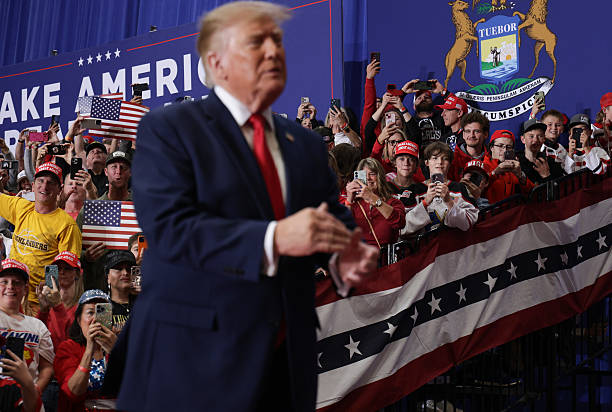
According to Associated Press reporting, he called El-Sayed a “jihadist”, described him as being on the side of terrorists and suggested that he should face security screening before entering the Senate. Trump also invoked the September 11 attacks and questioned El-Sayed’s loyalty to the United States.
These were political accusations, not substantiated findings of terrorist affiliation. No credible evidence was presented establishing that El-Sayed belonged to a terrorist organization. The distinction is important.
A candidate’s foreign-policy positions, political associations and public statements are legitimate subjects of scrutiny. Questioning a citizen’s loyalty because of religious identity is a different matter.
The Political Response
El-Sayed continued campaigning on healthcare, economic inequality and government accountability. His argument was that ordinary Americans were concerned about the cost of living, medical expenses and the direction of national policy, not simply the religious background of their political representatives.
Following his victory, he made a pointed reference to Trump’s attacks on his name and faith, arguing that these had nothing to do with why ordinary Americans were struggling to afford fuel and other essentials. His victory, therefore, carried a symbolic dimension.
The candidate whom the president had portrayed as unsuitable for public office had secured a seat in the Senate.
Ilhan Omar and Rashida Tlaib have also faced sustained criticism from Trump and other Republican politicians over their political positions and identities.
However, it would be inaccurate to suggest that all criticism of these representatives is religiously motivated. Their statements, policy positions and political decisions can legitimately be challenged. The essential distinction is between political accountability and religious prejudice.
Did Trump’s Attacks Help Muslim Candidates?
The election results suggest that anti-Muslim rhetoric did not prevent these candidates from winning. It may also have motivated some voters to participate.
CAIR’s exit survey found that 70% of its Muslim respondents said rising Islamophobia motivated them to vote. However, this does not prove that Trump’s attacks caused the electoral victories. Economic dissatisfaction, the wider Democratic electoral performance, local political conditions and candidate quality also contributed.
The more defensible conclusion is that presidential rhetoric cannot guarantee how voters will respond. In a democratic system, voters retain the power to reject the political messages and candidates promoted by the president.
8. AIPAC, Campaign Financing and the Limits of Political Money
The Michigan Senate primary provides one of the most revealing examples of the relationship between money and electoral influence. The American Israel Public Affairs Committee, commonly known as AIPAC, is a prominent pro-Israel advocacy organization involved in American political debate and electoral spending through its political network.
Its support for Haley Stevens became a central issue during her Democratic primary against El-Sayed. Associated Press reporting documented close to $30 million in spending by AIPAC and affiliated groups supporting Stevens.
El-Sayed made this financial imbalance a major part of his campaign message. He argued that the election represented a choice between grassroots political participation and the influence of wealthy donors and organized political interests. He nevertheless faced outside spending supporting his own campaign from groups with progressive and pro-Palestinian positions.
This distinction is important.
American campaign finance is not simply a contest between one lobbying organization and ordinary voters. Different political networks, donors and independent expenditure groups operate across the electoral system.
What Does the Result Actually Demonstrate?
El-Sayed’s victory does not establish that AIPAC has lost its influence. Nor does it mean that every candidate critical of Israeli government policy will win an election.
It demonstrates something more specific: substantial campaign expenditure cannot guarantee that voters will support a particular candidate.
The result also reflects growing divisions within the Democratic Party over Israeli military policy, Palestinian rights and the conditions attached to American military assistance. Another essential distinction must be maintained.
AIPAC represents a pro-Israel political position. It does not represent all Jewish Americans. Jewish Americans hold diverse political views, including substantial differences over the policies of the Israeli government, the treatment of Palestinians and American involvement in Middle Eastern conflicts.
Similarly, criticism of AIPAC’s political influence should not be turned into accusations against Jewish people collectively. The legitimate subject of investigation is political financing, advocacy and public policy.
9. What Did Muslim American Voters Actually Want?
A nationwide survey released by CAIR and CAIR Action on November 4 provides an important insight into the concerns of Muslim voters. The survey was conducted by Community Pulse, operated by Molitico, and included weighted findings from 522 registered voters who identified themselves as Muslim.
Its findings suggest that international conflicts, economic pressures and civil rights concerns were closely connected in the minds of respondents.
| Survey finding | Percentage |
|---|---|
| Gaza and Palestinian rights are among the leading issues | 76% |
| Gaza strongly influenced voting decisions | 80% |
| Iran strongly influenced voting decisions | 76% |
| The economy strongly influenced voting decisions | 80% |
| Rising Islamophobia motivated voting | 70% |
| Primarily voted for Democrats | 80% |
| Democrats are more responsive to Muslim concerns | 53% |
| Neither major party is more responsive | 33% |
The survey also found that 93% of respondents reported having voted, although this figure describes the survey participants and should not be interpreted as the actual turnout rate of the entire Muslim electorate.
Three Findings Deserve Particular Attention
First, foreign policy mattered, but it was not the only concern.
Gaza and the war involving Iran were major considerations, but economic pressures were equally important. The survey found that 80% said the economy was a major influence on their voting decisions. This challenges the assumption that Muslim American voters were motivated exclusively by religious or international political concerns.
Second, opposition to Islamophobia encouraged political participation.
Seventy percent said rising Islamophobia motivated them to vote. For some respondents, participation was therefore also a statement about equal citizenship, religious freedom and the right to participate in public life without discrimination.
Third, Democratic support did not mean unconditional political loyalty.
Although 80% of respondents who voted said they primarily voted for Democrats, 33% believed neither major party was more responsive to Muslim concerns. This is arguably one of the most revealing findings. It suggests that support for a party should not automatically be confused with complete trust in its leadership.
Understanding the Survey’s Limitations
The findings should be interpreted carefully. The sample consisted of 522 self-identified Muslim registered voters. Recruitment used text-message invitations, a stratified sample and participants from earlier surveys and an existing research panel.
The pollster reported a margin of error of approximately ±6.6 percentage points, accounting for weighting. The number of respondents varied between questions.
The survey provides useful evidence of the concerns expressed by its participants, but it is not an official count of how every Muslim American voted. It also cannot independently establish why individual candidates won particular districts.
Nevertheless, it offers an important window into the political priorities of a community that is becoming increasingly visible in American elections.
10. Why Non-Muslim Americans Supported Muslim Candidates
Muslim Americans constitute a minority of the national population and electorate. Their candidates, therefore, cannot win competitive elections simply by relying on Muslim voters. Their success requires broader political alliances.
This is one of the most important aspects of the 2026 results.
A voter does not have to share a candidate’s religion to support that candidate’s economic or social policies. Consider several examples.
A Christian family struggling with medical expenses may support a candidate advocating universal healthcare.
A Jewish voter concerned about civilian suffering in Gaza may support greater accountability for American military assistance.
An African-American voter may support a candidate campaigning against racial discrimination and unequal treatment under the law.
A young graduate struggling with student debt may support proposals for education affordability.
A working-class voter may support a candidate challenging the influence of wealthy donors and corporate interests.
These voters may have different religious beliefs, cultural backgrounds and political priorities.
What brings them together is a belief that the candidate can represent their interests.
The Importance of Coalition Politics
The success of minority candidates in American elections depends heavily on coalition-building. Muslim candidates have attracted support from different sections of the electorate, including African-American communities, Arab Americans, progressive Democrats, younger voters, civil rights activists and Jewish Americans critical of particular Israeli government policies.
These alliances are politically important because they demonstrate that religious identity need not determine the boundaries of electoral support. The most successful candidates are those who connect their personal backgrounds with wider public concerns.
This is how minority candidates can build majority electoral support. It is also why the 2026 results should not be interpreted as a purely religious political movement. They reflect a wider process of coalition-building within American democracy.
11. Gaza, Iran, and the Changing Debate Over American Foreign Policy
The 2026 election took place during a period of serious geopolitical tension. The destruction and humanitarian crisis in Gaza had become a major subject of American political debate.
The US-Israel war with Iran added another dimension, raising concerns about regional escalation, military expenditure and the possibility of a prolonged conflict.
For Muslim voters, these developments were especially significant. However, the political consequences extended beyond Muslim communities.
Americans were also concerned about the economic consequences of overseas conflict, particularly fuel prices, inflation, military spending and the possibility of further American casualties.
The Associated Press reported that the Iran war and rising prices were important sources of dissatisfaction among voters during the midterms. The election therefore brought foreign policy into direct conversation with domestic economic concerns.
What Could the New Representatives Change?
The growing presence of Muslim and Palestinian-American representatives may increase congressional scrutiny of several issues.
American military assistance to Israel
More representatives may demand conditions on military assistance, closer oversight of arms transfers and greater accountability concerning civilian protection.
Palestinian rights and humanitarian assistance
They may seek stronger congressional attention to humanitarian access, civilian protection and compliance with international humanitarian law.
Iran and regional military policy
They may question policies that could draw the United States into prolonged regional conflicts.
Civil rights and immigration
They may increase scrutiny of discriminatory policies, immigration restrictions and the treatment of religious minorities.
Campaign financing
The El-Sayed campaign may encourage other candidates to challenge the influence of wealthy donors and independent political expenditure groups.
Representation Does Not Equal Control
There are important constitutional limitations. A senator or representative cannot independently change American foreign policy. Congress has substantial authority through legislation, appropriations, military authorizations, oversight, treaty-related powers and confirmation of senior executive appointments.
However, policy changes require support from other members, committee processes, party leadership and, where relevant, the president. The new representatives may help shape the debate, introduce legislation, question officials and build coalitions. Whether they can translate these opportunities into actual policy changes remains uncertain.
Their influence will depend on political organization and legislative support, not simply their religious or ethnic backgrounds.
12. The Wider Political Environment: Why the 2026 Results Cannot Be Explained by Muslim Mobilization Alone
A particularly important qualification is the wider electoral environment. The 2026 midterms produced a sweeping Democratic victory.
Democrats won control of both chambers of Congress, reversing the Republican position in Washington and delivering a major political rebuke to Trump’s administration. They also won several competitive contests in states that had supported Trump in the 2024 presidential election.
Associated Press reporting identified high prices, inflation, concerns about government corruption and the Iran war among the principal sources of voter dissatisfaction. This national political shift is essential to understanding the Muslim electoral breakthrough.
It would be misleading to attribute every Muslim candidate’s victory to Muslim voter mobilization, opposition to Islamophobia, or concern about Gaza. Some candidates benefited from favourable district conditions, broader Democratic gains and established local political support.
Abdul El-Sayed’s victory, for example, was part of a wider Democratic Senate breakthrough. His individual campaign had distinctive features, but it also benefited from a political environment in which Republican candidates met significant economic and foreign-policy challenges.
The election therefore presents two connected developments:
- Muslim Americans are becoming more politically organized and electorally influential.
- A broader change in voter sentiment created opportunities for candidates from different political and social backgrounds.
Separating these factors is necessary for a balanced assessment.
13. The Organizations Behind Growing Muslim Political Participation
Electoral success rarely happens without organization. Voter registration, candidate recruitment, fundraising, campaign volunteers, public education and election-day mobilization all require sustained effort. Organizations involved in Muslim American civic and political participation include:
- Council on American-Islamic Relations (CAIR).
- CAIR Action.
- Emgage.
- Local Muslim civic organizations.
- Community-based voter registration and advocacy networks.
CAIR and CAIR Action tracked 168 Muslim candidates who advanced beyond their primaries and sought public office during the 2026 election cycle. CAIR Action also reported endorsing more than 1,600 candidates in the general election. An important institutional distinction is necessary.
CAIR is a nonprofit civil rights organization registered under Section 501(c)(3) of the US tax code. It does not endorse or oppose candidates for office. CAIR Action is a separate 501(c)(4) advocacy organization that engages in political activities within the applicable legal framework.
The two organizations share a broader civic engagement mission, but their legal roles and political activities are not identical.
The Role of Social Media
Digital platforms have also changed the nature of political campaigning. Candidates can now communicate directly with voters through podcasts, online interviews, YouTube, TikTok, Facebook and other platforms.
They can explain policy proposals, respond to criticism, organize volunteers and reach communities without relying entirely on expensive television advertising.
Social media does not eliminate financial inequality in elections. Well-funded campaigns can still purchase extensive advertising and employ professional campaign teams.
However, digital communication offers grassroots candidates additional opportunities to build recognition and mobilize supporters.
El-Sayed’s use of media appearances, online political communication and volunteer networks illustrates how modern campaigns can combine traditional organizing with digital outreach.
14. What Does This Mean for Ordinary Americans?
The historical significance of electing the first Muslim senator is undeniable. However, representation should not become an end in itself. The real test begins when elected officials take office.
Can they help reduce healthcare costs?
Can they contribute to policies that make housing more affordable?
Can they improve access to education and employment?
Can they defend religious freedom without compromising the rights of people from other communities?
Can they challenge discrimination while ensuring that all constituents receive equal treatment?
Can they influence foreign policy in ways that reduce civilian suffering and avoid unnecessary military escalation?
These questions matter more to ordinary people than the religious identity of their representatives.
A Muslim senator cannot automatically make healthcare affordable for a struggling American family.
A Palestinian-American congresswoman cannot independently change Washington’s policy toward Israel.
An African-American Muslim representative cannot single-handedly reform the criminal justice system.
These changes require legislation, institutional cooperation, political negotiation and sustained public pressure.
The same standards of accountability should apply to Muslim representatives as to every other elected official.
Their historic achievements deserve recognition, but their performance must ultimately be judged by the quality of their public service.
15. Will the Political Breakthrough Last?
There are several reasons to believe that Muslim American political participation will continue developing. The community has grown demographically.
Its younger generations are increasingly educated, professionally established and familiar with American political institutions. More people are entering local government, state legislatures and national politics.
Political concerns involving immigration, religious freedom, Gaza, Iran and economic inequality have also become part of wider American debates. However, several challenges remain.
Political Diversity
Muslim Americans are not a single political bloc.
They differ in ethnicity, national origin, economic circumstances, religious interpretation and political ideology.
Their elected representatives will not necessarily agree on healthcare, taxation, foreign policy or social issues.
The Challenge of Governing
Winning an election is different from passing legislation. New representatives must develop relationships across party lines, work through committees, negotiate competing priorities and build support for their proposals.
Electoral Conditions Can Change
The 2026 Democratic wave created favourable conditions for many candidates. Future elections may take place under very different political circumstances. The real strength of Muslim political participation will become clearer when candidates can continue winning across different electoral environments.
Public Trust and Accountability
Muslim representatives must also demonstrate that they can represent all constituents, including those who did not vote for them. Their responsibility is to serve the public, not simply the communities that helped elect them. These challenges are not unique to Muslim politicians. They are part of the normal responsibilities of democratic government.
16. The Bigger Lesson: Democracy Is About Participation, Not Religious Identity
The 2026 US midterms offer an important lesson about political power. A community does not need to constitute a national majority to become politically influential. It needs organization, credible candidates, voter participation, effective communication and the ability to build alliances with people whose backgrounds and beliefs may be different.
Muslim Americans have increasingly demonstrated these qualities. The election of the first Muslim senator is historically important. The congressional victories are equally significant.
But the 38 state legislative victories, judicial elections, municipal successes and educational board positions may prove just as important over time. They represent political participation at the level where many ordinary Americans experience government most directly.
The contrast with Trump’s attacks is also striking. The president questioned the suitability of Muslim candidates for public office, yet voters elected them. This does not mean that the election resolved the problem of Islamophobia or eliminated political discrimination. Nor does it mean that every Muslim candidate represents the same political agenda.
It demonstrates something more fundamental: religious identity does not determine a citizen’s capacity to participate in democracy, and presidential approval is not a prerequisite for electoral legitimacy. Perhaps the most significant development is that Muslim Americans are increasingly moving beyond asking political leaders to listen to their concerns.
They are entering the institutions where decisions are made. The next chapter will not be written by the number of Muslim candidates who win elections. It will be written by what they accomplish, how they govern and whether they can translate the trust of their voters into meaningful public service.
The real test of this historic breakthrough is not who has gained a seat at the table, but what they will do with the responsibility that comes with it.
Frequently Asked Questions
1. How many Muslim Americans won the 2026 US midterm elections?
CAIR reported at least 97 confirmed Muslim electoral victories across 21 states on November 5, 2026. Another 15 candidates were leading in uncalled races, while six contests remained too close to call. These were preliminary tracking figures rather than a government-certified national total.
2. Who became the first Muslim elected to the US Senate?
Dr. Abdul El-Sayed, a Democrat from Michigan and son of Egyptian immigrants, defeated Republican Mike Rogers in the November 2026 election. He became the first Muslim elected to the United States Senate.
3. How many Muslim Americans won congressional seats?
CAIR confirmed seven congressional victories in its November 5 report: one Senate seat and six House seats. Aisha Wahab, who had entered Congress through an August special election, separately declared victory in her campaign for a full term, although her November result was still awaiting final confirmation in that report.
4. Did Donald Trump attack Muslim candidates during the election campaign?
Yes. Trump repeatedly attacked Abdul El-Sayed, including calling him a jihadist and questioning his loyalty to the United States. His remarks attracted criticism for portraying a Muslim candidate as a national security threat without substantiated evidence of terrorist affiliation.
5. What role did AIPAC play in Abdul El-Sayed’s election?
AIPAC and affiliated groups spent close to $30 million supporting Haley Stevens in Michigan’s Democratic Senate primary against El-Sayed. Despite the financial imbalance, El-Sayed narrowly won the primary and subsequently defeated Republican Mike Rogers in the general election. The result demonstrated that substantial political spending does not guarantee electoral success.
6. Will the election victories change American foreign policy toward Israel and the Middle East?
They may increase congressional debate and scrutiny of military assistance, arms transfers, humanitarian policy and regional conflicts. However, individual senators and representatives cannot independently change foreign policy. Meaningful changes require legislative support, committee action, political coalitions and cooperation within the constitutional system.
Purpose of This Article
This article examines the growing political participation of Muslim Americans in the 2026 US midterm elections. It explores the historic election of America’s first Muslim senator, congressional and state-level victories, campaign financing, voter attitudes, religious discrimination and the possible implications for American domestic and foreign policy.
The analysis distinguishes confirmed election results from preliminary tracking and survey findings. Its purpose is to explain a significant development in American democracy without reducing it to a religious confrontation or overlooking the wider political and economic forces shaping the electorate.
https://mrpo.pk/trump-after-the-midterms/
Author
Maj Hamid Mahmood (Retired) holds an MA in Political Science, an LLB, and a Postgraduate Diploma in Human Resource Management (PGD-HRM). His academic and professional background supports his research-based writing on politics, law, governance, public policy, and global affairs.
References and Further Reading
- Council on American-Islamic Relations (CAIR): 2026 Muslim Election Results and Candidate Tracker.
https://www.cair.com/press_releases/breaking-cair-cair-action-report-record-97-muslims-and-counting-elected-nationwide/ - CAIR Action: 2026 Muslim Voter Exit Survey, November 4, 2026.
https://cairaction.org/press-release/cair-cair-action-exit-poll-gaza-genocide-iran-war-economy-and-islamophobia-shaped-muslim-vote/ - Associated Press: Progressive Democrat Abdul El-Sayed Wins Michigan Senate Race, November 4, 2026.
https://apnews.com/article/d546ffbcf04fbb4eb581f63f807a0609 - Associated Press: AIPAC Has Spent a Record Amount on Michigan’s Senate Primary, July 2026.
https://www.ap.org/news-highlights/elections/2026/aipac-has-spent-a-record-amount-on-michigans-senate-primary-the-biggest-test-of-its-influence-yet/ - Associated Press: Trump Escalates Anti-Muslim Attacks Against El-Sayed in Michigan, October 25, 2026.
https://www.ap.org/news-highlights/elections/2026/trump-escalates-anti-muslim-attacks-against-el-sayed-in-michigan-drawing-arab-american-rebuke/ - PolitiFact: Is Abdul El-Sayed a Doctor? Fact-Checking Mike Rogers in Michigan Senate Race, October 14, 2026.
https://www.politifact.com/article/2026/oct/14/abdul-el-sayed-doctor-physician-michigan-senate/ - Pew Research Center: 25 Years After 9/11, a Portrait of Muslim Americans, September 3, 2026.
https://www.pewresearch.org/religion/2026/09/03/25-years-after-9-11-a-portrait-of-muslim-americans/ - Pew Research Center: Faith on the Hill: The Religious Composition of Congress.
https://www.pewresearch.org/2012/11/16/faith-on-the-hill-the-religious-composition-of-the-113th-congress/ - Congressional Research Service: U.S. Role in the World: Background and Issues for Congress.
https://crsreports.congress.gov/product/pdf/R/R44891 - Associated Press: Democrats Win the US House and Senate as Voters Deliver a Strong Rebuke to Trump and Republicans, November 4, 2026.
https://apnews.com/article/f126e12e05b579a327b98481c0ae2226