
Trump After the Midterms 2026: Can Republicans Turn Against Him?
Trump after the Midterms, losing Congress is a political setback. Losing the support of your own party could be something much more dangerous.
https://mrpo.pk/us-2026-house-battlegrounds/
A president can survive hostile headlines, congressional investigations and fierce opposition from political rivals. But what happens when members of his own party begin questioning whether protecting him is damaging their own political future?
The November 2026 US midterm elections have brought that question into sharper focus. Democrats have won control of both chambers of Congress, delivering a major political setback to President Donald Trump and the Republican Party.
The incoming Congress, which convenes on January 3, 2027, will have greater authority to investigate the administration, scrutinise federal spending, challenge executive decisions and block much of the president’s legislative agenda.
But the election has not removed Trump from office. Nor does it automatically give Democrats the power to reverse his policies or end the Iran war.
The more consequential question may lie within the Republican Party itself.
Could Republican lawmakers gradually withdraw their support? Could congressional investigations expose evidence of serious misconduct? Could JD Vance eventually succeed Trump? And is voluntary resignation a realistic possibility?
Understanding these questions requires separating electoral defeat, constitutional accountability and the political survival of a president.
1. What the 2026 Midterm Results Actually Mean
Midterm elections take place halfway through a presidential term. All 435 seats in the House of Representatives and approximately one-third of the Senate are contested.
These elections frequently become a public assessment of the president’s performance, although voters also consider local candidates and state-level issues.
In November 2026, Democrats achieved a significant victory, gaining control of both chambers for the first time during Trump’s second presidency.
As of November 4, election calls reported by Reuters and NPR confirmed the change in congressional control, although some individual races were still being counted.
The political significance is considerable.
Republicans will lose control of congressional committees, while Democrats will gain the ability to organise hearings, conduct investigations and exercise oversight of the executive branch.
The incoming Democratic majority will have influence over:
- Legislation: Advancing its own proposals and blocking many Republican initiatives.
- Federal spending: Exercising congressional authority over appropriations and government funding.
- Investigations: Requesting documents, conducting hearings and issuing subpoenas through authorised committees.
- Appointments: Using the Senate’s confirmation powers to scrutinise presidential nominees.
- Military oversight: Examining defence expenditure, military operations and the administration’s decisions.
However, the president retains executive authority and the power to veto legislation. Overriding a presidential veto requires two-thirds support in both chambers.
The result is a divided government, not a change of president.
2. The Real Electoral Message: The Economy and Everyday Life
For ordinary Americans, the most important question is not which party controls the Capitol. It is uncertain whether political change will improve their financial circumstances.
Housing, groceries, medical insurance, electricity, fuel, transport and childcare have become central concerns for households struggling to manage their budgets.
KFF’s November 4, 2026, election analysis found that approximately six in ten voters were very concerned about healthcare costs, comparable to their concerns about affording gasoline and groceries. Its findings also indicated that healthcare costs played an important role in voting decisions.
This provides an important explanation for the political environment in which the election took place.
Inflation, groceries and housing
Democrats have promised to address affordability, including the cost of groceries, fuel, housing and healthcare.
They have also criticised Trump’s tariffs and other economic policies.
However, inflation is not controlled by Congress alone. Interest rates, global energy markets, supply chains, labour costs, housing shortages and monetary policy all influence household expenses. A change in congressional control cannot immediately reverse these pressures.
The real measure of success will be whether new policies improve household purchasing power, reduce unnecessary costs and make essential services more affordable.

Healthcare and Medicaid
Healthcare could become one of the first major confrontations. Democrats have promised to restore expired Affordable Care Act premium subsidies and reverse substantial Medicaid reductions included in Trump’s domestic legislation. These decisions could influence insurance premiums, access to treatment, hospital funding and healthcare protection for lower-income families.
The consequences extend beyond government budgets. A family that loses insurance coverage may postpone treatment, accumulate medical debt, or face financial hardship.
Fuel prices and the Iran conflict
The Iran war has created another direct connection between foreign policy and domestic living costs. Disruptions to oil supplies and uncertainty surrounding the Strait of Hormuz can influence international petroleum prices. Higher oil prices can increase the cost of petrol, shipping, aviation, manufacturing and food distribution. Democrats have promised to challenge the administration’s military decisions and seek an end to the conflict.
They will want answers about military objectives, financial expenditure, American casualties, civilian deaths and the legal authority under which operations were initiated.
For American families, these are not merely questions of international diplomacy. They affect taxes, energy bills and the broader economy.
Tariffs and international trade
Trump’s tariff policies have also become a major political issue. Tariffs are taxes on imported goods. Depending on market conditions, businesses may absorb some costs or transfer them to consumers through higher prices.
Democrats have indicated that they want to challenge Trump’s global tariff arrangements and restore a greater congressional role in trade policy.
Nevertheless, presidents possess significant trade powers delegated by existing laws. A new congressional majority cannot automatically cancel every tariff through a political declaration.
For international businesses, the important question is whether the new Congress can introduce greater predictability into American trade policy.
3. The Investigation Agenda: What Democrats Want to Examine
Democrats are preparing an extensive oversight programme involving the president, his administration, federal agencies and business interests connected to political figures.
The distinction between an announced intention, a formally opened investigation and proven wrongdoing must remain clear. The following areas have been identified in reporting by NPR and ABC News as potential priorities.
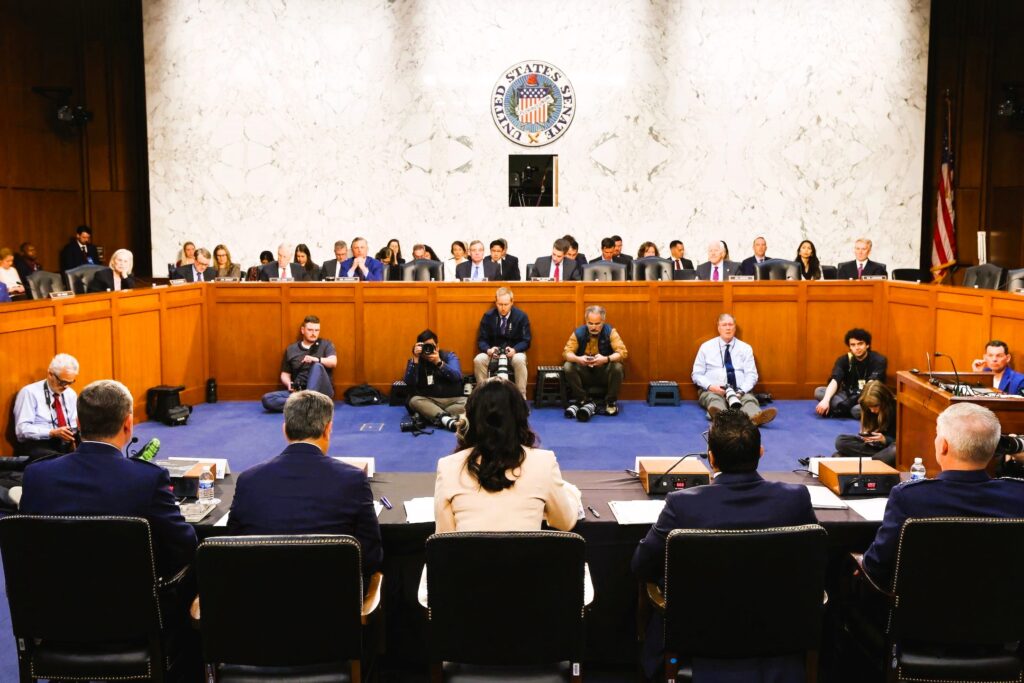
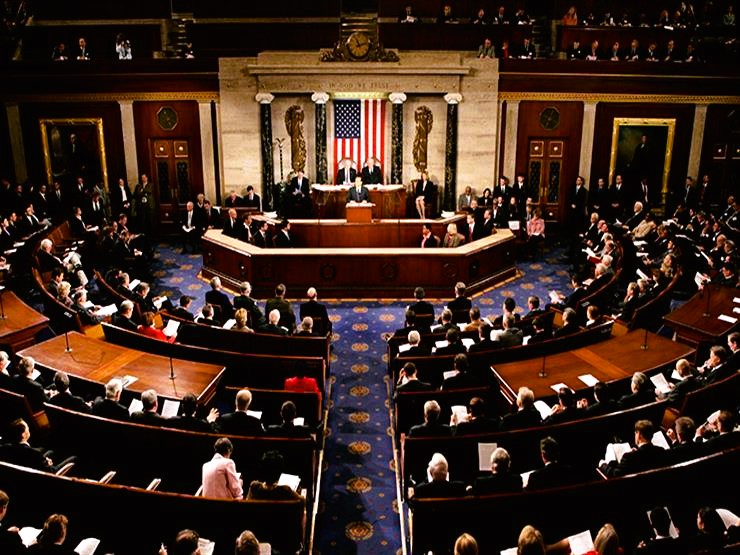
Source: Unsplash /official public-domain congressional photography.
1. Trump’s family businesses and financial interests
Figures to watch: Donald Trump Jr., Eric Trump, Jared Kushner and business associates.
Democrats want to examine whether government decisions have benefited businesses connected to the president, his family, or close associates. Potential areas include cryptocurrency ventures, Truth Social, overseas business relationships, government contracts and possible conflicts of interest.
Investigators may ask whether political access or public decisions have created private financial advantages. The public interest is straightforward: government decisions must serve the public rather than private commercial interests.
However, a business relationship or family connection is not proof of corruption. Investigators will need documentary evidence establishing any improper conduct.
2. The Epstein files and the Justice Department
Figures to watch: Attorney General Todd Blanche and senior Justice Department officials. The handling of records connected to Jeffrey Epstein could become another sensitive investigation. Democrats want to examine whether relevant documents were withheld, improperly redacted, or handled without adequate transparency.
The inquiry may also examine the Justice Department’s decision-making and its treatment of information concerning powerful individuals. The subject requires particular care. Being mentioned in a document, having known Epstein, or appearing in an address book does not establish participation in criminal activity.
The public interest involves transparency, equal treatment under the law and justice for victims, whose privacy must also be protected.
3. Immigration enforcement and ICE operations
Figures to watch: Department of Homeland Security officials and Immigration and Customs Enforcement leadership.
Democrats are expected to scrutinise federal immigration operations, including controversial deaths involving Renee Good and Alex Pretti in Minnesota.
Possible areas of investigation include:
- The circumstances surrounding the deaths.
- Whether officers followed established use-of-force procedures.
- Conditions in immigration detention facilities.
- Allegations of unlawful detention.
- Treatment of migrants and protection of civil rights.
The broader issue concerns the limits of federal enforcement authority. A government has the responsibility to enforce immigration law, but enforcement agencies must also respect constitutional protections, due process and applicable legal safeguards.
4. The Iran war and the Pentagon leadership
Figures to watch: Defense Secretary Pete Hegseth, senior Pentagon officials and President Trump.
This may become one of the most consequential investigations because it involves military decisions, international security and substantial public expenditure.
Democrats intend to examine the decision to launch military operations against Iran, the legal justification for the conflict and the administration’s changing explanations.
Other areas may include:
- American military casualties and injuries.
- Civilian casualties and the conduct of military operations.
- The cost of the war.
- The dismissal of senior military officers.
- Military operations against alleged drug-smuggling boats.
- Defence procurement and Pentagon expenditure.
Congress has constitutional powers involving declarations of war, military funding and oversight. The president, meanwhile, retains substantial authority as commander-in-chief. This division of responsibility will become a major constitutional and political battleground.
5. DOGE, Elon Musk and federal spending
Figures to watch: Elon Musk and officials associated with the Department of Government Efficiency.
Democrats are expected to investigate the federal workforce reductions and government restructuring associated with DOGE. They will want to know whether promised savings were achieved, whether dismissals complied with the law and whether essential government services were weakened.
Potential scrutiny also includes government contracts involving companies associated with Musk. The distinction is important: reducing expenditure is not automatically the same as improving government efficiency. If cuts eliminate waste, taxpayers may benefit. If they weaken essential services or create expensive administrative problems, the public may ultimately pay more.
6. White House projects and public expenditure
The administration’s major construction and renovation projects may also attract congressional scrutiny. These include the East Wing renovation, proposed monumental arch, Lincoln Memorial Reflecting Pool renovation and Rose Garden project.
Investigators may examine financing arrangements, private donations, contractor selection and compliance with federal spending laws. The central issue is whether public money has been used lawfully and whether the administration has respected Congress’s constitutional authority over appropriations.
7. Public health and Robert F. Kennedy Jr.
Figure to watch: Health and Human Services Secretary Robert F. Kennedy Jr.
Changes to federal health policy, vaccine guidance, medical research and disease-prevention programmes could attract congressional oversight. The important questions concern scientific evidence, transparency, public health outcomes and the effect of policy changes on families.
Health recommendations should be evaluated against reliable medical evidence rather than political loyalty. These inquiries may be politically contentious, but disagreement with a policy does not by itself establish unlawful conduct.
4. Who Will Lead the Congressional Investigations?
Several Democratic lawmakers are expected to assume influential committee positions when the new Congress convenes.
Among the prominent prospective leaders are:
- Robert Garcia: Expected to lead the House Oversight Committee, with responsibility for examining government accountability, financial interests and federal operations.
- Jamie Raskin: Expected to lead the House Judiciary Committee, focusing on constitutional issues, presidential powers and Justice Department oversight.
- Adam Smith: Expected to lead the House Armed Services Committee, with particular interest in Pentagon operations and the Iran war.
- Bennie Thompson: An influential Democratic figure in homeland security oversight.
- Hakeem Jeffries: is expected to become House Speaker, giving him substantial influence over the legislative and investigative priorities of the Democratic majority.
These are prospective positions, not a substitute for the formal committee organisation and leadership elections that will follow. The Senate will also have its own Democratic leadership and committee chairs, creating oversight pressure in both chambers.
5. Why Control of the Senate Matters So Much
The House receives considerable attention because it can initiate impeachment proceedings. However, the Senate may be equally important to Trump’s ability to govern. The Senate confirms many presidential appointments, including cabinet officials and federal judges.
A hostile Senate can delay or reject nominees, making it more difficult for a president to staff important positions. It also exercises powers involving treaties and impeachment trials.
However, one important limitation is often overlooked: the Senate filibuster. Most ordinary legislation can face a filibuster, and ending debate generally requires 60 votes under the Senate’s cloture rules.
Therefore, a Democratic majority does not guarantee that Democrats can pass every proposed bill. Budget reconciliation provides a separate route for certain budget-related legislation, but it is subject to strict rules.
This is why the new majority may be more effective at investigation and oversight than at implementing an extensive legislative programme.
6. Could Congress Force Another Government Shutdown?
Federal government funding is one of Congress’s most powerful instruments. If the president and Congress cannot agree on appropriations, some federal agencies may run out of authorised funding, resulting in a government shutdown. The consequences can include:
- Furloughs and delayed salaries for federal employees.
- Disruptions to government services.
- Delays in administrative processing.
- Financial uncertainty for contractors.
- Economic consequences for communities dependent on federal activity.
The United States has experienced major shutdowns before, including the 1995–96 confrontation during Bill Clinton’s presidency and the 35-day partial shutdown during Trump’s first term.
A similar confrontation is possible if the incoming majority and White House fail to reach an agreement over spending priorities. For ordinary people, political deadlock is not an abstract constitutional problem. It can affect employment, payments and essential public services.
7. The Iran War: Congress Versus the Commander-in-Chief
The Iran conflict deserves special attention because it combines constitutional authority with international security and economic consequences. The US Constitution gives Congress the power to declare war and control federal appropriations. The president serves as commander-in-chief.
The War Powers Resolution of 1973 establishes reporting and time-related requirements for certain military engagements without congressional authorisation. Its interpretation and constitutional application have been disputed by successive administrations.
Democrats could pursue several different approaches:
- Investigate the administration’s decision-making and legal justification.
- Demand information about military objectives, casualties and expenditure.
- Introduce legislation restricting or conditioning military funding.
- Seek statutory limits on further military action.
These measures have different legal requirements and political consequences. Congressional investigations alone cannot terminate a military operation.
Even legislation restricting funding would need to pass both chambers and be presented to the president, with a veto override requiring two-thirds support in each chamber. The international implications are equally important.
Iran, Israel, Gulf countries, European governments and Asian energy importers will all be watching the new political balance in Washington. If congressional pressure produces a diplomatic opening, it could reduce uncertainty in energy markets. If the confrontation deepens, oil prices and international economic instability could worsen.
8. Can Democrats Impeach Trump?
The possibility of impeachment will undoubtedly attract considerable attention. The Constitution establishes a two-stage process.
First: The House of Representatives
The House can approve articles of impeachment through a simple majority vote.
Impeachment is a formal accusation, not a conviction or automatic removal from office.
Second: The Senate
The Senate conducts the impeachment trial. Conviction and removal require the support of two-thirds of the senators present. This is a demanding threshold. Democrats would need substantial Republican support if they cannot secure the required votes themselves.
There is also an important constitutional distinction: the phrase “high crimes and misdemeanors” is not restricted to ordinary criminal offences. It concerns serious misconduct involving public office and constitutional responsibility. Political disagreement, unpopular policies, or electoral defeat alone do not establish grounds for impeachment.
The practical question will be whether investigators uncover credible evidence of conduct serious enough to justify proceedings. Democratic leaders will also have to consider the political consequences.
An impeachment campaign could consume valuable legislative time and deepen political polarisation. It could also be justified if serious constitutional misconduct is established.
9. Who Really Controls Washington?
The American political system divides federal authority among three branches. Understanding this division is essential to understanding why Trump’s political position has weakened without ending his presidency.
The Executive Branch
The president leads the federal executive, directs government agencies and serves as commander-in-chief. Trump can continue implementing policies within his lawful executive authority, issuing executive orders and directing federal departments. However, executive power is subject to legislation, judicial review and constitutional limits.
The Legislative Branch
Congress consists of the House of Representatives and the Senate. It passes federal laws, approves government spending, conducts oversight and exercises important powers involving military policy and presidential appointments. The House can impeach a president. The Senate conducts the trial.
The Judicial Branch
Federal courts interpret the Constitution and federal laws. They can review government actions and determine whether executive decisions comply with the law. The president cannot simply disregard judicial orders, and Congress cannot freely replace judicial decisions with political instructions. The system is designed to prevent the concentration of unlimited power in any one branch.
10. The 25th Amendment: Could JD Vance Replace Trump?
There are three important constitutional routes through which presidential leadership could change.
Voluntary resignation
A president may resign from office.
Under Section 1 of the 25th Amendment, the vice president then becomes president.
If Trump resigned, JD Vance would assume the presidency itself, not merely become acting president.
Impeachment and removal
If the House impeaches Trump and the Senate convicts him by the required two-thirds majority of senators present, he would be removed.
Vance would then become president under the constitutional succession arrangements.
Section 4 of the 25th Amendment
This provision addresses presidential inability to discharge the duties of office.
The vice president and a majority of the principal officers of the executive departments can declare the president unable to perform those duties.
The vice president then assumes the powers and duties of the acting president.
If the president contests that declaration, the matter can go to Congress.
Keeping the vice president in the acting role against the president’s objection requires a two-thirds vote in both chambers under the constitutional procedure. Section 4 is intended to address presidential inability, not ordinary political disagreement.
Losing an election, becoming unpopular, facing investigations, or losing support among Republican lawmakers does not automatically justify invoking it.
11. The Nixon Lesson: When a President Loses His Own Party
Richard Nixon’s resignation in August 1974 remains one of the most important examples of a president losing the political protection of his own party.
The Watergate scandal began with the burglary of the Democratic National Committee headquarters in 1972.
Subsequent investigations exposed efforts to obstruct the inquiry and raised serious questions about the use of presidential power.
The House Judiciary Committee approved three articles of impeachment in July 1974.
The Supreme Court rejected Nixon’s broad claim of executive privilege over the relevant recorded conversations. When damaging transcripts became public, Republican support collapsed.
Senior Republican figures recognised that Nixon could not rely on enough votes to survive a Senate trial.
He announced his resignation on August 8, 1974, effective the following day.
Vice President Gerald Ford became president.
The most important lesson is that Nixon did not leave office simply because the opposition controlled Congress.
He resigned because credible evidence, constitutional proceedings and the withdrawal of support from his own party combined to make his political survival untenable.
However, the comparison must not be exaggerated. The present investigations are not equivalent to Watergate, and no conclusion of comparable wrongdoing should be assumed without evidence.
12. Why Trump Is Unlikely to Resign Voluntarily
Predicting a president’s personal decisions is inherently uncertain. Nevertheless, Trump’s public political record suggests that voluntary resignation is less likely than continued confrontation. His political identity has been built around strength, loyalty, victory and resistance to political opponents.
His response to the 2020 election is one example of his reluctance to accept political defeat quietly. He could respond to the latest setback by blaming Democrats, economic circumstances, media coverage, or political opponents. He could also portray congressional investigations as politically motivated attacks.
But political circumstances are not static. Republican lawmakers have their own electoral interests. If they believe continued association with Trump threatens their chances of re-election, some may begin distancing themselves.
The key question is whether that dissatisfaction remains private or develops into an organised political break.
13. JD Vance and the Republican Party’s Future
JD Vance occupies an important constitutional and political position. If Trump resigns, dies, or is removed from office, Vance would become president under the relevant succession provisions. However, the vice presidency does not automatically guarantee a presidential nomination.
There is another important constitutional consideration. Under the 22nd Amendment, Trump cannot be elected president for a third time. His two presidential election victories, in 2016 and 2024, make the 2028 Republican nomination a contest for a new candidate. Vance could seek to inherit Trump’s political coalition while developing a more independent leadership identity.
Other Republican politicians may also seek the nomination. The party will face a strategic choice: should it continue the political movement associated with Trump, or attempt to attract voters who have become uncomfortable with his leadership?
The answer will depend on electoral performance, public opinion, fundraising and the willingness of Republican voters to accept a new direction.
14. Five Possible Scenarios for Trump’s Remaining Presidency
The midterm result creates several possible paths for the next two years.
Scenario One: Political confrontation
Democrats intensify investigations and challenge administration decisions. Trump responds through executive authority and public political attacks. This could produce sustained legislative deadlock.
Scenario Two: Limited cooperation
Both parties negotiate on selected matters such as government funding, infrastructure, healthcare and economic stability. Cooperation may be possible where neither party wants to be blamed for national disruption.
Scenario Three: Republican fragmentation
Some Republicans continue supporting Trump, while others increasingly distance themselves. The division could become more pronounced as the 2028 presidential nomination approaches.
Scenario Four: Impeachment proceedings
Investigations uncover evidence that Democratic leaders consider sufficient to justify impeachment. The House may act, but removal would still depend on the Senate’s constitutional voting requirement.
Scenario Five: Trump fights until the end of his term
Trump continues to defend his record, challenge political opponents and maintain the loyalty of his supporters.Given his public political style, this appears more plausible than voluntary resignation, although no future outcome can be guaranteed.
15. Why the Election Matters Beyond America
The political consequences extend well beyond Washington. The United States is a major economic, military and diplomatic power. Its domestic political balance can affect governments, businesses and households across the world.
Europe and NATO
European governments will be watching congressional debate over defence spending, military assistance and American commitments to NATO.
A divided government may complicate foreign policy, although it does not automatically reverse existing commitments.
Asia and international trade
American tariffs influence global supply chains, manufacturing costs and trade relations. Greater congressional involvement could create pressure for a more predictable trade framework. However, changes to trade policy will depend on legislation, delegated presidential authority and possible judicial decisions.
Energy markets and developing countries
The conflict in Iran is particularly important for countries dependent on imported oil and gas. Higher international energy prices can increase transport costs, electricity generation expenses and food prices. Lower-income countries may face additional pressure on foreign exchange reserves, import bills and public finances.
International confidence in American institutions
Political confrontation, uncertainty over executive authority, and inconsistent policy signals can erode investor confidence and diplomatic confidence. For America’s allies, the challenge is to distinguish temporary domestic political conflict from longer-term changes in American foreign policy.
16. The Real Threat May Come From Inside the Republican Party
The 2026 midterms have weakened Trump’s political position, but they have not ended his presidency.
Democrats now have stronger institutional powers to investigate the administration, challenge policies and restrict parts of its legislative agenda.
Trump still controls the executive branch. The more significant question is whether Republican lawmakers will continue to treat their political future as identical to their own. A political rebellion need not begin with an announcement demanding resignation.
It may emerge through withdrawn support, independent voting, refusal to defend controversial decisions and the gradual development of alternative leadership.
Nixon’s experience demonstrates how quickly political protection can disappear when evidence, constitutional accountability and party self-interest converge. Trump’s circumstances are different, and there is no certainty that history will repeat itself.
But one political reality is worth watching: losing control of Congress is a setback; losing the confidence of one’s own political allies can become a much more serious threat.
The midterms have changed the balance of power in Washington. Whether that change improves ordinary Americans’ lives, reshapes the Republican Party, or produces a deeper constitutional confrontation will depend on what happens next.

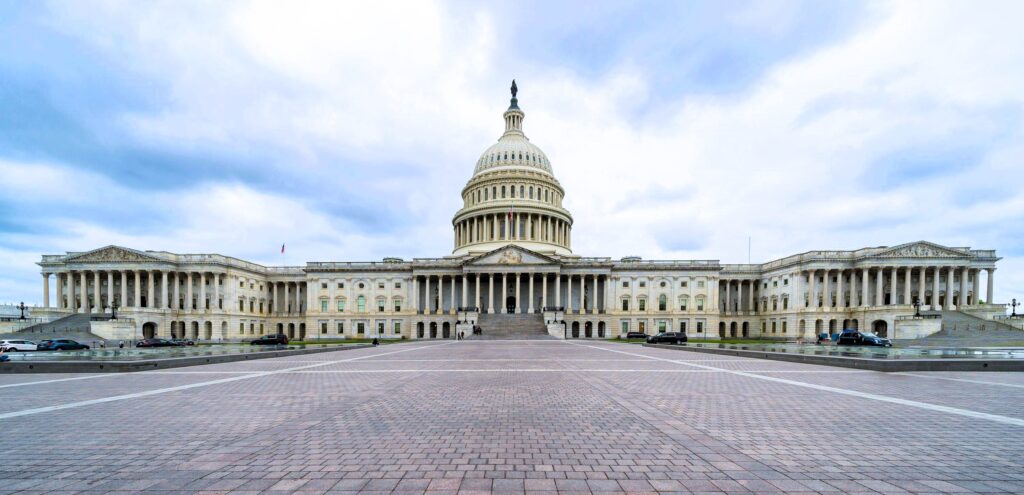
Source: Official White House public photography.
Frequently Asked Questions
1. What did Democrats achieve in the 2026 midterm elections?
They won control of both the House of Representatives and the Senate, giving them greater authority over legislation, federal spending, presidential appointments and congressional investigations.
2. Can Democrats remove Trump through impeachment?
The House can impeach him by a simple majority. Removal requires conviction by two-thirds of senators present. A Democratic majority alone is insufficient.
3. Can Republicans replace Trump with JD Vance?
Not through an ordinary party vote. Vance becomes president if Trump resigns, dies, or is removed. Otherwise, Vance can compete for the Republican presidential nomination in 2028.
4. Why is Nixon’s resignation relevant?
Nixon resigned after damaging evidence emerged, impeachment proceedings advanced and Republican support collapsed. His experience illustrates how losing support within one’s own party can threaten a presidency.
5. Can Democrats end the Iran war?
Not simply through investigations. Congress can use legislation, funding restrictions and its War Powers responsibilities to influence military policy, but the president retains substantial executive authority.
6. Will Democratic control of Congress improve living conditions in America?
That remains uncertain. Democrats can pursue changes to healthcare, taxation, trade and federal spending, but actual improvements will depend on legislation, presidential decisions, economic conditions and implementation.
References and Further Reading
- Reuters, November 4, 2026: Democrats Seize Congress in Sweeping Midterm Repudiation of Trump. Election results and political consequences.
- Associated Press: The Latest: Voters Give Democrats Control of Congress in Rebuke to Trump. Election developments and voter concerns.
- NPR via OPB, November 4, 2026: Back in the Majority, Democrats Have Plans for a Long List of Trump Investigations. Proposed oversight priorities.
- ABC News, November 4, 2026: Democrats Take the House: What They Plan to Investigate and Their Legislative Agenda. Investigations and legislative proposals.
- KFF, November 4, 2026: Health Care in the 2026 Midterm Election. Voter concerns about healthcare costs.
- US Senate: Constitution of the United States. Constitutional powers and presidential succession.
- US Senate: About Filibusters and Cloture. Senate legislative procedures.
- USA.gov: How Federal Impeachment Works. Impeachment procedure.
- Library of Congress: Richard Nixon and Federal Impeachment. Watergate and Nixon’s resignation.
- Council on Foreign Relations: How War, Tariffs and Other Foreign Policy Issues Could Affect the US Midterms. Foreign policy and economic implications.
Author
Maj Hamid Mahmood (Retired) holds an MA in Political Science, an LLB, and a Postgraduate Diploma in Human Resource Management (PGD-HRM). His academic and professional background supports his research-based writing on politics, law, governance, public policy, and global affairs.
Editorial note: Election figures and projected political appointments reflect reporting available on November 4, 2026. Individual election results and congressional leadership arrangements may subsequently be updated.