Iran Captures U.S. Dive-LD Underwater Drone: Why Was It in the War Zone?
Iran Captures U.S. Dive-LD Underwater Drone: Iran’s capture of a U.S. autonomous underwater drone near the Strait of Hormuz raises a question far bigger than the loss of one unmanned vehicle: why was an American underwater system operating in an active war zone, and what could Tehran learn from it?
https://mrpo.pk/war-first-casualty-is-truth/
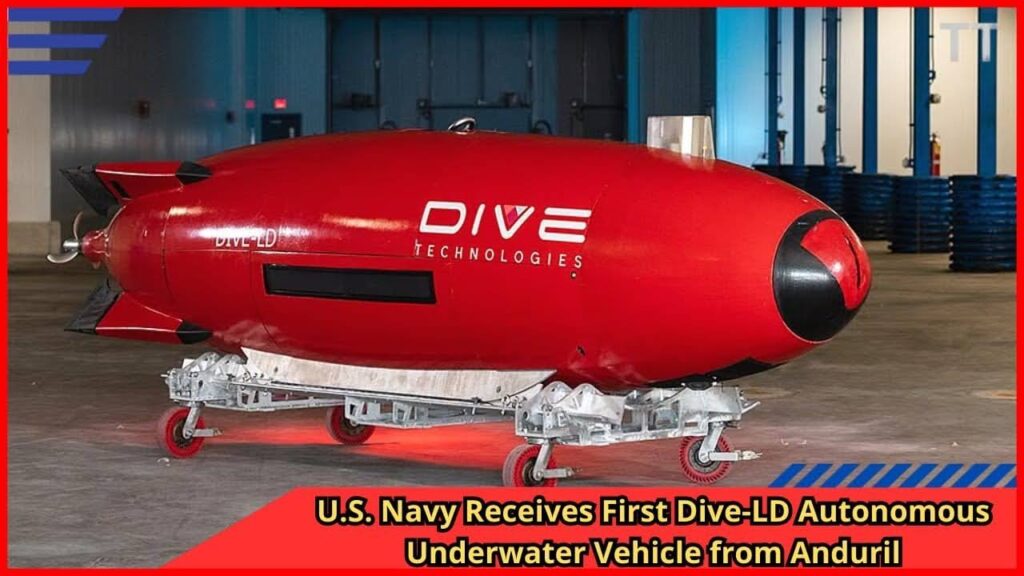
The current reporting says Iran captured the Dive-LD on September 8, 2026; the Pentagon says it had malfunctioned more than a day earlier and was an older model without classified sonar/radar or sensitive data. At the same time, Reuters reports that analysts believe Iran could still learn from its physical systems. (Reuters)
Washington’s claim, if true, is that even a supposedly expendable machine can become an intelligence prize when it falls intact into the hands of an adversary with a demonstrated record of studying captured American technology.
The incident therefore deserves to be examined neither as an Iranian technological triumph nor as an insignificant loss of a defective drone. It is something more interesting. It is a glimpse into the next generation of naval warfare, where machines without crews are increasingly being sent into places too dangerous for human beings.
Purpose of This Investigation
This article, Iran Captures U.S. Dive-LD Underwater Drone, examines why the U.S. Navy was operating an autonomous underwater vehicle around the Strait of Hormuz, what the Dive-LD was designed to do, why its loss matters even if it contained no classified equipment, and whether Iran could use what it learns to strengthen its own underwater warfare capabilities. The central question is not whether Iran can simply copy an American drone.
It is whether one captured machine can accelerate an already existing Iranian effort to develop cheaper and increasingly autonomous underwater systems.
Editorial Perspective
EP | Editorial Perspective: The American and Iranian versions of this incident should both be treated cautiously.
Iran has every incentive to portray the capture as a major intelligence victory. Washington has an equally obvious reason to minimise its significance. The available evidence supports neither extreme.
The Dive-LD was not America’s equivalent of a nuclear-powered attack submarine. But neither was it simply an ordinary piece of equipment with no intelligence value. The strategic significance lies in the fact that the U.S. is increasingly willing to deploy autonomous systems into dangerous environments, while Iran has spent years developing asymmetric technologies designed to exploit precisely such environments. That combination deserves attention.
Iran Captures U.S. Dive-LD Underwater Drone: What Is the Dive-LD?
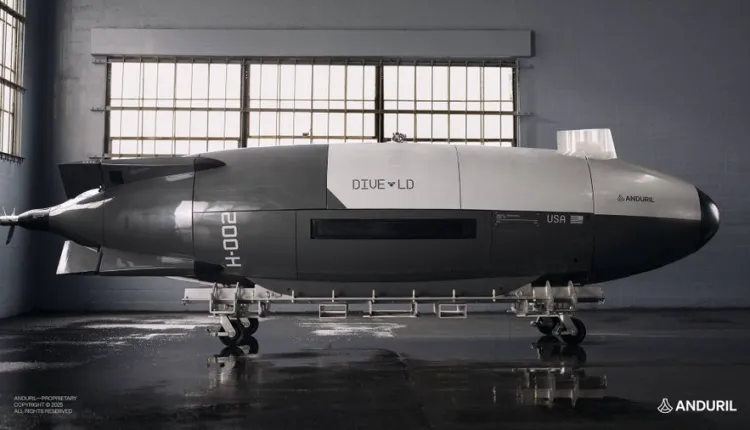
The Dive-LD is a large autonomous underwater vehicle, or AUV, developed by Anduril Industries. It has no crew. Instead, it is designed to navigate underwater autonomously while carrying different mission payloads.
Anduril lists the vehicle at approximately 5.8 metres long and 1.2 metres in diameter, with advertised endurance of up to 10 days and an operating depth of up to approximately 6,000 metres. Its modular architecture allows different sensor and payload configurations for different missions. (Anduril)
That flexibility is important because the Dive-LD is not designed around one single task.
It can be configured for missions such as seabed mapping, mine countermeasures, underwater surveillance, intelligence gathering and inspection of submerged infrastructure. (Reuters)
In other words, it is best understood as an underwater robotic platform, rather than simply an underwater weapon.
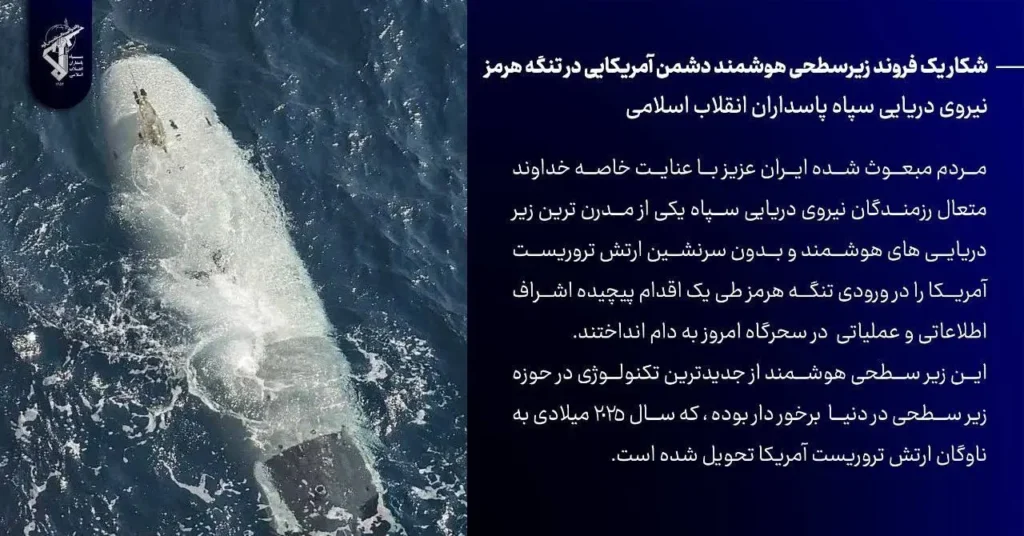
Iran Claims Capture of Secret US Dive-LD Underwater Drone in Strait of Hormuz
Alleged IRGC seizure of Anduril’s advanced US Navy autonomous underwater vehicle could expose sensitive technology and intensify the battle for control of the world’s most critical oil chokepoint.
Why Was an Underwater Drone Operating Near Hormuz?
This is the question that deserves more attention than it has received.
The Pentagon said the vehicle was surveying regional waters in support of ongoing operations. It also said the drone had malfunctioned more than a day before Iran announced its capture. (Reuters)
That explanation becomes more understandable when the broader military environment is considered. The Strait of Hormuz is not ordinary maritime territory. It is a strategic chokepoint through which a huge volume of global energy trade normally passes, while the surrounding waters have become a highly contested military environment during the current U.S.-Iran conflict.
Underwater surveillance becomes particularly important in such a location because threats do not have to appear on the surface. Mines, submarines, seabed infrastructure and other underwater objects can remain difficult to detect until they become a serious problem. An autonomous underwater vehicle allows the U.S. military to send a machine into that environment without putting a sailor inside a submarine or sending divers directly into potentially dangerous waters.
The presence of such a vehicle in the region was therefore not inherently unusual. The more difficult question is why this particular platform was operating where an adversary could potentially recover it after a failure.
The Risk of Sending an “Expendable” Machine Into Enemy Waters
This is where the incident exposes an important tension in modern warfare.
Anduril describes the Dive-LD as an attritable autonomous system. In military terminology, attritable means a system designed to perform valuable missions even when there is a meaningful possibility that it will eventually be lost. (Reuters)
That changes the traditional economics of warfare. Losing a $2.5 million autonomous underwater vehicle is obviously serious, but it is not remotely equivalent to losing a crewed submarine and its sailors. The concept therefore makes sense.
Send machines into dangerous places.
Let machines take risks that humans should not.
Accept occasional losses.
But there is a weakness in this logic:
An enemy may recover the machine instead of destroying it. And recovery can sometimes be more useful than destruction.
A destroyed drone may reveal very little.
An intact drone can potentially reveal how it was built.
What Can Iran Learn From a “Non-Classified” Drone?
The Pentagon says the captured Dive-LD was an older model and did not carry classified sonar or radar equipment or collect sensitive data. (Reuters)
If that assessment is accurate, Iran has not suddenly acquired a treasure chest of America’s most secret underwater warfare technology. But “not classified” does not mean “worthless.” Engineers can examine a physical platform for clues about its:
- Hull construction
- Propulsion arrangement
- Power system
- Battery architecture
- Navigation equipment
- Sensor integration
- Buoyancy and control systems
- Internal component layout
- Maintenance and recovery design
The value may therefore lie less in discovering a revolutionary secret and more in learning how an advanced American system solves familiar engineering problems.
Reuters reported that analysts believe Iran could potentially reverse-engineer mechanical aspects of the captured vehicle, although this would not suddenly give Tehran America’s overall underwater warfare capability. (Reuters)
That distinction is crucial.
Reverse engineering a machine is not the same as reproducing the industrial ecosystem that created it.
Iran Has Already Demonstrated This Approach
The Dive-LD is not Iran’s first opportunity to study American unmanned technology. The best-known example is the American RQ-170 Sentinel stealth drone captured by Iran in 2011.
Iran subsequently claimed that it had reverse-engineered the aircraft and produced drones influenced by the captured design. The extent to which Iran reproduced the original aircraft’s actual capabilities remains disputed, but the episode demonstrated Tehran’s willingness to extract technological and propaganda value from captured foreign systems. That history makes the current incident more significant.
Iranian engineers are not approaching the Dive-LD without previous experience in unmanned systems.
Iran’s Underwater Program Did Not Begin With the Dive-LD
It would be misleading to suggest that Tehran has suddenly discovered underwater autonomous warfare because an American vehicle fell into its hands. Iran has been developing naval unmanned systems for years.
The country has displayed unmanned underwater vehicles and has explored their use for reconnaissance and military missions. The Nuclear Threat Initiative documents Iranian development and deployment of submarine and unmanned-underwater capabilities. (Reuters)
Iran also has extensive experience with drones, missiles, small submarines, naval mines and other asymmetric systems. That combination matters more than any single captured machine. The Dive-LD could potentially give Iranian engineers another source of information to add to an existing technological base.
Iran Does Not Need to Build an American Dive-LD
This may be the most important point in assessing what happens next. Tehran does not need to reproduce every capability of the American vehicle. The operational requirements of the Persian Gulf are very different from those of the U.S. Navy’s global missions. A future Iranian underwater drone intended for regional warfare might not need a 6,000-metre diving capability. It might instead prioritise:
Low cost, shallow-water operation, quiet propulsion, autonomous navigation, endurance and quantity.
That would make the comparison with the American system much more interesting.
The question is not:
Can Iran build the same submarine?
It is:
Can Iran build a sufficiently capable underwater robot for its own strategic environment?
That is a considerably more achievable objective.
Why the Persian Gulf Favours Asymmetric Underwater Warfare
The geography of the Persian Gulf creates a unique military environment. Its relatively constrained waterways, heavy commercial traffic, shallow areas and proximity to Iranian territory can create opportunities for a defender that knows the local environment well. Iran has long based part of its naval strategy on making a technologically superior opponent pay a disproportionate price for operating close to Iranian territory.
Underwater autonomous systems fit naturally into that philosophy. A relatively inexpensive vehicle could potentially perform surveillance without exposing a crewed submarine. Several such vehicles could theoretically monitor different areas simultaneously. And an autonomous system can remain useful even when communications with its operator are intermittent. This is where the concept of quantity becomes more important than creating one extraordinarily sophisticated machine.
The Potential Shift From One Drone to Many
The future underwater contest may not resemble the Cold War submarine duel in which a handful of expensive submarines hunted each other. Instead, navies could eventually operate networks of autonomous underwater vehicles.
One machine could survey.
Another could map the seabed.
Another could monitor maritime traffic.
Another could search for mines.
Others could perform different missions.
The strategic advantage would come from creating a persistent underwater picture rather than relying entirely on a small number of expensive crewed platforms. The U.S. is clearly moving in this direction.
In March 2026, the Defence Innovation Unit and U.S. Navy selected Anduril for the Combat Autonomous Maritime Platform program involving the larger Dive-XL autonomous underwater vehicle. That development indicates that Dive-LD is part of a broader American push toward increasingly capable autonomous underwater systems rather than an isolated experiment. (Anduril)
The Bigger U.S. Navy Strategy
This incident therefore needs to be separated from the question of whether one Dive-LD was technologically advanced. The larger story is the Navy’s shift toward unmanned and autonomous maritime warfare.
The logic is straightforward.
The oceans are enormous.
Crewed submarines are expensive.
Human endurance is limited.
And putting sailors into dangerous waters carries enormous risks.
Autonomous systems can potentially remain in an area longer, cover more territory and undertake missions that would otherwise expose personnel to danger.
The U.S. military has consequently been investing in autonomous surface and underwater systems, while Anduril has expanded its own production and development efforts. In 2024, the company announced plans for a Rhode Island facility capable of producing up to 200 Dive-LD vehicles annually, illustrating the importance of scale to the concept. (Defense News)
The significance of the captured vehicle therefore extends beyond its individual capabilities. It is a piece of a much larger transition.
Could Iran Develop a More Lethal Version?
This requires careful wording. There is no evidence at present that Iran has copied the captured Dive-LD or developed a new weapon from it.
Any claim that it has done so would be speculation. But the technological direction is plausible.
Iran already possesses expertise in autonomous drones, naval warfare, submarines, mines and asymmetric weapons. It has also demonstrated interest in unmanned underwater systems. If Iranian engineers obtain useful information from the Dive-LD, they could potentially incorporate selected lessons into future domestic designs. The resulting system might not look anything like the American vehicle. It could actually be simpler.
And that could make it more relevant to Iran’s military strategy.
The Most Dangerous Possibility Is Not a Copy
Imagine that Iran eventually develops an inexpensive autonomous underwater vehicle designed specifically for the Persian Gulf.
It does not need America’s maximum depth.
It does not need global deployment capability.
It does not need every sophisticated sensor available to the U.S. Navy.
It simply needs to be reliable, difficult to detect and inexpensive enough to deploy in numbers.
That would create a different military equation.
The United States could possess the world’s most sophisticated underwater technology while still facing a practical problem:
How much does it cost to defeat one autonomous underwater vehicle compared with the cost of producing another?
That is the same economic dilemma that has already emerged in aerial drone warfare. Underwater warfare may be heading in the same direction.
What Does the Capture Say About U.S. Technology?
It would be unfair to interpret the incident as proof of American technological weakness. The Pentagon says the vehicle had malfunctioned and was an older system.
Anduril also says the platform was designed for environments where loss was an anticipated possibility. (Reuters)
But the incident nevertheless exposes a vulnerability in the attritable-warfare model.
An expendable system can be cheap enough to lose.
It cannot necessarily be cheap enough to allow an adversary to study it repeatedly.
That is a different calculation.
Future autonomous systems may therefore need not only protection against destruction but also measures designed to prevent technology exploitation after capture.
That could become increasingly important as autonomous platforms move deeper into contested waters.
The Iranian Propaganda Victory Is Real, Even If the Technology Gain Is Limited
There is another dimension that should not be overlooked. The capture gives Iran a powerful propaganda image. Iranian state media can present the incident as evidence that American technology is vulnerable even inside waters where Washington possesses enormous military superiority.
Reuters reported that Iranian officials portrayed the capture as a major intelligence and military success, while American officials and Anduril emphasised the vehicle’s age and lack of sensitive equipment. (Reuters)
The truth probably lies somewhere between the two narratives.
Iran has achieved a visible operational and propaganda success.
The United States has lost a vehicle but not its underwater technological superiority.
The real question is what happens after the cameras disappear.
What Happens Next Could Be More Important Than the Capture
The immediate incident will eventually disappear from the headlines. The more important developments may occur quietly.
Will Iranian engineers publicly display components from the vehicle?
Will Tehran announce a new generation of autonomous underwater systems?
Will Iranian naval exercises begin showing more sophisticated unmanned underwater platforms?
Will the United States modify how it protects or operates attritable underwater vehicles?
Will Washington introduce new systems designed to prevent captured platforms from yielding useful intelligence?
These are the developments worth watching.
Because the real test of the incident will not be the speeches made in Tehran or Washington. It will be what technology appears afterwards.
The Underwater Arms Race Is Already Taking Shape
The U.S. decision in 2026 to move ahead with larger autonomous underwater systems demonstrates that Washington views unmanned underwater warfare as a long-term capability rather than a temporary experiment. (Anduril)
Iran, meanwhile, has strong incentives to pursue relatively inexpensive autonomous systems suited to its regional strategy.
Other major powers, particularly China and Russia, are also investing heavily in underwater autonomy.
The result could be a new form of naval competition in which the most important weapons are not always the largest. They may be the machines that are:
small enough to deploy widely, intelligent enough to operate independently and cheap enough to lose.
Final Assessment
The capture of the U.S. Dive-LD near the Strait of Hormuz is important, but perhaps not for the reason either side initially suggests.
Iran has not demonstrated that it has defeated America’s most advanced underwater technology.
Nor has Washington demonstrated that the captured vehicle is completely irrelevant.
The Pentagon’s claim that the system was an older, malfunctioning model without classified sonar, radar or sensitive data significantly reduces the possibility of a catastrophic technology compromise. (Reuters)
But physical access still has value.
Iran already has an established unmanned-weapons industry, previous experience studying captured American technology and a strategic environment in which relatively inexpensive autonomous systems could have disproportionate value. The most realistic future scenario is therefore not an Iranian clone of Dive-LD. It is something potentially more strategically interesting:
Iran could take selected lessons from the American platform and combine them with its own experience to develop a cheaper underwater system designed specifically for the Persian Gulf.
If that happens, the September 2026 incident may eventually be remembered not as the day Iran captured one American underwater drone, but as one small event in the beginning of a much larger underwater arms race. And that is the question Washington, Tehran and the rest of the world should be asking now:
When an “expendable” autonomous weapon falls into enemy hands, how much of its technology remains expendable?
People Also Ask: 6 FAQs
1. Why was the U.S. Dive-LD operating near the Strait of Hormuz?
The Pentagon said the vehicle was surveying regional waters in support of ongoing operations. The Strait is a heavily contested maritime environment where underwater surveillance can be important for detecting mines, monitoring the seabed and supporting naval operations. (Reuters)
2. Is Dive-LD an attack submarine?
No. It is an autonomous underwater vehicle designed to perform different missions through modular payloads. Its publicly described roles include seabed mapping, mine countermeasures, intelligence gathering and underwater infrastructure inspection. (Anduril)
3. Did Iran capture classified American technology?
The Pentagon says the vehicle was an older model that did not carry classified sonar or radar equipment or collect sensitive data. However, analysts believe physical examination could still provide useful engineering information. (Reuters)
4. Can Iran reverse-engineer the Dive-LD?
Iran could potentially study its mechanical systems and design, but reproducing the complete vehicle would be much more difficult. Reverse engineering does not automatically provide the software, industrial capacity, materials or testing infrastructure required to reproduce the original system.
5. Could Iran develop a more advanced underwater drone from what it learns?
It is possible, but there is currently no evidence that Iran has already done so. More realistically, Tehran could incorporate selected lessons from the captured vehicle into its existing unmanned and naval technology programs.
6. Why does this incident matter beyond Iran and the United States?
Because autonomous underwater warfare is becoming an important part of future naval strategy. The United States is developing increasingly large autonomous underwater systems, while countries such as Iran have incentives to develop cheaper regional alternatives. (Anduril)
About the Author
Maj Hamid Mahmood (Retired), MA Political Science, LLB, PGD (HRM), is a writer and former military officer, educator and security professional whose work explores geopolitics, security, international affairs and contemporary issues through independent research and practical analysis.
References
- Reuters: Iran says it captured U.S. submarine drone in Strait of Hormuz
- Reuters: Iran likely to reverse-engineer captured U.S. underwater drone
- Anduril: Dive-LD autonomous undersea vehicle
- Anduril: Dive-XL and U.S. Navy autonomous-undersea program
- U.S. Navy / Unmanned Undersea Vehicle Squadron information