
Healthy Ageing After 65: The Science of Longevity, Brain Health, and Emotional Well-Being
Discover the science of healthy ageing after 65. Learn how movement, sleep, emotional resilience, brain health, social connection, and purpose influence longevity and quality of life.
Purpose of the Article
This article explores the physical, psychological, emotional, and social dimensions of healthy ageing using modern medical research, neuroscience, longevity science, and real-life human experiences. Its purpose is to replace fear-based narratives about ageing with a more hopeful, scientifically grounded understanding of how people can maintain mobility, mental clarity, emotional resilience, and dignity after 60 and beyond.
Introduction: Healthy Ageing After 65
What if growing older did not automatically mean becoming weak, lonely, dependent, or emotionally exhausted?
Across the United States, Europe, and many parts of the world, people are living longer than previous generations. Yet modern society still treats ageing as if life begins shutting down after 60. Science tells a different story.
Some people become emotionally and physically exhausted in middle age, while others remain mentally sharp, socially active, emotionally balanced, and purposeful well into their 80s and 90s. The difference is often not age alone.
It is lifestyle, mindset, movement, emotional resilience, sleep quality, social connection, stress management, and the ability to remain psychologically alive.
Healthy ageing is not about pretending people never grow old. It is about protecting:
- mobility
- brain function
- emotional health
- independence
- dignity
- and meaning in life
Healthy Ageing Tips for the Older Adults in Your Life
If you have older family members or loved ones, you may worry about their health as they age. Aging increases the risk of chronic diseases such as heart disease, type 2 diabetes, arthritis, cancer, and dementia. The good news is that adopting and maintaining a few key behaviors can help older adults live longer, healthier lives. As a family member, it’s important to encourage healthy lifestyle behaviors in your loved ones it’s never too late to start!
Behaviour changes can help older adults live more independently later in life. That’s important both for their quality of life and for yours. If a family member loses independence — whether it’s due to disability or chronic disease — you may find yourself in a caregiving role earlier than expected, which can affect family dynamics as well as finances.
https://www.nia.nih.gov/health/caregiving/healthy-aging-tips-older-adults-your-life
The Difference Between Growing Older and Becoming Old
Some people become emotionally old at 45. Others remain curious, socially connected, mentally active, and emotionally alive at 85.
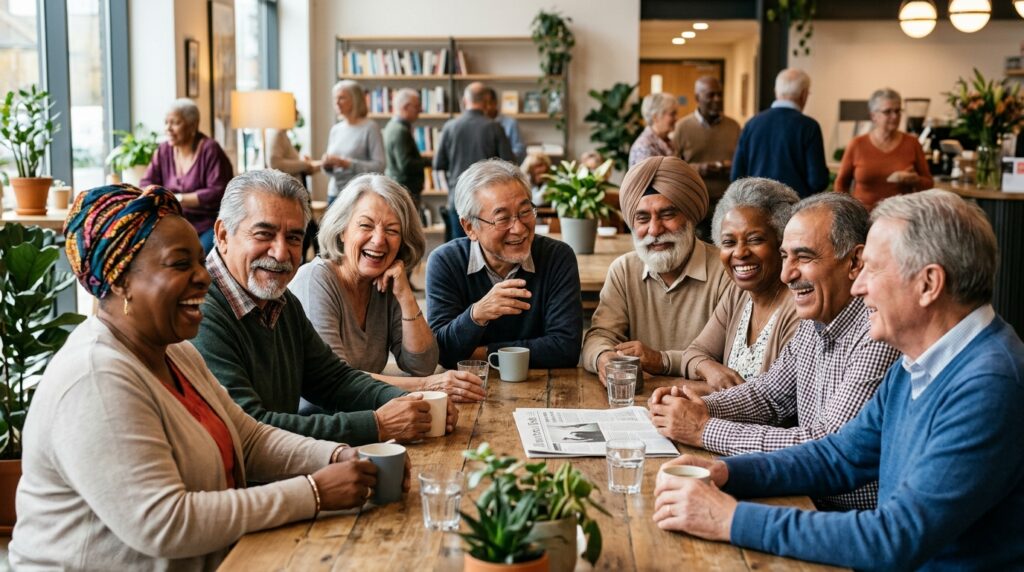
The difference is rarely age alone.
Modern ageing science increasingly shows that growing older and “becoming old” are not always the same thing.
Ageing is biological. Feeling defeated by life is often psychological, emotional, and social.
Many people associate ageing with:
- weakness
- loneliness
- dependence
- memory decline
- emotional irrelevance
But healthy ageing research paints a far more hopeful picture.
People who maintain:
- movement
- emotional resilience
- social connection
- purpose
- curiosity
- and adaptability
often age more successfully physically and psychologically.
Grey hair does not make someone old. Losing curiosity, movement, emotional connection, and hope often does.
Why Healthy Ageing Looks Different for Men and Women
Ageing affects everyone, but men and women often experience later life differently because of biological, emotional, psychological, and social factors.
Understanding these differences makes healthy ageing discussions more realistic, compassionate, and medically accurate.
The Emotional Pressure Women Often Carry
Many women spend decades caring for:
- children
- spouses
- parents
- households
- the emotional needs of families
while quietly neglecting:
- sleep
- stress recovery
- emotional well-being
- physical health
- personal identity
Many women spend so much time caring for everyone else that they reach later life emotionally exhausted before they ever stop to care for themselves.
Research increasingly suggests that chronic stress and emotional overload may influence biological ageing and long-term health outcomes.
The Psychological Impact of Ageing on Women
In many societies, women face intense cultural pressure connected to:
- youthfulness
- beauty
- physical appearance
- social visibility
As women age, some experience feelings of:
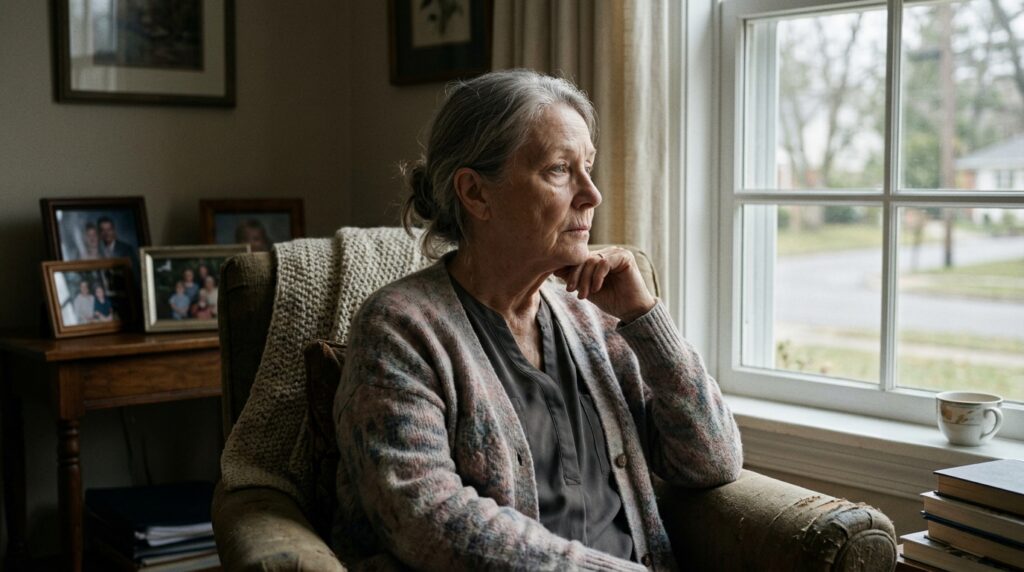
- becoming invisible
- reduced confidence
- social isolation
- loss of identity
At the same time, many older women develop remarkable:
- emotional intelligence
- adaptability
- resilience
- relationship strength
These qualities are strongly associated with healthier emotional ageing.
Healthy Ageing After 65: Menopause, Sleep, and Emotional Health
Menopause and post-menopause can significantly affect:
- sleep quality
- mood
- energy levels
- metabolism
- bone density
- emotional stability
Many women experience:
- nighttime waking
- hot flashes
- fatigue
- anxiety
- emotional sensitivity
during hormonal transitions.
This is why healthy ageing for women requires attention not only to physical health, but also emotional recovery, stress management, and social support.
Loneliness and Emotional Isolation in Older Women
Women statistically live longer than men in many countries, meaning many older women experience:
- widowhood
- living alone
- social isolation
- emotional grief
Sometimes the deepest pain of ageing is not wrinkles or grey hair. It is feeling emotionally forgotten.
Loneliness in older adulthood has increasingly been linked with:
- depression
- cognitive decline
- poorer health outcomes
- emotional distress
Ageing Challenges Men Emotionally Too
Men also face major emotional struggles during ageing, although many are less likely to openly discuss them.
Retirement, reduced physical strength, health problems, or loss of professional identity may cause some men to feel:
- emotionally lost
- less useful
- isolated
- psychologically disconnected
Many men were raised to suppress vulnerability, making emotional adjustment during ageing more difficult.
Healthy ageing for men increasingly requires:
- emotional openness
- purpose beyond work identity
- social connection
- stress management
Healthy Ageing Is Ultimately Human, Not Gendered
Although ageing affects men and women differently, the deeper human needs remain universal.
People age more successfully when they still feel:
- valued
- connected
- emotionally supported
- mentally engaged
- purposeful
- respected
Healthy ageing is not about looking young forever. It is about remaining emotionally alive, mentally engaged, physically capable, and meaningfully connected to life itself.
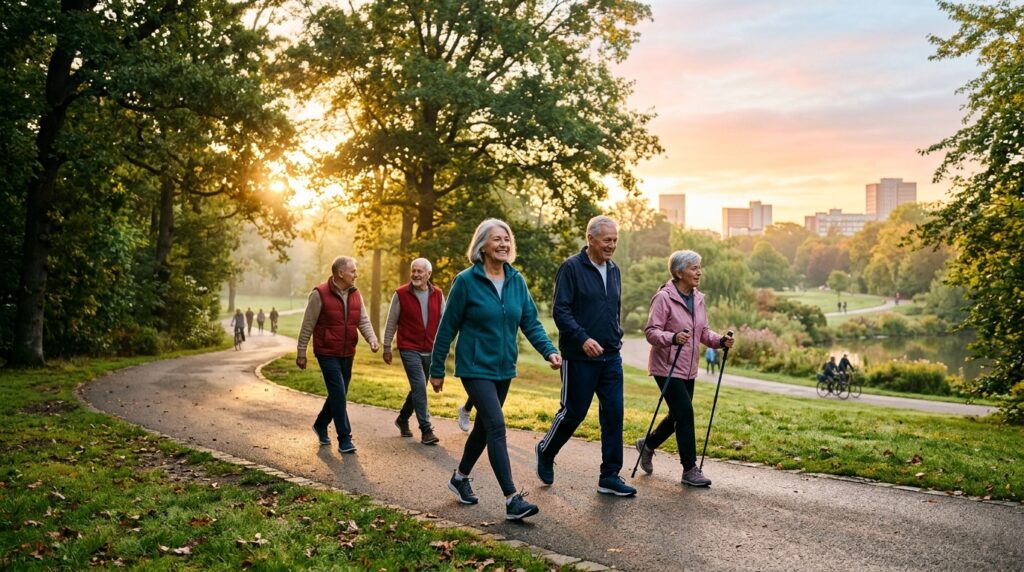
Why Healthy Ageing Is About More Than Living Longer
Modern longevity research increasingly focuses on quality of life rather than lifespan alone.
Living longer means little if someone loses:
- independence
- mobility
- emotional stability
- memory
- or meaningful human connection
Healthy ageing means preserving physical, mental, emotional, and social well-being together.
Researchers now define healthy ageing as maintaining:
- physical function
- mental clarity
- emotional resilience
- social participation
- and life satisfaction
even in later decades of life.
The Hidden Connection Between Emotional Health and Ageing
Many people think ageing is only biological.
Modern research increasingly shows that emotional health strongly influences physical ageing.
Chronic emotional stress may contribute to:
- inflammation
- poor sleep
- fatigue
- hormonal imbalance
- reduced immunity
- mental exhaustion
Researchers studying biological ageing found that loneliness, unhappiness, and psychological distress may accelerate ageing processes.
This helps explain why some people appear emotionally and physically older after years of:
- stress
- resentment
- grief
- hopelessness
- social isolation
Real-Life Example
A retired individual who suddenly loses routine, social interaction, and purpose may gradually stop:
- walking regularly
- seeing friends
- engaging mentally
- caring about routines
Within a few years, emotional withdrawal may begin affecting:
- sleep
- physical strength
- energy levels
- overall health
Meanwhile, another person of the same age who remains socially active, learns new skills, spends time outdoors, and maintains meaningful routines often experiences healthier ageing outcomes.
Why Movement Becomes More Important After 60
The body ages faster when movement disappears from daily life.
One of the strongest predictors of healthy ageing is movement.
Not perfection. Not extreme fitness.
Simply consistent movement.
As people age, muscle mass naturally declines through a process known as sarcopenia.
This contributes to:
- weakness
- poor balance
- falls
- slower movement
- reduced independence
Research increasingly shows regular physical activity supports:
- mobility
- brain function
- emotional health
- cardiovascular health
- longevity
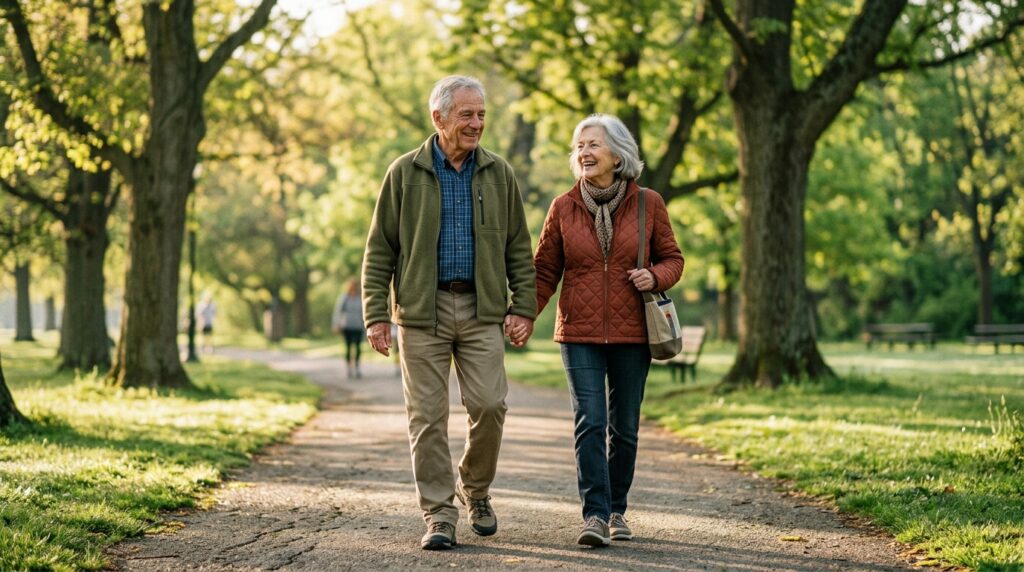
Walking, stretching, gardening, resistance exercises, and gentle mobility work can significantly improve quality of life in older adulthood.
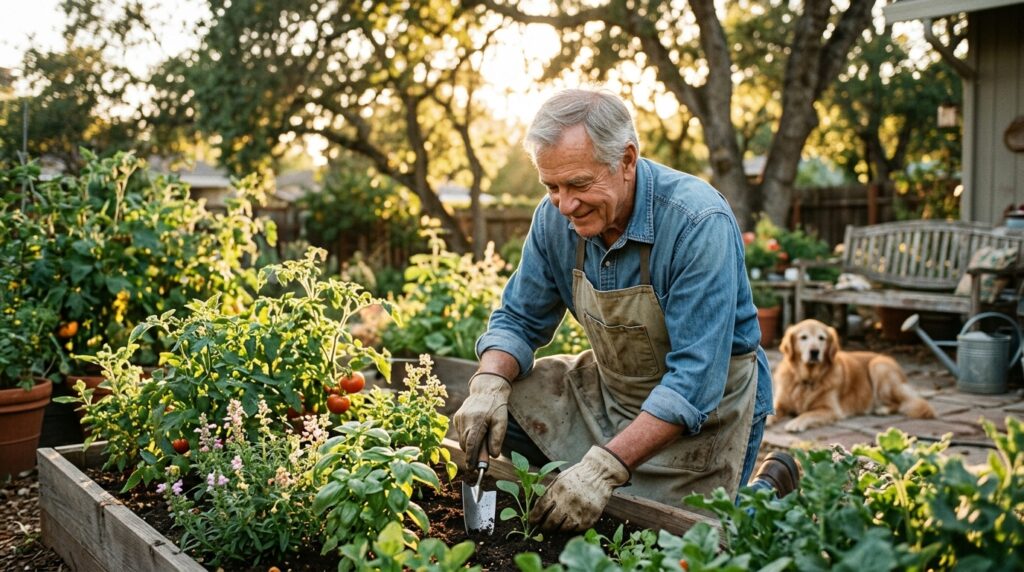
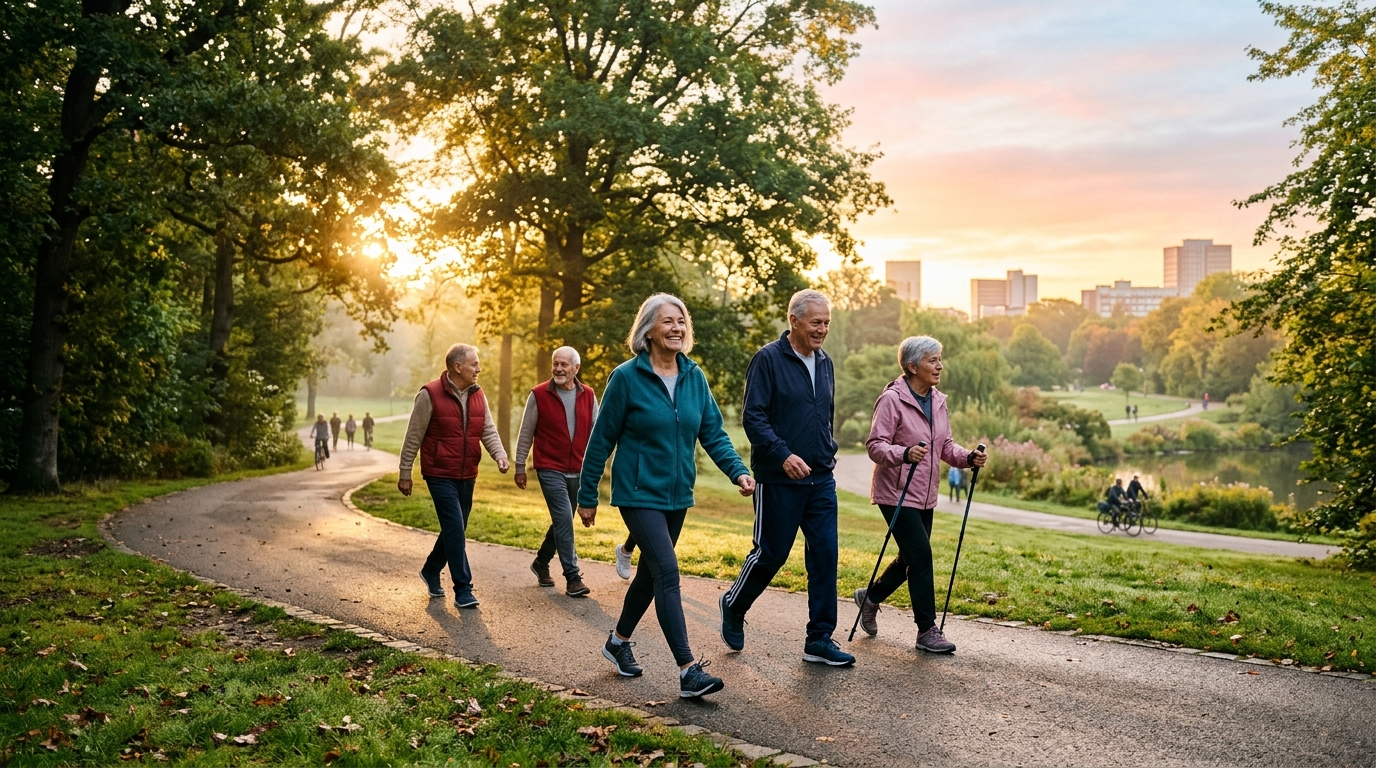
Why Walking Is One of the Most Powerful Longevity Habits
Walking remains one of the simplest and most sustainable health habits worldwide.
Long-living populations often share one common trait:
They move naturally throughout the day.
Walking supports:
- circulation
- balance
- mood regulation
- metabolic health
- cognitive function
- stress reduction
For many older adults, daily walking restores something deeply psychological:
a sense of independence.
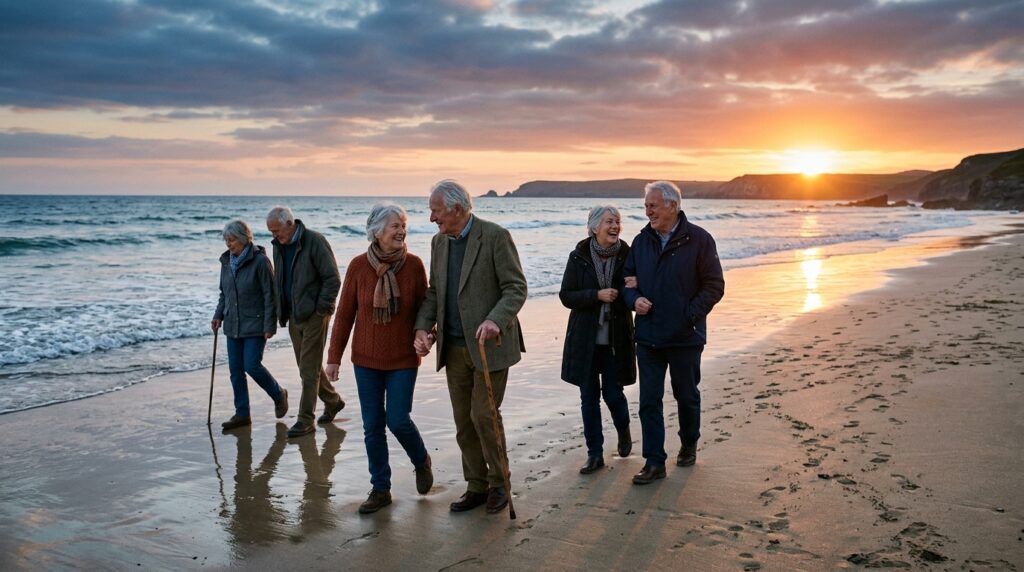
The Brain Needs Activity to Stay Healthy. Healthy Ageing After 65
The brain weakens faster from inactivity than from birthdays.
The brain changes with ageing, but decline is not always immediate or inevitable.
Modern neuroscience increasingly shows the brain remains adaptable throughout life through neuroplasticity.
Brain health is strongly connected with:
- movement
- sleep
- learning
- social interaction
- emotional well-being
- mental stimulation
People who continue:
- reading
- learning
- solving problems
- discussing ideas
- remaining socially engaged
often maintain stronger cognitive function later in life.
Sleep and Circadian Rhythm Are Critical for Healthy Ageing
Sleep affects almost every system in the body.
Poor sleep has been associated with:
- memory problems
- fatigue
- emotional instability
- inflammation
- reduced immunity
- increased fall risk
The body also follows a biological clock known as the circadian rhythm, which regulates:
- hormones
- alertness
- sleep cycles
- metabolism
- digestion
As people age, circadian rhythms may weaken, contributing to:
- lighter sleep
- earlier waking
- reduced energy
- mental fog
Research increasingly suggests that stable daily routines and regular sleep patterns support healthier ageing outcomes.
Loneliness May Be One of the Biggest Hidden Health Risks
Many older adults silently struggle with:
- emotional isolation
- reduced social interaction
- feeling forgotten
- loss of relevance
Research increasingly links loneliness with:
- depression
- cognitive decline
- cardiovascular disease
- poorer health outcomes
Sometimes, the most healing medicine for an ageing person is not a prescription. It is feeling valued, heard, and emotionally connected.
Purpose in Life Can Influence Longevity
One of the strongest findings in longevity psychology is that people often age better when they still feel needed.
Purpose may come from:
- family
- faith
- creativity
- volunteering
- mentoring
- hobbies
- helping others
People who wake up with purpose are often more motivated to:
- move
- socialize
- maintain routines
- care for themselves
The Modern Lifestyle Problem Accelerating Ageing
Modern life has created habits that silently worsen ageing:
- excessive sitting
- poor sleep
- social isolation
- chronic stress
- screen addiction
- processed food overconsumption
- reduced movement
Many people now spend more time:
- indoors
- inactive
- mentally overstimulated
- emotionally stressed
than previous generations.
This affects both physical and psychological ageing.
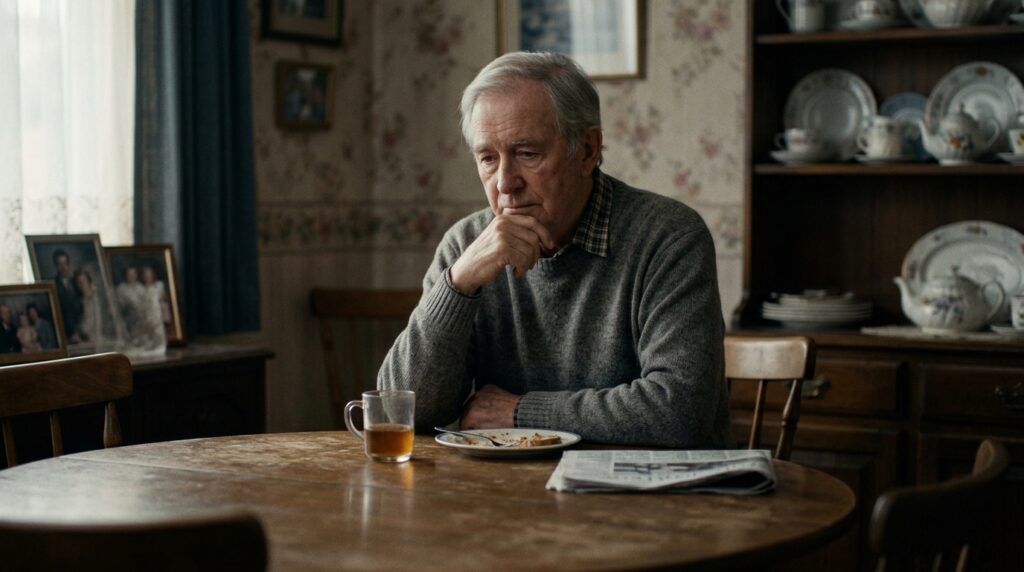
Emotional Resilience Is One of the Most Important Longevity Skills
Resilience does not mean pretending life is perfect.
It means developing the ability to recover emotionally from:
- stress
- grief
- illness
- disappointment
- uncertainty
Emotionally resilient individuals often:
- adapt better
- maintain healthier routines
- preserve stronger relationships
- cope more effectively with hardship
Positive emotional states appear to be associated with healthier ageing outcomes.
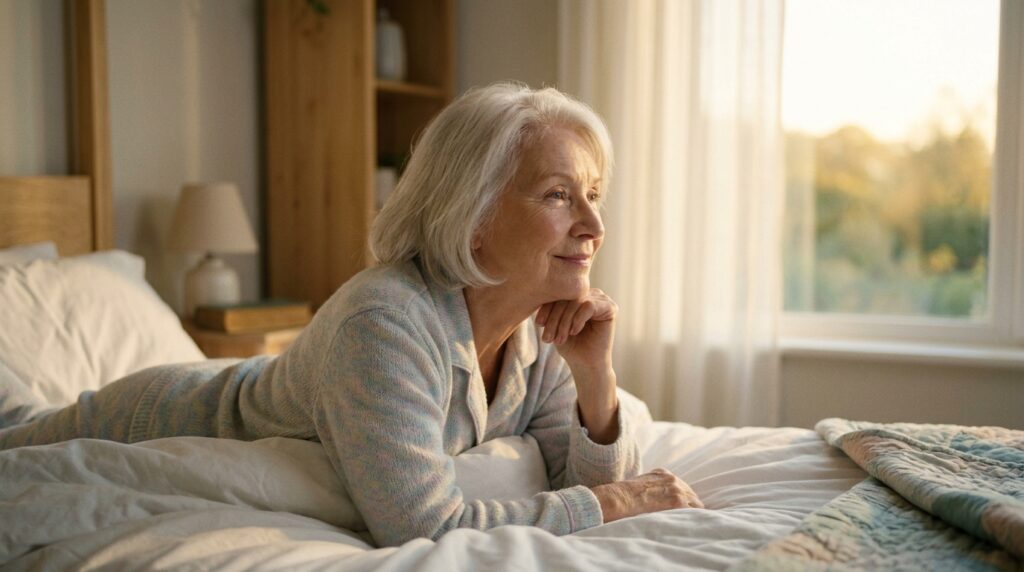
Healthy Ageing Is About Staying Alive Emotionally
Some people become old at 45. Others remain alive in spirit at 85.
The difference is rarely years alone.
Healthy ageing involves protecting:
- curiosity
- relationships
- hope
- emotional warmth
- meaning
- psychological flexibility
Many people remain biologically alive while becoming emotionally disconnected from life itself.
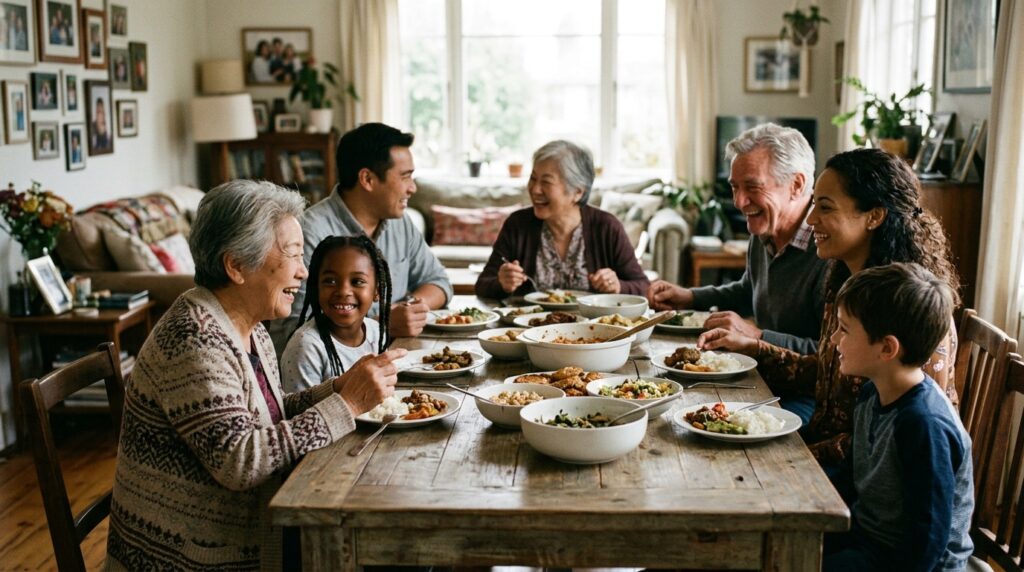
What Modern Science Says About Healthy Ageing
Current research strongly supports:
- regular movement
- strength maintenance
- quality sleep
- social engagement
- emotional resilience
- stress management
- balanced nutrition
- cognitive stimulation
- meaningful purpose
Healthy ageing is not created by miracle supplements or overnight hacks.
It is usually built slowly through repeated daily behaviours practised consistently over years.
Final Thoughts: Healthy Ageing After 65
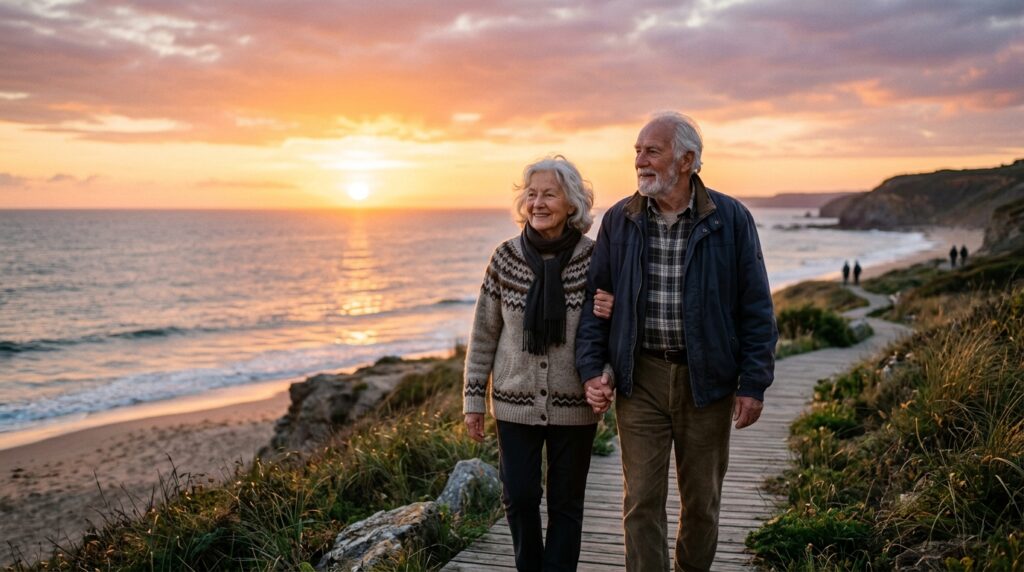
Healthy ageing is not about escaping age itself.
It is about preserving:
- mobility
- mental clarity
- emotional balance
- independence
- dignity
- and meaningful human connection
for as long as possible.
Ageing changes the body.
But many people remain:
- emotionally alive
- mentally curious
- socially valuable
- spiritually reflective
- deeply meaningful
far longer than society expects.
That is the true science and psychology of healthy ageing.
Frequently Asked Questions (FAQs)
1. What is the difference between healthy ageing and normal ageing?
Normal ageing involves gradual biological changes over time. Healthy ageing focuses on maintaining physical, emotional, mental, and social well-being despite those changes.
2. Can lifestyle really affect how people age?
Yes. Research strongly suggests that movement, sleep quality, emotional resilience, stress management, nutrition, and social connection influence ageing outcomes.
3. Why do some older adults remain mentally sharp?
Physical activity, social engagement, lifelong learning, emotional resilience, and cognitive stimulation help support brain health during ageing.
4. Does loneliness affect physical health in seniors?
Yes. Chronic loneliness has increasingly been linked with depression, cardiovascular problems, cognitive decline, and poorer overall health outcomes.
5. Is walking enough exercise for older adults?
Walking is one of the safest and most effective forms of movement for many older adults. However, strength and balance exercises are also important for healthy ageing.
6. What is the most important factor in healthy ageing?
There is no single factor. Healthy ageing usually depends on movement, emotional resilience, sleep quality, nutrition, social connection, stress management, and meaningful purpose combined together.
“The Happiest Dream of an Innocent Little Boy”
At a school, the teacher asked the children to write about what they wanted to become in the future… and what they did not want to become.
One little boy’s answer brought smiles to everyone’s faces.
In his innocent imagination, becoming a senior citizen seemed like the happiest and most enjoyable stage of life.
The child wrote:
“I do not want to become
a president,
a doctor,
or a scientist…
None of them.
My greatest wish is to become a senior citizen because their life looks the most fun.”
“Because my grandfather:
Can wake up late in the morning.
Can take afternoon naps whenever he wants.
Watches TV peacefully and goes to bed early in the evening.
Has no homework, no exams, and no tuition classes.
If there is nothing to do, he can simply sit under a tree enjoying the cool breeze, or go to the park and play chess with friends.
Can play video games for as long as he likes, and nobody complains.
Coffee in the morning, tea in the afternoon, milk in the evening, what an amazing life.
Travels free on the bus, and people respectfully offer him a seat.
Gets half-price tickets for trains and cinemas.
Can eat whatever he wants because no one stops him.
Can do whatever he feels like: sing, dance, paint, play the piano or trumpet, climb mountains, or go trekking.
And if he has money in his pocket, he can travel anywhere he wants.”
“So becoming a senior citizen is truly wonderful.”
Lesson:
Sometimes, senior citizens themselves do not realise how fortunate, respected, and free they truly are.
https://mrpo.pk/make-life-less-stressful/
https://mrpo.pk/?p=16536&preview=true
https://mrpo.pk/cognitive-bias/
References
- BMC Public Health Healthy Aging Study
https://link.springer.com/article/10.1186/s12889-024-17752-2 - BMC Biology Nutrition and Healthy Aging Research
https://bmcbiol.biomedcentral.com/articles/10.1186/s12915-022-01395-z - Psychological Factors and Biological Aging Research
https://www.aging-us.com/article/204264/text - Self-Acceptance and Longevity Study
https://www.mdpi.com/1660-4601/17/16/5980 - Nature-Based Activities and Older Adults Well-Being
https://www.nature.com/articles/s41598-020-74828-w - Healthy Aging and Resilience Research
https://www.humanhealthlabs.org/aging-lab - Healthy Aging Nun Study
https://pmc.ncbi.nlm.nih.gov/articles/PMC2243258/