From Inner Cohesion to Global Respect
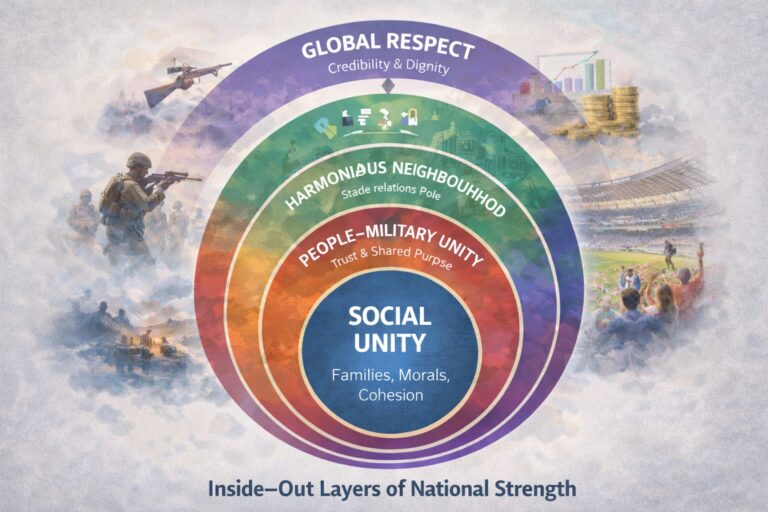
A nation’s true strength does not begin with military power or economic growth—it begins within. This article redefines national strength and prosperity through a civilizational lens, arguing that internal cohesion, moral order, and institutional trust form the foundation of sustainable power. Drawing upon historical patterns and Islamic principles, it presents an inside-out model of national development, where social unity leads to governance legitimacy, regional stability, and ultimately global respect. With a focused application to Pakistan, the study offers a framework for reversing decline through social reform, ethical economics, and just governance. A must-read for policymakers, scholars, and thinkers seeking long-term national stability.