Why Is Britain Preparing for Emergencies? Cyberattacks, AI and the Three-Day Warning
Why Is Britain Preparing for Emergencies? Imagine waking up to find that the electricity is out, mobile networks are unreliable, online banking is unavailable, and your local shops cannot process electronic payments. You have food in the refrigerator, but no idea how long the disruption will last. Would your household manage comfortably for three days?
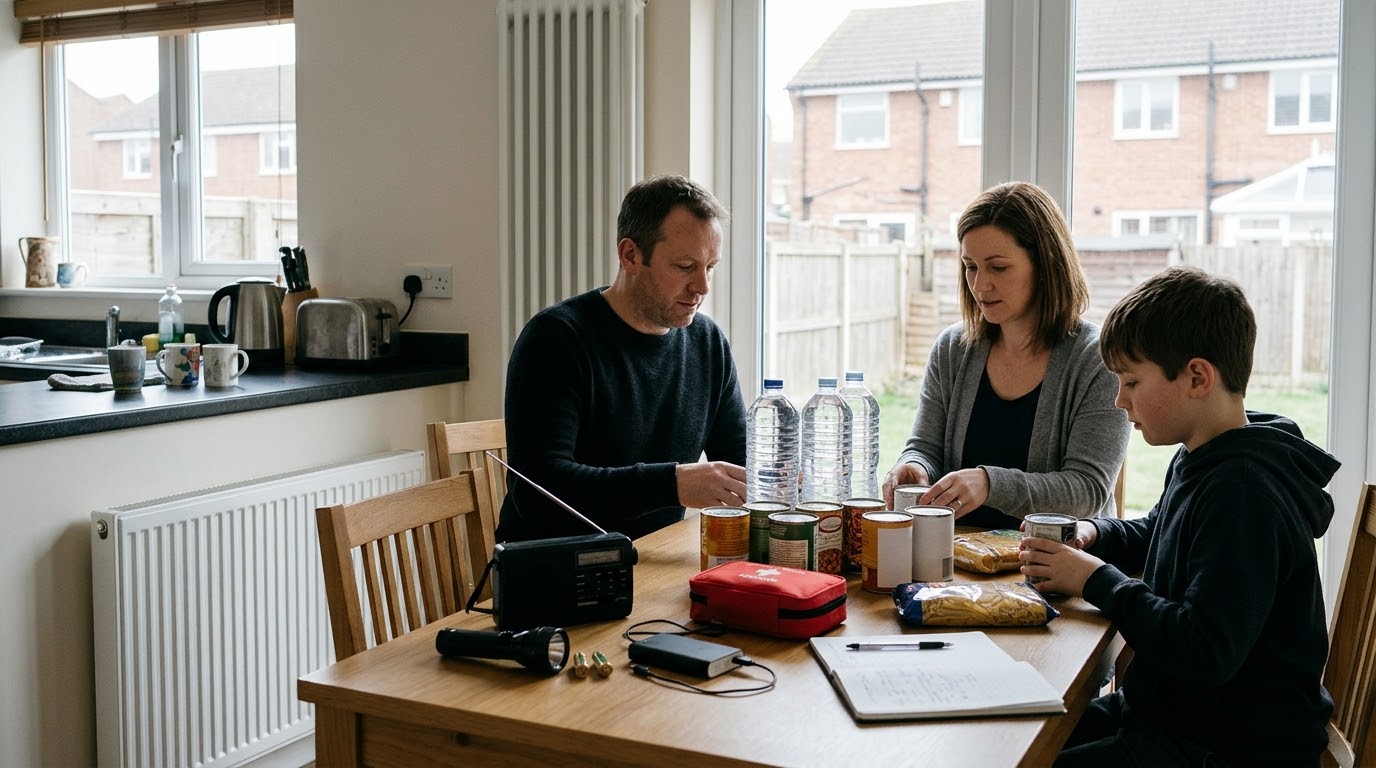
This is the practical question behind the British government’s new “Be Ready” campaign, which encourages households to prepare for temporary disruptions to essential services. The advice became particularly relevant in October 2026, when serious vulnerabilities in widely used website software triggered an international cybersecurity response.
Britain is not telling every household to expect an imminent disaster. Its message is more practical: severe weather, infrastructure failures, cyberattacks and other emergencies can disrupt everyday life, sometimes with little warning.
But the timing raises important questions. Why is the government emphasizing household preparedness now? What does artificial intelligence have to do with the threat? And how should ordinary citizens interpret this advice without becoming unnecessarily alarmed? The answers reveal a broader change in how governments think about national security, public safety and the resilience of modern societies.
What Has the British Government Actually Asked Citizens to Do?
On October 22, 2026, the UK government announced updated household preparedness guidance under its three-day “Be Ready” campaign. It encourages people to take simple, affordable steps to cope with disruptions lasting up to three days.
The guidance covers possible interruptions to electricity, water, telephone services and internet access. It also recommends keeping basic supplies at home and making plans for emergencies.
The government says the initiative builds on existing preparedness guidance and brings Britain closer to the approach already adopted by several European countries, including France, Ireland and the Netherlands. (UK Government)
What Does the Three-Day Recommendation Mean?
The principle is straightforward. If an emergency temporarily interrupts essential services, households should be able to manage their immediate needs while assistance reaches those who require it most.
The official checklist recommends preparing gradually rather than buying everything at once. It also recognizes that not everyone can afford every suggested item.
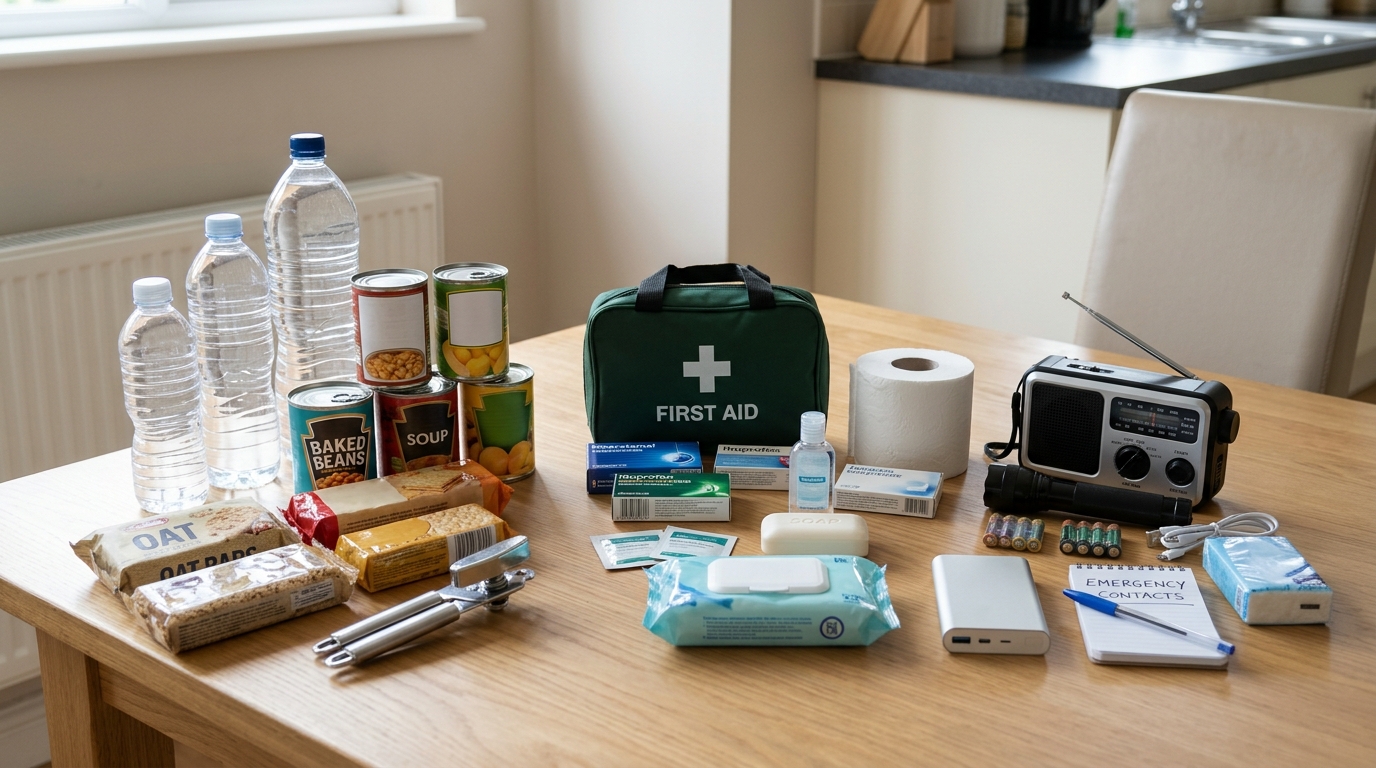
Key recommendations include:
- Food and Water: Keep bottled water and non-perishable food for three days.
- Lighting and Power: Have a torch, spare batteries and a charged power bank.
- Communications: Consider a battery-powered or wind-up radio for updates during power cuts.
- Medical Needs: Maintain essential medicines, first-aid supplies and any necessary medical equipment.
- Cash and Documents: Keep some cash and copies of important documents in case electronic services become unavailable.
- Family Contacts: Write down important telephone numbers and agree on how family members will reconnect if communications fail.
- Community Support: Know which neighbours may need extra help during an emergency.
The government recommends approximately three litres of drinking water per person per day, with additional water needed for cooking, washing and other household requirements. Supplies should be adapted to individual circumstances, including the needs of babies, older adults, people with disabilities and pets. (Official Be Ready guidance)
This is a preparedness recommendation, not an instruction to panic-buy supplies or assume that normal services are about to collapse.
Why Has Emergency Preparedness Become a Bigger Issue?
The campaign reflects a simple reality: modern life depends on interconnected services that most people rarely think about until something stops working.
Electricity powers homes, businesses, communications equipment and much of the infrastructure supporting digital services. Water systems depend on treatment and distribution networks. Shops depend on transportation, payment systems and supply chains.
A disruption in one area can create problems elsewhere.
Severe Weather and Infrastructure Failures
Britain experienced significant storms during the previous winter and wildfires during the summer of 2026. The government cited these events as reminders that severe weather can interrupt essential services and affect communities.
Flooding, extreme heat, storms and wildfires can damage infrastructure, restrict transport, interrupt power supplies and make it harder for emergency services to reach affected areas.
These events do not need to become national disasters to cause serious difficulties for individual households.
A local power cut lasting several hours may be manageable. A prolonged outage affecting water supplies, communications and transport at the same time can be considerably more challenging.
The purpose of household preparedness is to reduce the immediate consequences while professional assistance and normal services are restored.
Cyberattacks and Digital Disruption
Cybersecurity adds another dimension to the problem.
A cyberattack may target a government department, a business, a telecommunications provider, or a company supporting essential services. Depending on the target, the consequences can include unavailable websites, interrupted business operations, compromised information, or disrupted communications.
Not every cyberattack affects physical infrastructure, and not every technical failure has national consequences. Nevertheless, governments must consider the possibility that digital disruption could affect services on which people depend. That concern became particularly visible during the October 2026 PHP security incident.
How the AI-Linked PHP Incident Changed the Discussion
On October 21, 2026, developers of PHP released urgent security updates addressing two critical vulnerabilities in the programming language. Researchers had used artificial intelligence as part of the investigation that uncovered the flaws.
PHP is widely used to build and operate websites, including many content management systems and business applications. The vulnerabilities could, under the relevant technical conditions, allow attackers to execute malicious code on affected servers without logging in.
The disclosure triggered an international effort to identify vulnerable systems and apply security fixes. Some organizations temporarily took services offline as a precaution. The Associated Press reported that governments and businesses worldwide were working to secure affected systems. (Associated Press)
On October 23, Reuters reported that the British government explicitly connected the incident with the importance of its newly launched household preparedness campaign. Government officials also raised concerns about the potential for AI to make certain cyberattacks easier to carry out. (Reuters)
The incident, therefore, provides a concrete example of the kind of digital risk that governments must take seriously. However, it is important to distinguish between the documented security incident and possible future consequences. The vulnerabilities did not establish that Britain had suffered a nationwide internet shutdown or that all essential services were compromised.

Why Does One Software Vulnerability Matter?
The internet is built on shared technologies. Thousands of organizations may use the same programming languages, software libraries, hosting platforms and applications. This makes digital services easier to develop, but it also creates common points of vulnerability.
If a weakness affects widely used software, many organizations may need to respond simultaneously. Some can install security updates quickly. Others must first identify affected systems, test the fixes and coordinate with suppliers.
During that period, vulnerable systems may remain exposed. AI can help researchers examine complicated code and identify weaknesses more efficiently. But the same general capabilities could also help malicious actors search for flaws and develop attacks.
The important lesson is not that AI automatically makes the internet unsafe. It is that the speed of security research and the ability to respond effectively are becoming increasingly important.
Why AI Creates Both Benefits and Risks
Artificial intelligence is changing cybersecurity on both sides.
Security researchers can use AI tools to analyze code, investigate suspicious activity and help developers understand programming errors. Businesses may also use AI to improve monitoring and respond to threats more efficiently.
But malicious actors can potentially apply similar tools to automate reconnaissance, identify vulnerable systems and assist in developing malicious code.
The outcome depends on the tools, the vulnerability, the user’s expertise and the security measures protecting the targeted systems.
Could AI Cause a Major Internet Disruption?
A large-scale cyber incident is possible, but the PHP vulnerabilities alone do not establish that a global internet shutdown is imminent.
Consider a hypothetical scenario in which attackers exploit weaknesses in several widely used systems. Businesses experience outages, online services become temporarily unavailable, and organizations isolate affected networks while investigating the damage.
The disruption could affect payments, communications and access to digital services. If essential infrastructure were also affected, the consequences could extend further.
However, such an outcome would depend on the systems targeted, the success of the attacks, the availability of alternative services and the effectiveness of defensive measures.
The internet is not a single machine with one switch. It consists of many interconnected networks and services. A serious incident can disrupt important parts of that system without bringing the entire internet down. This distinction matters. Governments need to prepare for credible risks without encouraging the public to treat every cybersecurity warning as evidence of an impending catastrophe.
What Does This Mean for National Security?
National security is no longer limited to military readiness, border protection and the threat of armed conflict. Modern societies also depend on electricity grids, telecommunications, water distribution, banking networks, transportation systems and digital government services.
A disruption affecting one of these systems may create consequences beyond the organization initially targeted. For example, an attack on a supplier could interrupt services used by several businesses. A communications outage could make it harder for emergency services to coordinate their response. A cyber incident affecting a financial service could prevent customers from accessing their accounts temporarily.
These are possible consequences, not claims that all such outcomes occurred during the PHP incident.
Why Governments Need More Than Emergency Supplies
Household preparedness is only one part of national resilience. Governments and service providers must also maintain secure systems, test emergency plans, coordinate responses and develop ways to restore essential services after disruption.
Important priorities include:
- Critical Infrastructure Protection: Secure electricity, water, telecommunications, healthcare and financial systems.
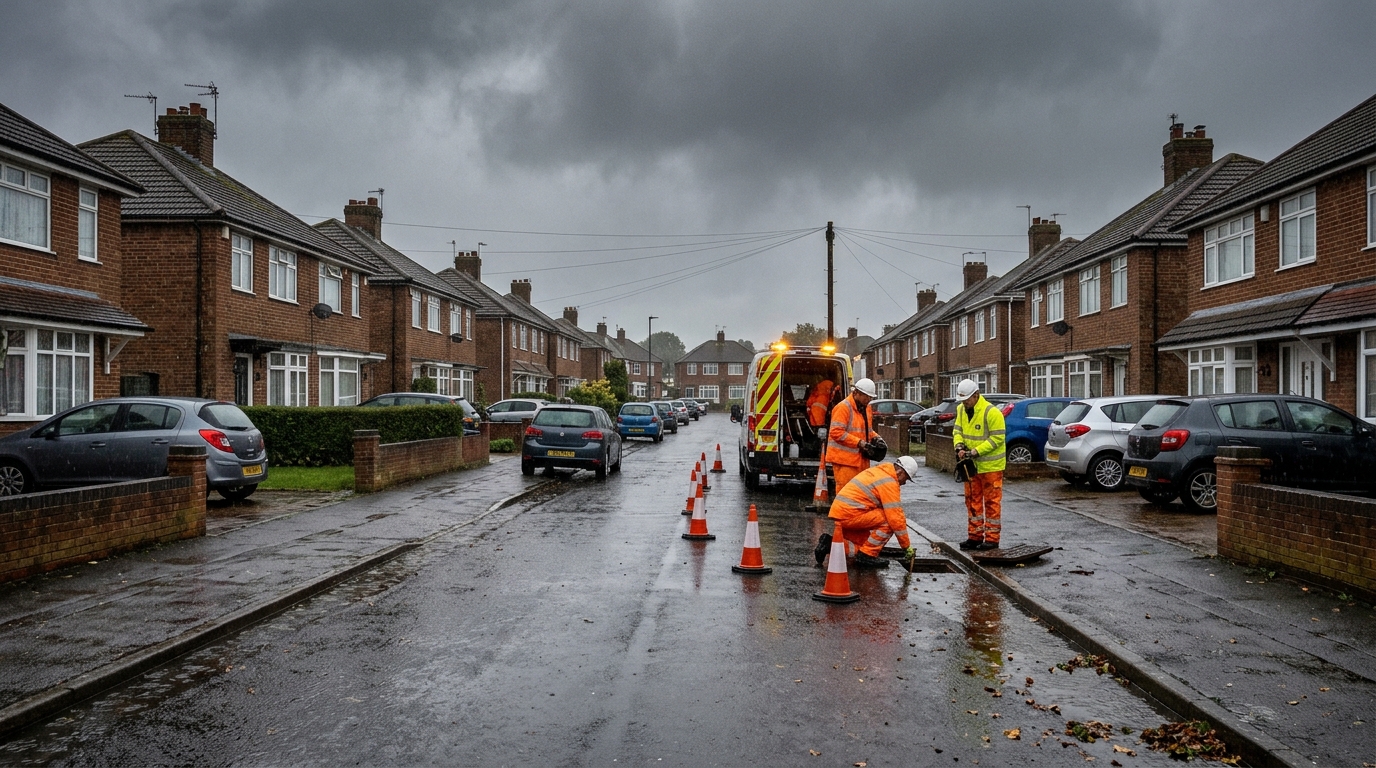
Critical Infrastructure Protection.Workers_inspecting_flooded_street_ - Cybersecurity Maintenance: Identify vulnerabilities, apply security updates and monitor systems for suspicious activity.
- Emergency Communications: Ensure that authorities can provide reliable information when ordinary channels fail.
- Recovery Planning: Maintain backups, alternative operating arrangements and tested procedures for restoring services.
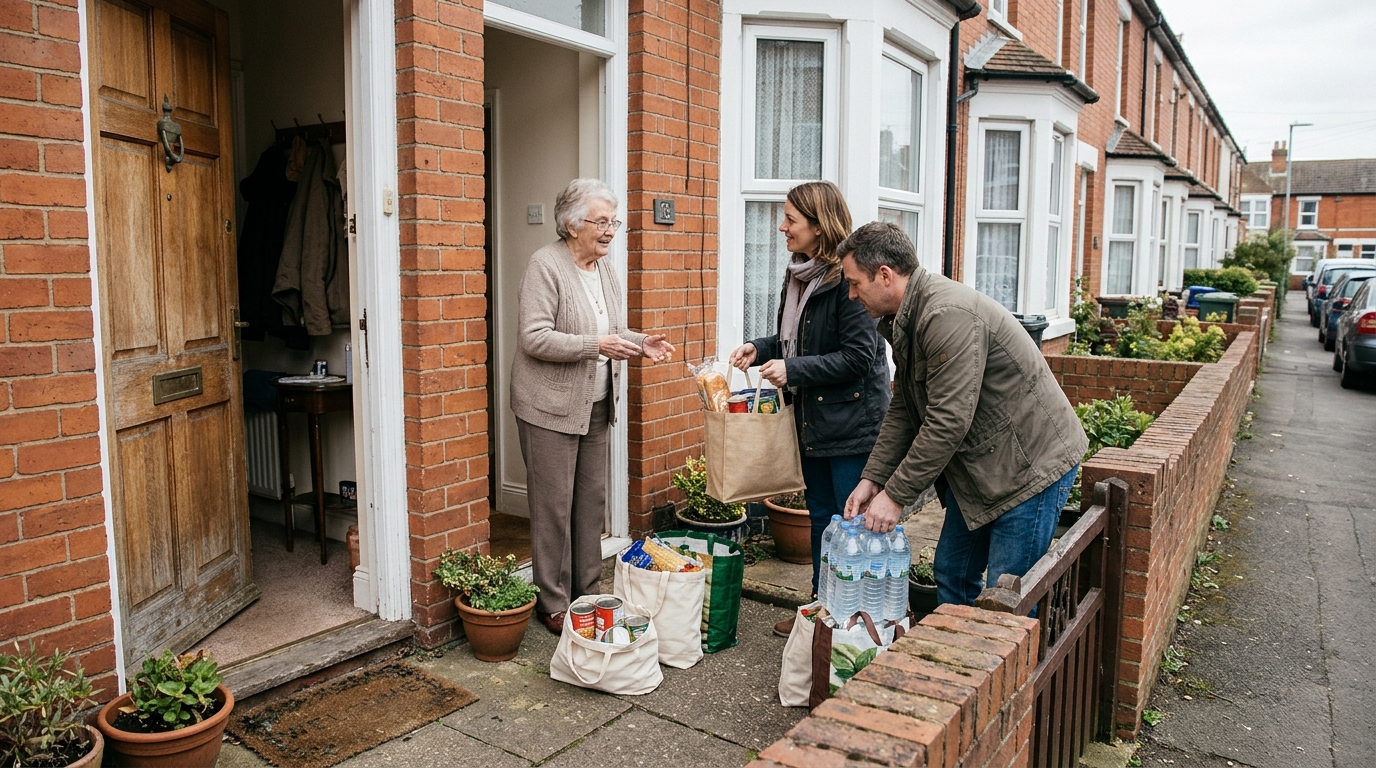
- Community Resilience: Support vulnerable households and coordinate assistance between emergency services, local authorities and community organizations.
Community Resilience
The British government announced on October 12, 2026, that it was strengthening national defenses against emerging AI-related risks, including using advanced AI to support cyber defense and preparing for serious incidents involving autonomous AI systems. (UK Government: Britain steps up national defences against growing AI risks)
This wider policy context shows that the government is addressing both technological threats and the public’s ability to cope with disruption.
Why Is Britain Asking Households to Prepare for Three Days?
The three-day recommendation is not a prediction that services will fail for exactly 72 hours. It is a practical planning benchmark. An emergency may last only a few hours, or recovery may take longer. Authorities cannot guarantee how quickly every service will return to normal in every possible situation.
A household with basic supplies can manage its immediate needs without relying entirely on emergency deliveries or assistance. This also helps emergency services prioritize people who face greater danger or cannot meet essential needs independently.
Is the Advice a Sign That Britain Expects War or a Major Disaster?
The announcement should not be interpreted as proof that the government knows a major disaster or war is imminent.
The official campaign identifies everyday emergencies and service disruptions, including those caused by severe weather. The broader security environment also includes cyber threats and other risks. Preparing for several possible emergencies is different from predicting one particular event.
Household readiness is common in countries that experience severe weather or other disruptions. France, Ireland and the Netherlands already apply similar three-day preparedness guidance. The relevant question is therefore not whether the government has predicted a catastrophe, but whether reasonable preparation can reduce harm if an emergency occurs.
What Should Ordinary Citizens Do?
The most useful response is practical preparation rather than fear. Households do not need to buy expensive equipment or build elaborate emergency shelters. Many preparations involve items people already own and simple decisions made in advance.
A Practical Household Checklist
Start With What You Have. Check your cupboards, medicines, lighting equipment and phone chargers before buying anything new.
Store Basic Food and Water. Keep a manageable supply of food that does not require refrigeration or complicated preparation, along with suitable drinking water.
Plan for Power Cuts. Keep a torch, spare batteries and a charged power bank available. A battery-powered radio can provide information if internet access becomes unavailable.
Prepare for Medical Needs. Make sure essential medicines and medical supplies are available, and know how to obtain replacements.
Keep Important Information Offline. Write down emergency contacts, medication information and other details you might need if your phone battery dies or digital services become unavailable.
Protect Your Accounts. Use unique passwords, enable multifactor authentication and install legitimate security updates on your devices.
Check on Vulnerable Neighbours. Older people, people with disabilities and those who depend on powered medical equipment may need additional help during an outage.
Build Gradually. Add supplies during normal shopping trips rather than spending money you cannot afford to spare.
The government also recommends that eligible households sign up for the Priority Services Register, which helps utility companies identify customers who may need additional support during an emergency.
Preparedness should be proportionate to a household’s circumstances. People who cannot afford every recommended item should not feel blamed or excluded. Community support and properly functioning public services remain essential.
What Lessons Can Other Countries Learn From Britain?
The British campaign raises questions that apply well beyond the United Kingdom. Countries differ in their infrastructure, financial resources, climate, emergency services and exposure to particular hazards. Nevertheless, all modern societies depend on services that can be disrupted.
Lessons for Pakistan and Other Developing Countries
Pakistan, like other countries, relies increasingly on digital payments, online government services, telecommunications and interconnected business systems. A serious technical vulnerability can affect a Pakistani organization even if the flaw was discovered overseas. Geographic distance does not protect a website from vulnerable software.
At the same time, the risks facing households vary considerably. Flooding, extreme heat, severe weather, power interruptions and other local emergencies may require different preparations in different regions.
The useful lesson is to combine household readiness with stronger public infrastructure and digital security. Governments and organizations ought to maintain emergency plans, improve cybersecurity, communicate clearly with the public and support people who need assistance. Households can prepare basic supplies and establish contact plans suited to their circumstances.
Preparedness is most effective when responsibility is shared between individuals, communities, businesses and public institutions.
Is the Government Shifting Responsibility Onto Citizens?
This is a fair question.
Encouraging households to prepare can reduce pressure on emergency services during the early stages of a disruption. But it should not become an excuse for governments or companies to neglect their own responsibilities. Citizens cannot repair a national electricity grid, secure a major telecommunications network, or patch a vulnerable server operated by a third party.
Those tasks belong to the organizations responsible for the relevant infrastructure.
Household preparation is intended to help people cope while those systems are repaired or restored. It cannot replace investment in resilient infrastructure, effective emergency services, or strong cybersecurity.
The government’s own guidance acknowledges that not everyone can complete every recommended action and that emergency services and community organizations remain important.
A balanced approach requires both capable institutions and prepared households.
The Questions Britain Must Still Answer
The “Be Ready” campaign provides practical guidance, but its effectiveness will depend on implementation. Several questions deserve continued attention.
Will people understand the advice? Clear communication is essential. Officials must explain what households should do without making ordinary risks sound like imminent catastrophes.
Can low-income households afford the recommendations? Gradual preparation, free planning resources and community assistance can help reduce financial barriers.
Are essential services adequately protected? Public preparedness cannot compensate for weak infrastructure or poor cybersecurity.
How quickly can services recover? Emergency plans should be tested, and lessons from real incidents should inform improvements.
Will vulnerable people receive support? Older adults, people with disabilities, isolated households and people dependent on medical equipment require particular attention.
How will AI change the threat environment? Governments need to monitor emerging capabilities while ensuring that AI is also used to strengthen defenses.
These questions are more useful than assuming that the announcement proves a specific future crisis is coming. They focus attention on measurable preparedness, institutional responsibility and practical improvements.
Final Verdict: Preparedness Is Not Panic
Britain’s three-day emergency guidance indicates a wider recognition that modern societies depend on interconnected systems that can occasionally fail.
Severe weather can interrupt electricity and transport. Infrastructure problems can affect water and communications. Cyberattacks can disrupt digital services, while vulnerabilities in widely used software can create security challenges across borders.
The October 2026 PHP incident made the cybersecurity dimension especially visible. AI-assisted research helped uncover serious software weaknesses, and organizations rushed to protect affected systems. The British government subsequently pointed to the incident as a reason to take preparedness seriously.
But the message should not be exaggerated. The campaign does not prove that a nationwide shutdown, war, or major disaster is imminent.
Its central idea is simpler: prepare for reasonable possibilities before they become urgent problems.
Governments must protect essential infrastructure. Technology companies must maintain secure systems. Emergency services must be ready to respond. Households can help themselves by keeping basic supplies, planning communications and checking on neighbours.
Preparedness does not eliminate risk. It reduces the likelihood that a temporary disruption becomes a personal crisis. In a world increasingly dependent on digital technology and interconnected services, that is a sensible lesson for Britain and for countries everywhere.
Frequently Asked Questions
1. Why Is the British Government Advising People to Prepare for Three Days?
The government’s “Be Ready” campaign encourages households to manage their basic needs during temporary disruptions while emergency services prioritize people who need immediate assistance. The recommendation covers possible emergencies such as severe weather and interruptions to essential services.
2. Does the Advice Mean Britain Expects a War or Major Disaster?
No. The guidance is intended to cover a range of possible emergencies. It should not be treated as evidence that a specific catastrophe is imminent.
3. What Is the Connection Between AI and the PHP Security Incident?
AI tools helped researchers investigate critical vulnerabilities in PHP, software widely used to operate websites. The incident demonstrated how AI can assist defensive research, while similar capabilities may also help malicious actors identify weaknesses.
4. Could a Cyberattack Disrupt Essential Services?
Yes, depending on the systems targeted and the extent of the attack. Cyber incidents can affect digital services and may have wider consequences if essential infrastructure is compromised. However, not every cyberattack causes physical disruption or a widespread outage.
5. What Should Households Keep for an Emergency?
The British guidance recommends drinking water, non-perishable food, a torch, spare batteries, a charged power bank, essential medicines, first-aid supplies, some cash and important contact information. Households should adapt their preparations to their own needs and budget.
6. Does Household Preparedness Replace Government Responsibility?
No. Governments and service providers remain responsible for protecting essential infrastructure, maintaining cybersecurity and responding to emergencies. Household preparations provide a limited buffer while services are restored.
Author: Maj Hamid Mahmood (Retired), Veteran, Ex-Principal, Author, Blogger, Content Creator, Former Security Consultant and Trainer.
https://mrpo.pk/europes-cost-of-living-protests-2026/
References and Further Reading
- UK Government. Households encouraged to take small, simple steps to stay prepared in an emergency, October 22, 2026. Read the official announcement.
- UK Government. Be Ready: Official household emergency guidance. Read the preparedness checklist.
- Reuters. UK tells public to keep three days’ emergency supplies at home, October 23, 2026. Read the report.
- Associated Press. Reporting on the critical PHP vulnerabilities and international security response, October 2026. Read the report.
- UK Government. Britain steps up national defences against growing AI risks, October 12, 2026. Read the official announcement.
- European Union Agency for Cybersecurity (ENISA). Cybersecurity guidance and alerts. Visit ENISA.
- PHP Development Team. Official software releases and security updates. Visit PHP.net.