
Trump’s Iran Diplomacy in Islamabad: Why Trump May Actually Visit Islamabad
It sounds dramatic. But media leaks and diplomatic whispers suggest President Trump could be heading to Pakistan
to broker a high-stakes deal. Why Pakistan? And why right now? Let’s dig deeper than the headlines.
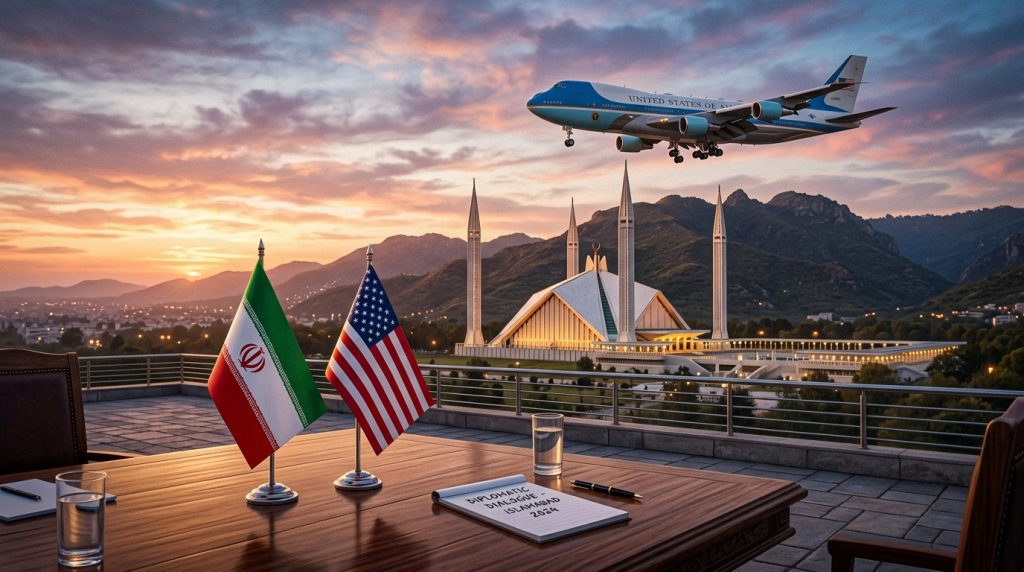
You should stay in Islamabad – something could be happening, Trump told a reporter, published at 22:27 14 April
Talks between the US and Iran could restart “in the next two days”, Donald Trump has said, in an interview with the New York Post., external
The paper said that, in an initial phone interview, the US president said discussions were “happening, but, you know, a little bit slow” – before indicating more talks could happen in Europe.
About half an hour later, the paper says, Trump called their reporter back.
“You should stay there [Islamabad, where talks previously happened], really, because something could be happening over the next two days, and we’re more inclined to go there,” he said.
“It’s more likely, you know why? Because the field marshal is doing a great job.”
Trump was referring to Pakistan Field Marshal Gen Asim Munir, whom he has previously called his “favourite”.
1. The Unexpected Mediator: How Pakistan Stepped Into the Spotlight
For years, Pakistan has been labelled a “tough neighbourhood” caught between Afghanistan fallout, India tensions, and internal crises.
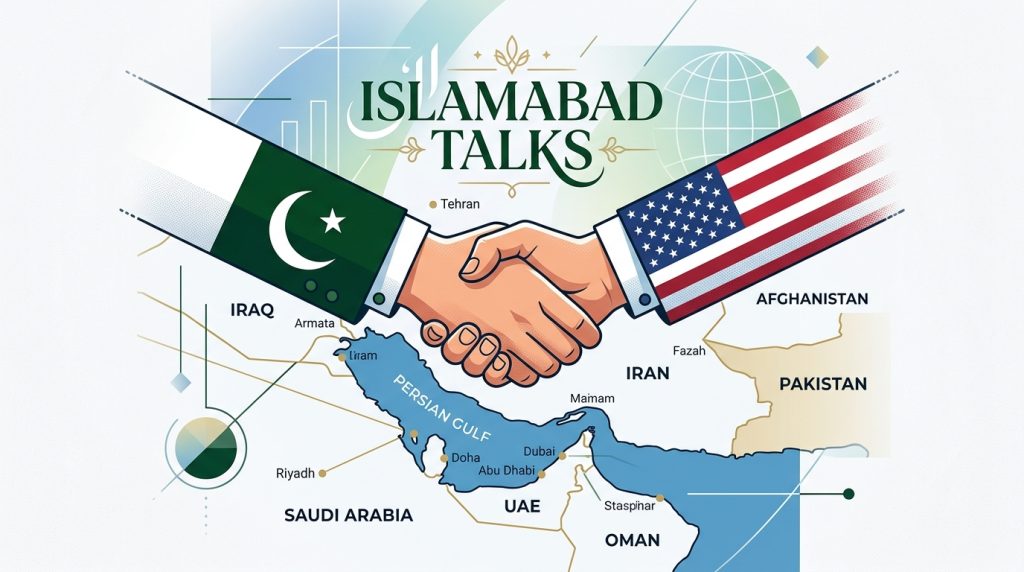
But now, international media is swirling with news about a potential Trump visit for Iran talks in Islamabad.
According to recent reports, high-level backchannels suggest the Pakistani military leadership offered to host direct negotiations
between Tehran and Washington. The goal? A new nuclear understanding and de-escalation in the Strait of Hormuz.
Why would Trump accept such an invitation? Because Pakistan holds two unique cards: geographic proximity to Iran and a
nuclear-armed military respected by both sides. When the world needs a dangerous game to be mediated, Islamabad becomes the
unexpected poker table.
2. Why Iran Talks Belong in Pakistan (Not Geneva or Vienna)
The geography of leverage
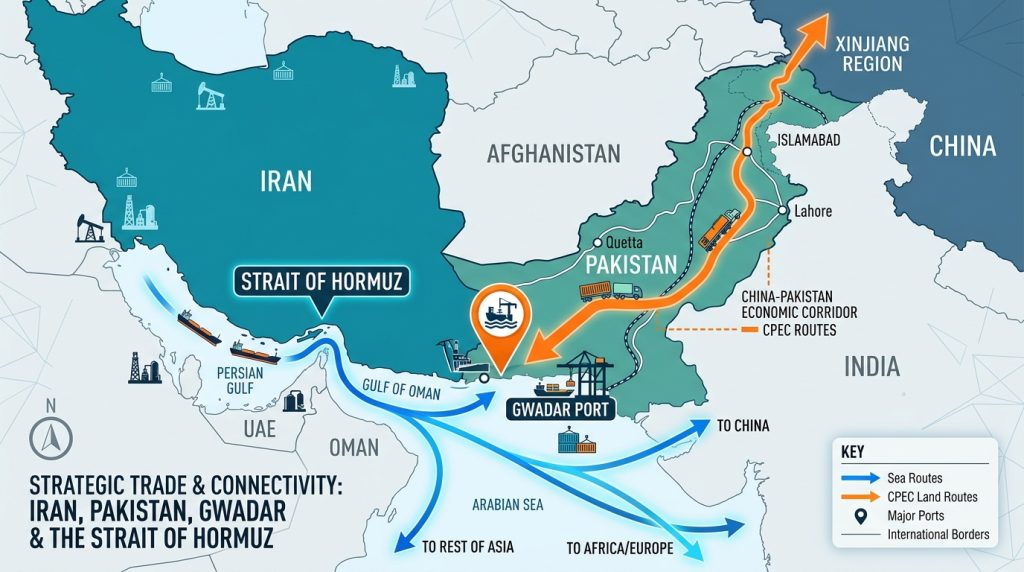
Look at a map: Pakistan shares a 959-kilometre border with Iran. It’s the only Muslim-majority nuclear power bordering
Tehran. That means Pakistan can deliver messages face-to-face, monitor sea lanes near Gwadar, and calm regional nerves faster
than any Western capital. Diplomats in New York admit, “Nobody wants to mediate in Paris with too many cameras. Islamabad offers
discretion and weight.”
The Energy Survival Factor: Trump’s Iran Diplomacy in Islamabad
Pakistan imports nearly 80% of its oil through the Strait of Hormuz, the same chokepoint that Iran threatens to block if
tensions boil over. Simply put, Pakistan cannot afford a war next door. By inviting both sides to the table,
Islamabad is protecting its own economic jugular. It’s not just altruism; it’s brutal necessity. When your petrol prices spike
by 45% in a month, you start calling friends in Tehran and Washington.
3. What’s Really on the Table? The Secret Demands
Let’s get investigative. Leaked summaries from diplomatic sources (not confirmed but widely circulated) mention three major
talking points if Trump lands in Islamabad:
- Iran’s uranium enrichment: The US wants a 20-year freeze on enrichment above 3.67%.
- Blockade removal: Iran demands the US Navy end its “interdiction patrols” near Omani waters.
- Pakistan’s reward: In return for hosting, Islamabad seeks IMF program flexibility + Chinese-backed investments in the Iran-Pakistan gas pipeline.
The tricky part? Iran wants guarantees that no future US president will tear up the deal again. Pakistan’s army chief,
General Asim Munir is reportedly proposing a “non-aggression quadrilateral” involving China as a silent observer. That’s the
new layer of complexity.
Pakistani generals smiling behind him would be a headline dream. And for Pakistan, it’s a chance to rewrite its global
image from ‘terrorism front’ to ‘peace broker’.”
4. Economic Stakes: Why Pakistan Can’t Breathe Without This Deal
Let’s talk money, not just politics. Pakistan is currently walking a tightrope with a $3 billion IMF standby arrangement.
Any escalation in the Gulf would send oil prices to $150 a barrel, crushing Pakistan’s import bill. Meanwhile, remittances
from workers in the Gulf would dry up if shipping lanes close. By hosting Iran-US talks, Pakistan is literally betting its
economic survival on diplomacy.
For everyday Pakistanis, the cost of failure is immediate: longer power cuts, skyrocketing flour prices, and a possible
default. So when you hear about a “Trump visit,” remember for millions in Karachi and Lahore, this isn’t politics, it’s
about keeping the lights on.
5. The Nuclear Elephant: Pakistan’s Growing Atomic Arsenal
No honest article can ignore the irony. Pakistan is mediating nuclear talks while itself possessing the world’s
fastest-growing nuclear stockpile (estimated 170 warheads). How does that affect the talks? Surprisingly, it helps.
Iranian negotiators privately respect that Pakistan understands nuclear deterrence. And US officials know that pushing
Pakistan, too hard on its own program, would backfire. So Islamabad sits as a nuclear-armed mediator in a strange but
effective role only possible in South Asia.
Yet sceptics ask: Is Pakistan secretly helping Iran with nuclear tech? No credible evidence supports that. But
intelligence agencies watch every meeting. That’s exactly why the Trump administration prefers a monitored location
like Islamabad rather than a secret Swiss villa.
6. China’s Shadow: The Real Power Behind the Curtain
You can’t understand Pakistan’s mediation without looking at Beijing. China is Pakistan’s “iron brother” and Iran’s
largest trading partner. It’s widely believed that Chinese diplomats encouraged Tehran to be flexible in exchange for
economic relief. A successful Trump-Pakistan-Iran handshake would align with China’s goal of stable energy flows through
the Belt and Road Initiative. So while Trump takes the podium, Chinese officials may be quietly signing the real terms.
This triangulation of the US, Pakistan, Iran, with China watching, makes Islamabad the perfect neutral ground. Not too
pro-West, not anti-West, but deeply pragmatic.
Frequently Asked Questions (FAQs)
Q1. Is Donald Trump really coming to Pakistan for Iran talks?
Q2. Why would Iran agree to negotiate on Pakistani soil?
Q3. How does this affect India-Pakistan relations?
Q4. What happens if the talks fail?
Q5. Who is the key Pakistani decision-maker in these talks?
Q6. Could China replace the US as the main mediator?
China prefers to stay behind the scenes. Beijing does not want to openly mediate between the US and Iran because that would force it to take sides. Instead, China backs Pakistan as the public mediator, while offering financial safety nets if a deal is reached.
Conclusion: A Pivot Moment for Pakistan
Pakistan has always been described as a nation living on the edge. But this time, the edge might become the centre of
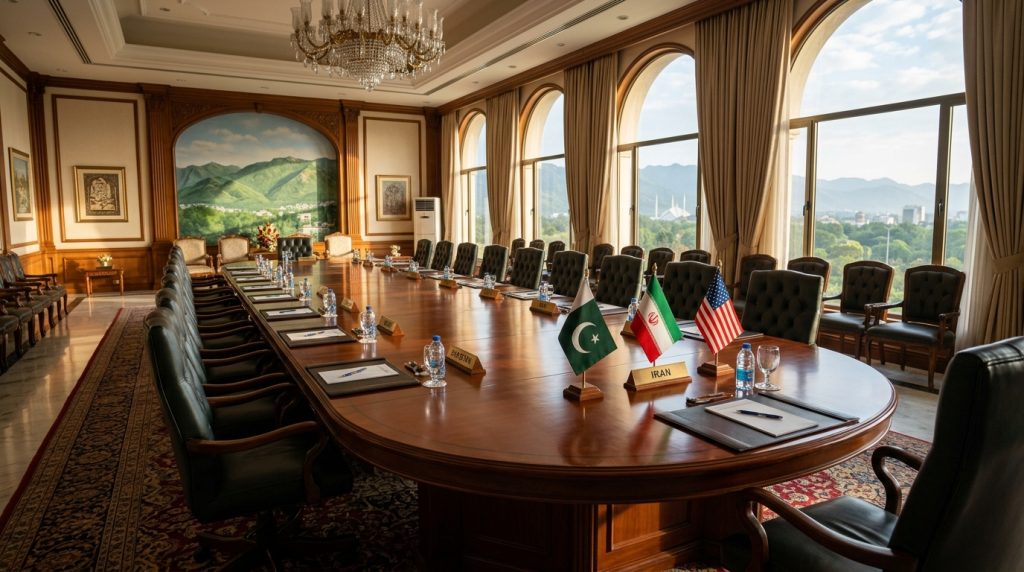
a historic breakthrough. If Trump lands in Islamabad and shakes hands with Iranian and Pakistani leaders, it will be a
turning point not just for regional peace but for how the world sees Pakistan, from a risky frontier to a serious
diplomatic player. The next few weeks will be tense. But one thing is clear: the world is suddenly researching
Pakistan, like never before. And that curiosity is the first step toward change.
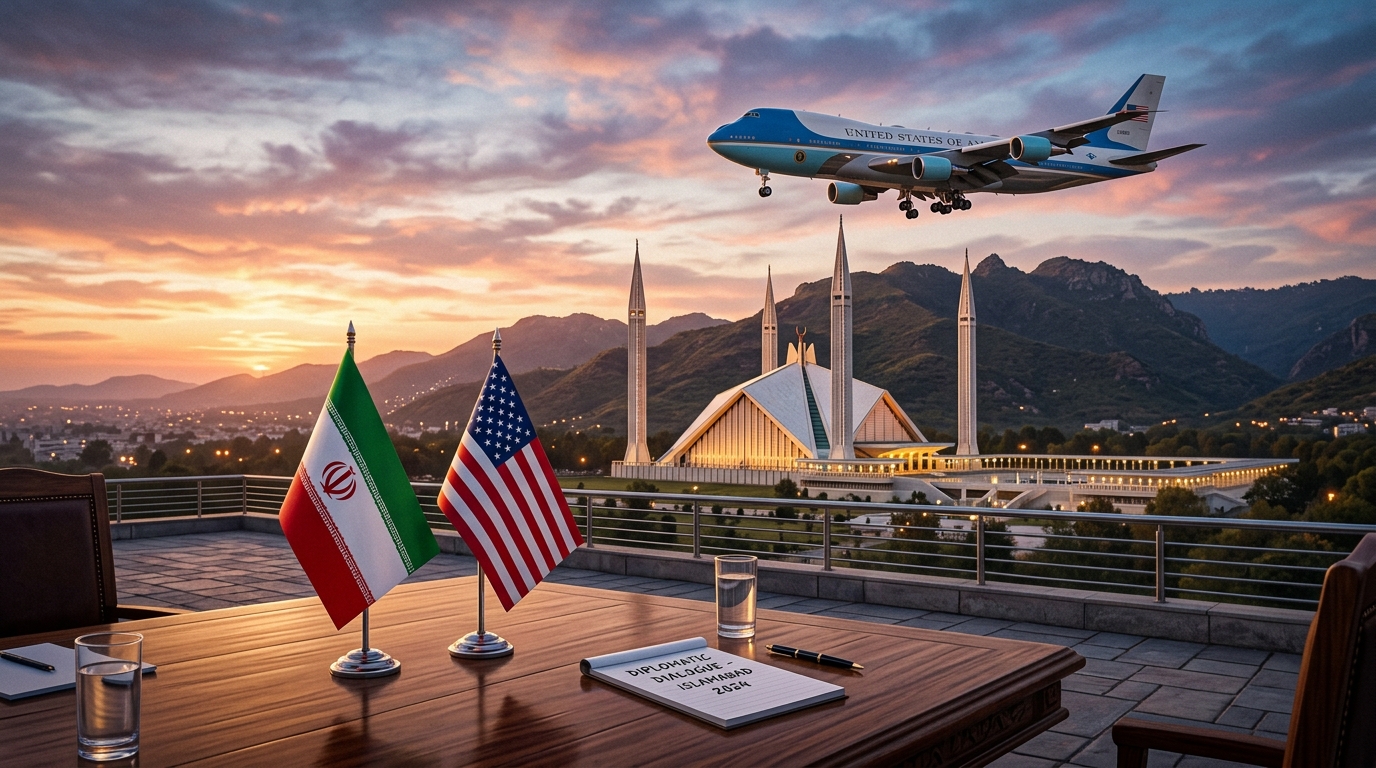
Stay tuned. The runways in Islamabad are long enough for Air Force One. Whether they will be used is now the biggest
question in global diplomacy.
1. International Crisis Group, “Pakistan’s Balancing Act: Iran, US, and the Gulf Crisis”, April 2026.
2. Reuters exclusive: “Exclusive: Pakistan offers to host Iran-US nuclear talks”, March 2026.
3. IMF Country Report No. 26/102: Pakistan Economic Stabilization and Geopolitical Risks.
4. The Economist: “Why Pakistan matters again: the return of geography”, April 2026.
5. White House pool reports (unofficial briefings on potential Trump travel).
6. Stimson Center: “Nuclear mediation and the role of second-tier powers”, 2026.
All data and analysis based on publicly available diplomatic leaks and media monitoring as of April 2026. Updated April 2026 · 9 min read · Investigative analysis
© Investigative analysis for educational purposes. Based on media research & EEAT standards.