
The Rise of Ayatollah Khomeini: Exile, Revolution and the Birth of the Islamic Republic
How one exiled cleric transformed Iran, ended 2,500 years of monarchy, and reshaped Middle Eastern politics forever
Introduction
The Rise of Ayatollah Khomeini: Exile, Revolution and the Birth of the Islamic Republic. Few individuals have altered the course of a nation’s history as profoundly as Ayatollah Ruhollah Khomeini. During the second half of the twentieth century, he emerged from relative obscurity as a religious scholar to become the central figure of one of history’s most significant revolutions. His leadership ended the 2,500-year-old Persian monarchy, overthrew one of the Middle East’s strongest American-backed governments, and established the world’s first modern Islamic Republic.
https://mrpo.pk/iran-explained-from-ancient-persia-to-modern-geopolitics/
To supporters, Khomeini was a courageous religious leader who challenged tyranny, foreign domination, and corruption. To critics, he was a revolutionary whose vision transformed Iran into a theocratic state where political dissent, social freedoms, and opposition movements faced severe restrictions. Whether viewed as a liberator or an authoritarian ruler, few dispute that his influence extended far beyond Iran’s borders, shaping regional politics and inspiring Islamic movements across the Muslim world.
Yet Khomeini’s rise was neither sudden nor inevitable. It unfolded over decades through religious scholarship, political activism, exile, and an extraordinary ability to communicate with ordinary Iranians despite living thousands of kilometres away from his homeland.
Understanding his journey also requires understanding the Iran he sought to change. During the reign of Mohammad Reza Shah Pahlavi, Iran experienced rapid modernisation, ambitious economic development, and close alliances with Western powers. At the same time, political repression, widening social inequality, and resentment toward foreign influence created deep tensions beneath the surface. These competing forces ultimately collided in the Iranian Revolution of 1979.
This article examines how Ayatollah Khomeini became the revolution’s undisputed leader, why successive governments failed to silence him, how exile amplified rather than diminished his influence, and how his return to Iran fundamentally reshaped one of the Middle East’s oldest civilisations.
40 years on: Khomeini’s return from exile and the Iran revolution
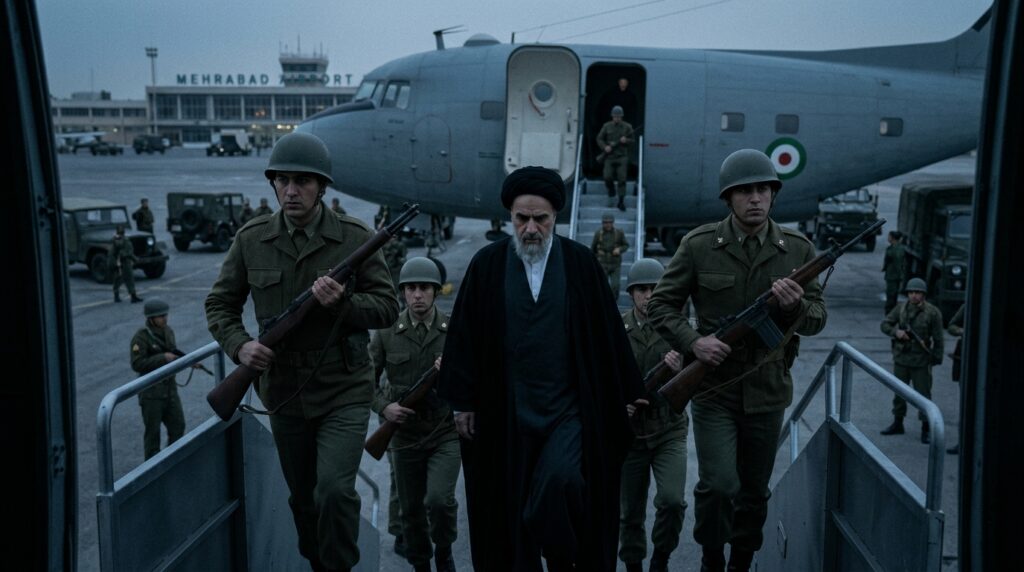
On a foggy Thursday morning on February 1, 1979, a chartered Air France flight from Paris touched down at Mehrabad International Airport near central Tehran, carrying Iran’s most revered spiritual figure.
Ayatollah Ruhollah Khomeini, an outspoken critic of Iran’s ruler Mohammad Reza Shah Pahlavi, was coming home after 14 years in exile in Turkey, Iraq and France.
Before landing, the plane circled low overhead, reportedly to make sure that no tanks were blocking the runway.
Khomeini’s return 40 years ago was essential to the success of the Iranian revolution. It eventually led to the establishment of the Islamic Republic and the cleric’s ascent to supreme leader. It would also pave the way for Iran to recast its role in the Middle East and rejig its ties to the West – a geopolitical convulsion that continues to reverberate around the world to this day.
Wearing his trademark black robe and turban, the 78-year-old cleric slowly emerged from the aircraft holding onto the pilot with his right hand. His son, Ahmad, followed closely behind.
Early Life and Religious Education: The Rise of Ayatollah Khomeini
Ruhollah Musavi Khomeini was born on 24 September 1902 in the town of Khomein, located in Iran’s Markazi Province. His family belonged to a respected lineage of Shi’a religious scholars who traced their ancestry to the Prophet Muhammad through Imam Musa al-Kazim. This religious heritage earned the family considerable respect within the local community and profoundly influenced Khomeini’s upbringing.
His father, Seyyed Mostafa Musavi, was a cleric known for speaking against local injustices. When Ruhollah was only a few months old, his father was killed under circumstances that remain debated by historians. Many contemporary accounts suggest that local tribal leaders or powerful landlords, angered by his opposition to corruption and abuse of power, orchestrated the murder. Losing his father so early left a lasting mark on the young Khomeini, whose family often interpreted the event as an example of resistance against oppression.
Raised primarily by his mother and an aunt, Khomeini experienced another personal tragedy when both women died while he was still a teenager. Responsibility for his education then fell largely to his elder brother and other members of his extended family, who ensured he continued the rigorous religious studies expected of someone from their scholarly tradition.
From an early age, Khomeini displayed an exceptional aptitude for learning. Alongside traditional Islamic subjects, he studied Arabic grammar, Persian literature, philosophy, logic, ethics, jurisprudence, and theology. His education reflected the classical Shi’a seminary curriculum, which emphasised both intellectual discipline and moral development.
In the early 1920s, Khomeini moved to the city of Qom, which had rapidly become Iran’s leading centre of Shi’a scholarship. There,, he studied under some of the most respected religious authorities of his generation, including Grand Ayatollah Abdul Karim Haeri Yazdi, the founder of the modern Qom Seminary.
Unlike many students who specialised solely in religious law, Khomeini developed wide-ranging intellectual interests. He immersed himself in Islamic philosophy, mysticism (Irfan), ethics, and classical Persian poetry. He became known among fellow scholars for his sharp analytical abilities, disciplined lifestyle, and willingness to engage with complex philosophical questions.
By the 1940s, Khomeini had established himself as a respected teacher within the seminary. His lectures attracted increasing numbers of students, many of whom would later become influential clerics and political leaders. Although he had not yet entered national politics, his reputation as an uncompromising scholar continued to grow.
Iran Under Mohammad Reza Shah
When Mohammad Reza Shah assumed the throne in 1941 following the forced abdication of his father, Reza Shah Pahlavi, Iran stood at a crossroads. The country possessed enormous natural resources and occupied a strategically important location between East and West. Yet it also faced political instability, foreign intervention, and widespread poverty.
Following the Second World War, Iran became an important arena in the emerging Cold War. Britain and the United States increasingly viewed the Shah as a vital ally against Soviet expansion in the Middle East. This geopolitical importance translated into substantial economic, military, and intelligence support from Western governments.
By the 1960s, the Shah launched an ambitious modernisation program known as the White Revolution. The reforms sought to transform Iran into a modern industrial state through land redistribution, infrastructure development, expanded education, women’s suffrage, healthcare initiatives, and rapid urbanisation.
Many of these reforms produced genuine achievements. Literacy rates improved significantly, universities expanded, roads and factories multiplied, and Iran’s oil revenues financed major development projects. Tehran became one of the region’s fastest-growing cities, while the country experienced impressive economic growth for much of the decade.
However, modernisation also produced unintended consequences. Land reforms often failed to provide sustainable livelihoods for rural farmers, leading many to migrate into overcrowded urban centres. Wealth is increasingly concentrated among political elites, industrialists, and those closely connected to the monarchy. Traditional merchants, religious institutions, and conservative segments of society viewed many reforms as direct attacks on Iran’s Islamic identity and cultural traditions.
Equally significant was the Shah’s increasingly authoritarian style of governance. Political opposition became progressively restricted, independent newspapers faced censorship, elections lacked meaningful competition, and critics risked arrest or imprisonment.
For many Iranians, the issue was not modernisation itself but the absence of political participation. Economic development proceeded alongside shrinking political freedoms, creating frustrations that cut across ideological, religious, and social divisions.
Among the Shah’s most outspoken critics was an increasingly influential cleric in Qom: Ayatollah Ruhollah Khomeini.
The White Revolution and the Birth of Opposition
Khomeini did not oppose every aspect of modernisation. Rather, he argued that genuine reform should emerge from Iran’s own religious and cultural traditions rather than being imposed through authoritarian rule or foreign influence.
His criticism intensified after the Shah announced the White Revolution in 1963. The reforms included land redistribution, women’s voting rights, literacy campaigns, privatisation initiatives, and expanded government authority over religious endowments.
While many urban professionals welcomed these changes, numerous senior clerics viewed them with suspicion. They feared that the reforms weakened Islamic institutions, reduced the influence of religious scholars, and increased Western cultural penetration.
Khomeini distinguished himself from other critics through the directness of his language. Rather than limiting himself to theological objections, he openly challenged the Shah’s legitimacy and accused the monarchy of sacrificing Iran’s independence in exchange for American support.
His speeches increasingly connected religious concerns with broader political grievances. He spoke about corruption, social injustice, economic inequality, foreign interference, and the concentration of power within the royal court. These themes resonated not only with religious audiences but also with students, merchants, intellectuals, and ordinary citizens dissatisfied with the political system.
The confrontation between Khomeini and the monarchy had begun.
SAVAK, the 1963 Uprising, and Khomeini’s Exile
SAVAK: The Shah’s Most Powerful Weapon
No discussion of the Iranian Revolution can be complete without understanding SAVAK, the intelligence and security organisation that became both the backbone of Mohammad Reza Shah’s rule and one of the principal reasons for its eventual collapse.
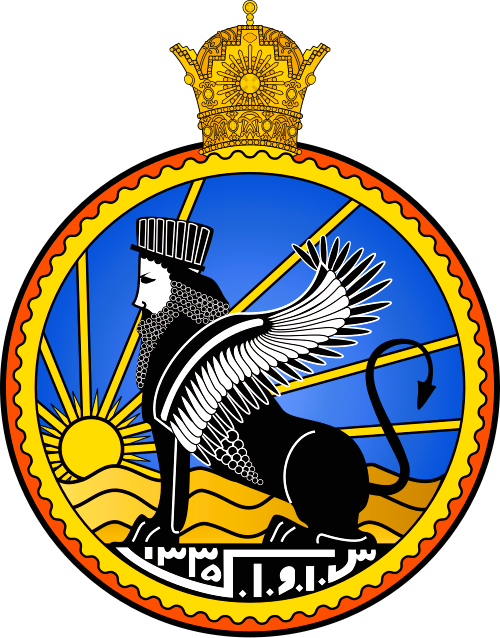
The French intelligence service, the Service de Documentation Extérieure et de Contre-Espionnage (SDECE, predecessor of today’s DGSE), assisted in establishing and training SAVAK during its formative years in the mid-1950s and early 1960s. French instructors provided courses in surveillance, counter-subversion, interrogation techniques, and political intelligence gathering—expertise refined during the Algerian War.[4][5][6]
According to a declassified CIA memo citing a classified U.S. Senate Foreign Relations Committee report, the CIA played a significant role in establishing SAVAK, providing both funding and training.[7] The organization became notorious for its extensive surveillance, repression, and torture of political dissidents. The Shah used SAVAK to arrest, imprison, exile, and torture his opponents, leading to widespread public resentment. This discontent was leveraged by Ayatollah Ruhollah Khomeini, then in exile, to build popular support for his Islamic philosophy.[8]
Ironically, the organisation established to preserve the Shah’s government ultimately became one of the greatest sources of public anger that fueled the revolution it was designed to prevent.
Why Was SAVAK Created?
The roots of SAVAK lay in the political upheaval that followed the overthrow of Prime Minister Mohammad Mossadegh in 1953. Mossadegh’s decision to nationalise Iran’s oil industry had brought him into direct conflict with Britain and strained relations with the United States. In August 1953, a coup restored the Shah’s authority and marked a turning point in Iran’s modern political history.
Although the monarchy regained power, the Shah emerged from the crisis deeply concerned about the security of his government. Communist organisations such as the Tudeh Party remained active, nationalist groups continued to challenge royal authority, and opposition movements were growing within universities, labour organisations, and even parts of the religious establishment.
The Shah concluded that Iran required a centralised intelligence agency capable of identifying threats before they could develop into organised opposition. In 1957, the government formally established the National Intelligence and Security Organisation, better known by its Persian acronym, SAVAK (Sazeman-e Ettela’at va Amniyat-e Keshvar).
American and Israeli Assistance
SAVAK did not emerge in isolation.
During the early Cold War, both the United States and Israel regarded Iran as one of their most important regional allies. Located along the Soviet Union’s southern border, Iran possessed immense strategic value. Washington feared communist expansion into the Middle East, while Israel sought strong regional partnerships with non-Arab states.
American intelligence officers from the CIA assisted in organising the new security service by providing advice on intelligence gathering, counterintelligence, record keeping, surveillance, and organisational structure. Israeli intelligence, particularly Mossad, also contributed expertise in security operations and officer training.
It is important to distinguish between the origins of SAVAK and its later evolution. While foreign assistance helped establish the organisation during its early years, operational decisions, arrests, and domestic policies were ultimately directed by Iranian authorities under the Shah’s government.
Organisation and Structure
Unlike ordinary police agencies, SAVAK possessed exceptionally broad powers.
Its responsibilities included:
- Domestic intelligence
- Counterespionage
- Monitoring political organizations
- Protecting the monarchy
- Surveillance of universities
- Monitoring religious institutions
- Press censorship
- Investigating suspected subversive activities
- Intelligence collection abroad
Reports flowed directly to the Shah, giving the organisation unusual political influence.
By the 1970s, SAVAK had developed an extensive bureaucracy with specialised departments dedicated to surveillance, interrogation, censorship, foreign intelligence, and internal security.
Its exact size remains debated by historians. Estimates range from several thousand full-time officers to tens of thousands when informants and cooperating personnel are included. More significant than its actual numbers was its reputation. Many Iranians believed SAVAK had informers everywhere, in workplaces, universities, mosques, newspapers, and even among neighbours. Whether accurate or exaggerated, this perception fostered an atmosphere in which people often censored themselves out of fear.
Surveillance Across Iranian Society
SAVAK’s reach extended into nearly every sector of public life.
Universities were closely monitored because students had become increasingly active in nationalist, socialist, and religious political movements. Student organisations suspected of anti-government activities frequently found themselves under surveillance.
Religious seminaries, particularly in Qom and Mashhad, also attracted significant attention. Clerics who criticised government policies could find their sermons recorded, movements tracked, and associates investigated.
The organisation monitored labour unions, professional associations, publishing houses, cultural organisations, and political parties. Foreign journalists, diplomats, and visiting academics were sometimes observed as well, reflecting the government’s concern about international perceptions of domestic unrest.
Telephone conversations could be intercepted, correspondence examined, and public speeches documented. Many Iranians assumed that criticism, even in private conversations, might eventually reach government officials. Whether every suspicion was justified remains uncertain, but the widespread belief that no conversation was entirely private profoundly influenced everyday life.
Censorship and Control of Information
Control over information formed another central component of SAVAK’s mission. Books, newspapers, magazines, theatrical performances, films, and broadcasts were subject to government review. Publications considered critical of the monarchy, supportive of revolutionary ideologies, or sympathetic to opposition groups could be banned.
Editors often practised self-censorship rather than risk closure or arrest. Writers learned to avoid politically sensitive subjects, while publishers became cautious about works addressing government corruption or authoritarianism. This climate affected not only political discussion but also academic research and artistic expression. Although Iran continued producing significant literary and cultural works, public debate operated within increasingly narrow boundaries.
Ironically, censorship sometimes increased public curiosity. Underground publications, secretly duplicated pamphlets, and audio recordings circulated through informal networks, reaching audiences beyond official control.
Arrests, Detention, and Interrogation
Perhaps the most controversial aspect of SAVAK’s history concerns its treatment of political prisoners. Former detainees, international human rights organisations, and numerous historians have documented cases involving prolonged detention, harsh interrogation, and physical abuse. Allegations included beatings, sleep deprivation, psychological pressure, and various forms of torture intended to obtain confessions or information about opposition networks.
The Iranian government consistently defended its security policies by arguing that extraordinary measures were necessary to combat violent extremists and foreign-backed conspiracies during the Cold War.
Historical evidence indicates that both realities existed simultaneously. Iran did face genuine security challenges, including armed guerrilla organisations that carried out attacks against government officials. At the same time, many individuals arrested by SAVAK were nonviolent political activists, journalists, students, intellectuals, religious leaders, and writers whose principal offence was criticising government policies.
The distinction between legitimate security concerns and political repression became increasingly blurred, undermining the government’s credibility among many citizens.
Khomeini and SAVAK
Among the figures who attracted SAVAK’s attention, none would prove more consequential than Ayatollah Ruhollah Khomeini. As his sermons grew more critical during the early 1960s, government agents regularly monitored his speeches in Qom. His writings circulated among seminarians, merchants, and religious communities despite official efforts to limit their distribution.
Rather than advocating isolated reforms, Khomeini challenged the legitimacy of the Shah’s political authority itself. He accused the monarchy of undermining Islam, concentrating wealth among elites, suppressing political freedoms, and allowing excessive foreign influence over Iranian affairs. Government officials increasingly viewed him not merely as a religious scholar but as a political threat capable of mobilising broad segments of society.
Why Fear Alone Could Not Preserve the Monarchy
Authoritarian governments often rely on security institutions to maintain stability. In the short term, such organisations can successfully suppress demonstrations, dismantle opposition networks, and discourage public dissent. Yet history shows that fear rarely produces genuine political legitimacy.
By the 1970s, many Iranians had never personally encountered SAVAK, but stories about arrests, disappearances, interrogations, and censorship circulated widely through families, universities, bazaars, and mosques. Some accounts were carefully documented; others were exaggerated through rumour. Together, they created a powerful public image of an omnipresent secret police. This perception gradually eroded trust between citizens and the state.
Rather than eliminating opposition, repression often encouraged disparate groups to unite. Religious scholars, university students, liberal intellectuals, leftist activists, merchants, and ordinary citizens frequently disagreed on ideology and political goals. However, many increasingly shared one conviction: that meaningful political change could not occur under a system sustained by pervasive surveillance and fear.
The Shah had built one of the Middle East’s most sophisticated security organisations. Yet intelligence agencies can monitor conversations, infiltrate organisations, and imprison opponents; they cannot easily eliminate widespread dissatisfaction. As economic inequality, political exclusion, and resentment toward authoritarian rule deepened, SAVAK became, in the eyes of many Iranians, less a symbol of national security than of a government growing increasingly disconnected from its people.
By the late 1970s, the organisation that had been created to safeguard the monarchy had instead become one of the most potent symbols of the grievances fueling the revolutionary movement.
The 1963 Uprising: The Beginning of Open Confrontation
By 1963, relations between Ayatollah Khomeini and the Shah had deteriorated to the point of no return. What had begun as criticism of specific government reforms evolved into a broader challenge to the legitimacy of the monarchy itself.
The immediate catalyst was Khomeini’s powerful Ashura sermon in June 1963, delivered before thousands of worshippers in Qom. Speaking in unusually direct language, he accused the Shah of acting against Islam, suppressing religious institutions, and allowing foreign powers to exert undue influence over Iran’s affairs. Such public criticism of the monarch was virtually unprecedented from a senior cleric and marked a decisive turning point in the confrontation between the religious establishment and the state.
Within days, government forces arrested Khomeini in the early hours of the morning and transported him to Tehran. News of his detention spread rapidly despite official censorship. Demonstrations erupted in Qom, Tehran, Shiraz, Mashhad, and several other cities as supporters demanded his release.
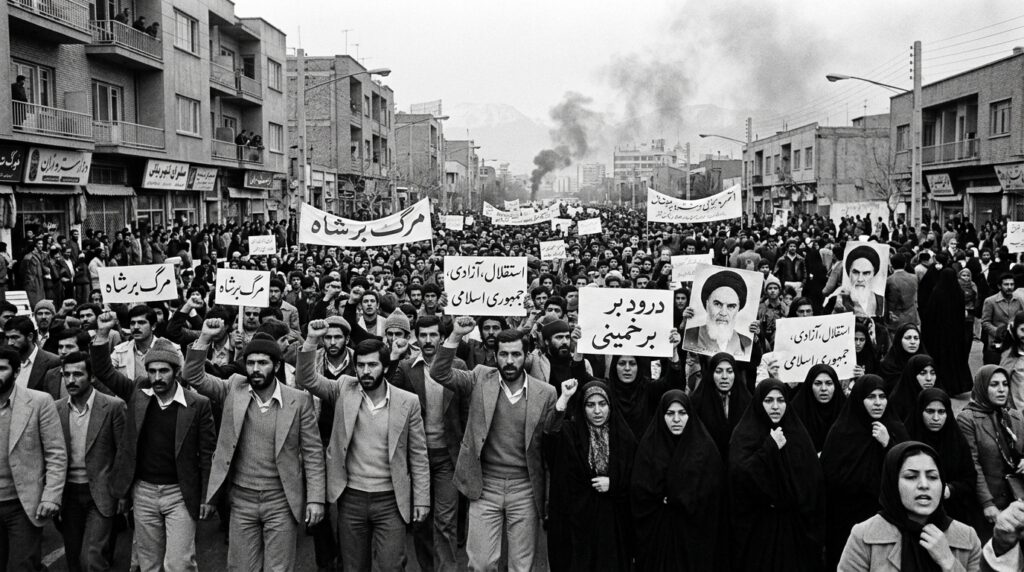
The protests, remembered as the 15 Khordad Uprising, were met with force. Security units and the military dispersed crowds, imposed order, and arrested numerous participants. Estimates of those killed vary widely, reflecting differing contemporary reports and later historical interpretations, but the crackdown left a lasting impression on Iranian society.
Although the demonstrations were suppressed, they transformed Khomeini from a respected religious scholar into the country’s most prominent symbol of organised resistance against the Shah. The events of June 1963 convinced both the monarchy and its opponents that their conflict had entered a new and irreversible phase.
The Shah’s Close Relationship with the United States and Israel
By the late 1960s and throughout the 1970s, another issue increasingly shaped public opinion inside Iran: the Shah’s exceptionally close relationship with the United States and Israel.
Following the 1953 coup that restored Mohammad Reza Shah to power after Prime Minister Mohammad Mossadegh was removed, many Iranians believed that the monarchy had become heavily dependent on Washington. Although the Shah portrayed himself as an independent ruler pursuing Iran’s modernisation, critics argued that his survival increasingly relied on American political, military and intelligence support.
This perception deepened after the 1953 CIA- and MI6-backed coup, which remained a powerful symbol for nationalists, religious leaders and left-wing activists alike. To many Iranians, it represented foreign interference in their country’s sovereignty. Whether they were secular intellectuals or conservative clerics, many shared the belief that Iran’s political independence had been compromised. The relationship was visible everywhere.
The United States became Iran’s largest supplier of advanced weapons. Thousands of American military advisers, engineers and civilian contractors worked across the country. Iran purchased billions of dollars in sophisticated aircraft, radar systems and military equipment, becoming one of Washington’s closest allies in the Middle East. The Shah also cultivated a discreet but remarkably close relationship with Israel.
Although Iran never officially recognised Israel in the same way as some Western countries, the two governments maintained extensive cooperation behind the scenes. They exchanged intelligence, expanded agricultural and technological cooperation, traded oil and worked together on regional security matters. Israel regarded Iran as one of its most important non-Arab partners, while the Shah viewed Israel as a strategic ally against Soviet influence and hostile Arab nationalist governments.
For many ordinary Iranians, however, these alliances became politically damaging. Across the Muslim world, sympathy for the Palestinian cause had grown considerably after the Arab-Israeli wars of 1967 and 1973. Many Iranian religious scholars viewed Israel’s occupation of Palestinian territories as an injustice against fellow Muslims. Ayatollah Ruhollah Khomeini repeatedly condemned the Shah for maintaining ties with Israel, arguing that the monarchy was ignoring the concerns of the Islamic world while suppressing its own religious population at home.
Khomeini’s speeches frequently linked domestic repression with foreign policy. He accused the Shah of serving American and Israeli interests instead of protecting Iran’s independence and Islamic identity. These arguments resonated not only with religious audiences but also with many students, intellectuals and nationalists who opposed foreign influence in Iranian affairs.
Economic issues reinforced these political grievances.
Despite soaring oil revenues during the 1970s, many Iranians questioned why enormous sums were being spent on imported military hardware while inflation, housing shortages and income inequality continued to worsen. Critics argued that the country’s wealth was enriching a small political elite while ordinary citizens struggled with rising living costs.
As dissatisfaction spread, slogans heard during demonstrations increasingly targeted both the Shah and his foreign allies. Protesters denounced what they viewed as American interference in Iran and condemned the monarchy’s cooperation with Israel. Opposition groups from very different ideological backgrounds, Islamists, nationalists, liberals and Marxists, found common ground in demanding greater political independence.
By the eve of the 1979 Revolution, the Shah’s close relationships with Washington and Israel had become powerful symbols of everything many Iranians believed was wrong with the monarchy: foreign dependence, authoritarian rule, corruption and a loss of national dignity.
Although historians emphasise that the revolution resulted from multiple factors—including political repression, economic discontent, religious opposition, social inequality and demands for constitutional freedoms—the perception that the Shah had aligned Iran too closely with the United States and Israel undoubtedly intensified public anger and strengthened the revolutionary movement.
The Gathering Storm: Iran Moves Towards Revolution
By the late 1970s, Iran appeared stronger than ever on paper. Oil revenues had transformed the country into one of the wealthiest nations in the Middle East. Tehran boasted modern highways, luxury hotels, gleaming office buildings and ambitious industrial projects. Foreign investors praised the Shah’s vision, and Western governments regarded Iran as a pillar of stability in an increasingly turbulent region. Beneath this image of prosperity, however, the foundations of the monarchy were beginning to crack.
The rapid economic growth of the early 1970s created problems that the government struggled to control. A dramatic increase in oil prices after the 1973 oil crisis flooded Iran with unprecedented wealth. Instead of producing long-term stability, the sudden influx of money fuelled inflation, rising property prices and widespread corruption.
The gap between the rich and the poor widened noticeably.
A small elite connected to the royal court enjoyed enormous wealth, while millions of ordinary Iranians found that their incomes failed to keep pace with the rising cost of living. Housing shortages became severe in major cities. Basic goods became more expensive, and unemployment remained high among educated young people entering the workforce.
Rapid urbanisation created additional social tensions.
Millions migrated from rural villages to Tehran, Isfahan, Mashhad and other growing cities in search of better opportunities. Many arrived expecting prosperity but instead found overcrowded neighbourhoods, limited public services and uncertain employment. Traditional community structures weakened while modern institutions failed to replace them.
Political frustration also intensified.
The Shah had effectively eliminated meaningful political opposition. Independent newspapers were censored, political parties operated under strict government control, and elections offered little genuine choice. In 1975, the Shah abolished the remaining political parties and created the Rastakhiz (Resurgence) Party, declaring it the country’s only legal political organisation. Membership became virtually compulsory for many citizens, reinforcing the perception that political participation had become an instrument of state control rather than democratic representation.
For many Iranians, there was simply no peaceful way to express criticism.
Universities became centres of dissent. Students organised demonstrations demanding political reforms, freedom of expression and an end to authoritarian rule. Intellectuals, writers and lawyers increasingly criticised government censorship and human rights abuses despite the risks involved.
Meanwhile, the religious establishment remained deeply influential across Iranian society.
Unlike political parties, mosques could not easily be dismantled by the state. They continued to function as places of worship, education and community organisation. Friday sermons became opportunities to discuss not only religious matters but also social injustice, corruption and political repression. Cassette recordings of Ayatollah Khomeini’s speeches, secretly smuggled into Iran from exile, circulated widely through mosque networks, bazaars and universities.
Khomeini’s message appealed to diverse audiences for different reasons.
Religious conservatives saw him as a defender of Islamic values against Westernisation. Bazaar merchants admired his criticism of government corruption and economic inequality. Students appreciated his uncompromising opposition to dictatorship. Nationalists respected his refusal to accept foreign influence over Iran’s affairs.
Although these groups disagreed on many issues, they increasingly shared one common objective: ending the Shah’s rule.
International developments also affected events inside Iran.
In 1977, U.S. President Jimmy Carter placed greater emphasis on human rights in American foreign policy. Encouraged by this shift, the Shah slightly relaxed political controls, allowing somewhat greater freedom of expression. Instead of calming public dissatisfaction, however, the limited opening encouraged broader criticism. Intellectuals published open letters, lawyers demanded constitutional reforms, and opposition voices became increasingly confident.
The government found itself trapped.
Years of repression had prevented peaceful political dialogue, while the sudden easing of restrictions allowed long-suppressed frustrations to surface all at once. Demonstrations became larger and more frequent, and each government’s attempt to suppress them generated even greater public anger.
The turning point came in January 1978.
A government-controlled newspaper published an article attacking Ayatollah Khomeini, accusing him of being a foreign agent and insulting his religious credentials. Rather than discrediting the exiled cleric, the article provoked outrage among seminary students and religious scholars in the holy city of Qom.
Peaceful demonstrations erupted.
Security forces opened fire on protesters, killing several people. Under longstanding Shi’a tradition, mourning ceremonies are held forty days after a person’s death. Those memorial gatherings themselves became new political demonstrations. When more protesters were killed, another cycle of mourning followed forty days later.
The movement grew like a chain reaction.
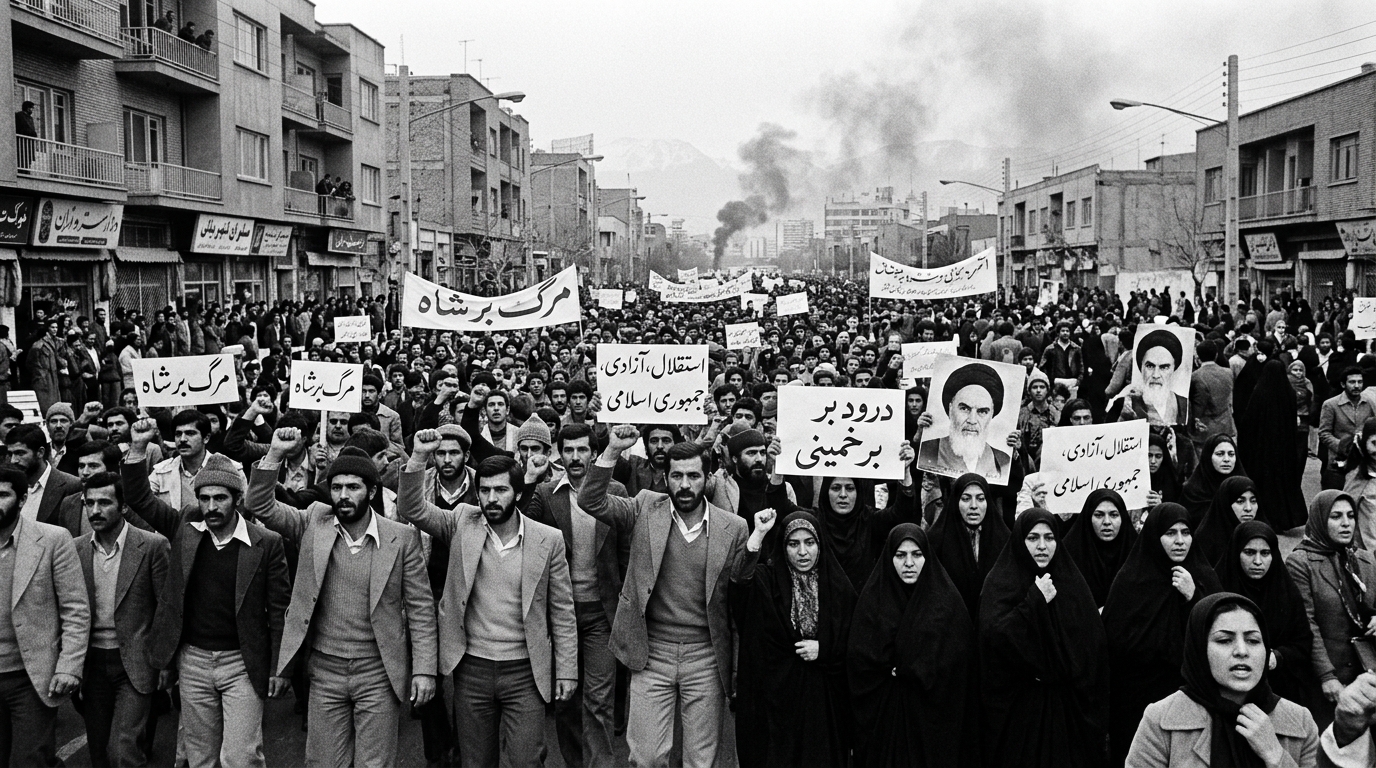
From Qom, protests spread to Tabriz, Yazd, Isfahan, Mashhad and eventually Tehran. Every forty days, fresh demonstrations commemorated those who had died in the previous protests, creating an expanding nationwide movement that became increasingly difficult for the government to contain.
By the summer of 1978, millions of Iranians from every social class were participating in strikes, marches and public demonstrations. What had begun as scattered protests had become a nationwide revolution.
Black Friday: The Massacre That Changed Everything
By September 1978, Iran had reached a critical turning point. Months of demonstrations, strikes and mourning ceremonies had transformed scattered protests into a nationwide movement. Millions of Iranians were demanding an end to the Shah’s rule, while the government struggled to regain control. Despite repeated attempts to suppress the unrest, each confrontation only strengthened public resolve.
The Shah now faced an impossible dilemma. If he allowed protests to continue, they threatened to undermine the authority of the monarchy completely. If he used overwhelming force, he risked turning the population decisively against him. Ultimately, the government chose repression.
Martial Law Declared
On 7 September 1978, the government declared martial law in Tehran and several other major cities.
Public gatherings were prohibited. Curfews were imposed, and the military was authorised to disperse demonstrations by force if necessary. Many Iranians, however, were either unaware of the declaration or chose to ignore it, believing that peaceful protest remained their only means of expressing opposition.
The following morning, 8 September 1978, thousands of demonstrators gathered in Jaleh Square in eastern Tehran. Men, women and children joined the protest, carrying banners, chanting slogans and calling for political change. The atmosphere was tense but initially peaceful.
Army units, supported by tanks and armoured vehicles, surrounded the square. Soldiers ordered the crowd to disperse. What happened next remains one of the most disputed and emotionally charged episodes in modern Iranian history.
The Shooting Begins
As protesters refused to leave, security forces opened fire. Eyewitness accounts describe scenes of panic as automatic gunfire echoed through the square. Demonstrators fled in every direction while many others fell where they stood. Some survivors recalled helicopters overhead and troops firing into dense crowds, although the precise sequence of events remains debated by historians.
The violence lasted only a short time, but its consequences were immense. The exact death toll has never been conclusively established.
Opposition groups at the time claimed that thousands had been killed, using the massacre to demonstrate the brutality of the Shah’s regime. Government figures reported fewer than one hundred deaths. Later historical research, based on hospital records, government documents and independent investigations, generally estimates that several dozen to a few hundred people were killed across Tehran during the day’s violence, with many more wounded.
Regardless of the precise number, the psychological impact was enormous. To many Iranians, Black Friday proved that the monarchy was willing to use deadly force against its own citizens to remain in power.
Why Black Friday Became a Turning Point
Before Black Friday, some opposition figures still hoped that constitutional reforms or negotiations might limit the Shah’s powers while preserving the monarchy. After the massacre, those hopes largely disappeared. Many Iranians concluded that reconciliation with the regime was impossible. Moderate voices lost influence, while revolutionary leaders gained credibility. Every funeral became another demonstration. Every death strengthened public anger.
Ayatollah Khomeini, speaking from exile in France, condemned the killings and portrayed the victims as martyrs who had sacrificed their lives for Islam and Iran. His speeches, reproduced on cassette tapes and distributed throughout the country, further unified the opposition. The Shah’s government, meanwhile, found itself increasingly isolated.
International media broadcast graphic images of the shootings, drawing worldwide attention to the crisis. Human rights organisations criticised the excessive use of force, while foreign governments began questioning whether the Shah could restore stability without escalating violence further.
Nationwide Strikes Bring Iran to a Standstill
Following Black Friday, opposition shifted beyond street protests. Workers across multiple industries launched strikes on an unprecedented scale. Government ministries, universities, banks, newspapers and factories experienced repeated work stoppages. Most significantly, employees in Iran’s vital oil industry walked off the job. The oil strikes dealt a devastating blow to the government.
Oil exports were the foundation of Iran’s economy and the primary source of state revenue. As production declined sharply, the government struggled to finance its operations and maintain public confidence.
Businesses closed.
Schools suspended classes.
Transport networks were disrupted.
Government offices functioned only intermittently.
For ordinary Iranians, daily life became increasingly uncertain, but many accepted these hardships as necessary sacrifices to achieve political change. The alliance opposing the Shah also continued to grow.
Religious scholars worked alongside secular intellectuals. Bazaar merchants funded strikes and demonstrations. Students organised protests on university campuses, while industrial workers paralysed key sectors of the economy. Although these groups held very different visions for Iran’s future, they remained united by one objective—the removal of Mohammad Reza Shah Pahlavi.
By the end of 1978, it had become increasingly clear that the monarchy was losing control. The Shah still commanded one of the region’s most powerful militaries, but he was rapidly losing the confidence of his people, parts of the political establishment, and even some within his own armed forces. For the first time since ascending the throne in 1941, the survival of the Pahlavi monarchy itself was in serious doubt.
The Fall of the Shah
By the beginning of 1979, the Pahlavi monarchy was rapidly collapsing. Months of nationwide demonstrations, crippling strikes and political paralysis had brought Iran to a standstill. Government ministries functioned only intermittently, the economy was deteriorating, and public confidence in the Shah had virtually disappeared. Although Iran still possessed one of the strongest militaries in the Middle East, it was becoming increasingly evident that military power alone could not restore political legitimacy.
The Shah appeared physically and emotionally exhausted.
Unknown to most Iranians at the time, Mohammad Reza Shah had been battling lymphoma, a form of cancer, for several years. His deteriorating health affected his decision-making during the revolution. Rather than acting decisively, he often hesitated, replacing governments, promising reforms and then reversing course, which satisfied neither his supporters nor his opponents. Many of his closest advisers disagreed over what should be done.
Some military commanders advocated declaring full martial law and crushing the protests with overwhelming force. Others warned that such action could trigger a civil war. Moderate politicians argued that genuine democratic reforms might still save the monarchy, but by late 1978, most Iranians no longer believed the Shah’s promises.
Shapour Bakhtiar’s Last Attempt
In a final effort to preserve the constitutional monarchy, the Shah appointed Shapour Bakhtiar as Prime Minister on 4 January 1979. Bakhtiar was an experienced politician and a long-time member of the opposition National Front. Ironically, he had spent years criticising the Shah’s authoritarian rule and had himself been imprisoned by the regime.
His appointment was intended to reassure both the opposition and Western governments. Bakhtiar immediately introduced sweeping reforms. He dissolved SAVAK, released many political prisoners, relaxed press censorship, promised free elections and pledged to respect constitutional government. He also insisted that the Shah should leave Iran temporarily to reduce political tensions.
These reforms came too late. Most opposition groups rejected Bakhtiar’s government, viewing it as merely another attempt to preserve the monarchy. Ayatollah Khomeini declared that any government appointed by the Shah was illegitimate and instructed his supporters not to cooperate with it.
The Shah Leaves Iran
On 16 January 1979, Mohammad Reza Shah Pahlavi and Empress Farah boarded an aircraft at Tehran’s Mehrabad Airport and departed Iran. Officially, the Shah announced that he was leaving for a short vacation to allow the new government time to restore stability. He expressed hope that he would soon return. Few believed him.
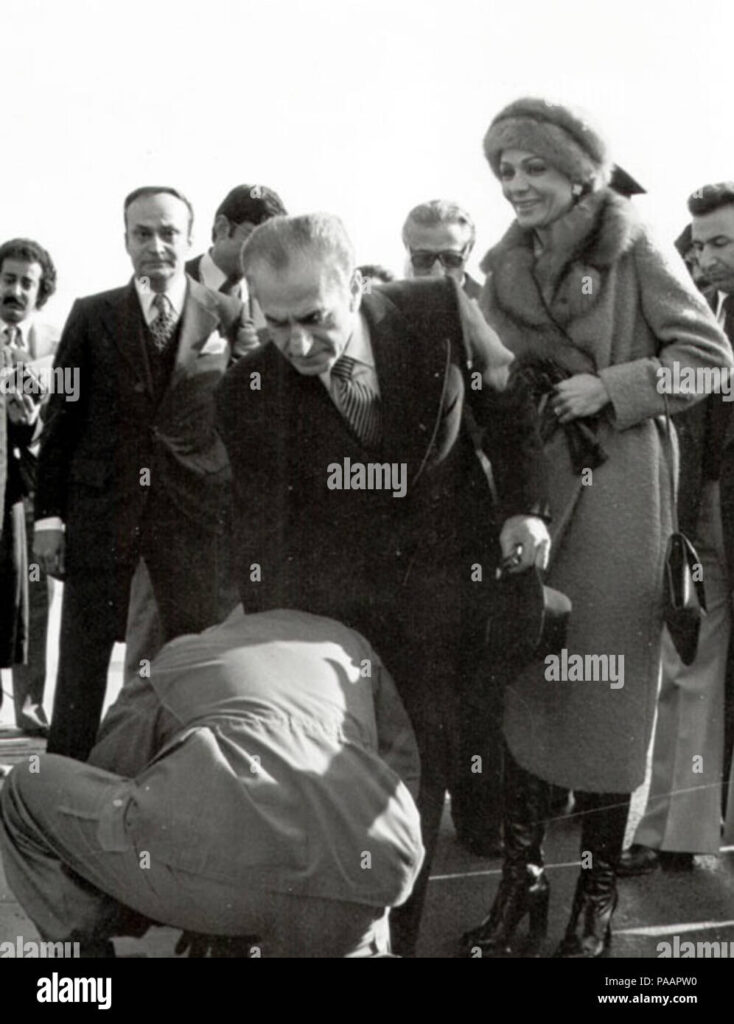
Television broadcasts showed the Shah walking slowly across the airport tarmac before boarding his plane. Observers noted his subdued expression as he paused briefly to look back toward Tehran one last time. It was the final time he would ever see his country. As news of his departure spread, millions of Iranians poured into the streets.
Crowds celebrated throughout Tehran and other major cities. People distributed sweets, embraced strangers and removed portraits of the Shah from government buildings and public institutions. Statues of Mohammad Reza Shah and his father, Reza Shah, were toppled in symbolic acts marking the end of more than fifty years of Pahlavi rule.
For many supporters of the monarchy, however, the day represented a profound national tragedy. They feared that the collapse of the monarchy would lead to instability, political extremism and foreign interference. Their concerns would later prove to be partly justified, although few could foresee the dramatic transformation that Iran was about to undergo.
A King Without a Kingdom
After leaving Iran, the Shah began a long and uncertain exile. He first travelled to Aswan, Egypt, where he was welcomed by President Anwar Sadat, one of his closest allies. Over the following eighteen months, he moved repeatedly between several countries, including Morocco, the Bahamas, Mexico, the United States and Panama, as governments struggled to balance humanitarian concerns with the growing diplomatic pressure exerted by Iran’s new revolutionary authorities.
His admission to the United States in October 1979 for cancer treatment would later trigger one of the most significant international crises of the twentieth century, the seizure of the U.S. Embassy in Tehran and the Iran Hostage Crisis. The Shah eventually returned to Egypt, where he died on 27 July 1980 at the age of sixty. He was buried in Cairo with full state honours granted by President Sadat.
Power Vacuum in Tehran
Although the Shah had left Iran, the monarchy had not yet formally ended. Prime Minister Shapour Bakhtiar remained in office and attempted to govern the country. He insisted that constitutional government could still be preserved without the Shah’s direct involvement. His authority, however, existed largely on paper.
Across Iran, revolutionary committees, religious leaders and striking workers increasingly ignored the government. Millions now awaited only one event, the return of Ayatollah Ruhollah Khomeini after nearly fifteen years in exile. That return would transform Iran forever.
Ayatollah Khomeini Returns to Iran
The departure of the Shah removed the greatest obstacle preventing Ayatollah Ruhollah Khomeini from returning home. For nearly fifteen years, the exiled cleric had directed the opposition movement from abroad. During that time, his speeches had been secretly recorded, duplicated onto cassette tapes and distributed throughout Iran, allowing his message to reach millions despite strict government censorship.
Now, with the Shah gone, preparations began for one of the most extraordinary political homecomings in modern history. On 1 February 1979, an Air France Boeing 747 carrying Khomeini departed Paris for Tehran.
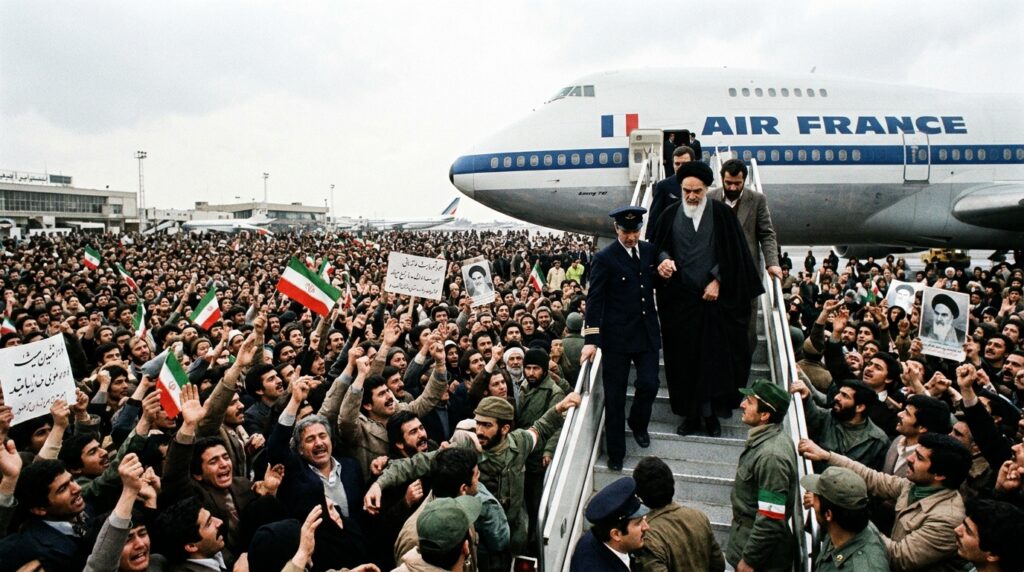
The flight attracted unprecedented international attention. More than one hundred journalists from around the world accompanied him, recognising that they were witnessing a historic event. There were widespread fears that elements of the Iranian military might attempt to shoot down the aircraft or arrest Khomeini immediately upon landing.
Neither happened.
At approximately 9:30 a.m., the aircraft landed safely at Tehran’s Mehrabad Airport. What followed was unlike anything Iran had ever experienced. An estimated three to five million people lined the roads between the airport and Tehran’s Behesht-e Zahra cemetery, creating one of the largest welcoming crowds in recorded history. People climbed onto rooftops, trees and vehicles simply to catch a glimpse of the man who had become the symbolic leader of the revolution.
Khomeini’s first public speech after returning was delivered at the cemetery where many victims of the revolution had been buried. Standing before thousands of mourners, he rejected the authority of Prime Minister Shapour Bakhtiar and declared that the existing government had no legitimacy because it had been appointed by the Shah. His words were unequivocal:
“I will appoint a government. I will strike this government in the mouth.”
The statement signalled that the struggle was entering its final phase. Within days, Khomeini appointed Mehdi Bazargan, a respected engineer and moderate Islamist, as head of a provisional revolutionary government. Iran now effectively had two rival governments claiming legitimacy: Bakhtiar’s constitutional administration and Khomeini’s revolutionary authority. The confrontation between them would soon determine the future of Iran.
The decisive events unfolded between 9 and 11 February 1979, when military units began defecting to the revolution, armed clashes erupted across Tehran, and the 2,500-year-old Persian monarchy came to an end.
The Final Days of the Monarchy
The return of Ayatollah Khomeini transformed Iran’s political crisis into a direct struggle for power. For several days after his arrival, Tehran existed under a state of uncertainty. Prime Minister Shapour Bakhtiar insisted that his government remained the only legal authority under Iran’s constitution. Khomeini, meanwhile, declared that the monarchy had lost all legitimacy and that a revolutionary government would soon replace it.
Both men claimed to govern Iran. In reality, however, events were rapidly slipping beyond Bakhtiar’s control. Across the country, revolutionary committees, known as komitehs, began assuming responsibility for local security and administration. Volunteers organised neighbourhood patrols, protected demonstrations and coordinated supplies during the ongoing strikes. Mosques continued serving as communication centres, while Khomeini’s representatives expanded their influence in cities and towns throughout Iran.
The loyalty of the armed forces became the decisive question. Although the Iranian military remained one of the largest and best-equipped in the Middle East, many ordinary soldiers were increasingly reluctant to fire on fellow Iranians. Months of demonstrations had placed enormous psychological strain on conscripts, many of whom came from the very families participating in the protests. Senior commanders publicly pledged their loyalty to the Shah’s government.
Within the ranks, however, divisions were becoming increasingly apparent.
The Air Force Revolt
On 9 February 1979, a dramatic confrontation accelerated the collapse of the monarchy. A group of young Air Force technicians and cadets, known as the Homafaran, visited Khomeini’s residence in Tehran and publicly declared their support for the revolution. Photographs of uniformed military personnel saluting Khomeini quickly spread across the country, delivering a devastating symbolic blow to the government.
The military leadership immediately denied the authenticity of the photographs. Few believed them. That evening, fighting broke out between Air Force personnel supporting the revolution and units of the Imperial Guard that remained loyal to the Shah. Armed civilians joined the clashes, while residents supplied ammunition, food and medical assistance to revolutionary fighters. The conflict soon spread across Tehran.
The Collapse of the Military
Over the next forty-eight hours, police stations, military bases and government buildings became the focus of intense fighting. Large crowds stormed armouries, seizing thousands of rifles and distributing weapons among civilians. Revolutionary groups established barricades throughout the capital while loyalist forces struggled to coordinate an effective response.
One by one, military units ceased resisting.
Some commanders surrendered peacefully.
Others simply abandoned their positions.
Many soldiers removed their uniforms and returned home rather than continue fighting their fellow citizens. The decisive moment came on 11 February 1979. Iran’s Supreme Military Council announced that the armed forces would remain neutral in the conflict and ordered all military personnel to return to their barracks.
The announcement effectively ended the monarchy. Without military support, Prime Minister Shapour Bakhtiar’s government collapsed within hours. Bakhtiar himself escaped into hiding before eventually fleeing the country. Revolutionary forces occupied government ministries, military headquarters, police stations and the national radio and television network. By the evening of 11 February 1979, the Pahlavi dynasty had fallen.
A monarchy that had ruled Iran for more than half a century, and a royal institution whose roots stretched back over 2,500 years of Persian kingship, had come to an end.
Why the Revolution Succeeded
The Iranian Revolution was not the result of a single event. Rather, it emerged from the convergence of multiple political, economic, religious and social factors that reinforced one another over many years.
Among the most significant were:
- Authoritarian rule, which denied meaningful political participation and suppressed peaceful opposition.
- SAVAK’s extensive repression, which generated widespread fear while convincing many Iranians that reform within the existing system was impossible.
- Rapid modernisation, which transformed Iranian society economically but also disrupted traditional communities faster than political institutions could adapt.
- Economic inequality, inflation and corruption, particularly during the oil boom of the 1970s, fuelled growing public dissatisfaction.
- The influence of Shi’a religious institutions, whose nationwide network of mosques provided an organisational structure that the government struggled to control.
- Ayatollah Khomeini’s leadership, which united diverse opposition groups through a powerful message combining religious authority, political resistance and national independence.
- The Shah’s close relationship with the United States and Israel, which many Iranians viewed as evidence that their country’s sovereignty had been compromised.
- The regime’s repeated use of lethal force, particularly during Black Friday, convinced many citizens that reconciliation with the monarchy was no longer possible.
- The nationwide strikes, especially in the oil industry, crippled the government’s ability to function.
No single factor alone would likely have produced the revolution. Together, however, they created a political crisis that ultimately overwhelmed one of the strongest states in the Middle East.
The Birth of the Islamic Republic
Although the revolution ended the monarchy in February 1979, the future of Iran remained uncertain.
Many participants had supported the revolution for different reasons.
Liberals hoped for constitutional democracy.
Left-wing organisations expected sweeping social and economic reforms.
Nationalists envisioned greater political independence.
Religious leaders sought the creation of an Islamic political system.
These differing visions soon came into conflict. Over the following months, Ayatollah Khomeini and his supporters gradually consolidated power, marginalising secular, liberal and leftist revolutionary groups.
On 1 April 1979, following a national referendum, Iran was officially declared the Islamic Republic of Iran. Later that year, a new constitution established the principle of Velayat-e Faqih (“Guardianship of the Islamic Jurist”), granting the Supreme Leader ultimate authority over the country’s political and religious institutions.
Ayatollah Ruhollah Khomeini became the first Supreme Leader of the Islamic Republic. The revolution fundamentally reshaped not only Iran but also the politics of the entire Middle East.
Its consequences, including the U.S. Embassy hostage crisis, the Iran-Iraq War, continuing tensions with the United States and Israel, and Iran’s enduring influence across the region, continue to shape international affairs more than four decades later.
Conclusion
The Iranian Revolution of 1979 was one of the twentieth century’s most consequential political transformations. It ended centuries of monarchy in Persia, overthrew one of the United States’ closest allies in the Middle East and established the world’s first modern Islamic Republic. The revolution was neither sudden nor inevitable. It was the culmination of decades of political repression, rapid social change, foreign influence, economic inequality and religious mobilisation.
Understanding why the Shah fell requires looking beyond simplistic explanations.
His ambitious programme of modernisation transformed Iran into a more industrialised and economically powerful nation. Yet the concentration of political power, suppression of dissent through SAVAK, widening social inequalities, perceptions of excessive dependence on foreign powers, and the inability to accommodate peaceful opposition gradually eroded the legitimacy of his rule.
Equally important was the emergence of Ayatollah Ruhollah Khomeini, whose years in exile transformed him into the symbolic leader of a broad and remarkably diverse revolutionary movement. By uniting religious institutions, bazaar merchants, students, intellectuals and ordinary citizens behind the demand for the Shah’s removal, he helped reshape the course of Iranian history.
The events of 1979 continue to influence global politics today. Debates over Iran’s political system, its regional role, relations with the West, and the legacy of the revolution remain central to understanding the modern Middle East.