
Monsoon Explained: Science, Climate Change, Benefits, Safety, and Global Impact
Monsoon rains bring life-giving water after scorching heat. They replenish parched lands. Discover the science behind monsoons, their global impact, climate change effects, health benefits, safety tips, fascinating facts, and latest research.
Wisdom Behind:
The Creator’s wisdom lies in balancing drought and abundance.
Monsoon: Nature’s Greatest Symphony of Rain, Life, and Renewal
“Rain is not simply water falling from the sky. It is Earth’s oldest promise that life will begin again.”
Close your eyes for a moment. Imagine months of relentless heat. Rivers have shrunk. Fields have cracked. Forests stand silent beneath a blazing sun. Dust hangs in the air, and every living creature waits for relief.
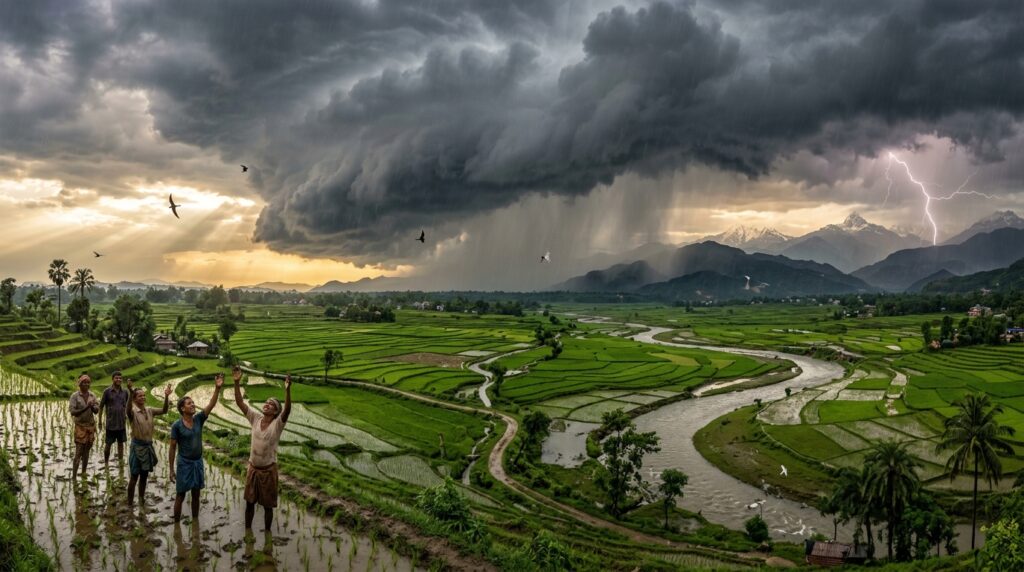
Then the wind changes. Dark clouds gather on the horizon. A cool breeze replaces the scorching air. The first raindrops strike the dry earth, releasing the unforgettable fragrance of petrichor. Birds begin to sing. Farmers look to the sky with hope. Rivers awaken, forests turn green, and life seems to start all over again. That is the magic of the monsoon.
For nearly half of the world’s population, the monsoon is much more than a weather event. It is a season that determines harvests, drinking water, electricity generation, biodiversity, public health, and the economies of dozens of countries. Entire civilizations have flourished because seasonal rains arrived at the right time.
Yet the monsoon is changing.
Scientists across the world are observing stronger cloudbursts, more destructive floods, longer dry spells, and increasingly unpredictable rainfall patterns. Climate change is altering one of Earth’s most important natural systems, making it essential for governments, farmers, businesses, and families to understand how monsoons work and how they are evolving.
This article combines with current scientific understanding to provide a comprehensive overview of monsoons for readers around the world. It explores their formation, importance, influence on ecosystems and human life, the challenges posed by climate change, and practical ways to stay safe and prepared, including regional monsoon patterns, cultural importance, safety, home preparation, travel, and myths, which are expanded here with updated context and evidence.
What Is a Monsoon?
Many people think a monsoon simply means heavy rain. That is one of the biggest misconceptions.
A monsoon is actually a seasonal reversal of wind patterns caused by differences in how quickly land and oceans heat and cool. Rain is the result of this large-scale shift in atmospheric circulation, not its definition.
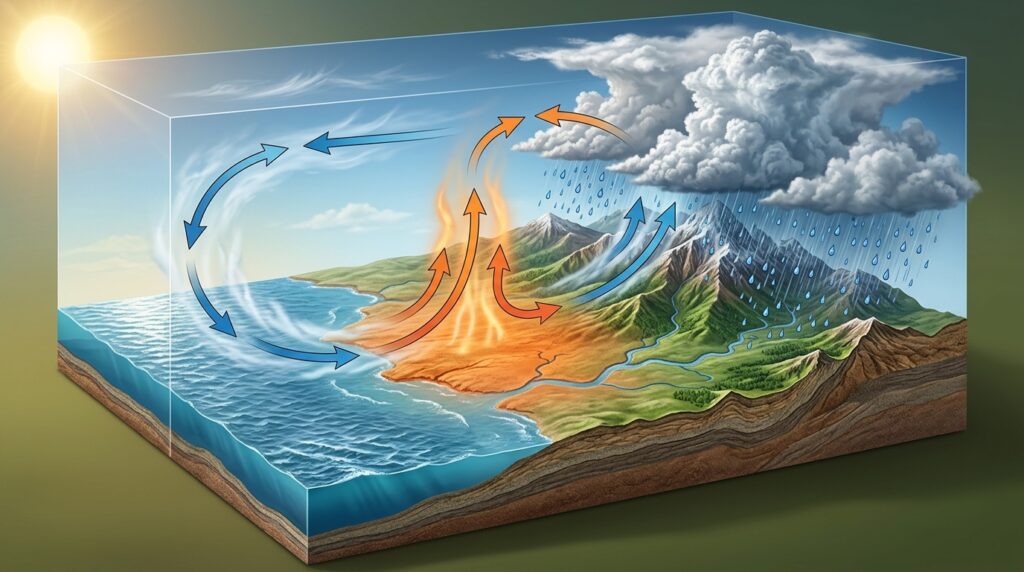
During summer, land heats much faster than nearby oceans. As the ground becomes hotter, warm air rises and creates a region of low atmospheric pressure. Cooler, moisture-rich air from the surrounding oceans rushes inland to replace it. As this moist air rises over mountains and warmer land, it cools, condenses into clouds, and produces widespread rainfall.
When winter arrives, the process reverses. Land cools more rapidly than the ocean, creating higher pressure over the continents. Winds then flow from land toward the sea, bringing much drier conditions to many monsoon regions. This remarkable seasonal cycle has repeated itself for thousands of years and remains one of the most important drivers of Earth’s climate.
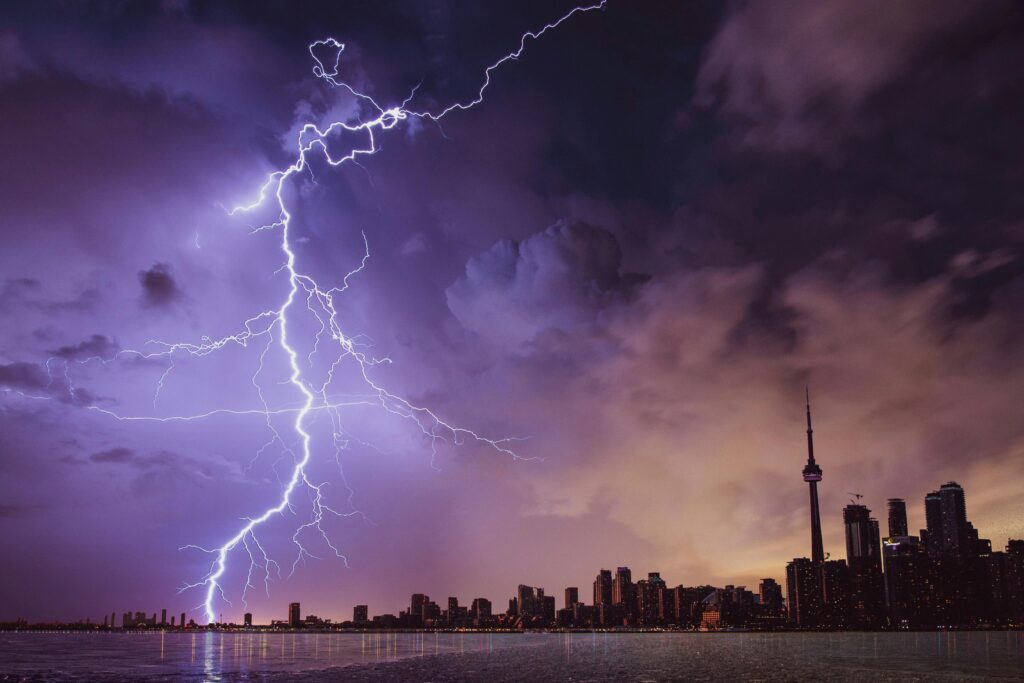
Did You Know?
Nearly half of the world’s population lives in regions influenced by monsoon systems. Seasonal rainfall supports agriculture, drinking water, hydropower generation, and ecosystems across Asia, Africa, Australia, and parts of the Americas.
The Science Behind the Monsoon
Although monsoons appear simple, they are driven by several powerful natural systems working together.
1. Uneven Heating of Land and Ocean
Land surfaces warm much faster than oceans because they absorb and release heat differently. As temperatures rise over land, hot air becomes lighter and begins to rise. This creates an area of low pressure. The relatively cooler ocean maintains higher pressure, causing moist ocean air to flow inland. This continuous movement of moisture forms the foundation of the summer monsoon.
2. Moisture Loaded Air
Warm air can hold enormous amounts of water vapor. When this humid air reaches cooler temperatures or higher elevations, the moisture condenses into clouds. As the droplets combine and become heavier, rain begins to fall. This process explains why coastal regions and mountain ranges often receive the heaviest rainfall.
3. Mountains Make the Rain Stronger
Mountain ranges play a critical role in shaping rainfall. One of the world’s best examples is the Himalayas. These towering mountains act as a natural barrier, preventing moisture-laden winds from moving farther north. Instead, the air is forced upward, cools rapidly, and produces intense rainfall across large parts of South Asia. Without the Himalayas, the South Asian monsoon would be dramatically weaker.
4. The Jet Stream
High above Earth, powerful rivers of air called jet streams influence where storms develop and how monsoon systems evolve. Even slight shifts in these fast-moving air currents can delay the arrival of seasonal rains or intensify rainfall in certain regions. Meteorologists closely monitor jet streams because they are among the best indicators of seasonal weather patterns.
5. The Intertropical Convergence Zone (ITCZ)
Near the equator lies a moving belt of clouds known as the Intertropical Convergence Zone (ITCZ). As the Sun’s position changes throughout the year, this zone also moves north and south. The ITCZ helps steer tropical moisture into monsoon regions and plays a major role in determining where heavy rainfall occurs.
Why Every Drop Matters
Rainfall from monsoons is much more than a seasonal event. It replenishes rivers that supply drinking water to millions of people. It refills underground aquifers that communities depend on during dry months. It irrigates farmland that produces rice, wheat, sugarcane, maize, cotton, fruits, and vegetables. It supports forests that absorb carbon dioxide and regulate Earth’s climate. It powers hydroelectric dams that generate renewable electricity.
It sustains wetlands, fisheries, migratory birds, amphibians, insects, and countless other forms of life. Without reliable monsoon rainfall, food prices rise, water shortages intensify, ecosystems suffer, and economies weaken. In many parts of the world, the success or failure of a monsoon season affects millions of livelihoods.
Quote to Remember
“A civilization’s future is often written in its water. Few natural events shape that future more profoundly than the monsoon.”
Monsoons Are Not Just an Asian Story
Although South Asia is often associated with monsoons, seasonal wind and rainfall systems influence many parts of the world. From the rice fields of Vietnam to the savannas of Africa, from northern Australia to parts of Mexico and the southwestern United States, monsoons help shape ecosystems, agriculture, water supplies, and local cultures. Each region experiences its own unique version of the monsoon, influenced by geography, mountains, oceans, and atmospheric circulation.
Global Monsoon Systems and Their Remarkable Influence on Civilization
“When the winds change, the destiny of nations often changes with them.”
The monsoon is one of Earth’s greatest natural phenomena, yet it is far from being the same everywhere. Every continent experiences the monsoon differently. Geography, mountain ranges, ocean temperatures, and atmospheric circulation all shape the amount of rainfall a region receives and the lives that depend on it. Although Asia is home to the world’s most powerful monsoon system, seasonal monsoon patterns also influence Africa, Australia, and even parts of North and South America.
Together, these weather systems affect nearly 3.5 to 4 billion people, making the monsoon one of the most influential climate systems on our planet.
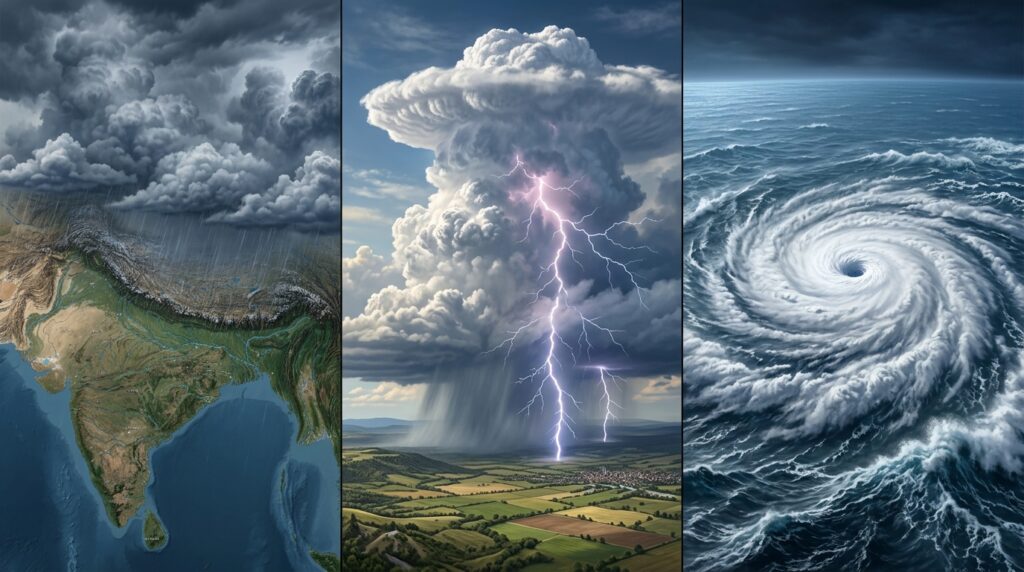
A Journey Around the World’s Monsoons
Imagine looking at Earth from space. You would notice enormous rivers of moist air moving from oceans toward continents as the seasons change. These invisible highways carry billions of tons of water vapor every day, feeding forests, rivers, lakes, wetlands, farms, and cities. Each region tells a different story.
South Asia: The World’s Largest Monsoon System
No region depends on the monsoon more than South Asia. Countries including India, Pakistan, Bangladesh, Nepal, Bhutan, Sri Lanka, and the Maldives eagerly await the arrival of seasonal rains every year.
Why Is South Asia So Important?
Nearly two billion people depend directly or indirectly on the South Asian monsoon. The seasonal rains influence:
- Agriculture
- Drinking water
- Hydroelectric power
- Fisheries
- Transportation
- Food prices
- Economic growth
In many countries, a delayed or weakened monsoon can affect national GDP because agriculture still supports millions of livelihoods. Rice, wheat, cotton, sugarcane, tea, mangoes, and countless other crops rely heavily on timely rainfall.
The Himalayas: Nature’s Giant Rain Wall
The Himalayas are not merely the world’s highest mountains. They function as an enormous atmospheric barrier. When moisture-laden winds travel north from the Arabian Sea and the Bay of Bengal, the mountains force this air upward. As the air rises, it cools rapidly. Clouds form. Rain begins. Without the Himalayas, much of northern India, Pakistan, Nepal, and Bangladesh would receive significantly less rainfall.
This remarkable interaction between mountains and atmosphere has shaped civilization for thousands of years.
Did You Know?
The city of Mawsynram in northeastern India receives some of the highest annual rainfall on Earth, often exceeding 11,000 millimeters (433 inches) because moist monsoon winds are forced upward by surrounding hills.
Pakistan and the Monsoon
Pakistan experiences a fascinating blend of weather systems. The summer monsoon usually enters through the southeast before gradually moving northward. Punjab, Azad Kashmir, Islamabad, Khyber Pakhtunkhwa, Gilgit-Baltistan, and parts of Balochistan receive varying amounts of rainfall depending on atmospheric conditions. The northern mountains often experience intense rainfall that feeds glaciers, rivers, and reservoirs.
However, climate change has increased the likelihood of:
- Flash floods
- Urban flooding
- Landslides
- Glacial lake outburst floods (GLOFs)
The devastating floods of recent years have demonstrated that while monsoons sustain life, extreme rainfall can also threaten lives, infrastructure, agriculture, and national economies.
India: Agriculture’s Lifeline
Few countries depend on rainfall as much as India. Nearly half of India’s cultivated farmland still relies primarily on rainfall rather than irrigation. A healthy monsoon supports:
- Rice production
- Wheat cultivation
- Sugarcane
- Cotton
- Tea plantations
- Fruit orchards
Conversely, weak rainfall can reduce harvests, increase food prices, and place enormous pressure on water supplies. For millions of farmers, the first monsoon clouds symbolize hope.
Bangladesh: Living With Water
Bangladesh has learned to coexist with water for centuries. The country receives rainfall from the South Asian monsoon while also collecting runoff from the mighty Ganges, Brahmaputra, and Meghna river systems. Although seasonal flooding replenishes fertile farmland, excessive rainfall can also displace communities and damage crops. Today, Bangladesh is recognized globally for innovative flood warning systems and community-based climate adaptation.
Nepal and Bhutan
Mountain landscapes create unique weather patterns. Steep valleys can receive extraordinary rainfall while nearby regions remain comparatively dry. Monsoon rains replenish rivers that generate hydroelectric power, one of the most valuable natural resources in both countries.
Sri Lanka
Sri Lanka experiences two distinct monsoon seasons because of its location in the Indian Ocean. This allows different regions of the island to receive rainfall at different times of the year. Tea plantations, tropical forests, reservoirs, and wildlife reserves all depend on these seasonal rains.
Southeast Asia: Rain That Feeds Nations
Stretching from Myanmar to Vietnam and Indonesia, Southeast Asia experiences one of the world’s richest monsoon climates. The countries such as Vietnam, Thailand, Cambodia, Laos, and parts of China receive seasonal monsoon rainfall similar to South Asia. Countries include:
- Thailand
- Vietnam
- Cambodia
- Laos
- Myanmar
- Malaysia
- Indonesia
- Philippines
Rice Bowl of the World
Many of these countries rank among the world’s largest rice producers. Rice requires abundant water during much of its growing season. Reliable monsoon rainfall helps feed hundreds of millions of people across Asia and beyond. Without seasonal rains, global food supplies would look very different.
Tropical Forests Flourish
Monsoon rains also nourish:
- Mangrove forests
- Rainforests
- Coral reef ecosystems
- Freshwater wetlands
These habitats support thousands of species found nowhere else on Earth.
East Asia
China, Japan, South Korea, and Taiwan experience seasonal rainfall influenced by the East Asian monsoon. Unlike the South Asian monsoon, this system is shaped by complex interactions involving the Pacific Ocean, Siberian air masses, and changing atmospheric circulation. These rains support agriculture, drinking water supplies, and hydroelectric generation while also increasing the risk of flooding and landslides.
Australia: A Different Calendar
Australia experiences its monsoon at the opposite time of year. Northern Australia receives monsoon rainfall roughly between December and February. Northern Australia transforms dramatically during the wet season. Dry landscapes suddenly burst into life. Rivers overflow.Wetlands expand. Millions of birds migrate into the region. Fish breeding increases. Crocodiles become more active. The entire ecosystem responds to the arrival of seasonal rains.
Did You Know?
Some Australian rivers remain nearly dry for months before expanding into vast waterways within days after heavy monsoon rainfall.
Africa’s Life Giving Monsoon
Many people are surprised to learn that Africa also experiences powerful monsoon systems. The West African Monsoon influences countries including:
- Senegal
- Mali
- Burkina Faso
- Niger
- Nigeria
- Chad
The Sahel region south of the Sahara Desert as a classic monsoon area. For communities living in the Sahel, rainfall determines whether grazing lands flourish or disappear. Livestock, crops, and drinking water all depend on these seasonal rains. A delayed rainy season can affect millions of people.
North American Monsoon
Few people realize that parts of North America also experience a true monsoon. The North American Monsoon affects:
- Arizona
- New Mexico
- Northwestern Mexico
The monsoon patterns also occur in parts of North America, although they are generally weaker than those in Asia. Summer thunderstorms provide much-needed rainfall after months of intense desert heat. These storms often produce spectacular lightning displays across desert landscapes. However, they can also trigger dangerous flash floods in normally dry riverbeds known as arroyos.
South America
Although the Amazon is famous for year-round rainfall, seasonal monsoon circulation strongly influences much of tropical South America. The rainy season supports:
- The Amazon Rainforest
- Pantanal wetlands
- Agriculture
- Freshwater fisheries
These ecosystems store enormous quantities of carbon, helping regulate Earth’s climate.
Culture, Civilization, and the Monsoon
Long before satellites and weather forecasts existed, civilizations celebrated the arrival of seasonal rains. The agricultural traditions, festivals such as Onam and Teej, water festivals in Southeast Asia, rain dances in Africa, and indigenous ceremonies in South America. Across the world, monsoons have inspired:
- Poetry
- Music
- Literature
- Architecture
- Religious festivals
- Traditional farming practices
Many ancient calendars were built around the expected arrival of seasonal rains. Even today, millions of people celebrate the first rainfall with joy because it represents hope, prosperity, and renewal.
Quote
“Long before modern science explained the monsoon, humanity understood its greatest lesson: water is life.”
Amazing Monsoon Facts
Did You Know?
☔ Nearly half of humanity depends directly or indirectly on seasonal monsoon rainfall.
🌾 Around half of the world’s rice production occurs in monsoon-influenced regions.
🐸 Thousands of amphibian species begin breeding immediately after seasonal rains arrive.
🌳 Monsoon forests absorb vast amounts of atmospheric carbon, helping slow global warming.
⚡ A single thunderstorm can release energy comparable to several atomic bombs, although spread over a large area and time.
🌍 Monsoon systems connect oceans, forests, mountains, rivers, wildlife, agriculture, and human civilization into one of Earth’s most remarkable natural cycles.
Climate Change and the Future of the Monsoon
“Climate change is not creating the monsoon. It is rewriting its rhythm.”
For thousands of years, people could predict the arrival of the monsoon with remarkable confidence. Farmers prepared their fields, rivers rose on schedule, and ecosystems adapted to familiar seasonal cycles. Today, that certainty is fading.
Across the globe, scientists are observing monsoons that are becoming increasingly erratic. In some places, the rains arrive weeks later than expected. Elsewhere, months’ worth of rainfall can fall within just a few days. Some regions experience devastating floods, while neighboring areas suffer prolonged drought.
The monsoon has always been dynamic. However, human-driven climate change is amplifying its extremes. Understanding these changes is no longer just a scientific pursuit. It has become essential for food security, water management, disaster preparedness, public health, and economic stability.
Is Climate Change Really Affecting the Monsoon?
The short answer is yes, but not in the same way everywhere. Scientists have found strong evidence that rising global temperatures are influencing:
- Rainfall intensity
- Rainfall distribution
- Heat waves
- Humidity
- Storm frequency
- Flash floods
- Drought cycles
Interestingly, climate change does not necessarily mean every place will receive more rain. Instead, it often means rainfall becomes less predictable. Some regions experience fewer rainy days but much heavier rainfall during those days. Others may endure long dry periods followed by sudden cloudbursts capable of causing catastrophic flooding.
This shift creates enormous challenges for agriculture, water management, and disaster planning.
Why a Warmer Planet Produces Heavier Rain
One of the most important discoveries in climate science is surprisingly simple. Warm air can hold more water vapor than cool air. As Earth’s average temperature increases, the atmosphere stores more moisture. Scientists estimate that the atmosphere can hold approximately 7 percent more water vapor for every 1°C increase in temperature.
Think of the atmosphere as a giant sponge. A larger sponge absorbs more water. When it eventually releases that water, rainfall can become much heavier. This is one reason why intense rainfall events are increasing in many parts of the world.
Did You Know?
Many of the world’s most destructive floods during the last two decades occurred after exceptionally warm ocean temperatures increased the amount of moisture available to storms.
When Too Much Rain Falls Too Quickly
Heavy rainfall is not always beneficial. If rain falls gradually, much of it infiltrates the soil. Groundwater is replenished.Reservoirs fill steadily. Plants absorb moisture. However, when enormous amounts of rain fall within a few hours, the land cannot absorb water quickly enough. Instead, water rushes across the surface.
The result can be:
- Flash floods
- Landslides
- Bridge failures
- Urban flooding
- Soil erosion
- Crop destruction
Ironically, communities experiencing severe flooding may still face water shortages weeks later because most of the water simply flows away instead of replenishing groundwater.
The Growing Threat of Cloudbursts
Cloudbursts have become increasingly common in many mountainous regions. A cloudburst occurs when an extremely intense volume of rainfall falls over a relatively small area within a short period. These events are especially dangerous because they often arrive with little warning.
Mountain valleys can rapidly transform into raging torrents carrying rocks, mud, and debris.Communities located near steep slopes are particularly vulnerable. Scientists are actively studying whether warmer air and changing atmospheric circulation are increasing the likelihood of such extreme rainfall events.
El Niño and La Niña: Nature’s Climate Switches
Not every unusual monsoon is caused by climate change alone. Two natural climate patterns also influence global weather.
El Niño
El Niño develops when surface waters in the central and eastern Pacific Ocean become unusually warm. This seemingly distant event influences weather around the world. In many monsoon regions, El Niño is associated with:
- Reduced rainfall
- Delayed monsoon onset
- Higher temperatures
- Increased drought risk
- Lower crop yields
However, its effects vary by region and year.
La Niña
La Niña is generally the opposite phase. During La Niña, Pacific Ocean temperatures become cooler than average. Many monsoon regions experience:
- Stronger rainfall
- Increased flooding
- More active tropical weather
Again, regional impacts differ, but La Niña often enhances seasonal rainfall in South Asia and Australia.
Climate Change Meets Natural Variability
Scientists now face an important question. How will global warming interact with El Niño and La Niña? Research suggests that climate change may intensify the impacts of these natural cycles, creating more frequent extremes rather than simply increasing average rainfall.
The Indian Ocean Is Also Changing
While much attention focuses on the Pacific Ocean, the Indian Ocean has become another major area of scientific research. Ocean temperatures in the Indian Ocean have risen significantly over recent decades. These warmer waters provide additional moisture to the atmosphere. They also influence:
- Storm formation
- Seasonal rainfall
- Cyclones
- Monsoon timing
Scientists are carefully monitoring changes in the Indian Ocean Dipole, another climate pattern that can strengthen or weaken monsoon rainfall across South Asia and East Africa.
Pakistan: A Frontline Nation
Few countries illustrate the changing monsoon more clearly than Pakistan. The importance of monsoon rains for agriculture and water resources while also the need for preparedness during severe weather. Recent years have shown how quickly seasonal rains can become destructive. Heavy rainfall has contributed to:
- River flooding
- Urban flooding
- Landslides
- Damage to roads and bridges
- Agricultural losses
- Displacement of communities
At the same time, some regions continue to struggle with water scarcity during other parts of the year. This contrast highlights one of the greatest challenges of modern climate change. The problem is increasingly water management, not simply the total amount of rainfall.
Cities Are Becoming More Vulnerable
Modern cities create unique flood risks. Concrete roads, buildings, and parking areas prevent rainwater from soaking into the soil. Instead, rainfall rapidly flows into drainage systems. When drainage systems become overwhelmed, streets quickly flood.Rapid urbanization has increased this problem in many cities around the world. Effective urban planning now includes:
- Green spaces
- Rain gardens
- Permeable pavements
- Improved drainage networks
- Flood retention areas
These solutions help cities adapt to changing rainfall patterns.
Agriculture Faces New Challenges
Farmers have always adapted to changing weather. However, today’s changes are occurring faster than many traditional practices were designed to handle. Unpredictable rainfall creates uncertainty about:
- Planting dates
- Harvest timing
- Irrigation schedules
- Fertilizer application
- Pest management
Fortunately, new technologies are helping. Farmers increasingly use:
- Satellite imagery
- Smartphone weather forecasts
- Soil moisture sensors
- Artificial intelligence
- Precision agriculture
These tools allow better decisions even when rainfall becomes less predictable.
Quote
“The farmer has always watched the sky. Today, satellites help interpret what the clouds may bring tomorrow.”
Artificial Intelligence Is Changing Weather Forecasting
Weather forecasting has advanced dramatically during the past decade. Modern forecasting combines:
- Weather satellites
- Ocean buoys
- Doppler radar
- Supercomputers
- Artificial intelligence
- Machine learning
These systems analyze billions of observations every day. As a result, forecasts are becoming more accurate, allowing governments and communities additional time to prepare for severe weather. Although no forecast is perfect, earlier warnings save countless lives each year.
Can We Stop Extreme Rainfall?
We cannot stop the weather. However, we can reduce risk. Scientists emphasize two complementary strategies.
Mitigation
Reducing greenhouse gas emissions helps slow long-term climate change. Examples include:
- Renewable energy
- Energy efficiency
- Sustainable transportation
- Forest conservation
Adaptation
Communities must also prepare for weather that is already changing. Adaptation includes:
- Better flood forecasting
- Stronger infrastructure
- Climate-smart agriculture
- Improved drainage systems
- Wetland restoration
- Early warning systems
- Community education
The combination of mitigation and adaptation offers the greatest opportunity to reduce future losses.
Did You Know?
Healthy wetlands act like giant natural sponges. They absorb excess rainfall, reduce flood peaks, recharge groundwater, improve water quality, and provide habitat for thousands of species. Protecting wetlands is one of the most cost-effective natural flood defenses available.
Looking Ahead
Scientists agree on one important point.
The future monsoon will not simply be wetter or drier. It will likely become more variable. Communities that improve forecasting, strengthen infrastructure, protect natural ecosystems, and use water wisely will be better prepared for whatever the future brings. The monsoon has always shaped civilization. Now, humanity must learn to adapt as the monsoon itself evolves.
Why the Monsoon Is the Lifeblood of Our Planet
“Every civilization is, in one way or another, a story about water.”
Imagine waking up one morning to discover that the rivers have stopped flowing. Reservoirs are shrinking.Groundwater is disappearing. Fields are turning brown. Forests are becoming silent. Wildlife is migrating in search of water. Electricity production is slowing. Food prices are rising. Within weeks, entire economies would begin to feel the consequences.
That is why the monsoon is much more than a rainy season. It is one of Earth’s greatest life-support systems.
Monsoons replenish water sources, support agriculture, and shape ecosystems. Modern science confirms that these seasonal rains also influence biodiversity, energy production, freshwater availability, and regional economies.
Water: The World’s Most Precious Resource
Fresh water represents only a tiny fraction of all the water on Earth. Much of that freshwater depends directly or indirectly on seasonal rainfall. Every monsoon helps to:
- Refill rivers
- Recharge lakes
- Replenish underground aquifers
- Restore wetlands
- Maintain reservoirs
- Sustain drinking water supplies
Without these seasonal rains, billions of people would face severe water shortages.
Groundwater: The Hidden Reservoir Beneath Our Feet
Many people rarely think about groundwater because they cannot see it. Yet it provides drinking water for billions of people around the world. When rain falls gently over forests, fields, and open land, part of that water slowly seeps through the soil. Eventually it reaches underground aquifers. These natural reservoirs become vital during dry seasons.
Unfortunately, rapid urbanization has reduced this natural recharge. Concrete roads, parking lots, and buildings prevent rainwater from soaking into the ground. Instead, valuable freshwater often flows directly into drains and rivers before it can replenish underground supplies.
Did You Know?
Some groundwater being pumped today may have taken decades or even centuries to accumulate beneath the Earth’s surface.
Rivers: Nature’s Highways
Nearly every great civilization developed near dependable rivers. Those rivers exist because rainfall continues to replenish them. The monsoon sustains famous river systems including:
- The Indus
- The Ganges
- The Brahmaputra
- The Mekong
- The Irrawaddy
- The Yangtze
- The Niger
- The Zambezi
These rivers provide:
- Drinking water
- Irrigation
- Transportation
- Fisheries
- Hydroelectric power
- Wildlife habitat
When monsoon rainfall changes significantly, entire river systems respond.
Agriculture: Feeding Nearly Half the World
Few natural events influence food production as much as the monsoon. Modern agriculture continues to rely heavily on these seasonal rains. Major crops benefiting from monsoon rainfall include:
- Rice
- Wheat
- Maize
- Sugarcane
- Cotton
- Tea
- Coffee
- Mangoes
- Bananas
- Jackfruit
- Guava
- Litchi
A healthy monsoon often means:
- Better harvests
- Lower food prices
- Improved rural incomes
- Greater food security
A failed monsoon can produce the opposite effect.
Farmers Understand Nature Better Than Anyone
For centuries, farmers have watched:
- Wind direction
- Cloud formation
- Bird behavior
- Soil moisture
- Humidity
- Temperature
Long before satellites existed, farming communities developed remarkable knowledge of seasonal weather patterns. Today, traditional wisdom increasingly works alongside modern technology. Farmers now use:
- Satellite forecasts
- Weather apps
- Soil sensors
- GPS-guided equipment
- Artificial intelligence
The partnership between ancient experience and modern science is transforming agriculture.
Hydroelectric Power: Rain That Becomes Electricity
Many people never associate rainfall with electricity. Yet millions of homes receive power generated by rivers fed by monsoon rains. Hydroelectric dams convert flowing water into renewable energy. Countries including:
- Pakistan
- India
- China
- Nepal
- Bhutan
- Vietnam
depend heavily on seasonal river flows. When reservoirs receive sufficient rainfall:
- Electricity production increases.
- Water storage improves.
- Irrigation becomes more reliable.
However, prolonged droughts or unpredictable rainfall can reduce power generation and place additional pressure on national energy systems.
Forests Come Alive
Walk through a forest before the rains. Leaves appear dusty. Streams become narrow. Many plants reduce growth. Wildlife conserves energy. Then the rains arrive. The transformation is astonishing. Fresh leaves emerge. Streams begin flowing again. Flowers bloom. Seeds germinate. Mushrooms appear almost overnight. Insects multiply. Birdsong becomes louder. The forest awakens.
Nature’s Recycling System
Rainfall performs another remarkable function. It helps recycle nutrients. Leaves decompose more quickly. Microorganisms become active. Organic matter enriches the soil. Healthy soil supports healthier forests. Healthy forests regulate rainfall. This creates a beautiful natural cycle.
Wildlife Waits for the Rain
Humans are not the only ones anticipating the monsoon. Entire ecosystems synchronize their life cycles with seasonal rainfall.
Frogs Begin Their Symphony
One of the first sounds after heavy rain is often the chorus of frogs. Many frog species spend much of the dry season hidden underground. When rainfall begins:
- They emerge.
- They breed.
- They lay eggs.
- Wetlands fill with life.
Their tadpoles become food for fish, birds, reptiles, and mammals.
Peacocks Dance for the Rain
Few images symbolize the monsoon better than a peacock displaying its magnificent feathers. The iconic sight of peacocks spreading their iridescent feathers during the rainy season. Although people often believe peacocks dance because it is raining, the display is actually part of their courtship behavior. The rainy season provides abundant food and favorable conditions for raising chicks, making it an ideal breeding season.
Rain and romance simply arrive together.
Butterflies Fill the Air
After rainfall, flowering plants flourish. Butterflies respond quickly. They pollinate flowers while feeding on nectar. Their increased activity supports entire ecosystems.
Fish Begin Their Journeys
Many freshwater fish use rising rivers as migration signals. Flooded riverbanks create ideal breeding habitats. Young fish find abundant food among newly submerged vegetation. Healthy fisheries depend on these natural cycles.
Did You Know?
Some fish species can detect tiny changes in water flow and pressure long before humans notice seasonal flooding.
Wetlands: Nature’s Silent Heroes
Wetlands rarely receive the attention they deserve. Yet they are among the planet’s most valuable ecosystems. They:
- Store floodwater
- Filter pollutants
- Recharge groundwater
- Support fisheries
- Protect biodiversity
- Capture carbon
During the monsoon, wetlands expand dramatically. They become nurseries for fish, amphibians, insects, reptiles, and birds. Protecting wetlands is often far less expensive than building artificial flood-control structures.
The Beautiful Mystery of Petrichor
Have you ever noticed the wonderful smell after the first rain? Scientists call this fragrance petrichor. It is produced when rain releases plant oils and a natural compound called geosmin, created by soil-dwelling microorganisms. Humans are remarkably sensitive to geosmin. Some researchers believe our ancestors evolved to recognize this scent because it signaled the arrival of fresh water after dry periods. For many people, petrichor is one of the most comforting aromas in nature.
Quote
“Before the rain feeds the rivers, it first awakens the human heart.”
Monsoon and Human Civilization
History shows that successful civilizations rarely developed by accident. They flourished where dependable water existed.
Seasonal rainfall influenced:
- Ancient settlements
- Trade routes
- Religious traditions
- Architecture
- Festivals
- Food cultures
Different cultures celebrate the monsoon through agriculture, festivals, music, rituals, and traditional practices across Asia, Africa, and South America. Even today, millions celebrate the first rainfall with gratitude because it represents survival, prosperity, and hope.
Nature’s Perfect Balance
The monsoon reminds us of an important truth. Too little rain causes drought.Too much rain causes floods. Nature thrives through balance. As climate change disrupts this balance, understanding and respecting water becomes more important than ever. Every raindrop carries responsibility as well as renewal.
Did You Know?
Scientists estimate that forests influenced by seasonal rainfall remove billions of tons of carbon dioxide from the atmosphere over time, helping moderate Earth’s climate while providing habitat for countless species.
Monsoon, Human Health, and Well-Being
“The monsoon can be one of nature’s greatest healers, but only for those who understand how to live with it safely.”
For many people, the arrival of the first rain brings relief from months of exhausting heat. The air becomes cooler, trees regain their vibrant green color, and the sound of rainfall creates a sense of calm that poets, musicians, and writers have celebrated for centuries. Yet the same season that nourishes life can also increase the risk of infectious diseases, poor indoor air quality, flooding, food contamination, and accidents.
Understanding these risks allows us to enjoy the beauty of the rainy season while protecting our health and the health of our families.
Practical precautions for staying safe during the monsoon, including weather awareness, home preparation, travel safety, and hygiene. This section expands ideas with current public health guidance and scientific understanding.
Why Do We Feel Better When It Rains?
Many people notice an improvement in mood when the first monsoon showers arrive. There are several reasons. After prolonged heat, rainfall lowers air temperatures and reduces heat stress. Cooler weather makes outdoor activities more comfortable and improves sleep quality for many individuals. The sound of gentle rain can also have a calming effect.
Researchers studying natural soundscapes have found that rainfall, flowing water, and birdsong may help reduce stress and improve relaxation by masking unpleasant background noise. The smell of rain, known as petrichor, can also evoke pleasant memories and a feeling of renewal.
However, emotional responses vary from person to person. While many people enjoy rainy weather, others may experience seasonal mood changes or anxiety during periods of prolonged cloud cover.
Humidity: Friend and Challenge
One of the defining features of the monsoon is high humidity. Humidity refers to the amount of water vapor present in the air. Moderate humidity can prevent excessive dryness of the skin and respiratory passages. However, very high humidity creates several challenges. It reduces the body’s ability to cool itself through sweating. As a result, people may experience:
- Fatigue
- Excessive sweating
- Reduced physical performance
- Heat exhaustion
- Difficulty sleeping
Elderly individuals, infants, pregnant women, and people with heart or lung diseases require additional care during periods of high humidity.
Stay Hydrated
One common misconception is that people need less water during rainy weather. In reality, the body continues to lose water through breathing, sweating, and normal metabolic processes. Drink water regularly throughout the day, even if you do not feel particularly thirsty. Fresh fruits, vegetables, soups, and oral rehydration solutions can also help maintain proper hydration.
The Hidden Danger of Contaminated Water
Heavy rainfall can overwhelm drainage systems and contaminate drinking water. Floodwater often mixes with:
- Sewage
- Industrial waste
- Agricultural runoff
- Animal waste
As a result, outbreaks of waterborne diseases become more likely after flooding.
These illnesses may include:
- Cholera
- Typhoid fever
- Hepatitis A
- Gastroenteritis
- Dysentery
Simple precautions make a significant difference. Always drink safe water. If water quality is uncertain:
- Boil it.
- Filter it using appropriate systems.
- Use approved purification tablets when necessary.
Food Safety During the Monsoon
Warm temperatures combined with high humidity create ideal conditions for bacterial growth. Food spoils more quickly during the rainy season. To reduce risk:
- Eat freshly prepared meals whenever possible.
- Refrigerate leftovers promptly.
- Wash fruits and vegetables thoroughly.
- Avoid food that has remained uncovered for long periods.
- Ensure meat, poultry, and seafood are cooked completely.
Street food can be enjoyable, but choose vendors who maintain good hygiene practices.
Mosquitoes: Tiny Insects With a Big Impact
One of the greatest health challenges during the monsoon is the rapid increase in mosquito populations. Standing water left after rainfall becomes an ideal breeding ground. Mosquitoes can transmit diseases including:
- Dengue
- Malaria
- Chikungunya
- Zika virus in some regions
- West Nile virus in certain countries
Fortunately, prevention is highly effective.
Protect Yourself From Mosquitoes
Simple habits can significantly reduce risk. Remove standing water from:
- Flower pots
- Buckets
- Tires
- Roof gutters
- Water containers
Use:
- Window screens
- Mosquito nets
- Long-sleeved clothing
- Insect repellents approved by health authorities
Communities benefit greatly when everyone participates in mosquito control.
Did You Know?
A bottle cap filled with rainwater may contain enough water for mosquitoes to lay eggs. Small collections of standing water should never be ignored.
Respiratory Health
Many people believe respiratory illnesses increase simply because they become wet in the rain. The reality is more complex. Rain itself does not cause viral infections. However, several factors during the monsoon may contribute to illness:
- Crowded indoor environments
- Poor ventilation
- High humidity
- Mold growth
- Close contact with infected individuals
Practicing good hygiene remains one of the most effective ways to reduce respiratory infections.
Mold: The Invisible Household Threat
High humidity encourages mold growth inside homes. Mold often develops on:
- Walls
- Ceilings
- Carpets
- Curtains
- Wooden furniture
- Air-conditioning systems
Exposure to mold may trigger:
- Allergies
- Asthma attacks
- Sneezing
- Eye irritation
- Chronic coughing
Keep indoor spaces well ventilated. Repair water leaks promptly. Dry damp surfaces as quickly as possible.
Healthy Nutrition During the Monsoon
A balanced diet helps strengthen the immune system throughout the year. During the rainy season, emphasize foods rich in:
Vitamin C
Sources include:
- Oranges
- Guava
- Kiwi
- Strawberries
- Bell peppers
Vitamin C supports normal immune function and helps the body absorb iron.
Vitamin A
Good sources include:
- Carrots
- Sweet potatoes
- Spinach
- Pumpkin
- Mangoes
Vitamin A contributes to healthy vision and supports the body’s protective barriers.
Zinc
Foods rich in zinc include:
- Beans
- Lentils
- Chickpeas
- Pumpkin seeds
- Nuts
- Lean meat
Zinc plays an important role in normal immune function.
Protein
Protein helps repair body tissues and supports immune health.
Healthy options include:
- Eggs
- Fish
- Chicken
- Yogurt
- Lentils
- Beans
- Tofu
Seasonal Fruits and Vegetables
Several fruits associated with the rainy season, including jackfruit, litchi, and guava. Adding seasonal produce to your diet provides important vitamins, minerals, fiber, and antioxidants. Eating locally grown seasonal foods may also improve freshness and nutritional value.
Exercise During the Monsoon
Rain should not become an excuse for inactivity. Instead, adapt your routine. Good options include:
- Indoor walking
- Yoga
- Stretching
- Strength training
- Stationary cycling
- Dance workouts
If exercising outdoors:
- Avoid flooded areas.
- Stay away from rivers during heavy rainfall.
- Stop immediately if thunderstorms develop.
Lightning Safety
Lightning is one of nature’s most powerful hazards. Remember this simple rule:
When thunder roars, go indoors.
Never seek shelter beneath isolated trees.
Avoid:
- Open fields
- Metal fences
- Electrical poles
- Lakes
- Rivers
- Swimming pools
Wait at least 30 minutes after the last thunder before returning outdoors.
Mental Well-Being
Rain has inspired artists for thousands of years. The monsoon provides an excellent opportunity to slow down and reconnect with family, nature, and ourselves. Many people enjoy:
- Reading
- Gardening
- Photography
- Birdwatching
- Writing
- Painting
- Listening to music
Simple moments spent watching rainfall can become valuable opportunities for reflection and gratitude.
Quote
“The rain nourishes more than forests. It also refreshes the human spirit.”
Children During the Monsoon
Children naturally enjoy playing in the rain. Parents should encourage outdoor activity while maintaining sensible precautions. Teach children to:
- Avoid floodwater.
- Stay away from electrical wires.
- Wear appropriate footwear.
- Wash hands after outdoor play.
- Change into dry clothing promptly.
Your original article also emphasized electrical safety, childproofing, and household precautions that become especially important during the rainy season.
Older Adults Need Extra Care
Older adults may be more vulnerable to:
- Falls on slippery surfaces
- Heat stress
- Respiratory illness
- Dehydration
- Heart complications
Family members should check regularly on elderly relatives during periods of severe weather. Small acts of care can prevent serious health problems.
Did You Know?
Many injuries during the rainy season are caused not by the rain itself but by slips, falls, poor visibility, damaged roads, and contact with floodwater. Simple precautions save lives.
Living Well With the Monsoon
The rainy season is neither an enemy nor a guarantee of safety. It is a reminder that nature deserves both appreciation and respect. By practicing good hygiene, maintaining safe homes, staying informed about weather conditions, and supporting one another during emergencies, we can enjoy the beauty of the monsoon while reducing unnecessary risks. The healthiest communities are not those that avoid nature, but those that learn to live wisely alongside it.
Monsoon Myths vs. Scientific Facts
“Nature is extraordinary enough. It doesn’t need myths to become fascinating.”
Every rainy season brings a flood of advice. Some of it has been passed down through generations. Some of it comes from social media. Some of it is based on personal experience. While traditional knowledge often contains valuable wisdom, many common beliefs about the monsoon do not stand up to scientific scrutiny. Understanding the difference between myth and fact helps us make better decisions for our health, safety, and well-being.
Myth 1: Getting Wet in the Rain Causes a Cold
The Fact
Rain itself does not cause the common cold. Colds are caused by viruses, most commonly rhinoviruses. However, prolonged exposure to cold rain may temporarily reduce body temperature and encourage people to spend more time indoors, where viruses spread more easily through close contact.
What You Should Do
- Change into dry clothes promptly.
- Stay warm after getting soaked.
- Wash your hands frequently.
- Avoid close contact with people who are ill.
Myth 2: Rainwater Is Always Pure
The Fact
Rainwater begins as relatively clean water vapor. However, during its journey through the atmosphere it can collect:
- Dust
- Smoke
- Air pollutants
- Bacteria
- Bird droppings from rooftops
- Chemicals from roofing materials
Rainwater should not be considered safe for drinking unless it has been properly collected, filtered, and treated.
Myth 3: Lightning Never Strikes the Same Place Twice
The Fact
This is completely false. Lightning frequently strikes tall objects repeatedly. Skyscrapers, communication towers, and mountain peaks may be struck dozens of times during a single thunderstorm. The Empire State Building, for example, is struck by lightning many times every year.
Myth 4: Raincoats Are Unhealthy
The Fact
A clean raincoat protects you from prolonged exposure to rain and helps reduce heat loss after becoming wet. Cleaning raincoats regularly because dirt and moisture can accumulate on their surfaces. Modern breathable waterproof materials also reduce overheating compared with older designs.
Myth 5: You Cannot Get Sunburned During the Monsoon
The Fact
Ultraviolet (UV) radiation can penetrate clouds. Even on cloudy days, prolonged outdoor exposure may still damage the skin. If you spend extended periods outdoors:
- Wear sunscreen.
- Use protective clothing.
- Wear sunglasses.
Myth 6: Mosquitoes Breed Only in Dirty Water
The Fact
Many mosquito species prefer clean, stagnant water. Flower pots, buckets, roof gutters, bird baths, and discarded containers often become ideal breeding sites after rainfall. Removing standing water remains one of the most effective methods of mosquito control.
Did You Know?
Mosquitoes can complete their life cycle in surprisingly little water. Even small containers left outdoors can become breeding sites after only a few rainy days.
Myth 7: Heavy Rain Cleans All Air Pollution
The Fact
Rain removes many airborne particles and temporarily improves air quality. However, pollution quickly returns if emissions continue. Rain is a helpful natural cleaner, but it is not a permanent solution to air pollution.
Myth 8: Floodwater Is Safe If It Looks Clean
The Fact
Floodwater should always be considered contaminated. It may contain:
- Sewage
- Chemicals
- Sharp debris
- Live electrical hazards
- Harmful microorganisms
Never allow children to play in floodwater. Avoid driving or walking through flooded streets whenever possible.
Myth 9: Thunder Cannot Harm You If It Is Not Raining
The Fact
Lightning can strike several kilometers away from the center of a storm. If you can hear thunder, you are already close enough to be struck. Remember the simple rule:
When thunder roars, go indoors.
Myth 10: All Mushrooms Growing After Rain Are Edible
The Fact
Many mushrooms appear rapidly after rainfall. Some are delicious. Others are highly poisonous. Even experienced collectors sometimes make mistakes. Never eat wild mushrooms unless they have been positively identified by an expert.
Myth 11: Drinking Hot Tea Prevents Viral Infections
The Fact
Tea may provide comfort, warmth, and hydration. However, no tea can prevent viral infections. A healthy immune system depends on:
- Balanced nutrition
- Adequate sleep
- Vaccination where appropriate
- Good hygiene
- Regular physical activity
Myth 12: Cars Are Safe Everywhere During Lightning
The Fact
A fully enclosed metal vehicle generally provides excellent protection during lightning because the electrical current travels around the outside of the vehicle.
However:
- Do not touch metal parts inside.
- Avoid driving through flooded roads.
- Stay inside until the storm passes.
The danger during monsoon driving usually comes from poor visibility and flooding rather than lightning itself.
Myth 13: Every Flood Is Caused by Heavy Rain
The Fact
Floods can result from many factors:
- Dam failures
- Snowmelt
- Storm surges
- River overflow
- Poor drainage
- Urban development
- Blocked waterways
Heavy rainfall is only one possible cause.
Myth 14: Indoor Plants Cause Mold
The Fact
Indoor plants themselves are not responsible for mold. Poor ventilation and excessive indoor moisture are the real causes. Proper airflow and humidity control help keep homes healthy.
Myth 15: Climate Change Only Means More Rain
The Fact
Climate change is making weather more unpredictable, not simply wetter. Some places receive:
- More intense rainfall
- Longer droughts
- Stronger storms
- Delayed rainy seasons
Others may experience reduced annual rainfall. The key change is increasing variability.
The Wisdom Hidden in Traditional Knowledge
Not every traditional belief should be dismissed. Many practices developed through generations of careful observation. For example:
Farmers often noticed changes in:
- Wind direction
- Bird migration
- Insect activity
- Cloud formation
- Humidity
Long before satellites existed. Modern meteorology has shown that many of these observations have genuine scientific foundations. Traditional knowledge and modern science work best when they complement one another.
Quote
“Science explains the rain. Wisdom teaches us how to live with it.”
Practical Monsoon Health Checklist
Before the rainy season arrives, ask yourself:
✅ Is my drinking water safe?
✅ Are roof gutters clean?
✅ Have I removed standing water around my home?
✅ Is my first-aid kit complete?
✅ Do I have flashlights and spare batteries?
✅ Are emergency phone numbers available?
✅ Are electrical wires in good condition?
✅ Is my family familiar with evacuation routes?
Small preparations often prevent major problems.
Did You Know?
Insurance studies consistently show that households that prepare before severe weather experience significantly lower financial losses than those that react only after disasters occur. Preparedness is one of the most effective forms of resilience.
A Lesson From Every Storm
The monsoon reminds us that nature deserves respect, not fear. Most rainy seasons pass peacefully. When problems occur, they usually result from poor preparation, unsafe behavior, or inadequate infrastructure rather than the rain itself. Knowledge remains our best protection.
By replacing myths with evidence and combining scientific understanding with practical experience, individuals and communities become far more resilient. The rain has always been one of humanity’s greatest allies. Our responsibility is to understand it.
Practical Monsoon Preparedness and Safety Guide
“The best time to prepare for the next storm is while the sky is still clear.”
The monsoon has sustained humanity for thousands of years, but it also reminds us that nature demands respect. Every year, floods, lightning strikes, landslides, and waterborne diseases affect millions of people across the globe. Yet many of these losses can be prevented through planning, awareness, and simple precautions.
Preparedness is not about fearing the rain. It is about ensuring that families, homes, and communities remain safe while continuing to enjoy the many blessings of the season.
Valuable practical advice on home maintenance, emergency planning, electrical safety, and travel precautions. The following section expands recommendations with modern disaster preparedness practices while preserving their practical focus.
Why Preparation Matters
Natural disasters rarely become tragedies because of the weather alone. The greatest damage often occurs because of:
- Poor planning
- Weak infrastructure
- Blocked drainage systems
- Unsafe construction
- Lack of early warning
- Delayed evacuation
- Public unawareness
Communities that prepare before the rainy season consistently recover faster and suffer fewer losses. Preparation is an investment in safety.
Preparing Your Home Before the Monsoon
Just a few hours of maintenance before the rainy season can prevent weeks of expensive repairs.
Inspect the Roof
Check for:
- Missing roof tiles
- Cracks
- Loose sheets
- Water leakage
- Rusted fasteners
Repairing minor problems early is far less expensive than repairing water damage later.
Clean Gutters and Drains
Leaves, plastic bags, and debris frequently block rainwater. Blocked gutters can cause:
- Roof leaks
- Damp walls
- Foundation damage
- Mosquito breeding
- Indoor flooding
Clean them before heavy rains begin.
Protect Doors and Windows
Inspect:
- Window seals
- Door frames
- Weather stripping
Replace damaged seals to reduce water intrusion. If your area experiences frequent flooding, consider temporary flood barriers or sandbags for vulnerable entrances.
Trim Trees
Large branches hanging above:
- Homes
- Vehicles
- Power lines
should be professionally trimmed before storm season. Strong winds combined with saturated soil can cause trees to fall unexpectedly.
Electrical Safety
Electricity and water are a dangerous combination.
Before the rainy season:
✔ Inspect exposed wiring.
✔ Replace damaged electrical outlets.
✔ Ensure outdoor wiring is properly insulated.
✔ Install residual current devices (RCDs) where possible.
If flooding occurs:
- Never touch electrical equipment while standing in water.
- Switch off electricity only if it is safe to do so.
- Call qualified professionals before restoring power.
Turning off electricity when water enters the home and avoiding damaged wiring during storms. These remain essential safety practices.
Did You Know?
Many electrocution accidents during floods occur after the rain has stopped because damaged electrical systems remain energized.
Preparing an Emergency Kit
Every household should have an emergency kit that is easy to carry and accessible to all family members. Include:
Essential Documents
Keep waterproof copies of:
- Identification cards
- Passports
- Insurance policies
- Property documents
- Medical prescriptions
- Emergency contacts
Store digital backups in secure cloud storage whenever possible.
First Aid Supplies
Your kit should contain:
- Bandages
- Sterile gauze
- Antiseptic solution
- Pain relievers
- Prescription medicines
- Oral rehydration salts
- Thermometer
- Scissors
- Disposable gloves
Check expiration dates regularly.
Food and Water
Store enough supplies for at least 72 hours.
Choose foods that require little or no cooking.
Examples include:
- Bottled water
- Canned food
- Energy bars
- Dry fruits
- Nuts
- Peanut butter
- Crackers
Remember to include supplies for infants, elderly family members, and pets if needed.
Emergency Equipment
Useful items include:
- Flashlights
- Spare batteries
- Portable radio
- Phone chargers
- Power banks
- Multi-tool
- Waterproof matches
- Whistle
- Blankets
Recharge power banks before the rainy season begins.
Staying Informed
Weather forecasting has improved dramatically.
Make it a habit to:
- Follow official weather services.
- Enable emergency alerts on your phone.
- Monitor flood warnings.
- Listen to local authorities.
- Avoid relying solely on social media rumors.
Accurate information saves lives.
Safe Driving During the Monsoon
Road accidents increase significantly during heavy rainfall.
Reduced visibility, slippery roads, and standing water create dangerous conditions.
Before Driving
Check:
- Tire tread
- Brakes
- Windshield wipers
- Headlights
- Battery
- Emergency tools
While Driving
Drive slowly.
Increase the distance between vehicles.
Turn on headlights during heavy rain.
Avoid sudden braking.
Do not use cruise control on wet roads.
If visibility becomes extremely poor, safely pull over until conditions improve.
Never Drive Through Floodwater
This simple rule saves countless lives every year.
Floodwater may hide:
- Deep potholes
- Open drains
- Washed-out roads
- Sharp debris
- Live electrical cables
Even shallow moving water can sweep away vehicles.
Remember:
If you cannot determine the depth, do not attempt to cross.
Public Transportation
When using buses or trains:
- Allow extra travel time.
- Carry waterproof bags.
- Protect electronic devices.
- Wear footwear with good grip.
- Follow announcements regarding delays or route changes.
Patience is often the safest travel strategy during severe weather.
Air Travel
Heavy rain does not automatically cancel flights.
However, severe thunderstorms, poor visibility, and strong winds may cause:
- Delays
- Diversions
- Temporary airport closures
Check flight status before leaving home.
Keep essential medications and important documents in your carry-on luggage.
Mountain Travel
Mountain regions become especially hazardous during prolonged rainfall.
Risks include:
- Landslides
- Rockfalls
- Flash floods
- Road collapses
Avoid unnecessary travel to mountainous areas during official weather warnings.
If hiking:
- Inform someone of your route.
- Carry emergency supplies.
- Monitor weather updates continuously.
- Turn back if conditions deteriorate.
Nature will always be there another day.
Protecting Electronics
Water damage can destroy valuable devices within seconds.
Use:
- Waterproof bags
- Protective cases
- Dry storage containers
Never charge wet electronic devices.
Allow them to dry completely and seek professional inspection if necessary.
Protecting Your Vehicle
If possible:
- Park on higher ground.
- Avoid parking beneath large trees.
- Keep fuel levels above half a tank.
- Check tire pressure regularly.
After flooding:
Have brakes, engine components, and electrical systems inspected before normal use.
Caring for Pets During the Monsoon
Animals need protection too.
Provide:
- Clean drinking water
- Dry shelter
- Regular veterinary care
- Tick and flea prevention
- Safe indoor spaces during thunderstorms
Never leave pets tied outdoors during storms. Many animals become frightened by thunder and lightning. Comfort and reassurance make a significant difference.
Helping Older Adults and People With Disabilities
Emergency planning should include everyone. Ensure vulnerable family members have:
- Medications
- Medical equipment
- Emergency contact information
- Transportation plans
- Backup power if required for medical devices
Neighbors can play a vital role by checking on those living alone.
Community Preparedness
Strong communities recover faster. Neighborhoods can work together by:
- Clearing drainage systems
- Sharing emergency information
- Identifying vulnerable residents
- Organizing volunteer response teams
- Practicing evacuation plans
Prepared communities save lives before emergency responders arrive.
Quote
“Resilience begins long before the storm. It begins with neighbors who prepare together.”
Climate-Resilient Homes
As weather patterns become more extreme, architects and engineers are designing homes that better withstand heavy rainfall. Examples include:
- Raised foundations
- Rainwater harvesting systems
- Permeable driveways
- Green roofs
- Flood-resistant building materials
- Improved drainage around foundations
These features not only reduce flood damage but also improve long-term sustainability.
Rainwater Harvesting
Instead of allowing valuable rainwater to flow away, many households now collect it for non-drinking purposes such as:
- Gardening
- Cleaning
- Toilet flushing
- Irrigation
When designed correctly, rainwater harvesting helps conserve freshwater and reduces pressure on municipal water supplies. However, water intended for drinking must be properly treated and tested.
Did You Know?
A roof measuring 100 square meters (about 1,075 square feet) can collect thousands of liters of rainwater during a single rainy season, depending on local rainfall.
Preparing Children
Teach children simple safety rules:
✔ Never play in floodwater.
✔ Stay away from storm drains.
✔ Do not touch fallen electrical wires.
✔ Come indoors immediately when thunder is heard.
✔ Tell an adult if they notice rising water.
Practical education creates lifelong safety habits.
Every Family Needs an Emergency Plan
Ask these questions together:
- Where will we meet if separated?
- Who will contact relatives?
- Which evacuation route is safest?
- Where are emergency supplies stored?
- Which neighbor may need assistance?
Review your plan every year before the rainy season begins.
A Season to Respect, Not Fear
The monsoon is one of Earth’s greatest gifts. It nourishes forests, fills rivers, supports agriculture, and sustains billions of lives. With preparation, awareness, and cooperation, most monsoon hazards can be greatly reduced. Nature rewards those who respect its power. The rain does not choose whom to protect.
Preparation does.
Monsoon: Nature’s Greatest Symphony of Rain, Life, and Renewal
“The greatest inheritance we can leave future generations is not wealth, but clean water, healthy forests, and a stable climate.”
Throughout this journey, we have explored the remarkable science behind the monsoon, its influence on civilizations, its role in sustaining biodiversity, the health challenges it presents, and the growing impact of climate change. One message stands out clearly. The future of humanity is closely connected to the future of water.
The monsoon is not simply a seasonal weather event. It is a living system that connects the atmosphere, oceans, mountains, forests, rivers, wildlife, agriculture, and billions of people into one extraordinary cycle of life. Protecting this system is among the greatest responsibilities of our generation.
The Future of the World’s Monsoons
Climate scientists agree that the monsoon is unlikely to disappear. Instead, it is expected to become increasingly variable. Future generations may experience:
- More intense rainfall events
- Longer dry periods between storms
- Increased flash flooding
- Greater urban flooding
- Rising heat stress
- Changing agricultural calendars
- More frequent landslides
- Greater pressure on freshwater resources
This does not mean every year will be worse than the previous one. Rather, weather patterns are expected to become less predictable, making preparedness and resilience more important than ever.
Reasons for Hope
Despite these challenges, there are many reasons for optimism. Around the world, governments, scientists, engineers, farmers, and communities are working together to improve resilience. Modern technology now provides:
- More accurate weather forecasting
- Earlier flood warnings
- Satellite monitoring
- Artificial intelligence forecasting
- Improved irrigation systems
- Climate-smart agriculture
- Better emergency communication
Every improvement helps save lives.
What Can Individuals Do?
Protecting the monsoon begins with protecting water. Small actions performed by millions of people create enormous change.
Use Water Wisely
Simple habits include:
- Repair leaking taps.
- Install water-efficient fixtures.
- Turn off taps while brushing teeth.
- Reuse water where appropriate.
- Water gardens efficiently.
Saving water today protects supplies tomorrow.
Harvest Rainwater
Rainwater harvesting reduces pressure on freshwater resources. Collected rainwater may be used for:
- Gardening
- Washing vehicles
- Cleaning outdoor spaces
- Irrigation
Properly designed systems also reduce stormwater runoff.
Protect Trees
Forests influence rainfall patterns, reduce soil erosion, support wildlife, and improve water quality. Plant native trees whenever possible. Protect existing forests. Healthy forests strengthen healthy monsoons.
Reduce Pollution
Clean rivers begin with responsible communities.
Avoid dumping:
- Plastic waste
- Chemicals
- Motor oil
- Household waste
into drains, rivers, lakes, or wetlands. Everything entering waterways eventually affects ecosystems downstream.
Support Sustainable Agriculture
Consumers influence farming practices. Choosing sustainably produced food encourages:
- Healthy soils
- Efficient irrigation
- Reduced pollution
- Better biodiversity
Sustainable farming protects both people and nature.
Stay Informed
Reliable information is one of the strongest forms of disaster preparedness.
Follow:
- National weather services
- Disaster management agencies
- Local emergency authorities
Avoid spreading unverified information during severe weather events.
Accurate communication saves lives.
Water Is Everyone’s Responsibility
Water conservation is no longer solely the responsibility of governments. Businesses, schools, communities, and individuals all have important roles.Every drop saved today helps strengthen resilience tomorrow. As the global population continues to grow, responsible water management will become increasingly important.
Lessons the Monsoon Teaches Us
The monsoon offers lessons far beyond meteorology. It teaches patience. After months of drought, renewal arrives. It teaches balance. Too little rain brings hardship. Too much rain also brings hardship. It teaches gratitude. Every harvest, every flowing river, every forest, and every glass of clean water begins with rain.
Most importantly, it teaches humility.
Despite remarkable advances in science and technology, humanity still depends upon the natural systems that sustain life.
Quote
“The monsoon reminds us that every drop of rain connects the sky, the earth, and every living thing between them.”
Did You Know?
Scientists estimate that wetlands, forests, and healthy soils naturally store enormous amounts of freshwater after heavy rainfall. Protecting these ecosystems is often more cost-effective than constructing large flood-control structures.
Nature remains one of our greatest engineers.
Key Takeaways
✔ A monsoon is a seasonal reversal of wind patterns, not simply heavy rainfall.
✔ Nearly half of the world’s population depends directly or indirectly on monsoon rainfall.
✔ Monsoons sustain agriculture, biodiversity, freshwater supplies, and renewable energy.
✔ Climate change is making rainfall increasingly unpredictable.
✔ Healthy forests and wetlands reduce flood risks.
✔ Modern forecasting systems save lives through earlier warnings.
✔ Every individual can contribute through water conservation and environmental stewardship.
Frequently Asked Questions (FAQs)
1. What is the difference between a monsoon and ordinary rainfall?
A monsoon is a large-scale seasonal shift in wind direction caused by differences in heating between land and oceans. Rainfall is only one consequence of this atmospheric circulation. Ordinary rain may occur at any time of the year and does not necessarily involve seasonal wind reversal.
2. Why is the monsoon becoming more unpredictable?
Scientific evidence indicates that rising global temperatures are increasing atmospheric moisture while changing ocean temperatures and atmospheric circulation. These changes can lead to heavier downpours, longer dry spells, delayed monsoon onset, and more frequent extreme weather events.
3. Which countries depend most on the monsoon?
Monsoon systems influence many regions, including Pakistan, India, Bangladesh, Nepal, Bhutan, Sri Lanka, China, Thailand, Vietnam, Myanmar, Malaysia, Indonesia, northern Australia, parts of Africa, Mexico, and the southwestern United States.
4. Is rainwater safe to drink?
Rainwater may become contaminated by airborne pollutants, roof materials, microorganisms, or animal waste. It should be properly collected, filtered, and treated before being used as drinking water.
5. How can families prepare for the monsoon?
Families should inspect roofs and drainage systems, prepare emergency kits, monitor weather forecasts, protect important documents, eliminate standing water, maintain electrical safety, and develop an emergency communication plan.
6. How can individuals help protect water resources?
Conserving water, harvesting rainwater, protecting forests, reducing pollution, supporting sustainable agriculture, and preserving wetlands all contribute to healthier water systems and greater resilience to climate change.
Final Thoughts
Every year, the arrival of the monsoon transforms landscapes across the globe. Dry fields become fertile. Rivers swell with fresh water. Forests burst into vibrant shades of green. Wildlife begins new life cycles. Farmers sow seeds with renewed hope.
Yet the monsoon also reminds us that nature’s gifts come with responsibilities.
As climate change reshapes weather patterns, our response must be guided by science, preparedness, cooperation, and respect for the environment.
The future of the monsoon will depend not only on atmospheric processes but also on the choices humanity makes today.
Every tree we protect, every wetland we restore, every drop of water we conserve, and every informed decision we make contributes to a more resilient future.
The next time you hear raindrops falling on your roof or breathe in the comforting fragrance of petrichor, remember that you are witnessing one of Earth’s oldest and most remarkable natural cycles.
The monsoon is more than rain.
It is the rhythm of life itself.
“Rain does not ask who deserves it. It falls for everyone. Our responsibility is to ensure that future generations inherit a world where its gift continues to sustain life.”
References
International Organizations
- Intergovernmental Panel on Climate Change (IPCC). (2023). Climate Change 2023: Synthesis Report.
- World Meteorological Organization (WMO). (2024). State of the Global Climate.
- World Health Organization (WHO). Floods and Health.
- Food and Agriculture Organization (FAO). Climate Change and Food Security.
- United Nations Environment Programme (UNEP). Adaptation Gap Report.
Scientific Agencies
- NASA Earth Observatory. Monsoons and Global Atmospheric Circulation.
- NOAA Climate.gov. Understanding Monsoons.
- United States Geological Survey (USGS). Flood Hazards.
Peer-Reviewed Journals
- Nature Climate Change
- Nature Reviews Earth & Environment
- The Lancet Planetary Health
- Journal of Climate
- Bulletin of the American Meteorological Society
- Weather and Climate Extremes
Beautiful Closing
“The first drop of rain never falls alone. It carries with it the hopes of farmers, the songs of birds, the fragrance of forests, the rhythm of rivers, and the promise of another season of life.”
Water is life.
The rivers that nourish our cities, the forests that cleanse our air, the crops that feed our families, and the countless species that share our planet all depend, directly or indirectly, on this extraordinary seasonal rhythm.
As our climate continues to change, the future of the monsoon will increasingly depend on the choices we make today.
By conserving water, protecting forests, restoring wetlands, reducing pollution, and embracing science-informed planning, we can help ensure that future generations inherit a world where the rains continue to bring prosperity rather than disaster.
The next time the first raindrops fall and the familiar scent of petrichor rises from the earth, pause for a moment.
Remember that you are witnessing one of nature’s oldest miracles.
The monsoon is not merely a season.
It is a timeless reminder that every ending can become a new beginning, and that hope, like rain, has the power to transform the world.