
Ageing Walking Fatigue: Rewire Your Ageing Stride
Ageing Walking Fatigue: Discover why walking becomes tiring as we age and how your nervous system adapts. Learn practical household hacks to boost balance, stamina, and mobility.
https://mrpo.pk/balancing-fast-weight-loss/
Purpose of the Article: To shift the narrative on aging and mobility from a hopeless story of “fading muscles” to an empowering story of “neurological adaptation.” By helping readers understand that the brain is actively modifying how it controls movement to ensure safety, this article provides targeted, brain-based everyday exercises using household items to help seniors reclaim their stamina, stability, and freedom.
Walking Energetics, Fatigability, and Fatigue in Older Adults: The Study of Energy and Aging Pilot
Fatigue refers to global self-reported tiredness, exhaustion, lack of energy, and weariness (19). Fatigue is associated with mortality (20), but it is challenging to assess how fatigue influences physical function, including preferred gait speed, because individuals likely modify their activities to maintain feelings of fatigue within an acceptable range (14,19). Therefore, two individuals may report similar levels of fatigue when the work performed to induce the fatigue is vastly different.
To overcome this measurement issue of self pacing, the construct of fatigability was introduced as the degree of fatigue experienced during performance of a defined activity, which normalizes fatigue to activity level (19). Studies are beginning to show that higher levels of fatigability are associated with worse physical function (21).
Introduction: The Exhausting Walk
Walking a single block or browsing a store shouldn’t feel like completing a marathon. Yet, millions of older adults notice that simple daily strolls leave them unexpectedly drained and seeking a seat far sooner than before.
Everyday Scenarios
-
For Women: You look forward to a relaxed Saturday morning browsing the vibrant stalls at your local farmer’s market. However, after navigating just two short aisles, your legs feel heavily weighted like lead. You find yourself scanning the crowd anxiously, searching desperately for a nearby bench to catch your breath.
-
For Men: You step outside to the driveway to collect the morning newspaper or head to the garage to tinker with tools. Suddenly, you notice your feet are shuffling across the pavement. What once was a quick, mindless trip now leaves you feeling strangely winded, stiff, and unsteady.
The Common Myth: For decades, society has blamed “getting old” and fading muscle strength (sarcopenia) for this slow, cautious stride. We assume that weak legs are the sole culprit behind late-life mobility challenges.
The Thesis: Groundbreaking research reveals that walking fatigue isn’t just about declining muscle mass. Instead, it stems from a sophisticated, deliberate rewiring of how our brain and nervous system manage movement.
The Brain’s Secret Plan: The “Safety-First” Strategy
Recent biomechanical research published in the journal Gait & Posture sheds new light on why walking becomes so taxing as we age. Researchers discovered that the ageing nervous system intentionally fundamentally alters its control signals to prioritise fall prevention over movement efficiency.
The Ankle Control Shift
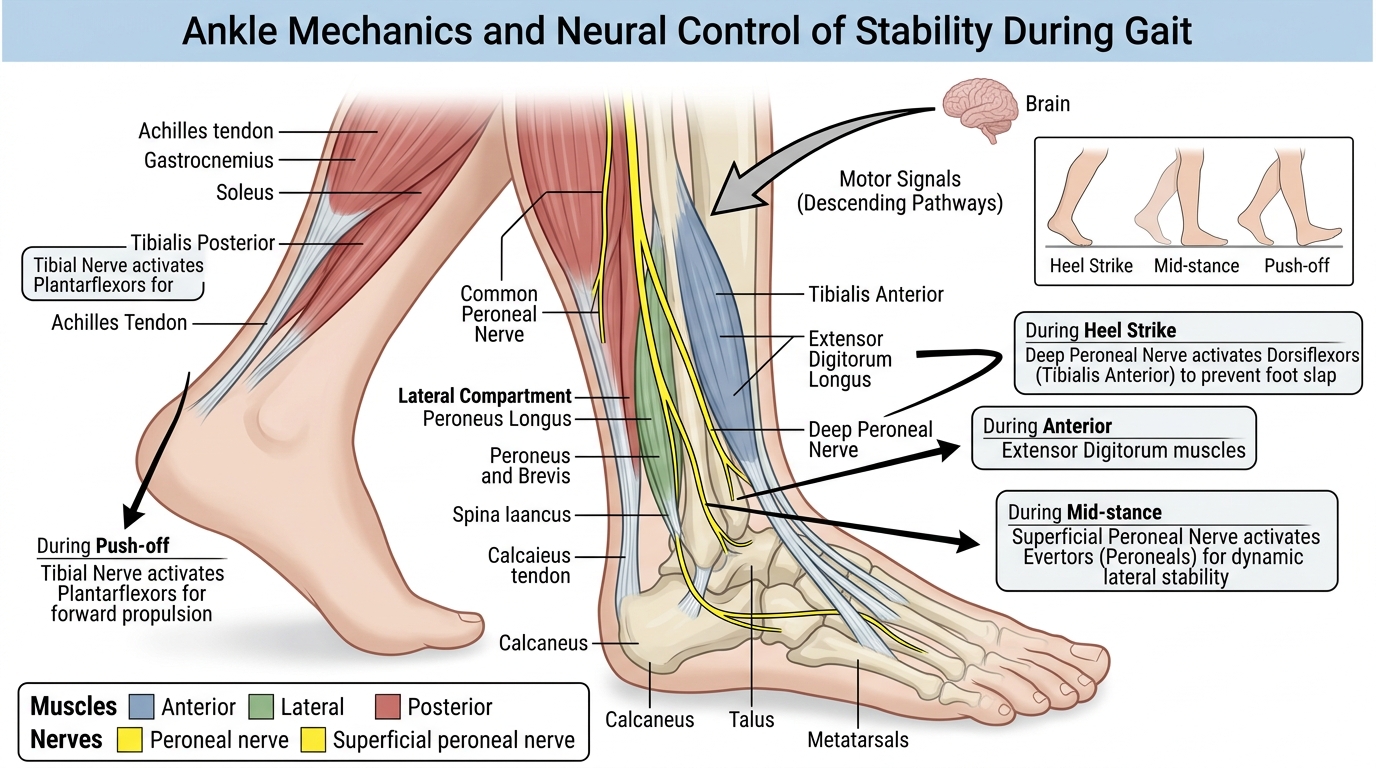
The human ankle functions as the body’s primary pivot point for balance. As we age, the nervous system changes how it manages the muscles surrounding this crucial joint. Instead of allowing the foot to roll smoothly and spring forward, the brain modifies motor commands to hold the ankle more rigid.
Stability Over Efficiency
Faced with subtle sensory declines, the brain makes a deliberate executive choice: sacrifice a fast, fluid stride to ensure maximum safety. Consequently, this protective mechanism leads to noticeable physical adjustments:
-
Shorter, more deliberate steps.
-
A slightly wider stance for an increased ground base.
-
A cautious walking pace accompanied by looking down at the ground.
The Energy Tax: Why Cautious Walking Costs More
While the safety-first strategy succeeds in lowering fall risks, it imposes a high energy cost on the body.
The “Tightrope” Analogy
In youth, walking is almost entirely automatic; your brain operates on autopilot. With aging, walking starts to feel like balancing on a tightrope. Every single step requires active neurological calculations and constant muscular adjustments.
Co-contraction (Muscular Stiffening)
To protect against trips, the nervous system engages in a process called muscular co-contraction. It fires opposing muscle groups simultaneously, such as the shin muscles (tibialis anterior) and calf muscles (gastrocnemius) to lock the ankle joint in place.
The Fatigue Factor
Firing agonist and antagonist muscles at the same time creates intense mechanical resistance. Your body burns through metabolic fuel at double the normal rate simply to move forward. Consequently, older adults experience deep physical exhaustion even across brief distances.
Beyond Muscles: The Neurological Reality of Ageing
It is essential to distinguish between muscle loss and neural signalling decay. While building leg strength remains important, muscle power alone cannot overcome inefficient neural control signals.
As nerve conduction speed naturally slows and proprioceptive feedback (sensory awareness of where your feet are in space) diminishes, the brain adapts dynamically. It increases its conscious control over gait. Therefore, overcoming walking fatigue requires re-training the nervous system, not just lifting heavier weights.
Household Hacks: Training the Nervous System at Home
Standard gym machines and casual walking loops fail to challenge the brain-to-ankle connection. To rebuild mobility, you can perform these safe, highly effective exercises right at home using everyday household items:
1. The Sofa Cushion (Proprioception & Surface Training)
-
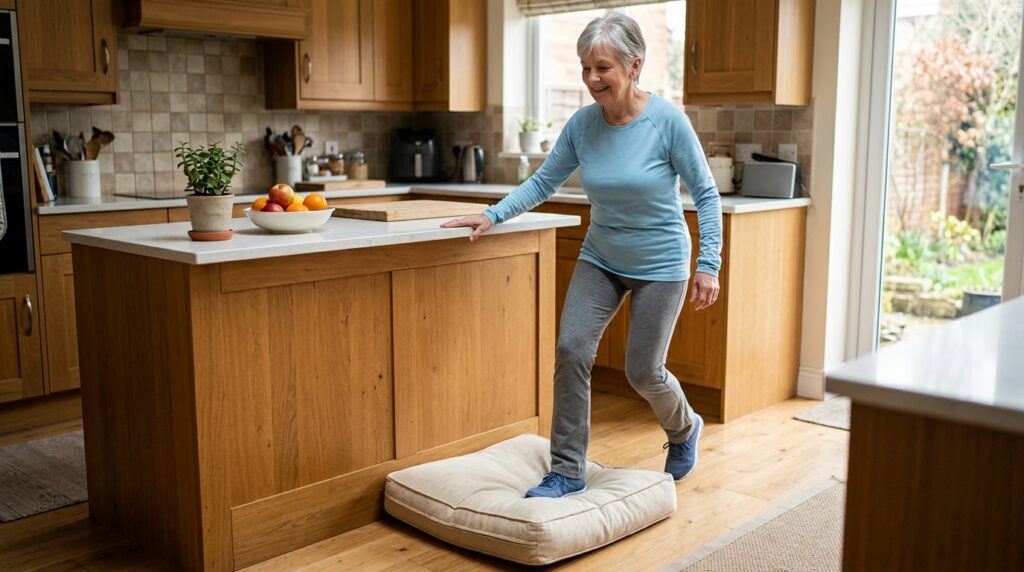
How to do it: Place a soft sofa cushion on the floor next to a sturdy wall or kitchen counter for hand support. Step onto the cushion with one foot while keeping the other on solid ground, then practice standing balanced on the cushion for 15–30 seconds. Switch sides.
The Sofa Cushion (Proprioception & Surface Training) -
Why it works: The squishy surface forces the ankle and brain to react instantly to changing sensory inputs, sharpening spatial awareness and neural agility.
2. The Kitchen Counter Line (Tandem Tightrope Walk)
-
How to do it: Stand alongside your long kitchen counter, lightly resting your fingers on the surface for safety. Walk slowly in a straight line, placing the heel of one foot directly in front of the toes of the other foot, like walking a tightrope.
-
Why it works: Narrowing your base of support challenges the nervous system’s lateral balance controls, training the brain to stabilise without rigid muscle stiffening.
3. The Hardcover Book (Ankle Pivot & Reflex Work)
-
How to do it: Lay a thick hardcover book flat on the floor in front of a chair. While seated or standing with support, gently tap the top of the book first with your toes, then with your heel, alternating rapidly for 1–2 minutes per leg.
-
Why it works: Rapid tapping stimulates fast-twitch motor units in the lower leg, restoring swift reflex signalling between the spinal cord and ankle muscles.
4. The Sturdy Wooden Chair (Single-Leg Micro-Adjustments)
-
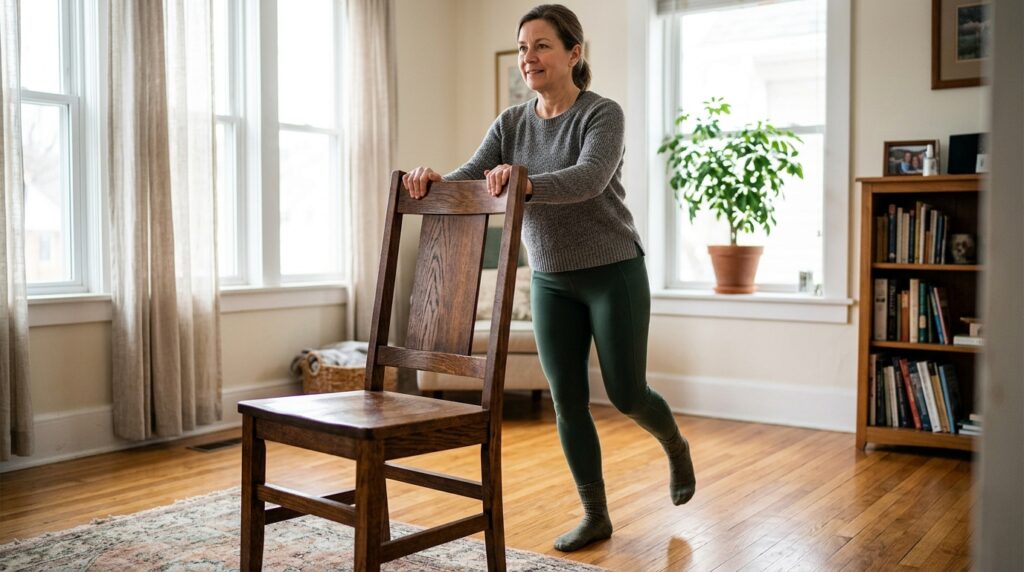
How to do it: Stand behind a heavy wooden dining chair and grip the top of the backrest. Lift one foot slightly off the floor and hold your balance for 10–15 seconds, gradually reducing your hand grip to light fingertip contact as you improve.
The Sturdy Wooden Chair (Single-Leg Micro-Adjustments) -
Why it works: Standing on one leg forces the standing ankle to make hundreds of subtle micro-adjustments every second, directly strengthening primary neural pathways.
Conclusion: Taking Control of the Stride
Ageing Walking Fatigue, Ageing mobility issues are not an inevitable sentence of decline. By understanding that your walking fatigue is an adaptive, safety-first response from your nervous system, you can take purposeful steps to retrain your brain.
Integrating simple neurological drills into your daily routine using common household items helps condition your brain and ankles to work in harmony. Ultimately, training the brain alongside the body allows older adults to reclaim their natural stride, conserve energy, and walk with renewed confidence and stamina.

Frequently Asked Questions about Ageing Walking Fatigue
1. Why do I feel exhausted after walking a short distance, even though my leg muscles don’t feel sore?
Your exhaustion isn’t from muscle damage; it’s from metabolic energy drain. Because your nervous system is actively stiffening your leg and ankle joints to keep you from falling, your body is working twice as hard to take a single step, burning through your energy reserves much faster.
2. If muscle weakness isn’t the main culprit, should I stop doing strength training exercises?
No! Strength training is still vital to prevent muscle wasting (sarcopenia) and support your joints. However, strength training alone won’t fix walking fatigue. You must combine it with balance and coordination drills that teach your brain how to use those muscles efficiently.
3. How does the nervous system change how we use our ankles as we age?
In younger adults, the ankle acts like a flexible, springy pivot that pushes the body forward effortlessly. As we age, the nervous system begins to stiffen the ankle joint by firing opposing muscles simultaneously. This creates a safer, flatter, but far more exhausting stomp rather than a smooth roll.
4. Can practising balance at home actually rewire an ageing nervous system?
Yes. The brain maintains a level of neuroplasticity (the ability to form new neural connections) throughout life. Regularly challenging your balance with simple, safe exercises forces the nervous system to adapt, speed up its signalling pathways, and find more efficient ways to keep you steady.
5. Why do I feel the need to look down at my feet constantly while walking?
As the nervous system ages, automatic proprioceptive signals (sensory feedback from your joints and feet telling your brain where they are in space) can slow down. Your brain compensates for this lost sensory data by relying heavily on your eyes to confirm where the ground is.
6. Are there any warning signs that my walking fatigue is a serious neurological issue rather than normal ageing adaptation?
While a slower, more energy-intensive stride is a common adaptive strategy, sudden changes are not. If you experience asymmetrical weakness (one leg dragging), sudden numbness, frequent unprovoked falls, or severe dizziness, you should consult a physician immediately, as these can point to underlying neurological conditions.
Disclaimer
The information provided in this article is for educational, informational, and entertainment purposes only and should not be taken as professional medical advice, diagnosis, or prescription treatment. Always consult with a licensed physician or qualified specialist before initiating any pharmaceutical therapy, modifying your diet, or beginning a new physical training program. Never disregard professional medical counsel because of information read within this article.
VIII. References & Authoritative Sources
-
Primary Study: “Age-related changes in the neural control of walking,” published in Gait & Posture.
-
Supporting Science: The Journals of Gerontology Series A: Biological Sciences and Medical Sciences (Studies regarding the energetic cost of walking in older adults and co-contraction of agonist-antagonist muscles).
-
Clinical Guidance: Harvard Medical School Health Publications (The neurology of balance and preventing falls in older adults).