The $5,000 Trump Dividend: Political Promise, Economic Reality and the Cost to Ordinary Americans
The $5000 Trump Dividend: What lies behind Donald Trump’s proposed cash payment to American citizens? An examination of its political timing, legal and financial hurdles, tariff policy, household costs, international decisions and the growing public search for stimulus money.
A promise of $5,000 can sound like welcome relief to a household struggling with rent, groceries, healthcare and rising bills. But a payment of this size raises a much larger question: where would the money come from, who would ultimately bear its cost, and could a one-time cheque solve the economic pressures facing ordinary Americans?
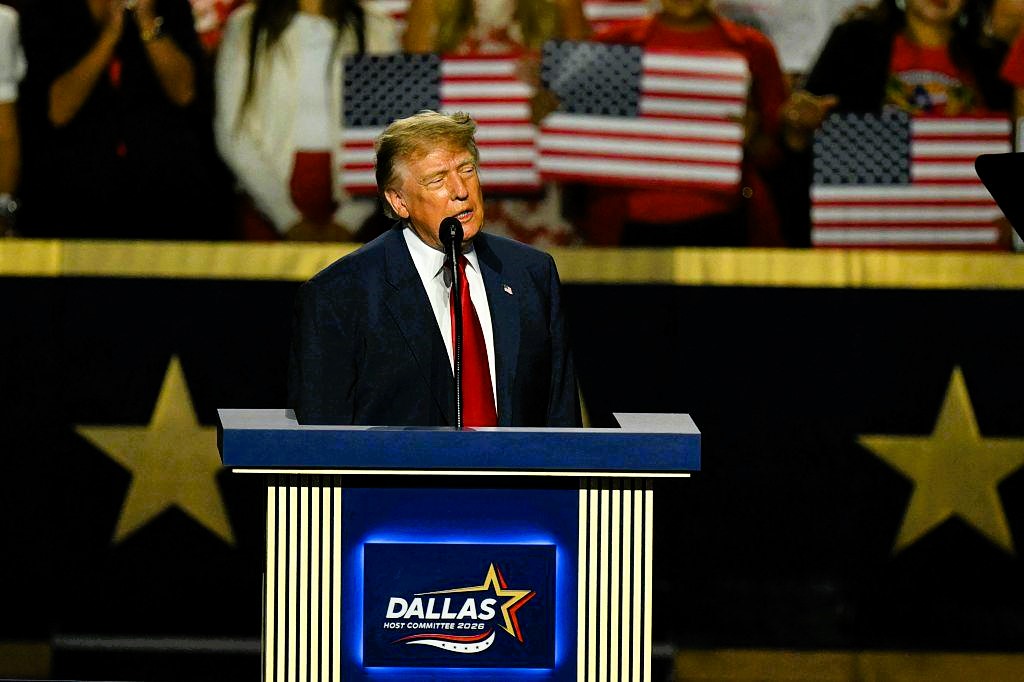
On September 9, 2026, President Donald Trump announced that he would issue a $5,000 payment to every adult US citizen if Republicans retained control of both the House of Representatives and the Senate in the November 3 midterm elections. The White House formally presented the proposal as the Trump Dividend the following day, describing it as a return to citizens from the country’s economic success. Trump also said recipients would have to spend the money within the United States.
However, the announcement did not establish an approved payment programme, a confirmed payment date, detailed eligibility rules, or a legally authorized funding mechanism. Reuters estimated that payments to approximately 240 million adult citizens would cost around $1.2 trillion.
The distinction is fundamental. A presidential announcement can create expectations, but it does not authorize the Treasury to distribute public money. The proposal must be assessed as a political commitment, a fiscal undertaking and a test of whether government policy is improving the financial circumstances of ordinary Americans.
A promise made in the shadow of the midterms
The timing gives the proposal its political significance. Trump made the announcement less than two months before voters were due to decide whether Republicans would continue controlling both chambers of Congress. The payment was explicitly conditional on that outcome, linking a substantial potential financial benefit to the result of a congressional election.
That does not automatically make the proposal unlawful. Political candidates routinely make promises about taxes, public benefits and government spending. Voters are entitled to consider those promises when choosing their representatives.
The more important questions are whether Congress would authorize the payment, whether the proposed funding is credible and whether voters have enough information to judge its likely economic consequences.
Even if Republicans retain both chambers, approval would not be automatic. Legislation would still have to pass through Congress, and lawmakers would have to address the cost, funding, eligibility and administrative arrangements.
Is this the first time Trump has promised cash payments?
No. The proposal follows earlier discussions about returning money to Americans through government savings or tariff revenue.
In 2025, Trump publicly supported the idea of a $5,000 DOGE dividend based on savings from government spending reductions. He also promoted a separate proposal for a $2,000 tariff dividend.
Neither became a nationwide payment programme.
The 2026 announcement is therefore not simply a new version of an existing benefit. It renews the question of whether the administration can turn ambitious payment promises into legally authorized and financially sustainable programmes.
The central difficulty remains the same: a proposed payment must be supported by actual revenue, a clear appropriation and workable administrative arrangements.
Why are Americans searching for stimulus payments?
The announcement has arrived at a time when many households are looking for financial relief. Searches and social-media discussions about stimulus checks, government payments, tax rebates and the proposed $5,000 dividend reflect a wider public conversation about affordability and economic uncertainty.
These terms are often used interchangeably online, although they describe different things:
- Economic stimulus payments are generally intended to support household spending and economic activity during a downturn.
- Tax refunds are money owed to taxpayers under the tax system. They are not necessarily new government assistance.
- Rebates return part of a tax, fee, or other payment under a particular programme.
- Social assistance provides targeted support to people who meet defined income, age, disability or other eligibility requirements.
- The Trump Dividend is a proposed broad cash payment presented by the president as a return to citizens from the benefits of his economic and tariff policies.
A search result, viral video, or social-media post does not establish that the government has approved a payment. Search interest can reflect curiosity, financial anxiety, political messaging, or confusion. It cannot prove that a programme exists or that applications are open.
The problem is compounded by misinformation. The National Taxpayer Advocate has identified harmful tax-related misinformation on social media as a serious concern. Fake announcements, misleading videos and unofficial websites can exploit people searching for government assistance.
Anyone claiming to register people for a $5,000 payment should be treated with caution. Requests for Social Security numbers, bank details, login credentials, or advance processing fees are warning signs, particularly when they come from unofficial accounts or websites.
Until a payment is authorized and the responsible government agency publishes official instructions, there is no legitimate application process to follow.
The arithmetic: what would $5,000 actually cost?
The most immediate obstacle is the scale of the proposed payment.
Reuters reported that approximately 240 million adult US citizens could qualify. At $5,000 each, the estimated direct cost would be:
240 million × $5,000 = $1.2 trillion
That is an extraordinary federal expenditure. It is not a routine rebate that could be absorbed through ordinary budget adjustments. The final cost could change if Congress altered the eligibility rules, payment limits or administrative arrangements.
A payment of this size could help an individual household meet overdue bills, reduce credit-card debt, cover medical expenses, or manage housing costs. But it would be a one-time transfer. It would not automatically reduce grocery prices, make healthcare more affordable, increase the supply of homes, or create lasting improvements in wages.
For families facing persistent expenses, the payment might provide breathing space without changing the financial conditions that made the money necessary.
Can tariff revenue finance the dividend?
The administration has associated the proposed payment with revenue collected from tariffs. The political argument is that tariffs make foreign exporters pay for access to the US market and that the resulting revenue can be returned to American citizens.
The economic reality is more complicated.
A tariff is a tax collected by the US government on imported goods. The importer generally pays it at the border. Businesses may absorb some of the cost, pass some to consumers through higher prices, or adjust their suppliers and product lines. The burden does not necessarily fall on foreign governments or overseas producers.
The Congressional Budget Office’s August 2026 update is particularly relevant. Following the Supreme Court’s decision on tariffs imposed under the International Emergency Economic Powers Act, the administration introduced replacement tariffs under other legal authorities.
CBO estimated that changes in trade policy would reduce projected net customs revenue for fiscal year 2026 by about $250 billion compared with its February projections. It was also estimated that most of the $166 billion collected under IEEPA would be refunded. The replacement tariffs were expected to raise less revenue.
These figures expose a major weakness in the proposed funding argument. Tariff receipts are nowhere near sufficient to finance a payment estimated to cost $1.2 trillion in a single year.
There is also a wider economic problem. If tariffs increase the cost of imported goods and production inputs, some of the revenue collected by the government may be accompanied by higher expenses for American businesses and households. Revenue raised through a tax is not the same thing as a free economic gain.
The Supreme Court ruling and the uncertainty surrounding tariff revenue
On February 20, 2026, the US Supreme Court ruled in Learning Resources, Inc. v. Trump and the related Trump v. V.O.S. Selections cases that the International Emergency Economic Powers Act did not authorize the president to impose the tariffs at issue.
The ruling concerned the use of IEEPA for those tariffs. It did not abolish every form of presidential tariff authority or prevent tariffs imposed under other statutes when their legal requirements are met.
The administration subsequently ended the affected IEEPA tariffs and introduced replacement measures under other legal authorities. CBO’s August update documented the resulting revenue changes and the expected refunds.
This matters because the dividend proposal depends partly on a revenue stream shaped by changing trade policy, legal authority, refunds and import activity. It is difficult to promise a fixed payment when the proposed funding source remains subject to legal and economic uncertainty.
The Supreme Court decision did not make all tariffs unlawful. It did, however, demonstrate that presidential tariff powers have legal limits and that revenue projections based on a particular tariff policy cannot be treated as guaranteed income.
The national debt and the cost of borrowing
If tariff revenue cannot cover the proposed payment, the government would need another source of funding. Congress could raise taxes, reduce other spending, use available budget resources, or authorize additional borrowing.
Borrowing would add to federal debt and future interest obligations. That does not mean every deficit-funded programme is automatically irresponsible. Governments sometimes borrow to respond to recessions, emergencies, or long-term investment needs. But a one-time payment of this magnitude requires a clear explanation of why the borrowing is justified and how the resulting debt burden would be managed.
CBO estimated that changes in tariff policy would increase projected federal deficits by $0.9 trillion over the 2027–2036 period compared with its February 2026 baseline. This included higher primary deficits and additional debt-service costs. These figures do not include a calculation of the proposed Trump Dividend itself, but they illustrate the wider fiscal consequences of changing tariff policy.
A $1.2 trillion payment would therefore require its own transparent fiscal plan. Without one, the public cannot assess whether it would be financed through new revenue, cuts elsewhere, or additional borrowing.
What the law requires
The president cannot simply instruct the Treasury to distribute $1.2 trillion because a payment has been announced.
The US Constitution’s Appropriations Clause provides that money may be drawn from the Treasury only as a consequence of appropriations made by law. In practical terms, Congress must provide the legal authority for the expenditure.
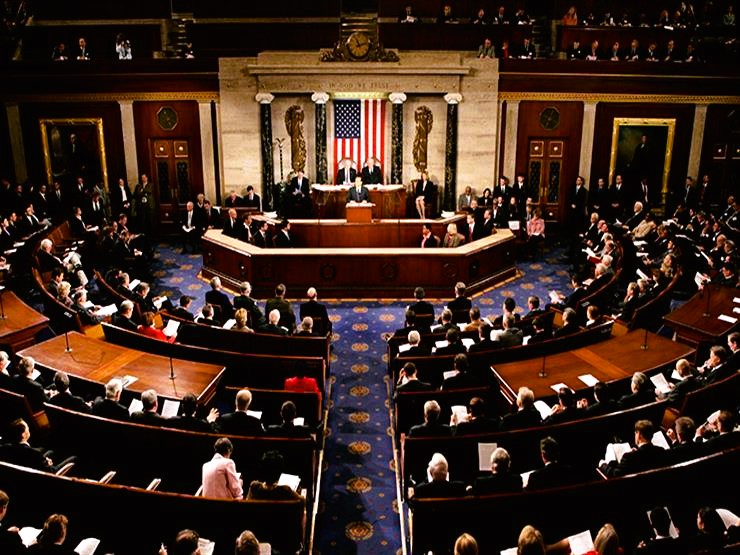
Legislation would need to establish the programme’s funding, eligibility, administration and any restrictions attached to the payment. The government would also have to determine how recipients would be identified and how payments would be distributed.
A separate legal question concerns the election-related condition. Federal law, under 18 U.S.C. §597, prohibits making or offering an expenditure to a person in exchange for voting, withholding a vote or voting for or against a candidate.
A general campaign promise to pursue a public benefit if a party wins an election is not automatically the same as offering an individual money in exchange for that person’s vote. Whether a particular statement or arrangement violates election law depends on its facts and legal interpretation. It would therefore be inaccurate to declare the proposal illegal solely because it was made before an election.
Nevertheless, tying a substantial proposed financial benefit to a party’s electoral success raises legitimate questions about political messaging and the use of public resources. Voters deserve clear information about the cost and conditions rather than an announcement that leaves the hardest questions unanswered.
How Trump’s policies are affecting ordinary Americans
The dividend debate cannot be separated from the economic circumstances in which it was announced. American households are dealing with pressures involving prices, healthcare, employment, housing, borrowing and energy. Some are directly connected to federal policy; others reflect international events, market conditions, state decisions and independent monetary policy.
A fair assessment must distinguish between these influences rather than attribute every economic difficulty to the president.
Tariffs and the cost of everyday goods
Tariffs can affect consumers through the prices of imported products, components, raw materials and goods manufactured in the United States using foreign inputs.
A 2026 Federal Reserve research paper, Paying More and Buying Less: 2025 Tariffs and U.S. Household Spending, examined transaction-level household spending data. The researchers estimated retail price pass-through of about 15% using the realized tariff rate. Their broader benchmark measure produced a higher price coefficient of 20%.
The study found that lower-income households bore a disproportionate welfare burden. Spending on affected goods fell by about three times as much as prices rose. Households reduced quantities purchased, particularly in non-essential categories, while uncertainty about the economic outlook also influenced spending decisions.
This is important because the impact of higher prices is not limited to the amount paid at the checkout. Families may postpone replacing appliances, buy cheaper products, reduce discretionary spending, or redirect money from other needs. Households with lower incomes generally have less flexibility to absorb these changes.
Supporters argue that tariffs can protect domestic producers, encourage investment and reduce dependence on foreign supply chains. Those objectives deserve consideration. However, whether domestic production expands depends on investment, labour, infrastructure, competition and access to necessary inputs.
The relevant question is whether the long-term benefits outweigh the costs passed on to consumers and businesses, and whether the gains reach the workers and communities the policy is intended to help.

Healthcare and the social safety net
The 2025 reconciliation law, commonly known as the One Big Beautiful Bill Act, changed federal spending and eligibility rules for major programmes, including Medicaid and the Supplemental Nutrition Assistance Program (SNAP).
CBO estimated that the law would reduce projected federal Medicaid outlays by approximately $1.2 trillion over 2026–2035. It projected that Medicaid enrollment would be 13.1 million lower in 2035 as a result of the law’s changes. These are projections, not a count of people who have already lost coverage.
The same CBO analysis estimated a $211 billion reduction in projected SNAP spending through 2035. The changes include provisions affecting eligibility, benefit amounts and the share of programme costs paid by state governments.
These programmes support households whose financial circumstances often leave little room for unexpected expenses. Medicaid covers eligible low-income adults, children, older people and people with disabilities. SNAP helps eligible households buy food. Changes to either programme can affect family budgets, state finances and local economies.
The law also contains tax provisions that benefit many households. But a tax reduction and a reduction in public benefits do not necessarily cancel each other out for the same family. The net effect depends on income, family circumstances, healthcare needs, eligibility and the value of benefits received.
A household may gain from lower taxes while facing higher healthcare or food costs. Assessing the overall effect, therefore, requires looking at both sides of the household budget.
Employment and immigration policy
Employment trends are influenced by interest rates, business investment, demographic changes, international competition and shifts in demand. A slowdown during a president’s term does not automatically prove that the president caused it.
Nevertheless, the availability of stable work and adequate wages is central to household security. A family may be more concerned about reduced working hours, job insecurity or difficulty finding employment than about headline stock-market performance.
Immigration policy can also affect employment and business costs. Agriculture, construction, hospitality and food services rely on immigrant labour, including workers without legal status. Enforcement can influence labour availability, wages, production costs and the pace of construction or agricultural activity.
Supporters of stricter enforcement argue that immigration laws should be upheld and that reducing unauthorized employment can protect lawful workers. Businesses and some economists, meanwhile, warn that sudden labour shortages can disrupt production and raise costs.
The effects vary by region and industry. A sound policy must uphold the law while recognizing legitimate labour-market needs, protecting workers and giving businesses predictable rules.
The Iran conflict and the cost of energy
International decisions can reach American households through fuel prices, shipping, insurance, transport and financial markets.
The US conflict with Iran has become a major example. An Associated Press report in October 2026 described higher fuel and transportation costs following disruption to Middle Eastern oil shipments. It reported average gasoline at $4.33 per gallon, approximately 45% above pre-conflict levels, and diesel at $6.33, about 68% higher. Airfares were also reported to be around 22% higher year over year in September.
Higher diesel prices affect more than motorists. Trucks, agricultural machinery, freight operators and delivery networks depend heavily on diesel. When transport and production costs rise, businesses may pass some of the increase to customers. The consequences can reach food distribution, deliveries, travel and other goods.
The same AP report cited a Moody’s Analytics estimate that the average household had experienced an economic impact equivalent to nearly $2,000 when higher energy costs, interest rates and military expenses were combined. This was a model-based estimate of the broader economic burden, not a bill sent to every household or a direct measurement of what each family had paid.
It would also be misleading to attribute every increase in grocery prices to the conflict. Weather, labour costs, tariffs, supply-chain conditions and retailer pricing decisions can all contribute. The war has added pressure, but its precise contribution varies across products and regions.
The wider policy question is whether the strategic objectives of military action justify its human, financial and economic costs. That debate should include national security and regional stability, but also the consequences for service members, civilians, taxpayers and families facing higher living expenses.
Housing, interest rates and household debt
Housing affordability is shaped by the supply of homes, construction costs, land-use rules, labour availability, mortgage rates, household incomes and local demand.
A president does not directly set mortgage rates. These are influenced by Treasury yields, inflation expectations, financial-market conditions and Federal Reserve monetary policy. Tariffs on construction materials or disruptions to labour supply may add to building costs, while uncertainty can affect investment and development decisions.
For households carrying credit-card balances, car loans or other debt, higher interest rates can make monthly payments more difficult. A one-time dividend could help reduce some outstanding balances, but it would not change the conditions that determine the cost of borrowing or the availability of affordable housing.
What the public is saying about the economy
Public opinion offers an indication of how Americans are experiencing economic conditions, although polling cannot establish that a particular policy caused a particular price increase.
A Pew Research Center survey of 5,062 US adults, conducted from September 28 to October 4, 2026, found that:
- 74% were very concerned about the price of gasoline and energy.
- 73% were very concerned about the price of food and consumer goods.
- 69% were very concerned about healthcare costs.
- 66% were very concerned about housing costs.
- 48% were very concerned about people who want to work being unable to find jobs.
- Only 21% rated national economic conditions as excellent or good.
Pew also found substantial partisan differences in how respondents assessed the administration’s economic policies. These responses measure public perceptions, not an independent calculation of the president’s causal impact.
The findings nevertheless help explain why a $5,000 promise can attract attention. When people feel pressure across energy, food, healthcare and housing at the same time, a substantial cash payment may appear more immediate than promises of long-term economic improvement.
But public anxiety does not prove that a proposed payment is financially viable. Nor should a one-time distribution be treated as a substitute for policies that make essential goods and services more affordable.
How would the dividend work if Congress approved it?
Even if Congress authorized the payment, several practical questions would remain.
Who would qualify? Trump’s announcement referred to adult US citizens. Legislation would need to define how age, citizenship, residence and other eligibility conditions would be verified. It would also need to address people without recent tax filings and other unusual circumstances.
When would payments arrive? No confirmed payment timetable was included in the announcement. A programme of this scale would require legislation, administrative preparation and a distribution system.
Would every recipient receive the same amount? The initial proposal described a $5,000 payment to every adult citizen. Congress could change that structure, but doing so would alter both the original promise and the total cost.
Would recipients have to spend the money in the United States? Reuters reported that Trump said recipients would have to spend it domestically. Such a condition would require clear legal and administrative rules. The government would have to explain how compliance would be defined and monitored without creating excessive bureaucracy.
These questions are central to whether the proposal could operate as announced and whether its administration would be fair, efficient and accountable.
A dividend may offer temporary breathing space. Genuine economic security requires something more durable.
Frequently asked questions
1. Is the $5,000 Trump Dividend an approved government payment?
No. The September 2026 announcement was a proposal conditional on Republicans retaining control of both the House and Senate. It did not itself establish an authorized payment programme or an application process.
2. Who would receive the proposed $5,000 payment?
Trump described it as a payment to every adult US citizen. Detailed eligibility rules, verification procedures and administrative arrangements would have to be established through legislation.
3. How much would the Trump Dividend cost?
Using Reuters’ estimate of approximately 240 million eligible adults, payments of $5,000 each would cost around $1.2 trillion. The final cost would depend on the rules enacted by Congress.
4. Can tariff revenue finance the proposed payments?
Not on the figures available. Tariff revenue is far below the estimated cost, and the Supreme Court’s February 2026 ruling and subsequent tariff changes have affected revenue projections. A credible plan would need to identify additional funding or borrowing.
5. Is promising a payment before an election illegal?
Not automatically. Federal law prohibits offering money in exchange for an individual’s vote. A general campaign promise to pursue a public benefit if a party wins is not necessarily the same thing. The legality of a specific arrangement depends on its facts and applicable law.
6. Should Americans apply for the $5,000 payment online?
No official application process has been established by the announcement. People should not share Social Security numbers, bank details, or pay processing fees through unofficial websites or social media accounts claiming to register applicants.
References and further reading
- The White House: Trump Dividend, America Is Winning — and Americans Should Win With It — September 10, 2026.
- Reuters: Trump promises $5,000 payout to US adults if Republicans win election — announcement and estimated cost.
- Reuters: Is Trump’s $5,000 dividend legal and how would it work? — funding, eligibility and legal questions.
- Congressional Budget Office: The Budget and Economic Outlook, 2026 to 2036 — federal budget and projected effects of the 2025 reconciliation law.
- Congressional Budget Office: Updated Budgetary Projections of Tariffs as of July 31, 2026 — tariff revenue and fiscal projections.
- US Supreme Court: Learning Resources, Inc. v. Trump — February 20, 2026 decision on IEEPA tariff authority.
- Federal Reserve: Paying More and Buying Less, 2025 Tariffs and US Household Spending — research on tariff effects on household prices and spending.
- Pew Research Center: Cost Concerns Dominate as Public’s Economic Ratings Turn More Negative — survey conducted September 28 to October 4, 2026.
- Associated Press: Retail price impacts from the Iran war are uneven but add up for US households before midterms — energy and household cost pressures.
- US House of Representatives, Office of the Law Revision Counsel: 18 U.S.C. §597 — federal law on expenditures to influence voting.
- US Constitution Annotated: Appropriations Clause — congressional authority over Treasury expenditure.
- Taxpayer Advocate Service: 2025 Annual Report to Congress — taxpayer misinformation and social-media risks.
Author: Maj Hamed Mahmood (Retired), MA Political Science, LLB, PGD (HRM)
The author’s military, political science and legal background informs this analysis of international relations, political developments, security affairs and the human consequences of national policy decisions.