Tesla Roadster 2026: SpaceX Thrusters, Performance and 2028 Launch
Tesla Roadster 2026: SpaceX Thrusters, Performance and 2028 Launch reveal features SpaceX-inspired thrusters, upside-down driving and a reported 0–60 mph time of 0.81 seconds. Explore its technology, specifications and production outlook.
https://mrpo.pk/nobel-prize-winning-optogenetics/
Tesla Roadster 2026: SpaceX Thrusters Bring Science Fiction to the Road
A sports car that drives upside down, flips through the air and accelerates from 0 to 60 mph in less than a second sounds like something from a science-fiction movie. Yet Tesla has demonstrated a prototype with these extraordinary capabilities.
Unveiled on October 15, 2026, at SpaceX’s test facility in McGregor, Texas, the next-generation Tesla Roadster combines electric-car engineering with technology inspired by aerospace systems. But behind the spectacular demonstration lies a more important question:
Can Tesla turn this ambitious prototype into a practical, safe and commercially available sports car?
The answer will depend on engineering, regulation, production readiness and whether the company can deliver on its latest promises.
Tesla Roadster 2026 Reveal: What Happened in Texas?
The unveiling marked a major development in a project that has remained unfinished for years.
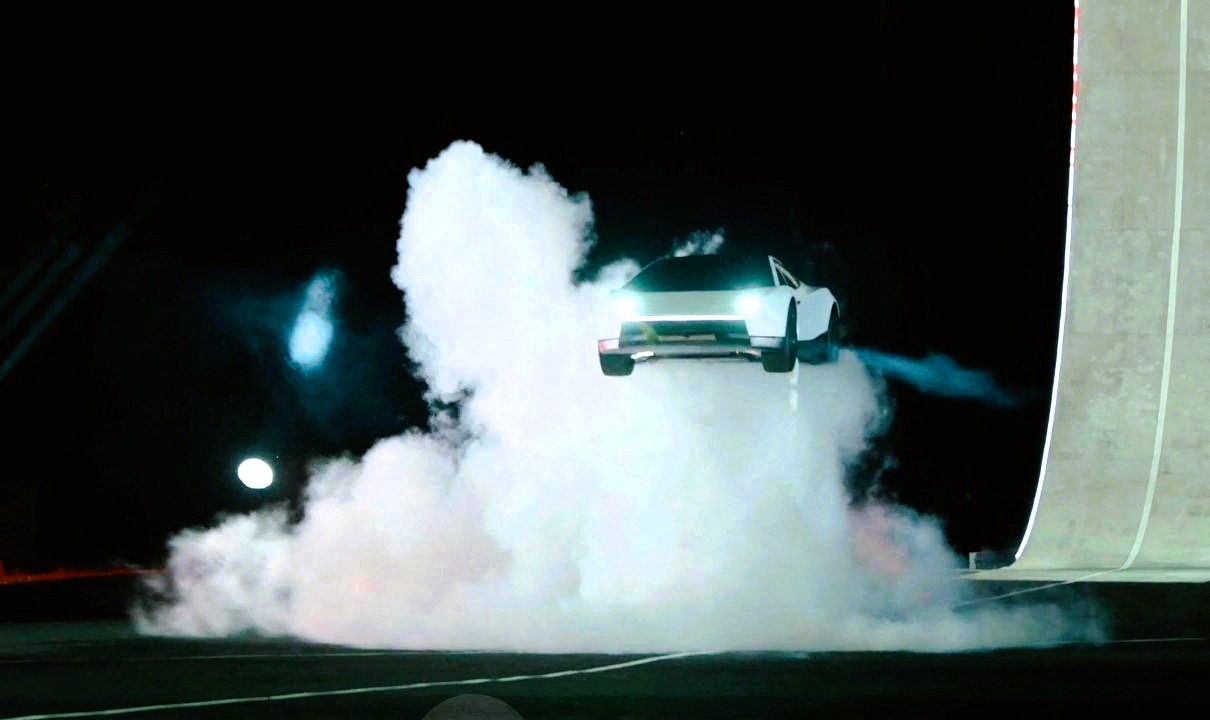
During the demonstration, a white Roadster prototype climbed a steep, curved ramp and reached an inverted position. Tesla attributed this extraordinary maneuver to a powerful underbody fan system that generates suction against the track.
The demonstration then showed the car leaving the structure, rotating in midair and landing on its wheels with assistance from compressed-air thrusters.
A second sequence featured the vehicle jumping over a lineup of Tesla models, including the Model 3, Model Y, Cybertruck, Cybercab and Semi.
Tesla also presented an acceleration run with a reported 0–60 mph time of approximately 0.81 seconds using thruster assistance.
These were demonstrations of a prototype, not independent proof that every advertised capability will be available in a production vehicle. The distinction matters because a dramatic demonstration can establish that a particular maneuver was attempted without proving everyday reliability, road legality, or commercial readiness.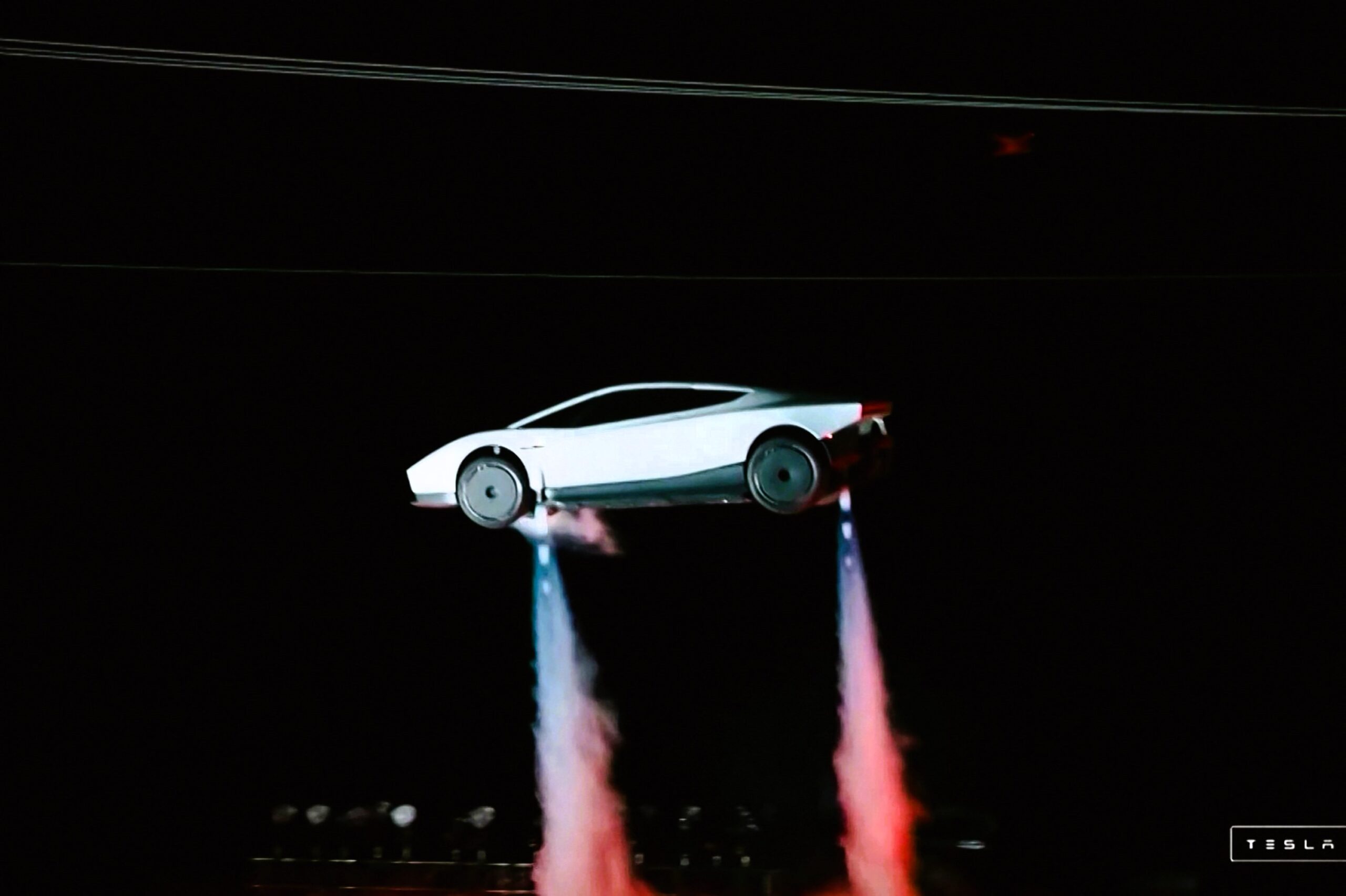
Image suggestion: SpaceX’s McGregor test facility or an official Tesla Roadster reveal photograph.
How Does the Roadster Work?
The Roadster’s most unusual capabilities rely on two different technologies: an underbody suction system and compressed-air thrusters.
1. Underbody fans and inverted driving
Conventional sports cars depend on tires, suspension and aerodynamic downforce to remain stable at high speeds. The new Roadster’s demonstrated ramp maneuver introduces another approach.
High-powered fans beneath the vehicle create suction, pulling the car toward a suitable surface. Tesla says its system can generate substantial additional grip, potentially allowing the vehicle to remain attached to a specially designed track even when inverted.
Active aerodynamic components, including an adjustable rear wing, are also part of the vehicle’s performance concept.
However, this does not mean the Roadster can drive upside down on ordinary roads, walls, or ceilings. The demonstration relied on a purpose-built structure, and the system’s real-world operating limits remain important unanswered questions.
2. SpaceX-inspired cold-gas thrusters
The second technology is even more unusual. The thruster-equipped versions use high-pressure compressed air to generate short bursts of thrust. Small nozzles can help change the vehicle’s orientation, while larger units can contribute to acceleration and brief aerial maneuvers.
Unlike conventional rocket engines that burn chemical propellants, a cold-gas thruster produces thrust by releasing stored pressurized gas. The system still requires energy to compress and store that gas, and the amount of available thrust depends on its design and operating conditions.
Tesla’s proposed arrangement draws on aerospace engineering associated with SpaceX. The technology could enable movements that ordinary tire traction cannot produce.
But a short jump or controlled airborne rotation is not the same as sustained flight. The Roadster should not be confused with an aircraft or a practical flying car.
3. What happens after the compressed air runs out?
Compressed-air systems have finite reserves. Recharging those reserves requires suitable onboard equipment or another replenishment method.
The reported design includes onboard compression, but practical questions remain about recharge time, energy consumption, component durability, noise and maintenance.
For a production vehicle, engineers must also account for the weight and packaging of pressure vessels, the protection of occupants and the consequences of a mechanical failure.
These details will help determine whether the technology becomes a usable feature or remains primarily a specialized performance demonstration.
Tesla Roadster 2026 Specifications and Three Versions
Tesla has presented three configurations with different intended levels of performance and thruster capability. The figures below should be treated as company targets or reported specifications, not as independently verified production-car test results.
| Feature | Performance | Thrust | Rocket |
|---|---|---|---|
| Intended role | Road-focused sports car | Thruster-assisted performance | Most extreme configuration |
| Seating | Two seats | Two seats | Single seat |
| Thrusters | Not listed as the defining feature | Rear-mounted system | More extensive thruster arrangement |
| Claimed 0–60 mph | Under 1.6 seconds | Under 0.9 seconds | Under 0.59 seconds |
| Reservation deposit reported | $50,000 | $250,000 | Invitation-only |
| Public-road status | Final approval and specifications need confirmation | Final approval and specifications need confirmation | Reported as not road-legal |
The reported 0–60 mph targets are particularly striking. The most aggressive figures depend on the configuration and the role of the thrusters, so they should not be compared directly with conventional production cars without explaining the testing conditions.
The Rocket version is especially specialized. Its single-seat arrangement and additional hardware suggest that its priorities differ substantially from those of an everyday sports car.
Tesla has unveiled its new Roadster sports car, which can thrust itself up in the air. But drivers shouldn’t expect to take it for a spin anytime soon.
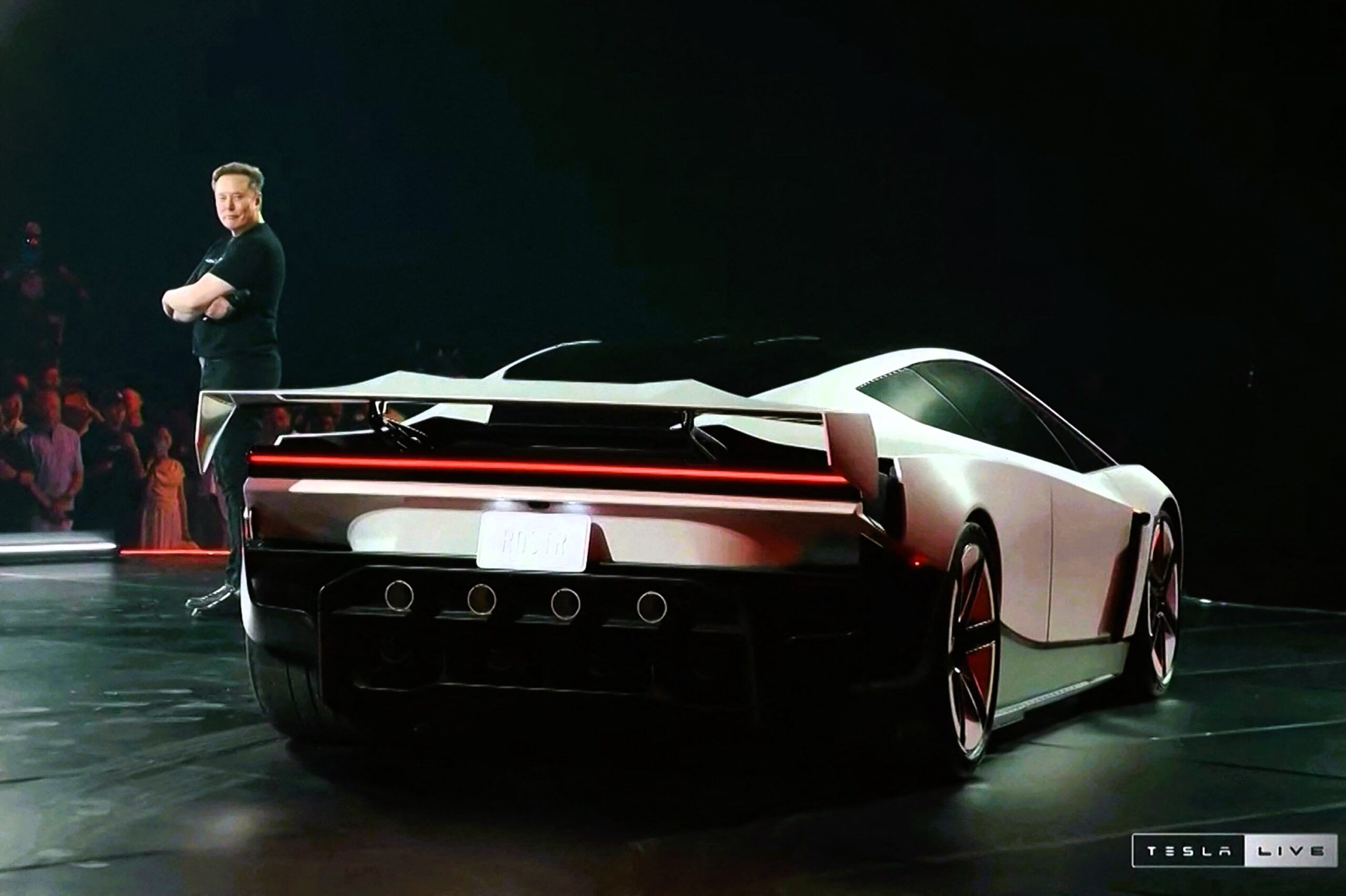
A grab from a live feed released by Tesla shows Elon Musk unveiling the next-generation Roadster electric car in McGregor, Texas, U, Oct. 15, 2026. (AFP Photo)
Range and Top Speed
Reports describe a range exceeding 300 miles and a top speed above 230 mph for the new Roadster lineup. Exact production specifications, test methods and configuration-specific figures still need to be established.
The range claim is notably lower than the approximately 620-mile target discussed when Tesla introduced the second-generation concept in 2017.
That difference illustrates a basic engineering trade-off. High-performance hardware, aerodynamic systems, additional equipment and vehicle weight can affect energy consumption and packaging.
Important distinction: A specification announced by a manufacturer is not the same as a verified result from an independently tested production vehicle.
Why the 0.81-Second Acceleration Claim Needs Context
One of the most attention-grabbing figures from the reveal was the reported 0–60 mph time of 0.81 seconds.
For comparison, conventional high-performance electric cars already deliver exceptional acceleration by using electric motors and advanced traction control. A time under one second falls into a very different performance category.
However, the reported Roadster result involved thruster assistance. It should not be presented as the acceleration capability of a conventional electric car operating on tires alone.
Several questions matter:
- Was the measurement independently verified?
- What timing method and test conditions were used?
- How much of the acceleration came from the electric drivetrain and how much from the thrusters?
- Can the result be repeated consistently?
- Does the claimed performance apply to a production vehicle or only to a specialized demonstration?
Until these questions are answered, the 0.81-second figure is best described as a reported demonstration result.
This qualification does not diminish the engineering ambition. It gives readers the information needed to interpret the claim accurately.
Tesla Roadster 2026 vs. the Original 2017 Concept
Tesla first unveiled the second-generation Roadster concept in November 2017. The original announcement promised extraordinary acceleration, a long driving range and production far earlier than the latest target.
The project subsequently experienced repeated delays. The 2026 reveal changes the story by placing greater emphasis on SpaceX-inspired technology, extreme acceleration and aerial maneuvers.
| Area | 2017 concept | 2026 reveal |
|---|---|---|
| Main attraction | Electric sports-car performance | Performance plus thruster-assisted maneuvers |
| Range target | Approximately 620 miles | More than 300 miles reported |
| Acceleration | Original target around 1.9 seconds to 60 mph | Sub-one-second result reported with thruster assistance |
| Production outlook | Originally targeted for 2020 | Production targeted for 2028 |
| Practical status | Concept followed by delays | Revealed prototype with production questions remaining |
The comparison shows how Tesla’s ambitions have evolved. It also highlights why a reveal should not be mistaken for a delivery schedule.
For customers who placed deposits or have followed the project for years, the central issue is no longer simply what the Roadster might do. It is whether Tesla can build it at scale and deliver the promised performance in a usable vehicle.
When Will the Tesla Roadster Reach Production?
Elon Musk identified 2028 as the production target during the October 2026 reveal.
That is an important milestone, but it is not a guarantee of customer delivery in a particular month or year.
Tesla must still demonstrate that the vehicle’s design, manufacturing process, safety systems and specialized hardware are ready for production. The company must also clarify final specifications, pricing, delivery arrangements and the availability of each configuration.
The Roadster has a long history of changing expectations. Its original production target was 2020, and subsequent delays have made firm commitments particularly important.
The company had not announced a complete final retail-price structure at the reveal. Reservation deposits are not the same as the total purchase price, and they should not be interpreted as a guarantee of delivery.
For prospective buyers, the sensible approach is to evaluate the official terms carefully and wait for confirmed production details before making assumptions about ownership.
Safety and Regulation: The Questions That Matter Most
A vehicle capable of generating thrust, leaving the ground, or changing orientation in midair presents challenges beyond those faced by conventional sports cars.
Is the Roadster safe for everyday driving?
That depends on the production configuration, its safety engineering and the circumstances in which its advanced systems can operate.
Musk reportedly acknowledged that the vehicle was not necessarily optimized for safety in its most extreme configuration. That statement makes it particularly important to distinguish ordinary road operation from specialized performance modes.
Before the Roadster can be judged as a practical consumer vehicle, buyers will need clear information about crash protection, occupant restraints, system failures, emergency shutdowns and the safeguards that prevent inappropriate activation of the thrusters.
Will the thruster-equipped versions be legal on public roads?
The Rocket configuration has been reported as not approved for public-road use. The regulatory position of the other configurations and their specialized systems also requires clarification.
Road-vehicle regulations differ across the United States, Europe, Canada and other markets. Approval in one jurisdiction would not automatically establish legality everywhere.
A successful demonstration at a controlled test facility is not a substitute for the necessary approvals.
Can this technology become practical?
Potentially, some of the underlying engineering ideas could have uses beyond spectacular stunts. Advanced traction systems, active aerodynamics and precise vehicle-control technologies may interest engineers working on high-performance vehicles.
However, the commercial value of the thrusters will depend on cost, weight, energy use, reliability, maintenance and safety. A capability can be technically impressive without being useful for most drivers.
What the Roadster Reveal Means for the Electric-Car Industry
The 2026 Roadster reveal is significant because it pushes the public discussion of electric vehicles beyond range, charging time and acceleration.
It combines automotive engineering with ideas drawn from aerospace technology. It also illustrates how a flagship vehicle can serve as a technology showcase and strengthen a company’s public identity.
Yet the wider electric-car market operates under different pressures. Most buyers care about affordability, dependable performance, access to charging, repair costs, safety, and long-term ownership.
The Roadster’s success will therefore depend on two distinct achievements.
First, Tesla must prove that its unusual engineering can work reliably outside a carefully controlled demonstration.
Second, it must establish whether the resulting vehicle can be manufactured, certified and delivered on commercially credible terms.
The reveal is a noteworthy engineering milestone. Whether it changes the broader automotive market will depend on what follows.
Frequently Asked Questions
1. Can the Tesla Roadster 2026 really fly?
The demonstrated prototype performed brief airborne maneuvers with thruster assistance. That is different from sustained, controlled flight. The Roadster should not be described as a conventional aircraft or a practical flying car.
2. How does the Roadster drive upside down?
Tesla demonstrated an underbody fan system that creates suction against a specially designed track. This can pull the vehicle toward the surface. It does not establish that the car can drive upside down on ordinary roads or arbitrary surfaces.
3. Is the Tesla Roadster really capable of 0–60 mph in 0.81 seconds?
A time of approximately 0.81 seconds was reported during the reveal with thruster assistance. Independent verification, detailed test conditions and repeatability remain important when interpreting the figure.
4. When will the new Tesla Roadster be available?
Tesla has targeted production for 2028. The target does not guarantee that all configurations will reach customers at the same time, and final delivery dates remain subject to confirmation.
5. How much will the Tesla Roadster 2026 cost?
A complete final retail-price structure was not announced at the reveal. Reported reservation deposits included $50,000 for the Performance version and $250,000 for Thrust. These deposits should not be confused with the total purchase price.
6. Is the thruster-equipped Tesla Roadster legal for everyday driving?
The Rocket configuration has been reported as not road-legal. The approval status of other versions and their specialized systems must be confirmed for each market. Buyers should not assume that every demonstrated capability will be permitted on public roads.
Conclusion: An Extraordinary Demonstration, With More to Prove
Tesla’s 2026 Roadster reveal offers a glimpse of what can happen when electric-vehicle engineering meets aerospace-inspired technology.
The underbody suction system, compressed-air thrusters and reported sub-second acceleration demonstrate an ambitious approach to vehicle performance. They also raise serious questions about safety, regulation, cost and everyday practicality.
The next milestone is not another spectacular stunt. It is a production vehicle that meets its advertised specifications, passes the necessary safety and regulatory requirements, and reaches customers as promised.
With production targeted for 2028, the Roadster has a clear challenge ahead: turning an extraordinary demonstration into a dependable product.
For enthusiasts, the promise is thrilling. For prospective buyers, evidence of production readiness will matter more than the spectacle.
References
- Reuters. Tesla’s new Roadster turns in air with SpaceX thrusters, won’t land until 2028. October 15, 2026.
- Associated Press. Tesla’s new Roadster car can thrust itself in the air. But don’t expect to drive it anytime soon. October 2026.
- TechCrunch. Tesla reveals SpaceX-powered Roadster that flies and falls with style. October 15, 2026.
- Car and Driver. Revealed! New Tesla Roadster Takes Flight with SpaceX Thrusters. October 2026.
- The Drive. Tesla Roadster Coming in 2028: 0-60 in 0.81s, Active Aero, and Attitude Control Thrusters. October 2026.
Editorial note: Performance figures, technical details, reservation terms and production dates are based on reported reveal information and should be checked against Tesla’s latest official specifications before publication. Production specifications and regulatory approvals may change.