The 2026 Nobel Prize in Physiology or Medicine recognised discoveries that made this breakthrough possible. But how can light affect living cells, and could this technology eventually transform medical treatment?
https://mrpo.pk/russian-plague-mystery/
This article explains the science from beginning to end in simple language, while distinguishing established research capabilities from treatments that are still being investigated.
What Is Optogenetics?
Optogenetics combines two scientific fields: genetics, which studies genes and biological instructions, and optics, which deals with light.
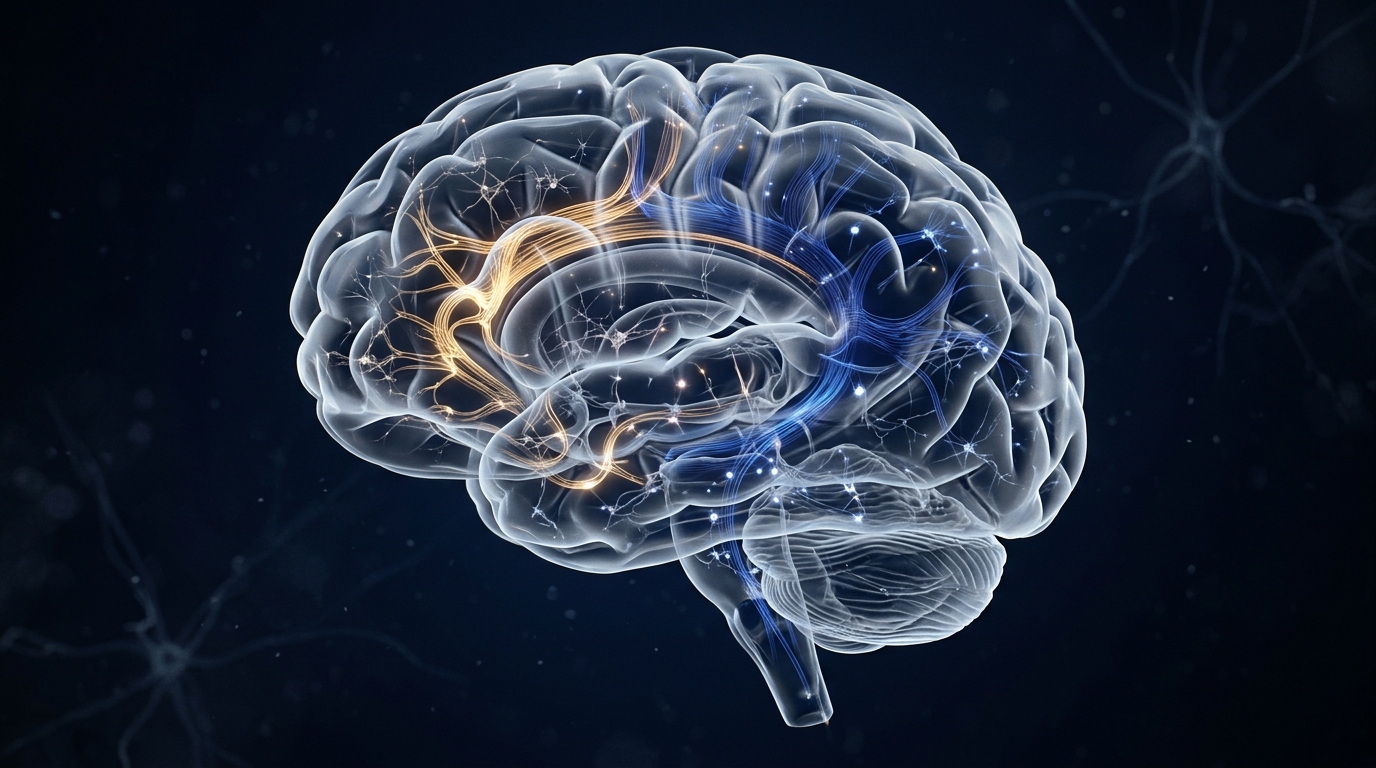
To understand its purpose, imagine the brain as an enormous communication network containing billions of nerve cells, known as neurons.
These neurons communicate through electrical impulses and chemical messengers. Their coordinated activity allows us to move, learn, remember, recognise faces, experience emotions and respond to our surroundings.
Scientists have long sought to understand exactly how particular groups of neurons contribute to these functions.
Traditional approaches, including medication and electrical stimulation, can influence nerve activity, but they may affect multiple cells or pathways simultaneously. Medicines can also affect other organs, while electrical stimulation may activate neighbouring nerve fibres unintentionally.
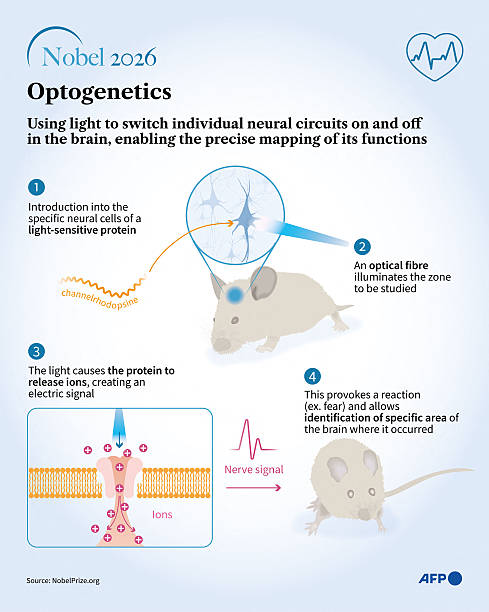
Optogenetics offers a more selective research method. Scientists make particular cells sensitive to light and then use controlled illumination to influence their electrical activity.
The essential idea is simple: give selected cells a light-sensitive biological switch, activate that switch with light, and observe what changes.
This is not the same as shining a flashlight at someone’s head and controlling their thoughts. The target cells must first be made light-sensitive, and specialised equipment is generally required to deliver light to the appropriate tissue.
The Surprising Discovery: From Green Algae to the Brain
The story began with Chlamydomonas, a microscopic, single-celled green alga that detects light to help it navigate towards favourable conditions for photosynthesis.
Researchers Peter Hegemann and Georg Nagel helped uncover the properties of channelrhodopsin, a light-sensitive protein found in algae. When suitable light activates this protein, a channel opens in the cell membrane, allowing electrically charged particles called ions to pass through.
This changes the cell’s electrical state.
Karl Deisseroth and other researchers helped adapt this discovery to neuroscience by introducing the relevant genetic instructions into selected nerve cells. These cells could then respond to controlled light, giving scientists a new way to investigate brain activity.
The 2026 Nobel Prize recognised Karl Deisseroth, Peter Hegemann and Georg Nagel for their discoveries concerning light-gated ion channels and optogenetics. The award was announced on 5 October 2026.
The three laureates share a prize of 12 million Swedish kronor, in addition to receiving Nobel medals and diplomas.
Read the official Nobel announcement.

Credit: Cmichel67/Wikimedia Commons (Karl Deisseroth); Associated Press (Peter Hegemann); The Brain Prize (Georg Nagel)
Nobel Prize-Winning Optogenetics: How Does Optogenetics Work?
These proteins became the foundation of optogenetics, the technology we have been discussing.
1. How do these proteins work?

Consider a tiny green alga called Chlamydomonas. It consists of just one cell, yet it can detect light and adjust its swimming direction to find favourable conditions for photosynthesis.
Here is how a light-sensitive protein works:

Step 1: Light arrives
Light consists of tiny packets of energy called photons. A light-sensitive part of the protein absorbs a photon of the appropriate wavelength.

Step 2: The protein changes
Absorbing light changes the shape or state of the protein, triggering a biological response.

Step 3: The cell responds
In proteins such as channelrhodopsin, the change opens an ion channel. Electrically charged particles cross the cell membrane, changing the cell’s electrical state.
2. What is channelrhodopsin?

Channelrhodopsin is a light-sensitive protein originally identified in green algae. It acts like a tiny molecular gate in the cell membrane.
When suitable blue light activates channelrhodopsin, the gate opens and allows certain ions to pass through. This changes the electrical voltage across the membrane.
In algae, this contributes to their ability to detect and respond to light. Scientists realised that the same protein could also be used to influence electrical activity in nerve cells.
That was a major breakthrough.
3. How did an algal protein become a tool for studying the human brain?
Scientists introduced the genetic instructions for channelrhodopsin into selected neurons in laboratory experiments.
The modified neurons then produced the light-sensitive protein in their membranes.
When researchers delivered the appropriate light, the protein opened its channel, ions moved across the membrane, and the neuron could generate electrical impulses.
This allowed scientists to investigate what happens when particular brain cells are activated at a chosen moment.
An important distinction: the protein does not create a complete electrical signal by itself. It changes the cell’s electrical conditions so that the neuron’s own biological machinery can generate or modify its activity.
4. Are all light-sensitive proteins the same?
No. Different proteins respond to light in different ways.
| Protein type |
What it does |
|---|---|
| Channelrhodopsins | Open channels that allow ions to cross a cell membrane |
| Light-driven ion pumps | Move particular ions across a membrane using light energy |
| Other opsins | Trigger different cellular responses, depending on their structure and biological context |
Researchers choose a protein according to whether they want to stimulate a cell, inhibit its activity or investigate another light-dependent process.
The big idea
Imagine installing a light-operated switch in a living cell. The switch is made from a protein; the instructions for producing it come from a gene, and light activates it.
That is the basic principle behind optogenetics.
What makes the discovery extraordinary is that scientists borrowed a mechanism from a microscopic organism and adapted it to investigate one of the most complex structures in nature: the human brain.
Step 1: Select the target cells
Scientists identify the neurons or neural pathways they want to study, such as those involved in movement, memory or seizure activity.
Step 2: Make the cells light-sensitive
Researchers introduce genetic instructions that enable the selected cells to produce a light-sensitive protein, known as an opsin. In laboratory research, engineered viral vectors are often used to deliver these instructions.
Step 3: Deliver the correct light
Specialised equipment, including LEDs, lasers or optical fibres, delivers light to the target tissue. The wavelength and timing must suit the selected protein.
For example, blue light can activate channelrhodopsin-2, commonly called ChR2.
Step 4: Change the cell’s electrical activity
Light activates the protein, allowing ions to cross the cell membrane. This changes the cell’s electrical voltage and may trigger a nerve impulse.
Other light-sensitive proteins can reduce neuronal activity instead. The effect depends on the protein, the cell and the experimental conditions.
Step 5: Measure the results
Researchers record electrical signals, observe cellular responses or study behaviour in experimental models. By comparing results under different conditions, they can investigate whether a particular group of neurons contributes to a specific function.
When the light is removed, the protein generally returns to its inactive state, although the timing varies and other biological effects may continue.
The key principle is simple: light activates a biological switch, the switch changes cellular activity, and researchers observe the consequences.
Why Is Optogenetics a Breakthrough?
The brain is an interconnected network. Different groups of neurons cooperate, and complex functions rarely depend on a single cell or pathway.
Optogenetics allows researchers to manipulate selected cells with precise timing. This helps them investigate cause and effect rather than simply observing which cells become active.
Scientists use the technique to explore questions such as:
- How do neural circuits contribute to learning and memory?
- Which pathways influence movement and sensation?
- How do particular cells contribute to abnormal activity during seizures?
- Which circuits are involved in stress, motivation and behaviour?
- What biological mechanisms might guide future treatments?
Optogenetics does not reduce complex experiences such as love, sadness, or consciousness to a single switch. Instead, it provides a valuable tool for studying the biological networks involved.
Potential Medical Applications
Optogenetics has transformed laboratory research, but many direct medical applications remain experimental. Its greatest value today is improving scientific understanding and helping researchers investigate possible treatments.
Epilepsy and seizures
Researchers use optogenetics in experimental models to investigate how selected neurons contribute to seizures. They can test whether activating inhibitory cells or suppressing particular overactive cells changes abnormal electrical activity.
Future systems might combine seizure detection with targeted intervention. However, safe gene delivery, accurate targeting and reliable long-term operation remain major challenges.
Optogenetics is not currently a routine treatment for epilepsy.
Chronic pain and spinal disorders
Researchers can activate or inhibit selected nerve cells in experimental models to investigate how pain signals travel through peripheral nerves, the spinal cord and the brain.
This work may help identify pathways that amplify or suppress pain. However, optogenetics is not an established cure for sciatica, spinal compression, or chronic back pain.
Depression, anxiety, and ME/CFS research
Scientists investigate neural circuits involved in mood, motivation, stress and behaviour. Such research may improve understanding of mechanisms relevant to psychiatric conditions.
Optogenetics may also help researchers explore selected biological questions related to myalgic encephalomyelitis/chronic fatigue syndrome (ME/CFS). However, ME/CFS is a complex illness, and optogenetics is not an established diagnostic test or treatment for it, depression or anxiety.
Could Optogenetics Restore Vision?
Vision restoration is one area where direct optogenetic approaches have advanced into human clinical investigation.
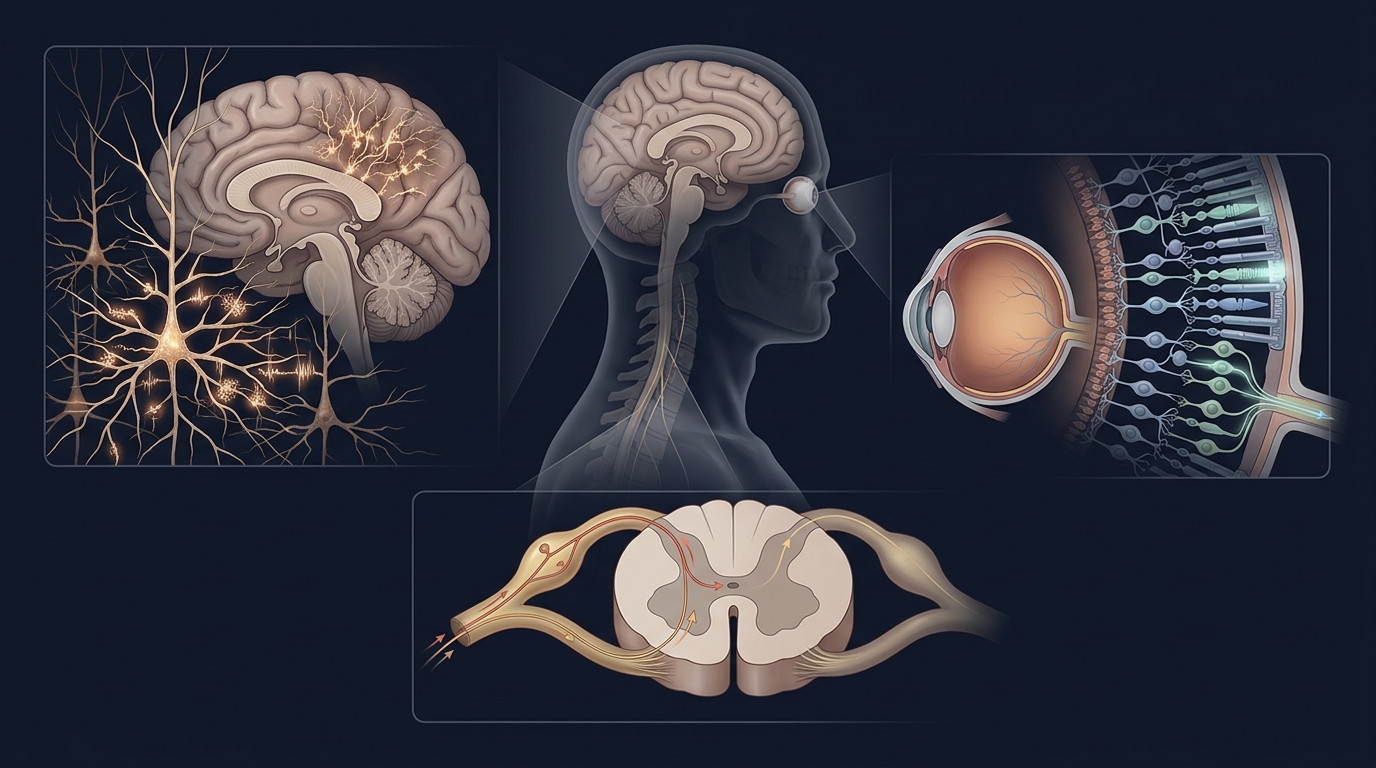
In certain retinal diseases, the cells that normally detect light are damaged or lost, while other retinal cells survive. Researchers are investigating whether introducing genes for light-sensitive proteins into surviving cells can restore some ability to detect visual information.
The results can vary, and specialised optical equipment may be needed. This approach does not restore normal vision in every patient and is not a universal cure for blindness.
Is Optogenetics Available in Hospitals?
Most optogenetics applications remain research-based or investigational. Direct interventions in humans are much more limited than laboratory uses.
Before a new treatment becomes routine, researchers must demonstrate its safety, effectiveness and durability. They must also address genetic delivery, specialised equipment, regulatory approval and long-term monitoring.
A Nobel Prize recognises a major scientific achievement. It does not mean that every possible application is already available to patients.
Global Research and Costs
Optogenetics combines neuroscience, genetics, optical engineering and biomedical research. Scientists in the United States, Germany and other countries continue to develop light-sensitive proteins, genetic delivery methods and specialised optical systems.
For countries such as Pakistan, opportunities include neuroscience education, biomedical engineering, international partnerships and shared research facilities. Building scientific expertise is an important first step towards participating in advanced research.
Costs vary widely. Laboratories may need specialised light sources, optical fibres, microscopes, recording equipment and biological materials. Advanced systems can cost tens of thousands of dollars or more, depending on the research.
Potential clinical treatments may involve additional costs for genetic delivery, devices, trials and long-term monitoring. Their eventual affordability will depend on the specific treatment and healthcare system.
What Does the Future Hold?
Scientists must still solve important challenges before many optogenetic approaches can become routine treatments. These include delivering genetic instructions safely, targeting the correct cells, controlling light effectively and proving meaningful benefits for patients.
In some conditions, optogenetics may eventually contribute directly to treatment. In others, its most important contribution may be identifying biological pathways that can be targeted through medicines or other technologies.
The distinction is important: understanding a disease mechanism is a major scientific step, but it does not automatically produce a safe and effective treatment.
Conclusion: When Light Becomes a Tool for Understanding Life
Optogenetics represents a remarkable meeting of biology, genetics and optical science.
By enabling scientists to influence selected cells with light, it has opened new ways to investigate how neural circuits contribute to movement, memory, perception and behaviour. It is also helping researchers explore potential approaches to neurological disorders and certain forms of vision loss.
Yet its promise must be balanced with scientific discipline. Many possible treatments remain experimental, and translating laboratory discoveries into routine medical care can take years of further research.
The journey from microscopic algae to the mysteries of the human brain reminds us that nature often holds unexpected answers to humanity’s most difficult questions.
The greatest achievement of optogenetics may not simply be the ability to switch selected nerve cells on or off, but the opportunity to understand the intricate biological systems that make human thought, perception and life possible.
For ordinary people, the central lesson is simple: scientists can make selected cells sensitive to light, use that light to change cellular activity and observe how the change affects a wider biological system. This is how an observation about a tiny organism became a powerful tool for exploring the human brain.
Frequently Asked Questions
1. What is optogenetics in simple language?
Optogenetics uses genetic methods and light-sensitive proteins to influence selected cells. Scientists use it to investigate how particular neurons affect the brain.
2. How does light activate a neuron?
Suitable light activates a protein such as channelrhodopsin. Ions cross the cell membrane, changing its electrical state and are liable to trigger a nerve impulse.
3. Can optogenetics switch neurons off as well as on?
Yes. Different light-sensitive proteins can increase or reduce neuronal activity, depending on their mechanism and the experimental conditions.
4. Can optogenetics cure epilepsy or chronic back pain?
No established routine treatment for these conditions currently uses optogenetics. Researchers are investigating the underlying mechanisms and potential therapeutic approaches.
5. Can optogenetics restore sight?
Clinical research is investigating whether light-sensitive proteins can restore some visual function in selected retinal diseases. Results vary, and the approach is not a universal cure for blindness.
6. Can a flashlight control someone’s brain?
No. Optogenetics generally requires selected cells to produce light-sensitive proteins and specialised equipment to deliver appropriately controlled light. An ordinary flashlight cannot control a person’s brain in this way.
References and Further Reading
- Nobel Prize. The 2026 Nobel Prize in Physiology or Medicine: Official announcement.
- Deisseroth, K. “Optogenetics.” Nature Methods.
- Fenno, L., Yizhar, O. and Deisseroth, K. “The Development and Application of Optogenetics.” Annual Review of Neuroscience.
- Yizhar, O. and colleagues. “Roadmap for direct and indirect translation of optogenetics into discoveries and therapies for humans.” Nature Neuroscience, 2025.
- Lindner, M. and colleagues. “Optogenetics for visual restoration: From proof of principle to translational challenges.” Progress in Retinal and Eye Research, 2022.
Excerpt: How can light influence brain cells? Discover how Nobel Prize-winning optogenetics evolved from research on microscopic algae into a powerful tool for neuroscience, and explore its potential medical applications and limitations.