
What If My Name Isn’t on the Voter List? The 2026 U.S. Guide
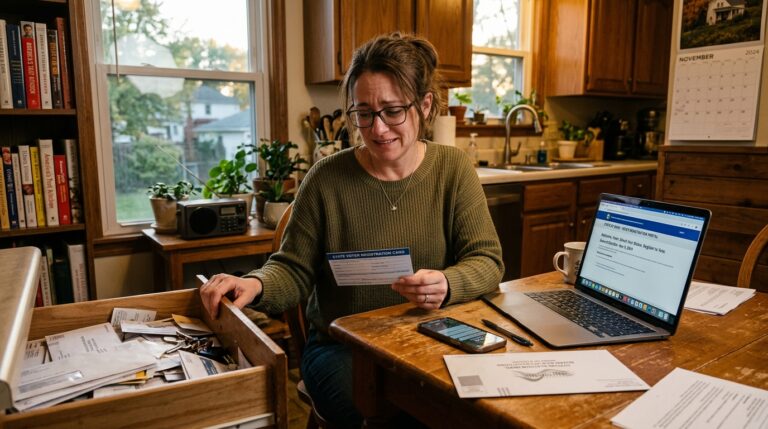
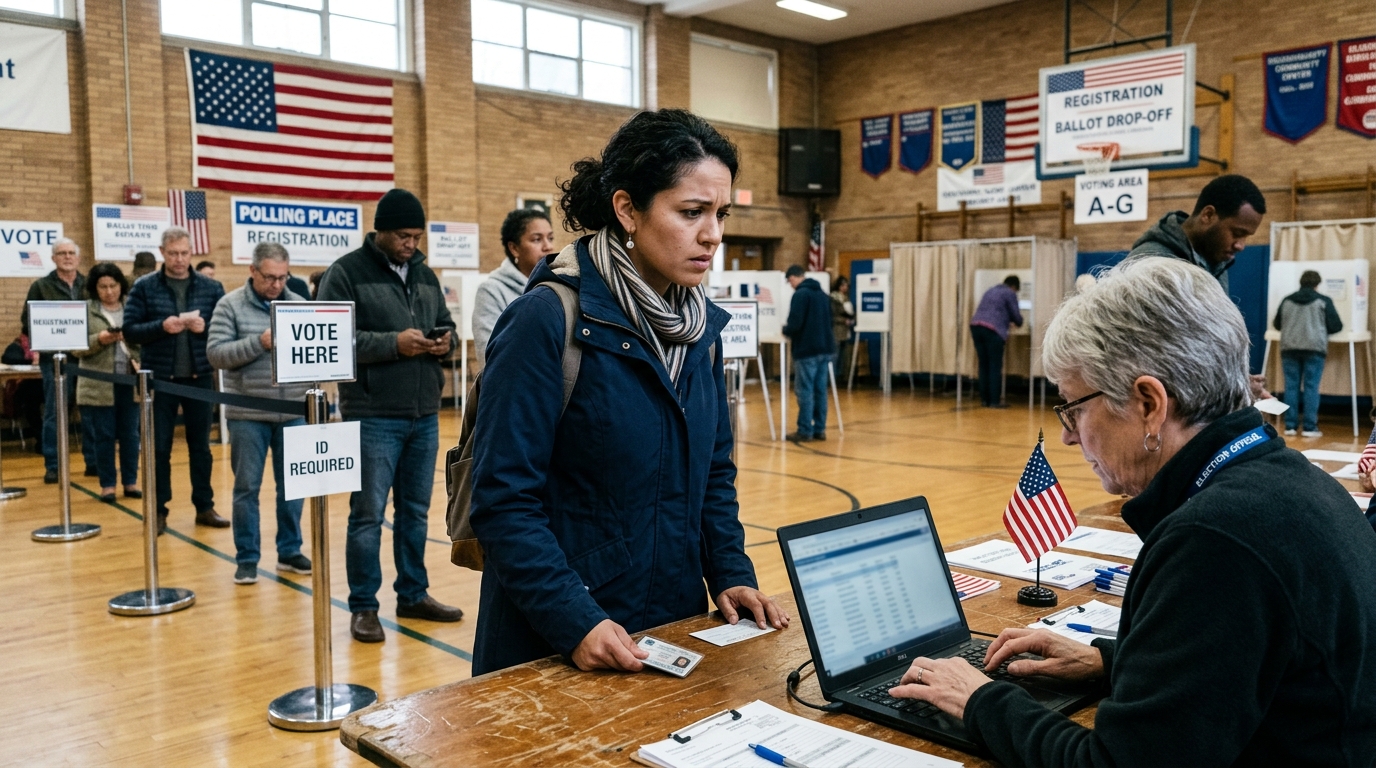
What If My Name Isn’t on the Voter List? You walk into your polling place, give your name, and wait for the poll worker to find it.
Then comes the sentence every voter dreads:
“I don’t see your name.”
For a moment, your stomach drops.
Did your registration disappear? Did you go to the wrong polling place? Did your recent move cause a problem? Was your registration never processed? Did your name change create a mismatch?
Most importantly:
Does this mean you cannot vote?
Not necessarily.
Election administration in the United States is largely handled by states and local jurisdictions. That means the exact procedure can vary depending on where you live. The U.S. Election Assistance Commission advises voters to use their state or local election office for the most precise information. (U.S. Election Assistance Commission)
So if your name is missing from the voter list, do not simply turn around and go home.
There are several things you can check before giving up.
https://mrpo.pk/2026-us-midterm-elections/
Why Might Your Name Not Be on the Voter List?
Seeing your name missing from the poll book does not automatically tell you why it is missing.
There can be several explanations.
You May Be at the Wrong Polling Place
This is one of the first things to check.
Your polling location may have changed since the last election. You may also have misunderstood which polling place serves your current address.
Before assuming your registration is gone, verify your polling location through your state’s official election website.
The federal government recommends checking your registration status and polling place before Election Day. USA.gov directs voters to their state’s election website through the official voter-registration system. (USAGov)
A simple mistake can look much more frightening than it really is.
Example:
Imagine Maria has voted at the same school for years. She arrives on Election Day and discovers that her name is not in the poll book.
Instead of leaving immediately, she checks her registration information.
Her polling location changed.
The problem was not her registration. She was simply standing in the wrong place.
Your Address May Have Changed
Moving is another common reason for voter-registration problems.
You may have moved:
- To another house in the same state
- To another county
- To another city
- Across state lines
- Into a temporary residence
- To a college address
Federal voter-registration guidance allows voters to update information such as their name and address, but the procedures and deadlines are determined by individual states. (Vote.gov)
If you moved recently, check your registration before assuming you are no longer eligible.
Your Name May Have Changed
Marriage, divorce, or another legal name change can create confusion if your registration record still uses your previous name.
Suppose your driver’s license says:
Emily Carter
But your voter record still says:
Emily Johnson
That does not automatically mean you are not registered.
The important question is how your state handles the mismatch.
If your name has changed, update your voter registration through your state’s official election system. Vote.gov specifically provides state-by-state instructions for updating a voter’s name and address. (Vote.gov)
On Election Day, explain the situation to the poll worker rather than assuming you must leave.
Your Registration May Not Have Been Updated Yet
Sometimes voters register or update their information close to an election.
The voter may believe everything is complete.
The election database may tell a different story.
This is why checking registration before Election Day matters.
Registration deadlines are not the same everywhere. Some states allow registration on Election Day, while others require registration days or weeks earlier. There is no single national registration deadline. (Vote.gov)
If you registered recently, keep any confirmation information you received.
It may help election officials locate your record or determine what options are available.
Your Registration Status May Be Different From What You Expected
Voter lists are maintained by state and local election officials.
A registration record can change because of address updates, duplicate records, death records, eligibility changes, or other list-maintenance procedures.
That does not mean every voter who cannot immediately be found has been improperly removed.
It means you need to find out what the official record actually says.
The EAC explains that election officials maintain voter lists and use procedures intended to keep registration records accurate. (U.S. Election Assistance Commission)
If you discover a registration problem, ask the election officials what happened and what remedy is available in your state.
What Should You Do at the Polling Place?
If the poll worker cannot find your name, stay calm.
Then work through the problem.
Step 1: Confirm Your Information
Give the poll worker your full name and, if requested, other information permitted under your state’s procedures.
If you recently changed your name, provide the previous name if appropriate.
If you recently moved, explain that too.
The goal is to help the election workers locate the correct record.
Step 2: Confirm You Are at the Correct Polling Place
Ask:
“Can you check whether I am at the correct polling location?”
This is important because voting locations can change.
Your state or local election office can provide the official polling-place information.
Step 3: Ask Whether Another Poll Book or Election Record Should Be Checked
Election workers may have procedures for resolving registration questions.
Do not assume that the first unsuccessful search ends the conversation.
Politely ask:
“Could you please check whether there is another way to verify my registration?”
You are trying to solve a problem, not win an argument.
Step 4: Ask What Your State Allows If Your Name Still Cannot Be Found
This is where state law becomes especially important.
In some circumstances, a provisional ballot may be available.
The Help America Vote Act establishes provisional voting protections in federal elections, but states administer the process differently. The EAC notes that procedures for issuing, processing, researching, and counting provisional ballots vary and must be understood within the applicable jurisdiction. (U.S. Election Assistance Commission)
Ask the poll worker:
“If my name isn’t on the list, am I eligible to cast a provisional ballot here?”
Do not demand that a particular procedure apply if your state does not use it in that situation.
Ask what the official procedure is.
What Is a Provisional Ballot?
A provisional ballot is essentially a ballot used when there is a question about whether a person’s regular ballot can be issued at that moment.
It is not the same as an ordinary ballot.
It is also not automatically rejected.
Election officials later review the ballot according to applicable law and procedures.
The EAC says jurisdictions must have procedures for processing provisional ballots and must inform individual voters whether their provisional ballot was counted. (U.S. Election Assistance Commission)
That makes one point particularly important:
If you are offered a provisional ballot, follow the instructions carefully.
Do not assume that merely receiving one guarantees that every vote on it will be counted.
The detailed rules belong in a separate guide, which is why this election cluster includes a dedicated article:
“Can I Vote Provisionally? What Is a Provisional Ballot?”
What If You Recently Registered?
This is where timing matters.
If you registered shortly before Election Day, check whether your state’s registration deadline had passed and whether your registration was successfully processed.
Some states permit registration on Election Day. Others do not. (Vote.gov)
If you have proof of registration, confirmation information, or an official registration receipt, keep it available.
But remember:
A registration receipt is not automatically a guarantee that you can vote at any location.
The state’s election rules still determine what happens.
What If You Moved but Forgot to Update Your Registration?
This situation is common enough to deserve special attention.
Suppose David moved from one apartment to another in the same city.
He assumed his voter registration would follow him automatically.
Election Day arrives.
His name does not appear where he expected.
The answer depends on his state’s rules and the timing of the move.
He should not guess.
He should ask election officials whether he needs to vote at another location, update his registration, or use another legally available voting procedure.
For future elections, update your voter registration whenever you move.
Vote.gov provides state-specific options for changing an address and checking registration status. (Vote.gov)
What If You Are Told You Are Not Registered?
This is the moment when many voters simply walk away.
Don’t rush.
Ask a calm, specific question:
“Can you tell me what the official record shows and what options are available to me under state law?”
You can also contact the appropriate local or state election office.
The EAC emphasises that because U.S. elections are decentralised, the local election office is often the best source for practical answers about registration and voting procedures. (U.S. Election Assistance Commission)
The important distinction is between:
“Your name isn’t appearing here.”
and:
“You are legally ineligible to vote.”
Those are not necessarily the same thing.
What If You Believe There Is a Mistake?
Document the problem.
Write down:
- Your polling location
- The time you arrived
- What the poll worker told you
- Whether you were directed somewhere else
- Whether you were offered another voting option
- The name or identification number of the election office you contacted
- Any instructions you were given
Do not photograph another voter’s information or interfere with election workers.
You are simply creating your own record of what happened.
That can be useful if you later need to follow up with election officials.
What If Someone Tells You to Leave?
A disagreement at a polling place can become confusing very quickly.
The best response is not shouting.
Ask:
“Could you please explain the official reason I cannot vote here and tell me who I should contact?”
If you believe your voting rights are being denied improperly, contact the appropriate election authority or other official assistance channel available in your state.
Federal election law includes protections concerning voting rights and provisional voting, while the exact remedies and procedures depend on the circumstances and jurisdiction. (U.S. Election Assistance Commission)
This is why voters should know their local election office before Election Day—not when they are already standing in a queue.
What If Your Polling Place Is Wrong?
This deserves a separate warning.
Do not assume that any polling place in your county can necessarily issue your regular ballot.
Polling-place rules vary by state.
Some jurisdictions have special procedures for voters who arrive at the wrong location. Others may require you to go to your assigned polling place.
So ask the election worker:
“Is this the polling place assigned to my address?”
If not, ask where you should go.
If you have a smartphone, use the official state or local election website rather than an unfamiliar social-media post or random website.
What About Voter ID?
Even if your name is on the list, your state may have voter-identification requirements.
Every state sets its own rules, and the requirements differ significantly. USA.gov advises voters to check the voter-ID requirements of their state before going to the polls. (USAGov)
So there are really two separate questions:
Is my name on the voter list?
and
Have I met my state’s requirements for voting in person?
Do not confuse the two.
What About Homeless Voters?
Not having a traditional home does not automatically mean a person cannot register or vote.
Vote.gov specifically provides information for people experiencing homelessness or without a permanent address. (Vote.gov)
The rules for establishing a voting residence vary by state.
If this applies to you, check your state’s election instructions before Election Day and bring any identification or documentation your state requires.
What About College Students?
College students can face registration confusion because they may have both a home address and a college address.
The important issue is where they are registered and what state rules apply.
Do not assume that your college address automatically changes your voter registration.
Check the official registration record before Election Day.
If you recently changed your address, verify that the change was actually processed.
What About Military and Overseas Voters?
Military and overseas voters have separate voting procedures.
Vote.gov explains that eligible military members and their families can vote from wherever they are stationed, including overseas. (Vote.gov)
If you are serving overseas, do not wait until Election Day in the United States to discover a registration or ballot problem.
The rules and deadlines for military and overseas voters are different enough to deserve advance preparation.
Don’t Let One Missing Name End the Conversation
The most important lesson is simple:
A missing name is a problem to investigate—not automatically the end of your voting attempt.
Check the polling place.
Check the registration record.
Explain recent moves or name changes.
Ask election workers what the official procedure is.
And if applicable, ask whether a provisional ballot or another state-authorized option is available.
The worst response is to become frustrated, assume nothing can be done, and walk away without asking.
Election Day is not the ideal time to discover a registration problem.
But if you do discover one, slow down.
Ask questions.
Follow the official procedure.
And get the answer from the people responsible for administering the election—not from the loudest person in the room.
Election-Day Quick Checklist
Before leaving home, save or write down:
- Your Registration Status: Confirm that your registration is active.
- Your Polling Place: Verify the current location.
- Your Address: Make sure the registration record shows the correct voting address.
- Your Name: Check that your registration uses the correct information.
- Your Identification: Know what your state requires.
- Election Office Contact: Save your state or local election office number.
- Backup Plan: Know what questions to ask if your name cannot be found.
- Provisional Voting Information: Understand that availability and procedures vary by state.
A few minutes of preparation can save a great deal of confusion.
The Bottom Line
If your name is missing from the voter list, do not immediately assume that you cannot vote.
First, make sure you are at the correct polling place.
Then ask election workers to check your information carefully.
If you recently moved or changed your name, explain it.
If your registration cannot be confirmed, ask what official options are available in your state, including whether you can cast a provisional ballot.
Most importantly, get information from your state or local election authority.
The United States does not have one uniform Election Day procedure. State and local election officials administer voting under their own laws and procedures. (U.S. Election Assistance Commission)
When the system says, “I don’t see your name,” don’t panic.
Ask the next question:
“What should I do now?”
That question may be much more important than the first answer you receive.
Frequently Asked Questions
1. What should I do if my name is not on the voter list?
First, confirm that you are at the correct polling place. Ask the poll worker to check your information and explain the problem. If your registration still cannot be confirmed, ask what options are available under your state’s law, including whether a provisional ballot is appropriate.
2. Can I vote if I recently moved?
Possibly, but the answer depends on your state’s rules, the type of move, and when you moved. Update your registration and check your state’s instructions before Election Day.
3. Can I vote if my name changed after marriage or divorce?
Possibly. A name mismatch does not automatically answer the question of whether you are eligible to vote. Explain the name change to the poll worker and follow your state’s procedure.
4. What if I registered but my name still isn’t showing?
Bring any official registration confirmation you have and ask election officials to check the record. Depending on the state and circumstances, other voting procedures may be available.
5. Does a missing name automatically mean I need a provisional ballot?
No. A provisional ballot is only one possible procedure, and state rules differ. First determine whether you are at the correct polling place and whether election officials can resolve the registration issue.
6. Where can I check my voter registration before Election Day?
Start with the official Vote.gov registration system or your state’s election website. USA.gov recommends checking your registration status, name, address, and polling place before Election Day. (Vote.gov)
References
- U.S. Election Assistance Commission — Voter FAQs and state election information
- U.S. Election Assistance Commission — Provisional Voting
- Vote.gov — Register to Vote
- USA.gov — Confirm Your Voter Registration
- USA.gov — Voter ID Requirements
- U.S. Election Assistance Commission — Register and Vote in Your State
- Vote.gov — Voting While Unhoused
- Vote.gov — Voting as a Military Service Member
Author
Maj Hamid Mahmood (Retired) holds an MA in Political Science, an LLB, and a PGD (HRM). His military background, academic training in political science, and legal education provide a multidisciplinary perspective for examining international conflicts, security affairs, political developments, and the human consequences of war.