
Iran Attacks on Kuwait and Bahrain 2026: Causes, Legality, Iran Self-Defence, and International Law Explained
Iran Attacks on Kuwait and Bahrain, Imagine waking up to air raid sirens and news of missiles flying toward major Gulf airports, all while global powers point fingers over who started it. The 2026 Iran conflict has millions searching for straight answers. Did the US and Israel break international rules? Does Iran have the right to hit back at US bases in Kuwait and Bahrain? Can America strike without nearby bases?
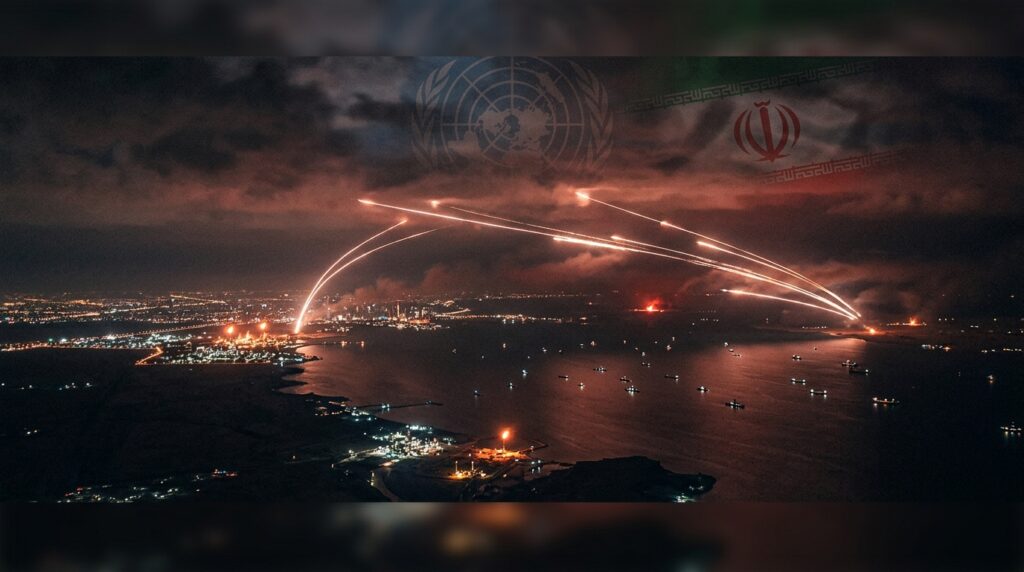
Iran Attacks on Kuwait and Bahrain 2026: Causes, Legality, Iran Self-Defence, and International Law Explained. This easy-to-read guide compiles everything in simple language: facts, legal views, and real-world options. Let’s cut through the noise together.
https://mrpo.pk/war-first-casualty-is-truth/
Trump says the war in Iran is ‘not a big thing’ for the U.S.
President Trump said on Wednesday that the war in Iran was “not a big thing” for the United States in his latest attempt to play down the effects of the war by pointing to the economy.
Speaking to reporters in the Oval Office, Mr. Trump asserted that the conflict, which has killed at least 13 U.S. service members and an estimated 1,700 Iranian civilians, drained military stockpiles, and inflicted financial pain on working-class Americans, was going better than expected. He maintained he was “very proud” of what he called a “detour” to Iran.

President Trump at the Oval Office on Wednesday.Credit…Doug Mills/The New York Times
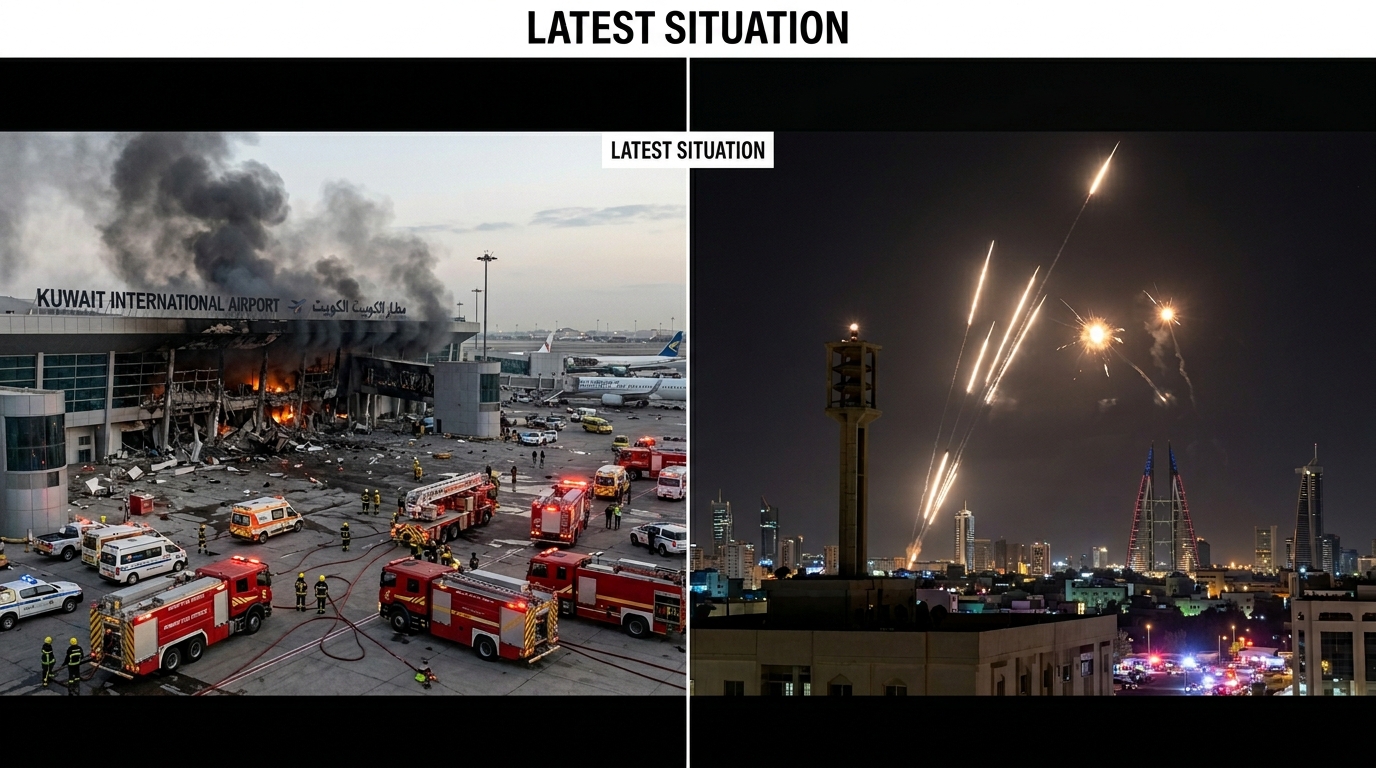
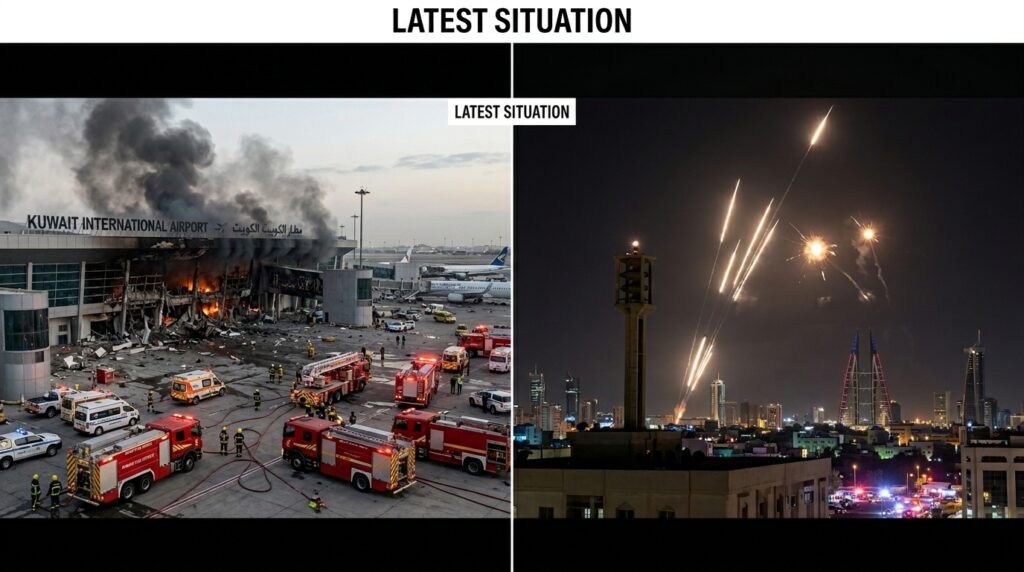
Latest Situation of Iran Attacks on Kuwait and Bahrain
On June 3, 2026, Iran launched missiles and drones targeting Kuwait and Bahrain.
Key Impacts:
- Kuwait: Terminal 1 of Kuwait International Airport took heavy damage. One Indian national was killed, and dozens were injured. Many threats were shot down, but civilian areas still suffered.
- Bahrain: Alerts sounded near US-linked sites, including the Fifth Fleet headquarters. Most attacks were intercepted with limited damage.
The US hit back at Iranian sites on Qeshm Island. Gulf nations condemned the strikes strongly. Tensions stay high even with shaky ceasefires.
Quick Question for You: How do you think everyday people in the Gulf feel when airports turn into targets? Drop your thoughts in the comments.
What Caused Iran’s Attacks on Gulf Countries?
Iran called its strikes retaliation for US actions, such as:
- Attacks on communication sites on Qeshm Island.
- Naval moves against Iranian tankers in the Strait of Hormuz.
Iran blamed Kuwait and Bahrain for letting the US use their land and bases. This fits the bigger war that started on February 28, 2026.
Did the US and Israel Follow UN Rules in Their Initial Attack on Iran?
Short answer: No, according to most international law experts.
The February 28 strikes killed Supreme Leader Ayatollah Ali Khamenei and top officials without UN Security Council approval or an immediate Iranian armed attack.
UN Charter Basics:
- Article 2(4) forbids using force against another nation’s sovereignty.
- Article 51 allows self-defence only after a real armed attack.
Preventive wars usually don’t pass legal tests. The US and Israel said it was needed to stop nuclear threats. Many experts still call it a violation.
Iran’s Self-Defence Options After an Unprovoked Attack
Iran has a legal right to defend itself after losing its top leader. But rules are strict: responses must be necessary, proportional, and protect civilians.
Lawful Options
- Strike military targets directly involved in attacks on Iran.
- Use drones, missiles, or proxies carefully.
- Report actions to the United Nations.
Actions That Cross the Line
- Hitting civilian airports or third countries without clear proof.
- Overkill that causes too much harm.
Query for Reader: What would you do if your country’s leader were killed in a surprise strike? Iran faces this exact dilemma right now.
Is Iran Justified in Attacking US Assets in Gulf Countries?
Generally no.
Attacking Kuwait or Bahrain’s soil breaks their sovereignty. Hosting US troops for defence doesn’t make them fair game unless they actively join attacks on Iran.
Defensive help from Gulf bases is generally not considered “participating in the war” under international law, even though it clearly supports one side. This is a common point of confusion, and your question gets to the heart of it.
The Legal Distinction
1. Neutrality vs. Alliance
– True neutrality (under the 1907 Hague Conventions) means a country stays completely out of a conflict, no military support, no bases, no favouring one side.
– Most Gulf countries (Kuwait, Bahrain, Qatar, UAE, Saudi Arabia) are not neutral. They have long-standing defence agreements with the United States. These are peacetime alliances for regional security, not declarations of war against Iran.
– Hosting US forces for defensive purposes (protecting their own territory, air defence, logistics, refuelling) is seen as an extension of their sovereign right to self-defence and alliance commitments, not direct participation in the US-Iran war.
2. What Counts as “Participating in the War”?
Under international humanitarian law and state practice, a country becomes a ” co-belligerent ” (active party to the conflict) when it:
– Launches attacks on the opponent (Iran).
– Provides troops for combat operations.
– Supplies real-time targeting intelligence or command support specifically used to strike the enemy.
– Allows its territory to be used as a launching pad for offensive strikes.
Defensive help (e.g., shooting down incoming Iranian missiles aimed at their own cities, hosting US aircraft for protection, or general logistics) usually falls short of this threshold. It is treated as non-belligerent support.
Why This Matters in the 2026 Conflict
– Gulf states repeatedly stated they limited or denied the US use of their bases for offensive strikes on Iran to avoid becoming targets. Many reports confirm the US relied more on naval forces and Diego Garcia for actual attacks.
– Iran argues that any support makes it complicit. However, the mainstream international legal view holds that the mere presence of foreign forces or defensive cooperation does not automatically render a host country a legitimate target.
– This is why Iran’s strikes on Kuwait International Airport and other Gulf targets were widely condemned as violations of sovereignty.
Real-World Comparison
– During the Cold War and many modern conflicts, countries host foreign bases for defence without being legally at war (e.g., Japan hosting US bases, Germany hosting US forces).
– If a country allows its airbases to actively launch bombing runs on Iran, that crosses into participation. Defensive interception of missiles aimed at themselves is usually viewed differently.
Bottom line: Defensive help is legally distinguished from direct participation because it is framed as protecting the host country’s own security rather than joining the offensive campaign. Iran rejects this distinction and sees it as participation. International law, however, leans toward the narrower definition of “active hostilities” for determining co-belligerency.
This grey area is exactly why the 2026 conflict became so messy; defensive alliances created easy targets for retaliation while staying just inside legal lines.
Can the US Attack Iran Without Gulf Bases or European Support?
Yes, the US has done it.
Carriers in the Arabian Sea, Tomahawk missiles from ships, and the Diego Garcia base make it possible. European restrictions and Gulf limits made it harder, but America adapted using sea power. Nearby bases just make things faster and cheaper.
How to Verify If US or Gulf Military Assets Were Used Against Iran
Use these reliable ways:
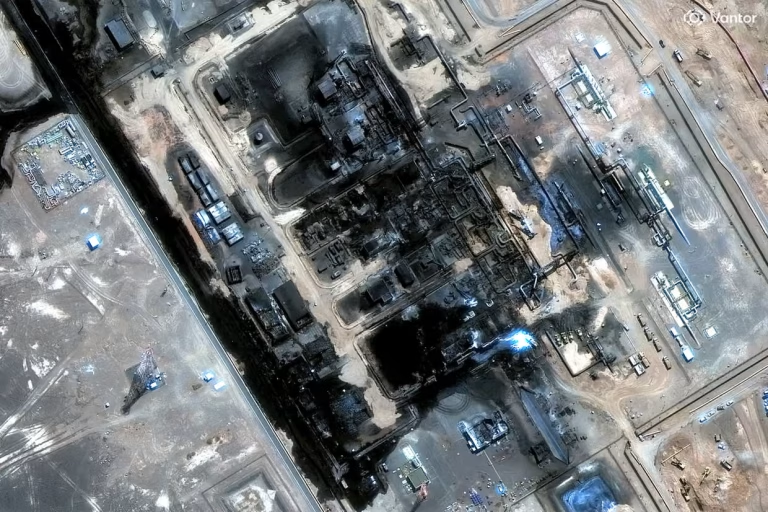
- Satellite photos from Maxar or Planet Labs.
- Flight and ship tracking apps.
- Reports from CENTCOM and independent journalists.
Most evidence shows Gulf bases gave defensive help, while the main strikes came from the sea.
Are Advanced Radar and Communication Systems Legitimate Targets?
Not just for being there.
International law says an object must actively help military action right now to be a fair target. Simple presence (especially defensive radars) usually doesn’t count. Active use of guiding strikes can change that, but attackers must still limit civilian harm.
6 Frequently Asked Questions (FAQs)
1. What was the main trigger for Iran’s attacks on Kuwait and Bahrain?
Retaliation for US strikes on Qeshm Island and naval actions, plus claims that Gulf countries helped the US.
2. Is attacking US bases in Gulf countries legal under international law?
No, it usually violates third countries’ sovereignty. Self-defence rights don’t automatically extend there.
3. Can the US keep striking Iran without Gulf bases?
Yes. Naval carriers, submarines, and distant bases like Diego Garcia allow continued operations, though with more effort.
4. Was killing Iran’s Supreme Leader Khamenei legal?
Most experts say the overall strikes violated UN rules on starting wars, making the leadership deaths part of an unlawful action.
5. What risks come with further escalation in the Gulf?
Higher oil prices, more civilian deaths, refugee crises, and possible wider war involving more countries.
6. How can people stay safe during these conflicts?
Follow official alerts, have emergency kits, avoid military areas, and rely on trusted news sources for updates.
What’s your biggest question after reading this? Share below, let’s keep the conversation going with facts, not anger.
References
- Reuters – “Iran Launches Attacks on Gulf States, June 2026”
- CENTCOM Official Statements on 2026 Operations
- UN Charter Articles 2(4) and 51 (United Nations)
- BBC Verify & New York Times Satellite Analysis Reports
- Additional Protocol I to the Geneva Conventions, Article 52
- Al Jazeera Coverage of Iran-US Escalation 2026
- International Law Analyses from American Society of International Law
This article is for informational purposes based on public reports as of June 4, 2026. International law remains debated in live conflicts. Always cross-check with multiple reliable sources.